

Fashion
Swinger to make 70 staff redundant, loss of Versace orders proves decisive


Translated by
Nicola Mira
Published
December 9, 2025
There may be trouble ahead for Swinger International. The Bussolengo-based company in the Italian province of Verona, which has been producing jeans (and, for some time now, ready-to-wear) for many major fashion houses since the early 1970s, is about to make almost half of its employees redundant.
It will be a particularly bitter Christmas for the employees of the Veneto-based company which, only two weeks after signing an agreement on extraordinary furlough for eight months covering its entire workforce, on November 25 opened collective redundancy proceedings for 70 of its current 148 employees, as reported in the Economy section of the local daily L’Arena.
Swinger International’s situation has deteriorated in just a few months following, according to union sources, the loss of orders from Versace, a brand officially acquired last week by Prada, which on its own generated about 80% of the company’s turnover (Swinger produced the Versace Jeans Couture line, ed).
On the subject, Prada told FashionNetwork.com that Versace had decided to terminate its licensing relationship with Swinger as early as October 2024, when the brand decided to shut down its second line, Versace Jeans Couture, thus before the start of negotiations between Capri Holdings and the Prada Group for the acquisition of the brand.
Prada also clarified that the decision is not related to any offshoring, as claimed by some sources, but to the choice, dating back to last year, to close the Versace Jeans Couture line.
For its part, Swinger International, contacted by FashionNetwork.com, declined to comment for the time being, while indicating that the company’s owners will communicate their response to this serious situation in the coming days.
It is a real shame for a company founded in the 1970s with a small artisanal production of jeans and then apparel, which over the decades grew to secure licences from international brands (such as Roberto Cavalli, Vivienne Westwood, Missoni, and Fendi), especially in the youth fashion and ready-to-wear segments, and which managed to increase revenues from almost 100 million euros in 2020 to more than 175 million in 2023. In 2011, Swinger International acquired the Genny brand, still in its portfolio, appointing Sara Cavazza Facchini as creative director.
On Tuesday, December 9, the first trade union consultation meeting to handle the redundancies was held at the Confindustria Verona headquarters. Regulations provide for a 45-day period in which the company and workers’ representatives can reach an agreement, and a further 30 days during which the Veneto Region is expected to act as mediator, the Verona daily added, noting that negotiations have so far proved unsuccessful.
The Filctem CGIL union did not sign the agreement. Its representatives say that “their requests, which included, among other things, the inclusion of a safeguard clause regarding the effective date of the redundancies, were not accepted,” reports L’Arena. In their view, moreover, “the conditions imposed by the company are absolutely unacceptable, starting with a wholly inadequate voluntary redundancy incentive.” The union has therefore announced that it will individually assist workers who authorise it to do so.
The current difficulties reportedly began to emerge in May, when Swinger International applied for furlough for 171 employees due to a slowdown in production, but matters accelerated at the end of the summer, when 23 members of the company’s workforce had already resigned.
This article is an automatic translation.
Click here to read the original article.
Copyright © 2025 FashionNetwork.com All rights reserved.










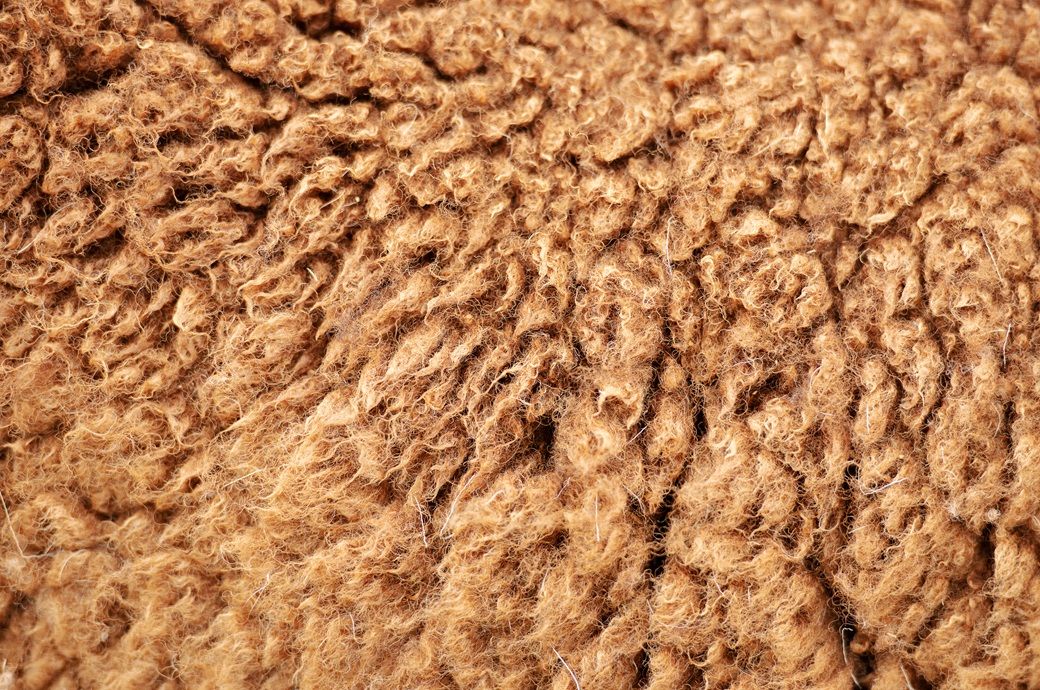
According to Australian Wool Innovation (AWI) commentary for week 38 (March 2026), the Eastern Market Indicator (EMI) fell by 32 Australian cents/kg, while the Western Market Indicator (WMI) dropped more sharply by 69 cents, signalling comparatively weaker conditions in Fremantle.
Australia’s wool market declined this week, ending a recent rally as weaker buyer sentiment and margin pressures weighed on prices.
The EMI fell 32 cents and WMI dropped 69 cents, led by losses in Merino wools.
Softer demand, higher supply, and a stronger Australian dollar pressured the market, though selective buying for quality lots persisted.
“Losses were led by medium Merino wools, which fell 70–75 cents in the eastern centres and 85–90 cents in the west. Finer Merino types also declined by 45–60 cents across all regions. Crossbred wool prices eased by 25–30 cents. In the carding segment, eastern markets remained steady to 5 cents higher, while Fremantle saw a sharper fall of around 45 cents,” the AWI Limited said in its Commentary.
The uniform decline across Merino fleece categories points to a broader pullback in buyer demand rather than isolated weakness. This follows several weeks of strong gains after the Chinese New Year period, with much of the earlier purchases still moving through processing and manufacturing stages.
Market sentiment this week reflected growing caution among exporters and processors facing tighter margins due to rising input costs. Increased wool offerings further reduced buyer urgency, while a firmer Australian dollar added pressure on export competitiveness, the AWI commentary noted.
Despite the overall softer trend, demand remained relatively firm for well-prepared, lower-risk lots, indicating that buyers are becoming more selective rather than exiting the market entirely.
Industry observers view the current downturn as a phase of consolidation, with the market testing resistance levels after recent gains, rather than signalling a fundamental shift in demand.
Looking ahead, all three auction centres will operate on a Tuesday-Wednesday schedule next week, with 40,909 bales expected to be offered.
Market direction will depend on the trade’s ability to absorb current supply levels and navigate prevailing cost pressures.
Fibre2Fashion News Desk (CG)

The most traded May 2026 contract settled at 68.70 cents per pound, down 0.07 cent. May contract has maintained a gain of 353 points despite slight fall. The contract had witnessed rally during the last five trading sessions.
ICE cotton futures paused after hitting an 8-month high, pressured by a stronger US dollar and profit booking.
The May 2026 contract settled at 68.70 cents per pound.
Rising crude oil capped losses by supporting cotton over polyester.
Lower volumes but higher open interest signalled fresh positions, while markets await the USDA report for direction.
Middle East tensions increased risks to energy supply, pushing Brent crude prices higher. Higher crude oil prices raised polyester production costs, making cotton relatively more competitive and providing indirect price support.
Market pressure was mainly due to a stronger US dollar, which recovered after the Federal Reserve kept interest rates unchanged, reversing prior weakness. The stronger dollar made US cotton more expensive for overseas buyers, weighing on demand sentiment.
Trading volume stood at 86,811 contracts, lowest in last 3 sessions, indicating lighter market participation. Open interest increased by 2,046 to 341,326 contracts, suggesting fresh positions and continued market involvement. Certified stocks unchanged at 116,789 bales as per ICE data on March 17, indicating no immediate supply pressure
Cotton rallied strongly over the past several sessions, driven largely by speculative short covering, pushing prices to multi-month highs. Current dip reflects mild profit booking and signs that short covering may be slowing or nearing completion.
Market analysts stated that the recent rally triggered significant short covering, but the future direction will depend on how speculative positions evolve next week. Mills were previously complacent with low inventories, but sudden price rise forced them to re-enter the market and cover demand.
Market participants are awaiting the next USDA export sales report for fresh direction.
This morning (Indian Standard Time), ICE cotton for May 2026 was traded at 68.13 cents per pound (down 0.57 cent), cash cotton at 67.95 cents (unchanged), the July 2026 contract at 69.95 cents (down 0.62 cent), the October 2026 contract at 71.99 cents (down 0.13 cent), the December 2026 at 72.12 cents (down 0.52 cent) and the March 2027 contract at 72.99 cents (down 0.48 cent)). A few contracts remained at their previous closing levels, with no trading recorded so far today.
Fibre2Fashion News Desk (KUL)

The sharp fall reflects growing concerns over rising energy prices and inflationary pressures linked to the ongoing conflict, ZEW said in a press release.
“The ZEW Indicator has collapsed,” said Achim Wambach, president of ZEW, noting that the escalation in the Middle East is fuelling energy costs and increasing risks to Germany’s fragile economic recovery. He added that financial market experts remain sceptical about a swift resolution to the conflict, raising uncertainty over the economic outlook.
Germany’s economic sentiment plunged in March 2026, with the ZEW index falling 58.8 points to -0.5 amid Middle East tensions driving energy and inflation concerns.
While the current situation improved slightly to -62.9, it remained weak.
Around 80 per cent expect rising inflation.
Eurozone sentiment also declined sharply, with expectations at -8.5 and conditions worsening to -29.9.
In contrast, the assessment of Germany’s current economic situation showed a modest improvement. The corresponding indicator rose by 3 points to -62.9, although it remains firmly in negative territory, signalling continued weakness in overall economic conditions.
Inflation concerns have intensified, with around 80 per cent of respondents anticipating increased price pressures in both Germany and the broader eurozone.
The negative sentiment extended across the eurozone, where the expectations index fell by 47.9 points to -8.5, slipping into negative territory. Meanwhile, the assessment of the current economic situation in the eurozone declined further to -29.9 points, down by 16.3 points from February.
Fibre2Fashion News Desk (SG)


Enzo Fernández ‘completely committed’ to Chelsea – Liam Rosenior

What happened to Chuck Norris? Actor rushed to hospital in Hawaii

Lionel Messi scores 900th goal, but Miami bounced from CCC

Stock market crash today (March 12, 2026): Nifty50 opens below 23,600; BSE Sensex down over 900 points on continuing US-Iran war – The Times of India

UK’s Topshop unveils Tolu Coker capsule collection

US ignites Iran war, but Gulf Arab states pay the price | The Express Tribune

-
Business1 week ago
Stock market crash today (March 12, 2026): Nifty50 opens below 23,600; BSE Sensex down over 900 points on continuing US-Iran war – The Times of India
-
 Fashion1 week ago
UK’s Topshop unveils Tolu Coker capsule collection
-
Business1 week ago
US ignites Iran war, but Gulf Arab states pay the price | The Express Tribune
-

 Fashion1 week ago
India’s textile recycling market may reach $3.5 bn by 2030: Report
-

 Tech1 week ago
Meta Developed 4 New Chips to Power Its AI and Recommendation Systems
-
 Business1 week ago
8th Pay Commission: How Much Will Central Govt Employees’ Salaries Rise? What We Know So Far
-

 Sports1 week ago
Bangladesh crush Pakistan in ODI series opener | The Express Tribune
-

 Tech1 week ago
Labour scarcity is forcing IT leaders to rethink automation economics | Computer Weekly