

Business
Telcos Set For Major Cost Relief As TRAI Plans Up To 50% Cut In Backhaul Spectrum Fees


Last Updated:
The Telecom Regulatory Authority of India (TRAI) is reportedly planning to slash backhaul spectrum pricing by up to 50%, according to a report.

spectrum pricing
The Telecom Regulatory Authority of India (TRAI) is reportedly planning to slash backhaul spectrum pricing by up to 50%, according to sources cited by ET. The move is expected to significantly ease the financial burden on telecom operators, potentially saving them hundreds of crores annually.
Currently, telcos pay between 0.15% and 3.95% of their Adjusted Gross Revenue (AGR) for backhaul spectrum, with rates varying based on the number of carriers used. Backhaul spectrum—radio frequencies that connect cell towers—is allocated administratively by the government. TRAI’s recommendations are expected soon, with the Department of Telecommunications (DoT) taking the final decision, ET reported. The industry’s annual payment for backhaul spectrum is estimated at around Rs 4,000 crore.
Under the current system, charges rise with the number of carriers a telco operates, calculated as a percentage of AGR using a weighted average formula. “TRAI’s recommendations are expected in the coming days,” an official told ET, requesting anonymity. “The DoT will take a final call after reviewing the proposals,” the official added.
During consultations, telecom operators requested a flat, lower rate for backhaul spectrum. They argued that the original pricing was set when access spectrum was also allocated administratively, whereas mobile spectrum is now auctioned competitively, highlighting the need for rationalisation.
Backhaul spectrum includes Microwave Access (MWA) and Microwave Backbone (MWB) frequencies. Officials indicate TRAI is considering a 50% cut for MWA carriers and a low, flat rate for MWB carriers. The industry expects that cheaper backhaul spectrum will benefit operators and end users alike by enabling more equitable access to services.
The spectrum covers the 7/13/15/18/21 GHz bands, as well as the E band (71-76 GHz and 81-86 GHz), which is key for 5G backhaul. V band spectrum (57-64 GHz and 64-71 GHz) has seen limited adoption so far. After the 2022 5G auction, E band frequencies were provisionally allocated administratively for 5G expansion. While auctioning backhaul spectrum had been considered earlier, the new Telecommunications Act mandates administrative allocation, prompting the regulator to focus on pricing decisions.

Aparna Deb is a Subeditor and writes for the business vertical of News18.com. She has a nose for news that matters. She is inquisitive and curious about things. Among other things, financial markets, economy, a…Read More
Aparna Deb is a Subeditor and writes for the business vertical of News18.com. She has a nose for news that matters. She is inquisitive and curious about things. Among other things, financial markets, economy, a… Read More
November 30, 2025, 13:29 IST
Read More




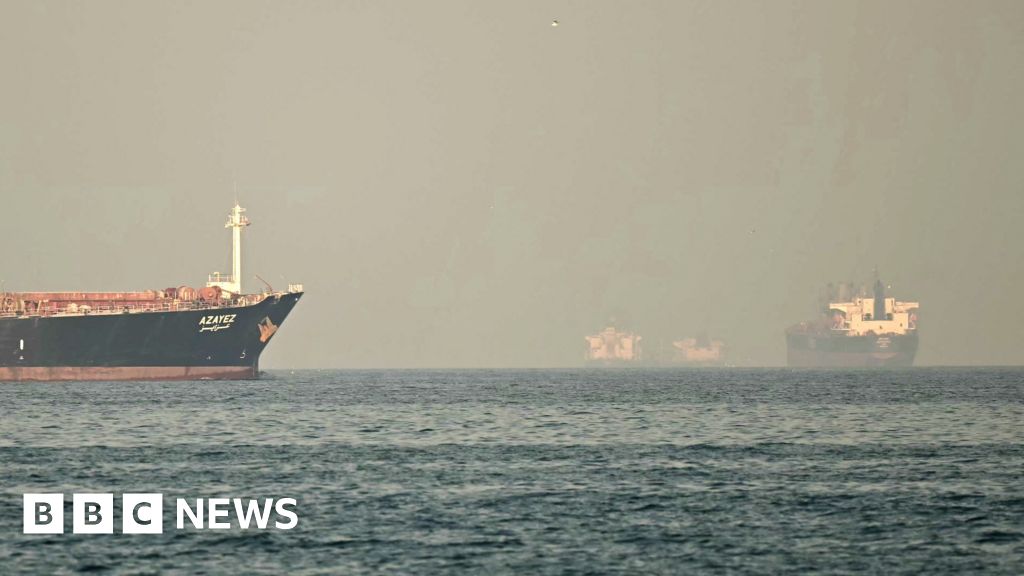
International shipping is said to have come to a standstill at the strait’s entrance, with fears of disruption already pushing up global oil prices.
Source link
Business
Khamenei dead, Middle East on edge: What will be the implications of Trump’s ‘Epic fury’ on stock markets, gold & oil? – The Times of India

The global markets are in for a phase of enhanced turmoil and uncertainty! The ongoing tensions in the Middle East after US and Israel’s strikes on Iran and Ali Khamenei’s death may have investors running for cover – looking for an asset class that is safer.During the night of February 27–28, the United States and Israel carried out joint aerial strikes on Iran as part of “Operation Epic Fury.” Statements by President Trump openly referring to regime change suggest that the confrontation could evolve into a prolonged campaign rather than remain a limited exchange, say market analysts at Franklin Templeton Institute.What does the situation mean for stock markets, energy markets (oil), gold and other asset classes? Here’s what Franklin Templeton Institute analysts have to say:From a market perspective, the key uncertainty is whether the conflict remains confined to direct military engagement or expands into disruptions affecting energy supplies and logistics networks, which would sustain a higher and more persistent risk premium.At the centre of the ongoing uncertainty from a global market and trade perspective is the Strait of Hormuz. While a complete blockade would carry severe consequences for Iran itself, the country has the capability to disrupt maritime traffic through tactics such as vessel harassment, seizures, drone activity, cyber operations, or the use of proxy forces.
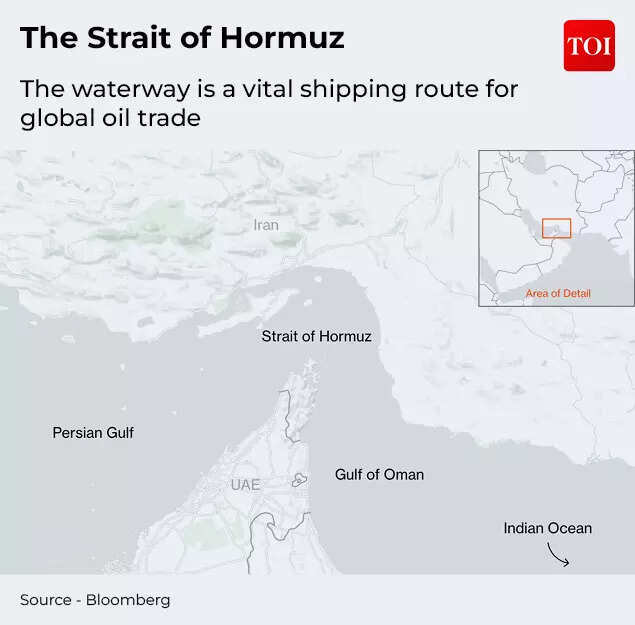
Strait of Hormuz
The most immediate economic impact is expected in energy markets, where crude oil and natural gas prices are likely to move higher, they say. Such actions, feel analysts, will keep geopolitical risk premiums at high levels. In 2024, approximately 20 million barrels per day moved through the Strait of Hormuz, which is around one-fifth of global petroleum liquids consumption. Even a limited interference – which can be caused by delays, rerouting, or isolated seizure – can push prices higher through increased risk perception well before any actual shortages emerge.Liquefied natural gas should not be overlooked in this context. Qatar has the world’s third-largest LNG export capacity, and roughly one-fifth of global LNG shipments pass through the Strait of Hormuz, largely consisting of Qatari exports. As a result, shipping risks in the region affect gas markets as significantly as oil markets.Also Read | US-Israel strikes on Iran: How will India be hit by Strait of Hormuz closure? ExplainedShipping expenses have already begun to rise, with insurance costs acting as a major driver. Insurers have started issuing cancellation notices and revising war-risk premiums for voyages in the Gulf region. Some routes have reportedly seen premium increases of up to about 50%, while earlier periods of tension recorded rises exceeding 60% on important trade corridors. These developments effectively tighten supply conditions even when production levels remain unchanged.The possibility of the conflict spreading across the region is increasing. Franklin Templeton Institute analysts are of the view that across global financial markets, the immediate response to such shocks is usually driven by adjustments in risk perception rather than by underlying economic changes. “The initial market reaction for this type of event would typically see Treasury yields move lower and equities lower—mostly a risk-premium repricing. Impacts on activity/earnings may be delayed and uneven. The US dollar reaction is not guaranteed; gold tends to benefit while bitcoin has been trading like a risk asset (i.e., down with equities), reinforcing that it’s not typically a reliable hedge/diversifier in geopolitical drawdowns,” say Franklin Templeton Institute analysts.However, they note that experience shows markets often come to view geopolitical disruptions as temporary. Initial spikes in risk premiums are frequently followed by the realization that the overall effect on corporate profitability is limited. The duration of the conflict, developments in shipping and insurance costs, and the eventual resolution will be more important than the initial headlines.“We would not yet label this a clean buy-the-dip setup—duration, shipping/insurance mechanics, and the endgame matter more than the first headline,” they say.From an investment perspective, the near-term outlook favours sectors linked to energy markets, as well as companies benefiting from higher shipping and insurance costs, along with defence-related industries, the analysts say. At the same time, caution is warranted toward emerging markets that depend heavily on energy imports and toward cyclical sectors sensitive to fuel and logistics costs, including airlines and certain industrial segments.“For protection, we prefer oil upside/volatility structures and selective gold exposure over broad equity shorts—the path will be driven more by shipping/insurance reality than by the new cycle,” they conclude.

Brent crude jumped 10% to about $80 a barrel over the counter on Sunday, oil traders said, while analysts predicted that prices could climb as high as $100 after U.S. and Israeli strikes on Iran plunged the Middle East into a new war.
The primary driver of this market volatility is the critical Strait of Hormuz. Ajay Parmar, director of energy and refining at ICIS, stated: “While the military attacks are themselves supportive for oil prices, the key factor here is the closing of the Strait of Hormuz.”
Most tanker owners, oil majors and trading houses have suspended crude oil, fuel and liquefied natural gas shipments via the Strait of Hormuz, trade sources said, after Tehran warned ships against moving through the waterway. More than 20% of global oil is moved through the Strait of Hormuz.
“We expect prices to open (after the weekend) much closer to $100 a barrel and perhaps exceed that level if we see a prolonged outage of the Strait,” Parmar said.
Middle East leaders have warned Washington that a war on Iran could lead to oil prices jumping to more than $100 a barrel, said RBC analyst Helima Croft. Barclays analysts also said prices could hit $100.
The OPEC+ group of oil producers agreed on Sunday to raise output by 206,000 barrels per day (bpd) from April, a modest increase representing less than 0.2% of global demand.
While some alternate infrastructure could be used to bypass the Strait of Hormuz, the net impact from its closure would be a loss of 8 million to 10 million bpd of crude oil supply even after diverting some flows through Saudi Arabia’s East-West pipeline and Abu Dhabi pipeline, said Rystad energy economist Jorge Leon.
Rystad expects prices to rise by $20 to about $92 a barrel when trade opens.
The Iran crisis also prompted Asian governments and refiners to assess oil stockpiles and alternative shipping routes and supplies.


When We Were Young Festival announces 2026 hiatus: ‘See you in 2027’

NAACP Image Award host Deon Cole issues Tourette warning after BAFTAs

Late to set-piece party, Liverpool are making up for lost time

Pakistan carries out precision strikes on seven militant hideouts in Afghanistan

Eye-popping rise in one year: Betting on just gold and silver for long-term wealth creation? Think again! – The Times of India

Kansas’ Darryn Peterson misses most of 2nd half with cramping

-
 Politics1 week ago
Pakistan carries out precision strikes on seven militant hideouts in Afghanistan
-
Business1 week ago
Eye-popping rise in one year: Betting on just gold and silver for long-term wealth creation? Think again! – The Times of India
-
 Sports1 week ago
Kansas’ Darryn Peterson misses most of 2nd half with cramping
-

 Entertainment1 week ago
Saturday Sessions: Say She She performs "Under the Sun"
-

 Tech1 week ago
The Supreme Court’s Tariff Ruling Won’t Bring Car Prices Back to Earth
-

 Entertainment1 week ago
Viral monkey Punch makes IKEA toy global sensation: Here’s what it costs
-

 Tech1 week ago
These Cheap Noise-Cancelling Sony Headphones Are Even Cheaper Right Now
-

 Sports1 week ago
Floyd Mayweather to come out of retirement again