

Business
The global wealthy are lining up for Trump’s $1 million Gold Card after price cut


U.S. President Donald Trump signs an executive order in the Oval Office at the White House on September 19, 2025 in Washington, DC. Trump signed two executive orders, establishing the “Trump Gold Card” and introducing a $100,000 fee for H-1B visas.
Andrew Harnik | Getty Images News | Getty Images
A version of this article first appeared in CNBC’s Inside Wealth newsletter with Robert Frank, a weekly guide to the high-net-worth investor and consumer. Sign up to receive future editions, straight to your inbox.
By slashing the price of the Gold Card from $5 million to $1 million, President Donald Trump has created one of the most coveted deals in the global visa market, with demand already surging among the world’s wealthy, according to immigration attorneys.
Last week, Trump signed an executive order announcing the official launch of the Gold Card, which will cost $1 million and grant residency in “record time,” he said. When he first announced the Gold Card in February, the price was $5 million. While the Gold Card website also touts a future $5 million Platinum Card, with added tax benefits, the Platinum Card wasn’t in the executive order and wasn’t mentioned in the press event.
With its new discounted price and promise of speedy approvals, the Gold Card has instantly become one of the most sought after “golden visas” in the world, with a price below many other countries. Singapore’s investment visa program, for instance, costs nearly $8 million, while New Zealand’s new program is just under $3 million. Even Samoa is more expensive, requiring a $1.4 million investment.
“The Gold Card is almost too cheap,” said Reaz Jafri of international law firm Withers. “You get access to the U.S. education system, health-care system, banking system and financial markets, all for $1 million. It’s a pittance for many of these families. I think they should have kept it at $5 million to make it special.”
The global wealthy are ready to write the checks. Jafri said he was speaking at a family office conference in Singapore this week and was approached by three families — two based in China and one based in India — who immediately expressed interest in buying a Gold Card. He said he expects his firm alone will help process “hundreds” of applications once the program is off the ground and proven.
Commerce Secretary Howard Lutnick said the government plans to issue 80,000 Gold Cards. Together with potential Platinum Card and the new H-1B fees, which were raised to $100,000, he said the programs are expected to raise $100 billion in federal revenue.
The Gold Card still faces obstacles. Despite the announcement at the White House last Friday, there is no way to apply for the visa yet. The website announcing the Gold Card that went live in June asks for basic information from potential applicants, including their name and country of residence. So far, people who registered on the site said they haven’t received any updates.
The program is also likely to be challenged in the courts and potentially by Congress. Because immigration law is set by Congress, the president created the Gold Card through several legal workarounds, including using the existing EB-1 and EB-2 programs as the infrastructure or basis for the Gold Card. The $1 million fee is officially labeled an “unrestricted gift” to the government rather than an official fee change.
The tentative legal status may also give the overseas wealthy pause at first, according to immigration attorneys. Many applicants will likely wait to see the first Gold Cards awarded and granted before spending the $1 million. And some may wait even longer.
“These things always take a little bit of time to ramp up,” said Dominic Volek group head of private clients at Henley & Partners. “People don’t want to be the first one to try it. The majority of our clients like to see the program up and running for three to six months and see the outcomes before they commit.”
Volek said he’s already had a number of inquiries from clients and expects the program to attract at least 5,000 to 10,000 applications a year.
“From a price point perspective, it’s definitely more attractive at $1 million instead of $5 million,” Volek said. “And if it’s as quick as they say, it becomes even more attractive.”
The Gold Card also comes at an opportune moment in the global visa market. As geopolitical uncertainty, wars and political tensions rise across the world, the ultra-wealthy are buying alternative citizenships and residencies for a “Plan B” or hedge against their home countries.
An estimated 142,000 millionaires are expected to relocate to another country in 2025, according to a report from New World Wealth and Henley & Partners. The U.S. is one of the top destinations, with 7,500 millionaires expected to move to the U.S. this year, ranking only second to the United Arab Emirates, according to the report. Most of the millionaires coming to America are from Asia, the U.K. and Latin America.
Demand for the Gold Card is likely to come mainly from China and India, according to immigration advisors. Yet applicants from those countries may be disappointed. The EB-1 and EB-2 programs (which form the basis for the Gold Card) already have large backlogs of applicants from China and India, stretching for years. If Gold Card buyers are allowed to skip to the front of the line because of their $1 million donation, the applicants who have been waiting could file lawsuits. At the same time, Gold Card buyers won’t be willing to spend $1 million if they’re forced to wait years for approval.
Dramatically expanding the number of visas available through the EB-1 and EB-2 programs would also likely require approval from Congress, advisors said.
“India and China are actually excluded in a way from the Gold Card,” Volek said. “The EB-1 and EB-2 routes already have significant backlogs for China and India. So immediate access to the Gold Card may not actually work if you’re born in one of those two countries.”
The Gold Card also has some downsides compared with other golden visa programs around the world. The $1 million donation isn’t refundable, while visas in other countries are structured as investments that could generate returns. And unlike most other countries, the U.S. taxes its citizens and residents on their worldwide income, even if it’s earned overseas.
The Platinum Card is designed to partially avoid the taxation issue in exchange for a higher price. According to the White House, the Platinum Card would allow holders to remain in the U.S. for 270 days a year without paying taxes on their overseas income. Currently, overseas nationals are subject to worldwide tax if they are in the U.S. for 183 days during a three-year period using a complex IRS day-counting formula known as the “substantial presence” test.
Some advisors say the Platinum Card will be a tougher sell than the Gold Card, since it doesn’t lead to a green card or citizenship and has limited benefits for the ultra-rich who already spend time in the U.S.
“It will not sell well,” said David Lesperance, of Lesperance Associates. “Few will consider it worth $5 million just to spend an additional 91 days in the U.S.”
Others say the Gold and Platinum cards will appeal to different types of overseas rich. The Platinum Card may be appealing to the ultra-wealthy — say, billionaires from Asia or the Middle East — who want to be in the U.S. but want to shield their companies and income from U.S. taxes. Jafri said he’s already received inquiries about the Platinum Card from four Brazilian family offices.
The Gold Card is more fitting for the sons and daughters of the overseas rich who want to go to college in the U.S. and become more competitive in the U.S. job market after graduating.
“A lot of the kids of these overseas billionaires don’t want to run the family business and want to be architects or doctors or engineers and have regular jobs,” Jafri said. “Or maybe they want to create a startup in America. The Gold Card is very attractive for that group.”
Given the relatively low price of the Gold and Platinum cards, Jafri said the White House should consider eventually issuing a Black Card.
“They could charge $20 million or $25 million and exempt the buyers from the estate tax,” he said. “That would be a game changer. I bet 1,000 people would do it and they would bring all their assets to the U.S.”





A display board shows canceled flights to Dubai and Doha amid regional airspace closures at Noi Bai International Airport, amid the U.S.-Israel conflict with Iran, in Hanoi, Vietnam, March 2, 2026. Picture taken with a mobile phone.
Thinh Nguyen | Reuters
Airline and travel stocks slipped Monday after airspace closures throughout the Middle East forced carriers to cancel thousands of flights, disrupting trips as far as Brazil and the Philippines.
Cruise lines stocks also fell sharply, with Royal Caribbean Cruises dropping 3% and Carnival Corp. losing more than 7%.
Norwegian Cruise Line Holdings‘ stock fell 10% after its earnings call disappointed investors. Elliott Investment Management said last month that it had built a more than 10% stake in the company and that it’s seeking changes. New CEO John Chidsey told analysts that “our strategy is sound, our execution and coordination have not been, and a culture of accountability is essential and necessary going forward.”
Oil prices also rose, potentially driving up airlines’ biggest cost after labor. Flights through the Middle East were grounded, including to destinations like Tel Aviv and Dubai.
United Airlines, which has the most international exposure of the U.S. carriers, fell nearly 3%. Service to Tel Aviv, Israel, one of the airline’s most profitable routes, was halted, but airlines were also was forced to pause flights to Dubai, in the United Arab Emirates, one of the busiest airport hubs in the world. Dubai is also a home base for the airline Emirates.
Shares of American Airlines lost 4% while Delta Air Lines fell 2%.
More than 11,000 Middle East flights have been canceled since the U.S.-Israeli strikes this weekend, according to aviation-data firm Cirium.
International travel has been a bright spot in the travel sector. In January, international air travel demand jumped 5.9% from a year ago while domestic flight demand was nearly flat, the International Air Transport Association, an airline industry group, said in a report Monday.
— CNBC’s Contessa Brewer contributed to this report.
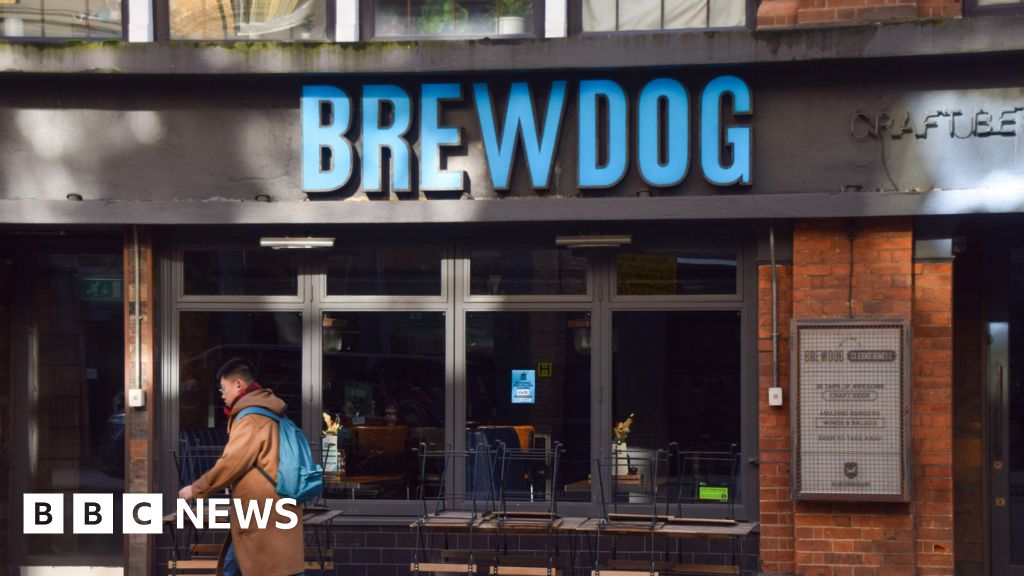
Beverage and cannabis company Tilray acquires the brewery, the brand and 11 bars after Brewdog went into administration.
Source link
Gas prices have leapt at the fastest pace since the outbreak of war in Ukraine, after Qatar halted production of liquified natural gas after attacks by Iran.
Oil prices also soared and global financial markets reeled from the fallout of an intensifying conflict between Iran and US-Israeli forces.
European whole gas prices soared by 52% on Monday, marking the sharpest rise since prices were pushed dramatically higher by the Russian invasion of Ukraine in March 2022.
The surge came after Qatar’s state-backed energy company QatarEnergy said it “ceased production” because of attacks on its facilities.
Qatari ministers had said earlier on Monday that an Iranian drone had attacked one of the company’s production facilities.
Qatar is a major producer of LNG, cooled gas which can be transported via ships, responsible for about a fifth of global supplies.
On Monday in London, the price of natural gas for delivery in April was up by about 43% to 115p per therm.
In the UK, gas prices are a key driver for the cost of domestic energy bills, indicating that a sustained spike could affect households in the coming months.
Neil Wilson, Saxo UK investor strategist, said: “Qatar is a top three LNG exporter, controlling roughly a quarter of expected supply over the next decade.
“Looks like Iran’s tactic is to pressure Gulf states so they in turn pressure the US and Israel to back off.
“I am much more concerned about European natural gas prices than oil prices, in terms of seeing a repeat of the 2022 European energy crisis.”
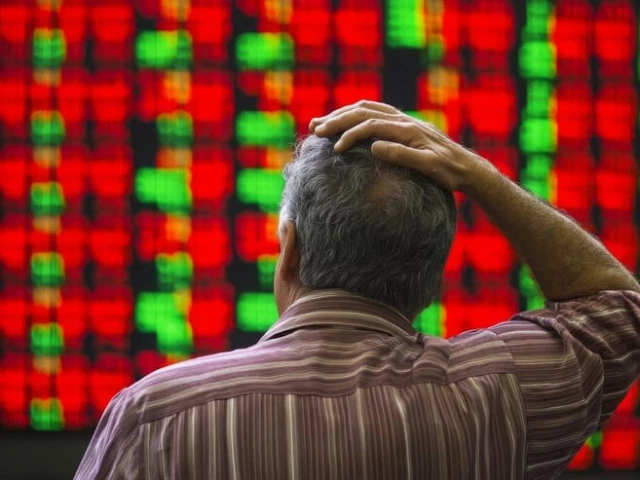
Global financial markets faltered after intense strikes across the Middle East and attacks on ships drove fears of energy supply disruption.
London’s FTSE 100 was weaker as trading was knocked by the growing conflict between Iran and US-Israeli forces.
The blue chip share index shed 130 points, closing 1.2% lower at 10,780.11.
Other European indexes suffered bigger drops with France’s Cac 40 down about 2.2% and Germany’s Dax tumbling 2.4% on Monday.
But it was a more tentative start to trading over on Wall Street with the S&P 500 relatively flat, and Dow Jones dipping by about 0.1% by the time European markets had closed.
Israel launched strikes on Lebanon’s capital Beirut on Monday after missiles were fired by militant group Hezbollah.
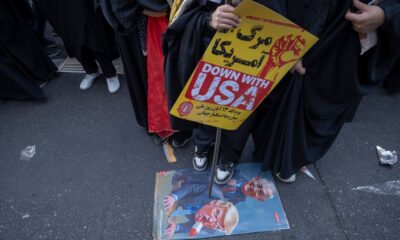
The latest strikes came after the US and Israel hit targets across Iran on Sunday as part of an intensifying military campaign which followed the killing of Supreme Leader Ayatollah Ali Khamenei.
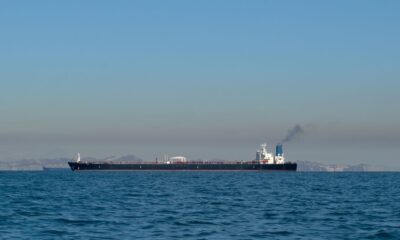
Oil supplies could be affected by the conflict after Iran reportedly warned tankers on the strait of Hormuz that no ships would be allowed to pass through.
UK Maritime Trade Operations Centre officials said that two vessels have been struck near to the key trade artery.
The Strait of Hormuz is used by tankers carrying about one fifth of the world’s oil supplies and seaborne gas.
On Monday, the price of Brent crude oil soared by as much as 13%, rising above 82 dollars a barrel, before paring back.
It was 8.4% higher at 79.2 dollars a barrel shortly before 2pm, before easing slightly to be 5.5% higher at 76.9 dollars a barrel by early evening.
Nevertheless, City analysts have said the markets have been relatively contained so far in reaction to the conflict.
Chris Beauchamp, chief market analyst at IG, said: “While we have seen a significant surge in oil prices since markets opened last night, the gains appear contained for now as we wait to see if shipping through Hormuz can continue at lower levels or will be blocked entirely.
“Oil and gas infrastructure in the region has not yet been extensively targeted, keeping oil well south of the 100 dollar barrel range that many expected as a result of the weekend.”
Meanwhile, the pound dipped in value against the US dollar to its weakest level since December.
The fall is partly linked to the strength of the dollar, with investors pouring funds into the US “safe haven” currency.
The pound was down about 0.8% at 1.338 versus the dollar during the day, before parring back some losses to be down around 0.3% at 1.34 against the dollar by early evening.
London stocks were broadly weaker, with travel stocks among those dropping particularly sharply.
Cruise giant Carnival slid by 8%, while airline firm IAG, the parent firm of British Airways, dipped by 7.6%.
Rival Wizz Air, which typically runs flights to Dubai and Abu Dhabi, was also down 7.3% in early trading on Monday, while travel-focused retail groups SSP and WH Smith were also firmly lower.
However, defence stocks were among the gainers, with BAE Systems lifting by 7.4% to 2,268p.
Elsewhere, oil and energy stocks were also stronger – Shell and BP rose by 4.5% and 3.5% respectively as prices lift.
International stock markets also opened weaker after the start of trading, with the Nikkei 225 in Tokyo falling by 1.5% after Asian markets opened.

Travel stocks fall after thousands of flights grounded following Iran strikes

Trump’s neck rash sparks fresh health questions

MLS Power Rankings: Miami surge after comeback win

-
 Business6 days ago
Households set for lower energy bills amid price cap shake-up
-
 Entertainment1 week ago
Talking minerals and megawatts
-
 Business6 days ago
Lucid widely misses earnings expectations, forecasts continued EV growth in 2026
-

 Entertainment1 week ago
Hailee Steinfeld shares big life update amid excitement for baby’s arrival
-
 Politics1 week ago
Supreme Court ruling angers Trump: Global tariffs to rise from 10% to 15%
-

 Sports1 week ago
South Africa thrash India by 76 runs in T20 World Cup Super 8 – SUCH TV
-

 Sports7 days ago
Top 50 USMNT players of 2026, ranked by club form: USMNT Player Performance Index returns
-
 Business1 week ago
Haryana Govt bars IDFC First Bank, AU Small Finance Bank over alleged Rs 590 crore fraud