

Entertainment
The Marka-e-Haq win

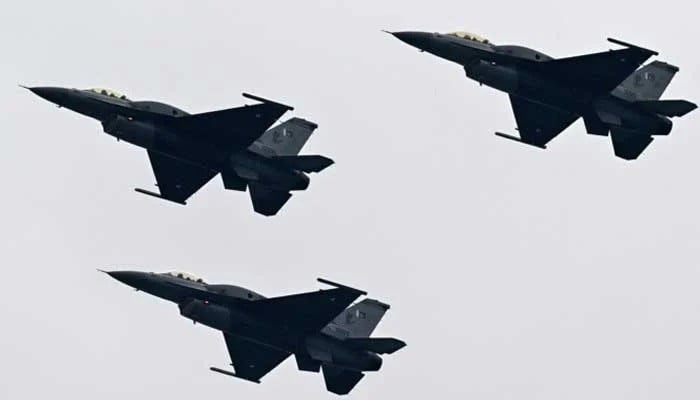
The 72-hour armed conflict named Marka-e-Haq was another finest hour in Pakistan’s history after 6th September 1965, when the entire nation gelled together to defeat the nefarious aims of an aggressor, displaying courage, cohesion and maturity as a proud nation that valued peace but also knew how to defend its sovereignty.
On May 6, under the cover of darkness, India targeted civilian infrastructure in Pakistan at six locations – Ahmedpur Sharqia (Bahawalpur), Muridke, Sialkot, Shakargarh, Muzaffarabad and Kotli, martyring 36 innocent civilians, including men, women and children.
The attacks were launched by India employing dual-use, nuclear-capable BrahMos cruise missiles in a conventional role – an extremely foolhardy and provocative act for a nuclear state – which indicated Indian hubris and disregard for acceptable norms of human rights as well as the laws of war. This crass irresponsibility as a nuclear state was matched by the sententious rhetoric of the Indian leadership, trying to justify the unjustifiable. The most egregious Indian mistake was crossing the Rubicon of deterrence stability, introducing dangerous instability into the subcontinental nuclear equilibrium.
By firing nuclear-capable cruise missiles across the international border, India had cocked a snook at Pakistan’s nuclear deterrence. Nuclear scholars like Bernard Brodie and Thomas Schelling have highlighted the need to make nuclear deterrence credible by convincing the adversary that nuclear weapons would be used if deterrence were ever breached. In fact, another nuclear commentator, Martin Van Creveld, had categorically stated that “nuclear strategy is no strategy but pure deterrence”. Had Pakistan not responded effectively, Indian hubris might have expanded the conflict further.
Unfortunately, India has not yet learned from its humiliation in Marka-e-Haq and is busy reorganising its armed forces for ground incursions through terrain-optimised and mission-specific, combined-arms, brigade-sized groups like Rudra brigades, Bhairav light commando battalions, Shaktiban artillery regiments, Ashni drone platoons and Akash Prime air defence regiments, employing the ‘Cold Strike’ concept aimed at shallow territorial incursions to create a semblance of victory.
The casus belli for the Indian attacks on the night of May 6 was the alleged Indian false flag operation at Pahalgam, a tourist resort in Indian Illegally Occupied Jammu and Kashmir (IIOJK), where 26 tourists were gunned down by unnamed militants.
The objective of the Indian false flag operation and concomitant aggression against Pakistan was to project Pakistan as a terror-sponsoring state and to impose a war to browbeat Pakistan into making concessions at the negotiating table. The aggression was also meant to act as a shot in the arm for Prime Minister Modi’s electoral prospects ahead of the important state elections in Bihar.
India’s violation of international law by unilaterally suspending the Indus Waters Treaty (IWT) was also a hidden motive, put into practice on April 23, following the false flag operation at Pahalgam on April 21, 2025.
The Indians, however, received a shock of their lives when Pakistan responded vigorously through air and ground retaliation. The crowning glory of Pakistan’s response was the downing of seven high-performance Rafale jets on May 7. The shocked Indian armed forces resorted to attacks using loitering munitions, targeting Pakistan indiscriminately, and on May 9, launched another wave of cruise missiles and drone strikes against the Nur Khan, Shorkot, Bholari, Jacobabad and Rafiqui airbases of Pakistan. Pakistan responded effectively, destroying 84 drones and disabling or misdirecting several missiles.
The main Pakistani response came on May 10 in the form of Operation Bunyanum Marsoos, during which 26 targets were attacked in IIOJK as well as mainland India, including Uri, KG Top, Nowshera Brigade Headquarters, and air/military bases at Halwara, Sirsa, Ambala, Jammu, Mamun, Naliya, Kandla, Bhuj, Swatragh, Poonch, and Rajauri, killing 50 Indian troops on the LoC alone.
The PAF destroyed several much-vaunted Indian S-400 missile systems, exposing gaps in Indian air defence. Having suffered grievous losses and an economic haemorrhage to the tune of $84 billion, the harried Indian leadership requested US mediation to end the conflict. The conflict resulted in an embarrassing defeat of Indian politico-military aims, alongside reputational damage after being dubbed an irresponsible nuclear state.
Pakistan has emerged as the undisputed winner in Marka-e-Haq, having effectively thwarted India’s war aim of pressurising Pakistan through accusations of terrorism and military coercion to extract concessions at the negotiating table under the overhang of international mediation. The military objective derived from this political aim was to attack alleged militant camps in Pakistan and inflict a crippling blow to Pakistan’s military and economic potential in order to weaken its resolve to stand up to Indian pressure.
Pakistan’s patient and responsible self-defence response, remaining within international law, earned it international goodwill and support. Its potent yet measured retaliation through Fateh I & II guided rocket artillery restored the balance of nuclear deterrence and forced India to rethink its war aims and ultimately acquiesce to US-mediated ceasefire efforts. The shift in Indian posture was a consequence of Pakistan’s effective conventional military response as well as its diplomatic and media strategy.
Marka-e-Haq, indubitably, is a watershed moment in the history of Indo-Pak conflicts, where a determined nation, courageous leadership and a better-trained and more motivated military leveraged technology-enabled network-centric warfare to defeat a much larger, yet poorly networked and platform-centric, Indian military. Pakistan emerged successful on multiple fronts – diplomatic, epistemic and military – to stand up to aggression and deliver a decisive response on the battlefield.
The strategic and diplomatic dividends of the Pakistani response, whose apotheosis was Operation Bunyanum Marsoos on May 10, are being realised in the form of enhanced international stature and increased clout as a ‘security stabiliser’ in the region.
The writer is a security and defence analyst. He can be reached at: [email protected]
Disclaimer: The viewpoints expressed in this piece are the writer’s own and don’t necessarily reflect Geo.tv’s editorial policy.
- Committee to review cases, submit report.
- PM approval awaited for compensation plan.
- Authorities have been told to halt action.
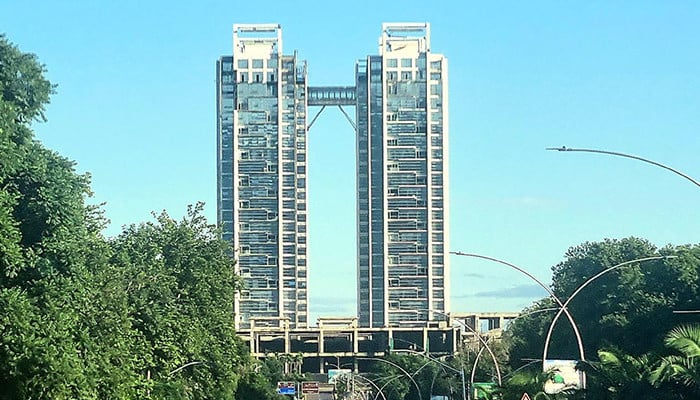
ISLAMABAD: The federal government has decided in principle to compensate apartment owners of One Constitution Avenue by paying them their original purchase prices, with a formal announcement expected after approval from Prime Minister Shehbaz Sharif.
A high-level committee, constituted by the prime minister, has begun work to examine the legal and administrative aspects of the high-profile controversy, according to an official notification issued by the Cabinet Division. The committee is headed by Law Minister Azam Nazeer Tarar and includes Minister of State for Interior Talal Chaudhry, along with the secretaries of the Cabinet Division and Commerce Division.
The committee has been tasked with reviewing all related cases, listening to affected apartment owners and proposing a balanced course of action to address grievances while ensuring compliance with the court orders. It is scheduled to submit its report to the prime minister by May 8.
Until a final decision is taken, authorities including the Capital Development Authority (CDA), police and district administration have been directed not to take any action against residents.
The issue stems from a long-standing dispute over the project. In 2005, the CDA allotted 13.5 acres of land to a private developer for construction of a five-star hotel. The company secured the lease for Rs4.8 billion and was granted possession after making an initial 15 per cent payment. However, it subsequently defaulted on payments, leading to prolonged rescheduling and litigation.
In 2019, the Supreme Court of Pakistan ordered the developer to pay Rs17.5 billion to restore the lease. The company has so far paid only Rs2.9 billion and remains in default of approximately Rs14.5 billion, resulting in cancellation of the lease in 2023.
Authorities also noted that in violation of the original agreement, the developer constructed 263 residential apartments on the site. Despite public notices warning buyers of the project’s disputed status, transactions continued.
Currently, only 69 of the 263 apartments are occupied, while the majority remain in the hands of investors. Of the occupied units, officials say only a small proportion are used for permanent residence, with many being rented out on a short-term basis.
Following directions from the Islamabad High Court, the CDA officials, accompanied by police, recently issued seven-day eviction notices to occupants in line with the court orders.
Despite earlier warnings, the government has now moved towards compensating affected buyers, signalling a conciliatory approach aimed at resolving the prolonged dispute.
Originally published in The News
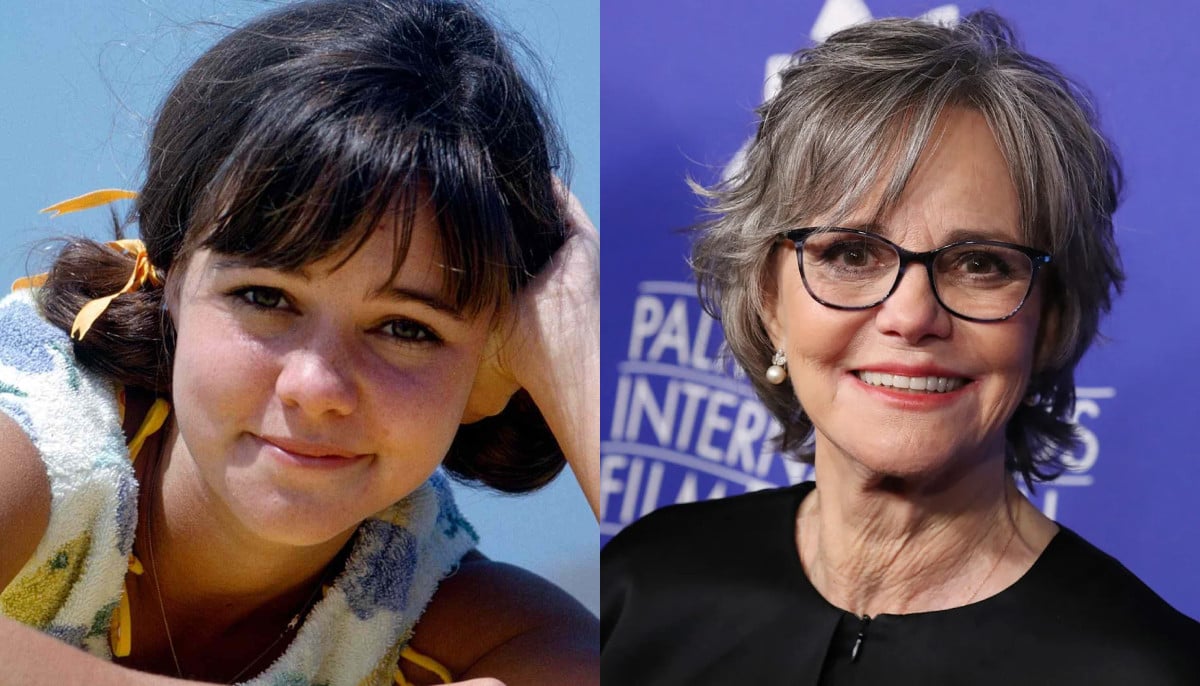
Sally Field has admitted that winning her first Best Actress Oscar was “almost too much” to process, leaving her feeling completely numb on the night.
Reflecting on the 1980 Academy Awards in a recent interview with Parade, the 79-year-old screen legend explained that the sheer scale of that year was difficult to calculate.
After a career-defining performance in Norma Rae, Field had already picked up numerous trophies, but by the time she reached the Oscars ceremony, the gravity of the moment and the transition from television star to critical darling had left her unable to feel anything.
The path to that first gold statuette was famously difficult for Field, who fought an uphill battle to be taken seriously as a film actress.
She recalled working incredibly hard to move beyond her television roots, noting that industry figures often refused to even let her into a room to audition.
She credited the 1976 miniseries Sybil as the start of her transition, but it was her role as a Southern textile worker in Norma Rae that truly broke the mould.
Despite the success, Field admitted she was never quite comfortable with the “glam stuff” that came with being a Hollywood frontrunner.
The 1980 ceremony itself was a much more low-key affair for Field than modern red carpets might suggest.
She remembered going to get her hair done but doing her own makeup, as was common practice at the time.
Her outfit was designed by the legendary Bob Mackie, who created a white strapless dress paired with a sheer floral cover.
Field jokingly recalled asking if she could have a “princess dress,” only for Mackie to suggest she wasn’t really that fancy, leading her to settle for the “little white suit” he had envisioned.
While that night in 1980 was a blur of numbness, Field’s second Best Actress win for Places in the Heart five years later was a completely different experience.
She famously used her 1985 acceptance speech to contrast the two moments, telling the audience that she didn’t feel it the first time, but she certainly did then.
It was during that second trip to the podium that she delivered the iconic line, “I can’t deny the fact that you like me, right now, you like me!”, finally embracing the professional validation that had felt so overwhelming half a decade earlier.

Jelly Roll has been bursting with pride after his 17-year-old daughter Bailee Ann was crowned prom queen, and the whole family dressed up to mark the occasion.
The singer, 41, shared a photo of Bailee on his Instagram Stories on 2 May, writing simply: “My little angel is the Prom Queen.”
In the snap, Bailee beamed in a glittering emerald gown, complete with a bedazzled crown and two sashes marking her win for the night.
Bailee herself was equally stunned by the honour, posting on her own Instagram Stories: “Omg I cannot believe I won prom queen!!!”
The family went all in on the evening.
Jelly Roll and his wife Bunnie XO joined Bailee in getting dressed up for the occasion, with a joint video posted on 3 May showing before and after clips of their prom transformation.
Bunnie wore a floral gown, while Jelly Roll kept things sleek in an all-black outfit.
It is a joyful moment for a family that is also looking ahead to a significant new chapter.
Bunnie, 46, real name Alisa DeFord, recently revealed in her memoir Stripped Down: Unfiltered and Unapologetic that she and Jelly Roll are working towards having children together via surrogacy and IVF.
Jelly Roll is also dad to nine-year-old son Noah Buddy from a previous relationship.


Govt to compensate One Constitution Avenue apartment owners at price originally paid

Frasers Group acquires two major UK designer outlets

Iran warns of ceasefire violation as US plans to escort Hormuz ships

-

 Tech7 days ago
A Brain Implant for Depression Is About to Be Tested in Humans
-

 Tech1 week ago
Almost 90% of women leave tech industry within 10 years | Computer Weekly
-
 Business1 week ago
Pakistan’s oil market is fuelling the crisis | The Express Tribune
-
 Business6 days ago
‘I had £20,000 stolen and had to fight a 13-month fraud reporting rule to get it back’
-

 Sports6 days ago
Pro wrestling star Steph De Lander reveals how colleague’s advice helped lead her to title triumph at ACW
-

 Entertainment7 days ago
Melania Trump says ABC should ‘take a stand’ on late-night host Kimmel
-

 Tech6 days ago
This Ambitious Laptop Doesn’t Leave Much Room for Your Hands
-

 Entertainment6 days ago
Norway joins Type 26 Frigate Programme to boost NATO naval power