

Tech
The Race to Build the DeepSeek of Europe Is On

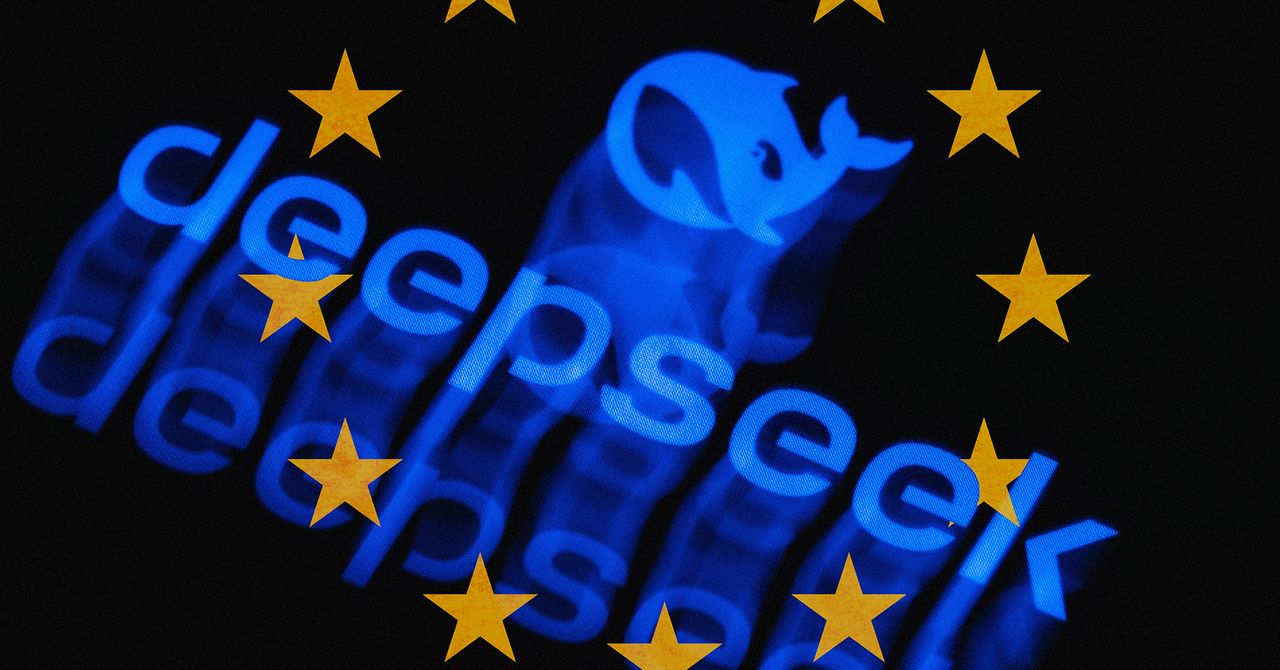
Against that backdrop, Europe’s reliance on American-made AI begins to look more and more like a liability. In a worst case scenario, though experts consider the possibility remote, the US could choose to withhold access to AI services and crucial digital infrastructure. More plausibly, the Trump administration could use Europe’s dependence as leverage as the two sides continue to iron out a trade deal. “That dependency is a liability in any negotiation—and we are going to be negotiating increasingly with the US,” says Taddeo.
The European Commission, White House, and UK Department for Science, Innovation and Technology did not respond to requests for comment.
To hedge against those risks, European nations have attempted to bring the production of AI onshore, through funding programs, targeted deregulation, and partnerships with academic institutions. Some efforts have focused on building competitive large language models for native European languages, like Apertus and GPT-NL.
For as long as ChatGPT or Claude continues to outperform Europe-made chatbots, though, America’s lead in AI will only grow. “These domains are very often winner-takes-all. When you have a very good platform, everybody goes there,” says Nejdl. “Not being able to produce state-of-the-art technology in this field means you will not catch up. You will always just feed the bigger players with your input, so they will get even better and you will be more behind.”
Mind the Gap
It is unclear precisely how far the UK or EU intends to take the push for “digital sovereignty,” lobbyists claim. Does sovereignty require total self-sufficiency across the sprawling AI supply chain, or only an improved capability in a narrow set of disciplines? Does it demand the exclusion of US-based providers, or only the availability of domestic alternatives? “It’s quite vague,” says Boniface de Champris, senior policy manager at the Computer & Communications Industry Association, a membership organization for technology companies. “It seems to be more of a narrative at this stage.”
Neither is there broad agreement as to which policy levers to pull to create the conditions for Europe to become self-sufficient. Some European suppliers advocate for a strategy whereby European businesses would be required, or at least incentivized, to buy from homegrown AI firms—similar to China’s reported approach to its domestic processor market. Unlike grants and subsidies, such an approach would help to seed demand, argues Ying Cao, CTO at Magics Technologies, a Belgium-based outfit developing AI-specific processors for use in space. “That’s more important than simply access to capital,” says Cao. “The most important thing is that you can sell your products.” But those who advocate for open markets and deregulation claim that trying to cut out US-based AI companies risks putting domestic businesses at a disadvantage to global peers, left to choose whichever AI products suit them best. “From our perspective, sovereignty means having choice,” says de Champris.
But for all the disagreement over policy minutiae, there is a broad belief that bridging the performance gap to the American leaders remains eminently possible for even budget- and resource-constrained labs, as DeepSeek illustrated. “If I would already think we will not catch up, I would not [try],” says Nejdl. SOOFI, the open source model development project in which Nejdl is involved, intends to put out a competitive general purpose language model with roughly 100 billion parameters within the next year.
“Progress in this field will not to the larger part depend anymore on the biggest GPU clusters,” claims Nejdl. “We will be the European DeepSeek.”










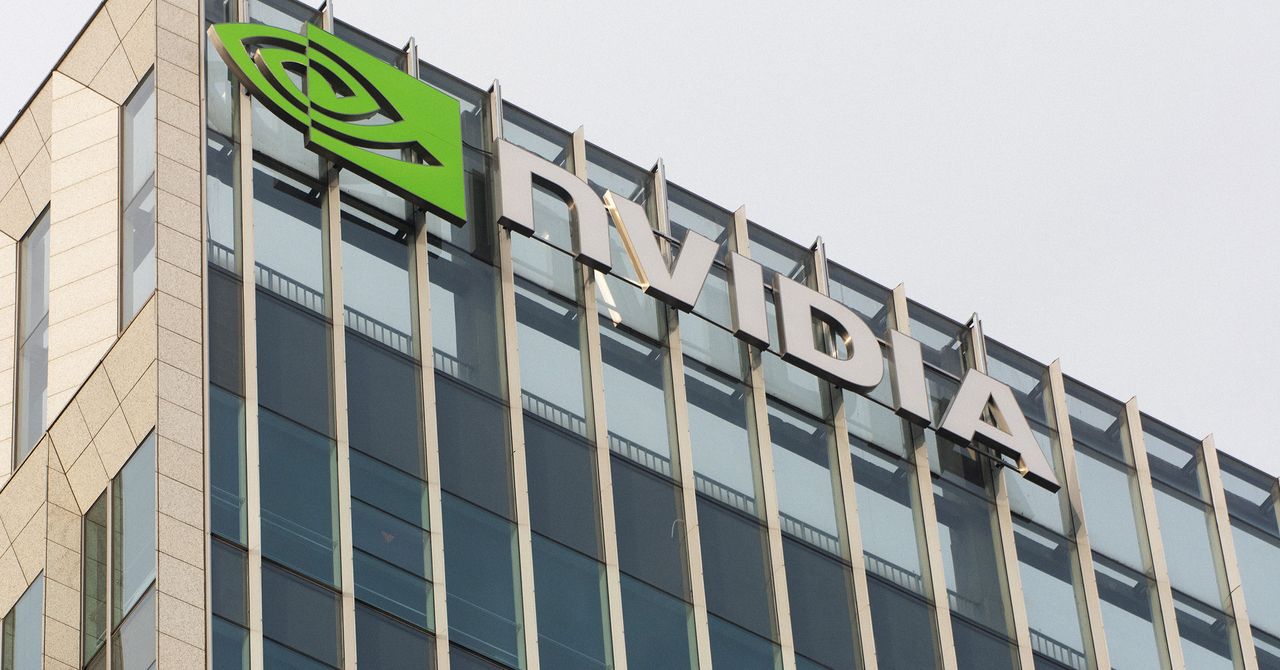
Nvidia is planning to launch an open-source platform for AI agents, people familiar with the company’s plans tell WIRED.
The chipmaker has been pitching the product, referred to as NemoClaw, to enterprise software companies. The platform will allow these companies to dispatch AI agents to perform tasks for their own workforces. Companies will be able to access the platform regardless of whether their products run on Nvidia’s chips, sources say.
The move comes as Nvidia prepares for its annual developer conference in San Jose next week. Ahead of the conference, Nvidia has reached out to companies including Salesforce, Cisco, Google, Adobe, and CrowdStrike to forge partnerships for the agent platform. It’s unclear whether these conversations have resulted in official partnerships. Since the platform is open source, it’s likely that partners would get free, early access in exchange for contributing to the project, sources say. Nvidia plans to offer security and privacy tools as part of this new open-source agent platform.
Nvidia did not respond to a request for comment. Representatives from Cisco, Google, Adobe, and CrowdStrike also did not respond to requests for comment. Salesforce did not provide a statement prior to publication.
Nvidia’s interest in agents comes as people are embracing “claws,” or open-source AI tools that run locally on a user’s machine and perform sequential tasks. Claws are often described as self-learning, in that they’re supposed to automatically improve over time. Earlier this year, an AI agent known as OpenClaw—which was first called Clawdbot, then Moltbot—captivated Silicon Valley due to its ability to run autonomously on personal computers and complete work tasks for users. OpenAI ended up acquiring the project and hiring the creator behind it.
OpenAI and Anthropic have made significant improvements in model reliability in recent years, but their chatbots still require hand-holding. Purpose-built AI agents or claws, on the other hand, are designed to execute multiple steps without as much human supervision.
The usage of claws within enterprise environments is controversial. WIRED previously reported that some tech companies, including Meta, have asked employees to refrain from using OpenClaw on their work computers, due to the unpredictability of the agents and potential security risks. Last month a Meta employee who oversees safety and alignment for the company’s AI lab publicly shared a story about an AI agent going rogue on her machine and mass deleting her emails.
For Nvidia, NemoClaw appears to be part of an effort to court enterprise software companies by offering additional layers of security for AI agents. It’s also another step in the company’s embrace of open-source AI models, part of a broader strategy to maintain its dominance in AI infrastructure at a time when leading AI labs are building their own custom chips. Nvidia’s software strategy until now has been heavily reliant on its CUDA platform, a famously proprietary system that locks developers into building software for Nvidia’s GPUs and has created a crucial “moat” for the company.
Last month The Wall Street Journal reported that Nvidia also plans to reveal a new chip system for inference computing at its developer conference. The system will incorporate a chip designed by the startup Groq, which Nvidia entered into a multibillion-dollar licensing agreement with late last year.
Paresh Dave and Maxwell Zeff contributed to this report.

Anthropic executives allege that current customers and prospective ones have been demanding new terms and even backing out of negotiations since the US Department of Defense labeled the AI startup a supply-chain risk late last month, according to court papers that also revealed new financial details about the company.
Hundreds of millions of dollars in expected revenue this year from work tied to the Pentagon is already at risk for Anthropic, the company’s chief financial officer, Krishna Rao, wrote in a court filing on Monday. But if the government has its way and pressures a broad range of companies from doing business with the AI startup, regardless of any ties to the military, Anthropic could ultimately lose billions of dollars in sales, he stated. Its all-time sales, since commercializing its technology in 2023, exceed $5 billion, according to Rao.
Anthropic’s revenue exploded as its Claude models began outperforming rivals and showing advanced capabilities in areas such as generating software code. But the company spends heavily on computing infrastructure and remains deeply unprofitable. Rao specified that Anthropic has spent over $10 billion to train and deploy its models.
Anthropic chief commercial officer Paul Smith provided several examples of partners who have privately raised concerns to the AI startup in recent days. He said a financial services customer paused negotiations over a $15 million deal because of the supply-chain label, and two leading financial services companies have refused to close deals valued together at $80 million unless they gain the right to unilaterally cancel their contracts for any reason. A grocery store chain canceled a sales meeting, citing the supply-chain-risk designation, Smith added.
“All have taken steps that reflect deep distrust and a growing fear of associating with Anthropic,” Smith wrote.
The executives’ comments are part of statements from six Anthropic leaders in support of a preliminary order that would allow the San Francisco company to continue doing business with the Department of Defense until lawsuits about the supply-chain-risk issue are resolved.
Anthropic has sued the Trump administration in two courts. A lawsuit filed in San Francisco federal court on Monday alleges the government violated the company’s free speech rights. A separate case filed Monday in the federal appeals court in Washington, DC, accuses the Defense Department of unfairly discriminating and retaliating against Anthropic.
The company is seeking a hearing as soon as Friday in San Francisco for a temporary reprieve. The legal battle and sales fallout follows a weeks-long dispute between Anthropic and the Pentagon over the potential use of AI technologies for mass domestic surveillance and autonomous lethal weapons. Anthropic contends AI is not yet capable of safely undertaking the tasks, while the Pentagon wants the right to make that judgment on its own.
By law, the supply-chain designation prevents a narrow set of companies that do business with the Pentagon from incorporating Anthropic into their systems. But Defense secretary Pete Hegseth has cast a wider net. He posted on X late last month that “effective immediately, no contractor, supplier, or partner that does business with the United States military may conduct any commercial activity with Anthropic.”
Rao wrote that the Pentagon reinforced the message by reaching out to several startups about their use of Claude, which he said he learned had happened from speaking with an investor that Anthropic and the smaller companies all share. They “have grown worried and uncertain about their ability to use Claude,” Rao wrote.
The Pentagon declined to comment on the lawsuits and did not immediately respond to a request for comment about Rao’s allegation about the outreach.
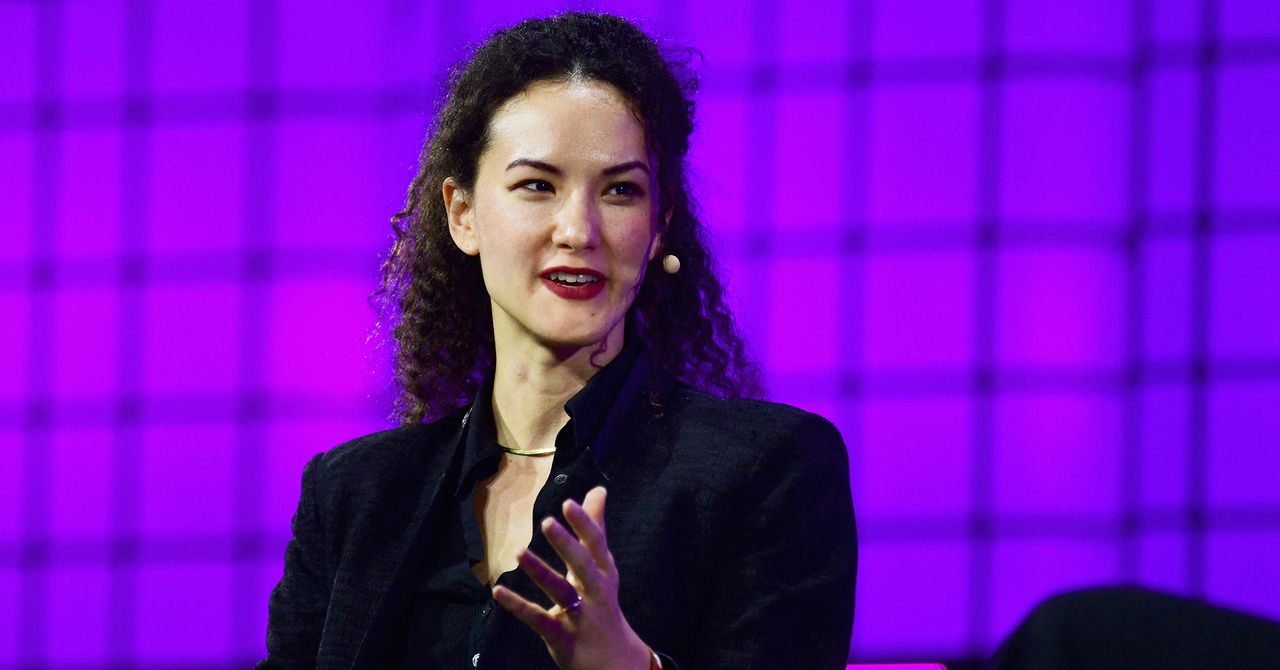
Jay Graber is stepping down as head of Bluesky, the social media platform exclusively announced to WIRED. Venture capitalist Toni Schneider will be the interim CEO until a permanent replacement is found.
“As Bluesky matures, the company needs a seasoned operator focused on scaling and execution, while I return to what I do best: building new things,” Graber wrote in a statement about the personnel change.
Graber joined Bluesky in 2019, when it was a research project within Twitter focused on developing a decentralized framework for the social web. She became the company’s first chief executive officer in 2021, when it spun out into an independent entity. She oversaw the platform’s remarkable rise and the growing pains it experienced as it transformed from a quirky Twitter offshoot to a full-fledged alternative to X.
Schneider tells WIRED that he intends to help Bluesky “become not just the best open social app, but the foundation for a whole new generation of user-owned networks.”
Schneider, who will continue working as a partner at the venture capital firm True Ventures while at Bluesky, was previously CEO of the WordPress parent company, Automattic, from 2006 to 2014. He also served as its CEO again in 2024 while top executive Matt Mullenweg went on a sabbatical. During that time, Schneider met Graber and became an adviser to Bluesky’s leadership. In a blog post announcing his new role, Schneider said he plans to emphasize scaling, describing his job as “to help set up Bluesky’s next phase of growth.”
This isn’t the end for Graber and Bluesky. She will transition to become the company’s chief innovation officer, a role focused on Bluesky’s technology stack rather than its business operations. The position was created for her. Graber, who began her career as a software engineer, has always sounded the most enthusiastic when discussing Bluesky’s technology rather than its revenue streams.
Bluesky’s board of directors will appoint the next permanent CEO. The members include Jabber founder Jeremie Miller, crypto-focused VC Kinjal Shah, TechDirt founder Mike Masnick, and Graber. (Twitter founder Jack Dorsey was originally part of the board but quit in 2024.) This means Graber will have input on her successor. The talent search is still in early stages.
It’s a pivotal moment for Bluesky. The company found success by positioning itself as a progressive replacement for Elon Musk’s X. That helped fuel the platform’s rise as X’s hard-right ideological turn prompted some users to seek new social networks. In 2025, Bluesky grew from 25 million users to over 40 million, according to its annual Transparency Report. Its team is optimistic it can continue expanding while staying true to its roots. Masnick says Schneider’s tenure at Automattic “proves you build a real business around open software.”
As far as social platforms go, though, it’s still a niche offering, and one perpetually subject to pundit-class grumblings about how it’s too woke or not woke enough. (Just last week, in a conversation with WIRED, Dorsey said he wasn’t happy with the platform because of “ideology.”) Meta’s competing app, Threads, has roughly 400 million users, or approximately 10 times more active accounts than Bluesky. Even if it’s not interested in chasing the type of hockey-stick growth traditionally favored in Silicon Valley, the company does need to convince more people and institutions to use its platform if it wants to stake a claim to the role of digital commons.


War, inflation and apparel: What TexPro CPI signals

Who is Ivanna Ortiz? Woman who fired shots at Rihanna Beverly Hills mansion

Sensex, Nifty 50 Stock Market Today Live Updates: Sensex Up 360 Points, Nifty Above 24,100; India VIX Falls Over 15%

-

 Politics3 days ago
India let Iran warship dock the day US sank another off Sri Lanka, say officials
-

 Sports3 days ago
Pakistan set for FIH Pro League debut | The Express Tribune
-

 Entertainment3 days ago
Harry Styles kicks off new era with ‘One Night Only’ comeback show
-
 Business1 week ago
Labour parliamentarians urge UK Government to oppose Rosebank oil field
-
 Business3 days ago
Home heating oil: ‘Most of my pension has gone on home heating oil’
-
 Business3 days ago
Restaurant group changes name after bid to buys pubs across the UK
-

 Tech1 week ago
The 5 Big ‘Known Unknowns’ of Donald Trump’s New War With Iran
-

 Sports1 week ago
USA vs. Argentina (Mar 1, 2026) Live Score – ESPN