

Tech
The vulnerabilities that drive prolonged outages during extreme weather events and how to reduce disruptions


Extreme weather events, such as hurricanes, winter storms, and tornadoes, have become a major cause of large-scale electric power outages in recent years, causing billions of dollars in losses.
In a new study, researchers have analyzed power outage data and corresponding weather records from several major service territories on the East Coast of the United States. They found that excessive weather stress and planning vulnerabilities at specific grid nodes are key drivers of prolonged local outages, which spread to the whole system. The authors use their findings to suggest ways to reduce customer outages.
The study, published in the INFORMS Journal on Data Science, was conducted by researchers at Carnegie Mellon University, Moonshot for Electric Grid, the Georgia Institute of Technology, Argonne National Laboratory, the University of Maryland, and the University of Illinois Urbana-Champaign.
“Resilience—the capability of withstanding, adapting to, and recovering from a large-scale disruption—has become a top priority for the power sector,” explains Shixiang (Woody) Zhu, assistant professor of data analytics at Carnegie Mellon’s Heinz College, who led the study. “But a system-level understanding of power grid resilience remains limited, despite the importance of accurately assessing this capability.”
After extensive losses as a result of extreme weather in the early 2000s, U.S. regulatory entities at different levels asked the industry to investigate the resilience of the power grid and adopt measures against extreme weather. But for a variety of reasons, identifying the key factors that contribute to the massive blackouts has long been a very complicated problem.
In this study, researchers used a spatiotemporal model and adopted a data-driven approach to analyze quarter-hourly, customer-level power outage data and corresponding weather records in Georgia, Massachusetts, North Carolina, and South Carolina.
They defined power grid resilience as infrastructural resistance to extreme weather and operational recoverability from such damages. Their model captures three important factors of infrastructural resistance that are closely tied to large-scale power outages: planning vulnerability, maintenance sufficiency, and criticality.
The researchers’ model suggests that local power outages directly induced by extreme weather were a nonlinear response to the accumulation of weather effects and caused subsequent large-scale and long-term blackouts by spreading failures through some critical nodes in power networks. Simulations showed that targeted interventions, such as isolating critical nodes and protecting vulnerable nodes from transient faults, could reduce customer outages by 45.5% and 49.5%, respectively. Among the study’s additional findings:
- Outage rates in metropolitan or economically strong areas were generally lower due to less vegetation, more underground or steel-structure-supported power lines, and adequate repair resources. Thus, the electricity infrastructures in those areas are less vulnerable to extreme weather events and more recoverable if damage to an infrastructure occurs.
- In contrast, rural areas, especially those with terrains like mountains, forests, rivers, and deserts, were hard to access and locate a fault, which inevitably delayed recovery from outages. Also, those economically weak areas usually lacked the resources to maintain or upgrade their electricity infrastructures, which became increasingly vulnerable to extreme weather events, resulting in relatively high outage rates.
- The direction (from source to target) of the spread of an outage typically followed the direction in which power flowed: An area with large-generation capacity or dense transmission network facilities (e.g., substations) was probably a hub of outage propagation. Such an area was more likely a mid-sized urban area, which could be developed to host several transmission or generation facilities, but was not a big load center that dominantly attracted power flows.
“Our study suggests there are planning and operational measures that can prevent and mitigate weather-induced power outages,” says Feng Qiu from Argonne National Lab, who coauthored the study. “Among these is reducing the interdependency of power grids by improving their operational flexibility and embracing diversified sources with distributed locations and versatile operation schemes.”
Insights such as these, the authors say, can inform strategies for decision makers to enhance grid resilience and reduce the likelihood of future disruptions.
More information:
Shixiang Zhu et al, Quantifying Grid Resilience Against Extreme Weather Using Large-Scale Customer Power Outage Data, INFORMS Journal on Data Science (2025). DOI: 10.1287/ijds.2023.0017
Citation:
The vulnerabilities that drive prolonged outages during extreme weather events and how to reduce disruptions (2025, October 15)
retrieved 15 October 2025
from https://techxplore.com/news/2025-10-vulnerabilities-prolonged-outages-extreme-weather.html
This document is subject to copyright. Apart from any fair dealing for the purpose of private study or research, no
part may be reproduced without the written permission. The content is provided for information purposes only.










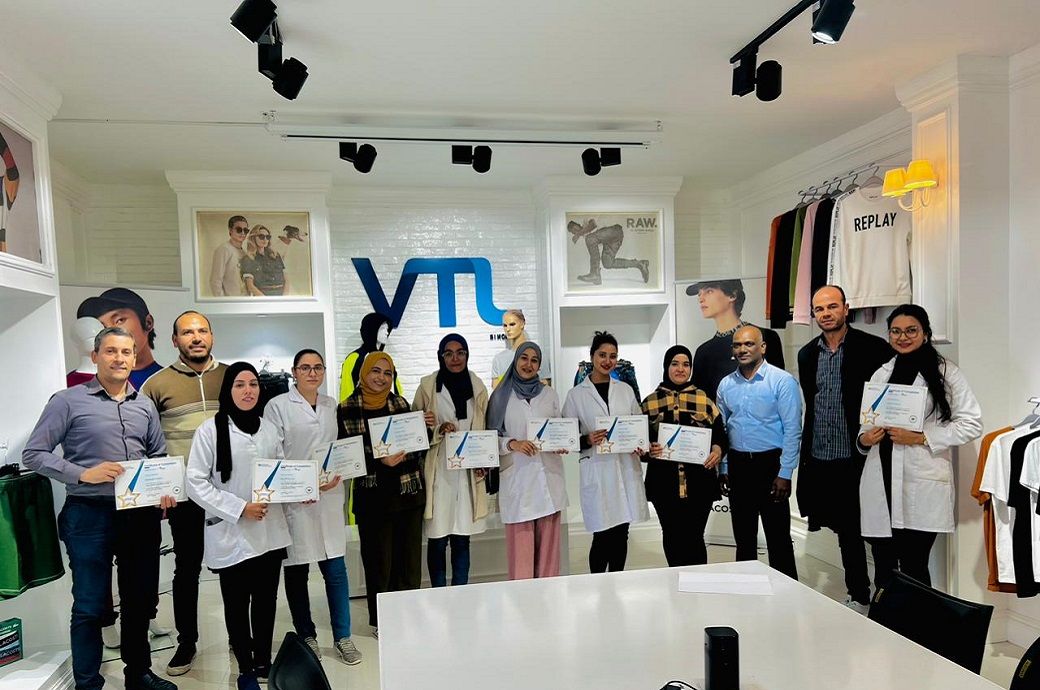
With over 5,000 employees and 3,000 sewing machines across 90 sewing lines, VTL Group specialises in jersey knits and denim, producing up to 20 million garments per year for world-renowned brands such as Lacoste, Adidas, G-Star, Hugo Boss, Replay and Paul & Shark. The company operates six garment production units, along with dedicated facilities for screen printing, knitting, dyeing and textile finishing. This extensive vertical integration gives VTL complete control over quality, lead-times and cost-efficiency, which is vital for meeting the stringent demands of its global customer base.
VTL Group has adopted Coats Digital’s GSDCost to standardise production, boost productivity, and improve pricing accuracy across its Tunisian operations.
The solution cut SMVs by 15–20 per cent, raised line output by 10 per cent, and enhanced planning, cost accuracy, and customer confidence, enabling competitive pricing, lean operations, and stronger relationships with global fashion brands.
Prior to implementing GSDCost, VTL calculated capacity and product pricing using data from internal time catalogues stored in Excel. This approach led to inconsistent and inaccurate cost estimations, causing both lost contracts due to inflated production times and reduced margins from underestimations. In some cases, delays caused by misaligned time predictions resulted in increased transportation costs and operational inefficiencies that impacted customer satisfaction.
Hichem Kordoghli, Plant Manager, VTL Group, said: “Before GSDCost, we struggled with inconsistent operating times that directly impacted our competitiveness. We lost orders when our timings were too high and missed profits when they were too low. GSDCost has transformed the way we approach planning, enabling us to quote confidently with accurate, reliable data. We’ve already seen up to 20% reductions in SMVs, a 10% rise in output, and improved customer confidence. It’s a game-changer for our sales and production teams.”
Since adopting GSDCost across 50 sewing lines, VTL Group has been able to establish a reliable baseline for production planning and line efficiency monitoring. This has led to a more streamlined approach to managing load plans and forecasting. Importantly, GSDCost has given the business the flexibility to align pricing more effectively with actual production realities, contributing to greater customer satisfaction and improved profit margins.
Although it’s too early to determine the exact financial impact, VTL Group has already realised improvements in pricing flexibility and competitiveness thanks to shorter product times and better planning. These gains are seen as instrumental in enabling the company to pursue more strategic orders, reduce wasted effort and overtime, and maintain the high expectations of leading global fashion brands.
Hichem Kordoghli, Plant Manager, VTL Group, added: “GSDCost has empowered our teams with reliable data that has translated directly into real operational benefits. We are seeing more consistent line performance, enhanced planning precision, and greater confidence across departments. These improvements are helping us build stronger relationships with our brand partners, while setting the foundation for sustainable productivity gains in the future.”
The company now plans to expand usage across an additional 30 lines in 2025, supported by a second phase of GSD Practitioner Bootcamp training to strengthen in-house expertise and embed best practices throughout the production environment. A further 10 lines are expected to follow in 2026 as part of VTL’s phased rollout strategy.
Liz Bamford, Customer Success Manager, Coats Digital, commented: “We are proud to support VTL Group in their digital transformation journey. The impressive improvements in planning accuracy, quoting precision, and cross-functional alignment are a testament to their commitment to innovation and excellence. GSDCost is helping VTL set a new benchmark for operational transparency and performance in the region, empowering their teams with the tools needed for long-term success.”
GSDCost, Coats Digital’s method analysis and pre-determined times solution, is widely acknowledged as the de-facto international standard across the sewn products industry. It supports a more collaborative, transparent, and sustainable supply chain in which brands and manufacturers establish and optimise ‘International Standard Time Benchmarks’ using standard motion codes and predetermined times. This shared framework supports accurate cost prediction, fact-based negotiation, and a more efficient garment manufacturing process, while concurrently delivering on CSR commitments.
Key Benefits and ROI for VTL Group
- 15–20% reduction in SMVs across 50 production lines
- 10% productivity increase across key sewing facilities
- More competitive pricing for strategic sales opportunities
- Improved cost accuracy and quotation flexibility
- Standardised time benchmarks for future factory expansion
- Enhanced planning accuracy and load plan management
- Greater alignment with lean and sustainable manufacturing goals
- Increased brand confidence and satisfaction among premium customers
Note: The headline, insights, and image of this press release may have been refined by the Fibre2Fashion staff; the rest of the content remains unchanged.
Fibre2Fashion News Desk (HU)

The US National Security Agency (NSA) has published its latest guidance on zero trust to secure US federal government IT networks and systems. This is the first of two guidance documents coming out of the NSA, providing “practical and actionable” recommendations that can be applied as best practice to secure corporate IT environments both in the public and private sectors.
In the Zero trust primer document, the NSA defines a “zero-trust mindset”, which means assuming IT environment traffic, users, devices and infrastructure may be compromised. To achieve this, the guidance urges IT security teams to establish a rigorous authentication and authorisation process for all access requests.
In the context of securing the integrity of government IT systems, it said that such a strategy enhances the security posture of networks by rigorously validating every access request, which prevents unauthorised changes, reduces risk of malicious code insertion, and ensures the integrity of software and supply chains
The main takeaway from the NSA regarding zero trust is to never trust users or devices that request network connectivity or access to internal resources. The NSA guidance calls for verification without exception, where dynamic authentication and explicit approval is used across all activities on the network, adhering to the principle of least privilege.
Specifically, the NSA’s latest guidance suggests that IT security teams should assume they are working in an IT environment where there is a breach, which means operating and defending resources under the assumption that an adversary already has a presence in the environment.
The NSA said IT security teams should plan for deny-by-default and heavily scrutinise all users, devices, data flows and requests. This means that IT security teams need to log, inspect and monitor all configuration changes, resource accesses and environment traffic for suspicious activity continuously.
The guidance also recommends explicit verification. This implies that access to all resources is consistently verified, using both dynamic and static mechanisms, which is used to derive what the NSA calls “confidence levels for contextual access decisions”.
Commenting on the guidelines, zero-trust expert Brian Soby, CTO and co-founder of AppOmni, said: “Across the guidance, the emphasis is on continuous logging, inspection and monitoring of resource access and configuration change, plus comprehensive visibility across layers.
“Read plainly, the NSA is suggesting that many programs are built around coarse checkpoints and limited signals, while the real risk lives inside enterprise applications, especially SaaS, where sensitive data and business workflows reside.”
Soby’s understanding of the new guidelines is that effective zero trust requires a thorough understanding of what users can and cannot do, instead of simply relying on their ability to authenticate through network directory services and the authorisation that successful authentication gives them.
“Many security programs still substitute directory groups and simplistic roles for true entitlement materiality, even though effective access in modern SaaS is shaped by application-native permissions, sharing rules, delegated administration, conditional controls and third-party OAuth grants.”
He noted that the NSA’s emphasis on monitoring resource access and configuration change implies that relying on coarse identity abstractions leaves IT security teams blind to the actions and permission shifts that create exposure and enable misuse.
“This gap also lines up uncomfortably well with the breaches and campaigns we are seeing now,” he added.
As an example, Soby said that recent intrusions tied to groups tracked as UNC6040 and UNC6395 have highlighted how attackers can bypass traditional, frontdoor-centred controls by abusing SaaS identities and integrations, including compromised OAuth tokens and third-party application access, to reach and extract data from SaaS environments.
“In that light, the NSA’s guidance supports a sharper conclusion: identity security programs that cannot truly understand user activities, behaviours and the materiality of entitlements inside applications do not match the principles of zero trust,” said Soby. “These often become more performative than effective, leaving security operations centre teams stuck with generic signals like logins when the meaningful attacker activity is happening inside the app.”

No matter how my style may change, I always consider Adidas the ultimate shoes for effortlessly cool people. With celebrity endorsements from pro athletes like David Beckham to music icons like Pharrell and Bad Bunny, Adidas has cemented itself firmly in the current zeitgeist. Although most known for classic sneaker styles like Sambas (beloved by skaters and boys I had crushes on in high school), Adidas also has always-stylish apparel, slides, running shoes, and more. WIRED has Adidas promo codes so you too can be cool—but on a budget.
Unlock 15% Adidas Promo Codes With Sign Up
Become a member of the cool kids club with Adidas membership program, adiClub. adiClub gives you free shipping, discount vouchers, and members-only exclusives. When you join, you’ll get instant benefits, points on purchases, and you can get rewards, exclusive experiences, products, vouchers, and more. Right now, when you sign up to be an adiClub member you’ll get a 15% Adidas promo code to save on a fresh pair of sneaks or athleisurewear fit.
There is more than one way to save. You can get 15% off by signing up for adiClub, either with your email, or by downloading the adidas or CONFIRMED app on your phone. After, you’ll find the 15% off welcome offer in your account under “Vouchers and Gift Cards.” Then, you’ll just need to paste it in the promo code step at checkout to save. You’ll instantly get 100 adiClub points, plus an additional 100 when you create a profile. Plus, when you sign up for the brand email newsletter, a unique promo code will be sent to your inbox to use for more savings.
Explore Adidas Coupons and 2026 Sale Deals For 60% Off Trending Shoes
As aforementioned, I think the Samba OG shoes are the most classic style you can get—I mean OG is in the name. The style gives an effortless cool vibe that’s stood the test of time. The classic Samba is now 20% off. Always-popular Campus 00s blend the skater aesthetic with contemporary tastes, making them another modern classic, starting at $66, now 40% off. The Gazelle Bold shoe comes in a bunch of fun colorways, making them a versatile choice for any stylish shoe-wearer, now on sale. Plus, you can get 40% off Handball Spezial shoes (starting at $66) and 30% off the Superstar II shoes (starting at $70).
Some of the best ways to save big are just through navigating the Adidas website—make sure you’re browsing styles under $80, and check the final clearance sale styles for up to 60% off. Plus, there are always discounts on certain colorways or materials of the same type of shoe.
Students, Military Members, and Healthcare Workers Can Unlock 30% Off at Adidas
Adidas doesn’t want your kid going back to school after holiday break with the same ol’ same ol’ and that’s why Adidas student discount gets your kid (or you, lifelong learner) 30% off full-price items with UNiDAYS online and a 15% discount in-store. Join now and verify your status with UNiDAYS. All you’ll need to do is enter the code provided from UNiDAYS during checkout, and you can get discounts of up to $1,000.
Heroic and stylish? That’s hot. The Adidas heroes discount gives thanks by giving verified medical professionals, first responders, nurses, military members, and teachers 30% off online and in-store (and 15% off at factory outlets). To redeem the heroes discount, you must complete verification through ID.me, then you’ll apply your unique discount code that will be sent to your inbox. A fireman in a pair of Sambas? Come rescue me, it’s burning up in here.
Be sure to check back regularly as we check back for more Adidas promo codes and other discounts, especially as the holiday (and shopping) season approaches oh-too-quickly.
Adidas Free Shipping Deals for adiClub and Prime Members
I’ve talked to you about all of the perks adiClub members get, but they also get free standard shipping on every order, which usually ships in 3-5 business days. With the membership, you’ll also get free returns or exchanges on any order!
Plus, if you’re already a Prime member, you’ll get 2-3 day free shipping without needing to join adiClub. Through this, you can conveniently track order in your Amazon Prime account; it will even show your delivery date info once you select your size.
Pay Less Now With These Adidas Financing Options
Adidas makes it easy for anyone to get the gift of great style. Adidas offers Klarna, the financing service on purchases, which allows you to pay later (in 30 days), or in 4 interest-free installments. Plus, with Klarna, you can try your order before you buy it).
There’s also the Afterpay buy option, which allows you to buy shoes now, and pay for them in four payments made every 2 weeks without any interest! This Afterpay option is eligible on any order above $50. If you’d rather pay with PayPal Pay, you can pay in 4 installments (eligible on purchases from $30 to $1,500). You can also pay over 6 weeks, starting with paying for only 25% of your order today, then the rest will be split into 3 additional payments.


Patrick Mahomes says he has to be held back from pushing so hard in injury rehab, shares hopes for Week 1

Budget 2026: Who Delivered The Longest Budget Speech In India?

Saks bonds worth just 1 cent hand hedge funds a painful lesson

-

 Politics1 week ago
UK says provided assistance in US-led tanker seizure
-

 Entertainment1 week ago
Does new US food pyramid put too much steak on your plate?
-

 Entertainment1 week ago
Why did Nick Reiner’s lawyer Alan Jackson withdraw from case?
-

 Sports5 days ago
Clock is ticking for Frank at Spurs, with dwindling evidence he deserves extra time
-
 Business1 week ago
Trump moves to ban home purchases by institutional investors
-

 Sports1 week ago
PGA of America CEO steps down after one year to take care of mother and mother-in-law
-

 Tech4 days ago
New Proposed Legislation Would Let Self-Driving Cars Operate in New York State
-
Sports7 days ago
Commanders go young, promote David Blough to be offensive coordinator