

Entertainment
Thousands of tickets to Taylor Swift and other events illegally resold by broker, FTC alleges


A Maryland ticket broker is accused of illegally purchasing and reselling hundreds of thousands of tickets for profit, including thousands to Taylor Swift’s highly sought Eras Tour.
The Federal Trade Commission is suing Key Investment Group, saying the company made millions of dollars in profit from reselling the tickets at inflated prices.
The lawsuit, filed Monday, Aug. 18, in U.S. District Court in Maryland, accuses the company and its affiliates of bypassing Ticketmaster’s security measures designed to block resellers from violating ticket-purchase limits.
Key Investment Group also did business under the names Epic Seats, TotalTickets.com LLC and Totally Tix LLC, according to the complaint.
The FTC alleges that, in a one year period, the group purchased at least 379,776 tickets from Ticketmaster at a cost of nearly $57 million. The company then allegedly resold those tickets on secondary marketplaces for about $64 million.
In a statement, Key Investment Group said it will “vigorously defend itself against this clear example of regulatory overreach.” It claims the FTC “misleadingly characterizes KIG’s use of standard internet browsers,” and said the government’s case “threatens to dismantle the secondary ticket market for live events.”
Taylor Swift’s Eras Tour tickets
Between March and August of 2023, Key Investment Group allegedly purchased 10 or more tickets to 38 Taylor Swift concerts, totaling 2,280 tickets, according to the complaint. The FTC says the company made more than $1.2 million in profit reselling those tickets.
For just one Taylor Swift show, the defendants allegedly used 49 different accounts to buy 273 tickets. The Eras Tour had a six-ticket purchase limit per customer, per event.
Among other events the FTC alleges were targeted was a 2023 Bruce Springsteen concert in New Jersey. Despite a four-ticket limit, the defendants allegedly purchased and resold more than 1,500 tickets.
How the alleged scheme worked
According to the FTC, the group used thousands of Ticketmaster accounts, both fictitious and third-party accounts it had purchased, to bypass security measures and purchase the tickets.
The company is also accused of using thousands of credit card numbers, including virtual card numbers, spoofing IP addresses to hide the identity of the ticket purchaser, and using SIM technology to collect the incoming verification codes.
In doing so, the FTC said the brokers violated the FTC Act and the Better Online Ticket Sales Act, which prohibits people from “circumventing a security measure, access control system, or other technological control or measure on an internet website or online service that is used by the ticket issuer to enforce posted event ticket limits or to maintain the integrity of posted online ticket purchasing order rules.”












The royal family gathered at Buckingham Palace to mark a historic milestone together in a show of unity in the times of crisis.
King Charles and Queen Camilla were joined by Prince William, Princess Kate and all other senior members of the family. They attended the reception to honour the Queen Elizabeth’s 100th birthday.
However, in a surprise turn of events, Prince Harry had joined the important celebration all the way from across the pond, as he remembered his beloved late grandmother.
Even though the Duke of Sussex remained in Montecito, he quietly sent flowers to St George’s Chapel at Windsor Castle, which is the final resting place for the longest reigning monarch in British royal history, confirmed by Town & Country magazine.
Elizabeth II was laid to rest in September 2022. The late Queen is buried in the King George VI Memorial Chapel alongside her parents, King George VI and Queen Elizabeth, the Queen Mother; her husband, Prince Philip; and her sister, Princess Margaret.
The news comes after King Charles’s office shared the highlights from the reception where they welcomed “representatives of The late Queen’s former charities and patronages, as well as some very special centenarians, who are celebrating their 100th birthday” on Tuesday.
Even though there had been talks about a possible reconcilation between King Charles and his younger son, the situation appears to be at a pause given the turbulent times the royals have faced recently.
There are quiet debates and discussion being held at the Palace on the matter, according to royal sources, although it remains to be seen how things pan out.
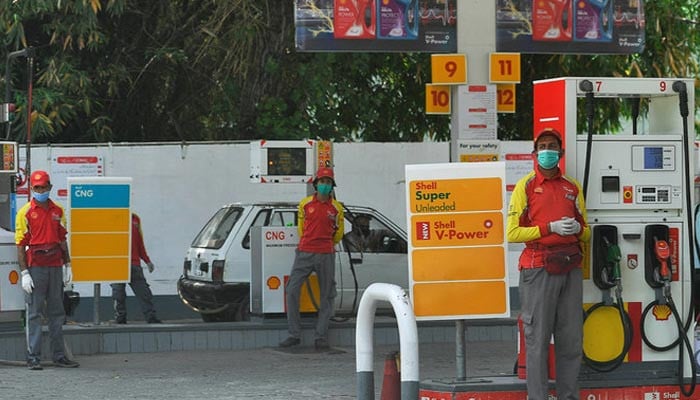
Pakistan’s fuel crisis is often framed as global oil prices and question of subsidies, but in reality it is more consequential as a question of strategic foresight, structure fragility and weak statecraft. This results in domestic inflation, external deficits, currency depreciation and social stress with almost no absorption capacity.
Earlier this month, in a single adjustment cycle, the petrol hit Rs450 and diesel Rs500 per litre, headlines blamed Middle East crisis, but in reality, it is a predictable consequence of deferred investment, policy fragmentation, and institutional inertia.
Pakistan consumes approximately 500,000 barrels of oil per day whereas the country’s domestic production is around 70,000 to 80,000. We import 20% crude oil and 80% refined oil, and that 80% of supply depends on imports denominated in US dollars. And whenever rupee depreciation even slightly, this translates directly into additional costs of billions of dollars.
Earlier when crude prices went up above $110 per barrel, the effect was predictable and compounded, and resulted in 40% to 50% single-cycle domestic price increase. Although, unprecedented but it is the eventual outcome of a system incapable of absorbing shocks, reflecting weak governance, underutilised infrastructure, therefore, fiscal designs consider energy as an instrument for revenue rather than a strategic asset.
Scale always strengthens the resilience as India processes 5.5 million barrels daily across its 23 refineries whereas Chinese exceeds 12 million barrels a day across 30 facilities. The UK is refining 1.1 million barrels daily despite diminishing domestic output. Pakistan operates with five refineries with the capacity of 450,000 barrels combined but refine only 60,000 barrels a day.
In 2007, the government announced an expansion plan to upgrades these refineries and their storage capacity but even after 15 years, it remains largely unimplemented. On papers and meetings in the official circles, there is so much movement but in reality, there has been a minimal progress. Our five refineries (Parco, Cnergyico, NRL, ARL and PRL) do not lack refining capacity but lack modern refining capability, as four out of five refineries are very basic (hydroskimming) with low complexity. Thus structural failure is compounded by investment delays, moreover, these refineries are underutilised because the configurations misalign with domestic petrol and diesel demand.
This underutilisation leads to an import of 80% to 85% refined fuel at a premium cost of $10–15 per barrel, thus, further inflating the annual oil bills to $10–20 billion, with crude alone exceeding $5 billion in peak years. This operational and structural weakness exacerbates macroeconomic stress, thus depleting foreign exchange reserves, worsening the current account deficits and unfortunately due to this, circular debt now running into trillions of rupees. Subsidies briefly soften the crises but defer inevitable corrections, concentrating shocks and compounding fiscal risk.
Then there is so-called petroleum levy (PL), embedded in this dynamic and become a de facto tax collection instrument. For government, it is easy to collect, bypasses provincial revenue sharing, and faces little resistance compared to taxing entrenched interests. Through this levy, government collected Rs1.22 trillion (around $4.7 billion) in FY2024-25. The PL represents 35% to 40% of retail petrol prices.
In current FY2025-26, government has already collected more than Rs1,000 billion through the petroleum levy and will exceed the target in this regard. This is roughly more than 100 billion a month tax collection avenue without any efforts towards documenting and structuring the informal economy.
Ordinary citizens, especially the working and lower middle class are struggling in their daily lives due to this dual burden of energy cost and actual taxation embedded in transport, goods and services. Supervision gaps further corrode prospective revenue, with oil marketing companies occasionally failing to remit full PL collections, while subsidies exceeding Rs100 billion provide insignificant relief.
Pakistan must prioritise building modern, export-oriented oil refineries with strong jet fuel (100,000 bpd) output to offset crude imports into USD-generating export.
As global fuel demand evolves, the aviation fuel remains structurally resilient as there is no medium-term EV kind of threat there. Modern-day oil refinery needs a capital of $5-10 billion and will take 4-5 years’ time for development. Instead of relying on FDI, CPEC or Saudi support (as this has been the case, it’s ideal but has delayed the progress of this initiative for more than two decades).
Under the SIFC, a sovereign-led model finance by provincial participation (an annual five per cent share from their NFC Award), 2% from strategic foreign reserves and 20% allocation of a portion of petroleum levy revenues can anchor this initiative and will be a considerable step towards our sustainability and self-sufficiency in fuel consumption and production. National strategic assets are always developed without reliance on foreign funding or investment. Our nuclear programme is a clear example of this.
This initiative will not only strengthen our foreign exchange reserves and safeguard our energy security, but also help us in transforming from consumption-driven policy to long-term, investment-led national resilience strategy. Pakistan should have prioritised this initiative long before proliferating its domestic market with oil marketing companies.
They are low-barrier capital-flow retail and marketing segments producing visible growth while stagnating the primary resilience – this expanded the consumer access but critically constrained the production capacity and shock absorption.
India set up theJamnagar refinery in 2000 with a 1,000,000 bpd capacity. During Ukraine war it benefited from cheap crude oil from Russia, refined at the Jamnagar refinery and exported refined gasoline and jet fuel to Europe. This initiative under their 1990s economic reforms earned them significant levels of foreign exchange.
For Pakistan, case for structural reform is financially compelling and viable. A greenfield refinery of 200,000 barrels per day, costing $5 billion, this will reduce imports and generate $1.2-1.5 billion in annual savings, recovering investment in six to seven years.
Even a 15% global price drop extends ROI only to eight or nine years; a 20% rupee depreciation raises savings to $1.7 billion, shortening the payback period to five or six years. Sensitivity analysis confirms that investing in resilience is not a luxury but a fiscal and strategic responsibility.
The implications are far-reaching and go beyond energy as highlighted in my previous article regarding reforms in Pakistan Railways. The Railways handles less than 5% of the cargo, over 90% is by road transport. This reliance increases fuel consumption, import bills and economic inefficiency.
Even promising policies of EV electric vehicle adoption remain largely symbolic. Without $1 billion investment in charging infrastructure, grid modernisation and tariff rationalisation, EVs in Pakistan cannot significantly decrease fuel demand.
A synchronised five-year investment package could produce 12% to 15% returns through import substitution and foreign exchange savings, but without systemic alignment, these initiatives remain conjectural.
Pakistan’s frequent fuel crises have similar recurrences – reactive and politically driven energy policy intensifies instability. We are a firefighting nation, addressing symptoms like price adjustments, subsidies and levy collections will never let us focus on the causes.
Decades of deferred investment, governance failures, bureaucratic fragmentation and electoral short-termism for political mileage have left our energy sector far from a platform for progress and development into a cyclical vulnerability.
To get out of this diurnal round we need decisive leadership, must stabilise the Pak rupee, segregate energy policy from political rhetoric, streamline regulatory approvals and fully committed medium-term infrastructure expansion. We can further harmonise Institutional credibility through the SIFC platform together with policy continuity and strategic vision. These are prerequisites for initiating or attracting investment in any sector.
Paying for expensive petrol for our vehicles is not an accident. It is due to a structural inevitability facilitated and coordinated by a system that merges revenue extraction with energy provision. Developed and civilised countries absorb global fuel shocks with their robust governance and infrastructure mechanism. Our system transfers them directly to the citizens. Unless we reform and priorities resilience over relief, every international fuel crisis will translate into domestic hardship on us. Energy reforms are no longer optional but a test of leadership, as they are the only solution to energy sovereignty.
The writer is a political economist, public policy commentator and advocate for principled leadership and regional cooperation across the Muslim world.
Disclaimer: The viewpoints expressed in this piece are the writer’s own and don’t necessarily reflect Geo.tv’s editorial policy.
Originally published in The News

Paris Jackson and Janet Jackson were absent from the Los Angeles premiere of the Michael biopic on Monday, 20 April, as the film’s complicated relationship with key members of the Jackson family played out on the red carpet.
Michael’s siblings Jermaine, La Toya, Marlon and Jackie Jackson were all present at the event, as was Paris’s brother Prince, 29.
The film, which hits cinemas on 24 April, charts the early career of the late King of Pop and stars Jermaine’s son Jaafar Jackson, 29, as Michael, who died in 2009 at the age of 50.
Paris, 28, has been open about her objections to the project since last year. She read an early draft of the script and shared her concerns about its accuracy, but when those weren’t addressed she walked away.
“Not my monkeys not my circus. God bless and god speed,” she wrote on Instagram Stories in September 2025.
She described the finished film as “sugarcoated” and accused it of containing “a lot of inaccuracy and there’s a lot of just full-blown lies,” while acknowledging that a certain section of her father’s fanbase would likely be happy with it.
“Go enjoy it. Do whatever. Leave me out of it,” she wrote.
Janet, 59, has not publicly commented on the film and is not a character in it.
According to a Page Six report from last month, she clashed with her family after Jermaine privately screened the film for them, expressing reservations about nearly every aspect of the production.
Jermaine reportedly told his sister she would “miss the wave” if she didn’t get on board.
Those close to Janet have since disputed the feud reports, with her nephew Austin Brown and her longtime creative director Gil Dudulao claiming the accounts were untrue.
Page Six has reported that Jermaine sees the biopic as an opportunity to restore the Jackson family’s reputation following the multiple allegations of child sexual abuse made against Michael both before and after his death, allegations Michael denied throughout his life and that his family continues to reject.
“This isn’t just about Michael. It’s about us. It’s about our legacy. It’s about the comeback in store for all of us,” one relative reportedly said after the private screening.
Michael’s youngest son Bigi, 24, was not at the LA premiere, though he had attended the film’s Berlin premiere earlier this month alongside Prince and several of their uncles.


Transfer rumors, news: Arsenal ramp up interest in Williams

Bangladesh RMG units call for allowing local FOC raw material sourcing
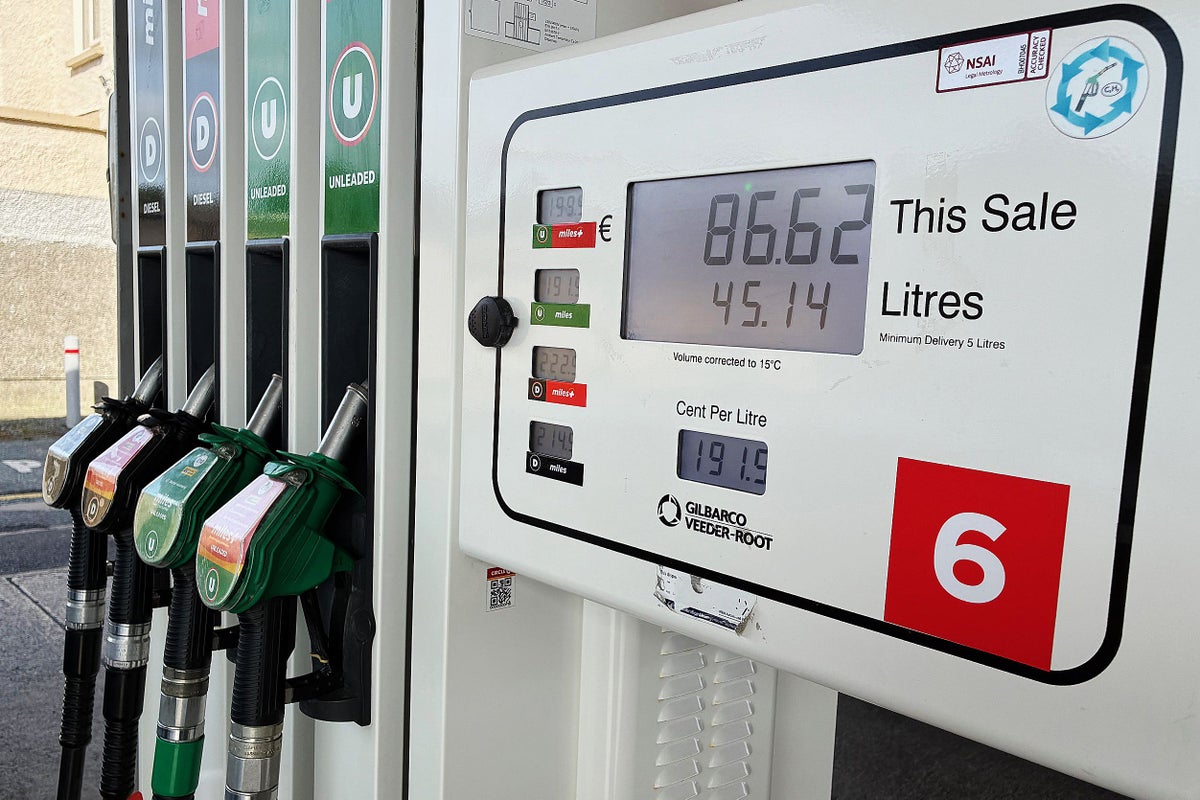
UK inflation accelerates after Iran war drives sharp rise in fuel prices

-

 Fashion6 days ago
France’s LVMH Q1 revenue falls 6%, shows resilience amid Iran war
-

 Sports1 week ago
The case for Man United’s Fernandes as Premier League’s best
-
 Business1 week ago
UK could adopt EU single market rules under new legislation
-

 Entertainment7 days ago
Is Claude down? Here’s why users are seeing errors
-
 Business1 week ago
Delta Air Lines unveils first new Delta One suite in premium cabin arms race
-
 Fashion1 week ago
Asia claims largest share of markets on Kearney FDI Confidence Index
-

 Sports7 days ago
PSL 11: Peshawar Zalmi win toss, opt to field first against Quetta Gladiators
-

 Tech7 days ago
The Deepfake Nudes Crisis in Schools Is Much Worse Than You Thought