

Politics
Three Turkish police officers, six Daesh militants killed in clash, amid national crackdown

- All six militants were Turkish citizens, says minister.
- Turkey arresteded 138 Daesh suspects last month.
- 108 addresses raided across Turkey early on Monday.
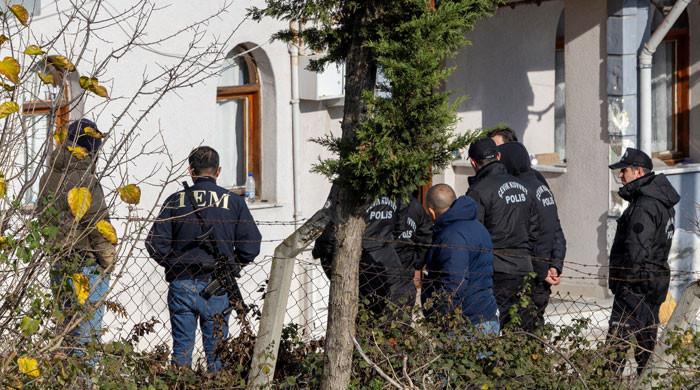
YALOVA: Three Turkish police officers and six Daesh militants were killed in a gunfight in northwest Turkey on Monday, the Interior Minister said, a week after more than 100 suspected Daesh members were detained for planning Christmas and New Year attacks.
Interior Minister Ali Yerlikaya said eight police and another security force member were wounded in a raid on a property in the town of Yalova, on the Sea of Marmara coast south of Istanbul. More than 100 addresses were raided nationwide early on Monday.
Turkey has stepped up operations against suspected Daesh militants this year, as the group returns to prominence globally.
The US carried out a strike against the militants in northwest Nigeria last week, while two gunmen who attacked a Hanukkah event at Sydney’s Bondi Beach this month appeared to be inspired by Daesh, Australian police have said.
On December 19, the US military launched large-scale strikes against dozens of Daesh targets in Syria in retaliation for an attack on American personnel.
Raid lated hours
Police raided the house in Yalova on the suspicion that militants were hiding there overnight. Sporadic gunfire was heard during the operation, which lasted nearly eight hours, according to a Reuters photographer at the scene.
Last week, Turkish police detained 115 suspected Daesh members they said were planning to carry out attacks on Christmas and New Year celebrations in the country.
Yerlikaya told reporters that the militants killed in Monday’s attack were all Turkish citizens, adding that five women and six children were brought out of the property alive.
In the last month, police arrested a total of 138 Daesh suspects and carried out simultaneous operations on Monday morning at 108 different addresses in 15 provinces, he added.
In a post on X, President Tayyip Erdogan offered his condolences to the families of the police officers killed, and said Turkey’s fight with “the bloody-handed villains who threaten the peace of our people and security of our state” will continue “both within our borders and beyond them.”
Wave of Daesh attacks in 2015-17
Police had sealed off the road approaching the house in the early hours and smoke was visible rising from a nearby fire, while a police helicopter flew overhead.
The Istanbul chief prosecutor’s office said last week that Daesh militants were planning attacks against non-Muslims in particular.
Almost a decade ago, the militant group was blamed for a series of attacks on civilian targets in Turkey, including gun attacks on an Istanbul nightclub and the city’s main airport, killing dozens of people.
Turkey was a key transit point for foreign fighters, including those of Daesh, entering and leaving Syria during the war there.
Police have carried out regular operations against the group in subsequent years and there have been few attacks since the wave of violence between 2015-2017.
- Khamenei says US faces disgraceful defeat in its plan.
- Iran to secure Gulf, eliminate “enemy’s abuses”: supreme leader.
- Iranian rial has fallen to historic lows against dollar.
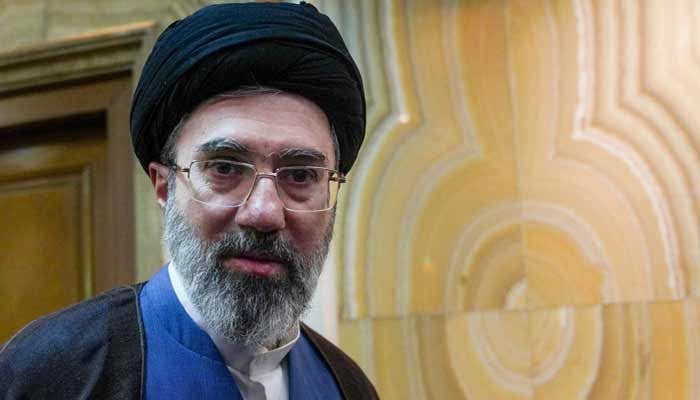
Iran’s new Supreme Leader Mojtaba Khamenei said in a published written message on Thursday that a new chapter for the Gulf and Strait of Hormuz has been taking shape since the Iran war with the United States and Israel broke out on February 28.
Iran’s Supreme Leader said that Tehran would secure the Gulf region and eliminate what he described as “the enemy’s abuses of the waterway.”
The Supreme Leader added that new management of the Strait of Hormuz would bring calm, progress and economic benefits to all Gulf nations.
“Today, two months after the largest military deployment and aggression by the world’s bullies in the region, and the United States’ disgraceful defeat in its plans, a new chapter is unfolding for the Persian Gulf and the Strait of Hormuz,” he said, hailing Iran’s control over shipping in the strait.
Khamenei was wounded in the initial US-Israeli strikes that assassinated his father Ali Khamenei, and has not been seen in public since being named his successor as supreme leader last month.
The United States imposed a blockade on Iran’s ports two weeks ago, while the Islamic republic has maintained its stranglehold over the strategic Strait of Hormuz since the start of the Middle East war in February.
Now, a State Department official told AFP, Washington is seeking to set up an international coalition comprising allied states and shipping firms to coordinate safe passage through Hormuz — while maintaining its own blockade of ships serving Iran.
“Any attempt to impose a maritime blockade or restrictions is contrary to international law… and is doomed to fail,” Iran’s President Masoud Pezeshkian said, in a statement that warned the blockade that began on April 13 would be “a disruption to lasting stability in the Persian Gulf”.
And Iran’s parliament speaker Mohammad Bagher Ghalibaf, who has emerged as an influential figure, said control of Hormuz would allow Tehran to “provide itself and its neighbours with the precious blessing of a future free from American presence and interference”.
‘Choking’
Trump is expected to receive a briefing on Thursday on new plans for potential military action in Iran from Admiral Brad Cooper, the head of US Central Command, two sources with knowledge of US planning told news site Axios.
This week Trump has reportedly told oil executives and national security officials to prepare for a long US blockade designed to force Tehran to surrender its nuclear programme.
US Central Command said on Wednesday in a social media post that it had reached a “significant milestone after successfully redirecting the 42nd commercial vessel attempting to violate the blockade”.
It said there are “41 tankers with 69 million barrels of oil that the Iranian regime can’t sell”, estimating the value at more than $6 billion.
Oil prices struck a four-year high on Thursday. International benchmark Brent crude soared more than 7% to $126 a barrel, but then eased in midday trading in London.
UN chief Antonio Guterres said the closure of Hormuz was “strangling the global economy” and International Energy Agency chief Fatih Birol told a meeting at his Paris headquarters: “The world is facing the biggest energy crisis in history.”
The European Central Bank also warned that the longer the war and high energy prices continue, “the stronger is the likely impact on broader inflation and the economy.”
Trump faces domestic political pressure to end the war, which is unpopular even with much of his base, has increased costs for American consumers and has unnerved US allies.
Iran’s economy is also suffering and the rial has fallen to historic lows against the dollar.
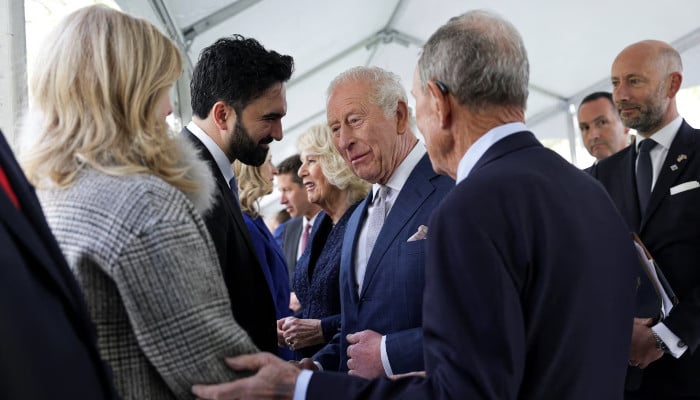
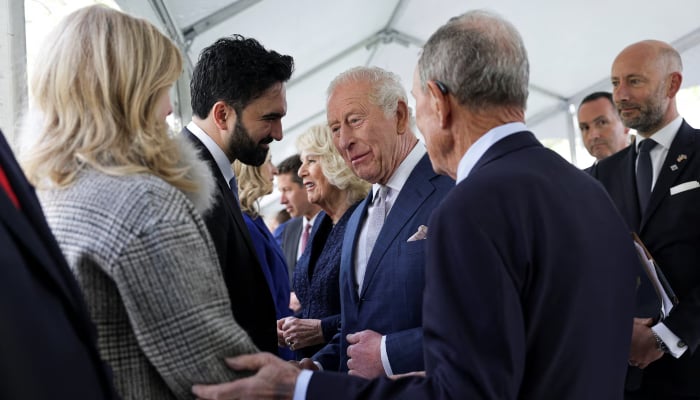
New York City Mayor Zohran Mamdani said on Wednesday he encourages Britain’s King Charles to return the Koh-e-Noor Diamond, with his comments coming during the British monarch’s ongoing US visit.
“If I were to speak to the king separately from that, I would probably encourage him to return the Koh-e-Noor Diamond,” Mamdani, who is Indian American, said when asked at a press conference hours before a ceremony that commemorated victims of the deadly September 11, 2001, attacks.
Later in the day, the king spoke with Mamdani at the ceremony. Buckingham Palace declined to comment. Mamdani’s office did not respond to a request to comment on whether Mamdani brought up the issue with the king.
India has previously repeatedly demanded that Britain return the 105-carat diamond.
Britain’s then colonial governor-general of India arranged for the huge diamond to be presented to Queen Victoria in 1850 after the East India Company had annexed the region of Punjab in 1849 and taken the diamond from a deposed Indian leader.
Charles on Wednesday commemorated victims of the September 11, 2001, attack on New York City, laying a floral bouquet at the memorial where the World Trade Centre’s twin towers once stood.
India received independence from British rule in 1947. The British colonisation of India and the widespread atrocities committed against people during that period remain sensitive issues in the country.
India has previously said the diamond was a “valued piece of art with strong roots in our nation’s history.” The diamond’s possession by the British is seen by many Indians as a symbol of colonial atrocities during British rule.
The diamond has been previously owned by India’s Mughal emperors, shahs of Iran, emirs of Afghanistan, and Sikh maharajas, according to the Historic Royal Palaces charity.
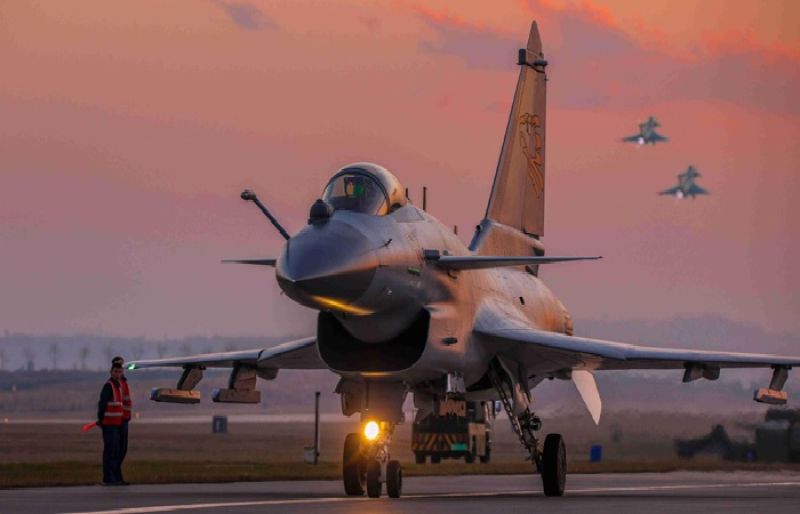
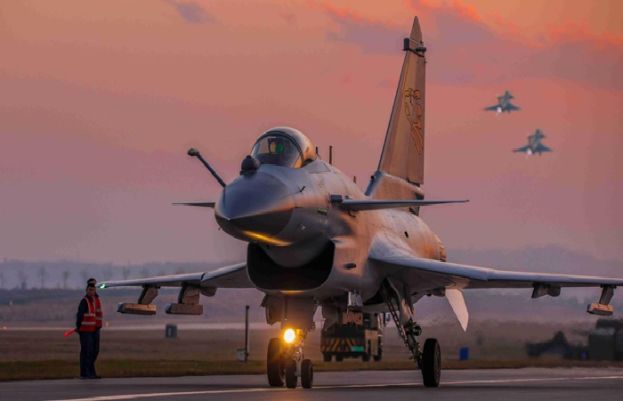
China’s AVIC Chengdu Aircraft Corporation, the maker of J-10C aircraft used by Pakistan to down India’s French-made planes in May last year, has reported a significant surge in profits, according a report by Bloomberg.
Revenue increased by 15.8% to 75.4 billion yuan ($11 billion) in 2025, with profit up 6.5% to 3.4 billion yuan in 2025, the publication cited the jetmaker as saying in a statement.
The numbers are the highest-ever for the company, Bloomberg reported, adding that Chengdu’s first-quarter sales rose almost 80% on year.
The Pakistan Air Force (PAF) inducted J-10C in March 2022, in a major boost to the country’s military capabilities to defend airspace.
At the time, the government said that the fighter jet could carry more advanced, fourth-generation air-to-air missiles, including the short-range PL-10 and the beyond-visual-range PL-15.
The fighter jet saw its first combat use in May 2025 when India launched an unprovoked attack on Pakistan on May 6, following an attack on tourists in the Indian Illegally Occupied Jammu and Kashmir.
Pakistan, during the 87-hour conflict, downed seven Indian fighter jets, including French-made Rafale, and dozens of drones.
The four-day war saw Pakistan successfully employing the Chinese-made HQ-9 air-defence system, PL-15 air-to-air missiles, and J-10C fighter aircraft, credited with downing multiple Indian aircraft.
The PAF also used its JF-17 Thunder jets to destroy India’s S-400 air defence system in Adampur by using hypersonic missiles.
The war between the two nuclear-armed nations ended on May 10 with a ceasefire agreement brokered by the US.
Months after the conflict, Inter-Services Public Relations (ISPR) Director-General (DG) Lieutenant General Ahmed Sharif Chaudhry praised the performance of Chinese-made weapons, saying they performed “exceptionally well. “Of course, lately, recent Chinese platforms, they’ve demonstrated exceptionally well,” Lt Gen Chaudhry said in an interview in October last year.
In November last year, a report presented to the United States Congress acknowledged Pakistan’s “military success over India” in the war.
The US-China Economic and Security Review Commission report — reviewing US-China security and foreign affairs — stated that Pakistan employed advanced Chinese weaponry to enhance its military edge over India.


Markets are underpricing the risk of Middle East pullback in AI, says tech investor Jack Selby

Olivia Rodrigo teases exciting ‘SNL’ double duty episode with one twist

Stock market holiday on May 1: Are NSE, BSE, MCX open on Maharashtra Day? – The Times of India

PSL 11: Hyderabad Kingsmen opt to field after winning toss against Multan Sultans

Trump administration in advanced talks for a rescue package for Spirit Airlines, source says
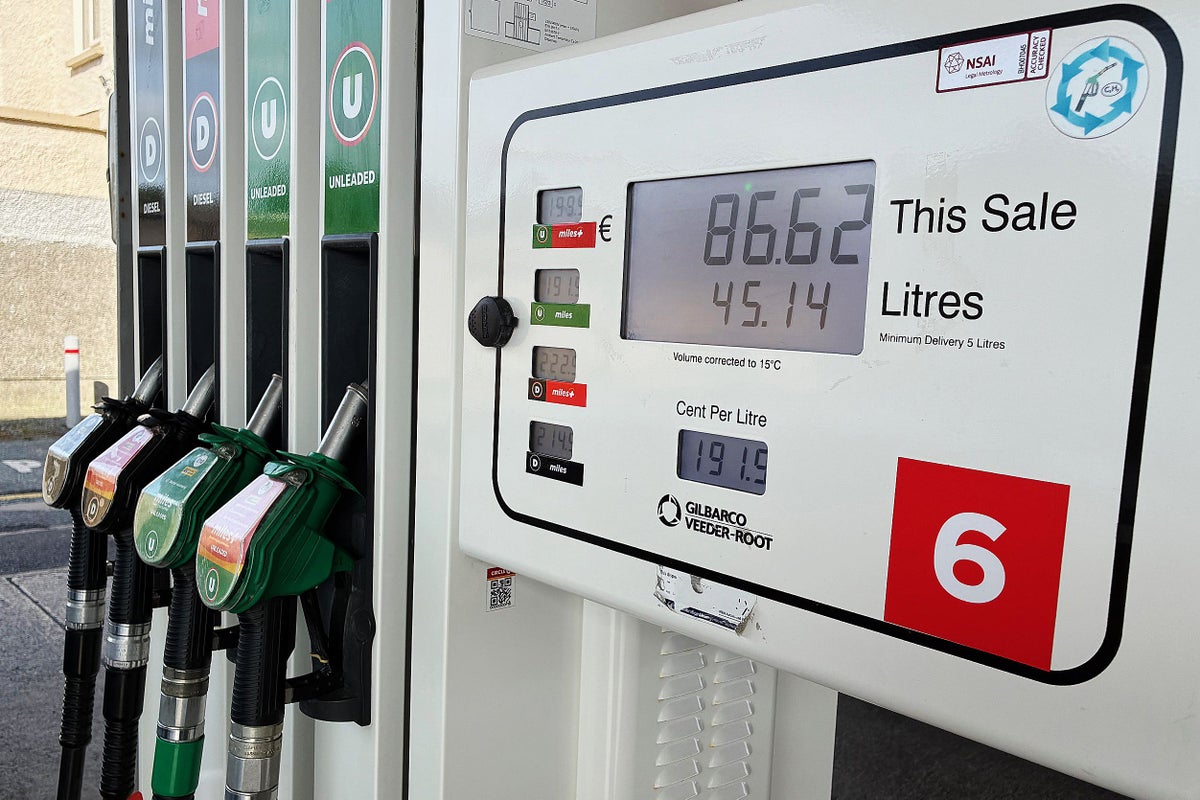
UK inflation accelerates after Iran war drives sharp rise in fuel prices

-
 Sports1 week ago
PSL 11: Hyderabad Kingsmen opt to field after winning toss against Multan Sultans
-
Business1 week ago
Trump administration in advanced talks for a rescue package for Spirit Airlines, source says
-
Business1 week ago
UK inflation accelerates after Iran war drives sharp rise in fuel prices
-

 Tech1 week ago
Microsoft faces court battle in £2bn Windows Server class action | Computer Weekly
-
 Business1 week ago
Gold prices in Pakistan Today – April 23, 2026 | The Express Tribune
-

 Entertainment1 week ago
Anne Hathaway shares major news about ‘Princess Diaries 3’
-

 Tech1 week ago
Blackbox replaces two racks of HPE storage with 8U of Everpure | Computer Weekly
-

 Fashion1 week ago
Bangladesh RMG units call for allowing local FOC raw material sourcing