

Politics
Top US Counterterrorism Official Resigns in Protest, Asserts Iran Posed No Immediate Threat

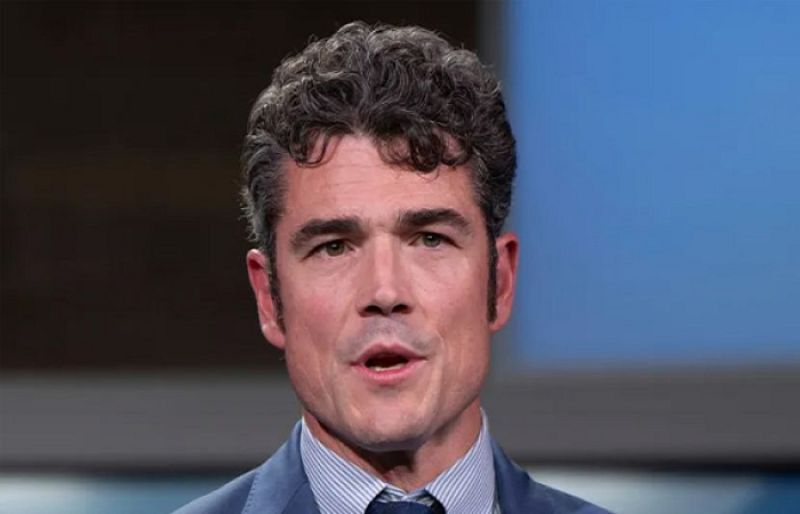

A top security official in U.S. President Donald Trump’s administration resigned over the war in Iran on Tuesday, saying the country had posed no imminent threat to the United States.Joe Kent, who headed the National Counterterrorism Centre, is the first senior official in Trump’s administration to resign over the conflict, now in its third week.
“I cannot in good conscience support the ongoing war in Iran. Iran posed no imminent threat to our nation, and it is clear that we started this war due to pressure from Israel and its powerful lobby,” Kent wrote in a letter posted to social media.
Some experts have said an imminent threat would be required for the United States to launch a war under the international law of war.
Kent and the White House did not immediately respond to requests for comment.
The Office of the Director of National Intelligence, which oversees the counterterrorism centre, also did not immediately respond.
KENT KNOWN FOR OPPOSING MILITARY INTERVENTIONS
Kent has long been known for his “America First” beliefs and has said he opposes U.S. military interventions abroad.
Still, the announcement came as a surprise, one U.S. official said.
Kent is close with Director of National Intelligence Tulsi Gabbard, who has kept a low profile since the Iran war began.
Gabbard has not issued any public statements and has only appeared in public during the dignified transfer of American soldiers killed earlier this month during the conflict with Iran.
The National Intelligence Council, which is overseen by Gabbard’s office, issued several assessments both before and after the U.S. strikes began that highlighted the risks of U.S. intervention.
Those reports indicated the Iranian government was unlikely to collapse and Iran would likely retaliate against U.S. outposts in the region and Gulf allies, as Reuters previously reported.
Kent has been criticised by Democrats for his associations with far-right figures, and Senator Mark Warner of Virginia, the top Democrat on the Intelligence Committee, said he should never have been confirmed to head the counterterrorism office.
“But on this point, he is right: There was no credible evidence of an imminent threat from Iran that would justify rushing the United States into another war of choice,” Warner said in a statement.
Last year, Kent pushed intelligence analysts, opens new tab to rework an assessment on Tren De Aragua, a Venezuelan gang, that did not support the White House’s argument that Venezuelan President Nicolas Maduro was directing its operations. The administration had portrayed the gang as a security threat to justify its immigration crackdown.
- Ceasefire will remain effective from May 9 to 11.
- Swap of 1000 prisoners part of ceasefire: Trump.
- Trump appreciates Putin, Zelensky over agreement.
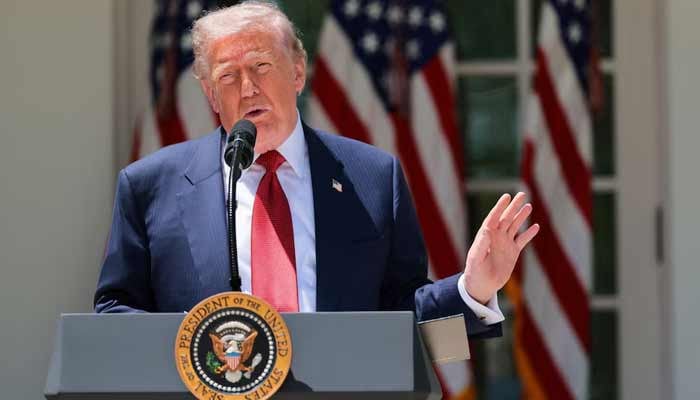
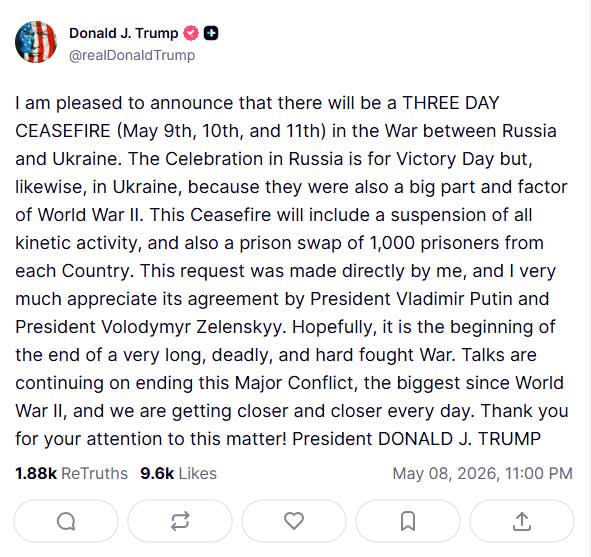
US President Donald Trump on Friday announced on social media that there would be a three-day ceasefire in the war between Russia and Ukraine from May 9 until May 11 to mark the end of World War Two for the Russians.
Trump had said after a phone call with Putin on April 29 that a temporary ceasefire was in the works. Putin announced a similar truce last year that lasted three days but was not agreed with Kyiv.
Trump said in a Truth Social post that the pause will include a suspension of all kinetic activity, and also a prison swap of 1,000 prisoners from each country.
“Hopefully, it is the beginning of the end of a very long, deadly, and hard-fought war,” he said, adding that there was constant progress in talks to end the conflict.
Russia announced a ceasefire for May 8 to 9 to coincide with commemorations of the Soviet Union’s victory over Nazi Germany in World War II and a military parade in Moscow’s Red Square.
Ukraine announced its own proposal for an open-ended ceasefire that started at midnight on Tuesday (2100 GMT), urging Russia to reciprocate.
Officials said on Thursday that Ukraine’s top negotiator, Rustem Umerov, had arrived in Miami for a series of meetings with US representatives as peace talks on ending Russia’s war in Ukraine have stalled in recent months.
The US-brokered talks are deadlocked over Ukraine’s eastern Donetsk region. Moscow demands Kyiv pull troops back from parts of the region it has failed to capture in its four-year full-scale invasion. Ukraine says it will not cede land that it controls.
Moscow and Kyiv have both accused each other of violating ceasefires that each has separately declared.
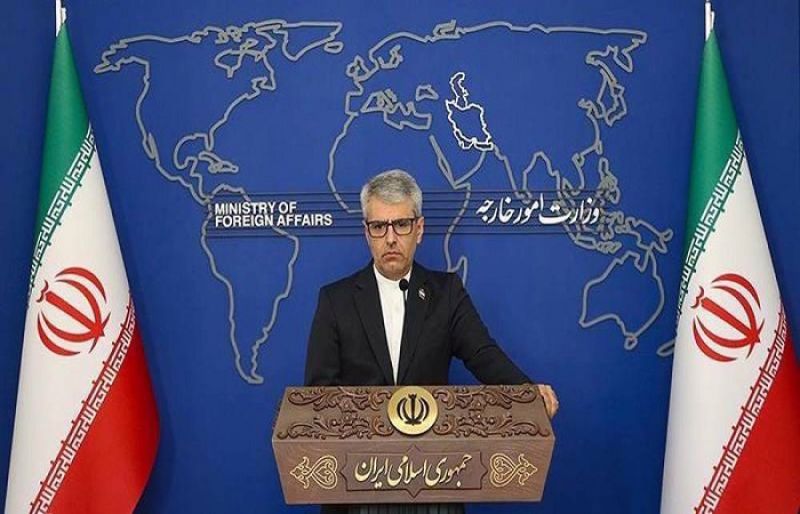
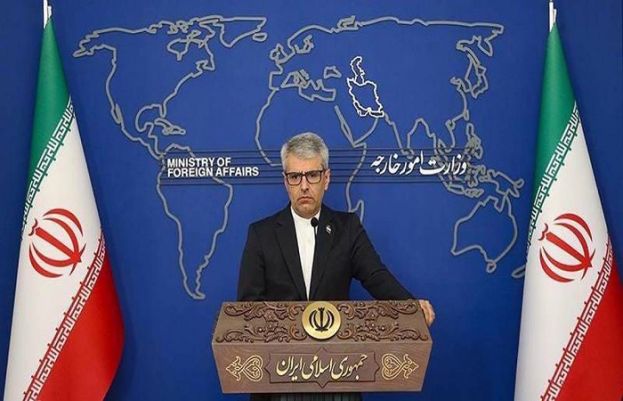
The spokesperson for Iran’s Foreign Ministry says Tehran’s response to a proposal by the United States to end the war against the Islamic Republic is still under review, paying no heed to the Americans’ deadlines.
“The [US] proposal is still being reviewed, and once we reach a conclusion, we will announce it,” Esmaeil Baghaei told reporters on Friday.
Regarding some reports that the Americans have set a deadline for Iran to respond to the plan, he once again affirmed that the matter is still being examined.
“We are doing our own job and pay no attention to such deadlines,” Baghaei emphasized.
The Iranian spokesperson’s remarks came after US Secretary of State Marco Rubio said on Friday that Washington expected to receive Iran’s response to a US proposal later in the day.
The US and Israel initiated an unprovoked war of aggression against Iran since February 28 after assassinating Leader of the Islamic Revolution Ayatollah Seyyed Ali Khamenei and several high-ranking military commanders.
A Pakistani-mediated ceasefire was brokered on April 8, but subsequent talks failed to turn into an agreement due to Washington’s excessive demands.
Iranian officials have repeatedly criticized the United States for its approach to talks as the White House seeks to impose conditions rather than engage in genuine give-and-take.
In a Wednesday post on X, Baghaei elaborated on Tehran’s understanding of what negotiations entail, citing international law.
The concept of talks “needs ‘good faith’, then, meaning that ‘negotiations’ is not ‘disputation’; nor is it ‘dictation’, ‘deception’, ‘extortion’ or ‘coercion’,” he explained.
On the same day, Iran’s Parliament Speaker Mohammad Baqer Qalibaf dismissed certain reports about a supposed impending arrangement between Tehran and Washington, describing them as misleading and part of recurring fake media narratives originating in the United States.
In a post on X, Qalibaf referred to allegations published by the US-based outlet Axios regarding such an arrangement, ironically describing them as “Operation Fauxios.”
He suggested that the circulation of such reports reflected a routine pattern in US media coverage, particularly stories attributed to unnamed sources that Iranian officials have repeatedly rejected as unfounded and have later been proven invariably wrong.


Airlines must not charge customers extra fuel fees after they have already bought tickets, the EU warned on Friday, as the aviation sector feels the pain from high energy prices because of the Middle East war.
“Airlines may adapt their published fares to the situation, but adding a fuel surcharge to a ticket after it has been bought cannot be justified,” EU spokesperson Anna-Kaisa Itkonen told reporters in Brussels.
Any changes post-booking can “raise issues under the EU’s unfair commercial practices”, she added.
In a document published on Friday on the energy crisis affecting the aviation sector, the EU said “any retroactive change of the price is excluded”.
“Airlines may not include terms and conditions which would allow them to increase the price of the ticket above what is advertised at the time of purchase simply because fuel was more expensive than they had accounted for,” the European Commission said.
The only exception is for package holidays if the seller has made it clear in the contract there could be a possibility of fuel-related changes to the costs.
In such cases, an increase of up to 8% is allowed, but if it is higher, the customer can accept or they have the right to cancel their booking.
Spanish low-cost carrier Volotea has been criticised in France where it is under investigation after demanding fuel surcharges from customers because of the energy shock from the war.
Gilles Gosselin, the airline’s France director, has defended the measure.
“The legality of our system has been confirmed by three independent law firms specialising in air transport and consumer law. The measure is transparent, it is temporary, and it works both ways”, up and down, Gosselin told AFP in France.


US Upland, Pima cotton export sales weaken: USDA

China loses 4% Canada apparel market share as western buyers diversify

Jon B flexes working with Michael Jackson

-
 Politics5 days ago
Iran weighs US reply delivered via Pakistan as Trump signals opposition to deal terms
-

 Tech1 week ago
Almost half of UK businesses hit by cyber attacks | Computer Weekly
-

 Tech1 week ago
This Indigenous Language Survived Russian Occupation. Can It Survive YouTube?
-

 Fashion1 week ago
US’ J.Jill, Inc. appoints Kimberly Wallengren as CMO
-

 Fashion1 week ago
Canada’s Lululemon appoints Esi Eggleston Bracey to board of directors
-

 Entertainment1 week ago
David Allan Coe, country singer who wrote “Take This Job and Shove It,” dies at age 86
-
 Business1 week ago
Government hikes jet fuel prices by 5% for international airlines – The Times of India
-

 Fashion1 week ago
US’ Gap partners with Victoria Beckham on timeless wardrobe essentials