

Tech
Trump Administration Won’t Rule Out Further Action Against Anthropic

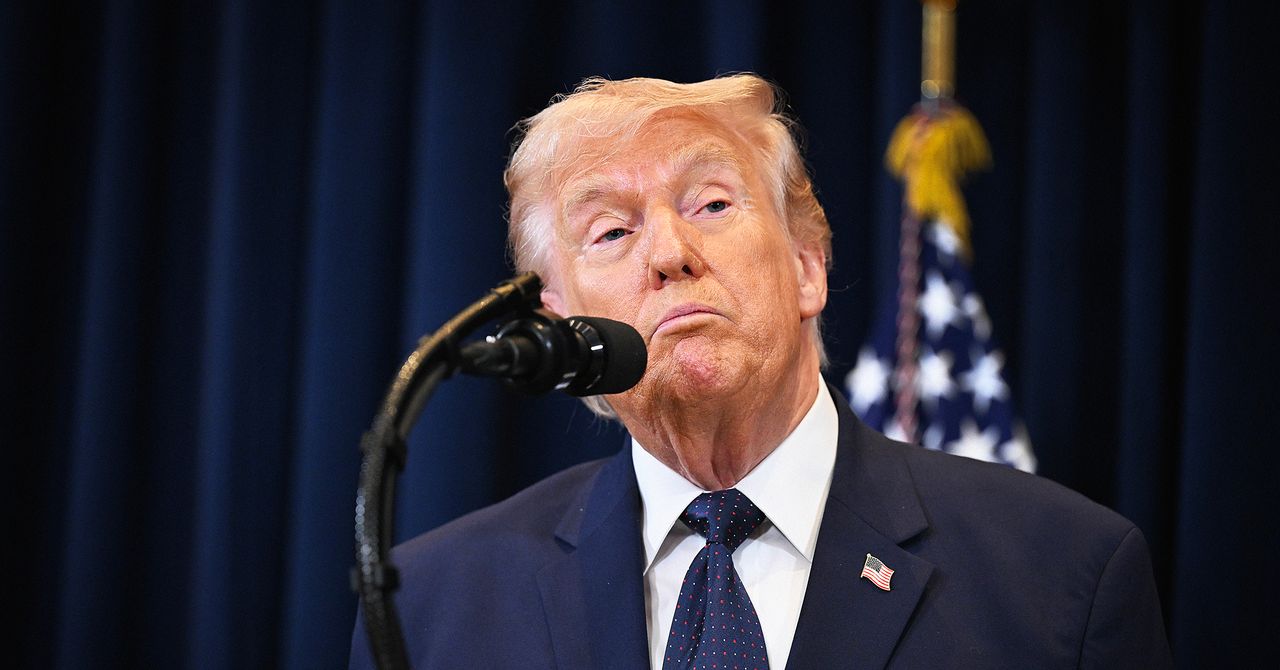
At Anthropic’s first court hearing challenging sanctions imposed by the Trump administration, the AI tech startup asked the government to commit that it wouldn’t levy additional penalties on the company. That didn’t happen.
“I am not prepared to offer any commitments on that issue,” James Harlow, a Justice Department attorney, told US district judge Rita Lin over video conference on Tuesday.
In fact, the government is gearing up to take another step designed to sideline the company from doing business with federal agencies. President Trump is currently finalizing an executive order that would formally ban usage of Anthropic tools across the government, according to a person at the White House familiar with the matter but not authorized to discuss it. Axios first reported on the plan.
Tuesday’s hearing stemmed from one of the two federal lawsuits Anthropic filed against the Trump administration on Monday, alleging that the government unconstitutionally designated it a supply-chain risk and turned it into a tech industry pariah. Billions of dollars in revenue for Anthropic is now at risk, with current customers and prospective ones dropping out of deals and demanding new terms, according to the company.
Anthropic seeking a preliminary court order suspending the risk designation and barring the administration from taking further punitive measures against the company.
The court appearance on Tuesday was to decide on the schedule for a preliminary hearing, and Anthropic is eager for it to happen soon to prevent further harm to its business. Michael Mongan, an attorney for Anthropic at WilmerHale, told Lin he was less concerned about delaying it until April if the Trump administration could commit to not taking additional action. “The actions of defendants are causing irreparable injuries, and those injuries are mounting day by day,” Mongan said.
After Harlow declined, Lin moved up the date of the hearing to March 24 in San Francisco, though that timeline was still later than Anthropic wanted. “The case is quite consequential from both sides, and I want to make sure I’m deciding on an expedited record but also a full record,” the judge said.
Scheduling in the other case, which is in Washington, DC, is on hold while Anthropic pursues an administrative appeal to the Department of Defense, which is expected to fail on Wednesday.
The months-long dispute between the Pentagon and Anthropic began when the AI startup refused to sign off on its current technologies being used by the military for any lawful purpose, which it fears could include broad surveillance of Americans and the launch of missiles without human supervision. The Defense Department contends usage decisions are its prerogative.
Several attorneys with expertise in government contracts and the US Constitution believe the administration’s action against Anthropic continues a pattern of abusing the law to punish perceived political enemies, including universities, media companies, and law firms (such as WilmerHale, the firm representing Anthropic). The experts believe Anthropic should prevail, but the challenge will be overcoming the deference that courts often give to national security arguments from the government, especially during times of war.
“If this is a one-off, you might give the president some deference,” says Harold Hongju Koh, a Yale Law School professor who worked in the Barack Obama presidential administration and has written about the Anthropic case. “But now, it’s just unmistakable that this is just the latest in a chain of events related to a punitive presidency.”
David Super, a Georgetown University Law Center professor who studies the constitution, says the provisions the Defense Department used to sanction Anthropic were designed to protect the country from potential sabotage by its enemies.






The UAE has announced that it will leave OPEC and OPEC+ effective May 1, ending a membership that began in 1967—four years before the UAE itself was founded as a country. This signals a turning point in the UAE’s role in global energy.
The government statement, published on state news agency WAM, cited a comprehensive review of the country’s production policy and capacity as the basis for the move, calling it a reflection of “the UAE’s long-term strategic and economic vision and evolving energy profile.”
The decision, it said, is rooted in national interest and a commitment to meeting what it described as the market’s “pressing needs,” a reference to global demand that the UAE believes is being underserved at a time of significant supply disruption.
The statement acknowledged the geopolitical backdrop—including an ongoing conflict with Iran that has severely restricted tanker movements through the Strait of Hormuz, the narrow waterway between Iran and Oman through which roughly a fifth of the world’s crude oil and liquefied natural gas normally passes.
The EIA estimates that Iraq, Saudi Arabia, Kuwait, UAE, Qatar, and Bahrain shut in 7.5 million barrels per day of crude oil production in March, and 9.1 million barrels per day in April.
However, the statement framed the exit as policy-driven rather than reactive, noting that “underlying trends point to sustained growth in global energy demand over the medium to long term.”
A Long-Running Dispute
Tuesday’s announcement was not without precedent. In 2021, the UAE refused to endorse a production agreement to extend cuts to production unless its individual quota was raised, arguing that it had invested billions to expand capacity and was being unfairly constrained by figures set in 2018. A compromise was eventually reached, but the episode exposed a fundamental tension: The UAE wants to produce more, and OPEC’s quota system was holding it back.
That ambition has only grown since. State oil company ADNOC has a stated target of 5 million barrels per day by 2027, up from current production of around 3.4 million. Under the OPEC+ deal, the country has been held to roughly 3.2 million barrels per day while sitting on capacity above 4 million, a gap that made continued membership increasingly difficult to justify.
The UAE stressed that its exit does not signal a retreat from global energy responsibility. It pledged to bring additional production to market “in a gradual and measured manner, aligned with demand and market conditions,” and reaffirmed investment plans across oil, gas, renewables, and low-carbon technologies.
The statement noted that leaving OPEC would make the nation more flexible to respond to market dynamics; OPEC sets limits on production, meaning that the world’s biggest producers can often supply and sell more oil than they actually do.
By limiting supply, the group is able to support prices. This mechanism primarily benefits producers that rely heavily on oil revenue, a description that fits Saudi Arabia far more than the UAE, whose non-oil economy now accounts for roughly 75 percent of GDP.
Market Reaction and Wider Implications
The immediate market response was sharp. Brent crude, the European benchmark, surpassed $100 per barrel for the first time since 8 April, rising to $111 as of writing.
The longer-term implications for OPEC are more consequential. The group has been under strain for months, with several members—including Iraq, Kazakhstan, and the UAE itself—having overproduced their quotas and being required to compensate. The UAE’s departure strips the group of its third-largest producer at a time when supply dynamics are already fragile.
The exit follows Qatar’s departure from the group in 2019, and comes as OPEC prepared for a meeting in Vienna on Wednesday.
“The time has come to focus our efforts on what our national interest dictates and our commitment to our investors, customers, partners and global energy markets,” the statement read.
The UAE said it values more than five decades of cooperation within OPEC and wished the organization success going forward.
This story originally appeared on WIRED Middle East.
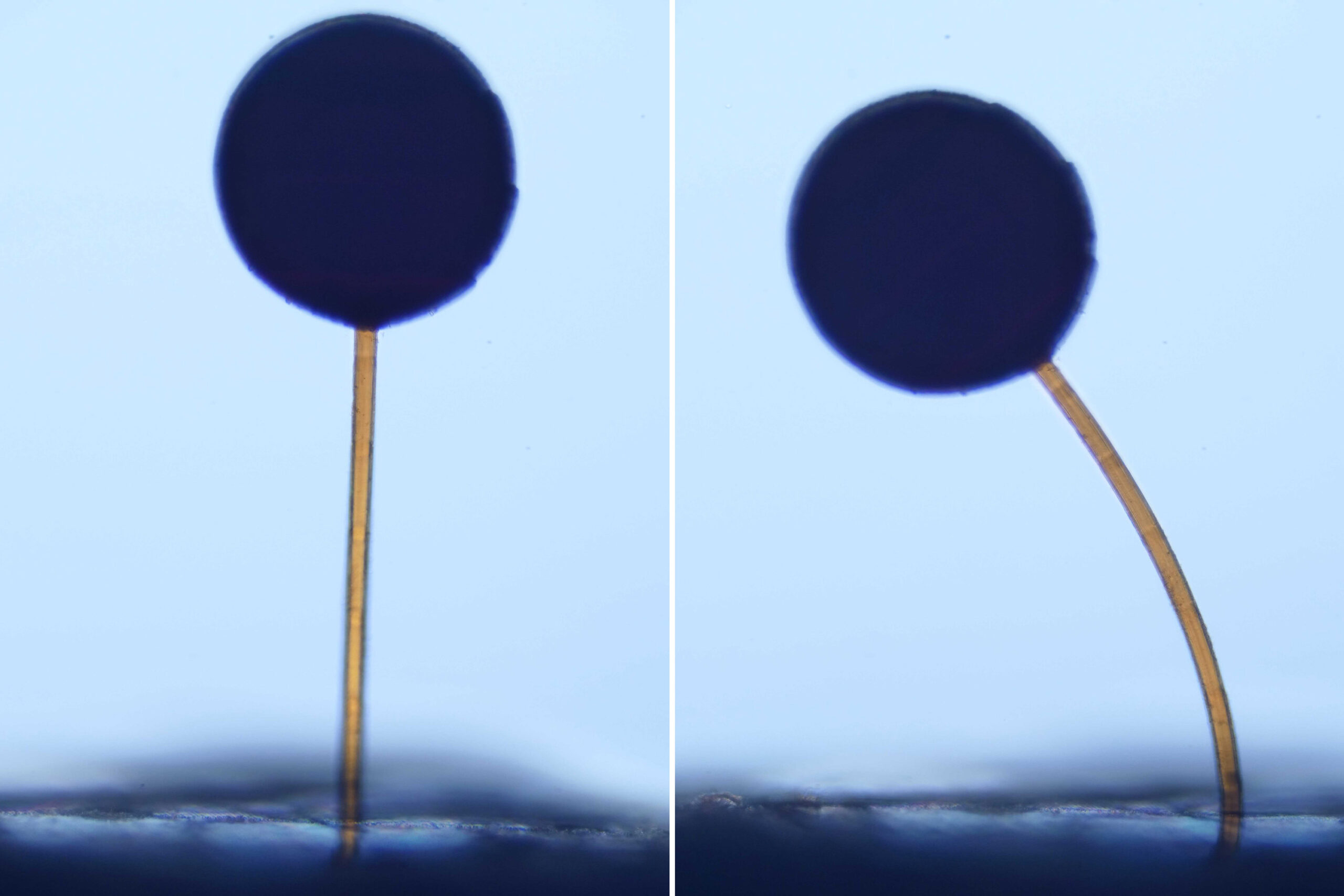
Under a microscope, a bouquet of lollipop-like structures, each smaller than a grain of sand, waves gently in a petri dish of liquid. Suddenly, they snap together, like the jaws of a Venus flytrap, as a scientist waves a small magnet over the dish. What was previously an assemblage of tiny passive structures has transformed instantly into an active robotic gripper.
The lollipop gripper is one demonstration of a new type of soft magnetic hydrogel developed by engineers at MIT and their collaborators at the École Polytechnique Fédérale de Lausanne (EPFL) in Switzerland and the University of Cincinnati. In a study appearing today in the journal Matter, the MIT team reports on a new method to print and fabricate the gel, which can be made into complex, magnetically activated three-dimensional structures.
The new gel could be the basis for soft, microscopic, magnetically responsive robots and materials. Such magno-bots could be used in medicine, for instance to release drugs or grab biopsies when directed by an external magnet.
Making objects move with magnets is nothing new, at least at the macroscale. We can, for example, wave a refrigerator magnet over a pile of paper clips that will trail the magnet in response. And at the microscale, scientists have designed a variety of magnetic “micro-swimmers” — components that are smaller than a millimeter and can be directed remotely by a magnet to squeeze through small spaces. For the most part, these designs work by mixing magnetic particles into a printable resin and pulling the entire swimmer in the direction of an external magnet.
In contrast, the MIT team’s new material can be made into even more complex and deformable structures with micron-scale precision. These features could enable a magnetic millibot to move individual features and perform more complex maneuvers.
“We can now make a soft, intricate 3D architecture with components that can move and deform in complex ways within the same microscopic structure,” says study author Carlos Portela, the Robert N. Noyce Career Development Associate Professor of Mechanical Engineering at MIT. “For soft microscopic robotics, or stimuli-responsive matter, that could be a game-changing capability.”
The study’s MIT co-authors include graduate students Rachel Sun and Andrew Chen, along with Yiming Ji and Daryl Yee of EPFL and Eric Stewart of the University of Cincinnati.
In a flash
At MIT, Portela’s group develops new metamaterials — materials engineered with unique, microscopic architectures that give rise to beyond-normal material properties. Portela has fabricated a variety of such metamaterials, including extremely tough and stretchy architectures and designs that can manipulate sound and withstand violent impacts.
Most recently, he’s expanded his research to “programmable” materials, which can be engineered to change their properties in response to stimuli, such as certain chemicals, light, and electric and magnetic fields.
From the team’s perspective, magnetic stimuli stand out from the rest.
“With a magnetically responsive material, we have control at a distance and the response is instantaneous,” says co-lead author Andrew Chen. “We don’t have to wait for a slow chemical reaction or physical process, and we can manipulate the material without touching it.”
For the new study, the team aimed to create a magnetically responsive metamaterial that can be made into structures smaller than a millimeter. Researchers typically fabricate microstructures by using two-photon lithography — a high-resolution 3D printing technique that flashes a laser into a small pool of resin. With repeated flashes, the laser traces a microscopic pattern into the resin, which solidifies into the same pattern, ultimately creating a tiny, three-dimensional structure, layer by layer.
While 3D resin printing produces intricate microstructures, using the same process to print magnetic structures has been a challenge. Researchers have tried to combine the resin with magnetic nanoparticles before printing the mixture. But magnetic particles are essentially bits of metal that inherently scatter light away or agglomerate and sediment unintentionally. Scientists have found that any magnetic particles in the resin can reduce the laser’s power at a given spot and weaken the resulting structure or prevent its printing altogether.
“Directly 3D printing deformable micron-scale structures with a high fraction of magnetic particles is extremely difficult, often involving a tradeoff between magnetic functionality and structural integrity,” says Sun, a co-lead author on the work.
A printed double-dip
The researchers created a new way to fabricate magnetic microstructures, by combining 3D resin printing with a double-dip process. The researchers first applied conventional resin printing to create a microstructure using a typical polymer gel, with no added magnetic particles. Then they dipped the printed gel into a solution containing iron ions, which the gel can absorb. The iron-soaked structure is then dipped again in a second solution of hydroxide ions. The iron ions in the gel bond with the hydroxide ions, creating iron-oxide nanoparticles that are inherently magnetic.
With this new process, the team can print intricate structures smaller than a millimeter, and add magnetic properties to the structures after printing. What’s more, they are able to control how magnetic a structure’s individual features can be. They found that, by tuning the laser’s power as they print certain features, they can set how cross-linked, or “tight” the gel is when printed. The tighter the gel, the fewer magnetic particles it can form. In this way, the researchers can determine how magnetic each tiny feature can be.
“This provides unprecedented design freedom to print multifunctional structures and materials at the microscale,” Sun says.
As a demonstration, the team fabricated ball-and-stick structures resembling tiny lollipops. The structures were less than a millimeter in height, with balls that were smaller than a grain of sand. The researchers printed the lollipops out of polymer gel and infused each ball with different amounts of magnetic particles, giving them various degrees of magnetism. Under a microscope, they observed that when they passed an ordinary refrigerator magnet over the structures, the lollipops pulled toward the magnet in various degrees, in a configuration that mimicked gripping fingers.
“You could imagine a magnetic architecture like this could act as a small robot that you could guide through the body with an external magnet, and it could latch onto something, for instance to take a biopsy,” Portela says. “That is a vision that others can take from this work.”
The team also fabricated a magnetically responsive, “bistable” switch. They first printed a small millimeter-long rectangle of polymer gel and attached to either side four tiny, oar-like magnetic structures. Each oar measured about 8 microns thick — about the size of a red blood cell. When the team applied a magnet on one end of the rectangle, the oars flipped toward the magnet, pulling the rectangle in the same direction and locking it in that position. When the magnet was applied to the other side, the oars flipped again, pulling the rectangle, like a switch, in the opposite direction.
“We think this is a new kind of bistable mechanism that could be used, for instance, in a microfluidic device, as a magnetic valve to open or shut some flow,” Portela says. “For now, we’ve figured out how to fabricate magnetic complex architectures at the microscale and also spatially tune their properties. That opens up a lot of interesting ideas for soft miniature robots going forward.”
This research was supported, in part, by the National Science Foundation and the MathWorks seed grant program.

The next gadget you put on your head could scan your brain. Neurable, a Boston-based company that embeds its noninvasive brain-scanning technology into hardware to monitor a person’s focus levels, announced on Tuesday that it is transitioning to a licensing platform model. By certifying third parties, Neurable expects its tech to be in a “flood” of consumer gadgets this year and next.
Neurable has until now focused its efforts on a pair of consumer-grade headphones—made in partnership with audio brand Master & Dynamic. It also has a contract with the US Department of Defense to see how its technology can monitor blast overpressure and potentially help diagnose mild traumatic brain injuries in soldiers. With the licensing model, we could see more of Neurable’s tech in everyday head-based wearables.
The headphones use built-in electroencephalography (EEG) sensors to monitor brain waves. That information is sent to a companion app and lets wearers know when they need a “brain break,” nudging them to take a breather before they feel burnt out to maximize productivity. The app also lets users discover their cognitive readiness for the day, their brain age, and other metrics, such as mental recovery, cognitive strain, and anxiety resilience. WIRED staff writer Emily Mullin tested the original headphones in 2024, though she found it difficult to verify the accuracy of Neurable’s algorithms.
Now, HP-owned gaming brand HyperX is releasing a gaming headset with Neurable’s technology, and it’s all about improving human performance while esports gaming. The headphones are purported to help wearers ease into the right state of mind for the best performance. Ramses Alcaide, Neurable cofounder and CEO, tells WIRED that the company has published a white paper showing improved performance among gamers using Neurable’s tech, with reduced response times in first-person shooter games and a small increase in accuracy.
The improvements may sound minor, but milliseconds are precious in the fast-paced world of esports gaming. And Alcaide says it could translate similarly to other fields: It could help a student reduce anxiety before an exam, while athletes could condition their nerves ahead of a race or game. Neurable is hardware-agnostic; Alcaide says it can be embedded in headphones, smart glasses, hats, or helmets. “There’s a whole landscape of technology that touches your head that’s yet to be embedded with our platform,” he says.
He likens it to when Fitbit made the idea of a wrist-worn heart-rate tracker popular. In the beginning, no one knew how fitness wearables would be received, but now no one blinks an eye at one on a wrist. Soon, no one will think twice about brain-scanning tech in headphones—or, at least, that’s the idea. Neurable’s tech is “invisible” in these types of gadgets.
Companies licensing Neurable’s tech can integrate it into existing hardware, Alcaide says, and will control the entire experience from product design to the software experience; these products will be advertised as “Powered by Neurable AI.” The user data still flows to Neurable’s servers for processing, but Neurable sets the data privacy protections. User identifiers are separated from the data, and while partner companies host the user-facing layer, Neurable says it keeps control of the underlying system and data handling. Neurable has previously said its business model is not to sell user data.
“Any time there’s a new transition to technology, there’s always going to be some anxiety,” Alcaide says. “We’ve been very careful when it comes to that transition. We’re protecting the data, being as ethical as possible.”
Neurable is one of many brain-computer interface (BCI) companies in the growing category. Elemind uses EEGs to improve sleep quality, and Sabi wants to turn thoughts into text. Even Apple filed a patent for EEG-sensing AirPods, though they’re not yet available.


Mideast conflict enters Cold War-like phase amid US-Iran deadlock: report

FTSE 100 edges higher but US tech stocks wobble

Structural issues from higher military RMG localisation: S Korean SMEs

-

 Sports1 week ago
NCAA men’s gymnastics championship: All-time winners list
-

 Sports1 week ago
WWE WrestleMania 42 Night 2: Live match results and analysis
-

 Politics1 week ago
UK’s Starmer seeks to deflect blame over Mandelson appointment
-

 Fashion1 week ago
UK’s Sosandar returns to profitability amid robust FY26 performance
-

 Entertainment1 week ago
Lee Anderson, Zarah Sultana kicked out of UK Parliament for calling PM ‘liar’
-
 Business1 week ago
How Trump’s psychedelics executive order could unlock stalled cannabis reform
-
 Business1 week ago
Us-India Trade Talks: US–India trade deal: Where do talks stand & what to expect – explained – The Times of India
-
 Business1 week ago
Exercise to test response to offshore energy threat involving vessels and drones