

Politics
Trump signs emergency order to protect US-held revenue from Venezuela oil

- White House says move aimed at advancing foreign policy.
- Order follows Trump’s meeting with top US oil executives.
- Fact sheet says US president preventing revenue seizure.
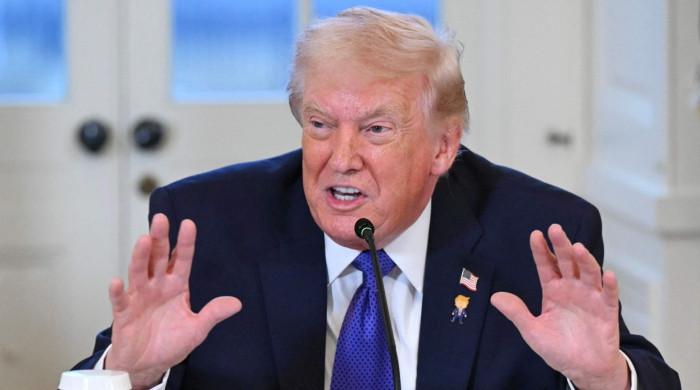
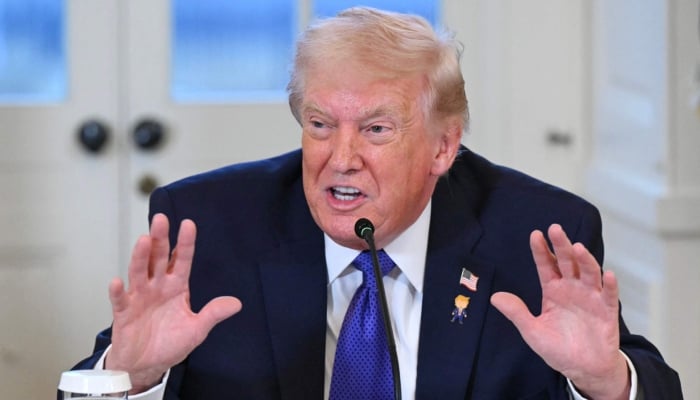
US President Donald Trump has signed an executive order protecting US-held money derived from sales of Venezuelan oil, after the ouster of Nicolas Maduro, the White House said.
In an order signed Friday, Trump — who has made clear that tapping Venezuela’s vast oil reserves was a key goal in the US ouster of Maduro — is acting “to advance US foreign policy objectives,” the White House said in a fact sheet accompanying the order.
The action follows a meeting Friday in Washington where Trump pressed top oil executives to invest in Venezuela, and was met with a cautious reception — with the chief executive of ExxonMobil describing the country as “uninvestable” without sweeping reforms.
ExxonMobil and ConocoPhillips exited in 2007 after refusing demands by then-president Hugo Chavez to cede majority control to the state. They have been fighting to recoup billions of dollars they say Venezuela owes them.
Chevron is currently the only US firm licensed to operate in Venezuela.
Trump’s executive order signed Friday declares a national emergency “to safeguard Venezuelan oil revenue held in US Treasury accounts from attachment or judicial process,” the White House fact sheet said.
In effect, it places those revenues under special protection in order to prevent them from being seized by courts or creditors. The action is decreed to be necessary for US national security and foreign policy.
“President Trump is preventing the seizure of Venezuelan oil revenue that could undermine critical US efforts to ensure economic and political stability in Venezuela,” the fact sheet said.
Sanctioned by Washington since 2019, Venezuela sits on about a fifth of the world’s oil reserves and was once a major crude supplier to the United States.
But it produced only around 1% of the world’s total crude output in 2024, according to OPEC, having been hampered by years of underinvestment, sanctions and embargoes.
Trump sees the country’s massive oil reserves as a windfall in his fight to further lower US domestic fuel prices.
The executive order comes one week after US forces seized authoritarian leader Maduro in a nighttime operation in the Venezuelan capital that killed dozens of Venezuelan and Cuban security forces.
- US military, shipping will be legitimate targets: Iranian official
- Israeli PM, Marco Rubio discuss possible US intervention on call.
- Tel Aviv on high alert due to prospects of any action by Washington.
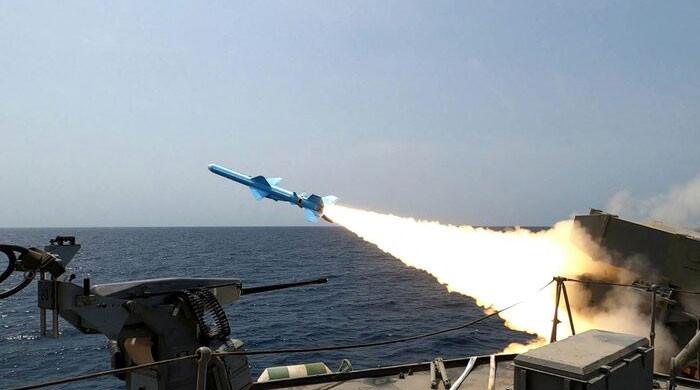
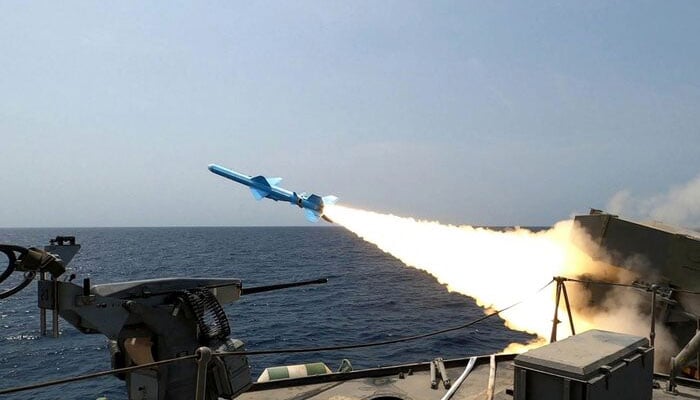
PARIS: Iran on Sunday warned that it would strike US military and shipping targets in the event of a new attack by Washington during an ongoing wave of protests.
“In the event of a military attack by the US, both the occupied territory and centres of the US military and shipping will be our legitimate targets,” said Iranian parliament speaker Mohammad Bagher Ghalibaf, who told parliament in comments broadcast by state TV.
Tehran’s warning comes as sources say Israel is on high alert for the possibility of US intervention amid protests in Iran.
The country has faced demonstrations since December 28, 2025, on the issue of soaring inflation, with authorities accusing the US and Israel of fomenting unrest.
US President Donald Trump has repeatedly threatened to intervene in recent days and warned Iran’s rulers against using force against demonstrators. On Saturday, Trump said the US stands “ready to help”.
The sources, who were present for Israeli security consultations over the weekend, did not elaborate on what Israel’s high-alert footing meant in practice. Israel and Iran fought a 12-day war in June, in which the US joined Israel in launching airstrikes.
In a phone call on Saturday, Israeli Prime Minister Benjamin Netanyahu and US Secretary of State Marco Rubio discussed the possibility of US intervention in Iran, according to an Israeli source who was present for the conversation.
A US official confirmed the two men spoke but did not say what topics they discussed.
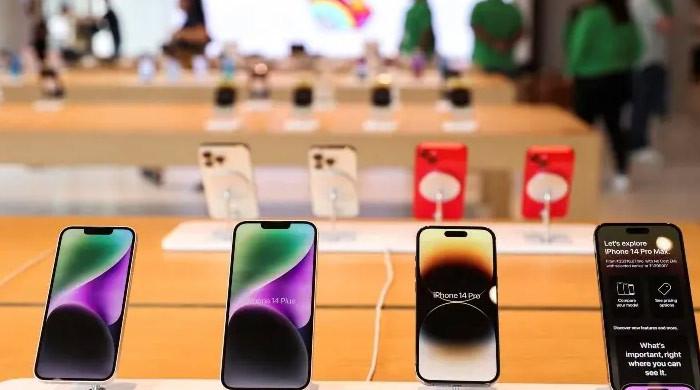
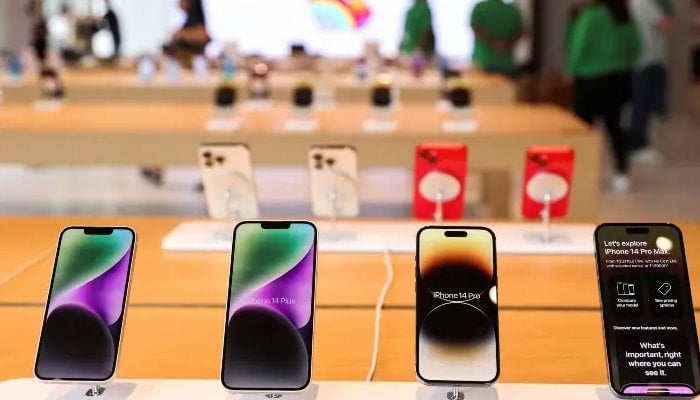
India proposes requiring smartphone makers to share source code with the government and make several software changes as part of a raft of security measures, prompting behind-the-scenes opposition from giants like Apple and Samsung.
The tech companies have countered that the package of 83 security standards, which would also include a requirement to alert the government to major software updates, lacks any global precedent and risks revealing proprietary details, according to four people familiar with the discussions and a Reuters review of confidential government and industry documents.
The plan is part of Prime Minister Narendra Modi’s efforts to boost the security of user data as online fraud and data breaches increase in the world’s second-largest smartphone market, with nearly 750 million phones.
IT Secretary S Krishnan told Reuters that “any legitimate concerns of the industry will be addressed with an open mind”, adding it was “premature to read more into it”. A ministry spokesperson said it could not comment further due to ongoing consultation with tech companies on the proposals.
Apple, South Korea’s Samsung, Google, China’s Xiaomi and MAIT, the Indian industry group that represents the firms, did not respond to requests for comment.
Indian government requirements have irked technology firms before. Last month, it revoked an order mandating a state-run cyber safety app on phones amid concerns over surveillance. But the government brushed aside lobbying last year and required rigorous testing for security cameras over fears of Chinese spying.
Xiaomi and Samsung, whose phones use Google’s Android operating system, hold 19% and 15%, respectively, of India’s market share, while Apple holds 5%, according to Counterpoint Research.
Among the most sensitive requirements in the new Indian Telecom Security Assurance Requirements is access to source code – the underlying programming instructions that make phones work. This would be analysed and possibly tested at designated Indian labs, the documents show.
The Indian proposals also require companies to make software changes to allow pre-installed apps to be uninstalled and to block apps from using cameras and microphones in the background to “avoid malicious usage”.
“Industry raised concerns that globally security requirements have not been mandated by any country,” said a December IT ministry document detailing meetings that officials held with Apple, Samsung, Google and Xiaomi.
The security standards, drafted in 2023, are in the spotlight now as the government is considering imposing them legally. IT ministry and tech executives are due to meet on Tuesday for more discussions, sources said.
Companies say source code review, analysis ‘not possible’
Smartphone makers closely guard their source code. Apple declined China’s request for source code between 2014 and 2016, and US law enforcement has also tried and failed to get it.
India’s proposals for “vulnerability analysis” and “source code review” would require smartphone makers to perform a “complete security assessment”, after which test labs in India could check their claims through source code review and analysis.
“This is not possible … due to secrecy and privacy,” MAIT said in a confidential document drafted in response to the government proposal, and seen by Reuters. “Major countries in the EU, North America, Australia and Africa do not mandate these requirements.”
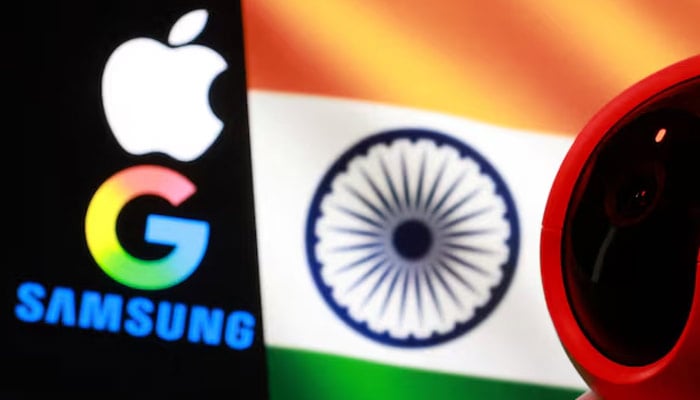
MAIT asked the ministry last week to drop the proposal, a source with direct knowledge said.
The Indian proposals would mandate automatic and periodic malware scanning on phones. Device makers would also have to inform the National Centre for Communication Security about major software updates and security patches before releasing them to users, and the centre would have the right to test them.
MAIT’s document says regular malware scanning significantly drains a phone’s battery, and seeking government approval for software updates is “impractical” as they need to be issued promptly.
India also wants the phone’s logs – digital records of its system activity – to be stored for at least 12 months on the device.
“There is not enough room on the device to store 1-year log events,” MAIT said in the document.
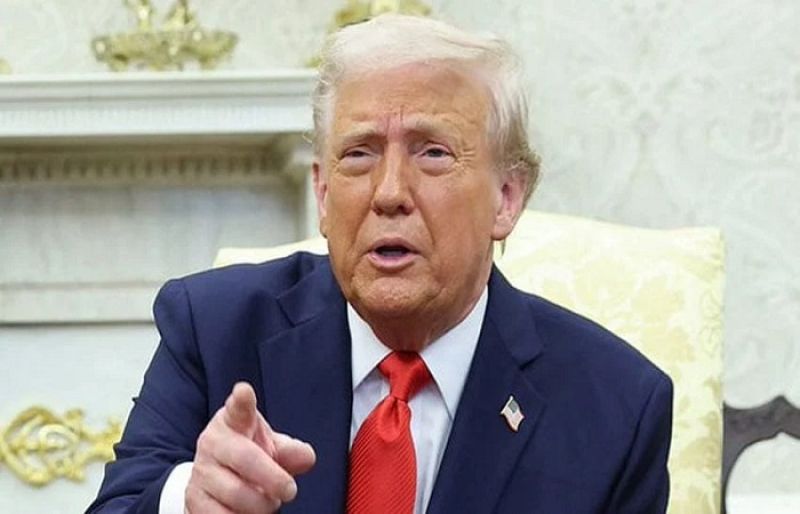

Donald Trump has ordered special forces commanders to prepare plans for an invasion of Greenland, but the proposal is facing resistance from senior military figures, The Mail on Sunday understands.Sources said policy hawks around the US President, led by political adviser Stephen Miller, feel emboldened by the reported success of the operation to detain Venezuela’s leader, Nicolás Maduro. They are said to want swift action to secure the island before Russia or China takes steps of its own.
British diplomats believe Trump is also driven by a wish to divert voters’ attention from the state of the US economy ahead of the mid-term elections later this year, after which he could lose control of Congress to the Democrats.
Such a move would place him in direct conflict with Sir Keir Starmer and would, in effect, bring about the collapse of Nato.
Sources divulged that the president asked the Joint Special Operations Command (JSOC) to prepare an invasion plan. The proposal has met opposition from the Joint Chiefs of Staff, who argue that it would be unlawful and would not receive congressional backing.
One source said efforts had been made to divert Trump’s attention towards less contentious options, including intercepting Russian “ghost ships” — a covert fleet of vessels used by Moscow to bypass Western sanctions — or considering military action against Iran.
Diplomats have conducted war games around what they describe as an “escalatory scenario”, in which Trump uses force or political pressure to break Greenland’s ties with Denmark.
One diplomatic cable terms a worst-case outcome that results in “the destruction of Nato from within”.
It adds that some European officials suspect this is the underlying objective of the hardline Maga faction around Trump. Since Congress would not permit a US withdrawal from Nato, the occupation of Greenland could compel European states to abandon the alliance.
“If Trump wants to end Nato, this may be the most convenient route,” the cable says.
Under a ‘compromise scenario’, Denmark would grant the United States full military access to Greenland while denying access to Russia and China.

Transfer window weekly: Real Madrid open to Vinícius exit? Chelsea keen?

Colombian music star Yeison Jimenez dead at 34 after fatal plane crash

Popular Influencer Haley Kalil appears to take subtle jab at ex husband

-

 Sports6 days ago
VAR review: Why was Wirtz onside in Premier League, offside in Europe?
-

 Entertainment4 days ago
Does new US food pyramid put too much steak on your plate?
-

 Politics4 days ago
UK says provided assistance in US-led tanker seizure
-

 Entertainment4 days ago
Why did Nick Reiner’s lawyer Alan Jackson withdraw from case?
-

 Politics6 days ago
China’s birth-rate push sputters as couples stay child-free
-

 Sports6 days ago
Steelers escape Ravens’ late push, win AFC North title
-
 Business6 days ago
8th Pay Commission: From Policy Review, Cabinet Approval To Implementation –Key Stages Explained
-
 Entertainment6 days ago
Minnesota Governor Tim Walz to drop out of 2026 race, official confirmation expected soon