

Business
Uber to invest up to $1.25 billion in EV maker Rivian in deal to launch 50,000 robotaxis


The Rivian R2 is on display during the 2025 Los Angeles Auto Show at the Los Angeles Convention Center on Nov. 23, 2025 in Los Angeles, California.
Josh Lefkowitz | Getty Images
Uber Technologies plans to invest up to $1.25 billion in electric vehicle maker Rivian Automotive as part of a deal to deploy up to 50,000 robotaxis in several countries through 2031, the companies announced Thursday.
The tie-up includes expectations for Uber, or its fleet partners, to purchase 10,000 autonomous versions of Rivian’s upcoming R2 electric vehicle, with the option to buy up to 40,000 more robotaxis beginning in 2030, according to a release from the companies.
Shares of Rivian jumped in premarket trading Thursday, rising roughly 10% before paring back those gains, closing the day 3% higher, while Uber’s stock fell 1%.
The deal is the latest in a resurgence of announcements about autonomous vehicles and robotaxis, as companies attempt to capitalize on what investors have forecast as a multitrillion-dollar market. Many companies, including Uber, have previously failed to hit their targets when it comes to robotaxis.
An initial $300 million investment from Uber to Rivian, which is preparing to begin R2 sales to consumers this spring, is expected soon following the deal’s signing, subject to regulatory approval, according to the release. That investment equates to about 19.55 million shares of the automaker, a Rivian spokesman confirmed.
Four other investment tranches will occur subject to hitting certain milestones by unspecified dates through 2031, according to a Thursday public filing from the automaker. Uber also is expected to pay certain licensing fees in connection with its use of Rivian’s autonomous driving system software, the filing said.
The companies said the R2 robotaxis are expected to be available exclusively through Uber’s ride-hailing and delivery platform in 25 cities across the the U.S., Canada and Europe. The first cities are planned to be San Francisco and Miami in 2028, they said.
“We’re big believers in Rivian’s approach—designing the vehicle, compute platform, and software stack together, while maintaining end-to-end control of scaled manufacturing and supply in the U.S.,” Uber CEO Dara Khosrowshahi said in the release. “That vertical integration, combined with data from their growing consumer vehicle base and experience managing the complexities of commercial fleets, gives us conviction to set these ambitious but achievable targets.”
The deal is the latest capital investment for Rivian following a $5.8 billion software deal with German automaker Volkswagen announced at the end of 2024. It also marks an increase in Uber’s plans for robotaxis following recent announcements with EV maker Lucid, Amazon’s Zoox, Chrysler parent Stellantis and tech giant Nvidia.
Rivian CEO RJ Scaringe recently started talking about the company’s ambitions for robotaxis, including on the EV maker’s third-quarter results call in November and at its first-ever “Autonomy and AI Day” in December.
Scaringe said Rivian’s forthcoming R2 and the technologies supporting it would enable the company to pursue robotaxis, which are currently dominated in the U.S. by by Alphabet-backed Waymo.
Rivian Chief Executive RJ Scaringe speaks at the company’s first Autonomy and AI Day showcasing developments in self-driving technology, in Palo Alto, California, U.S., Dec. 11, 2025.
Carlos Barria | Reuters
Scaringe and other executives have said the emergence of new technologies, including artificial intelligence and more capable semiconductor chips, will allow companies to finally succeed with robotaxis.
“The scale of Rivian’s growing data flywheel coupled with RAP1 [Rivian Autonomy Processor], our state of the art in-house inference platform, and our multi-modal perception platform make us incredibly excited for the rapid advancement of Rivian autonomy over the next couple of years,” Scaringe said in the Thursday release.
— CNBC’s Lora Kolodny contributed to this report.





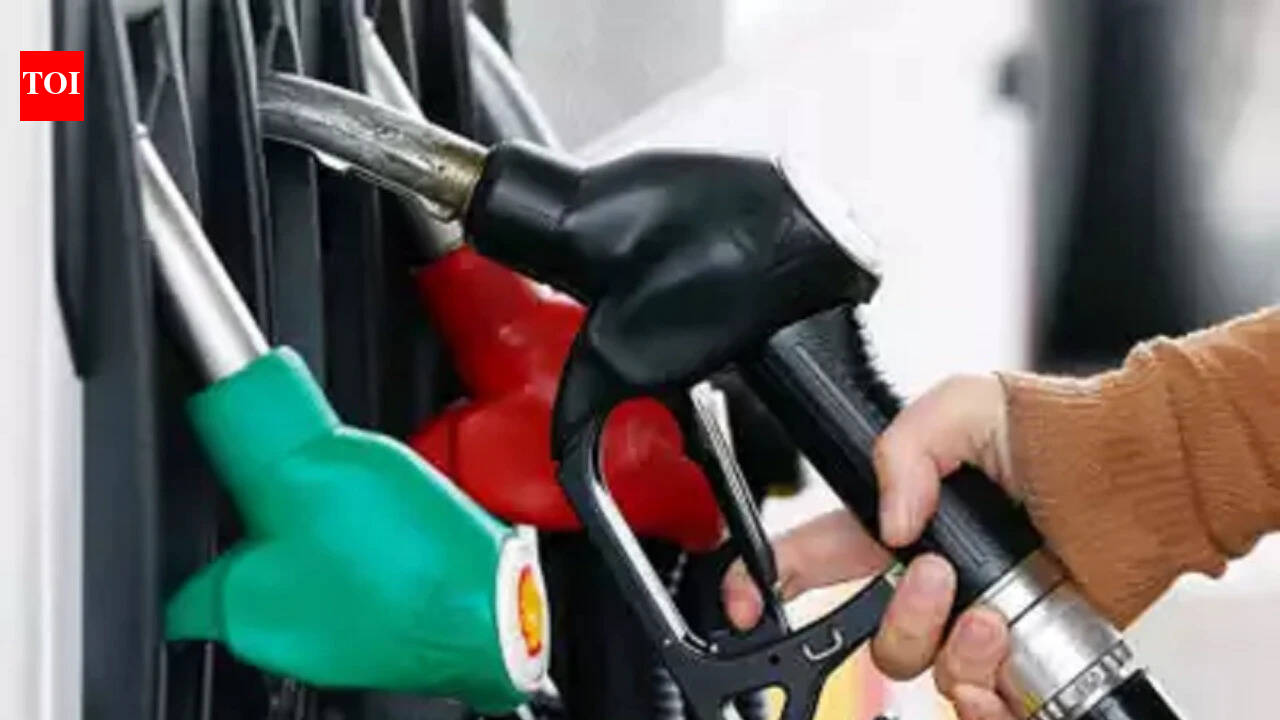
NEW DELHI: The West Asia conflict is pushing govt to look at a faster transition towards renewable energy, including the possibility of increasing ethanol blending in petrol from 20-25%, although in a calibrated manner. This will come along with increased refining capacity within the country, so that there is a buffer in the system and greater domestic resilience, those familiar with the discussions said, pointing out that sustaining refineries at 100% capacity is not sustainable.While Barmer refinery has begun operations, expansion at Numaligarh is underway and work on integrated refineries on the west coast is also under focus. Apart from a mega refinery in Maharashtra, a new facility in Gujarat is also planned.Officials said rising use of renewables, biofuels and hydrogen in the energy mix was no longer just an environmental issue, but a strategic necessity in a situation like the present one, where the military conflict in West Asia has disrupted global energy supplies, triggering a supply crisis and a surge in oil and gas prices.According to officials, 20% ethanol blending has helped India save 4.5 crore barrels of crude annually and reduce foreign exchange outflow by around ₹1.5 lakh crore so far. Given the concerns over fuel efficiency and impact on vehicles, govt is expected to take a gradual approach that addresses the anxiety on ethanol blending. The third pillar on energy is expanding the strategic petroleum reserves.
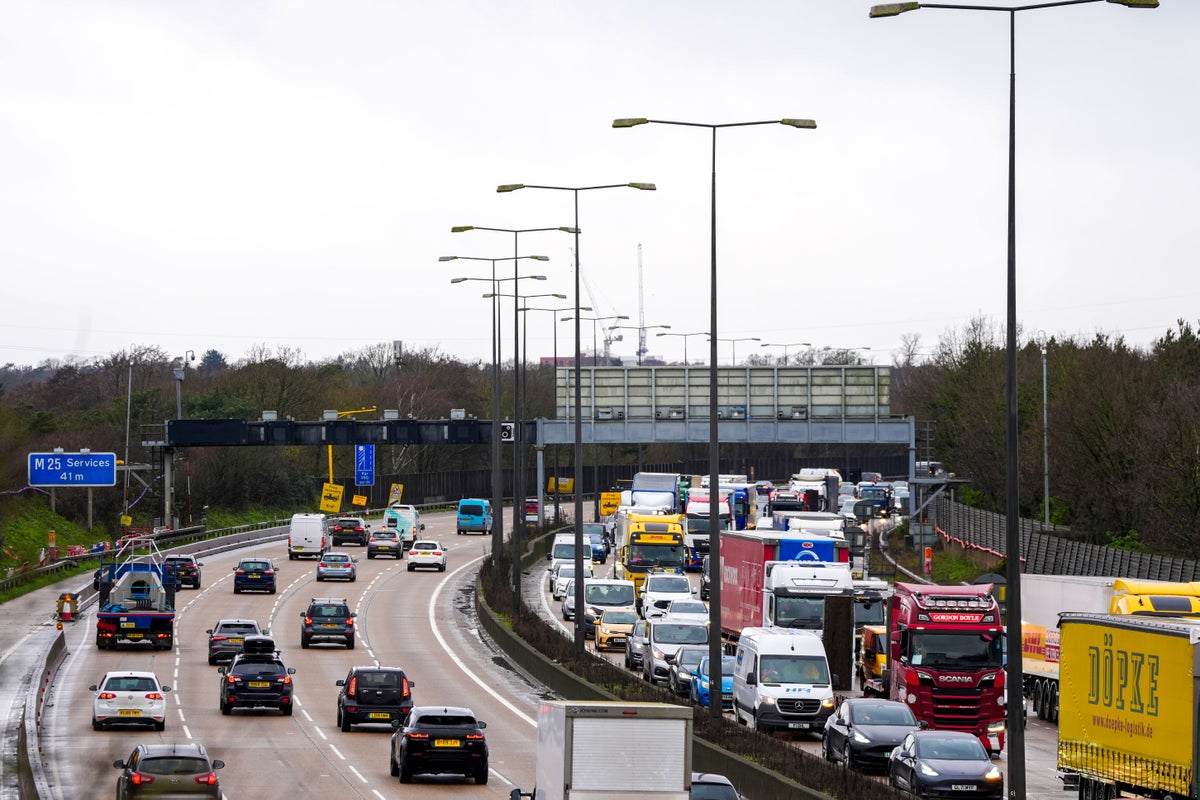
Millions of car finance payouts are in jeopardy after the UK’s financial watchdog indicated its compensation scheme faces significant delays, changes, or even collapse.
This uncertainty stems from four legal challenges against the Financial Conduct Authority (FCA).
The FCA has advised motor finance firms to prepare for the possibility that its redress scheme, which could see an average payout of £829, may not proceed.
The regulator stated that while a hearing date is unclear, these cases are unlikely to be heard before October.
In the meantime, it is in discussions about the “possibility of suspending some elements” of its compensation scheme, while still urging lenders to prepare for payouts.
But the regulator said it was also considering its options should parts of the scheme be quashed by the courts, including proceeding with a revised version or asking lenders to plan for a scenario where “there would be no scheme”.
This could mean lenders need to be ready to respond to complaints from car finance customers individually, rather than under the rules of an industry-wide programme set by the FCA.
“Many people will be frustrated that the legal action will delay payouts due to begin this year,” the FCA said.
“We remain committed to ensuring consumers receive any compensation owed as promptly as possible.”
The FCA set out the final details of its compensation scheme in March, which it estimated could cost the industry about £9.1 billion in total.
It had been expecting millions of claims to be paid out this year and the vast majority settled by the end of 2027.
The financial services arms of carmakers Volkswagen and Mercedes-Benz and the car finance arm of French bank Credit Agricole, as well as Consumer Voice, a group representing consumers, are asking the courts to quash the scheme, arguing the rules are unlawful.
“Between the four separate legal challenges, it is claimed in effect that the FCA’s approach to establishing the schemes has been both unduly favourable to consumers and unduly favourable to lenders,” the watchdog said.
At least one claim alleges that the FCA has breached the rights of lenders under the 1998 Human Rights Act, according to the watchdog.
Despite the uncertainty of the legal cases, the watchdog is still advising consumers to complain directly to their lender if they think they might be owed compensation, which they can do for free using a template letter on its website.
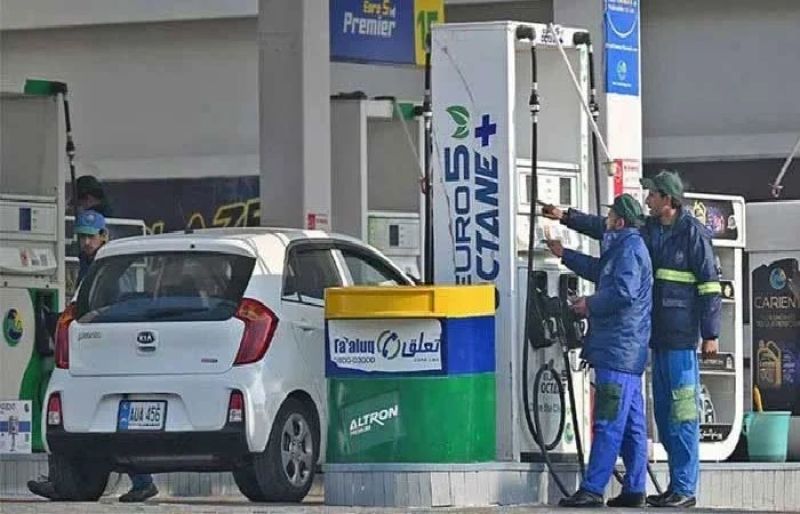
The federal government has increased petrol and diesel prices by nearly Rs15 per litre each for the next week.
In a notification issued on Friday, the Petroleum Division said new fuel rates will come into effect from May 9.
The price of petrol has jumped from Rs399.86 to Rs414.78, while the HSD price increased from Rs399.58 to Rs414.58 per litre.
This marks the third consecutive increase in petrol and diesel prices after cumulative hikes of Rs33.28 on petrol and Rs46.16 on diesel over the previous two weeks.
The government has been reviewing petroleum prices every Friday night amid global oil market volatility linked to the US-Iran conflict.
Global oil prices were up more than 1% on Friday after renewed fighting broke out between the US and Iran, threatening a shaky ceasefire and dashing hopes for progress on reopening the Strait of Hormuz, a key oil and gas transit route.
Brent crude futures were up $1.41, or 1.41%, at $101.47 a barrel as of 0123 GMT. West Texas Intermediate (WTI) US crude futures rose by $1.12, or 1.18%, to $95.93 a barrel. At the market open prices had risen by more than 3%.
Petrol is mainly used by commuters in small vehicles, rickshaws and two-wheelers. Higher fuel prices significantly impact the budgets of middle and lower-middle-class households, who rely on petrol for daily travel.
On the other hand, a significant portion of the transport sector relies on high-speed diesel.
Its price is considered inflationary since it is predominantly used in heavy goods transport vehicles, trucks, buses, trains, and agricultural machinery such as tractors, tube wells, and threshers.
The consumption of high-speed diesel particularly contributes to the increased prices of vegetables and other food items.


Timberwolves’ coach Finch blasts Tony Brothers for ‘unprofessional’ conduct

Top Sri Lankan Buddhist monk arrested over alleged sex abuse

Romeo Beckham shares loved up moment with girlfriend Kim Turnbull

-

 Politics6 days ago
Iran weighs US reply delivered via Pakistan as Trump signals opposition to deal terms
-

 Tech1 week ago
Almost half of UK businesses hit by cyber attacks | Computer Weekly
-

 Tech1 week ago
This Indigenous Language Survived Russian Occupation. Can It Survive YouTube?
-

 Fashion1 week ago
Canada’s Lululemon appoints Esi Eggleston Bracey to board of directors
-

 Fashion1 week ago
US’ J.Jill, Inc. appoints Kimberly Wallengren as CMO
-

 Entertainment1 week ago
David Allan Coe, country singer who wrote “Take This Job and Shove It,” dies at age 86
-
 Business1 week ago
Government hikes jet fuel prices by 5% for international airlines – The Times of India
-

 Entertainment1 week ago
China’s brain-control weapons race being led by Harvard scientist who was jailed in US