

Business
UK cement production drops to lowest levels since 1950s


Pritti Mistry & Simon BrowningBusiness reporters, BBC News
 Getty Images
UK cement production has fallen to its lowest level since 1950, putting the government’s house building plan at risk, a trade body has warned.
Cement is the key binding ingredient in concrete, which is the most widely used material in the construction industry, and mortar.
The Mineral Products Association (MPA) said production levels were “increasingly under threat” due to high energy, regulatory and labour costs.
The Department for Business and Trade said it recognised challenges in the sector and its Industrial Strategy was increasing help for energy-intense companies, which include cement manufacturers.
The Labour government has pledged to build 1.5 million new homes in England by 2029 as part of efforts to solve the housing crisis and boost economic growth.
Under a separate investment strategy unveiled in June, Chancellor Rachel Reeves pledged to pour £725bn over the next decade into maintaining existing infrastructure and building new projects.
But the UK made just 7.3 million tonnes of cement in 2024, according to the MPA, which represents manufacturers of products such as asphalt and cement.
The trade body said that was about half of that produced in 1990 and similar to production levels seen when rationing was still in place following the World War Two.
MPA executive director Dr Diana Casey said the decline threatened to derail the government’s ambitions for housing, infrastructure and clean energy projects.
“[You] can’t build houses, bridges or railways without us,” she told the BBC.
“So the fact production has declined so much at a level since 1950 is worrying,” she continued, adding that it “could impact government targets like homes and hospitals and power plants that are due to be built”.
The MPA said a project such as the Sizewell C nuclear power plant could need up to 750,000 tonnes of cement and a new hospital would require nearly 8,000 tonnes.
A traditional four-bedroom home needs between three and five tonnes.
The MPA said production had fallen due to rising costs and changes to carbon taxation, which reduced market competitiveness and was a major concern to the sector.
It also highlighted the growth of cheaper cement import sales nearly tripling over the past 16 years, from 12% in 2008 to 32% in 2024.
Ms Casey said more action was needed to cut electricity prices, which were “disproportionately affecting the industry”.
“[The] UK is uncompetitive because of high costs – energy particularly – and regulatory burden because of carbon, therefore it is cheaper to import cement,” she said.
“We’re calling on the government to help put domestic production on a level playing field so that it can compete fairly with imports.”
In a statement, the Department for Business and Trade said: “We recognise the cement sector faces challenges which is why our modern Industrial Strategy is increasing support for energy-intensive firms through our Supercharger scheme, which will slash energy prices for eligible businesses.”
According to the MPA, about 40% of British cement is manufactured in the Peak District, with the rest of the production spread across the UK.
The trade body fears jobs could be at risk and “disappear in the future” if imports rise.
Rico Wojtulewicz, head of policy and market insights at the National Federation of Builders, said it was getting harder for construction firms, because there were many stalled projects which meant there was a reduced need for locally manufactured cement.
Building costs had also continued to rise, he added, which was pushing smaller builders out of the sector and driving others to find savings.
“They are all looking for better priced materials,” he said.
UK inflation lifted to its highest since December after a sharp jump in diesel and petrol prices caused by the conflict in the Middle East, according to official figures.
Chancellor Rachel Reeves said the Iran crisis was “not our war, but it is pushing up bills for families and businesses” as a result.
The rate of Consumer Prices Index (CPI) inflation increased to 3.3% in March from 3% in February, the Office for National Statistics said.
The increase was in line with predictions from economists.
Higher motor fuel was the main driver of the acceleration in inflation, increasing by 8.7% month-on-month – the largest increase since June 2022, shortly after the Russian invasion of Ukraine.
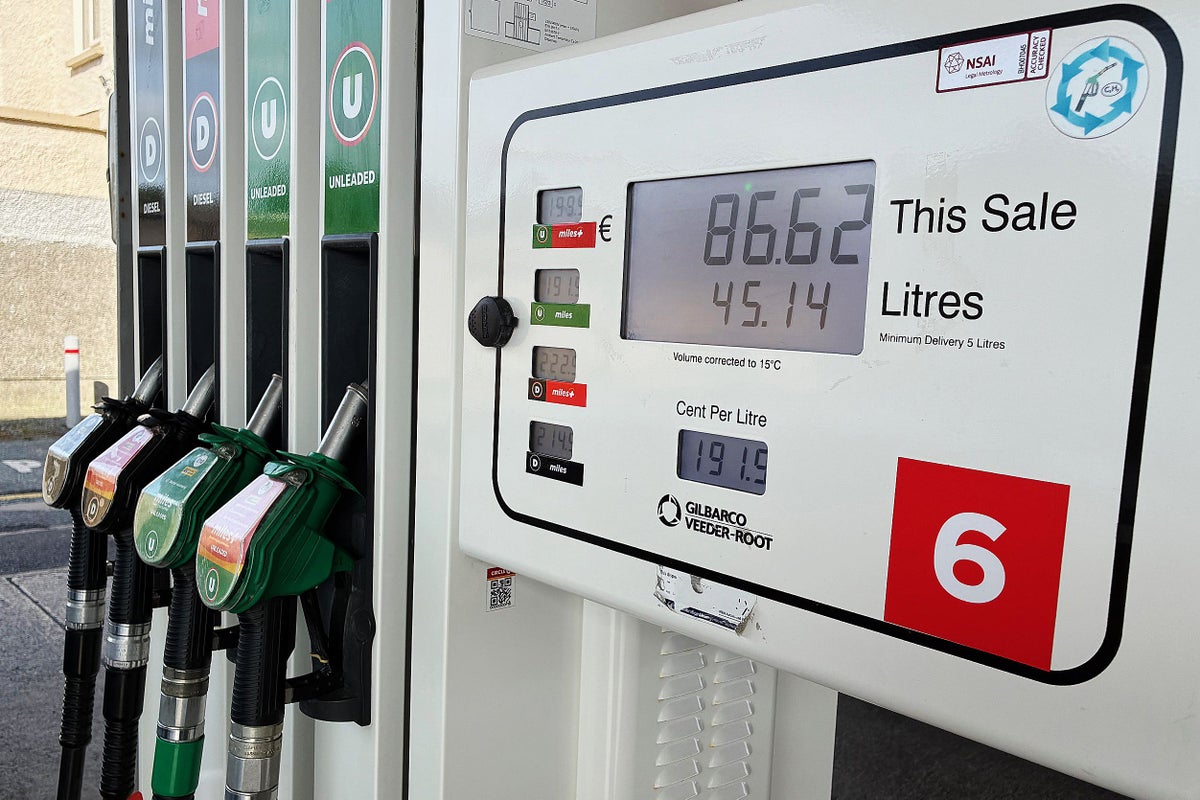
The ONS found that the average price of petrol rose by 8.6p per litre between February and March to 140.2p per litre. This marked the highest price since August 2024.
Diesel prices meanwhile increased by 17.6p per litre in March to an average of 158.7p per litre, the highest price since November 2023.
Office for National Statistics chief economist Grant Fitzner said: “Inflation climbed in March, largely due to increased fuel prices, which saw their largest increase for over three years.
“Air fares were another upward driver this month, alongside rising food prices.
“The only significant offset came from clothing costs, where prices rose by less than this time last year.”
The data revealed that the cost of air travel also increased significantly, with inflation of 14.5% compared with the same month last year.
The rise in air fares, which analysts have partly linked to the early timing of the Easter holidays, was the highest since July last year.
Meanwhile, food and non-alcoholic drink prices were up 3.7% year-on-year in March, accelerating from 3.3% inflation in the previous month.
This included another acceleration in the price of sweets and chocolates, which were up 10.6% year-on-year.
Elsewhere, clothing and footwear had a downward pressure on inflation, as prices dipped 0.8% for the month.
Sales and discounting activity pulled inflation in the category to its lowest level since March 2021.
The rise in the overall rate of inflation drives the UK further away from the 2% inflation target set by the Government and the Bank of England.
Ms Reeves said: “We’re acting to protect people from unfair price rises if they occur to bring down food prices at the till, and are boosting long-term energy security — building a stronger, more secure economy.”
James Smith, developed markets economist at ING, said: “The latest rise in UK headline CPI tells us virtually nothing about the scale and duration of the inflation wave to come.
“The Bank of England is still flying blind, with the conflict unresolved, but the limited amount of survey data available so far suggests little cause for alarm on inflation.”
Anna Leach, chief economist at the Institute of Directors, said: “As inflation has come in in line with revised expectations, and given yesterday’s labour market data which showed a fall in vacancies and further downward progress in wage growth, interest rates should hold at next week’s MPC (Monetary Policy Committee) meeting.
“But there remains tremendous uncertainty over the outlook for energy supply and prices.”

The Manx treasury says plans are in place to protect essential services in the wake of the Iran war.
Source link

Malaysia-based Karex produces more than five billion condoms a year and supplies global brands like Durex and Trojan.
Source link


Burkina Faso fully nationalises leading cotton firm Sofitex

Marcus Smart’s breakout game helps Lakers go up 2-0 on Rockets

Why Guardiola’s legacy could exceed Ferguson’s, Wenger’s, Klopp’s

-

 Fashion6 days ago
France’s LVMH Q1 revenue falls 6%, shows resilience amid Iran war
-

 Sports1 week ago
The case for Man United’s Fernandes as Premier League’s best
-
 Business1 week ago
UK could adopt EU single market rules under new legislation
-

 Entertainment7 days ago
Is Claude down? Here’s why users are seeing errors
-
 Business1 week ago
Delta Air Lines unveils first new Delta One suite in premium cabin arms race
-

 Fashion1 week ago
Asia claims largest share of markets on Kearney FDI Confidence Index
-

 Sports7 days ago
PSL 11: Peshawar Zalmi win toss, opt to field first against Quetta Gladiators
-

 Tech7 days ago
The Deepfake Nudes Crisis in Schools Is Much Worse Than You Thought