

Politics
UN chief affirms Iran’s undeniable right to self-defense amid foreign aggression


The UN secretary-general has affirmed Iran’s undeniable right to self-defense against foreign aggression, amid the latest unprovoked US-Israeli aggression against the Islamic Republic.
Antonio Guterres made the remarks during a telephone conversation with Foreign Minister Abbas Araghchi on Friday.
The UN chief stressed the need to prevent the escalation of tensions and to reduce their humanitarian and security consequences in the region.
The comments came more than three weeks into the unlawful attacks that have targeted Iran’s military and civilian infrastructures alike, leading to the martyrdom of numerous people, including the Leader of the Islamic Revolution Ayatollah Seyyed Ali Khamenei and senior commanders as well as hundreds of women and children.
According to Iran’s Red Crescent Society, the atrocities have damaged more than 70,000 civilian targets such as residential areas, business centers, schools, and vital infrastructures.
The Islamic Republic has retaliated by targeting sensitive and strategic Israeli and American assets throughout the region, including those lying in the regional countries cooperating with the aggressors.
Tehran has underlined its right to reprisal in line with international law, while urging states across the region to prevent their respective territories from being used as launch pads for attacks on Iranian soil.
- SPA unanimously re-elects Kim.
- 687 deputies elected to new SPA term.
- 99.93% backing for deputies, 0.07% against.
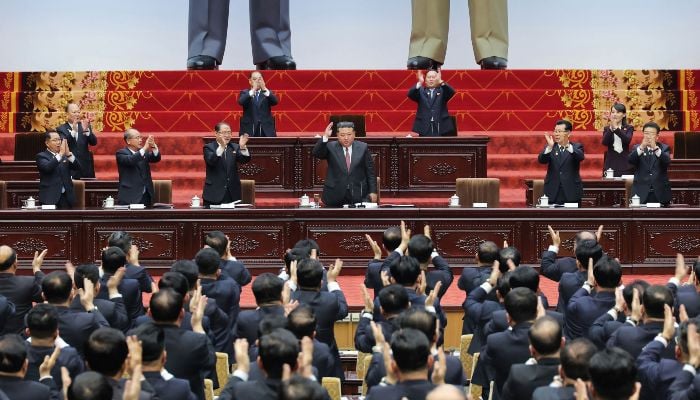
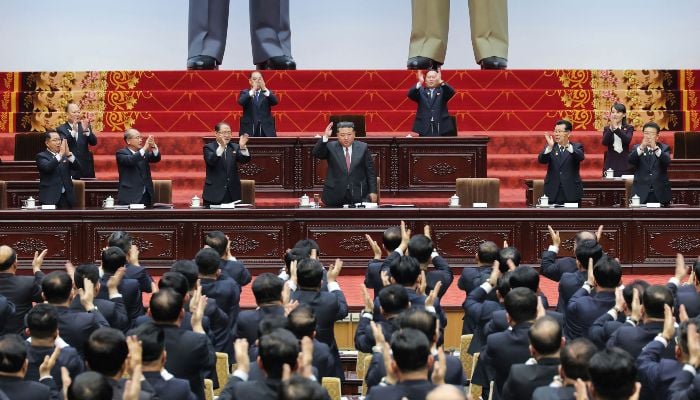
SEOUL: North Korea’s legislature has re-elected Kim Jong Un as president of state affairs, state media reported on Monday.
Kim’s reappointment as head of the nation’s highest policymaking and governing body, the State Affairs Commission, was announced by the state news agency KCNA.
Critics argue that elections in North Korea are pre-determined and designed to give the country’s leadership a veneer of democratic legitimacy.
“The Supreme People’s Assembly of the DPRK reelected Comrade Kim Jong Un as President of the State Affairs of the Democratic People’s Republic of Korea at the First Session, the first state affairs activity of its 15th term, on March 22,” KCNA reported.
The report said the decision to re-elect Kim to the “top post” reflected “the unanimous will and desire of all the Korean people”.
Kim is the third-generation ruler of the nuclear-armed state founded by his grandfather Kim Il Sung in 1948. He has ruled the country since his father’s death in 2011.
The election is a “highly choreographed event with a pre-determined outcome”, said Lee Ho-ryung of the Korea Institute for Defence Analyses.
“Throughout the third-generation rule, the North has staged such events to showcase a procedure in an attempt to achieve political legitimacy,” she said.
“But no one thinks any different outcome would emerge from it.”
Photos released by KCNA show Kim dressed in a formal western suit and seated at the centre of a stage, flanked by top officials in front of two giant statues of his father Kim Jong Il and grandfather.
Barometer
Prior to the event, 687 deputies were elected to the SPA, with North Koreans over 17 given the choice of approving or rejecting the sole candidate put forward by the ruling party.
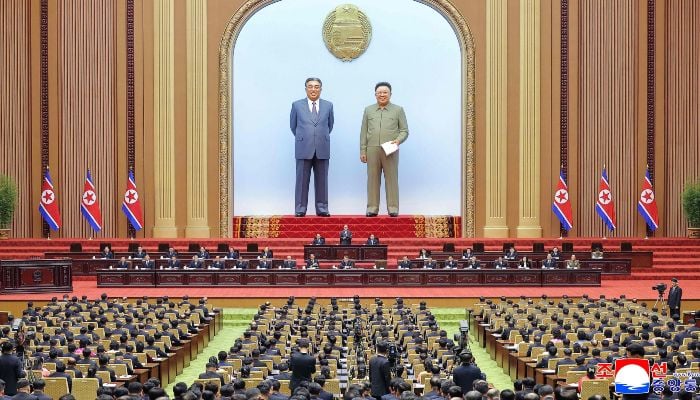
The new deputies were duly approved with 99.93% of votes in favour and 0.07% against, KCNA reported earlier, with turnout at 99.99%.
The Pyongyang assembly hall was “full of the extraordinary political awareness and revolutionary enthusiasm” by the newly elected members, it said.
Analysts say the current assembly session may also take up possible constitutional amendments that could include formally codifying inter-Korean relations as those between “two hostile states”.
The language Kim uses to describe his stance towards South Korea in his assembly speech will be a “barometer” of his inter-Korea plans, Hong Min, a senior analyst at the Korea Institute for National Unification, told AFP.
“The extent to which terms such as ‘national unification’ or ‘Korean unity’ are removed and replaced by aggressive expressions including ‘territorial control’ could serve as a barometer of his ideological framework,” he said.
The key point lies in how far he will “flesh out issues of territory, territorial waters and airspace” in dealing with Seoul, he added.
The gathering follows a five-yearly meeting of the ruling party last month.
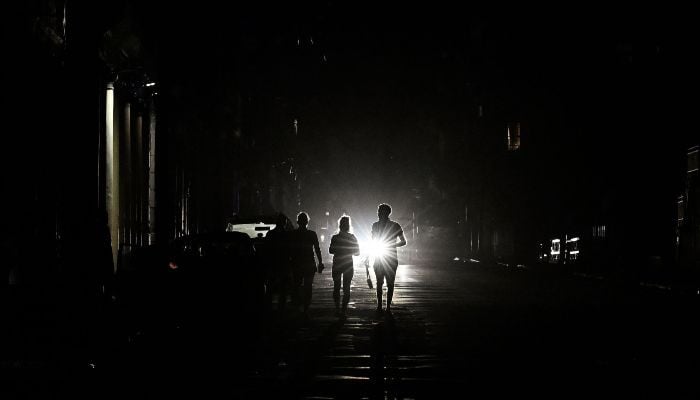
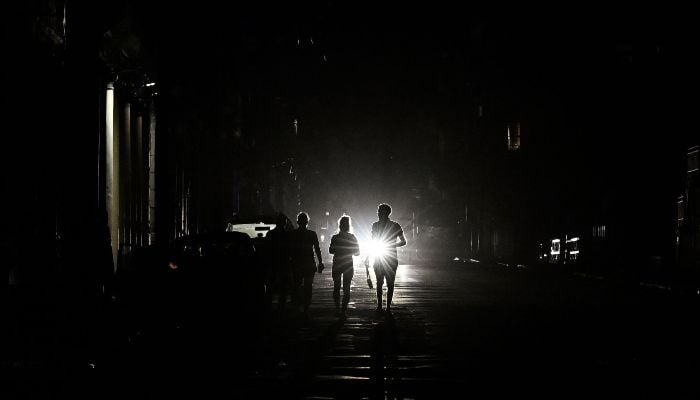
HAVANA: Cuba’s power grid was restored, officials said, a day after the second nationwide blackout in a week as the crisis-hit island struggles under a US oil blockade.
Two-thirds of Havana had power again in the afternoon, the capital’s electricity company said, a day after the energy ministry reported a “total disconnection” of the national electric system in the country of 9.6 million people.
“Thanks to the efforts of our electrical workers, the SEN (National Electric System) was restored,” Prime Minister Manuel Marrero Cruz said on X late Sunday.
Authorities cautioned, however, that demand would still exceed supply.
The outage comes as Cuba’s communist government has faced growing pressure from US President Donald Trump, who imposed the de facto oil blockade in January and mused this past week about “taking” the Caribbean island.
A top Cuban diplomat said the country’s military was “preparing these days for the possibility of military aggression.”
“We truly hope that it doesn’t occur,” Deputy Foreign Minister Carlos Fernandez de Cossio told NBC’s ‘Meet the Press’ in an interview taped before the blackout.
He said Havana was willing to continue talking with Washington, but discussing changes to its political system was off the table.
“Cuba has no quarrel with the United States. We do have the need and the right to protect ourselves. But we are willing to sit down,” Fernandez de Cossio said in the interview, which aired Sunday.
Restless night
There have been seven nationwide blackouts since 2024, making life more difficult for Cubans who fear food will spoil in refrigerators, among other problems in a country in economic crisis.
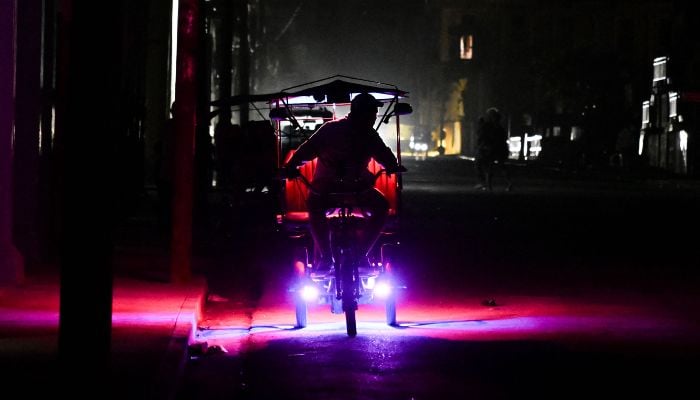
“The truth is, it gets harder every day to live with this situation,” Alina Quinones, a 48-year-old nurse, told AFP as she headed to the Havana hospital where she works, after barely sleeping.
She had no power, internet or phone connection, making it impossible to reach relatives in Matanzas, a city east of the capital.
Francisco Gonzalez, a 79-year-old retiree, also said he had a sleepless night in the dark, “sitting in an armchair at home, waiting for the power to come back on.”
Regular outages, as well as persistent shortages of food, medicine and other basics, are fueling public frustration, with people banging pots at night as a form of protest.
In a rare moment of violence, demonstrators vandalised a provincial office of the Cuban Communist Party last weekend.
The breakdowns have intensified since Cuba’s main regional ally and oil supplier, Venezuela’s socialist leader Nicolas Maduro, was captured in a US military operation in January.
Trump subsequently threatened to impose tariffs on countries that sell oil to Cuba.
No oil has arrived since January 9, hitting the power sector, while public transport has dwindled and airlines have curtailed flights to the island, a blow to its all-important tourism business.
‘Very severe’
The latest grid failure was due to an outage in a generating unit at one of the country’s ageing thermoelectric plants, triggering a domino effect in the system, according to authorities.
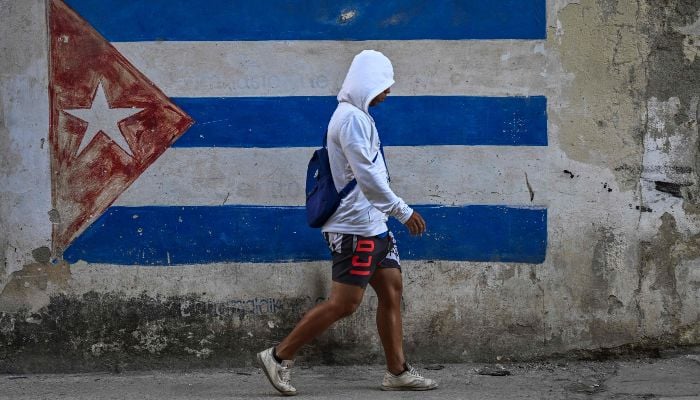
The blackout occurred as an international aid convoy began arriving in Cuba this week, bringing sorely-needed medical supplies, food, water and solar panels to the Caribbean island.
But getting oil to power its decades-old thermoelectric plants is becoming increasingly urgent.
“It is very severe. And we are acting as proactively as we can to cope with the situation,” Fernandez de Cossio told NBC.
“We do hope that fuel will reach Cuba one way or the other and that this boycott that the United States has been imposing does not last and cannot be sustained forever,” he said.
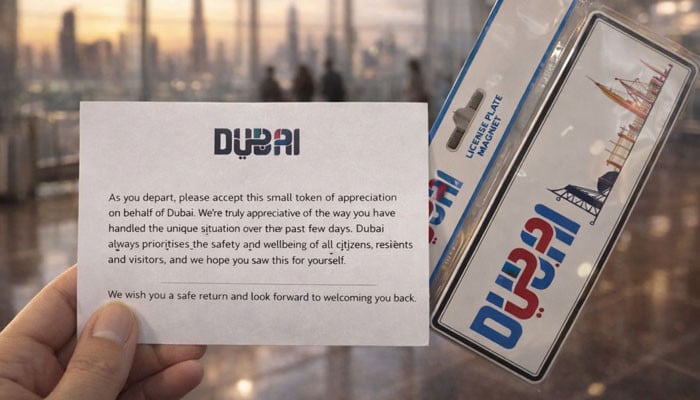
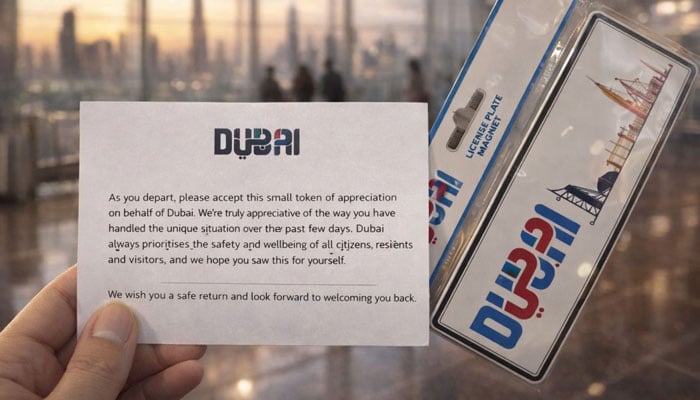
Dubai: Dubai has introduced a thoughtful gesture to express care and appreciation for travellers, offering departing passengers souvenir gifts and thank-you messages as regional tensions continue.
Dubai authorities said the initiative reflects gratitude for visitors’ patience and cooperation during a period of heightened security concerns, while reaffirming the emirate’s commitment to safety and well-being.
At Dubai Airports, passengers leaving the city are being handed small tokens of appreciation along with printed cards thanking them for their understanding and wishing them a safe journey home, while expressing hope to welcome them back soon.
Although no formal statement has been issued, the move appears aimed at maintaining traveller confidence and reinforcing Dubai’s image as a reliable global hub.
Airport operations have continued with some disruption despite the regional situation, supported by contingency planning and enhanced safety measures for residents and international travellers alike.


Thailand’s apparel exports rise 5.6% to $2.3 bn in 2025

North Korea’s Kim reappointed as president of state affairs

Cuba restores power grid after latest blackout

Tips and Advice for Buying Used or Refurbished Electronics

UAE savings strategies 2026 explained: Best apps, tools, budget rules and smart money hacks to beat rising cost of living in emirates – The Times of India

Strategic oil stocks to be released ‘immediately’ in Asia and Oceania: IEA

-
 Tech1 week ago
Tips and Advice for Buying Used or Refurbished Electronics
-
Business1 week ago
UAE savings strategies 2026 explained: Best apps, tools, budget rules and smart money hacks to beat rising cost of living in emirates – The Times of India
-
 Entertainment1 week ago
Meet one of the last true paparazzi
-
 Entertainment1 week ago
Strategic oil stocks to be released ‘immediately’ in Asia and Oceania: IEA
-
 Entertainment1 week ago
Iran at war
-

 Sports1 week ago
College Basketball Invitational abruptly cancels 2026 tournament
-

 Sports1 week ago
Japan suffers shocking collapse to Venezuela in World Baseball Classic
-

 Sports1 week ago
Transfer rumors, news: Real Madrid open to Camavinga exit, as Premier League clubs circle