

Politics
US, Iran to seek de-escalation in nuclear talks in Oman: regional official

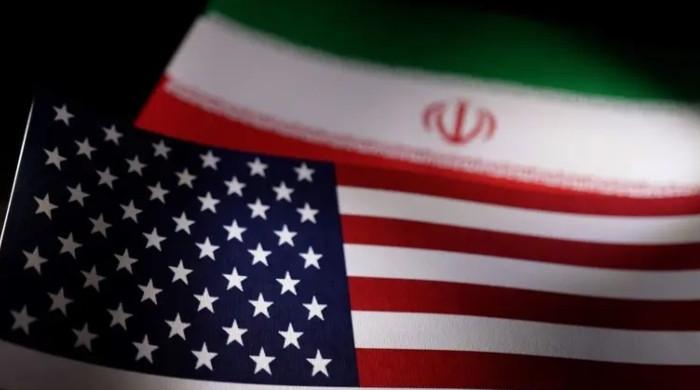
- Tensions escalated after anti-government protests in Iran.
- Meeting moved to Oman as Iran demands bilateral talks.
- Iran wants talks to focus only on its nuclear programme.
The United States and Iran are due to hold talks in Oman on Friday after Tehran requested a change of venue to limit negotiations to its nuclear programme, a regional official said, with a build-up of US forces in the Middle East raising fears of a confrontation.
Iran wanted the meeting to take place in Oman as a continuation of previous rounds of talks held in the Gulf Arab country on its nuclear programme, asking for a change of location from Turkiye to avoid any expansion of the discussions to issues such as Tehran’s ballistic missiles, the regional official said.
Iran has said it will not make concessions on its formidable ballistic missile programme — one of the biggest in the Middle East — calling that a red line in negotiations.
Tehran, which says it replenished its stockpile of ballistic missiles since coming under attack from Israel last year, has warned that it will unleash its missiles to defend the itself if its security is under threat.
The regional official, speaking on condition of anonymity, said Iran had since the beginning stressed that it would only discuss its nuclear programme, while Washington wanted other issues on the agenda.
Oil prices extended gains on Wednesday after the US shot down an Iranian drone and armed Iranian boats approached a US-flagged vessel in the Strait of Hormuz, rekindling fears of an escalation between Washington and Tehran.
Iran sought bilateral talks
US President Donald Trump has warned that “bad things” would probably happen if a deal could not be reached, ratcheting up pressure on Iran in a standoff that has led to mutual threats of air strikes and stirred fears of a wider war.
On Tuesday, the US military shot down an Iranian drone that “aggressively” approached the Abraham Lincoln aircraft carrier in the Arabian Sea, the US military said, in an incident first reported by Reuters.
Trump told reporters at the White House on Tuesday: “We are negotiating with them right now.” He did not elaborate and declined to say where he expected talks to take place.
A source familiar with the situation said Trump’s son-in-law, Jared Kushner, was due to take part in the talks, along with US Special Envoy Steve Witkoff and Iranian Foreign Minister Abbas Araqchi.
Ministers from several other countries in the region including Pakistan, Saudi Arabia, Qatar, Egypt and the United Arab Emirates had also been expected to attend, but a regional source told Reuters that Tehran wanted only bilateral talks with the US.
In June, the United States struck Iranian nuclear targets, joining in at the close of a 12-day Israeli bombing campaign.
More recently, the US navy built up forces in the region following protests against the government in Iran, the deadliest since the 1979 revolution.
Trump, who stopped short of carrying out threats to intervene, has since demanded nuclear concessions from Iran, sending a flotilla to its coast.
Iran’s leadership is increasingly worried a US strike could break its grip on power by driving an already enraged public back onto the streets, according to six current and former Iranian officials.
The priority of the diplomatic effort is to avoid conflict and de-escalate tension, a regional official told Reuters earlier.
Tanker incident
Iranian sources told Reuters last week that Trump had demanded three conditions for the resumption of talks: zero enrichment of uranium in Iran, limits on Tehran’s ballistic missile programme and an end to its support for regional proxies.
Iran has long said all three demands are unacceptable infringements of its sovereignty, but two Iranian officials told Reuters its rulers saw the ballistic missile programme, rather than uranium enrichment, as the bigger obstacle.
An Iranian official said there should not be preconditions for talks and that Iran was ready to show flexibility on uranium enrichment, which it says is for peaceful, not military purposes.
Since the US strikes in June, Tehran has said its uranium enrichment work has stopped.
In another incident on Tuesday, this one in the Strait of Hormuz, the US Central Command said Iran’s Islamic Revolutionary Guard Corps forces had approached a US-flagged tanker at speed and threatened to board and seize it.
Maritime risk management group Vanguard said the Iranian boats ordered the tanker to stop its engine and prepare to be boarded. Instead, the tanker sped up and continued its voyage.
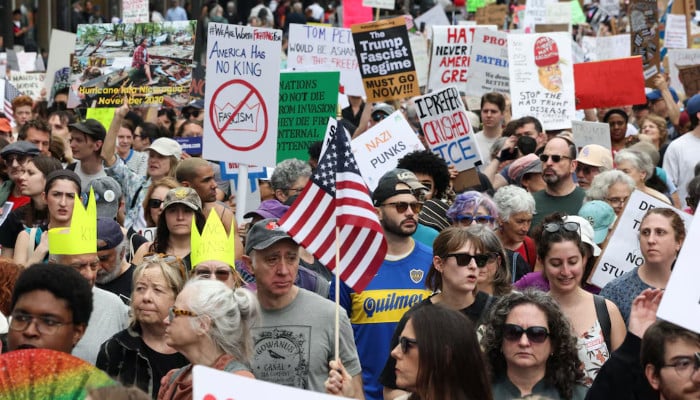
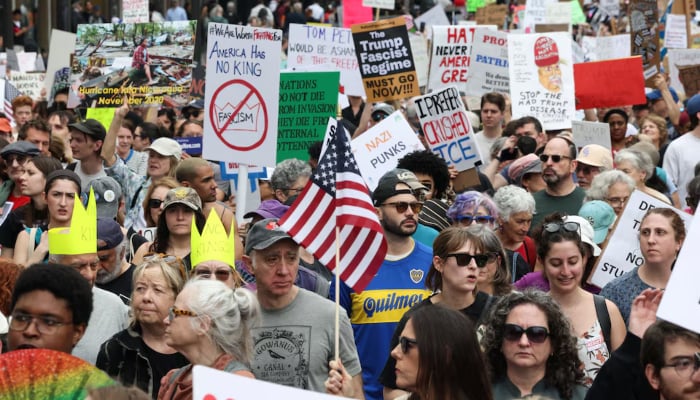
MINNEAPOLIS: Massive nationwide protests against US President Donald Trump are expected Saturday as millions of people vent fury over what they see as his authoritarian bent and other forms of cruel, law-trampling governance.
It is the third time in less than a year that Americans will take to the streets as part of a grassroots movement called “No Kings,” the most vocal and visual conduit for opposition to Trump since he began his second term in January 2025.
And now they have something new to fume over — the war in Iran that Trump launched alongside Israel, with ever-shifting goals and timelines for completion.
The first such nationwide protest day came in June on Trump’s 79th birthday and coincided with a military parade in Washington that he insisted on holding.
Several million people turned out, from New York to San Francisco and many places in between.
The second “No Kings” day in October drew an estimated seven million protesters, according to organisers.
The goal now is to bring out even more people on Saturday, as Trump’s approval rating is low at around 40% and midterm elections loom in November, when Trump’s Republicans could lose control of both chambers.
Just as Trump is worshipped by many in his “Make America Great Again” movement, on the other side of America’s wide political chasm, he is disliked or even loathed with equal passion.
Trump foes bemoan his penchant for ruling by executive decree, his use of the Justice Department to prosecute opponents, his embrace of fossil fuels and climate change denial even as the planet warms, his fight against racial and gender diversity programs, and his newfound taste for flexing US military power after campaigning as a man of peace.
“Since the last time we marched, this administration has dragged us deeper into war,” said Naveed Shah of Common Defence, a veterans association that belongs to the “No Kings” movement.
“At home, we’ve watched citizens killed in the streets by militarised forces. We’ve seen families torn apart and immigrant communities targeted. All of it done in the name of one man trying to rule like a king,” Shah said.
Springsteen in Minneapolis
Organisers say more than 3,000 rallies are planned, an increase from the last protest day, in major cities coast to coast and in suburbs and rural areas — even in the Alaskan town of Kotzebue, above the Arctic circle.
Minnesota will be a key focal point, returning to the limelight months after becoming ground zero for the national debate over Trump’s violent immigration crackdown.
Legendary rocker Bruce Springsteen, a fierce critic of the president, is scheduled to perform in St Paul, the capital of the northern state, his song “Streets of Minneapolis.”
It is a ballad he wrote and recorded in the space of 24 hours in memory of Renee Good and Alex Pretti, Americans shot and killed by federal agents during protests in frigid January weather against Trump´s immigration offensive.
“Masked secret police terrorising our communities. An illegal, catastrophic war putting us in danger and driving up our costs. Attacks on our freedom of speech, our civil rights, our freedom to vote. Costs pushing families to the brink. Trump wants to rule over us as a tyrant,” the “No Kings” movement said.
It said what began in 2025 as a simple day of defiance has mushroomed into a powerful movement of national resistance to the Trump administration.
Organisers say two-thirds of those who plan to rally Saturday do not live in big cities, which in America are often Democratic strongholds — a data point that is up sharply since the last protest.
“America is at an inflection point,” said Randi Weingarten, president of the American Federation of Teachers.
“People are afraid, and they can’t afford basic necessities. It’s time the administration listened and helped them build a better life rather than stoking hate and fear.”
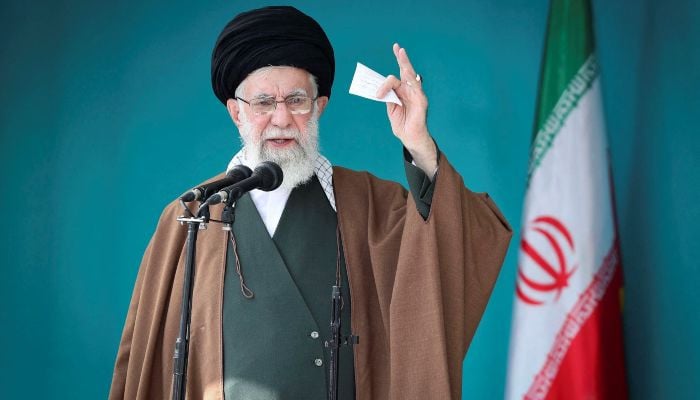
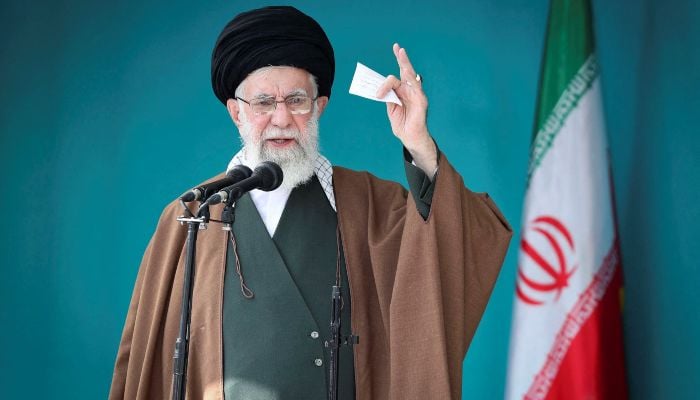
US-Israeli strikes on Iran have martyred several senior political and military figures, hitting the Islamic Republic’s core leadership as the regional war disrupts energy markets and global shipping.
Below are some of the most prominent figures killed:
Supreme Leader
Ayatollah Ali Khamenei, who as Supreme Leader since 1989 built an iron grip over Iran while entrenching hostility towards the US and Israel, was martyred aged 86 in a US-Israeli air strike on his compound on February 28.
His more than three-decade rule was marked by consolidation of power through the security apparatus, and expansion of Iran’s regional influence, even as tensions over its nuclear programme repeatedly brought it into confrontation with the West.
Senior officials
Ali Larijani, secretary of the Supreme National Security Council and a veteran powerbroker, was assassinated at 67 in a US-Israeli air strike in the Pardis area on March 17, along with his son and one of his deputies, Iranian media reported.
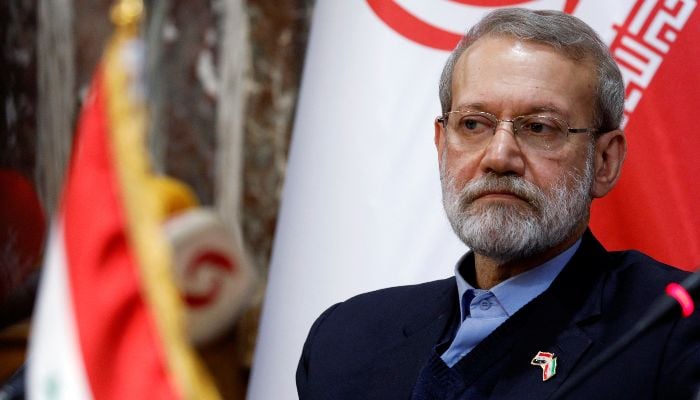
A former Revolutionary Guards commander and nuclear negotiator, he was a close adviser to the slain Supreme Leader and played an important role in shaping Iran’s security and foreign policy.
Esmail Khatib, Iran’s intelligence minister, was eliminated in an Israeli strike on March 18. A hardliner cleric and politician, he worked in Ayatollah Ali Khamenei’s office and was mentored by him, before heading the civilian intelligence apparatus in August 2021.
Ali Shamkhani, a close adviser to Khamenei and a key figure in Iran’s security and nuclear policymaking, was cut down in US-Israeli strikes on Tehran on February 28.
He had earlier survived an attack on his home during the 12-day June war between Israel and Iran.
Top military commanders
Mohammad Pakpour, commander-in-chief of the IRGC, Iran’s most powerful military force, was assassinated in the February 28 strikes in Tehran, Iranian state media said.
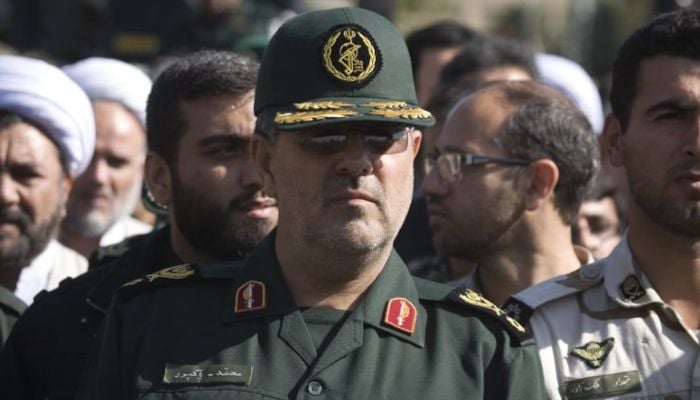
He rose through the ranks to lead the Revolutionary Guards after his predecessor Hossein Salami was eliminated in the 12-day war in June.
Aziz Nasirzadeh, Iran’s defence minister and a career air force officer, was martyred in the same wave of strikes targeting senior leadership in Tehran on February 28, according to sources. He played a key role in military planning and defence policy.
Abdolrahim Mousavi, chief of staff of Iran’s armed forces, was assassinated in the February 28 strikes during what Iranian media said was a meeting of senior leadership in Tehran. He was responsible for coordinating Iran’s military branches and overseeing conventional forces.
Gholamreza Soleimani, commander of Iran’s Basij paramilitary force, was eliminated in US-Israeli strikes on March 17, according to Iranian state media. A senior Revolutionary Guards officer, he led the force central to internal security and the enforcement of state authority.
Behnam Rezaei, the Revolutionary Guards’ navy intelligence chief, was martyred in an Israeli strike in the port city of Bandar Abbas on March 26, according to the Israeli military, which said he was responsible for collecting information on regional countries.
- Trump reiterates claims Tehran ready to make deal.
- Talks ongoing to negotiate end to month-long war: Trump.
- “Tehran’s leadership, nuclear programme suffered damage.”
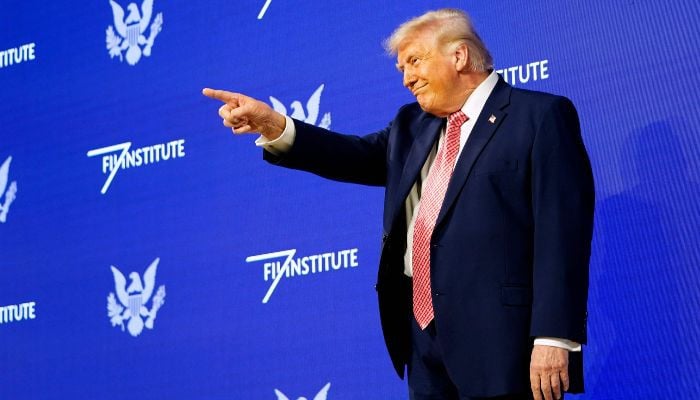
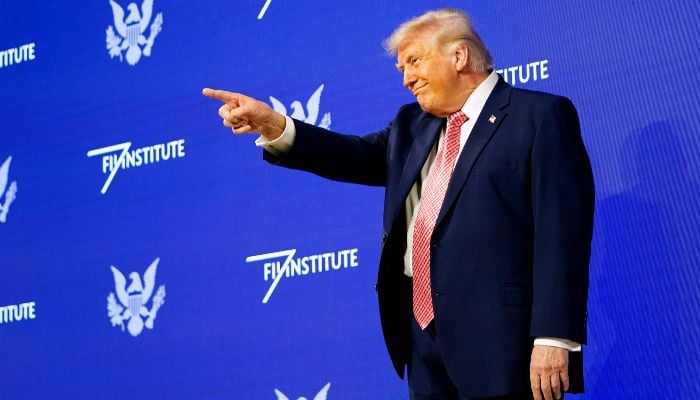
WASHINGTON: US President Donald Trump on Friday insisted Iran must open up the Strait of Hormuz to oil traffic to make a peace deal — and dubbed the crucial waterway the “Strait of Trump.”
Trump, who has renamed several buildings in Washington after himself during his second term, said his comment was a “mistake” but then added that “there’s no accidents with me.”
Repeating his claims that Tehran is ready to make a deal despite its denials, the 79-year-old US leader said that talks were underway to negotiate an end to the month-long conflict.
Trump added that Iran was “on the run” and reiterated assertions that Tehran’s leadership, navy, air force and nuclear programme had all suffered significant damage.
“We’re negotiating now, and it would be great if we could do something, but they have to open it up,” Trump told a Saudi-backed FII Priority investment forum in Miami.
“They have to open up the Strait of Trump — I mean Hormuz. Excuse me, I’m so sorry. Such a terrible mistake.”
Trump said the media would pounce upon the comment, but then added “there’s no accidents with me, not too many.”
He also talked about how he had ordered the renaming of the Gulf of Mexico as the “Gulf of America” shortly after returning to power.
During a cabinet meeting on Thursday, Trump said it was “an option” to take control of Iran’s oil as the United States has effectively done with Venezuela — despite the fact that the war is still raging.
Republican Trump, who rose to fame as a property tycoon with his name plastered across his own skyscrapers, made similar teasing comments before renaming Washington’s Kennedy Centre the “Trump-Kennedy Centre.”
A peace institute in Washington was also renamed after Trump last year.
The Strait of Hormuz was open to international shipping before the conflict, but the narrow waterway has since ground to a standstill, leading to a surge in global energy prices.
Earlier Friday, US Secretary of State Marco Rubio voiced alarm that Iran would seek to establish a permanent “tolling system” for vessels in the strait, through which one-fifth of global oil normally transits.


NHL playoff watch: Guide to all 15 games on Showdown Saturday

King Charles health update leaves Prince William worried: ‘upsetting’

Zayn Malik shares personal video message on ‘Mind of Mine’ 10th anniversary

-
 Business1 week ago
Flipkart group CFO to leave co amid IPO plans – The Times of India
-

 Fashion1 week ago
China’s textile & apparel exports surge 17% to $50 bn in Jan-Feb 2026
-
 Business1 week ago
Video: The Effects of High Oil Prices
-

 Sports1 week ago
Rating Adidas’ 2026 World Cup away shirts: Argentina, Spain, Mexico and more
-

 Sports1 week ago
American Conference Commissioner Tim Pernetti thanks Trump for Army-Navy game executive order
-
Tech1 week ago
The Corsair 4000D RS PC Case Keeps Your System Cool
-

 Tech1 week ago
‘Uncanny Valley’: Nvidia’s ‘Super Bowl of AI,’ Tesla Disappoints, and Meta’s VR Metaverse ‘Shutdown’
-

 Tech1 week ago
Gamers Hate Nvidia’s DLSS 5. Developers Aren’t Crazy About It, Either