

Business
US-Israel-Iran War: Strait Of Hormuz, A Global Oil Transit Chokepoint, Hit? Will It Impact India?

Last Updated:
US-Israel-Iran War And Strait Of Hormuz: How has the conflict impacted the traffic in the global oil shipping lane? What does it mean for India and the world? News18 explains




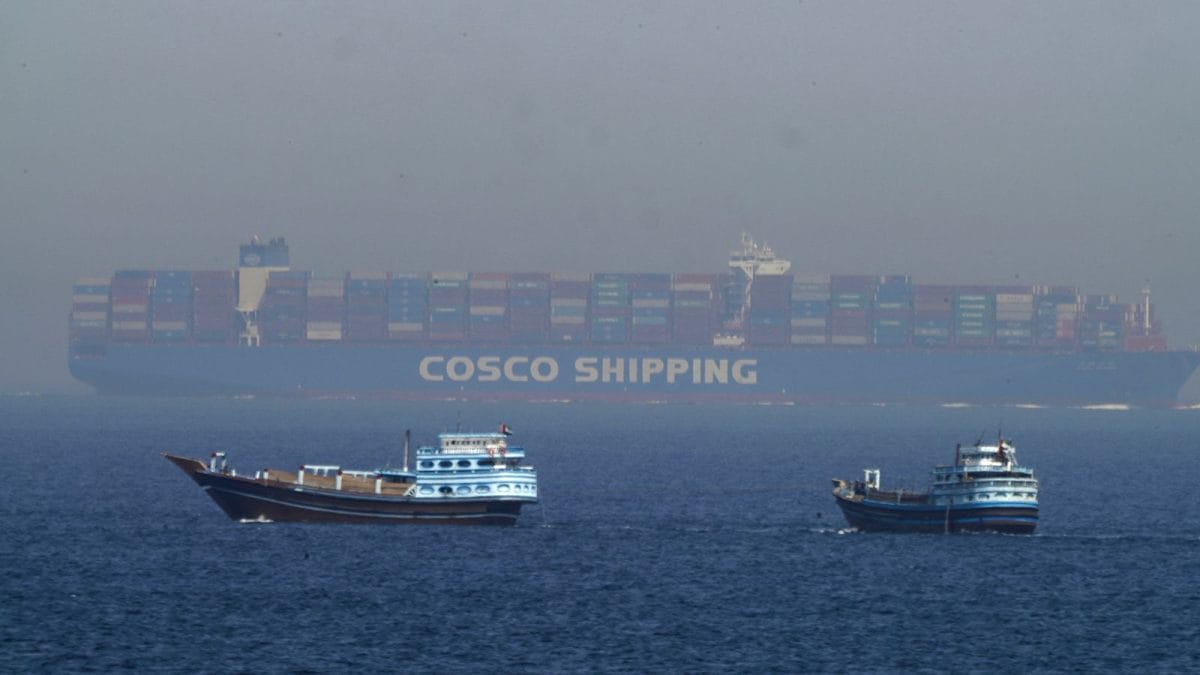
Two traditional dhows sail by a large container ship in the Strait of Hormuz. (AP)
The Strait of Hormuz is currently the focus of a severe global crisis. Following joint Israeli-United States strikes on Iran on February 28, the Islamic Revolutionary Guard Corps (IRGC) has reportedly closed the waterway to all maritime traffic.
Where is it? How was the conflict impacted the traffic? What does it mean for India and the world? News18 explains
Where is the Strait of Hormuz?
It is a narrow, strategically vital waterway in the Middle East that serves as the only sea passage from the Persian Gulf to the open ocean.
It links the Persian Gulf (to the west) with the Gulf of Oman and the Arabian Sea (to the southeast).
Bordering Countries
North Coast: Iran
South Coast: The Musandam Peninsula (an exclave of Oman) and the United Arab Emirates
It is about 21 to 33 miles (33–54 km) wide at its narrowest point. Due to the narrowness, ships must use two-mile-wide lanes (one inbound, one outbound) separated by a two-mile buffer zone to prevent collisions.
Major islands within or near the strait include Qeshm, Hormuz, Larak, and Hengam, most of which are controlled by Iran.
Key Oil Shipping Lane: Why the Strait of Hormuz matters
The Strait of Hormuz is the world’s most critical oil chokepoint. It connects the Persian Gulf with the Gulf of Oman and the Arabian Sea. It is approximately 21 miles (33 km) wide at its narrowest point.
It handles approximately 20% of global oil consumption (around 20 million barrels per day) and 20-25% of the world’s liquefied natural gas (LNG), primarily from Qatar. Over 80% of the oil passing through the strait is destined for Asia, with China, India, Japan, and South Korea being the primary importers.
Alternative routes are limited and cannot fully compensate for a total closure of the strait.
Saudi Arabia can divert up to 5 million barrels per day via its East-West Pipeline to the Red Sea. The UAE operates the Habshan-Fujairah pipeline, which can carry roughly 1.5 million barrels per day directly to the Gulf of Oman. Iraq has a pipeline through Turkey, but it primarily handles crude from northern fields.
How has the US-Israel-Iran conflict hit the Strait Of Hormuz?
While Iran has not issued a formal legal confirmation of a total blockade, vessels in the region are receiving VHF radio transmissions from the IRGC stating that “no ship is allowed to pass”.
The U.S. has surged naval assets to the region, including the USS Gerald R. Ford and the USS Abraham Lincoln, in what is described as the largest deployment since 2003.
The impact
Forecasts for Brent crude have already been hiked toward $100 per barrel due to supply chain risks.
At least three Pakistani ships operated by the Pakistan National Shipping Corporation were reportedly stopped by Iran on March 1.
Ship traffic has plummeted, with many tankers staying in port or turning back, though some continue to transit at their own risk.
BREAKING:Iran has attacked the Palau-flagged oil tanker Skylight as it was passinf through the Strait of Hormuz right off the coast of Oman.
4 sailors wounded in the attack. The entire crew has been evacuated. pic.twitter.com/wDX5X2czq6
— Visegrád 24 (@visegrad24) March 1, 2026
Attack reported
A Palau-flagged oil tanker, Skylight, was reportedly attacked while transiting through the Strait of Hormuz near the coast of Oman, amid escalating tensions in the region. According to reports circulating on social media, the vessel was struck while passing through the strategic waterway, triggering a fire onboard. Visuals shared online show thick plumes of black smoke rising from the tanker, with flames visible near the deck. Initial reports claim that four sailors were injured in the attack. The entire crew has since been evacuated from the vessel. The extent of the damage to the tanker remains unclear
What does it mean for India?
India is facing a high-stakes energy and economic crisis due to the reported closure of the Strait of Hormuz by Iran. India is the world’s third-largest oil consumer and is uniquely vulnerable because its dependence on this specific route has actually increased in early 2026, say experts.
Approximately 50% of India’s total crude oil imports (around 2.6 million barrels per day) pass through the Strait. This volume primarily comes from Iraq, Saudi Arabia, the UAE, and Kuwait.
India is even more vulnerable in terms of LPG (Cooking Gas), as it imports almost 100% of its LPG through this chokepoint. A sustained closure would immediately threaten the Pradhan Mantri Ujjwala Yojana and domestic household energy.
About 60% of India’s Liquefied Natural Gas imports, mainly from Qatar and the UAE, transit the Strait. Every $1 increase in the price of oil adds roughly $2 billion to India’s annual import bill.
Rising fuel costs are expected to spike domestic inflation, potentially forcing the Reserve Bank of India (RBI) to keep interest rates high. The increased demand for dollars to pay for costlier oil is also putting downward pressure on the Indian Rupee (INR), according to analysts.
Beyond energy, over 13% of India’s non-oil exports (worth $47.6 billion) to Gulf nations are at risk due to shipping disruptions.
India has enough crude oil in its Strategic Petroleum Reserves (SPR) and commercial stocks to last about 10–15 days, plus another 7–10 days of finished fuel inventories. While India had recently reduced its intake of Russian oil, officials have indicated they may pivot back to Moscow if Middle Eastern supplies remain blocked, though transit from Russia takes nearly 30 days compared to 5 days from the Gulf, according to reports.
The Ministry of External Affairs has activated contingency plans for the possible evacuation of the 9–10 million Indians living in the Gulf region through Operation Sindhu-II.
External Affairs Minister S. Jaishankar is currently engaging in “shuttle diplomacy,” calling for restraint from both Iran and Israel while emphasizing the respect of sovereignty and territorial integrity.
With Agency Inputs
March 01, 2026, 18:10 IST
Read More

UK inflation lifted to its highest since December after a sharp jump in diesel and petrol prices caused by the conflict in the Middle East, according to official figures.
Chancellor Rachel Reeves said the Iran crisis was “not our war, but it is pushing up bills for families and businesses” as a result.
The rate of Consumer Prices Index (CPI) inflation increased to 3.3% in March from 3% in February, the Office for National Statistics said.
The increase was in line with predictions from economists.
Higher motor fuel was the main driver of the acceleration in inflation, increasing by 8.7% month-on-month – the largest increase since June 2022, shortly after the Russian invasion of Ukraine.
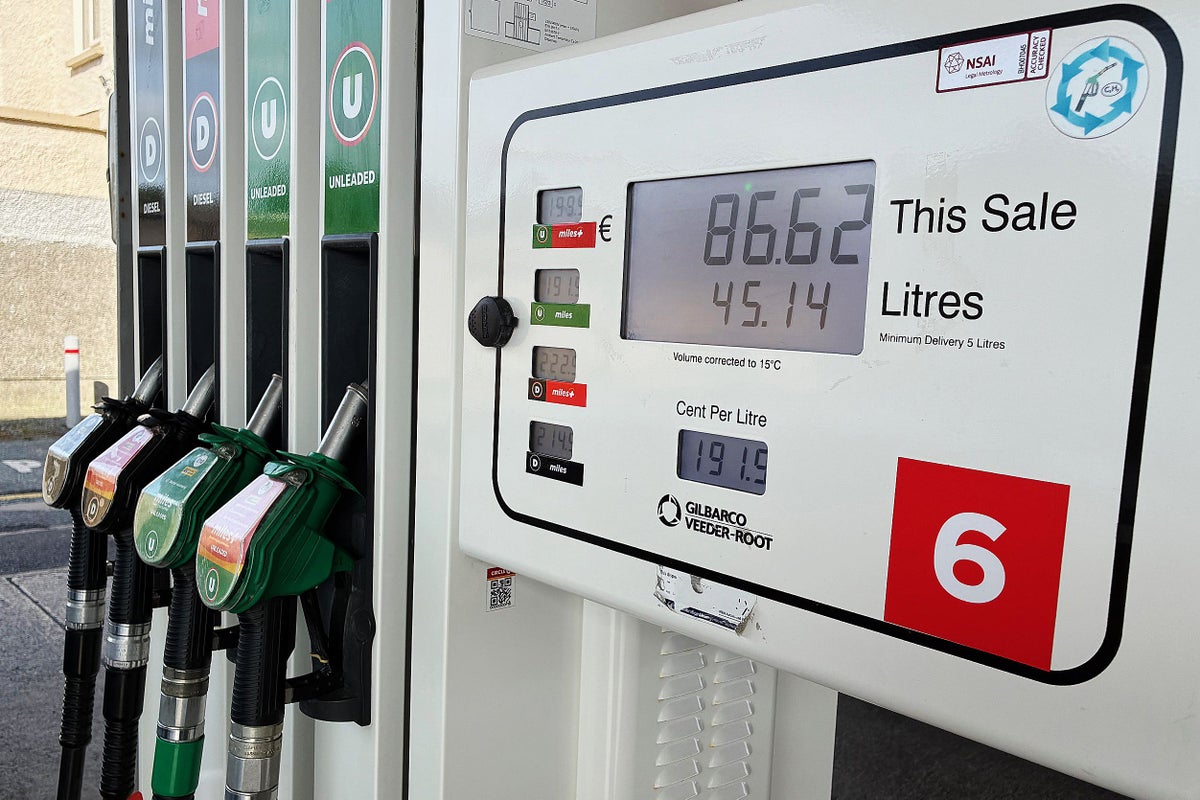
The ONS found that the average price of petrol rose by 8.6p per litre between February and March to 140.2p per litre. This marked the highest price since August 2024.
Diesel prices meanwhile increased by 17.6p per litre in March to an average of 158.7p per litre, the highest price since November 2023.
Office for National Statistics chief economist Grant Fitzner said: “Inflation climbed in March, largely due to increased fuel prices, which saw their largest increase for over three years.
“Air fares were another upward driver this month, alongside rising food prices.
“The only significant offset came from clothing costs, where prices rose by less than this time last year.”
The data revealed that the cost of air travel also increased significantly, with inflation of 14.5% compared with the same month last year.
The rise in air fares, which analysts have partly linked to the early timing of the Easter holidays, was the highest since July last year.
Meanwhile, food and non-alcoholic drink prices were up 3.7% year-on-year in March, accelerating from 3.3% inflation in the previous month.
This included another acceleration in the price of sweets and chocolates, which were up 10.6% year-on-year.
Elsewhere, clothing and footwear had a downward pressure on inflation, as prices dipped 0.8% for the month.
Sales and discounting activity pulled inflation in the category to its lowest level since March 2021.
The rise in the overall rate of inflation drives the UK further away from the 2% inflation target set by the Government and the Bank of England.
Ms Reeves said: “We’re acting to protect people from unfair price rises if they occur to bring down food prices at the till, and are boosting long-term energy security — building a stronger, more secure economy.”
James Smith, developed markets economist at ING, said: “The latest rise in UK headline CPI tells us virtually nothing about the scale and duration of the inflation wave to come.
“The Bank of England is still flying blind, with the conflict unresolved, but the limited amount of survey data available so far suggests little cause for alarm on inflation.”
Anna Leach, chief economist at the Institute of Directors, said: “As inflation has come in in line with revised expectations, and given yesterday’s labour market data which showed a fall in vacancies and further downward progress in wage growth, interest rates should hold at next week’s MPC (Monetary Policy Committee) meeting.
“But there remains tremendous uncertainty over the outlook for energy supply and prices.”
The Manx treasury says plans are in place to protect essential services in the wake of the Iran war.
Source link

Malaysia-based Karex produces more than five billion condoms a year and supplies global brands like Durex and Trojan.
Source link


Transfer rumors, news: Arsenal ramp up interest in Williams

Bangladesh RMG units call for allowing local FOC raw material sourcing
UK inflation accelerates after Iran war drives sharp rise in fuel prices

-

 Fashion6 days ago
France’s LVMH Q1 revenue falls 6%, shows resilience amid Iran war
-

 Sports1 week ago
The case for Man United’s Fernandes as Premier League’s best
-
 Business1 week ago
UK could adopt EU single market rules under new legislation
-

 Entertainment7 days ago
Is Claude down? Here’s why users are seeing errors
-
 Business1 week ago
Delta Air Lines unveils first new Delta One suite in premium cabin arms race
-

 Fashion1 week ago
Asia claims largest share of markets on Kearney FDI Confidence Index
-

 Sports7 days ago
PSL 11: Peshawar Zalmi win toss, opt to field first against Quetta Gladiators
-

 Tech7 days ago
The Deepfake Nudes Crisis in Schools Is Much Worse Than You Thought