

Politics
US Seizes Sanctioned Oil Tanker Near Venezuela: Trump


The United States has seized a sanctioned oil tanker off the coast of Venezuela, President Donald Trump announced on Wednesday, escalating tensions between Washington and Caracas and pushing oil prices higher.
“We’ve just seized a tanker on the coast of Venezuela, large tanker, very large, largest one ever, actually, and other things are happening,” Trump said, reiterating pressure on Venezuelan President Nicolas Maduro to step down. When asked about the fate of the oil, Trump replied: “We keep it, I guess.”
In response, the Venezuelan government condemned the move as “blatant theft” and an “act of international piracy,” vowing to defend its sovereignty, natural resources, and national dignity, and to raise the matter with international bodies.
This marks the first known action against an oil tanker since Trump ordered a military buildup in the region.
The US has previously targeted suspected drug vessels, raising legal and diplomatic concerns.
US Attorney-General Pam Bondi confirmed on X that the FBI, Homeland Security, Coast Guard, and military executed a seizure warrant on the crude oil tanker, used to transport sanctioned oil from Venezuela and Iran.
A brief video posted by Bondi showed helicopters approaching the vessel and armed personnel rappelling onto it.
While US officials did not publicly name the vessel, British maritime risk firm Vanguard identified it as the Skipper. The tanker had departed Venezuela’s main oil port of Jose between December 4–5 after loading roughly 1.1 million barrels of Merey heavy crude, according to satellite and PDVSA data.
The seizure affected oil markets, with Brent crude rising 27 cents to $62.21 per barrel, and US West Texas Intermediate gaining 21 cents to $58.46 per barrel.
Maduro addressed a military commemoration on Wednesday but did not directly comment on the tanker’s seizure.
Impact on oil?
Venezuela exported more than 900,000 barrels per day (bpd) of oil last month, the third-highest monthly average so far this year, as PDVSA imported more naphtha to dilute its extra-heavy oil output.
Even as Washington increased pressure on Maduro, the U.S. had not previously moved to interfere with oil flows.
Venezuela has had to deeply discount its crude to its main buyer China, due to growing competition with sanctioned oil from Russia and Iran.
“This is just yet another geopolitical/sanctions headwind hammering spot supply availability,” Rory Johnston, an analyst with Commodity Context, said.
“Seizing this tanker further inflames those prompt supply concerns but also doesn’t immediately change the situation fundamentally because these barrels were already going to be floating around for a while,” Johnston said.
Chevron, which partners with PDVSA, said its operations in the country were normal and continuing without disruption.
The US oil major, responsible for all Venezuelan crude exports to the United States, last month increased crude exports to the US to 150,000 bpd from 128,000 bpd in October.
Increasing pressure on Maduro
Maduro has alleged that the US military build-up is aimed at overthrowing him and gaining control of the OPEC nation’s vast oil reserves.
Since early September, the Trump administration has carried out more than 20 strikes against suspected drug vessels in the Caribbean and Pacific, killing more than 80 people.
Experts say the strikes may be illegal.
There has been little or no proof made public that the boats are carrying drugs or that it was necessary to blow them out of the water rather than stop them, seize their cargo and question those on board.
Concerns about the attacks on the boats increased this month after reports that the commander overseeing one of the operations ordered a second strike that killed two survivors.
A Reuters/Ipsos poll published on Wednesday found that a broad swath of Americans oppose the US military’s campaign of deadly strikes on the boats, including about one-fifth of Trump’s Republicans.
In a sweeping strategy document published last week, Trump said his administration’s foreign policy focus would be on reasserting its dominance in the Western Hemisphere.
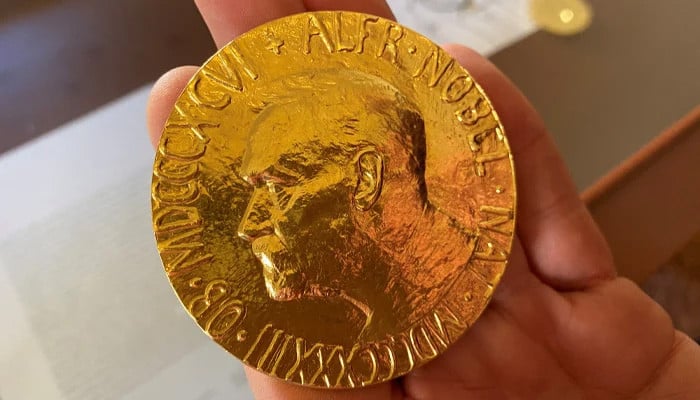
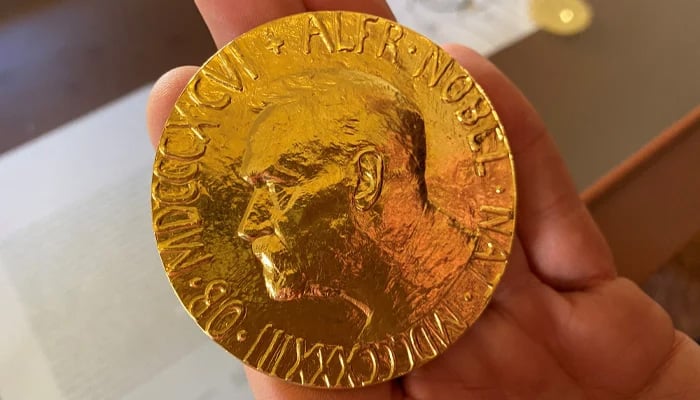
Some 287 candidates will be considered for the 2026 Nobel Peace Prize, the secretary of the Norwegian Nobel Committee said on Thursday, with US President Donald Trump likely to be among the nominees.
Of this year’s nominations, 208 are individuals and 79 are organisations, said Kristian Berg Harpviken, adding that there were many new nominees compared to last year.
“Since I am new in the job, one of the things that has to some extent surprised me is how much renewal there is from year to year on the list,” Harpviken said in an interview. He has held the position since January 2025.
Despite the number of conflicts rising worldwide and international cooperation under pressure, the award remains relevant, he added.
“The Peace Prize is even more important in a period like the one we’re living in,” he said. “There is as much good work, if not more, than ever.”
Trump likely nominated, but not confirmed
The leaders of Cambodia, Israel and Pakistan have said they nominated Trump for this year’s prize. Their nominations, if made, would have been done in spring and summer 2025, and they are therefore valid given the deadline was January 31.
There is no way of verifying they have done as they have said as nominations remain secret for 50 years and Harpviken declined to say on Thursday whether Trump had been nominated.
A nomination is not an endorsement by the award body.
In addition to committee members, thousands of people worldwide can propose names: members of governments and parliaments; current heads of state; university professors of history, social sciences, law and philosophy; and former Nobel Peace Prize laureates, among others.
Many names appear on betting sites giving odds on this year’s possible laureates, from Russia’s Yulia Navalnaya, the wife of the late Russian opposition leader Alexei Navalny, to Pope Leo and Sudan’s Emergency Response Rooms, a volunteer aid group, among others.
Concern for health of jailed Iranian laureate
Harpviken said the committee was deeply concerned about the health of the 2023 Peace Prize laureate, Iranian human rights activist Narges Mohammadi, which is worsening after she suffered a heart attack in prison.
Her supporters said on Wednesday her life was in imminent danger.
“Her sister was able to visit her in prison yesterday and the reports coming out after that are actually quite alarming as to her health condition,” said Harpviken.
“We see there is a lot of international pressure now. So we hope that the Iranian authorities do pay attention to that and release her so that she can have proper medical treatment.”
Who else could be nominated?
Among possible nominees for this year’s prize are Lisa Murkowski, the US senator for Alaska, and Aaja Chemnitz, a member of the Danish parliament elected from Greenland, according to the Norwegian lawmaker who nominated them both.
“Together they have worked relentlessly to build trust and to secure a peaceful development of the Arctic region over many years,” said the lawmaker, Lars Haltbrekken.
Greenland has been in particular focus this year due to Trump’s relentless push to acquire the island from Nato ally Denmark.
This year’s Nobel Peace Prize will be announced on October 9, while the ceremony will take place on December 10.
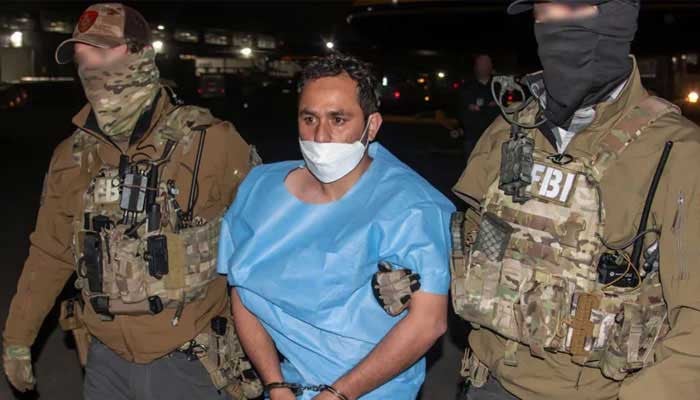
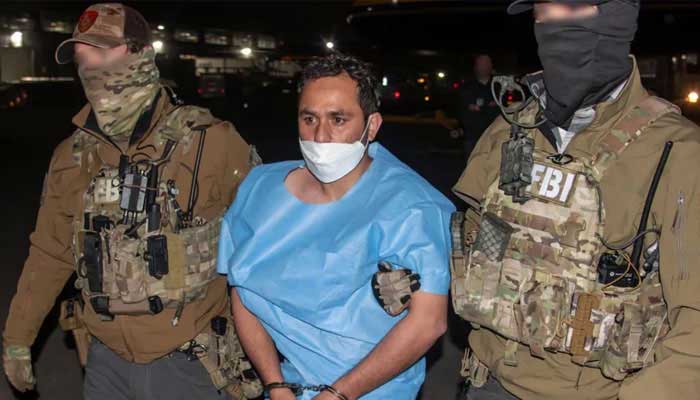
A US federal jury convicted an Afghan man on Wednesday of providing support to the Daesh in Afghanistan but failed to agree on whether he was involved in the deadly 2021 suicide bombing at Kabul airport.
Mohammad Sharifullah, a member of the Daesh-Khorasan, was convicted in Virginia of conspiracy to provide material support to a terrorist organisation.
President Donald Trump, in an address to Congress last year, had described Sharifullah as the “top terrorist responsible” for the Kabul airport attack that killed at least 170 Afghans and 13 American troops.
The jury found Sharifullah guilty of providing support to Daesh but deadlocked after two days of deliberations on whether he played a role in the Kabul airport suicide bombing.
According to prosecutors, Sharifullah scouted out the route to the airport where the suicide bomber later detonated his device among packed crowds trying to flee days after the Taliban seized control of Kabul.
The United States withdrew its last troops from Afghanistan in August 2021, ending a chaotic evacuation of tens of thousands of Afghans who had rushed to Kabul’s airport in the hopes of boarding a flight out of the country.
Sharifullah was extradited to the United States in March 2025 and put on trial in Alexandria on the outskirts of the US capital.
He faces up to 20 years in prison.
According to the US authorities, Sharifullah was involved in a number of Daesh-Khorasan attacks between 2016 and his arrest by Pakistani authorities in 2025.
They included a June 2016 suicide bombing that targeted Nepali security guards protecting the Canadian embassy in Kabul.
Sharifullah was accused of conducting surveillance and transporting the suicide bomber to the attack site.
He was also accused of giving weapons instructions to Daesh-Khorasan gunmen who attacked the Crocus City Hall near Moscow in March 2024.
- Khamenei says US faces disgraceful defeat in its plan.
- Iran to secure Gulf, eliminate “enemy’s abuses”: supreme leader.
- Iranian rial has fallen to historic lows against dollar.
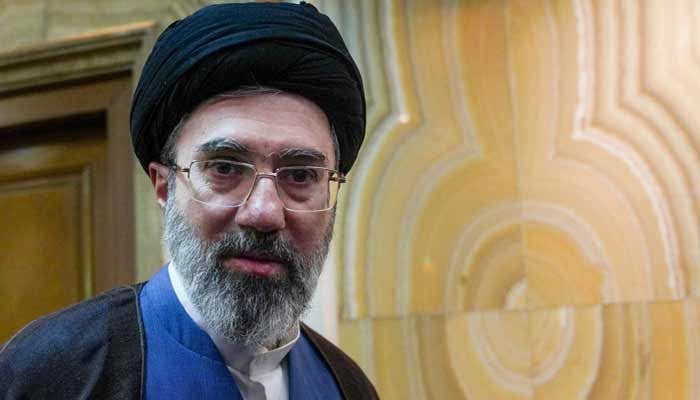
Iran’s new Supreme Leader Mojtaba Khamenei said in a published written message on Thursday that a new chapter for the Gulf and Strait of Hormuz has been taking shape since the Iran war with the United States and Israel broke out on February 28.
Iran’s Supreme Leader said that Tehran would secure the Gulf region and eliminate what he described as “the enemy’s abuses of the waterway.”
The Supreme Leader added that new management of the Strait of Hormuz would bring calm, progress and economic benefits to all Gulf nations.
“Today, two months after the largest military deployment and aggression by the world’s bullies in the region, and the United States’ disgraceful defeat in its plans, a new chapter is unfolding for the Persian Gulf and the Strait of Hormuz,” he said, hailing Iran’s control over shipping in the strait.
Khamenei was wounded in the initial US-Israeli strikes that assassinated his father Ali Khamenei, and has not been seen in public since being named his successor as supreme leader last month.
The United States imposed a blockade on Iran’s ports two weeks ago, while the Islamic republic has maintained its stranglehold over the strategic Strait of Hormuz since the start of the Middle East war in February.
Now, a State Department official told AFP, Washington is seeking to set up an international coalition comprising allied states and shipping firms to coordinate safe passage through Hormuz — while maintaining its own blockade of ships serving Iran.
“Any attempt to impose a maritime blockade or restrictions is contrary to international law… and is doomed to fail,” Iran’s President Masoud Pezeshkian said, in a statement that warned the blockade that began on April 13 would be “a disruption to lasting stability in the Persian Gulf”.
And Iran’s parliament speaker Mohammad Bagher Ghalibaf, who has emerged as an influential figure, said control of Hormuz would allow Tehran to “provide itself and its neighbours with the precious blessing of a future free from American presence and interference”.
‘Choking’
Trump is expected to receive a briefing on Thursday on new plans for potential military action in Iran from Admiral Brad Cooper, the head of US Central Command, two sources with knowledge of US planning told news site Axios.
This week Trump has reportedly told oil executives and national security officials to prepare for a long US blockade designed to force Tehran to surrender its nuclear programme.
US Central Command said on Wednesday in a social media post that it had reached a “significant milestone after successfully redirecting the 42nd commercial vessel attempting to violate the blockade”.
It said there are “41 tankers with 69 million barrels of oil that the Iranian regime can’t sell”, estimating the value at more than $6 billion.
Oil prices struck a four-year high on Thursday. International benchmark Brent crude soared more than 7% to $126 a barrel, but then eased in midday trading in London.
UN chief Antonio Guterres said the closure of Hormuz was “strangling the global economy” and International Energy Agency chief Fatih Birol told a meeting at his Paris headquarters: “The world is facing the biggest energy crisis in history.”
The European Central Bank also warned that the longer the war and high energy prices continue, “the stronger is the likely impact on broader inflation and the economy.”
Trump faces domestic political pressure to end the war, which is unpopular even with much of his base, has increased costs for American consumers and has unnerved US allies.
Iran’s economy is also suffering and the rial has fallen to historic lows against the dollar.


Will AI lead to more accurate opinion polls?

Good Luck Getting a Mac Mini for the Next ‘Several Months’

Rivian renegotiates DOE loan down to $4.5 billion, adjusts capacity plans for Georgia plant

PSL 11: Hyderabad Kingsmen opt to field after winning toss against Multan Sultans

Trump administration in advanced talks for a rescue package for Spirit Airlines, source says
UK inflation accelerates after Iran war drives sharp rise in fuel prices

-
 Sports1 week ago
PSL 11: Hyderabad Kingsmen opt to field after winning toss against Multan Sultans
-
Business1 week ago
Trump administration in advanced talks for a rescue package for Spirit Airlines, source says
-
Business1 week ago
UK inflation accelerates after Iran war drives sharp rise in fuel prices
-

 Entertainment1 week ago
Anne Hathaway shares major news about ‘Princess Diaries 3’
-
 Tech1 week ago
Microsoft faces court battle in £2bn Windows Server class action | Computer Weekly
-
 Business1 week ago
Gold prices in Pakistan Today – April 23, 2026 | The Express Tribune
-

 Tech1 week ago
Blackbox replaces two racks of HPE storage with 8U of Everpure | Computer Weekly
-

 Fashion1 week ago
Bangladesh RMG units call for allowing local FOC raw material sourcing