

Business
VB G RAM G: A Reimagined Rural Employment Guarantee With A Development Thrust

Last Updated:
Modi government’s VB G RAM G Bill replaces MGNREGA, raising job days from 100 to 125, boosting tech-driven transparency, and enhancing state flexibility amid Opposition protests.
Since FY15, the cumulative budgetary allocation to MGNREGA has reached Rs 8.64 lakh crore, about 3.6 times that of the UPA period.
As the Modi government introduced the VB G RAM G Bill — Viksit Bharat – Guarantee for Rozgar and Ajeevika Mission (Gramin) in the Lok Sabha, replacing MGNREGA, the Opposition, including the Congress, vociferously protested and tore copies of the legislation in the well of the House, irked by the absence of Mahatma Gandhi’s name. Realising its bankruptcy of issues, the Congress latched onto this matter hurriedly, without examining the fine print—where none existed. What the Congress fails to acknowledge is that rural employment schemes have existed since the 1960s, and even MGNREGA did not carry Mahatma Gandhi’s name when the Bill was legislated in 2005.
Improvements to MGNREGA since 2014-15
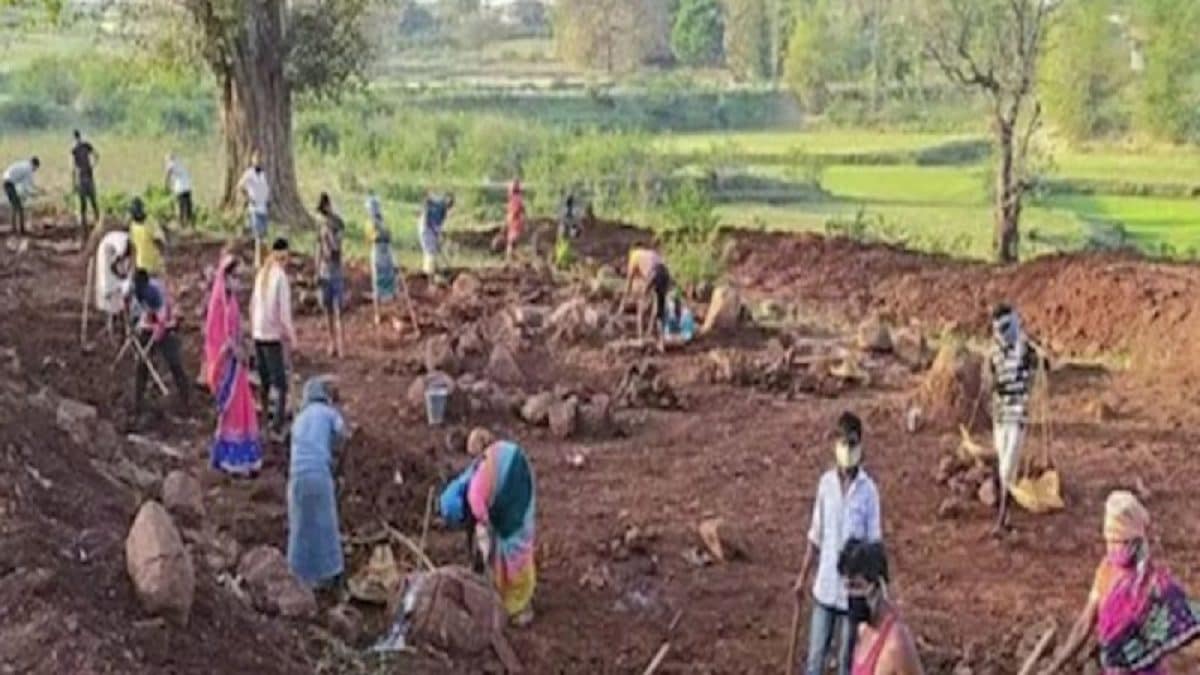
The implementation of MGNREGA during the UPA years was riddled with weak oversight, patchy execution, and relatively shallow budget allocations. Since FY15, the cumulative budgetary allocation to MGNREGA has reached Rs 8.64 lakh crore, about 3.6 times that of the UPA period. This includes stepped-up expenditure of Rs 1.12 lakh crore during crisis periods such as the Covid pandemic.
This exponential increase in allocation translated into visible improvements in women’s participation, person-days generated, and the creation of durable rural assets. Unlike the UPA era, digitisation and geotagging of photographs have aided in improving transparency and facilitating timely payment of wages.
However, despite the ramp-up in implementation, several irregularities and structural issues — such as fake job cards, chronic delays in wage payments, quality and durability deficits in assets, and accountability gaps — have been highlighted in various Departmentally Related Standing Committee reports.
The Bill: Differentiation across multiple dimensions
The new Bill represents a comprehensive revamp of MGNREGA while retaining the core employment guarantee. It raises the guaranteed wage employment from 100 days to 125 days per household per financial year, covering more than a third of the year. While convergence, saturation, and a whole-of-government approach existed operationally under MGNREGA, these principles have now been formally embedded in the legislation, reinforcing the commitment to rural resilience and prosperity.
The Bill also mandates that wage payments be made within seven days of completion of work, compared to the earlier ceiling of 15 days.
The most defining feature of the Bill is its emphasis on technology-enabled planning, transparency, and accountability. All Viksit Gram Panchayat Plans will be aggregated into the Viksit Bharat National Rural Infrastructure Stack and integrated with the PM Gati Shakti National Master Plan to enable spatially optimised infrastructure development. Artificial intelligence will also be leveraged for planning, audits, and fraud-risk mitigation.
Biometric authentication of workers, mobile application-based and dashboard-based monitoring systems providing real-time visibility of demand, works, workforce deployment, payments, and progress, along with weekly public disclosure mechanisms — both digital and physical — covering key metrics, muster rolls, payments, sanctions, inspections, and grievance redressal — form a robust technology-driven transparency and accountability framework.
Enhancing responsibility, predictability, flexibility, and accountability for states
Earlier, states received 32 percent devolution from central taxes. This was increased to 42 percent by the Fourteenth Finance Commission. In alignment with this shift, VB G RAM G will be implemented as a centrally sponsored scheme with a 60:40 Centre-state funding pattern, replacing the earlier central sector structure.
States will also have greater flexibility to allocate funds, based on Viksit Gram Panchayat Plans, to those gram panchayats that need them the most, thereby addressing regional disparities more effectively. The Bill introduces normative allocations, enabling states to better predict finances and plan works in advance.
With technology-driven governance and the liability resting on states to provide unemployment allowance if work is not provided within 15 days, states are firmly brought within the accountability framework. When analysed together, the employment guarantee and panchayat plans clearly reinforce the demand-driven character embedded in the Bill.
Relief for farmers and support to agriculture
Agriculture and allied activities play a critical role in food security and contribute significantly to GDP. As the annadata is a key stakeholder in the vision of Viksit Bharat, farmer welfare remains a core focus of the Modi government. Initiatives such as PM-KISAN, PMFBY, the announcement of 50 percent returns over cost in MSP, and GST 2.0 reforms, including a reduction in GST on key farm inputs to five percent, reflect this commitment.
Yet, persistent challenges remain in agricultural production, with implications for food security. One major issue is the chronic labour shortage during peak sowing and harvesting periods. This concern was also flagged by the Standing Committee on Rural Development in its 2012–13 report on MGNREGA, which noted that MGNREGA works during peak agricultural seasons adversely affect labour availability for farming. While the department acknowledged the issue, it had earlier rejected a blanket ban on works during peak periods.
Recognising this challenge, and considering that over 80 percent of farmers are small and marginal, farm mechanisation levels remain low, and more than 45 percent of the cost of cultivation is labour-related, the Bill empowers states to notify, in advance, a period aggregating up to 60 days in a financial year covering peak sowing and harvesting seasons during which works under the scheme will not be undertaken. This ensures adequate availability of farm labour during critical agricultural operations.
Another major concern is that over 50 percent of India’s net sown area remains monsoon-dependent, exposing food production to high rainfall variability. With water security identified as one of the four thematic focus areas, water-related works such as irrigation support and groundwater recharge will strengthen agricultural resilience. The other thematic focus areas—connectivity, storage, and protection from extreme weather—also provide direct and indirect support to farmers.
Conclusion
The transformative VB G RAM G Bill represents continuity rather than rupture, carrying forward the spirit embedded in MGNREGA while addressing its structural shortcomings. By raising the employment guarantee from 100 to 125 days, strengthening execution through technology-enabled planning, payments, and oversight, and enhancing state participation and accountability, the Bill seeks to elevate rural employment guarantees to the next level.
In doing so, states are also poised to reap positive spillover effects across agriculture and rural infrastructure, making VB G RAM G a more holistic instrument for rural development in a Viksit Bharat.
 Click here to add News18 as your preferred news source on Google.
December 20, 2025, 07:32 IST
Read More
Business
Noida International Airport inauguration: Delhi-NCR gets new airport – all you need to know – The Times of India
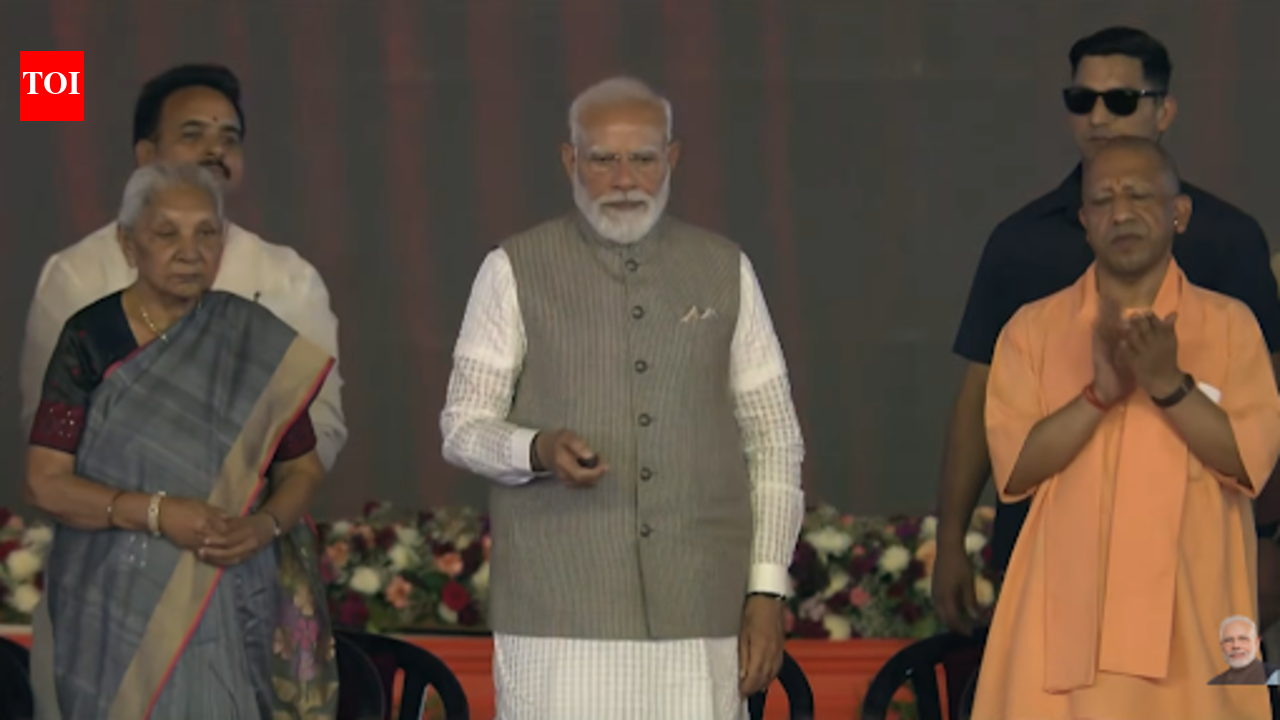
NEW DELHI: Prime Minister Narendra Modi on Saturday inaugurated Phase I of the Noida International Airport at Jewar in Uttar Pradesh, marking a significant milestone in India’s expanding aviation infrastructure.PM Modi was accompanied by Uttar Pradesh chief minister Yogi Adityanath and Governor Anandiben Patel.
Developed at an investment of around Rs 11,200 crore under a Public–Private Partnership (PPP) model, the project is expected to enhance both regional and international connectivity for the National Capital Region (NCR).The airport is being positioned as a key addition to India’s aviation network, aimed at easing pressure on existing infrastructure while supporting the country’s ambition of becoming a global aviation hub.
Second international gateway for Delhi NCR
Noida International Airport has been developed as the second international gateway for Delhi NCR, complementing the existing Indira Gandhi International Airport, which currently handles the majority of the region’s air traffic.

.
With rising passenger demand and capacity constraints at IGI Airport, the new facility is expected to play a crucial role in distributing traffic more efficiently.Together, the two airports will function as an integrated aviation system, helping reduce congestion, improve connectivity, and enhance the region’s standing among leading global aviation hubs.
Phase I capacity and future expansion plans
Phase I of the airport is designed to handle 12 million passengers per annum (MPPA), providing immediate relief to the region’s growing air travel demand.The project has been planned with scalability in mind, with provisions to expand capacity to 70 million passengers annually in subsequent phases. This long-term vision reflects the government’s strategy to future-proof infrastructure and accommodate sustained growth in air travel.
Modern infrastructure and all-weather operations
The airport features a 3,900-metre runway capable of handling wide-body aircraft, making it suitable for both domestic and international long-haul operations.
.
Equipped with advanced navigation systems such as the Instrument Landing System (ILS) and modern airfield lighting, the facility is designed to support efficient, all-weather, round-the-clock operations. These features ensure operational reliability even under challenging weather conditions.
Cargo hub and logistics ecosystem
In addition to passenger services, the airport includes a comprehensive cargo ecosystem aimed at strengthening logistics and trade.The Multi-Modal Cargo Hub comprises an Integrated Cargo Terminal and dedicated logistics zones, with an initial handling capacity of over 2.5 lakh metric tonnes annually. This capacity is expected to expand significantly to around 18 lakh metric tonnes in the future, positioning the airport as a major cargo and logistics centre in North India.
Dedicated MRO facility to enhance efficiency
A key component of the airport’s infrastructure is a 40-acre Maintenance, Repair and Overhaul (MRO) facility.This dedicated facility is expected to improve operational efficiency by enabling airlines to service and maintain aircraft locally, reducing turnaround times and operational costs. It also strengthens India’s capabilities in aviation maintenance services.
Sustainability and future-ready design
Noida International Airport has been designed as a sustainable and future-ready infrastructure project, with a focus on achieving net-zero emissions.The project incorporates energy-efficient systems and environmentally responsible practices, aligning with India’s broader climate goals. The airport’s development reflects a growing emphasis on green infrastructure in large-scale projects.
Architecture inspired by Indian heritage
Blending modern infrastructure with cultural aesthetics, the airport’s architectural design draws inspiration from traditional Indian elements such as ghats and havelis.This approach aims to create a distinctive identity for the airport while offering passengers a sense of place rooted in Indian heritage.
Strategic location and multi-modal connectivity
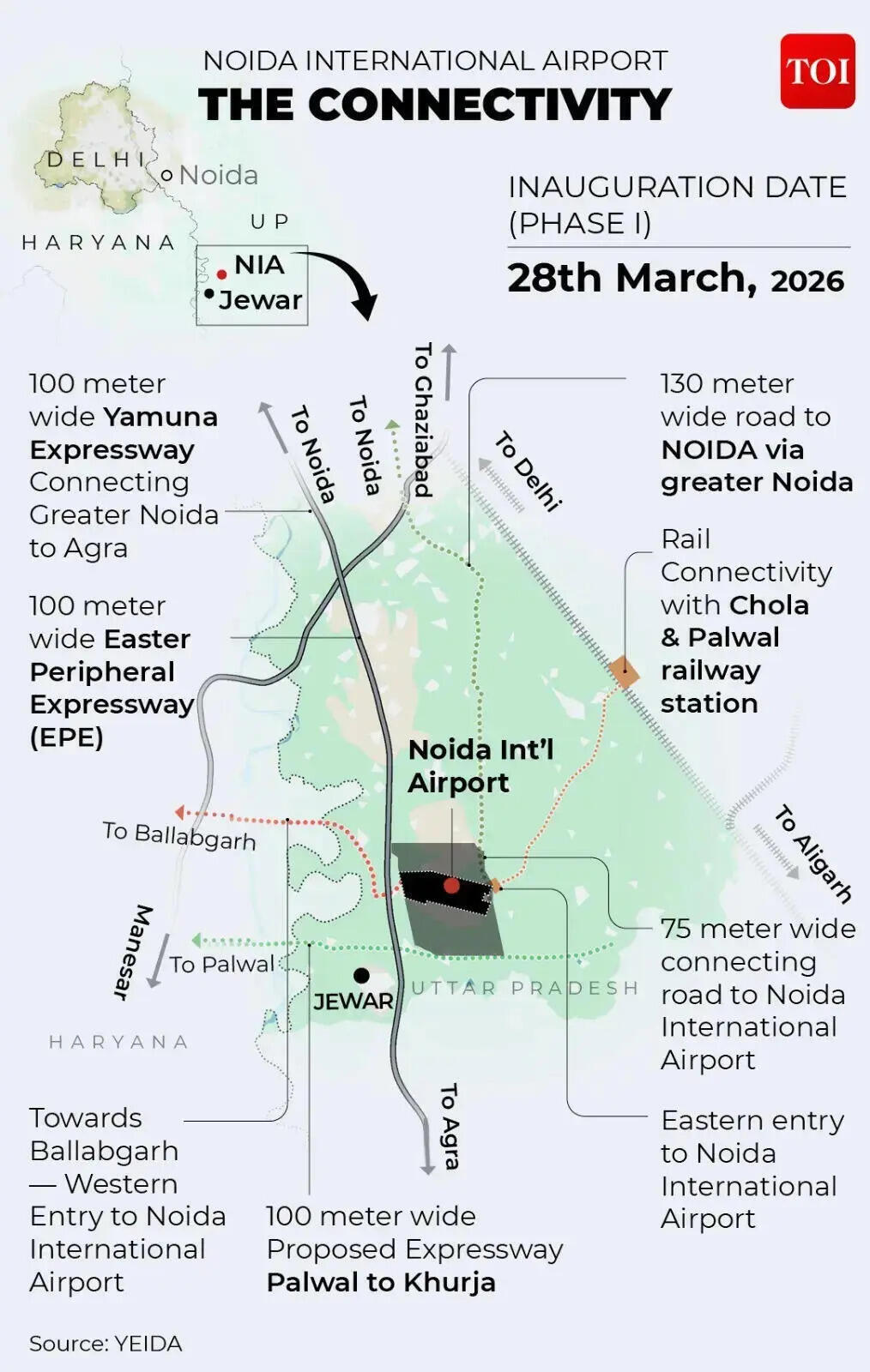
Strategically located along the Yamuna Expressway in Gautam Buddha Nagar district, the airport is planned as a multi-modal transport hub.It will feature seamless integration with road, rail, metro and regional transit systems, ensuring smooth connectivity for passengers and cargo. This connectivity is expected to significantly improve accessibility for travellers across Delhi NCR and neighbouring regions.
Boost to India’s aviation ambitions
The inauguration of Phase I of Noida International Airport is being seen as a major step in strengthening India’s aviation ecosystem.By expanding capacity, improving connectivity, and integrating modern infrastructure with sustainability, the project is expected to play a key role in positioning Delhi NCR as a major global aviation hub while supporting economic growth and regional development
Business
Iran permits 2 Pakistani cargo ships to pass through Strait of Hormuz | The Express Tribune

Iran has permitted two Pakistani cargo ships to transit through the Strait of Hormuz, sources in the Ministry of Maritime Affairs confirmed on Saturday.
The vessels, Multan and P-Akili, which were previously held after Iranian forces took control of the strait — a key global oil supply route — have now crossed and are en route to Karachi. They are expected to dock at Karachi port on March 31, a source familiar with the matter said.
Multan is a general cargo ship, while P-Akili is carrying over 80 million litres of crude oil. Sources added that Iranian authorities not only allowed the vessels to pass but also provided an escort until they cleared the strait’s flashpoint line.
Read: Global poll says Iran war leaves US increasingly isolated internationally
This move comes amid ongoing mediation efforts by Islamabad, in coordination with Turkiye and Egypt, to curb the escalating conflict in the Middle East.
It is the second time Tehran has permitted a Pakistani ship to pass through the Strait of Hormuz since the conflict began on February 28. Previously, a Pakistani oil tanker transited the strait on March 16.
The Middle East region remains on high alert following the joint US-Israel offensive on Iran that began on February 28, which has resulted in over 1,900 deaths, including then-Supreme Leader Ali Khamenei.
Tehran has retaliated with drone and missile strikes targeting Israel, Jordan, Iraq, and Gulf countries hosting US military assets, causing casualties, infrastructure damage, and disruption to global markets and aviation.

Butter, chocolate, coffee and milk have all seen prices rocket. Tracing back through the story of one particular supermarket staple begins to explain why
Source link


Transfer rumors, news: Salah eyes Roma after Liverpool exit

NHL playoff watch: Guide to all 15 games on Showdown Saturday

I Tested Garmin Watches for a Decade While Hiking, Biking, and Climbing. Here’s What You Should Buy

-
 Business1 week ago
Flipkart group CFO to leave co amid IPO plans – The Times of India
-
 Business1 week ago
Video: The Effects of High Oil Prices
-

 Fashion1 week ago
China’s textile & apparel exports surge 17% to $50 bn in Jan-Feb 2026
-

 Sports1 week ago
Rating Adidas’ 2026 World Cup away shirts: Argentina, Spain, Mexico and more
-

 Sports1 week ago
American Conference Commissioner Tim Pernetti thanks Trump for Army-Navy game executive order
-
Tech1 week ago
The Corsair 4000D RS PC Case Keeps Your System Cool
-

 Tech1 week ago
Gamers Hate Nvidia’s DLSS 5. Developers Aren’t Crazy About It, Either
-

 Tech1 week ago
‘Uncanny Valley’: Nvidia’s ‘Super Bowl of AI,’ Tesla Disappoints, and Meta’s VR Metaverse ‘Shutdown’