

Tech
Werewolf exes and billionaire CEOs: Why cheesy short dramas are taking over our social media feeds


What can you do in 60 seconds? In short dramas, or “micro dramas,” that’s enough time for a billionaire CEO to fall in love with his contracted wife, or for a werewolf mafia boss to break a curse.
These vertically framed, minute-long serials are reshaping the way we consume screen entertainment.
ReelShort, NetShort and DramaBox are currently the leading short drama platforms. DramaBox has been downloaded more than 100 million times on Google Play, while ReelShort was ranked second on Apple’s top free entertainment apps at the time of writing, ahead of Netflix, HBO Max, Prime Video and Disney+.
Short dramas originated in China in the early 2020s through short video platforms such as Douyin (TikTok’s sister app) and Kuaishou (also known as Kwai).
The format has since expanded globally through both Chinese platforms and social media apps such as TikTok and Instagram. It reflects a growing trend in smartphone entertainment towards shorter, scrollable content.
@reelshortapp She’s been challenged; he saves her. She’s been abused; he steps in. #reelshort #fyp #drama #love #billionaireromance #romance ♬ original sound —ReelShort
Our new research, which involved interviewing 12 people in the short drama industry, shows it is creating much-needed job opportunities. At the same time, this industry is expanding faster than regulation can catch up—and that spells trouble.
Cliffhangers and outrageous storytelling
Short dramas are optimized for fragmented viewing via smartphones. The format blends TikTok’s fast-paced plotting style with recognizable screen genres. Think: a cheesy lifetime flick delivered in one-minute bursts. Most series have between 50 and 100 episodes.
Their appeal lies in dramatic storylines and cliffhangers. Each episode ends with a twist, designed to keep you hooked. This might be the revelation of a mysterious identity, or a tangled misunderstanding that is bound to lead to conflict. As ReelShort puts it: “every second is a drama.”
Let’s look at the hit series Playing by the Billionaire’s Rules as an example. Over 89 episodes, the series features a contract lover, million-dollar debts, an accidental pregnancy and a secret love triangle.
While it falls short of Hollywood standards of plot, dialogue and acting, it captures viewers’ attention through a conflict-ridden plot and provocative (sometimes amateurish) performances.
Playing by the Billionaire’s Rules is one of thousands of such series available online. In most cases, the first five to ten episodes are free, after which viewers must pay (usually right when the story is at its most thrilling).
A low-cost format, ripe for expansion
Despite illogical storytelling, crude production and exaggerated, stereotypical characters, short dramas are proving to be highly lucrative. In one 2023 article, The Economist described this “latest Chinese export to conquer America” as a hybrid of TikTok and Netflix.
Their popularity can also be linked to the COVID pandemic and the Hollywood writers’ strike, both of which slowed down the global screen industry.
Our research shows short drama production teams, which are mostly led by Chinese producers, have now expanded globally to the United States, Australia, eastern Europe and other parts of Asia, in search of new collaborative opportunities.
Los Angeles is emerging as the fastest-growing production hub. According to one LA Times article, short drama apps outside of China made US$1.2 billion (about A$1.8 billion) last year. Some 60% of this revenue came from the US.
Companies the world over are cashing in on the opportunity. Spanish-language media company TelevisaUnivision has started investing in the format, as has Ukrainian startup Holywater, which is using AI to generate almost fully synthetic short dramas.
Even the Hollywood giant Lionsgate has taken notice of short dramas, and is exploring their commercial potential.
It’s also possible short dramas will open the door for new players in the streaming wars. Although Netflix isn’t currently producing short dramas, it has started experimenting with the vertical short format (in the form of series and movie clips) on its mobile app.
Short dramas are also easily replicated across countries and various market conditions, and allow for localized content strategies. For example, the short drama Breaking the Ice reboots the Chinese campus romance template into a story centered on hockey players, making it more relatable for North American audiences.
Fantasy templates, such as those featuring werewolves, vampires, and witches, have also proven universally successful—and are often used by Chinese producers as low-risk, easily localized genres to test new markets.
Concerns behind the scenes
Our research finds the short drama industry is seen as a promising avenue for creating job opportunities, and for allowing actors and creators to get significant exposure on a modest budget.
But we’ve also found the industry to be far less regulated than more established screen industries.
There are growing concerns in the industry around labor exploitation and copyright infringement, as well as uncertainty over how sustainable the model will be in the long run.
One of our interviewees, a producer based in Los Angeles, revealed several concerning practices, including problems with overtime work, stealing and recycling of drama scripts, underpayment of film school graduates, and the prevalence of unfair contracts for screenwriters.
The screenwriters we interviewed told us they hadn’t received proper credit for their work, and were bound by “buyout contracts” that excluded them from receiving additional compensation—even if their scripts garnered millions of views.
Earlier this year, the Media, Entertainment & Arts Alliance and Casting Guild of Australia issued a joint statement urging local actors to verify the credentials of any “vertical series” production teams before signing contracts with them.
Still, the short drama format continues to draw significant attention from across the screen industry. More than just a passing content trend, this may be the beginning of a structural shift in what “television” means: low-cost, easily replicated and recklessly fast-paced.
More information:
Wenjia Tang et al, ReelShort as a New Template of International Short-drama Business: Platformisation, Glocalisation, and De-Westernised Practices, Global Media and China (2025). DOI: 10.1177/20594364251366414
This article is republished from The Conversation under a Creative Commons license. Read the original article.
Citation:
Werewolf exes and billionaire CEOs: Why cheesy short dramas are taking over our social media feeds (2025, August 19)
retrieved 19 August 2025
from https://techxplore.com/news/2025-08-werewolf-exes-billionaire-ceos-cheesy.html
This document is subject to copyright. Apart from any fair dealing for the purpose of private study or research, no
part may be reproduced without the written permission. The content is provided for information purposes only.













On February 28, United States and Israeli forces launched a series of strikes on Iran, kicking off turmoil in the Middle East.
Pete Hegseth, the secretary of the Department of Defense, said in a recent press conference that the operation could last as long as eight weeks. President Donald Trump himself said in a press conference on March 2 that the administration projected the operation would last four or five weeks but had “the capability to go far longer than that.”
This week Iran has responded in turn, attacking Israel, regional US embassies and military bases, and other sites across the Middle East. Iran has peppered neighboring countries with hundreds of drone and ballistic missile strikes since the operation began. While many of these have been intercepted, over a thousand people have died in the region and multiple buildings have been damaged, including luxury hotels in Dubai, US military bases and embassies, and international airports and marine ports.
Israel has also started bombarding Lebanon, following strikes at the country by the Lebanese militant group Hezbollah.
The Trump administration has given various, and at times seemingly contradictory, justifications for the military action, citing everything from potential “nuclear threat” to unverified claims that Iran attempted to interfere in the 2020 and 2024 US presidential elections. As of March 5, Congress, which in the US has the sole power to declare war, has not done so.
The attacks have already disrupted supply chains, creating uncertainty for the oil and gas and fertilizer industries as key infrastructure has been targeted or shut down out of caution. Shipping traffic has halted along the Strait of Hormuz, a critical route.
As the conflict continues to escalate and expand, WIRED is tracking which countries have been affected and how. This article was last updated on March 5.
Iran
As of March 4, Iranian state media estimates that over 1,000 people have died in the country since the US-Israeli attacks began. Several schools and hospitals have been hit, according to Al Jazeera. The Israeli Air Force says it has struck Iran with over 5,000 munitions since the beginning of the operation.
Israel
Israel has faced retaliatory strikes from Iran. As of March 4, at least 11 people have died and over 40 buildings have been damaged in Tel Aviv, according to Al Jazeera.
Azerbaijan
On March 5, Azerbaijan said drone attacks launched from Iran had crossed over the country’s borders and damaged an airport building and two civilians. President Ilham Aliyev of Azerbaijan said that the country’s military forces “have been instructed to prepare and implement appropriate retaliatory measures,” according to Reuters. Iran has denied responsibility for the attacks, according to Al Jazeera.
Bahrain
Missile and drone strikes have targeted different locations in Bahrain, including a US naval base, according to the BBC. On March 2, Amazon reported that a drone strike occurred in close proximity to one of its data centers in the country. CNBC later reported that Iranian state media said that Iran had targeted the data center because of the company’s support of the US military.
Cyprus
On March 2, a drone strike hit a British air base in Cyprus, according to Reuters. It caused limited damage and no casualties. Greece, the UK, and France have lent defensive support to the country, according to a Bloomberg report.
Iraq
Since February 28, there have been reports of multiple Iranian strikes aimed at a US military base near the Erbil International Airport, according to the nonprofit monitoring group Armed Conflict Location and Event Data.
Jordan
Jordan’s armed forces have intercepted dozens of missiles since the start of the conflict. At least one Iranian-backed militant group in Iraq has claimed responsibility, according to the Associated Press. On March 2, the US Embassy in the country announced that all its personnel had temporarily departed.
Kuwait
Kuwait has endured multiple waves of Iranian missile and drone attacks since February 28. On March 2, US Central Command said in a statement that three US fighter jets were accidentally struck down by Kuwaiti air defenses during an attack that included Iranian aircraft, missiles, and drones.
Lebanon
Israel attacked southern Lebanon after the militant Lebanese group Hezbollah launched rocket and drone attacks against them. Lebanon prime minister Nawaf Salam subsequently banned Hezbollah’s military and security activities, according to Al Jazeera.
Oman
Oman’s Duqm commercial port has been hit by several drone attacks, according to Al Jazeera. Omani authorities have said at least one oil tanker off the country’s port of Khasab in the Strait of Hormuz has been attacked.
Qatar
On March 2, QatarEnergy posted on X saying that it would halt production of liquified natural gas following a military attack on its operational facilities in the country. It did not attribute the attack to any particular country. On March 3, it posted again, saying that it would also stop the production of additional products, including urea, polymers, methanol, and aluminum.
Saudi Arabia
Infrastructure in Saudi Arabia has been targeted with projectiles. On March 3, the US embassy in Riyadh, the country’s capital, was damaged following an attack. On March 4, Reuters reported that one of the Saudi Aramco’s largest domestic refineries of Saudi Aramco, the majority state-owned oil company, was targeted by an attempted drone attack.
Syria
Tom Fletcher, the United Nations undersecretary-general for humanitarian affairs and emergency relief, says that civilians and civilian infrastructure were under attack in several countries including Syria.
Turkey
On March 4, the Turkish Ministry of National Defence announced that NATO had intercepted ballistic munitions launched from Iran, and that munition fragments had fallen into Hatay, a province that borders the Mediterranean Sea and Syria. Iran has denied any missile launch towards the country.
United Arab Emirates
As of March 4, UAE Ministry of Defence officials say that the country has intercepted hundreds of drone and missile attacks from Iran. Despite the relatively high rate of interceptions, debris created by the fallout has still damaged areas of the country. In Dubai, the luxury hotel Burj Al Arab was struck by debris, as well as the Palm Jumeirah, a man-made island home to high-end hotels and apartments. On March 2, Amazon Web Services announced that two of its facilities were directly struck in the country, causing “elevated error rates and degraded availability.”
Countries Evacuating Citizens
On March 2, US assistant secretary of state for consular affairs Mora Namdar posted on X urging Americans to depart from several middle eastern countries due to “serious safety risks.” On March 4, Reuters reported that the US military has offered seats on military transport planes to Americans trying to leave the region.
Over a dozen countries have announced that they will be evacuating their citizens from the area or sponsoring repatriation flights, including the UK, Ireland, Germany and Italy.

OpenAI CEO Sam Altman is still in the hot seat this week after his company signed a deal with the US military. OpenAI employees have criticized the move, which came after Anthropic’s roughly $200 million contract with the Pentagon imploded, and asked Altman to release more information about the agreement. Altman admitted it looked “sloppy” in a social media post.
While this incident has become a major news story, it may just be the latest and most public example of OpenAI creating vague policies around how the US military can access its AI.
In 2023, OpenAI’s usage policy explicitly banned the military from accessing its AI models. But some OpenAI employees discovered the Pentagon had already started experimenting with Azure OpenAI, a version of OpenAI’s models offered by Microsoft, two sources familiar with the matter said. At the time, Microsoft had been contracting with the Department of Defense for decades. It was also OpenAI’s largest investor, and had broad license to commercialize the startup’s technology.
That same year, OpenAI employees saw Pentagon officials walking through the company’s San Francisco offices, the sources said. They spoke on the condition of anonymity as they aren’t licensed to comment on private company matters.
Some OpenAI employees were wary about associating with the Pentagon, while others were simply confused about what OpenAI’s usage policies meant. Did the policy apply to Microsoft? While sources tell WIRED it was not clear to most employees at the time, spokespeople from OpenAI and Microsoft say Azure OpenAI products are not, and were not, subject to OpenAI’s policies.
“Microsoft has a product called the Azure OpenAI Service that became available to the US Government in 2023 and is subject to Microsoft terms of service,” said spokesperson Frank Shaw in a statement to WIRED. Microsoft declined to comment specifically on when it made Azure OpenAI available to the Pentagon, but notes the service was not approved for “top secret” government workloads until 2025.
“AI is already playing a significant role in national security and we believe it’s important to have a seat at the table to help ensure it’s deployed safely and responsibly,” OpenAI spokesperson Liz Bourgeois said in a statement. “We’ve been transparent with our employees as we’ve approached this work, providing regular updates and dedicated channels where teams can ask questions and engage directly with our national security team.”
The Department of Defense did not respond to WIRED’s request for comment.
By January 2024, OpenAI updated its policies to remove the blanket ban on military use. Several OpenAI employees found out about the policy update through an article in The Intercept, sources say. Company leaders later addressed the change at an all-hands meeting, explaining how the company would tread carefully in this area moving forward.
In December 2024, OpenAI announced a partnership with Anduril to develop and deploy AI systems for “national security missions.” Ahead of the announcement, OpenAI told employees that the partnership was narrow in scope and would only deal with unclassified workloads, the same sources said. This stood in contrast to a deal Anthropic had signed with Palantir, which would see Anthropic’s AI used for classified military work.
Palantir approached OpenAI in the fall of 2024 to discuss participating in their “FedStart” program, an OpenAI spokesperson confirmed to WIRED. The company ultimately turned it down, and told employees it would’ve been too high-risk, two sources familiar with the matter tell WIRED. However, OpenAI now works with Palantir in other ways.
Around the time the Anduril deal was announced, a few dozen OpenAI employees joined a public Slack channel to discuss their concerns about the company’s military partnerships, sources say and a spokesperson confirmed. Some believed the company’s models were too unreliable to handle a user’s credit card information, let alone assist Americans on the battlefield.

Though most people associate the beginning of March with the hopefulness of spring and the indignities of daylight saving time, there’s another important event taking place yards all over the country: hummingbird season.
While many species of hummingbirds can be seen in regions year-round, others are migratory, and this time typically marks their return from wintering grounds in Central and South America. These tiny birds can lose up to 40 percent of their body weight by the time they arrive here after having flown thousands of miles, and since many flowers haven’t bloomed yet, nectar feeders can be a source of essential fuel.
Though I test smart bird feeders year-round, I don’t use hummingbird feeders as often as I should, as it’s imperative that they be cleaned and refilled with new nectar every two or three days (a ratio of 1:4 granulated sugar to water is best, and avoid any dyes or additives) to prevent deadly bacteria and mold, and I don’t always have the time.
But if you are going to invest the energy in maintaining a hummingbird feeder, right now is the best time, as you have a chance to see migratory species you might not otherwise encounter, such as black-chinned hummingbirds. A smart feeder helps you ID them, whether they’re stopping at your feeder on their way north or arriving at their final destination.
Birdbuddy’s Pro is the smart hummingbird feeder I recommend and use myself when I’m not actively testing. The app is easy to navigate and sends cleaning reminders, the built-in solar roof keeps the battery charged, and, unlike other feeders, only the shallow bottom screws off for refilling. No having to pour sticky nectar through a narrow opening, or turn a giant cylinder upside down and risk spilling.
Note that it’s not perfect; the sensor is inconsistent and doesn’t capture every hummingbird that visits, but for the camera quality (5 MP photos, 2K video with slow-motion, 122-degree field of view) and ease of use, it’s a foible I’m willing to put up with. If you already have another Birdbuddy feeder, the hummingbird feeder images and videos will integrate seamlessly into your app feed.

Birdbuddy
Pro Smart Solar Hummingbird Feeder
Right now, the feeder is 37 percent off on Birdbuddy’s website—a deal I usually don’t see outside of shopping events like Black Friday or Amazon Prime Day. Note that the feeder only runs on 2.4 GHz Wi-Fi, and while it is fully functional without a subscription, a Birdbuddy Premium subscription will let you add friends and family members to your account so they can see the birds as well. That’s $99 a year through the app.
Power up with unlimited access to WIRED. Get best-in-class reporting and exclusive subscriber content that’s too important to ignore. Subscribe Today.


US Senate backs Trump’s Iran operations after House vote

Harry Kane calf injury imperils Bundesliga record chase

Here’s Every Country Directly Impacted by the War on Iran

What are Iran’s ballistic missile capabilities?

India Us Trade Deal: Fresh look at India-US trade deal? May be ‘rebalanced’ if circumstances change, says Piyush Goyal – The Times of India
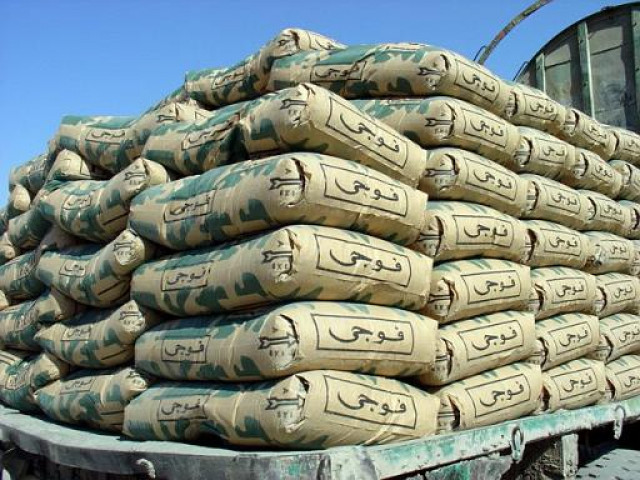
Attock Cement’s acquisition approved | The Express Tribune

-
Business7 days ago
India Us Trade Deal: Fresh look at India-US trade deal? May be ‘rebalanced’ if circumstances change, says Piyush Goyal – The Times of India
-
Business1 week ago
Attock Cement’s acquisition approved | The Express Tribune
-
 Politics1 week ago
What are Iran’s ballistic missile capabilities?
-

 Politics1 week ago
US arrests ex-Air Force pilot for ‘training’ Chinese military
-

 Fashion1 week ago
Policy easing drives Argentina’s garment import surge in 2025
-
 Business6 days ago
Greggs to reveal trading amid pressure from cost of living and weight loss drugs
-

 Sports1 week ago
Sri Lanka’s Shanaka says constant criticism has affected players’ mental health
-

 Sports6 days ago
LPGA legend shares her feelings about US women’s Olympic wins: ‘Gets me really emotional’