

Business
What $1 million buys you in real estate around the world


France, Provence-Alpes-Cote d’Azur, French Riviera, Alpes-Maritimes, Principality of Monaco.
Marco Bottigelli | Moment | Getty Images
A version of this article first appeared in CNBC’s Inside Wealth newsletter with Robert Frank, a weekly guide to the high-net-worth investor and consumer. Sign up to receive future editions, straight to your inbox.
A million dollars isn’t what it used to be — especially in luxury real estate.
According to the new Knight Frank Wealth Report, $1 million buys you only 16 square meters (or about 172 square feet) in Monaco, the world’s most expensive luxury market as measured per meter. That’s down from 17 square meters (182 square feet) in 2020.
In Hong Kong, which ranks second, $1 million gets you 22.5 square meters, or about 242 square feet. New York looks downright affordable next to London, Singapore and Geneva, with $1 million getting you 33.9 square meters, or 365 square feet.
Luxury real estate in most major markets around the world continues to become more expensive, as the wealthy grow wealthier and more mobile. Last year, prices for prime real estate in 100 markets tracked by Knight Frank increased by 3.2%, outpacing the growth of mainstream global housing prices at 2.9%.
The Middle East led global luxury growth last year, with prices in Dubai, United Arab Emirates, up 25% in 2025 and nearly 200% over the past five years, according to the report. Tokyo was the big standout in 2025, with prices surging 58%, the report said. Manila, Philippines, Seoul, South Korea, and Prague also had strong price growth.
For future growth, Knight Frank says Mumbai, India, Brisbane, Australia, Miami and Hong Kong are all future hot spots for luxury real estate. The report said the ultra wealthy are more mobile than ever, buying homes around the world and flitting from city to city more frequently.
“Rising tax and growing regulatory pressures are accelerating the global mobility of wealth,” the report said. “As a result, established hubs such as London are shifting towards a ‘dip-in, dip-out’ model: places to spend time for business, culture and connectivity rather than permanent residence.”
Liam Bailey, global head of research at Knight Frank, said the luxury markets with the strongest outlook have low supply combined with a strong lifestyle and tax appeal. Miami, Milan and Dubai, for instance, have attractive tax environments. New York and London draw the wealthy for their lifestyle offerings and business concentration. Yet both cities are becoming less attractive for tax reasons.
“Every market that wants to succeed in attracting UHNW capital over the next decade needs to be positioned at an attractive point on the tax curve, ” Bailey said. “Capital is already moving away from high-friction environments toward jurisdictions that actively court wealth.”





Now one of the biggest sportswear firms, Anta’s rise follows a playbook adopted by many Chinese giants.
Source link
Business
Gold price prediction today: Will gold prices continue to be volatile? Key levels to watch out for April 27, 2026 week – The Times of India

Gold price prediction today: Gold prices will closely track movements on the rate decisions by several central banks, including the US Federal Reserve, this week, says Manav Modi, Senior Analyst, Commodity Research at Motilal Oswal Financial Services Ltd.Gold is currently consolidating after sharp swings in a broad range, indicating a pause rather than a reversal. Price action shows a higher-high structure intact, but the recent sideways movement suggests indecision near the upper supply zone around 158,000–160,000. The formation resembles a short-term flag/triangle continuation pattern, where a breakout on either side will define the next directional move. Volume has tapered slightly, reinforcing the consolidation narrative.Gold prices recently moved from the upper band toward the mid-band (20 DMA), and are now attempting to stabilize. The bands have started to contract, signaling a potential volatility expansion ahead. Sustaining above the mid-band (~150,500–151,000 zone) keeps bullish bias intact, while a breakdown below this could trigger a deeper mean reversion toward the lower band.For the week, immediate support for gold prices is placed at around Rs 150,500, which is followed by stronger support near Rs 148,500. On the upside, the resistance stands at around Rs 155,500, and after that the key supply zone is at Rs 158,000. A decisive close for gold above Rs 158,000 levels can then resume the broader uptrend. However, a break in gold prices below levels of Rs 148,500 may shift the momentum to bearish in the near term.The economic docket is filled with data points and events this week as the focus will be on FED, BOJ, ECB and ECB policy meetings. US consumer confidence, GDP, inflation and durable goods orders data will also be in radar.(Disclaimer: Recommendations and views on the stock market, other asset classes or personal finance management tips given by experts are their own. These opinions do not represent the views of The Times of India)

British families tell BBC Panorama how the Iran war is affecting their monthly budgets.
Source link


SBP raises policy rate by 100bps to 11.5% as inflation risks mount

Finalise Bangladesh’s textile-RMG circular economy strategy: Experts

Prince Harry faces unseen threat to Archie, Lilibet: Can’t escape

-

 Sports1 week ago
WWE WrestleMania 42 Night 2: Live match results and analysis
-

 Sports1 week ago
NCAA men’s gymnastics championship: All-time winners list
-

 Fashion1 week ago
UK’s Sosandar returns to profitability amid robust FY26 performance
-

 Politics6 days ago
UK’s Starmer seeks to deflect blame over Mandelson appointment
-

 Entertainment7 days ago
Lee Anderson, Zarah Sultana kicked out of UK Parliament for calling PM ‘liar’
-
 Business1 week ago
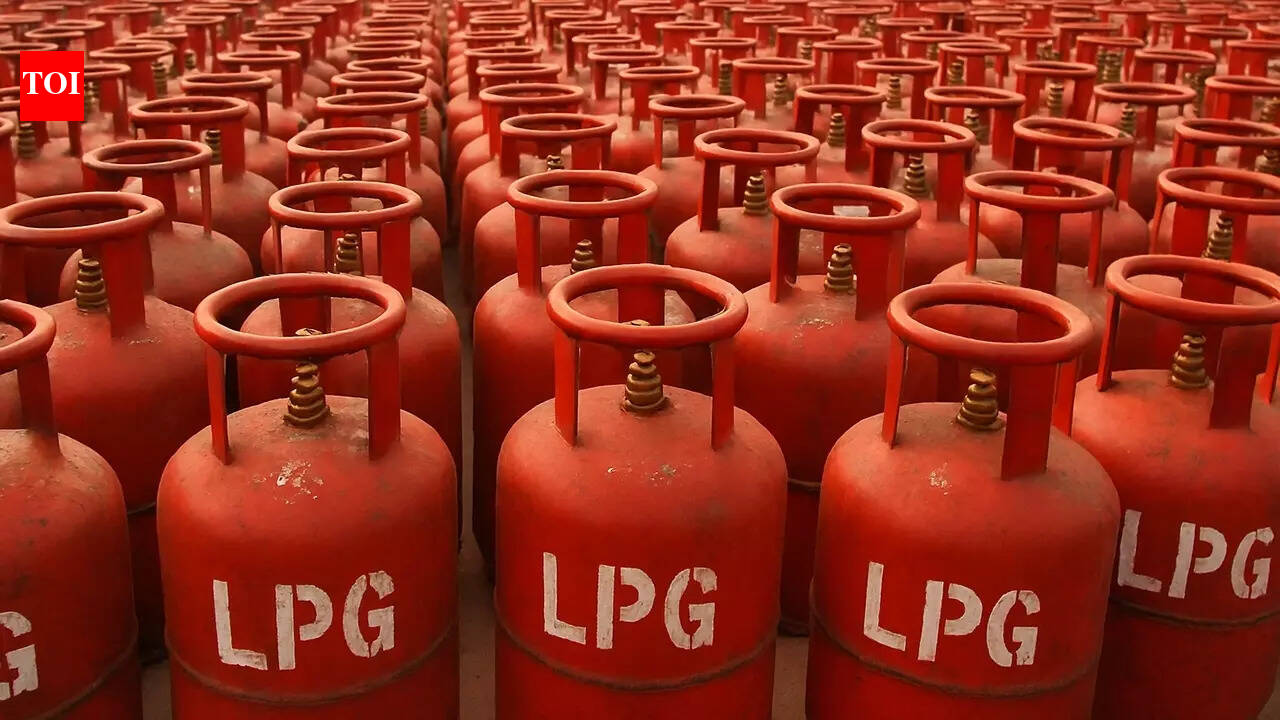
No fuel shortage: Govt assures 100% domestic LPG, PNG, CNG supply amid Hormuz energy crunch – The Times of India
-
 Business7 days ago
How Trump’s psychedelics executive order could unlock stalled cannabis reform
-
 Business1 week ago
Exercise to test response to offshore energy threat involving vessels and drones