

Business
What Is Core-and-Satellite Strategy And How Can It Help Investors Navigate Market Volatility?


Last Updated:
The ‘core’ typically makes up around 60–70% of a portfolio and is meant to deliver stable returns while serving as its foundation.



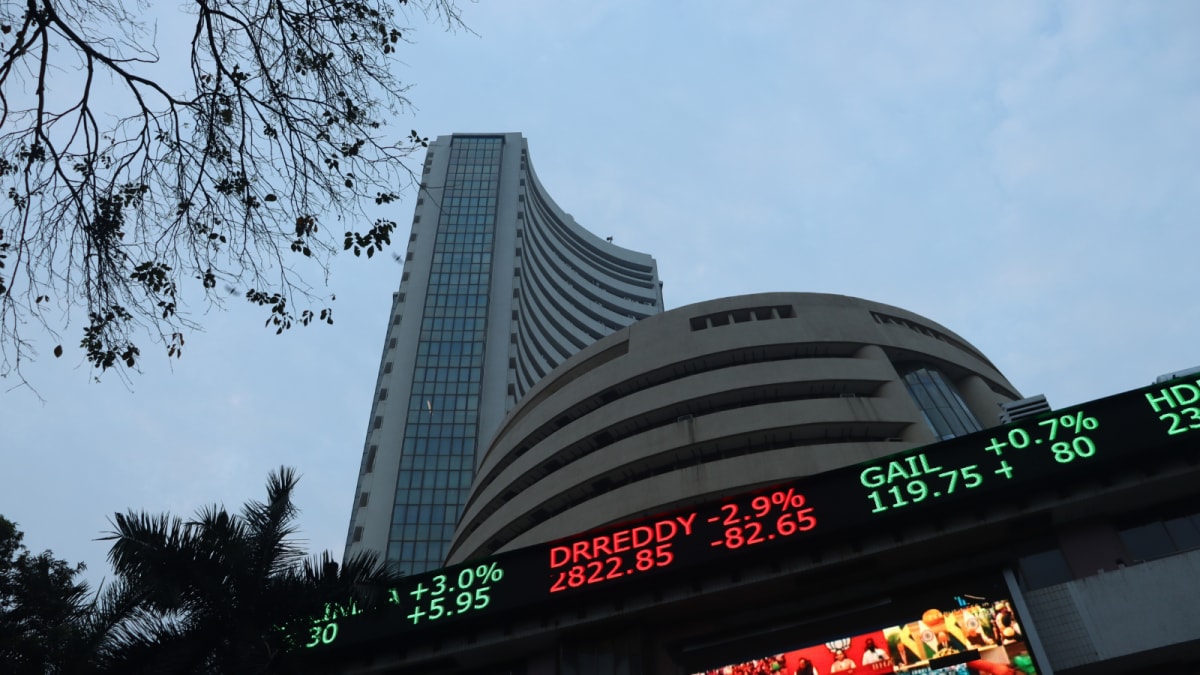
Small and mid-cap stocks produced 14-17% returns in the last 20 years. (representative image)
Navigating financial markets often seems like an uphill task as investors need to balance the desire for growth with the fear of sudden downtrends. When markets fall, people struggle to find the right direction while chasing high returns and protecting their wealth from volatility. Too much risk can lead to panic mode, while excessive caution could leave your portfolio lagging behind inflation and long-term goals.
A practical solution here is the core-and-satellite strategy emerges as a practical solution. Under this, investors get to combine a stable “core” of diversified, low-cost investments with the dynamic “satellite” portion to target higher-growth opportunities. Not only does it allow them to achieve resilience and flexibility, but the strategy also ensures steady progress even during turbulent times. By following this dual approach, people can cushion portfolios against market downfalls.
How Does It Work?
According to Moneycontrol, the “core” usually accounts for nearly 60-70 per cent of the portfolio. It is specifically designed to provide steady returns and act as the anchor of your portfolio.
It comprises stable, low-cost funds:
1. Large-cap equity funds: Your hard-earned money gets invested in established companies having proven business models. Often, it is seen that they appear to fall less compared to mid and small-cap funds.
2. Flexi-cap funds: The fund managers keep shuffling the investment between large, mid and small caps, depending on the ongoing condition of the market. In simple terms, these add flexibility and diversification to the portfolio.
3. Hybrid funds: A combination of equity and debt, these are meant for growth and stability.
However, investors must note that even the “core” is not free from risk. Moneycontrol report highlights how markets fell nearly 14 per cent between October 2024 and February 2025.
The Role of Satellite Investments
Keeping core aside, the remaining 30-40 per cent is what makes up satellite investments.
“The satellite portfolio allows tactical exposure to high-growth sectors, themes, or strategies,” the report quoted Kirang Gandhi, a Pune-based financial mentor, as saying.
This includes mid-cap and small-cap funds that hold higher growth potential. Also, it features international equity funds.
This highlights that it is the growth engine of the portfolio, but also carries substantial risk.
A key part of the core-and-satellite approach is “balance,” where the core allows the money to grow steadily and the satellite portion adds more potential without putting the portfolio at risk.
In the last 20 years, the small and mid-cap indices have generated nearly 14-17 per cent returns on an annual basis, leaving behind large-cap indices. Investors must note that falls are more frequent in mid and small-cap stocks.
Using the core-and-satellite strategy, investors get to diversify their portfolio without making it too complicated.
Kirang Gandhi said this strategy combines safety with smart opportunity for Indian investors and avoids overexposure.
“It brings structure, discipline, and clarity to long-term wealth building without chasing trends,” Gandhi concluded.
 Click here to add News18 as your preferred news source on Google.
January 10, 2026, 13:40 IST
Read More



Business
UP hikes minimum wages across categories amid Noida protest: What workers will now earn – The Times of India
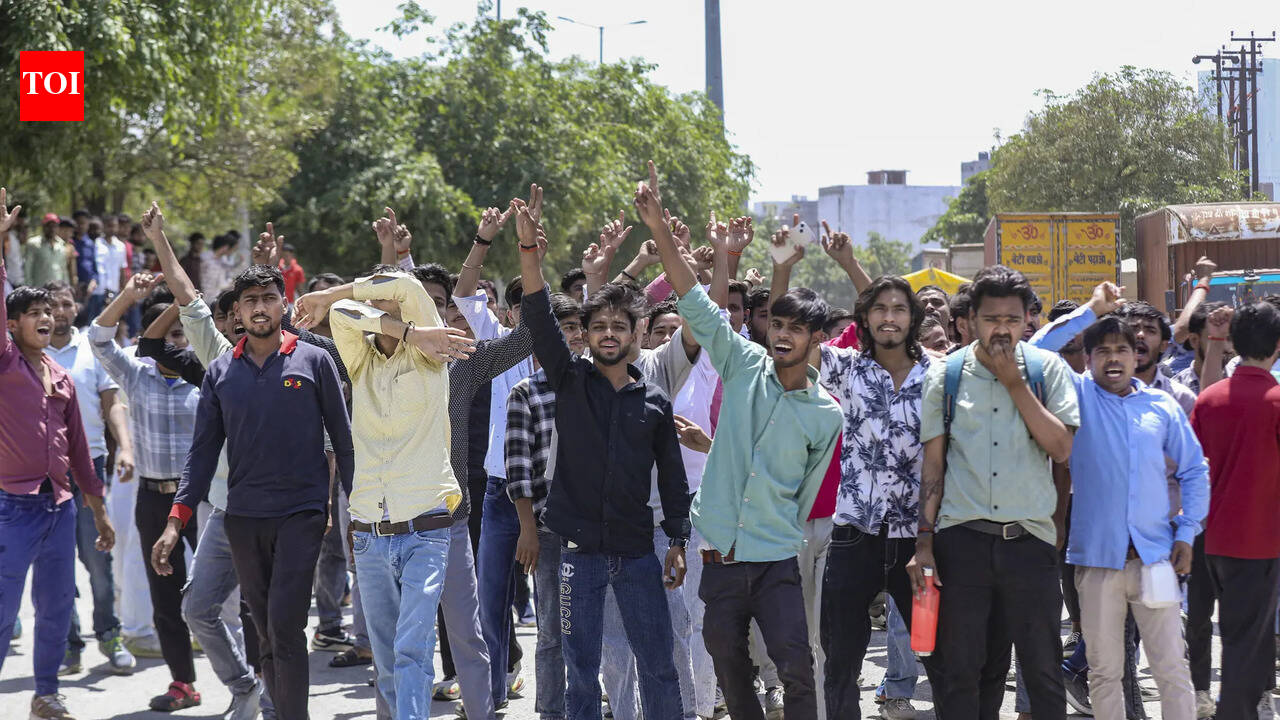
The Uttar Pradesh government on Tuesday approved an interim hike of around 21% in minimum wages for workers in Gautam Buddh Nagar and Ghaziabad, following large-scale protests by thousands of factory workers in Noida. The fresh minimum wage structure introduced across worker categories, will be taking effect retrospectively from April 1. The agitation, which had been intensifying over several days, saw an estimated 40,000 to 45,000 workers assemble at nearly 80 to 83 locations across the Gautam Buddh Nagar commissionerate, including key industrial hubs such as Sector 62, Phase-2, Sector 63, Sector 60, Sector 84 and parts of Greater Noida. The revised wages were finalised by the high-powered committee and received approval late on Monday night. Gautam Buddh Nagar District Magistrate Medha Roopam said, “The wage increase has been done by the high-powered committee… The decision was approved by CM UP late last night.”
Breakdown: Who gets what
Gautam Buddh Nagar and GhaziabadThese regions have seen the sharpest revision:
- Unskilled workers will now be paid Rs 13,690 per month, up from Rs 11,313.
- Semi-skilled workers will receive Rs 15,059.
- Skilled workers will earn Rs 16,868 per month.
Other municipal corporation areas
- The new monthly wages stand at Rs 13,006 for unskilled workers.
- Semi-skilled workers will now earn Rs 14,306 every month.
- Skilled workers will be paid Rs 16,025.
In other districts
- Unskilled workers will now get Rs 12,356 per month.
- Semi-skilled workers will earn Rs 13,591.
- Skilled workers will see Rs 15,224 per month.
Additionally, Uttar Pradesh CM Yogi Adityanath has urged employers to ensure timely wage payments, provide appropriate overtime compensation, and guarantee weekly offs, bonuses and social security benefits, while also maintaining safe working conditions, especially for female workersThe wage revision comes after widespread protests by factory workers in Noida on Monday, where thousands raised demands for better pay and working conditions. Clashes broke out in parts of the district during the demonstrations, after which the government set up a committee to step in and facilitate discussions between workers and employers.The government said that it had assessed all feedback and objections before finalising the revision, aiming for the “balanced and practical” outcome.As per the official statement, the committee is working to resolve the issue through dialogue and coordination while considering measures to address industries dealing with global headwinds, including rising input costs and falling exports, even as workers’ demands on wages, overtime, safety and working conditions remain “relevant and important.”It further added that an interim wage revision linked to indexation is under consideration, and that the process for final wage determination will be taken up based on recommendations of a wage board to be formed soon.At the same time, the government rejected as “fake and misleading” social media claims suggesting a uniform minimum wage of Rs 20,000 per month, clarifying that no such order has been issued and that work on fixing a national “floor wage” is still underway at the central level.

Oil prices fell sharply on Tuesday despite heightened tensions in the Middle East, as markets bet on a possible diplomatic breakthrough between the United States and Iran even after Washington moved to block Iranian ports.
Brent crude dropped 2.7% to $96.66 a barrel, while US crude slid 3% to $96.13, with traders weighing signs that talks could still resume following the collapse of weekend negotiations.
Sources told Reuters that both sides have kept the door open to dialogue, while a US official pointed to forward movement towards a potential agreement.
The United States has continued to engage Tehran even as its military enforced a blockade of Iranian ports, a move aimed at increasing pressure after talks failed to deliver a deal.
US President Donald Trump said on Monday that Iran had “called this morning” and “they’d like to work a deal”, although the claim could not be independently verified.
“The failed weekend talks did not produce a deal, but they also did not close the door on diplomacy, and that is enough for equities to keep pushing higher for now,” said Charu Chanana, chief investment strategist at Saxo.
Reflecting that optimism, Asian equities advanced in early trade. MSCI’s broadest index of Asia-Pacific shares outside Japan rose 1%, while Japan’s Nikkei and South Korea’s Kospi each gained more than 2%.
Futures also pointed to a steady global outlook, with Nasdaq futures up 0.13%, S&P 500 futures flat, EUROSTOXX 50 futures rising 0.63%, and DAX futures adding 0.77%, following an overnight rally on Wall Street.
The US dollar, often seen as a safe haven, weakened alongside oil as investors shifted towards riskier assets.
“Markets are trading hope, not resolution,” said Chanana.
Analysts said Washington’s blockade strategy could shift pressure onto Tehran without immediate escalation on the ground.
“The US has actually played that trump card… it’s now forced the Iranians back to the drawing board,” said Tony Sycamore, a market analyst at IG.
Dollar on backfoot
The dollar fell to a 1-1/2-month low of 98.328 against a basket of currencies on Tuesday, as buoyant risk sentiment dampened demand for the world’s reserve currency.
That left the euro trading 0.05% higher at $1.1764 while sterling GBP= rose to a more than six-week peak of $1.3514.
“The US and Iran have started to walk down the path of coming up to an agreement,” said Joseph Capurso, a strategist at Commonwealth Bank of Australia.
However, “the markets are still facing a global economic outlook that is deteriorating, and I think the risks are high that you get equity markets and credit markets and the like fall again, and that would push up the US dollar against probably all currencies.”
US Treasury yields were little changed, with the two-year yield last at 3.7722% while the benchmark 10-year yield stood at 4.2854%.
The inflationary pulse from the steep rise in energy prices has prompted investors to prepare for the possibility that a number of major central banks will lean towards raising rates, marking a sharp reversal from expectations before the war for rate cuts or a prolonged pause.
Elsewhere, spot gold was up 0.7% at $4,771.81 an ounce.

Crude prices fall back below $100 a barrel as markets hope an agreement can be reached between the two sides.
Source link


US inflation outlook firms; short-term expectations climb

PCB bans Zimbabwe player Muzarabani from playing PSL – SUCH TV

Moya Brennan, Clannad star, face of Irish folk music, dies aged 73

-

 Fashion7 days ago
India’s exports face reset as EU links trade to carbon metrics: EY
-

 Entertainment6 days ago
Queen Elizabeth II emotional message for Archie, Lilibet sparks speculation
-

 Tech6 days ago
As the Strait of Hormuz Reopens, Global Shipping Will Take Months to Recover
-

 Tech6 days ago
Azure customers up in arms over ‘full’ UK South region | Computer Weekly
-

 Entertainment1 week ago
Lamar Odom shocking response to Khloé Kardashian account of his overdose
-

 Sports1 week ago
With Messi goal, Inter Miami open new stadium with dream moment
-

 Tech5 days ago
This AI Button Wearable From Ex-Apple Engineers Looks Like an iPod Shuffle
-

 Fashion6 days ago
CII submits 20-pt agenda to Indian govt to back firms hit by Iran war