

Business
Why Pakistan’s governance model is failing its youth | The Express Tribune

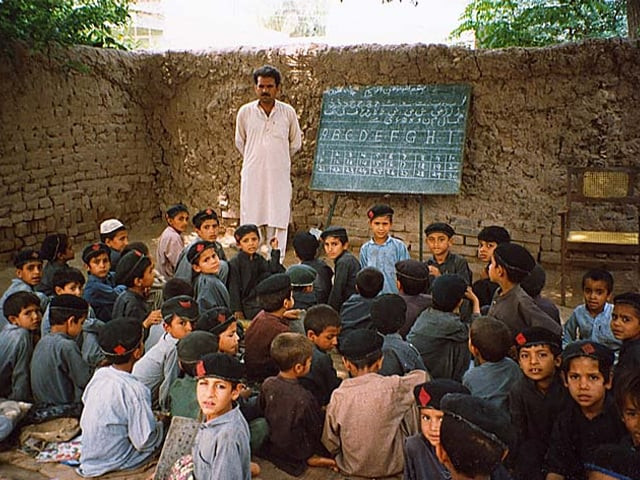
Unemployed young people pose challenges, can become positive force if governance system is fair and inclusive
ISLAMABAD:
What is a state? Why do people give up their rights to the state? How does it function? What are the responsibilities of a state? These are questions that have always been asked and debated throughout human history. A state aims to restrict, control, and eliminate injustice, external threats, and social injustice. But how?
The state establishes a fair governance system that upholds human equality, dignity, and liberty. Through this system, the state aims to provide basic needs, skills for growth, education to promote morality and values, and a peaceful living environment. It ensures that everyone – government, institutions, and individuals – is governed by the rule of law, which unites society.
In essence, a state’s strength depends on its governance system, which should focus on people, be anchored in the rule of law, be dedicated to justice and the fight against injustice, and hold officials accountable for ensuring a prosperous and safe life.
Now, the question is, how do we create such a state, who can undertake the job, and what qualities do those individuals possess? Islam outlined the characteristics of the state and its actors many centuries ago. Islam states that the system and its actors must be pious, transparent, accountable, selfless, and always serve as servants rather than rulers. Islam has provided a practical example of a welfare state, governed by the rule of law, with everyone submitting to it.
The state is always focused on people, giving priority to meeting the needs of its citizens and all creatures within its borders. The state must also provide social justice before seeking justice.
Pakistan was envisioned as a state with these characteristics. It was promised that the state would work to create a fairer social justice system, a welfare economy, respect human dignity, ensure sustainable peace, and operate through a people-centric governance system based on Islamic principles.
It will be ensured through inclusiveness and public participation, achieved by strengthening people’s democracy at the highest level. Quaid-e-Azam Muhammad Ali Jinnah emphasised that a fair and just system of governance would be crucial to achieving these objectives.
Regrettably, after Jinnah’s death, the idea began to fade. The ruling elite could not grasp the Quaid-e-Azam’s vision. Justice and social justice have become the last priorities of the ruling class. The state, which was meant to serve as the guarantor of justice, was unable to do much to protect the vulnerable.
The elite ruling class and its actors exploit the weak with impunity. Those who were brought into the system as servants have become the rulers. They enjoy enormous benefits at the expense of the common man. They have burdened citizens with various taxes and bestowed themselves with extraordinary privileges. The lure of power’s perks and benefits is so strong that no one wants to relinquish it.
As a result, elitism, exploitation, injustice, and social and economic exclusion have become the defining features of the Pakistani system. Rent-seeking and corruption are common practices. Fairness, social justice, and inclusivity, which were meant to be the core principles of the state, have become alien to Pakistanis.
In modern Pakistan, exclusion and injustice are so widespread that they affect all levels of society. The story of exclusion begins with the education system and extends to access to livelihood opportunities, social status, security without discrimination, and growth prospects.
The biggest victims of this unfair and exclusionary system are the youth. On one side, most young people lack access to quality education and skill development, and on the other side, retired individuals prevent them from getting jobs, as they take on post-retirement roles.
The elite class has replaced merit with nepotism and bribery. This forces the youth to remain unemployed. It is a concerning trend, as youth (aged 30 and below) make up 64% of the population. This creates serious challenges for the country, security, and economic growth.
It is well known that youth can be a destructive or constructive force. If the system is fair and inclusive, young people will be a positive force; otherwise, no one can stop them from becoming destructive. Recently, we have seen Gen Z bring down many governments.
Against this backdrop, there is a need to reform the system to ensure it is fair and inclusive. Serious reforms are necessary to safeguard the social and economic interests of ordinary people, protect the life and dignity of every citizen, and guarantee justice and social equity for all without discrimination.
In this context, we have some suggestions for consideration. First, merit should be the guiding principle, not nepotism or any form of discrimination. Merit must consist of two components: 1) field competence and 2) high moral values such as integrity, selflessness, truthfulness, transparency, accountability, and honesty.
Second, the constitution should prohibit post-retirement appointments that favour the elite and are a criminal act. Third, the ruling class must live among ordinary citizens; there should be no gated communities. Fourth, everyone must obey the law, regardless of their situation or status. The ruling class must understand that the rule of law is fundamental to keeping the country united.
It is high time to bring in changes, as Pakistan is undergoing a series of constitutional reforms. Moreover, the much-debated topic of creating new provinces is included in the proposed 28th amendment, making the timing more relevant for enacting and piloting the reforms.
In conclusion, state leaders must understand that selective justice and social injustice are a recipe for failure and go against the teachings of Islam. Fair and accessible justice, along with social justice, is increasingly necessary. Therefore, the government should neither be too soft nor too harsh; it must be just and equitable.
The foundation of the government relies on justice and social justice at all levels. Without these, the government cannot endure, as seen in the example of the USSR. Despite its power, the USSR’s inability to deliver justice and social justice ultimately led to its collapse.
The writer is a political economist and visiting research fellow at Hebei University, China








Gold slumped more than 5%, ending a four-day rally on Tuesday. The metal was weighed down by a stronger dollar and fading prospects of an interest rate cut as inflation concerns intensified against the backdrop of a potentially prolonged conflict in West Asia. Spot gold was down 5.6% at $5,029.59 an ounce whereas prices had hit an over four-week high in the previous session. US gold futures lost 5.1% to $5,041.50.The US dollar, a competing safe-haven asset, rose to an over one-month peak, making dollar-priced bullion less affordable for holders of other currencies. US Treasury yields rose for a second consecutive session.Indian bullion traders and associations are speculating that gold could attain Rs 2 lakh per 10 gm and silver may well scale Rs 3.5 lakh per kg if the conflict does not abate swiftly.Spot silver fell 11.2% to $79.42 an ounce after climbing to a more than four-week high on Monday. As the Iran conflict entered its fourth day, crude oil benchmarks jumped over 8% in response.
Business
Oil Prices: US, Israel attack Iran: With oil prices up, forex volatility set to continue – The Times of India

MUMBAI: The rupee is likely to come under renewed pressure when forex markets open on Wednesday as the conflict in West Asia has worsened the trade and energy situation beyond expectations of analysts.On Tuesday, the Indonesian rupiah, South Korean won and Thai baht each fell by more than 1%, leading losses in Asia, while broader emerging-market currency indices dropped about 0.5% in their worst session since Nov 2024. The selloff followed a sharp escalation in the conflict, with Iran moving to effectively choke tanker traffic through the Strait of Hormuz, sending crude prices up roughly 9% in London trading. The spike in oil heightened concerns over inflation, wider current account deficits and delayed rate cuts in oil-importing economies. Investors rushed into the US dollar and gold, pushing the dollar to multi-month highs and triggering capital outflows from riskier assets.According to KN Dey, forex consultant, the rupee is most likely to breach 92 level this week. “Oil prices have risen sharply and supply chains are getting disrupted. Most Asian currencies have already fallen, with the Korean won and the Malaysian ringgit down over 1%. The rupee will open under pressure and a gap-down start is likely. Stop-loss levels could trigger early, adding to volatility,” he said. “Going ahead would be very tough, RBI’s intervention would only act as a speedy breaker.“What has worsened the conflict situation is that it has created a supply-chain crisis. “Beyond the immediate risk to oil and gas supplies from the Gulf, the broader concern is how the conflict may influence trade behavior across Asia,” said Choon Hong Chua, senior director, Moody’s. “This raises the risk of selective export restrictions, informal boycotts, and tighter customs scrutiny as govts seek to limit exposure to secondary sanctions or political repercussions,” he added.
Business
Iran Conflict: Middle East tensions: Global insurers exit Iranian waters as conflict deepens – The Times of India
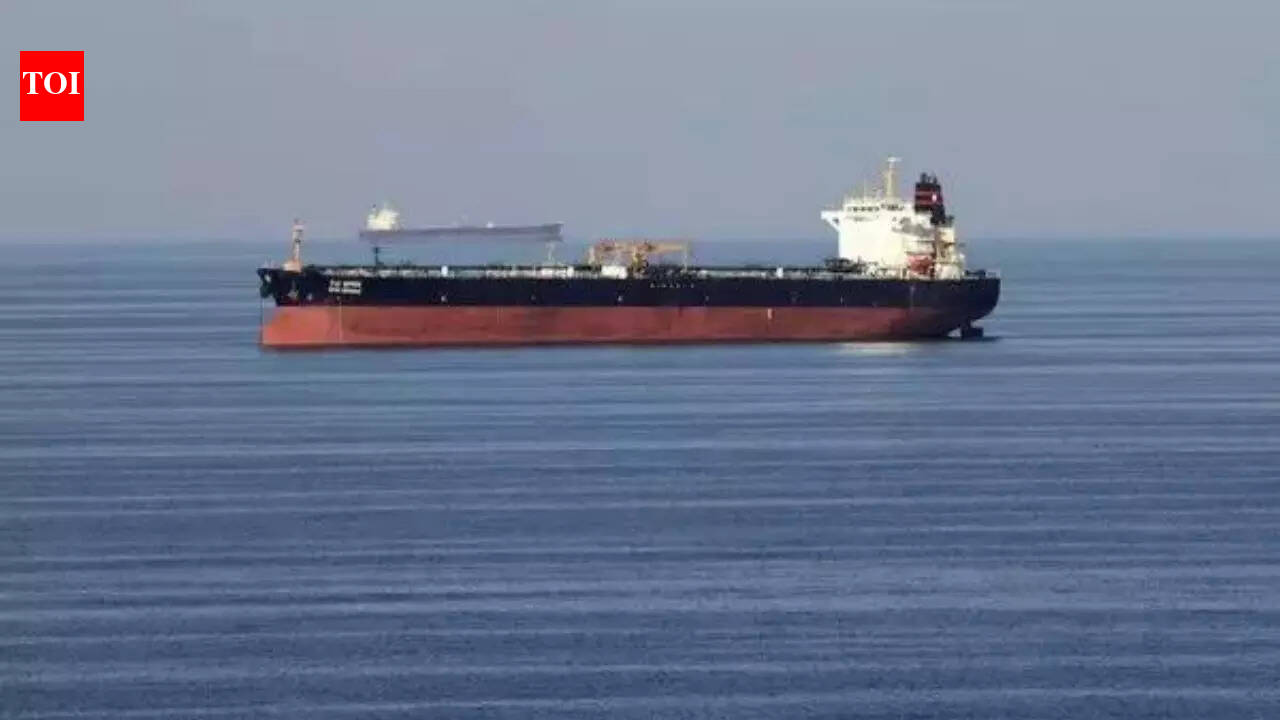
MUMBAI: India’s trade and energy supplies face fresh risks after reinsurers and Protection & Indemnity (P&I) clubs announced cancellation of war risk insurance for vessels transiting the Strait of Hormuz and Iranian waters, following an escalation in the Iran conflict. The cancellations, effective from this week, have left over 150 vessels stranded and disrupted a corridor that handles nearly one-fifth of global oil flows.P&I clubs are mutual, non-profit insurance associations owned by shipowners. They provide third-party liability cover through a pooled premium for risks such as cargo damage, pollution, crew injuries and collisions that are not covered under hull insurance. The clubs also provide legal support and dispute resolution across jurisdictions.“The industry is currently in a wait-and-watch mode, as much depends on how long the conflict persists. If it turns prolonged, insurers are likely to come together to create additional capacity for war-risk cover. Typically, there is an immediate surge in demand when hostilities break out, but that demand tends to ease quickly if the situation stabilises in a short span,” said Tapan Singhel, MD & CEO, Bajaj General Insurance.
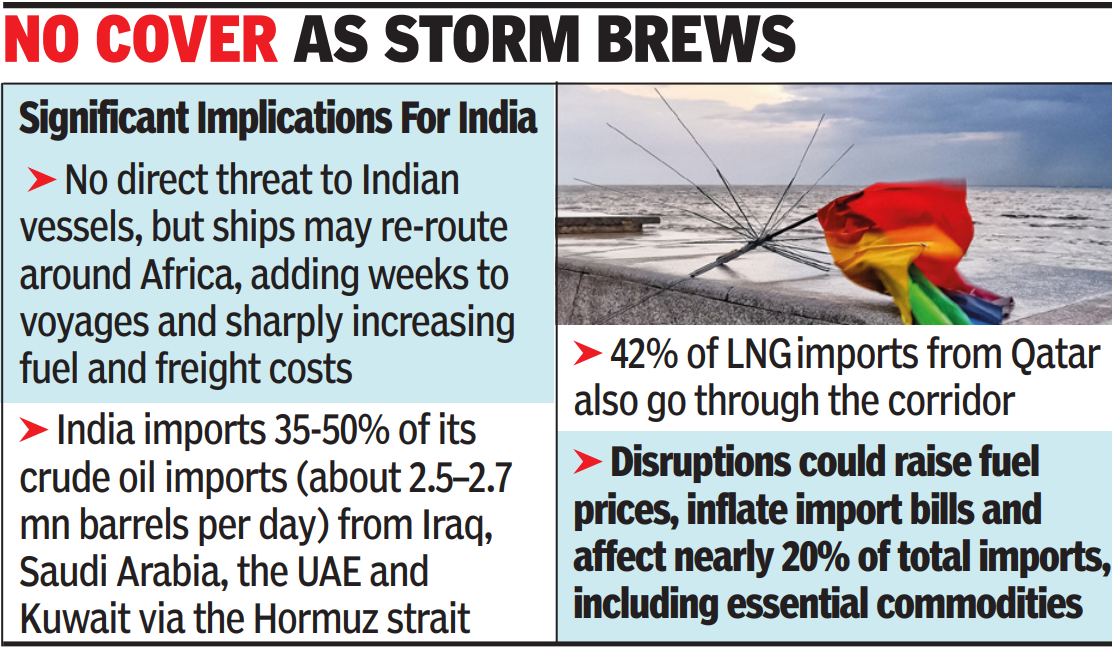
Brokers said that in the past when international reinsurers ceased to provide cover for some risks like terrorism the Indian market had provided the capacity by building an insurance pool where domestic companies come together and share the risks. However, this tie state-owned reinsurer GIC Re, which leads domestic marine pools, has itself issued cancellation notices for marine hull war risk covers effective March 3, 2026, mirroring global reinsurers and P&I clubs. The crisis has brought marine insurance centerstage, the share of this line of non-life had shrunk to around 2% of industry premium as risks ebbed due to containarisation and more safety in transport. The size of the premium also determines the capacity of the industry to provide large covers.Their role is central to global shipping. Without P&I cover, shipowners face potentially unlimited liabilities in the event of accidents, pollution or war-related damage. In high-risk zones, the absence of insurance effectively halts voyages, as operators are unwilling to expose vessels to uninsured losses. In previous crises in the Red Sea, war risk exclusions by insurers sharply curtailed traffic and drove up freight rates.In the current episode, major P&I clubs and reinsurers have issued notices cancelling war risk cover for Iranian waters, the Persian Gulf and the Strait of Hormuz, citing tanker damage, casualties and threats from Iranian forces. Reports of VHF warnings and GPS disruptions have added to concerns. Insurers have invoked standard cancellation clauses following US and Israeli strikes on Iran, with broader policy implications if the conflict further widens.Fresh war risk cover may be available, but at sharply higher premiums. Rates that were around 0.25% of vessel value have surged multiple times, rendering transits commercially unviable for many operators. Even where cover is available, shipowners remain wary of risks such as seizures or missile strikes.

Gold Prices: Gold retreats on strong dollar after four-day rally – The Times of India

Legendary Auburn coach Bruce Pearl backs Trump on Iran strikes, rips Obama and Biden over their strategy
Oil Prices: US, Israel attack Iran: With oil prices up, forex volatility set to continue – The Times of India

-

 Politics6 days ago
What are Iran’s ballistic missile capabilities?
-
 Politics6 days ago
US arrests ex-Air Force pilot for ‘training’ Chinese military
-
 Business1 week ago
Households set for lower energy bills amid price cap shake-up
-

 Sports1 week ago
Top 50 USMNT players of 2026, ranked by club form: USMNT Player Performance Index returns
-

 Sports6 days ago
Sri Lanka’s Shanaka says constant criticism has affected players’ mental health
-
 Business1 week ago
Lucid widely misses earnings expectations, forecasts continued EV growth in 2026
-

 Fashion5 days ago
Policy easing drives Argentina’s garment import surge in 2025
-

 Fashion5 days ago
Texwin Spinning showcasing premium cotton yarn range at VIATT 2026