Connect with us

Business

Will Crude Oil Become Cheaper Than Water? Experts See A Massive Price Fall By March 2027

Published

on

Will Crude Oil Become Cheaper Than Water? Experts See A Massive Price Fall By March 2027
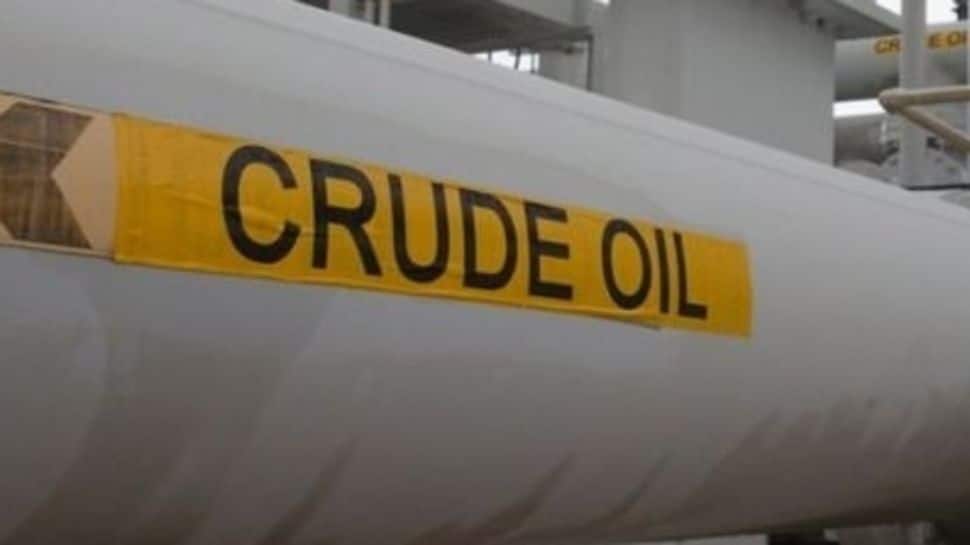

New Delhi: Crude oil prices in the international market could soon fall below the cost of a bottle of drinking water, and this is not an exaggeration. According to projections by global brokerage giant JP Morgan, Brent crude could drop to $30 per barrel by March 2027.

If converted to Indian rupees at an estimated exchange rate of Rs 95 per dollar, the price of one barrel would come to roughly Rs 2,850. Given that a barrel contains 159 litres, this would bring the cost of one litre of crude to just Rs 17.90, cheaper than the average price of bottled water in Delhi, which presently ranges between Rs 18 and Rs 20 per litre.

A Major Price Drop

Add Zee News as a Preferred Source


JP Morgan’s forecast is significant for countries that rely heavily on crude imports. The firm estimates that Brent crude could fall more than 50% from present levels, which are hovering just above $62 per barrel. The expected decline is primarily due to a surge in global supply that could exceed demand.

Even though global oil consumption is projected to rise steadily over the next three years, supply growth, particularly from non-OPEC+ countries (Russia, Mexico, Kazakhstan, Oman, Malaysia, Sudan & South Sudan, Azerbaijan, Bahrain, Brunei and Singapore), is expected to outpace demand. This supply glut is likely to put considerable downward pressure on prices.

Global Demand, Supply Dynamics

In 2025, global oil demand is expected to grow by 0.9 million barrels per day (mbpd), reaching a total consumption of 105.5 mbpd. Growth is predicted to remain steady in 2026 and could rise to 1.2 mbpd in 2027.

However, JP Morgan forecasts that supply growth will significantly exceed these demand hikes. In 2025 and 2026, supply could expand nearly three times faster than demand. By 2027, supply will continue to outpace consumption, creating an oversupply that could depress prices further.

Non-OPEC+ Drives Oil Supply Boom

One of the key drivers of this oversupply will be production from non-OPEC+ countries. JP Morgan highlights that roughly half of the expected supply surplus by 2027 will come from outside the traditional OPEC+ coalition (Saudi Arabia, Iraq, UAE, Kuwait, Iran, Venezuela, Nigeria, Libya, Algeria, Angola, Gabon, Republic of the Congo and Equatorial Guinea), fuelled by steady offshore growth and global shale production.

Once considered a high-cost cyclical sector, offshore oil has now become a reliable low-cost growth engine. JP Morgan projects offshore additions of 0.5 mbpd in 2025, 0.9 mbpd in 2026 and 0.4 mbpd in 2027.

Most floating production, storage and offloading (FPSO) units required for this expansion have already been approved, making this growth highly probable.

Shale, Other Key Supply Sources

Shale oil remains the most flexible lever in global supply. While US shale growth is slowing, efficiency and productivity improvements continue to support output. In addition, Argentina’s Vaca Muerta region has emerged as a low-cost scalable source thanks to improvements in export infrastructure.

Global shale supply is expected to increase by 0.8 mbpd in 2025. Assuming prices remain around $50 per barrel, production could grow by another 0.4 mbpd in 2026 and 0.5 mbpd in 2027. This surge in supply has already contributed to a rise in global inventories, which increased by 1.5 mbpd this year alone, including roughly 1 mbpd in floating storage and Chinese stockpiles.

JP Morgan expects this surplus layer to continue through 2026, with inventories potentially reaching 2.8 mbpd in 2026 and 2.7 mbpd in 2027 if no supply adjustments are made.

How $30 Per Barrel Could Happen

This imbalance could push Brent crude below $60 in 2026, possibly dropping to around $50 in the final quarter of the year. Average prices could fall to $42 by 2027, with end-of-year levels approaching $30 per barrel.

While supply cuts could be used to stabilise prices, hitting $30 would be challenging. The forecast suggests Brent could trade around $58 per barrel in 2026, slightly below current levels above $60.

Impact On Petrol, Diesel Prices In India

Such a dramatic fall in crude prices would be a major benefit for India. Petrol and diesel prices could drop substantially, easing the burden on consumers.

At present, Brent crude imports cost India over Rs 5,600 per barrel due to both price and rupee depreciation. By 2027, even if the rupee weakens to Rs 100 per dollar, the cost per barrel would still fall to around Rs 3,000 (roughly Rs 2,600 cheaper than current levels).

This provides ample room for the government and oil companies to reduce retail fuel prices.



Source link

Continue Reading
Click to comment

Leave a Reply

Your email address will not be published. Required fields are marked *

Business

South Korea: Online retail giant Coupang hit by massive data leak

Published

on

South Korea: Online retail giant Coupang hit by massive data leak


Osmond ChiaBusiness reporter

Getty Images Coupang logo on mobile phone screen against a white backgroundGetty Images

Coupang is often described as South Korea’s equivalent of Amazon.com

South Korea’s largest online retailer, Coupang, has apologised for a massive data breach potentially involving nearly 34 million local customer accounts.

The country’s internet authority said that it is investigating the breach and that details from the millions of accounts have likely been exposed.

Coupang is often described as South Korea’s equivalent of Amazon.com. The breach marks the latest in a series of data leaks at major firms in the country, including its telecommunications giant, SK Telecom.

Coupang told the BBC it became aware of the unauthorised access of personal data of about 4,500 customer accounts on 18 November and immediately reported it to the authorities.

But later checks found that some 33.7 million customer accounts – all in South Korea – were likely exposed, said Coupang, adding that the breach is believed to have begun as early as June through a server based overseas.

The exposed data is limited to name, email address, phone number, shipping address and some order histories, Coupang said.

No credit card information or login credentials were leaked. Those details remain securely protected and no action is required from Coupang users at this point, the firm added.

The number of accounts affected by the incident represents more than half of South Korea’s roughly-52 million population.

Coupang, which is founded in South Korea and headquartered in the US, said recently that it had nearly 25 million active users.

Coupang apologised to its customers and warned them to stay alert to scams impersonating the company.

The firm did not give details on who is behind the breach.

South Korean media outlets reported on Sunday that a former Coupang employee from China was suspected of being behind the breach.

The authorities are assessing the scale of the breach as well as whether Coupang had broken any data protection safety rules, South Korea’s Ministry of Science and ICT said in a statement.

“As the breach involves the contact details and addresses of a large number of citizens, the Commission plans to conduct a swift investigation and impose strict sanctions if it finds a violation of the duty to implement safety measures under the Protection Act.”

The incident marks the latest in a series of breaches affecting major South Korean companies this year, despite the country’s reputation for stringent data privacy rules.

SK Telecom, South Korea’s largest mobile operator, was fined nearly $100m (£76m) over a data breach involving more than 20 million subscribers.

In September, Lotte Cards also said the data of nearly three million customers was leaked after a cyber-attack on the credit card firm.


Source link

Continue Reading

Business

Pakistan’s crisis differs from world | The Express Tribune

Published

on

Pakistan’s crisis differs from world | The Express Tribune


Multiple elite clusters capture system as each extracts benefits in different ways

Pakistan’s ruling elite reinforces a blind nationalism, promoting the belief that the country does not need to learn from developed or emerging economies, as this serves their interests. PHOTO: FILE


KARACHI:

Elite capture is hardly a unique Pakistani phenomenon. Across developing economies – from Latin America to Sub-Saharan Africa and parts of South Asia – political and economic systems are often influenced, shaped, or quietly commandeered by narrow interest groups.

However, the latest IMF analysis of Pakistan’s political economy highlights a deeper, more entrenched strain of elite capture; one that is broader in composition, more durable in structure, and more corrosive in its fiscal consequences than what is commonly observed elsewhere. This difference matters because it shapes why repeated reform cycles have failed, why tax bases remain narrow, and why the state repeatedly slips back into crisis despite bailouts, stabilisation efforts, and policy resets.

Globally, elite capture typically operates through predictable channels: regulatory manipulation, favourable credit allocation, public-sector appointments, or preferential access to state contracts. In most emerging economies, these practices tend to be dominated by one or two elite blocs; often oligarchic business families or entrenched political networks.

In contrast, Pakistan’s system is not captured by a single group but by multiple competing elite clusters – military, political dynasties, large landholders, protected industrial lobbies, and urban commercial networks; each extracting benefits in different forms. Instead of acting as a unified oligarchic class, these groups engage in a form of competitive extraction, amplifying inefficiencies and leaving the state structurally weak.

The IMF’s identification of this fragmentation is crucial. Unlike countries where the dominant elite at least maintains a degree of policy coherence, such as Vietnam’s party-led model or Turkiye’s centralised political-business nexus, Pakistan’s fragmentation results in incoherent, stop-start economic governance, with every reform initiative caught in the crossfire of competing privileges.

For example, tax exemptions continue to favour both agricultural landholders and protected sectors despite broad consensus on the inefficiencies they generate. Meanwhile, state-owned enterprises continue to drain the budget due to overlapping political and bureaucratic interests that resist restructuring. These dynamics create a fiscal environment where adjustment becomes politically costly and therefore systematically delayed.

Another distinguishing characteristic is the fiscal footprint of elite capture in Pakistan. While elite influence is global, its measurable impact on Pakistan’s budget is unusually pronounced. Regressive tax structures, preferential energy tariffs, subsidised credit lines for favoured industries, and the persistent shielding of large informal commercial segments combine to erode the state’s revenue base.

The result is dependency on external financing and an inability to build buffers. Where other developing economies have expanded domestic taxation after crises, like Indonesia after the Asian financial crisis, Pakistan’s tax-to-GDP ratio has stagnated or deteriorated, repeatedly offset by politically negotiated exemptions.

Moreover, unlike countries where elite capture operates primarily through economic levers, Pakistan’s structure is intensely politico-establishment in design. This tri-layer configuration creates an institutional rigidity that is difficult to unwind. The civil-military imbalance limits parliamentary oversight of fiscal decisions, political fragmentation obstructs legislative reform, and bureaucratic inertia prevents implementation, even when policies are designed effectively.

In many ways, Pakistan’s challenge is not just elite capture; it is elite entanglement, where power is diffused, yet collectively resistant to change. Given these distinctions, the solutions cannot simply mimic generic reform templates applied in other developing economies. Pakistan requires a sequenced, politically aware reform agenda that aligns incentives rather than assuming an unrealistic national consensus.

First, broadening the tax base must be anchored in institutional credibility rather than coercion. The state has historically attempted forced compliance but has not invested in digitalisation, transparent tax administration, and trusted grievance mechanisms. Countries like Rwanda and Georgia demonstrate that tax reforms succeed only when the system is depersonalised and automated. Pakistan’s current reforms must similarly prioritise structural modernisation over episodic revenue drives.

Second, rationalising subsidies and preferential tariffs requires a political bargain that recognises the diversity of elite interests. Phasing out energy subsidies for specific sectors should be accompanied by productivity-linked support, time-bound transition windows, and export-competitiveness incentives. This shifts the debate from entitlement to performance, making reform politically feasible.

Third, Pakistan must reduce its SOE burden through a dual-track programme: commercial restructuring where feasible and privatisation or liquidation where not. Many countries, including Brazil and Malaysia, have stabilised finances by ring-fencing SOE losses. Pakistan needs a professional, autonomous holding company structure like Singapore’s Temasek to depoliticise SOE governance.

Fourth, politico-establishment reform is essential but must be approached through institutional incentives rather than confrontation. The creation of unified economic decision-making forums with transparent minutes, parliamentary reporting, and performance audits can gradually rebalance power. The goal is not confrontation, but alignment of national economic priorities with institutional roles.

Finally, political stability is the foundational prerequisite. Long-term reform cannot coexist with cyclical political resets. Countries that broke elite capture, such as South Korea in the 1960s or Indonesia in the 2000s, did so through sustained, multi-year policy continuity.

What differentiates Pakistan is not the existence of elite capture but its multi-polar, deeply institutionalised, fiscally destructive form. Yet this does not make reform impossible. It simply means the solutions must reflect the structural specificity of Pakistan’s governance. Undoing entrenched capture requires neither revolutionary rhetoric nor unrealistic expectations but a deliberate recalibration of incentives, institutions, and political alignments. Only through such a pragmatic approach can Pakistan shift from chronic crisis management to genuine economic renewal.

The writer is a financial market enthusiast and is associated with Pakistan’s stocks, commodities and emerging technology


Source link

Continue Reading

Business

India’s $5 Trillion Economy Push Explained: Why Modi Govt Wants To Merge 12 Banks Into 4 Mega ‘World-Class’ Lending Giants

Published

on

India’s  Trillion Economy Push Explained: Why Modi Govt Wants To Merge 12 Banks Into 4 Mega ‘World-Class’ Lending Giants


India’s Public Sector Banks Merger: The Centre is mulling over consolidating public-sector banks, and officials involved in the process say the long-term plan could eventually bring down the number of state-owned lenders from 12 to possibly just 4. The goal is to build a banking system that is large enough in scale, has deeper capital strength and is prepared to meet the credit needs of a fast-growing economy.

The minister explained that bigger banks are better equipped to support large-scale lending and long-term projects. “The country’s economy is moving rapidly toward the $5 trillion mark. The government is active in building bigger banks that can meet rising requirements,” she said.

Why India Wants Larger Banks

Add Zee News as a Preferred Source


Sitharaman recently confirmed that the government and the Reserve Bank of India have already begun detailed conversations on another round of mergers. She said the focus is on creating “world-class” banks that can support India’s expanding industries, rising infrastructure investments and overall credit demand.

She clarified that this is not only about merging institutions. The government and RBI are working on strengthening the entire banking ecosystem so that banks grow naturally and operate in a stable environment.

According to her, the core aim is to build stronger, more efficient and globally competitive banks that can help sustain India’s growth momentum.

At present, the country has a total of 12 public sector banks: the State Bank of India (SBI), the Punjab National Bank (PNB), the Bank of Baroda, the Canara Bank, the Union Bank of India, the Bank of India, the Indian Bank, the Central Bank of India, the Indian Overseas Bank (IOB) and the UCO Bank.

What Happens To Employees After Merger?

Whenever bank mergers are discussed, employees become anxious. A merger does not only combine balance sheets; it also brings together different work cultures, internal systems and employee expectations.

In the 1990s and early 2000s, several mergers caused discomfort among staff, including dissatisfaction over new roles, delayed promotions and uncertainty about reporting structures. Some officers who were promoted before mergers found their seniority diluted afterward, which created further frustration.

The finance minister addressed the concerns, saying that the government and the RBI are working together on the merger plan. She stressed that earlier rounds of consolidation had been successful. She added that the country now needs large, global-quality banks “where every customer issue can be resolved”. The focus, she said, is firmly on building world-class institutions.

‘No Layoffs, No Branch Closures’

She made one point unambiguous: no employee will lose their job due to the upcoming merger phase. She said that mergers are part of a natural process of strengthening banks, and this will not affect job security.

She also assured that no branches will be closed and no bank will be shut down as part of the consolidation exercise.

India last carried out a major consolidation drive in 2019-20, reducing the number of public-sector banks from 21 to 12. That round improved the financial health of many lenders.

With the government preparing for the next phase, the goal is clear. India wants large and reliable banks that can support a rapidly growing economy and meet the needs of a country expanding faster than ever.


Source link

Continue Reading

Trending