

Business
With Trump’s tax bill set to dent giving by the wealthy, can middle-class donors make up the difference?


A woman puts money into a Salvation Army red kettle outside of Giant Supermarket in Alexandria, Virginia on November 22, 2023.
Eric Lee | The Washington Post | Getty Images
A version of this article first appeared in CNBC’s Inside Wealth newsletter with Robert Frank, a weekly guide to the high-net-worth investor and consumer. Sign up to receive future editions, straight to your inbox.
New tax laws risk reducing charitable giving by the wealthy next year, economists and academic experts say, leaving less-wealthy Americans to make up the difference.
Under President Donald Trump’s “big beautiful bill,” signed into law in July, several tax benefits for wealthy donors will be reduced. Top earners will also have their effective tax benefit cut from 37% to 35%. The Indiana University Lilly Family School of Philanthropy estimates this cap alone will reduce giving by $4.1 billion to approximately $6.1 billion annually.
In addition, the bill also limits tax incentives for itemizers, who will only be able to deduct donations in excess of 0.5% of their adjusted gross income.
At the same time, the bill also creates new incentives for middle- and lower-income filers to give. Starting next year, roughly 140 million taxpayers who do not itemize will still be able to deduct up to $1,000 in cash donations per filer. About 90% of taxpayers take the standard deduction since it was raised in 2017 during the first Trump administration.
While the tax changes may help broaden the base of giving, making it less dependent on the ultra-wealthy, experts are skeptical that the math will balance out.
Elena Patel, co-director of the Urban-Brookings Tax Policy Center, told Inside Wealth she is not optimistic that middle- and lower-income donors will be able to make up the shortfall as top earners give less.
“The nonprofit sector says that every dollar matters, and so incentivizing small donations from every household could have a meaningful impact for certain kinds of organizations. But the truth is that those kinds of contributions, however, just are not the bulk of charitable giving in the charitable sector,” she said. “That 2-percentage-point reduction [for top earners] might not seem like a big deal, but you have to keep in mind the scale of gifts that are being given among the highest-net-worth individuals in the United States.”
What the ‘K-shaped’ economy means for philanthropy
Charitable giving by American households continues to rise, reaching $392.45 billion last year, per the latest report by the Lilly School of Philanthropy for Giving USA. That’s up 52% since 2014.
But while donations are increasing, fewer Americans are giving as wealthy donors make up an increasing share of philanthropy, according to the university’s research.
Amir Pasic, dean of the Lilly School of Philanthropy, said incentivizing Americans of all income levels to donate is valuable in and of itself.
“We’ve had this general problem of dollars going up but the number of donors going down. This is a positive development because this could really increase the number of donors,” he said.
However, Pasic said, financial stress has limited everyday donors’ ability to give, while wealthier ones have been donating more. The share of Americans who donate dropped from 66.2% to 45.8% between 2000 and 2020, according to the university’s research.
“Economic uncertainty is always worrisome for people’s giving planning,” Pasic said.
This lopsided, or “K-shaped,” economy shows signs of getting worse amid tariff hikes and inflation. Lower- and middle-income consumers are spending less on everything from McDonald’s burgers to flights, while wealthier Americans flex their spending power.
Will the new deduction move the needle?
Economist Daniel Hungerman said he questions whether the new deduction would spur a substantial number of donations or mainly reward taxpayers who would have given anyway.
While the new deduction is larger, at $1,000 per single filer and $2,000 for married joint filers, a similar legislative effort in the ’80s failed to move the needle on charitable giving, he said. A temporary $300 deduction in 2020 spurred by the Covid pandemic only increased charitable donations by 5%, according to the Tax Foundation.
Trump’s tax bill also permanently raises the standard deduction, which significantly dampens charitable giving, Hungerman said. His study estimated that the higher deduction led to a permanent annual drop of $16 billion after the 2017 reforms.
However, raising the cap on the federal deduction for state and local taxes (better known as SALT) may provide some relief, he said. More taxpayers in high-cost states will benefit from itemizing, which encourages donations.
Hungerman said encouraging everyday donors to get in the habit of giving now could lead to higher levels of donating later if they increase their wealth.
“Maybe what is even more compelling to me is the long game, if we can send a message that everybody should give like this, and we change some of these people’s giving behavior,” he said. “Somewhere out there is the Bill Gates of tomorrow.”
What donors can do now
Currently, taxpayers who plan to take the standard deduction would benefit from waiting until 2026 to make donations. However, itemizers and high-income donors will get more bang for their buck by giving before the end of the year.
Robert Westley, senior vice president and regional wealth advisor at Northern Trust, said he is recommending that clients accelerate their donations to this year if they were planning to donate over the next four years.
Filers can only deduct up to 60% of their adjusted gross income for cash donations to public charities per year. The percentage drops to 30% for contributions of long-term appreciated assets like stock or real estate.
However, taxpayers can generally carry forward excess deductions over five years, he said. Still, it’s unclear how much bang they will get for their buck as the IRS has yet to specify whether excess deductions will be subject to the new floor and ceiling on charitable deductions, according to Westley.
For donors who want to give more now but are unsure of how to do so, he said he suggests giving to a donor-advised fund, or DAF. With a DAF, donors get an upfront deduction but can wait to allocate those funds to specific charities. For donors wanting to offload appreciated assets, it is much simpler to donate stock to a DAF than directly to a nonprofit.
Given this year’s stock run up, Westley said many of his clients are looking to donate appreciated stock, especially in tech, to offset gains as well as rebalance their portfolios.
“Their equities have appreciated, and some of them might now represent a higher percentage of the portfolio than their target asset allocation,” he said. “When you donate those risk assets to charity, you get the tax benefit, you don’t realize the gain, and when it’s done you’ve lowered your risk-asset allocation.”
Lawyers and tax planners are still waiting for guidance from the IRS on a bevy of issues stemming from the changes. For instance, it’s still unclear whether deductions will be capped for non-grantor trusts that make charitable donations, according to Westley.
But high-income donors still have many tools at their disposal, he said. Top earners who are 73 and older can effectively reduce their taxable income dollar-for-dollar by giving their required minimum distributions from an IRA to charity.
Westley said this tactic is popular among his retirement-age clients and likely to become even more so with the raised SALT cap. Filers can lower their income to qualify for the enhanced SALT deduction, which maxes out at $40,000 for taxpayers with incomes of $500,000 or less.
“You’re not even dealing with any of the itemized deduction rules,” he said. “There’s no ceiling on the tax benefit and there’s no floor or hurdle to get over for the deduction.”






Business
Stock Market News Live Updates: Sensex Down Over 1,000 Points, Nifty Below 24,900; India VIX Jumps Nearly 20%

Nifty, Sensex Stock Market Today Live Updates: Indian benchmark indices continued their downward trajectory on Monday, tracking weak global cues as geopolitical tensions between the US and Iran escalated.
As of 11:00 AM, the Sensex was trading 1.34 per cent, or 1,086.02 points, lower at 80,201.17, while the Nifty50 declined 1.31 per cent, or 350.55 points, to 24,828.10. Shares of Larsen & Toubro, InterGlobe Aviation and Adani Ports and Special Economic Zone were among the biggest laggards in the Nifty 50 index.
Broader market indices also traded in the red, with the Nifty MidCap and Nifty SmallCap indices falling 0.93 per cent and 1.3 per cent, respectively. Among sectoral indices, the Nifty Auto was the worst performer, sliding more than 2 per cent as shares of Maruti Suzuki India and Mahindra & Mahindra came under pressure.
On the other hand, the Nifty Metal index declined the least, making it the relatively best-performing sectoral index in early trade despite the overall weak market sentiment.
Global Cues
Over the weekend, Iran’s Supreme Leader Ayatollah Ali Khamenei and several senior officials were killed in a joint US-Israel military operation. The conflict appears set to intensify, with US President Donald Trump vowing to retaliate after American servicemen were killed in Iran’s counterattacks, according to agency reports.
Asian markets tumbled in early Monday trade. Japan’s Nikkei 225 and South Korea’s Kospi dropped as much as 2.7% and 2.43%, respectively.
On Sunday, US stock futures declined more than 1% after the strikes on Iran. Both the S&P 500 and the Dow Jones Industrial Average were reported to have fallen 1.11% each.
During the Asia session, Dow Jones Industrial Average futures and S&P 500 futures were down 0.6% and 0.54%, respectively.
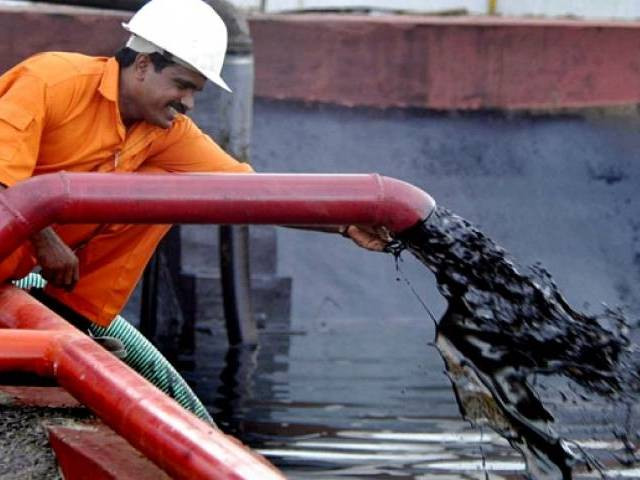
In commodities, oil prices surged amid rising concerns over supply disruptions in the key producing region. Brent crude futures jumped 13.76% to $82.37 per barrel — the highest level since January 2025 — according to Bloomberg data.
Gold and silver futures rose more than 1% as investors turned to safe-haven assets.

Labour MPs are among a group of more than 60 parliamentarians to have made public their opposition to the planned Rosebank oil field – with one of Sir Keir Starmer’s backbenchers urging the Government to rule against the development and take a stand “against Trump, Reform and their fossil fuel paymasters”.
Clive Lewis is one of more than 50 MPs at Westminster who have signed a pledge from campaign group Uplift to “oppose the Rosebank oil field” and instead “advocate for a properly funded just transition for oil and gas workers and communities”.
Urging the Government to reject the development, Norwich South MP Mr Lewis said: “We must stand our ground against Trump, Reform and their fossil fuel paymasters.
“Approving an enormous new oil field would mean caving in to their anti-climate, anti-renewables agenda that runs completely counter to our values and our long-term interests.”
Scottish Labour MP Chris Murray, another of the Labour MPs to have signed the pledge, said the decision on Rosebank was “an opportunity for the Government to change course”.
It comes as the UK Government continues to consider whether the development of the oil field can go ahead – with Labour now under mounting pressure after the loss of the Gorton and Denton by-election to the Greens on Thursday.
Rosebank, which lies about 80 miles west of Shetland, is the UK’s largest untapped field, containing up to an estimated 300 million barrels of oil.
Drilling there was approved by the Conservative government in 2023 but was then subject to a legal challenge in the wake of a Supreme Court ruling which said the emissions created from burning fossil fuels should be considered when granting permission for new sites.
Now the decision on whether it can proceed lies with Labour ministers – with some 16 Labour MPs having made plain their opposition to the development.
The group includes Mr Lewis, Mr Murray, former Labour shadow chancellor John McDonnell and Scottish Labour’s Brian Leishman.
Former Labour MPs Jeremy Corbyn and Diane Abbott have also signed the pledge, along with a number of Liberal Democrat and Green MPs, SNP MP Chris Law, Plaid Cymru’s Liz Saville Roberts and Paul Maskey of Sinn Fein.
In Scotland a number of Labour MSPs have signed the pledge, along with Green MSPs – including the party’s Scottish co-leader Ross Greer – and former SNP health secretary Michael Matheson.
While previous Scottish first ministers Nicola Sturgeon and Humza Yousaf made plain their opposition to Rosebank, First Minister John Swinney has insisted the Scottish Government takes a “case-by-case approach” to new oil and gas developments, stressing these should only proceed if found to be compatible with climate change targets.
Mr Lewis said opposing Rosebank would “show that a Labour Government will stand by the promises we made to the country”.
He added: “There are only so many times we can afford to make mistakes and then change course.
“With Rosebank, we have an opportunity to get it right the first time.”
Mr Murray, the Labour MP for Edinburgh East and Musselburgh, said many locals in his constituency were “deeply concerned about Rosebank and rightly so”.
He added: “Climate change is one of the reasons I came into politics, and opening new oil and gas fields is simply incompatible with our climate commitments.
“With the North Sea’s oil supply dwindling, Scotland’s energy sector must transition to clean energy, or workers risk being left behind.”
Scottish Labour MSP Mercedes Villalba, who has also signed the pledge, argued that “approving projects like Rosebank will lock us into a toxic dependence on volatile, conflict-ridden fossil fuels”.
This would create “another excuse to delay the urgent investment needed to create secure, well-paid jobs for Scotland’s workers”, she added.
Ms Villalba said: “In an increasingly uncertain world, where climate action is relegated in favour of fossil politics, the UK and Scotland must lead the way on the clean energy transition.”
Wera Hobhouse, Liberal Democrat MP for Bath, said people in her constituency and across the country “are already facing the consequences of an increasingly unstable climate”.
Highlighting the impact of flooding and “skyrocketing food prices”, she said that “climate impacts are now a daily reality”.
Ms Hobhouse said: “Extreme weather is damaging crops, putting pressure on farmers, and destroying our precious natural environment.
“We cannot ignore these warning signs.
“A massive new oil field like Rosebank would only make matters worse.
“The emissions would be enormous, locking us into decades more pollution when we should be cutting carbon and unlocking the benefits of cheap, renewable energy.”
Approving the Rosebank development would “make a mockery of Labour’s environmental promises”, she said.
A UK Government spokesperson said: “Our priority is to deliver a fair, orderly and prosperous transition in the North Sea in line with our climate and legal obligations, which drives our clean energy future of energy security, lower bills, and good long-term jobs.”

Discussions over what measures to implement to protect children’s wellbeing will last for three months.
Source link

Stock Market News Live Updates: Sensex Down Over 1,000 Points, Nifty Below 24,900; India VIX Jumps Nearly 20%

New Zealand’s apparel imports ease down to $101 mn in Jan 2026

Katie Price laughs off pregnancy claims as Lee Andrews remains overseas

Pakistan carries out precision strikes on seven militant hideouts in Afghanistan

Eye-popping rise in one year: Betting on just gold and silver for long-term wealth creation? Think again! – The Times of India

These Cheap Noise-Cancelling Sony Headphones Are Even Cheaper Right Now

-
 Politics1 week ago
Pakistan carries out precision strikes on seven militant hideouts in Afghanistan
-
Business1 week ago
Eye-popping rise in one year: Betting on just gold and silver for long-term wealth creation? Think again! – The Times of India
-
 Tech1 week ago
These Cheap Noise-Cancelling Sony Headphones Are Even Cheaper Right Now
-

 Sports1 week ago
Kansas’ Darryn Peterson misses most of 2nd half with cramping
-

 Sports1 week ago
How James Milner broke Premier League’s appearances record
-

 Entertainment1 week ago
Saturday Sessions: Say She She performs "Under the Sun"
-
Sports1 week ago
Mike Eruzione and the ‘Miracle on Ice’ team are looking for some company
-

 Entertainment1 week ago
Viral monkey Punch makes IKEA toy global sensation: Here’s what it costs