

Entertainment
27th and counting: A constitutional makeover?

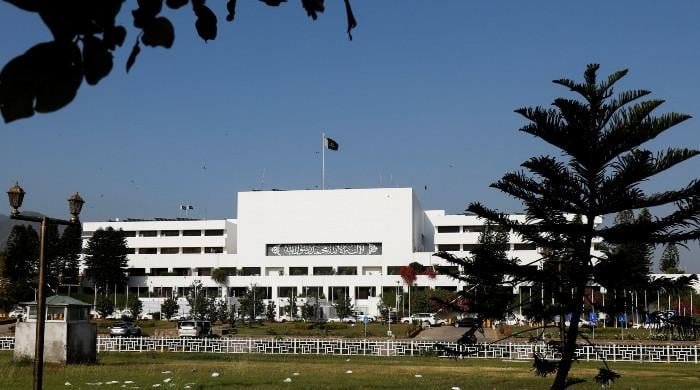
KARACHI: As discussions over the proposed 27th Amendment gather pace, analysts warn that the changes being contemplated could upend the country’s constitutional balance, while the government insists that any move will be made only after consensus and without ‘endangering democracy’.
The proposed 27th Amendment, said to include the creation of a Constitutional Court, possible reconfiguration of the National Finance Commission (NFC) Award and an amendment to Article 243, has sparked intense debate among political parties and legal experts.
While the PPP has confirmed that Prime Minister Shehbaz Sharif has sought its support for the move, opposition politicians and constitutional lawyers see the proposals as part of a larger attempt to dilute the gains of the 18th Amendment.
On Monday, PPP Chairman Bilawal Bhutto-Zardari said that the prime minister had approached his party for backing on the 27th Amendment.
Later that night, speaking to Geo News’ Shahzeb Khanzada, Prime Minister’s Adviser on Political Affairs Senator Rana Sanaullah dismissed the controversy, saying the proposed amendment was being “unnecessarily portrayed” as a storm and a bogeyman.
He insisted that “discussions on the matters raised by Bilawal Bhutto have been ongoing for months” and that “no constitutional amendment will be made without complete consensus”.
Sanaullah said that all stakeholders would be consulted before any draft was finalised and that any amendment introduced would “not endanger democracy”. On the proposed Constitutional Court, he said there was no disagreement on its formation since it was also a part of the Charter of Democracy.
“Our stance from day one has been that a constitutional court should exist”, he said. “Everyone agrees that such a court would handle matters more effectively and sustainably”.
Yet not everyone is convinced. Talking to journalist Hamid Mir, PTI senator Barrister Ali Zafar accused the government of being “less than truthful” about its intentions. “Government ministers had been lying and saying no 27th amendment was on the horizon. Now, Bilawal Bhutto Zardari has come clear on this,” he said. “If they wanted to bring an amendment, there should have been a debate, and then it should have been presented in parliament”.
Barrister Zafar argued that the proposals seemed to “tinker with presidential powers and the NFC”, warning that any rollback of provincial autonomy would amount to undoing the PPP’s 18th Amendment legacy.
Minister of State for Law and Justice Barrister Aqeel, however, maintained that “discussions are underway regarding the 27th Amendment, but formal work has not yet begun”.
He confirmed that “the purpose of amending Article 243 is to constitutionally recognise the field marshal title awarded to the army chief”, that the points of the amendment were “not final”, and that civil society would be consulted regarding the amendment.
Legal and constitutional experts contacted by The News expressed far deeper concerns. According to high court advocate Hassan Abdullah Niazi, the proposed changes would “mark a tragic conclusion to the 18th Amendment’s story”.
He says that what is being discussed would “curtail judicial independence via a special court, allow members of the executive to operate as judges, weaken provincial autonomy and expand the role of the military”.
“All of this”, Niazi says, “would cut at the very core of the constitutional order the 18th Amendment created”. He adds that it is “baffling how the government believes the people will buy their argument for a separate constitutional court when the experiment of a ‘constitutional bench’ has failed to deliver efficiency or expediency.”
“This is mainly about consolidating control over an already hamstrung judiciary”, he warns, adding that such an arrangement would not just duplicate judicial structures but “create a parallel system of constitutional adjudication entirely susceptible to political pressure”.
Explaining the concept, Niazi says a constitutional court would “likely be completely separate from the current Supreme Court. It would have its own staff, process, judges and jurisdiction. It is akin to the government creating a completely new court structure within Pakistan’s legal system”.
Such a move, he cautions, “will lead directly to a flood of issues for litigants, lawyers and judges, as it is incredibly difficult to parse constitutional cases from regular disputes in Pakistan”.
PILDAT President Ahmed Bilal Mehboob says the proposed components of the amendment reflect “the unfinished agenda of the 26th Amendment”, and while the idea itself is not unexpected, what surprised him was “the absence of amendment/expansion of Article 140-A to empower local governments, despite the fact that the Punjab Assembly unanimously demanded this amendment and the MQM included this as part of the coalition agreement signed with the PML-N”.
He feels that a Constitutional Court could “conform better with several international models than the compromise solution of the Constitutional Bench”, but has reservations about the Election Commission reforms being discussed.
“Breaking the ECP appointment logjam may result in reappointment of the incumbent CEC and ECP members for the next five years, as was proposed in the initial draft of the 26th Amendment. If it happens, it will be unfortunate and run counter to the neutrality of the ECP”, he says.
Mehboob adds that, while it would be difficult for the PPP to agree to any dilution of the current ring-fencing of provincial shares in the divisible pool, “the increasing need to boost defence spending may convince them and representatives of smaller provinces”. He also suggests that other parties should emulate the PPP’s step of calling a meeting of its CEC to deliberate on the proposals.
Barrister Ali Tahir, meanwhile, offers a far bleaker assessment: “Whatever remains of the existing constitutional structure is now being prepared for a complete demolition”.
He views the revival of the Constitutional Court proposal as a response to “concern in certain quarters” that the Supreme Court, in hearing the pending 26th Amendment case, could constitute a full bench and possibly strike it down. “If that happens”, he says, “it would deliver a very serious blow to the current hybrid political arrangement”. Hence, the constitutional court push.
Tahir describes the proposal to reintroduce executive magistrates as “in direct conflict with several Supreme Court judgments, most notably the Sharf Faridi case”, warning that under Article 175, “judicial power must remain completely independent from the executive”.
Bringing back executive magistracy, he says, would mean that “whatever limited relief the courts are still able to grant to citizens may also be taken away”.
Tahir further says that plans to allow the transfer of judges under a government-controlled or executive-dominated body “would destroy judicial independence”, and that tampering with Article 243 would amount to “institutionalising a new civil-military imbalance or entrenching the hybrid model further”.
Hafiz Ehsaan Ahmad Khokhar, advocate of the Supreme Court of Pakistan, calls for “a broad-based national dialogue engaging all political parties, constitutional institutions and provincial governments to introduce reforms that bring clarity, legislative competence and predictability to Pakistan’s constitutional and governance framework”.
Khokhar says the 18th Amendment was a landmark reform, but “the experience of its implementation exposed serious coordination gaps and fragmentation in national policymaking”.
The abolition of the Concurrent Legislative List, he says, weakened uniformity in critical areas and the 26th Amendment ended up deepening “internal divisions within the judiciary”. Khokar says that these developments “signal the need for a measured realignment”.
Khokhar also supports a Constitutional Court “endowed with exclusive jurisdiction over constitutional interpretation, intergovernmental disputes and fundamental rights litigation, which would consequently decrease the burden of regular high courts and the Supreme Court”. Such a court, he says, “would prevent controversies by establishing clear jurisdictional boundaries, avoiding internal judicial conflict and ensuring timely constitutional justice”.
On Article 243, Khokhar says the amendment should “codify tenure limits, define reappointment conditions and introduce transparent procedural requirements for appointments of the chiefs of army, navy and air staff”. He also favours reviving the executive magistracy. Still, as Barrister Tahir cautions, “there is a long road ahead before any consensus can be built to push something of this magnitude through parliament”.
Originally published in The News

Trevor Oakes, guitarist who helped make Showaddywaddy famous all over the world, has died at the age of 79 after fighting bravely with a long illness.
The icon passed away peacefully on February 18, leaving all of his fans and friends heartbroken.
Trevor’s former bandmate Dave Bartram paid a touching tribute for him, calling him “a unique character and a dedicated professional” who played a huge part in the band’s success.
Trevor was there from the very start, helping the band bring back songs from the 1950s and 1960s for a new generation.
Showaddywaddy, however, then got Top 10 hits, including the number one song Under the Moon of Love in 1976.
Dave remembered him as not just a talented musician but also a loving family man with a cheeky sense of humour, saying that he will be “sadly missed by all those dear to him.”
Though Trevor stepped away from performing in 2009 due to health problems, his spirit and influence stayed with the band, which continues to tour today under Dave’s management.
Only one original member remains on stage but Trevor’s energy and love for music live on in every show.
Fans, moreover, will always remember him for the joy, laughter and music he shared over years.


John Mayer and Kat Stickler’s relationship has come to an end after they were reportedly planning on settling down together.
The musician and the influencer sparked dating rumours in October 2025, and were frequently spotted dining together and spending time with each other in New York City.
While the Gravity hitmaker was believed to be actively pursuing the social media star, and introducing her to his friends and family, the couple suddenly broke off in March.
Mayer and Stickler quietly split ways as an insider told the celebrity gossip account DeuxMoi, which came as a surprise to people.
Following the news social media sleuths noticed that the pair stopped ‘liking’ each other’s posts in February this year.
The breakup news surfaced after an insider revealed that the New Light singer was “looking to seriously date” and settle down with Stickler.


Man City show why they are worthy WSL title winners as tired United wilt

Trevor Oakes of ‘Showaddywaddy’ dies aged 79, know the reason here

USA 2-5 Belgium (Mar 28, 2026) Final Score – ESPN

-
 Business1 week ago
Flipkart group CFO to leave co amid IPO plans – The Times of India
-

 Fashion1 week ago
China’s textile & apparel exports surge 17% to $50 bn in Jan-Feb 2026
-

 Sports1 week ago
Rating Adidas’ 2026 World Cup away shirts: Argentina, Spain, Mexico and more
-

 Sports1 week ago
American Conference Commissioner Tim Pernetti thanks Trump for Army-Navy game executive order
-
Tech1 week ago
The Corsair 4000D RS PC Case Keeps Your System Cool
-

 Tech1 week ago
Gamers Hate Nvidia’s DLSS 5. Developers Aren’t Crazy About It, Either
-
 Business4 days ago
Property Play: Home flippers see smallest profits since the Great Recession, real estate data firm says
-
 Business1 week ago
‘Marriage penalty’ in Washington state’s new millionaire tax stirs debate