

Tech
Love it or hate it? Apple’s ‘Liquid Glass’ explained

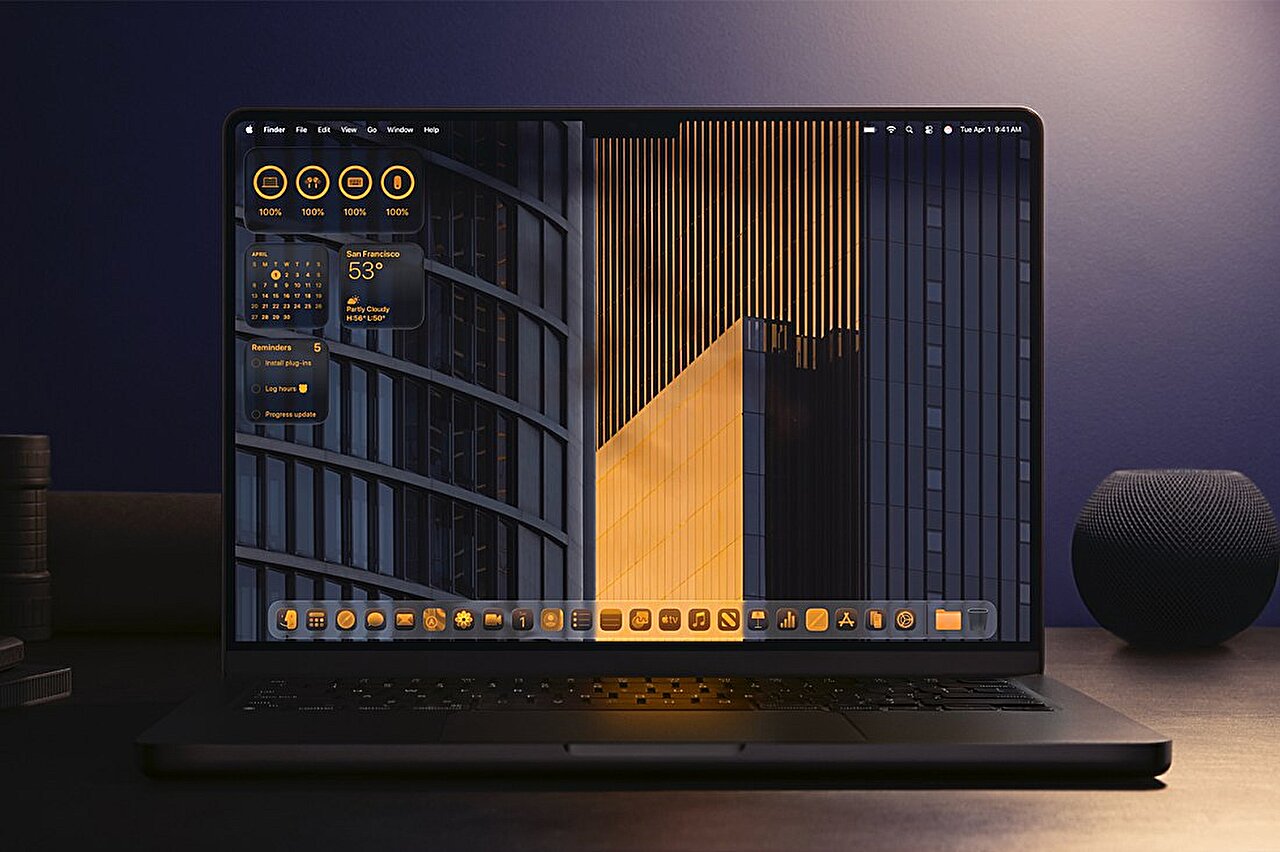
Apple’s latest design overhaul—aptly named Liquid Glass—has been polarizing to say the least.
Some people love it, lauding the company’s bold new approach as a step toward the future.
Others hate it, highlighting that the company’s focus on transparent surfaces and flashy visuals has caused readability and usability issues.
It’s the company’s biggest redesign since the launch of iOS 7 more than 12 years ago. From the Mac and the iPad to the iPhone and the Apple Watch, all of Apple’s mainline products have been updated with the new design.
Apple is the latest company that seems to be moving away from the purely flat and minimal design practices that have been a mainstay in the technology industry for the past decade.
Instead, it is going back to its roots a bit, incorporating elements of the real world into its interfaces.
Liquid Glass was inspired by Apple’s Vision OS, the operating system of Apple’s mixed reality headset, the Vision Pro.
Transparent surfaces and glassy icons make a lot of sense for an operating system designed to be worn on your face, says Paolo Ciuccarelli, director of the Center for Design at Northeastern University. You want to be able to see what’s in front of you after all. It’s interesting, however, that we are seeing similar design cues being implemented into nearly Apple’s full lineup of projects.
He sees it as a positive sign that the company is experimenting, adding the physicalities of the real world into its software.
“It’s good on one side that we go back to some level of materiality,” he says. “It’s a new way of addressing a universal need that we have to see our technology be a part of our world.”
It harkens a bit back to the early days of the iPhone, which relied heavily on skeuomorphic design for much of its operating system.
That’s a design language that involves creating digital interfaces that look similar to real-world objects—think of the original Notepad app literally looking like a yellow legal notepad or the Voice Memos app looking like a real-life recording setup.
It’s understandable why Apple relied so heavily on that design language for the first few iPhones, Ciuccarelli explains.
“It was a new type of phone, and they needed a way of presenting these functions,” he says. “Looking back, in a way it was a bit of a shortcut to introduce as much innovation as possible, but in a way that could be understood by people who have never seen a device like that before.”
It also made sense why the company decided to go all in on flat design several years later once the iPhone and Apple’s lineup of products became more established. It was a bold new approach that certainly got a lot of attention at the time.
Also by abandoning the constraints of skeuomorphism, the company was able to play around a bit more and create a more unified and consistent experience across its range of apps and services. The Notes app no longer looked totally different from the Voice Memos app, for example.
“People knew about [the devices], so there was no need to be realistic—to mimic something that exists in reality anymore,” he says. “We could move to another level.”
But after more than 10 years, Apple’s signature flat design had become a bit stale. At the same time, advancements in computational power have opened up the possibility for more playful and graphically intense interfaces, Ciuccarelli says.
Now with this new interface type, Apple is mixing the best of worlds—not completely abandoning some flat design elements but reintroducing playful animations meant to mimic reality. For example, the lock screen app now has a cool magnifying effect when swiped up.
“We’ve overcome some of the [technical] limitations and finally are getting interfaces designed with the potentiality of the devices but with the idea of adding elements that make them feel organic and living on their own,” he says.
Apple isn’t the only company following this trend. Microsoft is doing something similar with its Fluent Design, and so is Google with its Material 3 expressive.
“There’s a little bit of a trend there, of course,” says Ciuccarelli. “As soon as the big players start doing something, there’s going to be traction.”
Of course, Ciuccarelli says these changes shouldn’t be made haphazardly. They should be made for the benefit of the end user.
“I don’t want to see animations and interactions that don’t really enable something that wasn’t possible before,” he says.
For many Apple users, Apple hasn’t done a very good job of explaining why these changes were made. For its part, Apple says Liquid Glass “brings more focus to content and a new level of vitality.”
Apple will certainly iterate on Liquid Glass in the years to come, just like it has done with all its software in the past, he explains. It’s already scaled back the glassy and transparent look a bit from the previous betas this summer.
“It’s a new world that they are opening up,” Ciuccarelli says.
This story is republished courtesy of Northeastern Global News news.northeastern.edu.
Citation:
Love it or hate it? Apple’s ‘Liquid Glass’ explained (2025, October 10)
retrieved 10 October 2025
from https://techxplore.com/news/2025-10-apple-liquid-glass.html
This document is subject to copyright. Apart from any fair dealing for the purpose of private study or research, no
part may be reproduced without the written permission. The content is provided for information purposes only.








Our muscles are nature’s actuators. The sinewy tissue is what generates the forces that make our bodies move. In recent years, engineers have used real muscle tissue to actuate “biohybrid robots” made from both living tissue and synthetic parts. By pairing lab-grown muscles with synthetic skeletons, researchers are engineering a menagerie of muscle-powered crawlers, walkers, swimmers, and grippers.
But for the most part, these designs are limited in the amount of motion and power they can produce. Now, MIT engineers are aiming to give bio-bots a power lift with artificial tendons.
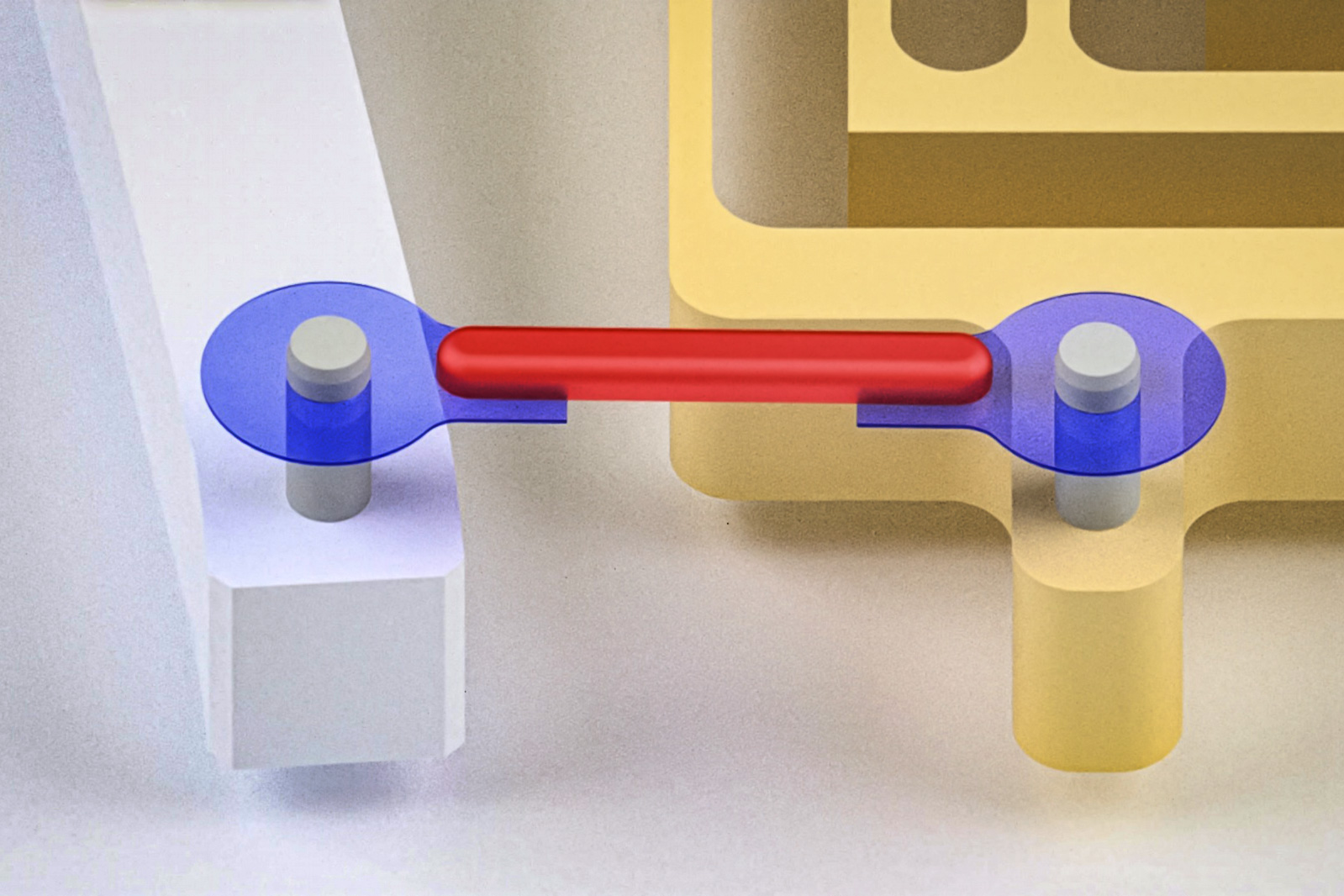
In a study appearing today in the journal Advanced Science, the researchers developed artificial tendons made from tough and flexible hydrogel. They attached the rubber band-like tendons to either end of a small piece of lab-grown muscle, forming a “muscle-tendon unit.” Then they connected the ends of each artificial tendon to the fingers of a robotic gripper.
When they stimulated the central muscle to contract, the tendons pulled the gripper’s fingers together. The robot pinched its fingers together three times faster, and with 30 times greater force, compared with the same design without the connecting tendons.
The researchers envision the new muscle-tendon unit can be fit to a wide range of biohybrid robot designs, much like a universal engineering element.
“We are introducing artificial tendons as interchangeable connectors between muscle actuators and robotic skeletons,” says lead author Ritu Raman, an assistant professor of mechanical engineering (MechE) at MIT. “Such modularity could make it easier to design a wide range of robotic applications, from microscale surgical tools to adaptive, autonomous exploratory machines.”
The study’s MIT co-authors include graduate students Nicolas Castro, Maheera Bawa, Bastien Aymon, Sonika Kohli, and Angel Bu; undergraduate Annika Marschner; postdoc Ronald Heisser; alumni Sarah J. Wu ’19, SM ’21, PhD ’24 and Laura Rosado ’22, SM ’25; and MechE professors Martin Culpepper and Xuanhe Zhao.
Muscle’s gains
Raman and her colleagues at MIT are at the forefront of biohybrid robotics, a relatively new field that has emerged in the last decade. They focus on combining synthetic, structural robotic parts with living muscle tissue as natural actuators.
“Most actuators that engineers typically work with are really hard to make small,” Raman says. “Past a certain size, the basic physics doesn’t work. The nice thing about muscle is, each cell is an independent actuator that generates force and produces motion. So you could, in principle, make robots that are really small.”
Muscle actuators also come with other advantages, which Raman’s team has already demonstrated: The tissue can grow stronger as it works out, and can naturally heal when injured. For these reasons, Raman and others envision that muscly droids could one day be sent out to explore environments that are too remote or dangerous for humans. Such muscle-bound bots could build up their strength for unforeseen traverses or heal themselves when help is unavailable. Biohybrid bots could also serve as small, surgical assistants that perform delicate, microscale procedures inside the body.
All these future scenarios are motivating Raman and others to find ways to pair living muscles with synthetic skeletons. Designs to date have involved growing a band of muscle and attaching either end to a synthetic skeleton, similar to looping a rubber band around two posts. When the muscle is stimulated to contract, it can pull the parts of a skeleton together to generate a desired motion.
But Raman says this method produces a lot of wasted muscle that is used to attach the tissue to the skeleton rather than to make it move. And that connection isn’t always secure. Muscle is quite soft compared with skeletal structures, and the difference can cause muscle to tear or detach. What’s more, it is often only the contractions in the central part of the muscle that end up doing any work — an amount that’s relatively small and generates little force.
“We thought, how do we stop wasting muscle material, make it more modular so it can attach to anything, and make it work more efficiently?” Raman says. “The solution the body has come up with is to have tendons that are halfway in stiffness between muscle and bone, that allow you to bridge this mechanical mismatch between soft muscle and rigid skeleton. They’re like thin cables that wrap around joints efficiently.”
“Smartly connected”
In their new work, Raman and her colleagues designed artificial tendons to connect natural muscle tissue with a synthetic gripper skeleton. Their material of choice was hydrogel — a squishy yet sturdy polymer-based gel. Raman obtained hydrogel samples from her colleague and co-author Xuanhe Zhao, who has pioneered the development of hydrogels at MIT. Zhao’s group has derived recipes for hydrogels of varying toughness and stretch that can stick to many surfaces, including synthetic and biological materials.
To figure out how tough and stretchy artificial tendons should be in order to work in their gripper design, Raman’s team first modeled the design as a simple system of three types of springs, each representing the central muscle, the two connecting tendons, and the gripper skeleton. They assigned a certain stiffness to the muscle and skeleton, which were previously known, and used this to calculate the stiffness of the connecting tendons that would be required in order to move the gripper by a desired amount.
From this modeling, the team derived a recipe for hydrogel of a certain stiffness. Once the gel was made, the researchers carefully etched the gel into thin cables to form artificial tendons. They attached two tendons to either end of a small sample of muscle tissue, which they grew using lab-standard techniques. They then wrapped each tendon around a small post at the end of each finger of the robotic gripper — a skeleton design that was developed by MechE professor Martin Culpepper, an expert in designing and building precision machines.
When the team stimulated the muscle to contract, the tendons in turn pulled on the gripper to pinch its fingers together. Over multiple experiments, the researchers found that the muscle-tendon gripper worked three times faster and produced 30 times more force compared to when the gripper is actuated just with a band of muscle tissue (and without any artificial tendons). The new tendon-based design also was able to keep up this performance over 7,000 cycles, or muscle contractions.
Overall, Raman saw that the addition of artificial tendons increased the robot’s power-to-weight ratio by 11 times, meaning that the system required far less muscle to do just as much work.
“You just need a small piece of actuator that’s smartly connected to the skeleton,” Raman says. “Normally, if a muscle is really soft and attached to something with high resistance, it will just tear itself before moving anything. But if you attach it to something like a tendon that can resist tearing, it can really transmit its force through the tendon, and it can move a skeleton that it wouldn’t have been able to move otherwise.”
The team’s new muscle-tendon design successfully merges biology with robotics, says biomedical engineer Simone Schürle-Finke, associate professor of health sciences and technology at ETH Zürich.
“The tough-hydrogel tendons create a more physiological muscle–tendon–bone architecture, which greatly improves force transmission, durability, and modularity,” says Schürle-Finke, who was not involved with the study. “This moves the field toward biohybrid systems that can operate repeatably and eventually function outside the lab.”
With the new artificial tendons in place, Raman’s group is moving forward to develop other elements, such as skin-like protective casings, to enable muscle-powered robots in practical, real-world settings.
This research was supported, in part, by the U.S. Department of Defense Army Research Office, the MIT Research Support Committee, and the National Science Foundation.

HBO knows you’re bored and cold. It wants you to Max and chill with Noah Wyle in scrubs. The company offers some of the best Cyber Monday streaming deals with a ridiculously low-priced $3/month offer for basic HBO Max (it’s the version with ads and 2K streaming, but still, super-cheap). Disney Plus and Hulu deals are bundled up for $5/month. Apple TV wants back in your life for $6.
Of course, this deal is only meant for new customers. Not boring ol’ existing customers. If you already have basic HBO Max, you’re already paying $11 for the same service, and HBO would like you to keep doing that. Streaming apps are banking on you being complacent and happy in your streaming life. Maybe they’re even taking you for granted.
Sometimes you can get the current deal just by threatening to cancel, or actually canceling, your account. Suddenly, you’re an exciting new customer again! Another method is by using an alternate email account (perhaps your spouse’s or roommate’s?) and alternate payment information as a new customer. If you do use a burner email (you did not hear this from me), check in on your favorite app’s terms of service to make sure you’re not in violation by re-enrolling with different emails. I’ll also issue the caveat that you lose all your viewing data and tailored suggestions if you sign up anew.
But times and wallets are tight! And $3 HBO Max sounds pretty good. After all, every middle-aged American man needs to rewatch The Wire once every five years or so—assuming he’s not the kind of middle-aged man who rewatches The Sopranos instead. Here are the current best streaming deals for Cyber Monday 2025.
Devon Maloney; ARCHIVE ID: 546772
Regular price: $80
The UK and Ireland SAP User Group (UKISUG) Connect 25 conference has opened in Birmingham with a keynote session recognising the challenges business face.
The user group itself has adapted to changes in the technology market such as the advent of artificial intelligence (AI) in business applications and the economic climate that has a profound effect on its members’ ability to deliver value with enterprise technology.
In his keynote presentation, Conor Riordan, chair of UKISUG, said: “As an organisation, we have to change, to position ourselves as we move from the old to the new.”
The user group has a 2030 plan, recognising the shifts in enterprise software. For instance, there is the shift to no-code and low-code tooling, which has implications on the agility of enterprise software development. Riordan noted that the current business climate and geopolitical volatility means that there is a huge pressure to reduce costs, leading to cuts in training budgets and the challenge of delivering more with less, adding: “We need to have process change.”
Moving to a future where organisations are using data to make more dependable decisions, Riordan noted that SAP is moving to a dynamic ecosystem of applications and AI, but the challenge is how quickly businesses can start taking advantage of the AI now available in their business applications. “We see members say SAP AI will help them,” Riordan said.
But many are concerned how the new technology now available will deliver a return on investment (ROI). For Riordan, IT decision-makers need to be wary of tackling the so-called low-hanging fruit, the use cases that the industry sells to the executive team: “It is really complex work, and the low-hanging fruit is not that low hanging. It will take years, not months, to deliver value.”
A poll of delegates at the conference found that 78% of respondents are just getting started with AI, while 29% say their AI initiatives have under-delivered.
“This stuff is not easy,” Riordan said, adding that the challenge is one of process re-engineering and culture change, and that he believes humans need to be at the centre of decision-making. “We ask partners to be reasonable in their productivity claims so we can all succeed together.”
The Value of AI in the UK: Growth, people & data from SAP and Oxford Economics, which was published in October 2025, notes that customers are investing £16m in AI on average this year. The report’s authors predict this will increase by 40% within the next two years. However, the theme coming out of the keynote session at Connect25 is that few companies are really using AI.
Another big topic covered during the keynote is the end of support for SAP products. With SAP’s 2027 maintenance deadline for SAP ECC 6.0 fast approaching, many organisations are now embarking on their migration journey to SAP S/4Hana. More than half (54%) of respondents said that gaining access to SAP’s AI offerings will influence their future deployment of SAP.
Among attendees of Connect25, 49% said they are working towards the 2027 deadline. Riordan called on SAP to help customers to move to the cloud and build a tangible business case.
During her keynote speech, Leila Romane, managing director of SAP UK & Ireland, spoke about the AI opportunity, saying: “We are helping customers unleash new value with business AI.”
SAP’s strategy is to drive business value through the power of AI, data and its enterprise applications, with the SAP Cloud integral in SAP’s strategy to deliver AI-enablement across its enterprise software suite. Romane said SAP recognised that its customers were all at different stages of their cloud journey, adding: “Our commitment is to help you move.”


Flamengo’s Copa Libertadores trophy damaged in title celebrations

Tajikistan says five Chinese nationals killed in cross-border attacks from Afghanistan in past week

UK budget mildly deflationary; debt to climb past 106%: Fitch

-

 Sports1 week ago
WATCH: Ronaldo scores spectacular bicycle kick
-

 Entertainment1 week ago
Welcome to Derry’ episode 5 delivers shocking twist
-

 Politics1 week ago
Washington and Kyiv Stress Any Peace Deal Must Fully Respect Ukraine’s Sovereignty
-
 Business1 week ago
Key economic data and trends that will shape Rachel Reeves’ Budget
-

 Tech6 days ago
Wake Up—the Best Black Friday Mattress Sales Are Here
-

 Politics1 week ago
53,000 Sikhs vote in Ottawa Khalistan Referendum amid Carney-Modi trade talks scrutiny
-

 Fashion1 week ago
Canada’s Lululemon unveils team Canada kit for Milano Cortina 2026
-
 Tech1 day ago
Get Your Steps In From Your Home Office With This Walking Pad—On Sale This Week