

Tech
Amazon uses AI to make robots better warehouse workers


Amazon on Wednesday said it is speeding up the automation of its warehouses with the help of artificial intelligence and robotics, raising questions about the future of human workers.
The e-commerce colossus known for its promise of quick deliveries showed off robotic arms and other high-tech warehouse tools in Silicon Valley, saying AI is not only powering innovations but accelerating how quickly they are developed by the second largest employer in the United States.
“Blue Jay” robotic arms billed as capable of efficiently picking, sorting, and consolidating at a single workstation were among AI enhanced equipment items demonstrated by Amazon at a conference held in a massive distribution center in Silicon Valley.
The arrival of Blue Jay, being tested in South Carolina, follows that of a Vulcan robot early this year that Amazon described as having a sense of touch while tending to its duty helping fulfill orders for customers.
Amazon Robotics chief technologist Tye Brady credited AI with slashing the time it took to design, build and deploy Blue Jay by some two-thirds to just slightly more than a year.
“That’s the power of AI,” Brady said.
“Expect more rapid development cycles like this…we’re on a trajectory to supercharge the scale and impact of innovation with our operations.”
Brady dismissed concerns that enhancing warehouses with robotics and AI will mean fewer jobs for humans, saying Amazon has created more US jobs in the past decade than any other company.
“To our frontline employees, here’s my message,” Brady said.
“These systems are not experiments. They’re real tools built for you to make your job safer, smarter and more rewarding.”
However, The New York Times on Tuesday reported that robotics could let Amazon avoid hiring 160,000 workers in just two years even as its online retail business grows.
Automation of Amazon warehouses could cut the need to hire, particularly when it comes to temporary workers needed for peak holiday shopping demands.
Amazon on Wednesday also demonstrated an AI agent designed to manage robots and warehouse teams more efficiently.
The e-commerce giant’s innovations reach outside distribution centers, with Amazon demonstrating camera-equipped smart glasses that display navigation and delivery instructions to drivers.
© 2025 AFP
Citation:
Amazon uses AI to make robots better warehouse workers (2025, October 23)
retrieved 23 October 2025
from https://techxplore.com/news/2025-10-amazon-ai-robots-warehouse-workers.html
This document is subject to copyright. Apart from any fair dealing for the purpose of private study or research, no
part may be reproduced without the written permission. The content is provided for information purposes only.










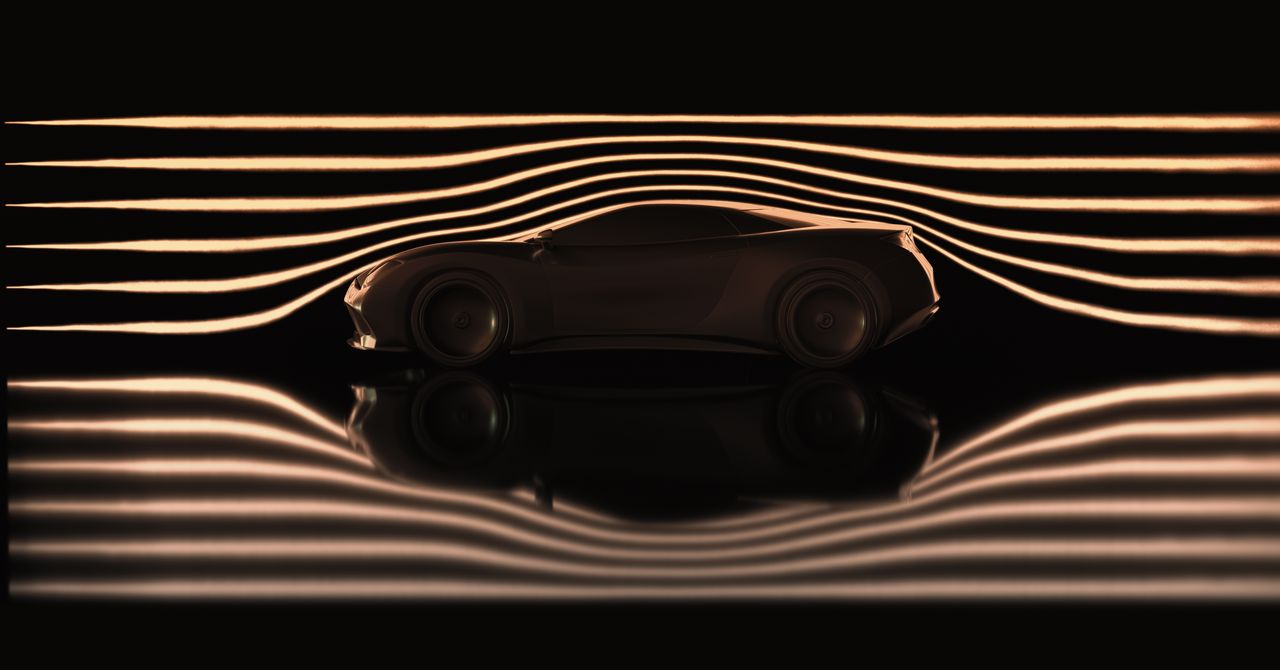
Aerodynamic drag is a major “barrier” in high-speed airplanes, automobiles, and bullet trains. This is because a design with less aerodynamic drag allows the aircraft to move at higher speeds with less energy.
When an aircraft or car body moves at high speed, a thin layer of air called the “boundary layer” is formed on its surface. This boundary layer has two states: laminar flow, in which air flows in an orderly fashion, and turbulent flow, which involves turbulence.
The longer the air stays in the laminar flow state with low friction, the smaller the air resistance becomes, but as the air speed increases, it transitions to turbulent flow. The key to reducing aerodynamic drag is how to delay this transition to turbulence.
For more than 80 years, the principle of “the surface of an object must be smooth” has been the basic premise of aeronautical engineering throughout the world in order to suppress the transition to turbulence and reduce aerodynamic drag. This premise was based on the results of a 1940 study by Ichiro Tani, a Japanese aerodynamicist who quantitatively demonstrated the relationship between “surface roughness” (an indicator of the state of the machined surface) and turbulent transition, arguing that surface roughness, which was unavoidable with the manufacturing technology of the time, prevented laminar flow from being realized.
However, in 1989 Tani reinterpreted the experimental data on rough-surface pipes obtained by fluid engineer Johann Nikulase in the 1930s, bringing a new perspective that “roughness may not necessarily only promote turbulent transition and increase fluid resistance.” Inheriting this idea, a research group led by Yasuaki Kohama of Tohoku University experimentally demonstrated in the 1990s that fibrous rough surfaces, which have fine fibrous irregularities on their surface, have the effect of delaying transition under certain conditions.
The same Tohoku University research team recently announced a discovery that significantly advances this trend. Aiko Yakino, associate professor at Tohoku University’s Institute of Fluid Science, and her research group were the first in the world to demonstrate that aerodynamic drag can be reduced by up to 43.6 percent simply by applying distributed micro-roughness (DMR), a surface roughness so fine and irregular that it cannot be distinguished by the naked eye.
This technology is fundamentally different from the “rivulet (shark skin) process,” which is known as a typical aerodynamic drag reduction technology. The rivulet process mimics the fine longitudinal grooves in shark skin, and by carving grooves approximately 0.1 mm wide along the direction of airflow, it aligns the vortices that occur near the wall surface of turbulent airflow areas. DMR, on the other hand, delays the switch from laminar to turbulent flow by means of random and minute irregularities. The flow zones it affects and the mechanisms it employs are based on completely different concepts.
Precise Measurement in a Wind Tunnel Without Support Bars
A key factor in this achievement was the use of a different wind tunnel experiment method than before. Conventional wind tunnel experiments had structural limitations: the support rods and wires essential for supporting the model disrupted the airflow, negating the minute changes in air resistance caused by micro-scale roughness.
The world’s largest 1-meter magnetic support balance system (1m-MSBS), owned by the Institute of Fluid Science, Tohoku University, has fundamentally solved this problem. This device can levitate a streamlined model approximately 1.07 m in length inside a wind tunnel without contact using electromagnetic force. Because it does not use any support rods or other means, it completely eliminates interference with the airflow around the model.
Yakino and his team precisely measured the total drag coefficient on smooth and DMR-coated surfaces over a wide range of Reynolds numbers (ratio of inertial to viscous forces acting on the fluid) (Re = 0.35 x 10⁶ to 3.6 x 10⁶).
Shopping for a Dyson vacuum is an experience. There are many models to navigate and serious price tags on most of them. As someone who tests vacuums for a living, I have to admit that a Dyson blows most other vacuums away. There are a few cheaper models I’ll still grab (check out my full guide to cordless and robot vacuums for more recommendations), but if you’re dreaming of a Dyson, this weekend is a great time to buy.
Several Dyson models I love are on sale for the long weekend. This weekend’s sale includes Dyson’s newest robot vacuum and the PencilVac that I can’t stop using, and my overall favorites like the V15 Detect and Gen5Detect, and more models our team has loved using. Read on to find out every on-sale Dyson I’d buy this weekend.
Best Dyson Vacuums on Sale for Memorial Day
The Best Dyson for the Price
If you’re looking for the best features for the best price, I already recommend the Dyson V15 Detect when it’s not on sale, making this an even better time to buy. You’ll get both a Fluffy Optic cleaner head and a Digital Motorbar cleaner head to use for hard floors, carpet, or rugs, trigger control, and details about the particles you suck up while you vacuum. It’s lightweight and easy to use anywhere in the house, and the hour-long battery life should be plenty for a whole-home clean.
A More Powerful Dyson
Dyson’s more powerful stick vacuum is the Gen5Detect, which is a great option if you have pets since it has a faster motor with more suction power than the V15 Detect to suck up more pet hair (it’s our top vacuum for pet hair for a reason) and has a HEPA filter to keep allergens contained inside of the vacuum instead of being released back into the air. It also comes with a true power button, so you don’t have to hold onto the trigger button the entire time to use it. Similar to the V15 Detect, it comes with both a Digital Motorbar cleaner head and a Fluffy Optic cleaner head to use on carpet and hard floors, respectively. You’ll also get two more attachments, plus a built-in dusting and crevice tool (it’s nice not to have to wonder where this attachment is!) It’s an expensive vacuum, but well worth the investment when it’s on sale.
If You Only Have Hard Floors
I shouldn’t like the PencilVac so much, but I find myself reaching for it often, and I think it’s plenty worth its abilities when it’s on sale. Part of what makes it so easy to grab compared to my other stick vacuums is how easy it is to store and keep charged with the freestanding charging base, letting it stand wherever I like in my home as long as there’s an outlet nearby. The PencilVac has two versions, the Fluffy and Fluffycones, with the latter having a design that has fluffy cone-shaped rollers to best collect debris. It is limited to only hard floors and has a short battery life, but I love how maneuverable and lightweight this vacuum is. It’s usually a high price tag for its abilities, and even on sale, it’s not what I would call cheap, but it’s a great, quick daily vacuum.
Dyson’s Latest Robot Vac
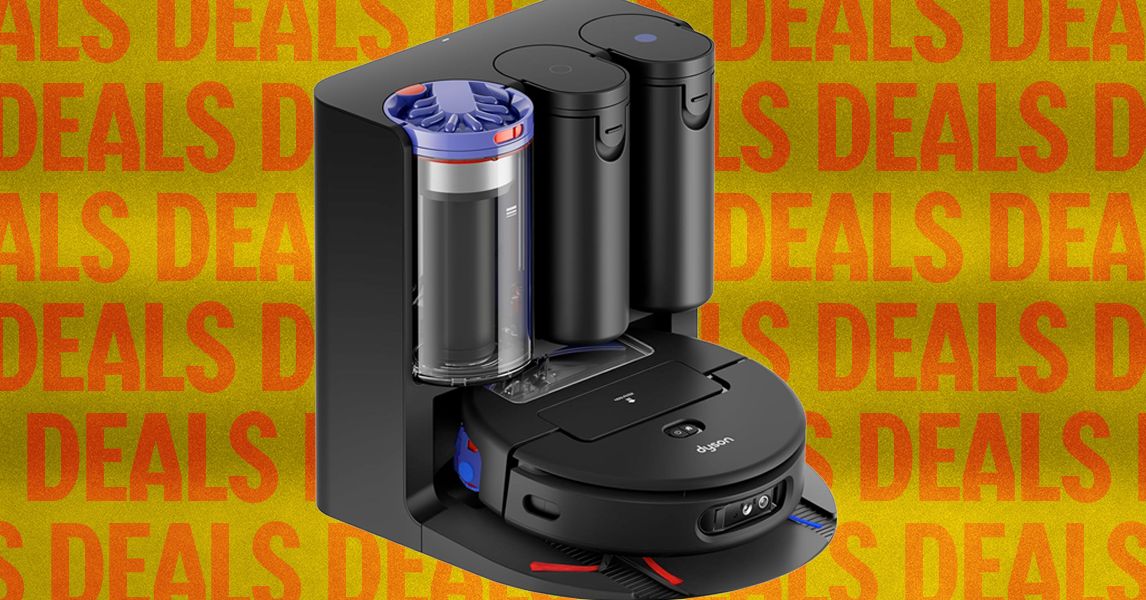
Dyson’s newest robot vacuum, the Spot+Scrub Ai, is its first that doubles as both a vacuum and a mop. It has a large base station that reminds me of Dyson’s vacuums, since the dry debris canister is clear and rounded like the ones you’d see attached to a Dyson stick vacuum or one of its upright models. It does a good job mopping and vacuuming, and can learn multiple floors, and the navigation has improved since the older Dyson 306 Vis Nav. Still, it’s not perfect navigation, since the camera sits below the top of the vacuum and doesn’t always see low-profile furniture that it’ll bump into. If you don’t have a ton of low furniture (or tons of IKEA pieces, as I do), this vacuum could be just perfect for you.
A Stick Vac and Mop

Dyson
V15s Detect Submarine
If you want a vacuum that doubles as a mop, look no further than this variation of the V15 Detect that’s also on sale for the holiday weekend. The V15s Detect Submarine comes with the Submarine wet roller head that transforms it from a regular Dyson vacuum (that still comes with both the Fluffy optic cleaner head and Digital motorbar cleaner head for you to use on hard floors and carpet) into a wet roller mop. You can’t buy a regular V15 Detect and add this attachment on; this V15s is made to work with this Submarine head. You’ll fill the small reservoir on the roller head with water and can start mopping away, but you will have to rinse the mop head afterwards by hand, which is a little gross.
A Handheld-Only Dyson
-
Photograph: Brenda Stolyar
-
-Reviewer-Photo-SOURCE-Brenda-Stolyar.jpg)

If you’re not looking to spend a ton but want a Dyson that’s super portable and great for stairs, cars, and even boats, the Dyson Car+Boat is made for that. It’s in the name, after all. This handheld-only vacuum packs solid power and has a great battery life for a handheld vacuum. It uses a trigger-style control like the V15 Detect, which I actually find ideal for cleaning compact spaces like stairs and cars so that you’re not fumbling to switch it off as you move around the car or to the next set of stairs. It’s an affordable way to get into the Dyson ecosystem, especially since it’s on sale.
Power up with unlimited access to WIRED. Get best-in-class reporting and exclusive subscriber content that’s too important to ignore. Subscribe Today.
Photograph: Michael Calore
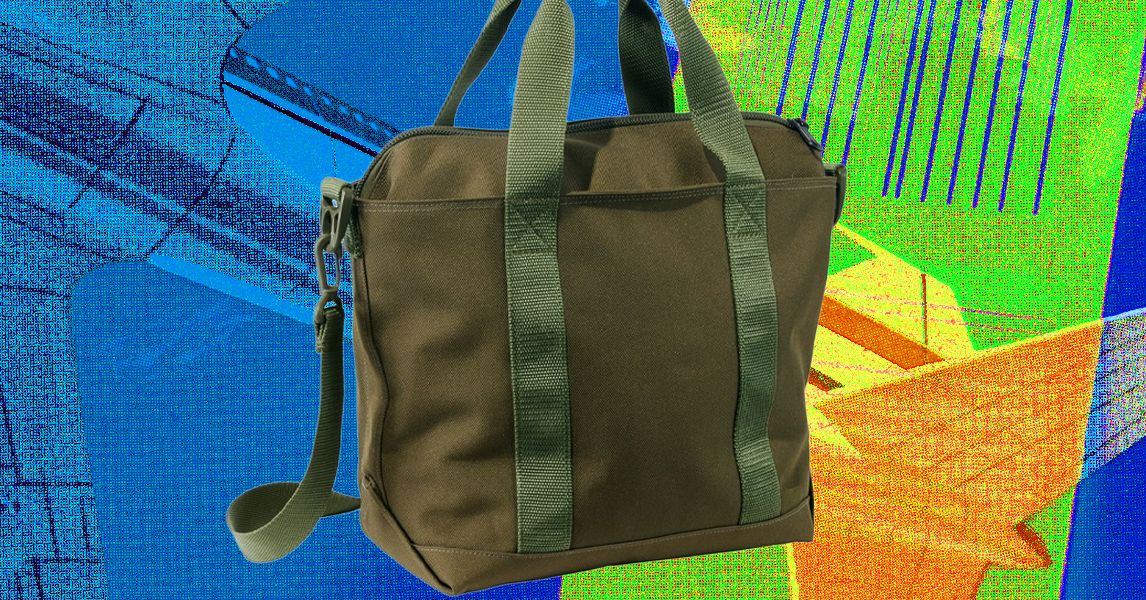
The walls of the bag are tough enough, made from 1,200-denier polyester, which is heavy-duty and water-resistant, not to mention so rugged that it’s nearly indestructible. I’ve checked it as luggage on a dozen or so flights, and it doesn’t show any scuffs or tears. The zipper at the top isn’t sealed, but it’s heavier than it needs to be and works just fine in the rain. What truly sets the bag apart, though, is its lining. The whole interior of the tote is coated with a thin layer of thermoplastic, further increasing its imperviousness to moisture.

Photograph: Michael Calore

Photograph: Michael Calore
Now, of course, the purpose of this kind of lining is to keep the contents dry when you use the bag in a wet environment, like on a canoe trip, on a rainy bike ride, or on a duck hunt in the Maine wilderness. And surely, I have used the bag in a canoe and on many a rainy bike ride (I’ve never been on a duck hunt), and the goods inside have indeed always remained intact. I even trust the bag enough to carry electronics and musical equipment to the office or studio on drizzly mornings. But for me, the utility the bag provides is more so the opposite: it’s an excellent place to cleanly transport items that are, themselves, muddy, wet, or slimy.
For example, I’ve taken the bag car camping several times. Once, I used it to pack my tent, ground cloth, boots, and rain shell. On the last day of the trip, it poured outside, and upon it being time to head home, my rain jacket and tent were soaked, the ground cloth was dotted with wet pine needles and flecks of bark, and my boots had a thick layer of Mendocino, California, muck in the tread. I crammed all of those items in the Hunter’s Tote, zipped it up, and tossed it into the back seat of my rental car. The interior lining kept the mess inside, saving the rental car’s tuck-and-roll upholstery. Back home, I emptied the tote, flipped it inside out, and blasted out all the forest flooring with a hose.
There are two heavy plastic tabs on the edges of the tote, one at each end of the zipper. This is where the shoulder strap clips in. I’ve never really used the strap (honestly, it just gets in the way), but those tabs are great for hanging the tote to dry after rinsing it out.
The Hunter’s Tote comes in three sizes. I have the largest, the XL, which has a capacity of 53 liters. (That’s huge for a tote bag.) I prefer the larger size because when you set the reinforced bottom on a flat surface and prop the mouth of the bag open, you have a generous flat bottom inside of 10 by 19 inches. All that room really makes the bag more versatile, so my recommendation is to go large.
Also, just know there are no frills here: no exterior pockets, no padding, no laptop sleeve. Just a rugged carrier that’s ready for your dirtiest work. Whether you’re carrying twelvers of La Croix or bagging Buffleheads, it’s indispensable.
Power up with unlimited access to WIRED. Get best-in-class reporting and exclusive subscriber content that’s too important to ignore. Subscribe Today.


Queen Elizabeth II heartbreaking final message for Prince Philip emerges

Proposed US-Iran deal involves opening strait during ceasefire extension: report

A Fundamental Principle of Aeronautical Engineering Has Been Overturned

-

 Entertainment1 week ago
Where Pete Davidson, Elsie Hewitt stand after breakup: Details revealed
-

 Politics1 week ago
Rising diesel costs from Iran war strain US school budgets
-

 Entertainment1 week ago
Drake drops highly anticipated "Iceman" album, plus two surprise albums
-
 Business1 week ago
UK borrowing costs rise and pound falls as leadership drama continues
-

 Tech1 week ago
Greg Brockman Officially Takes Control of OpenAI’s Products in Latest Shakeup
-

 Tech7 days ago
Why Is Your Grill So Dumb? The Best Grills Set Temp Like an Oven
-

 Tech7 days ago
This Solar-Powered Smart Sprinkler Keeps My Lawn Watered Without Any Power Cables
-

 Fashion1 week ago
RMG trade bodies seek policy support from Bangladesh PM