

Tech
Fast, accurate drag predictions could help improve aircraft design


Researchers at the University of Surrey have proposed a computational approach that can provide aerodynamic drag data more efficiently during the early stages of aircraft design. It is hoped that AeroMap could help develop safer and more fuel-efficient aircraft.
Drag is the aerodynamic force that opposes an aircraft‘s motion through the air. Being able to predict drag accurately at an early design stage helps engineers avoid later adjustments that can lead to additional time and cost. Reliable early estimates can also reduce the need for extensive wind tunnel testing or large-scale computer simulations.
AeroMap estimates drag for different wing-body configurations operating at speeds close to the speed of sound. In a study published in Aerospace Science and Technology, researchers show how AeroMap provides datasets up to 10 to 100 times faster than high-fidelity simulations currently on the market, while maintaining good accuracy.
The researchers suggest that such improvements in prediction speed could support the development of more fuel-efficient aircraft configurations by allowing designers to assess a wider range of design options in less time.
“Our goal was to develop a method that provides reliable transonic aerodynamic predictions for a range of configurations, without the high computational cost of full-scale simulations. By providing reliable results earlier in the design process, AeroMap reduces the need for costly redesigns and repeated wind-tunnel testing.
“It also delivers the level of detail engineers need to refine concepts more efficiently and with greater confidence,” says Dr. Rejish Jesudasan, research fellow at the University of Surrey and lead author of the study.
AeroMap is based on a viscous-coupled full potential method, which combines a reduced form of the Navier–Stokes equations that describe airflow with a model of the thin boundary layer of air that moves along an aircraft’s surface. This approach enables AeroMap to capture the main effects of drag without the high computing demands of more detailed simulations. As a result, it provides a practical tool for the early stages of aircraft design, when engineers need results that are both reliable and rapid.
Many existing models still rely on empirical methods developed several decades ago. Although these remain widely used, they can be less accurate when applied to modern, high-efficiency wing designs. AeroMap has been validated against NASA wind tunnel data, with results showing close agreement between its predictions and experimental measurements, indicating its suitability for sustainable aircraft development.
“Accurately predicting the transonic performance of aircraft configurations, during early concept studies, remains a significant challenge. Previous empirical approaches, based on older datasets, can struggle to capture the behavior of modern high-efficiency wings.
“AeroMap combines established aerodynamic principles in a way that improves the reliability of drag predictions during early development, helping engineers make better-informed design decisions,” says Dr. Simao Marques.
“We are exploring how AeroMap can be combined with optimization techniques to assess a wider range of wing-body configurations and performance scenarios. This approach could help engineers identify more efficient designs earlier in the process, potentially reducing lifecycle costs and supporting the industry as it works toward future sustainability goals,” says John Doherty.
More information:
Rejish Jesudasan et al, Enhancing rapid drag analysis for transonic aircraft configuration trade studies, Aerospace Science and Technology (2026). DOI: 10.1016/j.ast.2025.110727
Citation:
Fast, accurate drag predictions could help improve aircraft design (2025, November 4)
retrieved 4 November 2025
from https://techxplore.com/news/2025-11-fast-accurate-aircraft.html
This document is subject to copyright. Apart from any fair dealing for the purpose of private study or research, no
part may be reproduced without the written permission. The content is provided for information purposes only.










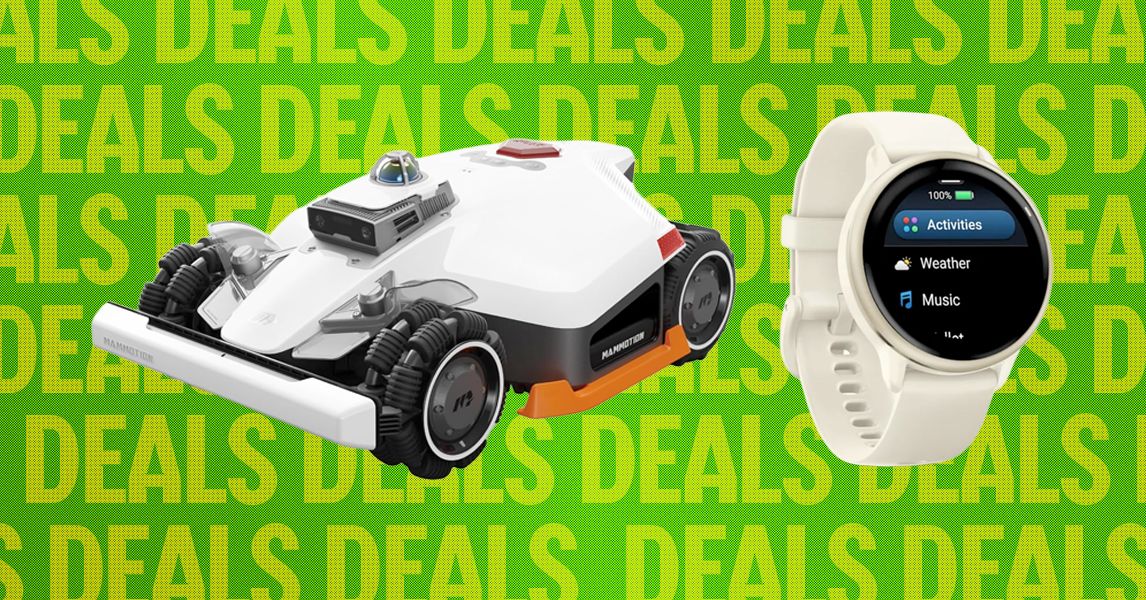
I’ve been covering deals since 2013, and I still think Memorial Day sales are worth checking out. There are so many made-up shopping holidays these days that it can be difficult to ascertain when items are actually cheaper than usual. Now is one of those times. To help you out, I’ve scoured through our buying guides full of hand-tested items to find gadgets and gizmos that are discounted—and worth buying. If you’re in the market for something we’ve tested, keep checking in through May 26 to see if you can snag a deal. We’ll update this post again between now and then.
Make sure to check out our various buying guides for recommendations on the best laptops, the best printers, and more. You might also be interested in the rest of our Memorial Day deals coverage.
Updated May 25: I’ve added 5 new deals, removed expired discounts, and checked for accuracy throughout.
WIRED Featured Deals:
Birdfy Lite Smart Bird Feeder (Lifetime AI, No Solar) for $120 ($110 off)
A few different combinations of our favorite smart bird feeder are on sale. You can choose a version with or without solar charging. There’s also the option of buying a model that comes with lifetime AI bird identification; otherwise, if you decide you want it later, it’ll cost you $5 per month, but it isn’t required for enjoyment. This bird feeder is equipped with a 1080p camera that can capture decent footage of whoever comes to snack. It has a wide field of vision as well, and the feeder is easy to clean and refill.

You could argue, and people have, that the top gay dating apps are now optimized for monetization and juicing engagement loops. Increasingly overrun with bots, they are at times even devoid of actual connection.
Grindr, with its 15 million monthly active users, is drowning in ads while pushing expensive upsells on users. (In February, as part of its “gAI” overhaul, the company announced a new premium monthly subscription tier for $500.) Sniffies was beloved by cruisers until the seismic reaction in April to Match Group’s $100 million investment sparked concerns that another queer space could get absorbed into a larger dating conglomerate.
As public backlash against popular queer apps continues to mount, a batch of tech entrepreneurs are scrambling to meet the demand by doubling down on privacy-conscious, community-driven alternatives.
Calum Bowden, who posts under the internet persona @donjackoghue, launched MeetMarket in March. Currently only available as a web app, MeetMarket includes all the core features of your typical hookup app—a customizable profile, a grid of nearby users—with one major difference. It was built on a decentralized identity system, meaning MeetMarket doesn’t store users’ emails, passwords, or personal information. Users store everything on their device, giving them full control and ownership over their data and how it’s shared. Messages on the platform are end-to-end encrypted, and Bowden says it will always be ad-free, even for nonpaying members. (A monthly membership costs €12, or $13.99.)
“Decentralization and data privacy make a lot of sense for queer people in general, and especially in hostile legal environments or in the US right now, where you don’t really know what digital platforms actually have your best interest in mind,” says the 34-year-old PhD student in Berlin who studies the sociology of technology and organization.
Within the first 48 hours of MeetMarket’s launch on March 24, over 12,000 people had signed up, and some 60,000 people have used it since. The app averages 5,000 weekly visitors, according to Bowden, though there is not a lot of concurrent activity in the same cities. “It’s become more social than necessarily driving an immediate hookup.” But casual encounters do still happen, he says. “The Midwest bottom jockeys are eating meet market up,” one user noted on X.
Bowden didn’t anticipate public sentiment would sour on Sniffies just a few weeks after his launch. Still, the timing of it couldn’t have been more serendipitous. “When Sniffies announced their investment from Match Group, I was like, how are they fueling my fire?” he asks. “This is exactly the model that venture capital leads to. This is exactly why these economic models for technology are so bad, because they basically force the gentrification of a digital platform.” Sniffies did not immediately respond to a request for comment.
A self-described “utopian conspirator,” Bowden is the cofounder of Trust, a nonprofit that operates as a kind of incubator to prototype ideas “as a critique of technology and the status quo,” he says. With MeetMarket, he wanted to create an app that gave users more agency over their experience without cheapening it.
It can sometimes seem like Big Dating wants people to believe that it is the only answer to cure their romantic woes—Bumble CEO Whitney Wolfe Herd recently told Axios that there isn’t much longevity in niche apps—but the opposite is proving just as true, as people seek out more specificity and intention in their online dating experience.
“Gay men have tribes, subcultures, aesthetics, and different ways they want to be seen,” says Justin Finnegan, a 35-year-old software engineer in Toronto who last year created Chunkr, a gay hookup app that has resonated with bears, chubs, cubs, and their admirers despite originally being for all gay men.

As we get out of the house, the gear-obsessed WIRED Reviews team is writing about our favorite bags and EDCs. Today, reviewer Boutayna Chokrane raves about her love for her Lululemon gym bag. You can also check out other Bag Check stories where WIRED writers share their carryall of choice.
I have long had a soft spot for messenger bags. There’s a retro Silicon Valley vibe to the crossbody that I respect: It implies you move fast, travel light, and keep your world compartmentalized. The unfortunate practical reality of many a messenger bag, though, is chronic neck and shoulder pain. With all of its weight relying on one strap, a single shoulder is left to bear all the burden. After a few blocks adorned with a messenger, you may feel that your style choice has transformed into a full-on punishment. After years of testing various incarnations of messenger bag—including micro slings and cavernous totes—I’d made peace with this trade-off. Beauty is pain, after all.
Then I met the comfort-forward, durable, and compact-yet-cavernous Lululemon 3-in-1 Duffle.

Lululemon
3-in-1 Gym Duffle Bag 30L
True to its name, it’s a multi-use transport system that is easy to reconfigure when my commute demands a different carry. You can grab it by the top handles, sling it across your body when you need your hands, or detach the shoulder strap and wrap it around your yoga mat to use it as a stand-alone mat carrier. No matter how you task it to carry your stuff, rest assured the bag’s design promises utility and comfort: The strap is cushioned enough to spare your shoulder, resilient enough to handle the load of your gym gear, and springy enough to double as a stretching strap. Every component of the duffel has a reason to exist, and some of them even have two.
I’ve been toting this duffel for the gym four days a week since January 2025, which is about as real-world a test as it gets. It has endured Chicago at its most extreme: sleet, wet snow, and torrential rain. The water-repellent nylon shrugs off all elements without any fanfare. The bag dries fast, resists grime, and—most impressively to me—doesn’t hold onto odor. Trust me, I’ve pushed that boundary more than once with sweaty clothes after hot Pilates and have found the included drawstring pouch effectively quarantines everything.
It’s also low-maintenance: After a trip to the beach, a couple of quick shakes cleared out any memory of sand. This duffel requires blessedly minimal upkeep, save for the occasional spot clean, making it a refreshingly low-effort option for commuters who don’t need another chore on their to-do list.
The design is deceptively compact. Externally, it presents as a modest and understated gym bag. But peek inside, and you’ll immediately see that this duffel, with its shocking 30-liter capacity, is Poppins-esque. There’s a dedicated shoe compartment on the side that accommodates up to a men’s size 14, though I prefer to use the bottom section for footwear to keep the main cavity flexible. There’s a slot for a 24-ounce water bottle, interior pockets for keys, AirPods, and other small essentials that tend to disappear into bag voids, and there’s still room for a change of clothes, a Theragun, and a dopp kit. Nothing about this bag feels over-engineered, but nothing feels missing, either.


Vietnam launches Hai Phong customs pilot from June 1

Is American men’s tennis in trouble as French Open begins?

Memorial Day Deals on Our Top Smart Bird Feeders, Camera Bags, and More

-

 Tech1 week ago
Why Is Your Grill So Dumb? The Best Grills Set Temp Like an Oven
-
 Tech1 week ago
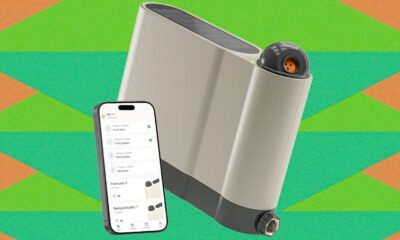
This Solar-Powered Smart Sprinkler Keeps My Lawn Watered Without Any Power Cables
-

 Fashion5 days ago
US cotton planting advances to 41%, concerns persist in Texas
-

 Fashion4 days ago
ICE cotton sees mixed trend as rain forecasts weaken sentiment
-

 Fashion1 week ago
Turkiye’s current account deficit expected to widen in 2026: Minister
-
 Fashion1 week ago
India’s Pearl Global’s FY26 revenue crosses $521 mn milestone
-

 Tech1 week ago
A Danish Couple’s Maverick African Research Finds Its Moment in RFK Jr.’s Vaccine Policy
-
 Fashion7 days ago
Nigeria Kwara Garment Factory, KWS Garment Production Village ink pact