

Tech
Engineers send a wireless curveball to deliver massive amounts of data

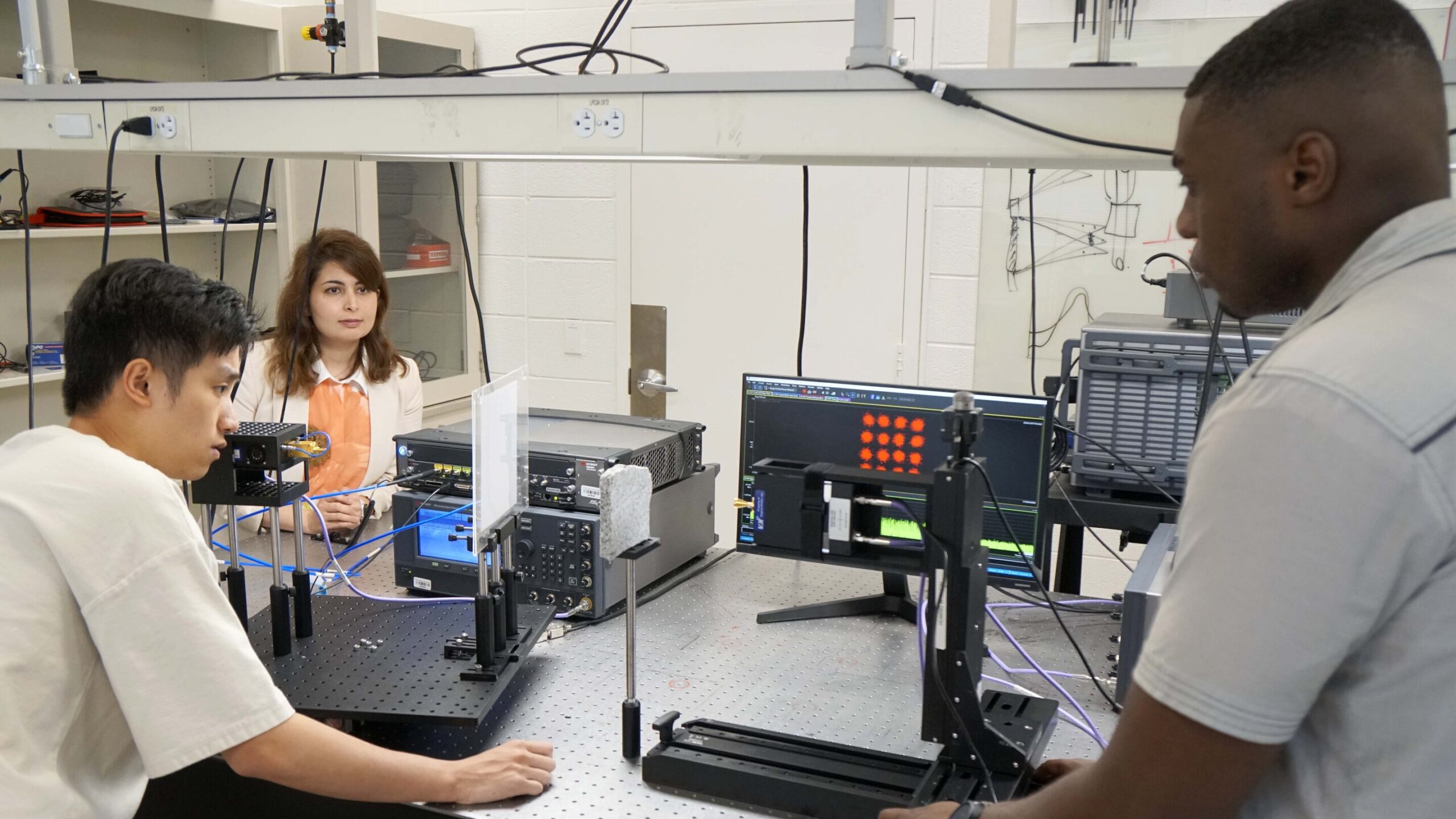
High frequency radio waves can wirelessly carry the vast amount of data demanded by emerging technology like virtual reality, but as engineers push into the upper reaches of the radio spectrum, they are hitting walls. Literally.
Ultrahigh frequency bandwidths are easily blocked by objects, so users can lose transmissions walking between rooms or even passing a bookcase.
Now, researchers at Princeton Engineering have developed a machine-learning system that could allow ultrahigh frequency transmissions to dodge those obstacles. In an article in Nature Communications, the researchers unveiled a system that shapes transmissions to avoid obstacles coupled with a neural network that can rapidly adjust to a complex and dynamic environment.
Lead researcher Yasaman Ghasempour, an assistant professor of electrical and computer engineering at Princeton, said the work is an important step toward deploying data transmission in the sub-terahertz band, which is at the upper end of the microwave spectrum.
Transmissions in the sub-terahertz band have the potential to handle 10 times the data of current wireless systems. This kind of fast transmission would be important for uses such as virtual reality systems or fully autonomous vehicles.
“As our world becomes more connected and data-hungry, the demand for wireless bandwidth is soaring. Sub-terahertz frequencies open the door to far greater speeds and capacity,” Ghasempour said.
Sub-terahertz beams are easily blocked, but can bend with special transmitters
Ultra-high frequency signals like those in the sub-terahertz band are transmitted in defined beams, unlike lower frequency radio waves, which can span over wider areas. This makes the signals easy to block, particularly indoors and in areas with lots of moving people and objects.
Engineers have successfully tested systems using reflectors to bounce signals around obstacles. But these systems rely on reflectors that may not be available or practical in many situations.
Ghasempour’s team proposed using a special transmission technique to dodge obstacles. The researchers were able to bend transmission beams by transmitting a signal that curves around the obstruction. In doing this, they used an idea first proposed in 1979 for a kind of radio wave called Airy beams that allow engineers to shape transmissions like a curveball. When correctly controlled, the beams can maneuver through a complex and moving field of objects.
“This is for complex indoor scenarios where you don’t have a line of sight,” said Haoze Chen, a graduate student at Princeton and the paper’s lead author. “You want the link to adapt to that.”
Unlike static systems, the new system allows the transmitters to adapt to changes in real time. By adjusting the exact curvature properties on the fly, the transmitter can steer signals around new obstacles as they appear, maintaining a strong connection even in crowded, constantly changing environments.

Chen said that most work with Airy beams has focused on creating the beams and exploring their underlying physics.
“What we are doing is not only generating the beams but finding which beams work best in the situation,” he said. “People have shown that these beams can be created, but they have not shown how the beams can be optimized.”
The system learns to dodge obstacles by training like an NBA All-Star
Finding the best curved beam is a difficult problem, particularly in a cluttered and shifting environment. The standard method of aiming beams—scanning a room for the best transmission path—does not work for bendable transmissions.
“For Airy beams, this is impractical,” Chen said. “There are infinite ways of curving depending on the degree of the curve and where the curve happens. There is no way a transmitter can scan through.”
To solve the problem, the researchers took a cue from human athletes. Basketball players don’t pull out a calculator every time they take a shot. They rely on past experience to learn what force and direction works for different situations. To generate that type of response, the researchers designed a neural net, a computer system that mimics the brain.
Like basketball players, neural nets require a lot of training before they can perform. But Chen said training the system by transmitting actual beams was very time-consuming. Instead, co-author Atsutse Kludze designed a simulator that allowed the net to train virtually for different obstacles and different environments.
The math behind Airy beams is difficult, and Kludze, a doctoral student in Ghasempour’s lab, had to create a system that applied the underlying physics to almost any scenario.
Neural net calibrates curves with perfect precision
Throwing a lot of data at the neural net is not effective. Instead, the researchers use principles from physics to create and train the neural net. Once the system was trained, the neural net was able to adapt incredibly quickly.
The researchers said they tested their scheme with experiments, which were focused on understanding the technology and developing ways to control the transmissions.
“This work tackles a long-standing problem that has prevented the adoption of such high frequencies in dynamic wireless communications to date,” Ghasempour said.
“With further advances, we envision transmitters that can intelligently navigate even the most complex environments, bringing ultra-fast, reliable wireless connectivity to applications that today seem out of reach—from immersive virtual reality to fully autonomous transportation.”
More information:
A Physics-Informed Airy Beam Learning Framework for Blockage Avoidance in sub-Terahertz Wireless Network, Nature Communications (2025). DOI: 10.1038/s41467-025-62443-0
Citation:
Engineers send a wireless curveball to deliver massive amounts of data (2025, August 18)
retrieved 18 August 2025
from https://techxplore.com/news/2025-08-wireless-curveball-massive-amounts.html
This document is subject to copyright. Apart from any fair dealing for the purpose of private study or research, no
part may be reproduced without the written permission. The content is provided for information purposes only.













In case you didn’t get the memo, everyone is feeling very Chinese these days. Across social media, people are proclaiming that “You met me at a very Chinese time of my life,” while performing stereotypically Chinese-coded activities like eating dim sum or wearing the viral Adidas Chinese jacket. The trend blew up so much in recent weeks that celebrities like comedian Jimmy O Yang and influencer Hasan Piker even got in on it. It has now evolved into variations like “Chinamaxxing” (acting increasingly more Chinese) and “u will turn Chinese tomorrow” (a kind of affirmation or blessing).
It’s hard to quantify a zeitgeist, but here at WIRED, chronically online people like us have been noticing a distinct vibe shift when it comes to China over the past year. Despite all of the tariffs, export controls, and anti-China rhetoric, many people in the United States, especially younger generations, have fallen in love with Chinese technology, Chinese brands, Chinese cities, and are overall consuming more Chinese-made products than ever before. In a sense the only logical thing left to do was to literally become Chinese.
“It has occurred to me that a lot of you guys have not come to terms with your newfound Chinese identity,” the influencer Chao Ban joked in a TikTok video that has racked up over 340,000 likes. “Let me just ask you this: Aren’t you scrolling on this Chinese app, probably on a Chinese made phone, wearing clothes that are made in China, collecting dolls that are from China?”
Everything Is China
As is often the case with Western narratives about China, these memes are not really meant to paint an accurate picture of life in the country. Instead, they function as a projection of “all of the undesirable aspects of American life—or the decay of the American dream,” says Tianyu Fang, a PhD researcher at Harvard who studies science and technology in China.
At a moment when America’s infrastructure is crumbling and once-unthinkable forms of state violence are being normalized, China is starting to look pretty good in contrast. “When people say it’s the Chinese century, part of that is this ironic defeat,” says Fang.
As the Trump administration remade the US government in its own image and smashed long-standing democratic norms, people started yearning for an alternative role model, and they found a pretty good one in China. With its awe-inspiring skylines and abundant high-speed trains, the country serves as a symbol of the earnest and urgent desire among many Americans for something completely different from their own realities.
Critics frequently point to China’s massive clean energy investments to highlight America’s climate policy failures, or they point to its urban infrastructure development to shame the US housing shortage. These narratives tend to emphasize China’s strengths while sidelining the uglier facets of its development—but that selectivity is the point. China is being used less as a real place than as an abstraction, a way of exposing America’s own shortcomings. As writer Minh Tran observed in a recent Substack post, “In the twilight of the American empire, our Orientalism is not a patronizing one, but an aspirational one.”
Part of why China is on everyone’s mind is that it’s become totally unavoidable. No matter where you live in the world, you are likely going to be surrounded by things made in China. Here at WIRED, we’ve been documenting that exhaustively: Your phone or laptop or robot vacuum is made in China; your favorite AI slop joke is made in China; Labubu, the world’s most coveted toy, is made in China; the solar panels powering the Global South are made in China; the world’s best-selling EV brand, which officially overtook Tesla last year, is made in China. Even the most-talked about open-source AI model is from China. All of these examples are why this newsletter is called Made in China.
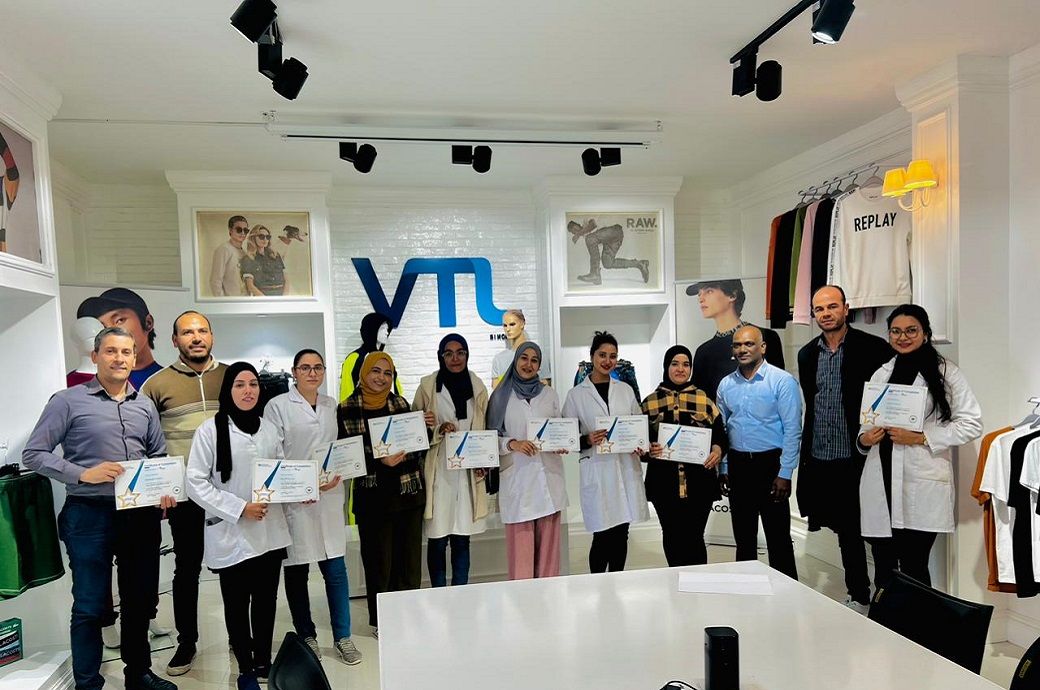
With over 5,000 employees and 3,000 sewing machines across 90 sewing lines, VTL Group specialises in jersey knits and denim, producing up to 20 million garments per year for world-renowned brands such as Lacoste, Adidas, G-Star, Hugo Boss, Replay and Paul & Shark. The company operates six garment production units, along with dedicated facilities for screen printing, knitting, dyeing and textile finishing. This extensive vertical integration gives VTL complete control over quality, lead-times and cost-efficiency, which is vital for meeting the stringent demands of its global customer base.
VTL Group has adopted Coats Digital’s GSDCost to standardise production, boost productivity, and improve pricing accuracy across its Tunisian operations.
The solution cut SMVs by 15–20 per cent, raised line output by 10 per cent, and enhanced planning, cost accuracy, and customer confidence, enabling competitive pricing, lean operations, and stronger relationships with global fashion brands.
Prior to implementing GSDCost, VTL calculated capacity and product pricing using data from internal time catalogues stored in Excel. This approach led to inconsistent and inaccurate cost estimations, causing both lost contracts due to inflated production times and reduced margins from underestimations. In some cases, delays caused by misaligned time predictions resulted in increased transportation costs and operational inefficiencies that impacted customer satisfaction.
Hichem Kordoghli, Plant Manager, VTL Group, said: “Before GSDCost, we struggled with inconsistent operating times that directly impacted our competitiveness. We lost orders when our timings were too high and missed profits when they were too low. GSDCost has transformed the way we approach planning, enabling us to quote confidently with accurate, reliable data. We’ve already seen up to 20% reductions in SMVs, a 10% rise in output, and improved customer confidence. It’s a game-changer for our sales and production teams.”
Since adopting GSDCost across 50 sewing lines, VTL Group has been able to establish a reliable baseline for production planning and line efficiency monitoring. This has led to a more streamlined approach to managing load plans and forecasting. Importantly, GSDCost has given the business the flexibility to align pricing more effectively with actual production realities, contributing to greater customer satisfaction and improved profit margins.
Although it’s too early to determine the exact financial impact, VTL Group has already realised improvements in pricing flexibility and competitiveness thanks to shorter product times and better planning. These gains are seen as instrumental in enabling the company to pursue more strategic orders, reduce wasted effort and overtime, and maintain the high expectations of leading global fashion brands.
Hichem Kordoghli, Plant Manager, VTL Group, added: “GSDCost has empowered our teams with reliable data that has translated directly into real operational benefits. We are seeing more consistent line performance, enhanced planning precision, and greater confidence across departments. These improvements are helping us build stronger relationships with our brand partners, while setting the foundation for sustainable productivity gains in the future.”
The company now plans to expand usage across an additional 30 lines in 2025, supported by a second phase of GSD Practitioner Bootcamp training to strengthen in-house expertise and embed best practices throughout the production environment. A further 10 lines are expected to follow in 2026 as part of VTL’s phased rollout strategy.
Liz Bamford, Customer Success Manager, Coats Digital, commented: “We are proud to support VTL Group in their digital transformation journey. The impressive improvements in planning accuracy, quoting precision, and cross-functional alignment are a testament to their commitment to innovation and excellence. GSDCost is helping VTL set a new benchmark for operational transparency and performance in the region, empowering their teams with the tools needed for long-term success.”
GSDCost, Coats Digital’s method analysis and pre-determined times solution, is widely acknowledged as the de-facto international standard across the sewn products industry. It supports a more collaborative, transparent, and sustainable supply chain in which brands and manufacturers establish and optimise ‘International Standard Time Benchmarks’ using standard motion codes and predetermined times. This shared framework supports accurate cost prediction, fact-based negotiation, and a more efficient garment manufacturing process, while concurrently delivering on CSR commitments.
Key Benefits and ROI for VTL Group
- 15–20% reduction in SMVs across 50 production lines
- 10% productivity increase across key sewing facilities
- More competitive pricing for strategic sales opportunities
- Improved cost accuracy and quotation flexibility
- Standardised time benchmarks for future factory expansion
- Enhanced planning accuracy and load plan management
- Greater alignment with lean and sustainable manufacturing goals
- Increased brand confidence and satisfaction among premium customers
Note: The headline, insights, and image of this press release may have been refined by the Fibre2Fashion staff; the rest of the content remains unchanged.
Fibre2Fashion News Desk (HU)

The US National Security Agency (NSA) has published its latest guidance on zero trust to secure US federal government IT networks and systems. This is the first of two guidance documents coming out of the NSA, providing “practical and actionable” recommendations that can be applied as best practice to secure corporate IT environments both in the public and private sectors.
In the Zero trust primer document, the NSA defines a “zero-trust mindset”, which means assuming IT environment traffic, users, devices and infrastructure may be compromised. To achieve this, the guidance urges IT security teams to establish a rigorous authentication and authorisation process for all access requests.
In the context of securing the integrity of government IT systems, it said that such a strategy enhances the security posture of networks by rigorously validating every access request, which prevents unauthorised changes, reduces risk of malicious code insertion, and ensures the integrity of software and supply chains
The main takeaway from the NSA regarding zero trust is to never trust users or devices that request network connectivity or access to internal resources. The NSA guidance calls for verification without exception, where dynamic authentication and explicit approval is used across all activities on the network, adhering to the principle of least privilege.
Specifically, the NSA’s latest guidance suggests that IT security teams should assume they are working in an IT environment where there is a breach, which means operating and defending resources under the assumption that an adversary already has a presence in the environment.
The NSA said IT security teams should plan for deny-by-default and heavily scrutinise all users, devices, data flows and requests. This means that IT security teams need to log, inspect and monitor all configuration changes, resource accesses and environment traffic for suspicious activity continuously.
The guidance also recommends explicit verification. This implies that access to all resources is consistently verified, using both dynamic and static mechanisms, which is used to derive what the NSA calls “confidence levels for contextual access decisions”.
Commenting on the guidelines, zero-trust expert Brian Soby, CTO and co-founder of AppOmni, said: “Across the guidance, the emphasis is on continuous logging, inspection and monitoring of resource access and configuration change, plus comprehensive visibility across layers.
“Read plainly, the NSA is suggesting that many programs are built around coarse checkpoints and limited signals, while the real risk lives inside enterprise applications, especially SaaS, where sensitive data and business workflows reside.”
Soby’s understanding of the new guidelines is that effective zero trust requires a thorough understanding of what users can and cannot do, instead of simply relying on their ability to authenticate through network directory services and the authorisation that successful authentication gives them.
“Many security programs still substitute directory groups and simplistic roles for true entitlement materiality, even though effective access in modern SaaS is shaped by application-native permissions, sharing rules, delegated administration, conditional controls and third-party OAuth grants.”
He noted that the NSA’s emphasis on monitoring resource access and configuration change implies that relying on coarse identity abstractions leaves IT security teams blind to the actions and permission shifts that create exposure and enable misuse.
“This gap also lines up uncomfortably well with the breaches and campaigns we are seeing now,” he added.
As an example, Soby said that recent intrusions tied to groups tracked as UNC6040 and UNC6395 have highlighted how attackers can bypass traditional, frontdoor-centred controls by abusing SaaS identities and integrations, including compromised OAuth tokens and third-party application access, to reach and extract data from SaaS environments.
“In that light, the NSA’s guidance supports a sharper conclusion: identity security programs that cannot truly understand user activities, behaviours and the materiality of entitlements inside applications do not match the principles of zero trust,” said Soby. “These often become more performative than effective, leaving security operations centre teams stuck with generic signals like logins when the meaningful attacker activity is happening inside the app.”


Japan’s Fast Retailing names Francesco Risso as GU creative director

Reliance Industries Q3 Results: Revenue Rises 10% On Digital, Oil-To-Chemicals Growth

Sophie Turner triggers mixed reaction with ‘Tomb Raider’ reveal

-

 Politics1 week ago
UK says provided assistance in US-led tanker seizure
-

 Entertainment1 week ago
Does new US food pyramid put too much steak on your plate?
-

 Entertainment1 week ago
Why did Nick Reiner’s lawyer Alan Jackson withdraw from case?
-

 Sports6 days ago
Clock is ticking for Frank at Spurs, with dwindling evidence he deserves extra time
-
 Business1 week ago
Trump moves to ban home purchases by institutional investors
-

 Sports1 week ago
PGA of America CEO steps down after one year to take care of mother and mother-in-law
-

 Tech4 days ago
New Proposed Legislation Would Let Self-Driving Cars Operate in New York State
-
Sports7 days ago
Commanders go young, promote David Blough to be offensive coordinator