

Business
Budget 2026: Date, process, key FAQs and what to expect– Check details

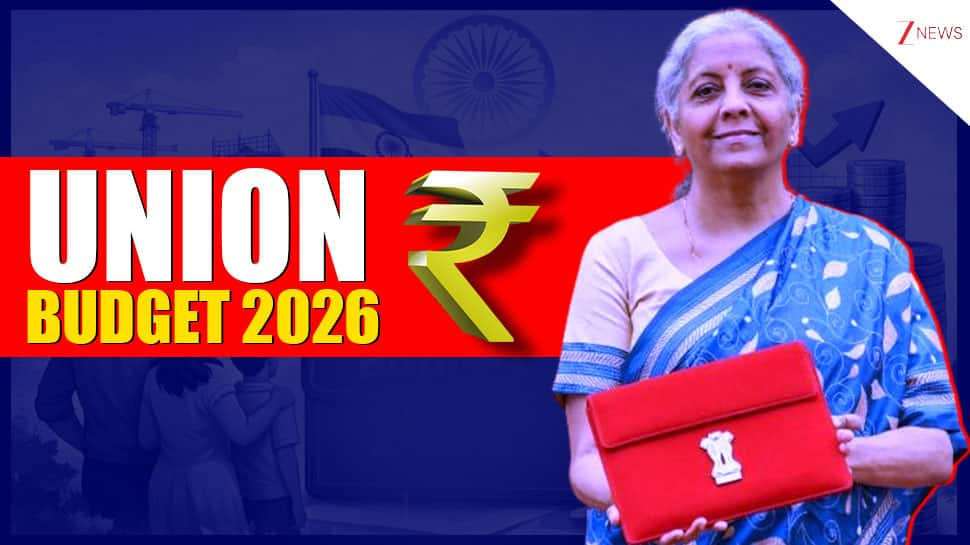
New Delhi: All eyes will be on Parliament on February 1, Sunday, as the government presents Budget 2026. As the country’s annual financial roadmap, the Budget outlines how the government plans to raise revenue and where it intends to spend it in the year ahead. From taxpayers and salaried individuals to businesses, investors and state governments, millions closely watch this announcement for cues on taxes, schemes, growth plans and the overall direction of the economy.
Nirmala Sitharaman to Present Her Ninth Consecutive Budget
The Union Budget 2026–27 will be presented by Finance Minister Nirmala Sitharaman, marking her ninth straight Budget in office. It will also be India’s 88th Budget since Independence. The upcoming announcement is expected to send key signals on tax policies, government spending, fiscal management and overall policy direction, especially at a time when the global economy remains uncertain and India’s growth outlook is under close watch.
Understanding the Union Budget
The Union Budget is the government’s yearly financial plan. It outlines how much money the Centre expects to earn through taxes, dividends, borrowings and other sources and how it plans to spend that money in the upcoming financial year, beginning April 1, 2026. The funds are allocated across key sectors such as infrastructure, defence, welfare schemes, education and healthcare, shaping the country’s economic priorities for the year ahead.
Key FAQs on the Union Budget
1. What is included in the Union Budget?
The Budget has several important parts. It begins with the Budget Speech, where the Finance Minister outlines key announcements, policy measures and tax changes. It also contains detailed tax proposals (such as changes in income tax or GST), spending allocations for each ministry, and overall figures on the government’s income and expenditure. The speech is usually the most closely watched segment.
2. What are the main components of the Budget?
Broadly, the Budget is divided into two sections, the Revenue Budget and the Capital Budget. The Revenue Budget deals with day-to-day income and expenses, including tax collections and subsidies. The Capital Budget focuses on long-term investments such as building infrastructure and creating assets, along with capital receipts like borrowings and disinvestment proceeds.
The documents also provide key indicators like fiscal deficit, revenue deficit and primary deficit, which reflect the government’s financial health.
3. Why is the Budget presented on February 1?
Since 2017, the Union Budget has been presented on February 1 instead of the last working day of February. This change was made to give ministries enough time to roll out new schemes and spending plans from the start of the financial year on April 1, reducing implementation delays.
4. What happens on Budget Day?
On February 1, the Finance Minister delivers the Budget speech in the Lok Sabha, outlining major announcements and priorities. After the speech, detailed Budget documents are tabled in Parliament and released to the public.
5. What happens after the Budget is presented?
Following the presentation, Parliament debates the proposals. Ministries seek approval for their spending through Demands for Grants, and the Finance Bill — which includes tax changes — is discussed and passed. Once approved, the new tax rules and spending plans usually come into effect from April 1.
6. How does the Budget affect common people?
The Budget can directly impact your income tax, GST on goods and services, and prices of items such as petrol, diesel or gold. It may also introduce new schemes for farmers, students or homebuyers. Large spending on infrastructure and jobs can influence employment opportunities and overall market conditions.



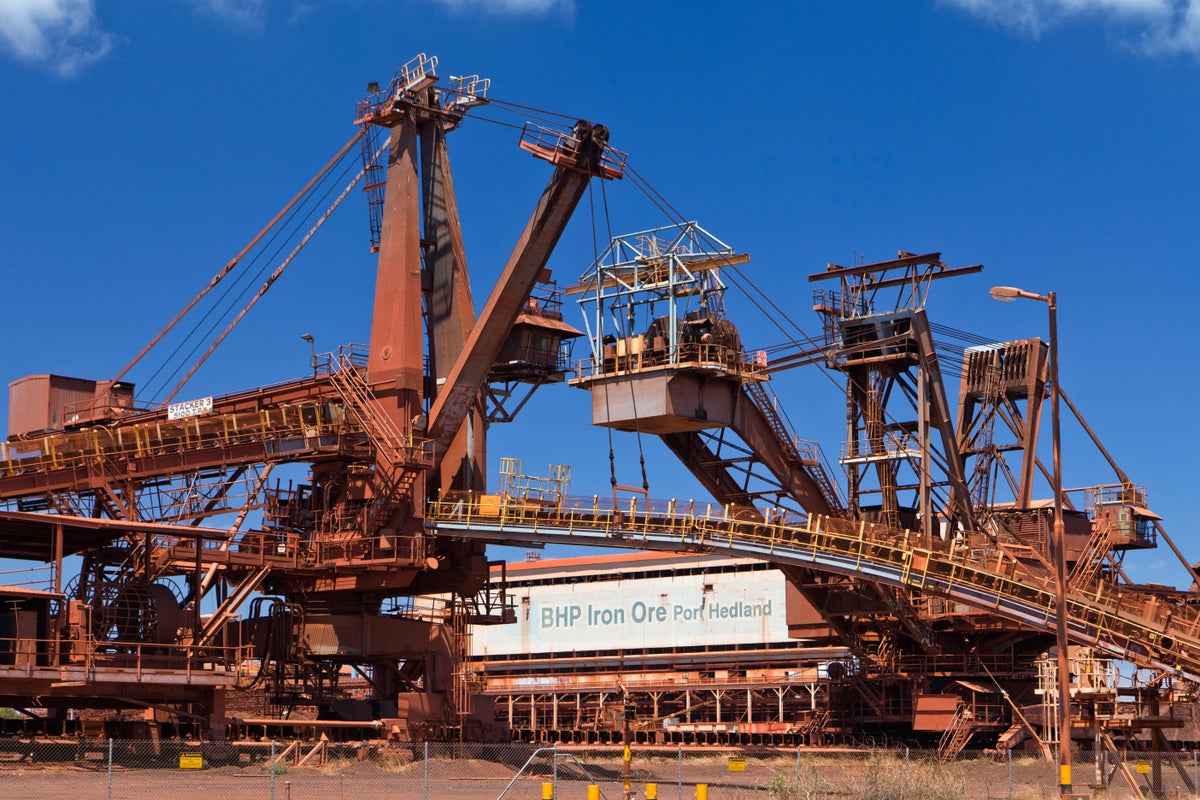
BHP has named Brandon Craig as its new chief executive to replace Mike Henry at the helm of the world’s largest mining company.
Mr Craig, who is currently BHP’s Americas boss, will start on July 1, when Mr Henry steps down after six-and-a-half years in the role.
The Australian mining giant – which switched its main listing from London to Sydney in 2022, but retained a standard listing in the UK – said Mr Henry had helped the firm establish itself as the world’s biggest copper producer.
But he also presided over two failed attempts to buy rival Anglo American to further bolster its copper portfolio, last November walking away from a deal just 18 months after its previous ill-fated approach.
Former FTSE 100 company BHP had looked to muscle in on the agreed mega-merger between Anglo and Canadian rival Teck Resources before pulling out.
Ross McEwan, BHP chairman and former NatWest chief executive, said Mr Craig’s “discipline and focus” would help him drive the group’s strategy forwards.
“We would like to recognise the outstanding contribution of Mike Henry to BHP as chief executive,” he added.
“Under his leadership, BHP has transformed into a safer and more productive company, financially strong and sharply focused on shareholder value and social value.”
Mr Craig has worked at BHP for more than 25 years, having joined in 1999.
Before his current role, he also previously led the group’s Western Australia iron ore business.
He will take on the chief executive role with a 1.9 million US dollar (£1.4 million) annual salary, plus benefits, with the potential for cash and share awards worth up to a maximum of 6.8 million dollars (£5.1 million) each year and possible long-term incentive share awards of up to 3.8 million dollars (£2.8 million) a year.
Mr Craig said: “It is an honour and privilege to succeed Mike Henry as chief of BHP.
“Thanks to his leadership, BHP is well positioned for the future.
“Mike will be remembered for his strategic decision-making, portfolio transformation, operational excellence and focus on safety and high-performance culture.”
Outgoing boss Mr Henry said: “It has been a privilege to serve as chief executive of BHP and to have worked with so many truly talented people. I am proud of what we have achieved together.”
Business
LPG crisis: Centre pushes states to fast-track switch to PNG amid Hormuz supply disruption – The Times of India
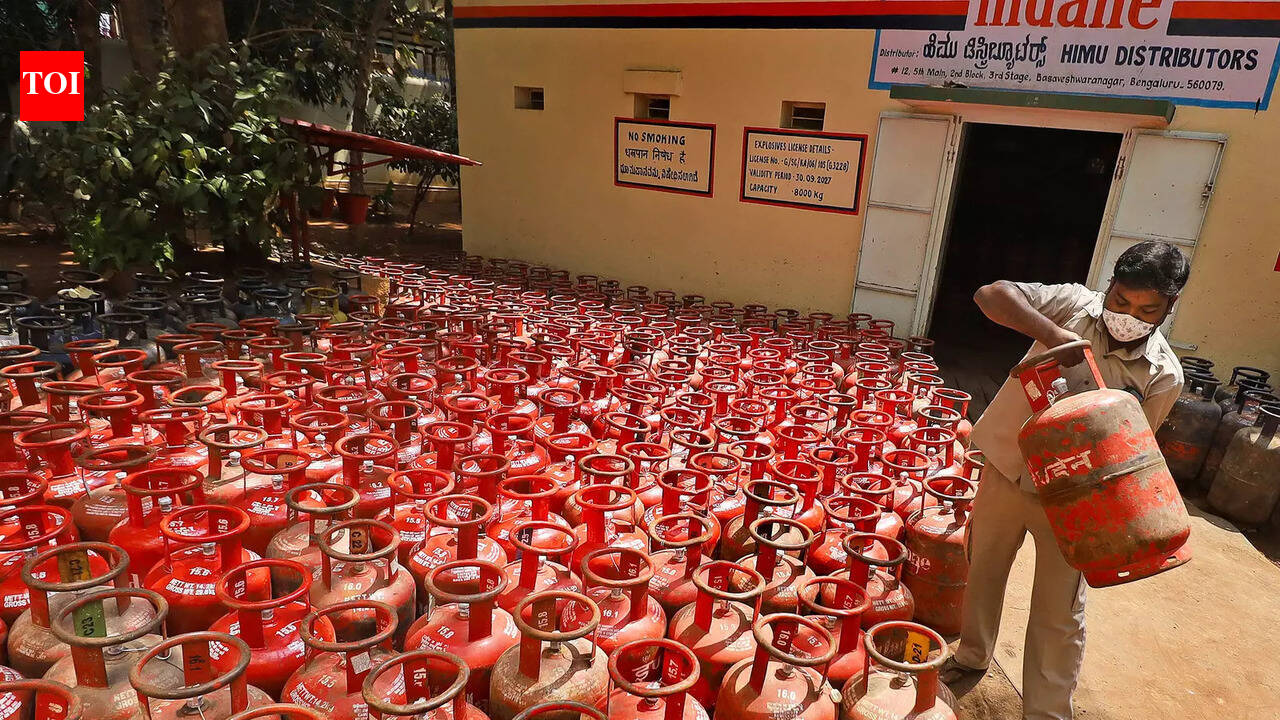
As the Middle East crisis continues to escalate, its impact is now being felt across Indian households and businesses such as eateries and restaurants, with the country relying on imports for 60% of its LPG needs. Amid rising concerns over LPG supply flows, the government is encouraging both households and commercial users to shift towards PNG.It has urged states to fast-track approvals and cut charges so that more homes can shift to piped natural gas (PNG) at a time when liquefied petroleum gas (LPG) supplies remain under stress. According to an official cited by ET, states have been asked to speed up permissions for laying pipelines and to do away with road restoration and related fees imposed by local authorities. The aim is to accelerate infrastructure rollout and make it easier for households to adopt PNG.As part of the relief measures, the petroleum and natural gas regulatory board has waived imbalance charges for city gas companies, shippers and consumers “as a temporary relief measure in light of the extraordinary circumstances” due to ongoing Iran war. These charges are typically imposed when the actual quantity of gas taken or injected by a shipper differs from the amount scheduled on the pipeline network.Officials said the Centre is trying to overcome “structural constraints” that have slowed the growth of PNG connections. Sujata Sharma, joint secretary at the ministry of Petroleum and Natural Gas, outlined a series of steps proposed to states in a presentation shared on Monday.These include directing states to:
- Issuing deemed permission for pending applications for laying city gas distribution (CGD) pipelines
- Mandating approval of all new CGD permissions within 24 hours
- Waiving road restoration and permission charges levied by state or local authorities
- Relaxing working hours and working seasons
- Appointing state nodal officers for support, coordination and faster implementation
Meanwhile, the gap between LPG and PNG usage remains wide. India has around 10 million active PNG consumers, compared with about 330 million LPG users.Hospitality and consumers are already feeling the strain of LPG-related disruptions. The Hotel and Restaurant Association (Western India) (HRAWI) has approached the Maharashtra government seeking an extension or staggered payment of annual licence fees, saying a commercial LPG shortage has forced several establishments to shut. In Patna, residents have flagged delayed deliveries and cases where cylinders are marked as delivered but not received, prompting the district administration to step up monitoring, even as officials maintain there is no shortage. The impact is also visible in other industries. In Gujarat’s Morbi, around 430 ceramic units are set to remain shut for at least three weeks after the West Asia conflict disrupted gas supplies essential for manufacturing, according to an industry representative.

Asian markets mostly rose on Wednesday, and oil prices dipped following another tech-led advance on Wall Street, as the United States hit Iranian missile sites near the key Strait of Hormuz and Tehran struck crude-producing Gulf neighbours.
While the war in the Middle East shows no sign of ending and oil has stuck around $100 a barrel — threatening to fuel a fresh inflation spike — equity traders have shifted back into the market after the steep losses suffered at the outset of the conflict.
However, analysts warned the positive mood could fade if the crisis drags on and energy costs spiral with Hormuz — through which a fifth of global oil and gas flow — effectively closed by Iran.
That comes with central banks increasingly in a bind as the need for lower interest rates to support the economy goes up against the prospect of rising prices, which would need higher borrowing costs.
In a bid to ease traffic through the crucial Strait, US forces dropped several 5,000-pound (2,250 kg) bombs on “hardened Iranian missile sites” near the coast, Central Command said.
Iran has sought to extract a heavy toll on the global economy in retaliation for the US-Israeli attack, including by driving up the cost of oil.
US President Donald Trump on Tuesday fumed that allies, which have largely distanced themselves from his war, were not lining up to help escort tankers through Hormuz.
The attacks came as Israel announced it had killed security chief Ali Larijani, a key force leading Iran since the death of Supreme Leader Ayatollah Ali Khamenei in the first strikes of the war.
Meanwhile, Saudi Arabia intercepted six drones and Kuwait’s air defences responded to a rocket and drone attack, authorities from both countries said Wednesday, while two people were killed by missiles near Tel Aviv.
Israel also hit a central Beirut neighbourhood as it looks to take out the Hezbollah.
Rystad Energy estimated just 12.5 million barrels per day of Middle Eastern oil remains online, down from the 21 million per day pre-war base.
“But the 12.5 million bpd figure is not secure,” Rystad said. “If the (Hormuz) situation persists, the drop in departures could start feeding through into additional export losses in the weeks ahead, as producers face growing difficulty moving crude out of the Gulf.”
Still, oil prices fell, with West Texas Intermediate losing more than one percent to sit around $95, while Brent dipped 0.8%, though it was still holding above $102.
And stocks continued to defy gravity following gains on Wall Street that were helped by tech giants including Apple and Amazon.
Seoul jumped more than three percent thanks to a surge in chip giants Samsung and SK hynix. The Kospi, however, is still well down from the record highs touched before the war broke out.
Tokyo was up more than two percent, while Taipei, Sydney, Singapore and Wellington also rallied. Hong Kong and Shanghai dipped.
“Asia is picking up the baton with a cautiously constructive tone… all of it leaning on the signal from Wall Street where the S&P and Nasdaq have now strung together a second day of gains, suggesting the market is actively choosing to look through the geopolitical noise rather than price it in the fore,” wrote SPI Asset Management’s Stephen Innes.
However, Fawad Razaqzada at Forex.com warned that traders might begin to rethink their positions the longer the conflict rumbles on.
“If the war continues then the US and Israel will have to continue alone, because other NATO members have decided against joining the conflict,” he wrote.
“This may work in favour of Iran keeping the Strait of Hormuz closed for longer.”
Focus is also on the Federal Reserve’s policy meeting that concludes later Wednesday.
The bank is expected to keep borrowing costs on hold but it will release its “dot plot” forecast for rates in the coming months, amid speculation it could be forced to hike again.

World’s largest mining group names new chief executive

Suez and Hormuz shut together, triggering global supply shock

Zendaya brings back her decade-old Oscars look with new detail

Stock market crash today (March 12, 2026): Nifty50 opens below 23,600; BSE Sensex down over 900 points on continuing US-Iran war – The Times of India

Intertextile Shanghai 2026: Fringe events spotlight market trends

What time will NASA’s 600 kg satellite crash to Earth today— 14 years after launch?

-
Business6 days ago
Stock market crash today (March 12, 2026): Nifty50 opens below 23,600; BSE Sensex down over 900 points on continuing US-Iran war – The Times of India
-
 Fashion1 week ago
Intertextile Shanghai 2026: Fringe events spotlight market trends
-
 Entertainment1 week ago
What time will NASA’s 600 kg satellite crash to Earth today— 14 years after launch?
-

 Fashion1 week ago
German brand Adidas posts 13% revenue growth in 2025
-

 Tech7 days ago
Meta Developed 4 New Chips to Power Its AI and Recommendation Systems
-

 Fashion7 days ago
UK’s Topshop unveils Tolu Coker capsule collection
-

 Fashion7 days ago
India’s textile recycling market may reach $3.5 bn by 2030: Report
-
 Entertainment7 days ago
Gas, food, household prices explained