

Business
The price of menstrual products is skyrocketing from inflation, tariffs


Always products are displayed on a shelf in a supermarket in Sarajevo, Bosnia and Herzegovina October 29, 2024.
Dado Ruvic | Reuters
Rising inflation and ever-changing tariff policies have led to higher prices across store shelves over the past few years, squeezing consumers’ budgets.
An often overlooked example: menstrual products.
The average price of menstrual products, including sanitary pads and tampons, has risen nearly 40% since 2020, from roughly $5.37 per unit to $7.43 per unit, according to February data from Chicago-based market research firm Circana.
Dollar sales from menstrual products have grown by nearly 30% over that same period, according to Circana.
But at the same time, sales of menstrual products — which broadly includes pads, tampons, liners and more — have seen a roughly 6% decrease since 2022, falling incrementally each year, according to data from NielsenIQ.
The data analytics company noted that items across the store have seen average unit price increases, with the dollar volume of consumer packaged goods at large rising 2.7% year-to-date. Those price increases are in line with climbing inflation, with the latest consumer price index in February showing a 2.4% annual rise.
The latest CPI data found that inflation in personal care products in the U.S. has jumped dramatically, up 22.1% in February from January 2020.
But because menstrual products are a necessity for a large portion of the population, those costs may be hurting consumers.
“I do think that we’re at a point where consumers in general are having to choose whether they can buy food for their family, or buy prescriptions for their family. Some things that we do typically define as a necessity, people are finding alternatives for or going without,” said Sarah Broyd, a partner with consultancy firm Clarkston Consulting.
Broyd said the gap between higher prices and declining sales shows consumers may be searching for alternatives out of necessity.
Menstrual products haven’t just been hit by inflation, either. According to government data, the U.S. collected $115 million through tariffs on menstrual products containing cotton in 2025, compared with just $42 million in 2020.
The U.S. imported the majority of its menstrual products from Canada, China and Mexico in 2024, according to the World Bank. President Donald Trump has imposed tariffs on all three of those countries at varying levels over the past year.
Those added costs come on top of the so-called “pink tax,” where some states place a sales tax on menstrual products. According to 2025 data from Statista, Tennessee, Mississippi and Indiana have the highest sales tax on menstrual products at 7%. Products that are deemed “medical devices” are often excluded from sales taxes.
‘A subscription service to be a woman’
For 30-year-old Dafna Diamant, the rising price of menstrual products has become noticeable at the cash register and a drag on her monthly expenses.
The New York resident said she’s noticed her usual pack of roughly 18 tampons rise to somewhere around $25, especially over the past year.
“It’s crazy, and it just feels like as a woman, you have to pay sometimes $50 every couple months,” Diamant told CNBC. “And for some people, it takes a toll on the income.”
Diamant said she feels particularly frustrated because it’s not a monthly expense she can go without. She often buys store-brand period products at retailers like CVS and Walgreens, yet she said she’s still shocked by the sticker price.
“It still feels like a subscription service to be a woman,” Diamant told CNBC. “You have to pay every month to be fertile.”
Even larger companies have felt the effects. Procter & Gamble, the parent company of menstrual product brand Always, said in July that it was raising prices on 25% of its personal care and household products due to a $1 billion total annual tariff impact. It manufactures its Always products across facilities in Maine, Utah and Canada, according to the company.
P&G declined to comment for this story.
Kimberly-Clark, the maker of menstrual product brand Kotex, said on an earnings call in April that the company incurred a total of $300 million in gross costs from tariffs, with more than half of that related to tariffs on China. The company did not respond to CNBC’s requests for comment.
Broyd, the partner at Clarkston Consulting, said menstrual products have been hit with a “triple whammy” of rising raw material costs, inflation across energy and supply chains, and cross-border friction from tariffs.
“When you think about plastic and pulp and some of the main components of feminine care products, they’re largely probably coming from overseas and then getting hit with that much more of tariffs,” Broyd said.
She added that these tariffs are on top of already alleged higher levies on other women’s products, the subject of Congress’ Pink Tariffs Study Act introduced last year by Democrats to determine whether the U.S. tariff system is “regressive” or has a “gender bias.”
As prices continue to shoot up, Broyd said she believes companies will continue to reevaluate their portfolios and potentially sell off their feminine care segments to focus on businesses with higher margins. In November, Edgewell Personal Care sold its feminine care business to a company in Sweden for $340 million.
“You’re seeing these more niche, more startup type brands that are popping up in stores. … That’s the biggest growth,” Broyd said. “People that have the ability to flex up and buy more organic or products that they trust, they’ll spend that price premium. But for other consumers that don’t have the discretionary income to do that, they’re going to trade down and go private label, or go without.”
The rise of reusables
Diamant said she and her friends are now trying period underwear instead of single-use products to streamline their expenses.
A growing number of people have been trying reusable period products, primarily because they’re environmentally friendly and cheaper.
Major manufacturers have often relied on brand loyalty for their products, which could take a hit if consumers turn to alternatives.
“If you’re in fem care, you’re going to be using Kotex for 40 years. If you’re in Depend, you’re going to be using Depend for 40 years, right?” Kimberly-Clark CEO Michael Hsu said on a November earnings call. “There is long-duration frequency. There’s a lot of expenditure for consumers, and so because of that, they want to have an ongoing relation with us.”
Saalt, a reusable period products company offering cups, discs and underwear, said it estimates that 16% to 20% of U.S. consumers have tried or used reusable menstrual products, consisting of mostly younger consumers.
“Affordability is huge,” CEO Cherie Hoeger told CNBC. “When you look at our product, a cup or disc can last 10 years, and our product is only in the $30 price range. … They’re able to save up to $1,800 on the lifespan of that cup or disc, and that’s on the low end.”
Saalt, which launched in 2018, hit revenues of eight figures in its third year of business, Hoeger said. The company declined to disclose details of its financials, but she said demand has grown year-over-year since it launched.
Among Generation Z, Hoeger said the top reason for switching to reusables is pricing.
“They usually have some affinity toward sustainability and climate change, but it’s never their number one,” Hoeger said.
The rise of reusables may be contributing to the declining sales of single-use period products over the past few years. It also coincides with recent studies indicating that tampons could contain lead or other harmful ingredients. The Food and Drug Administration investigated the presence of metals and determined there was no risk.
Riding that momentum, other companies like Knix, MeLuna, Flex and more have entered the reusables space and garnered growing market share as consumers search for alternatives.
“Affordability is the crux; it’s the root problem,” Hoeger said. “Without affordability for these period products, you have real economic consequences for women to happen.”





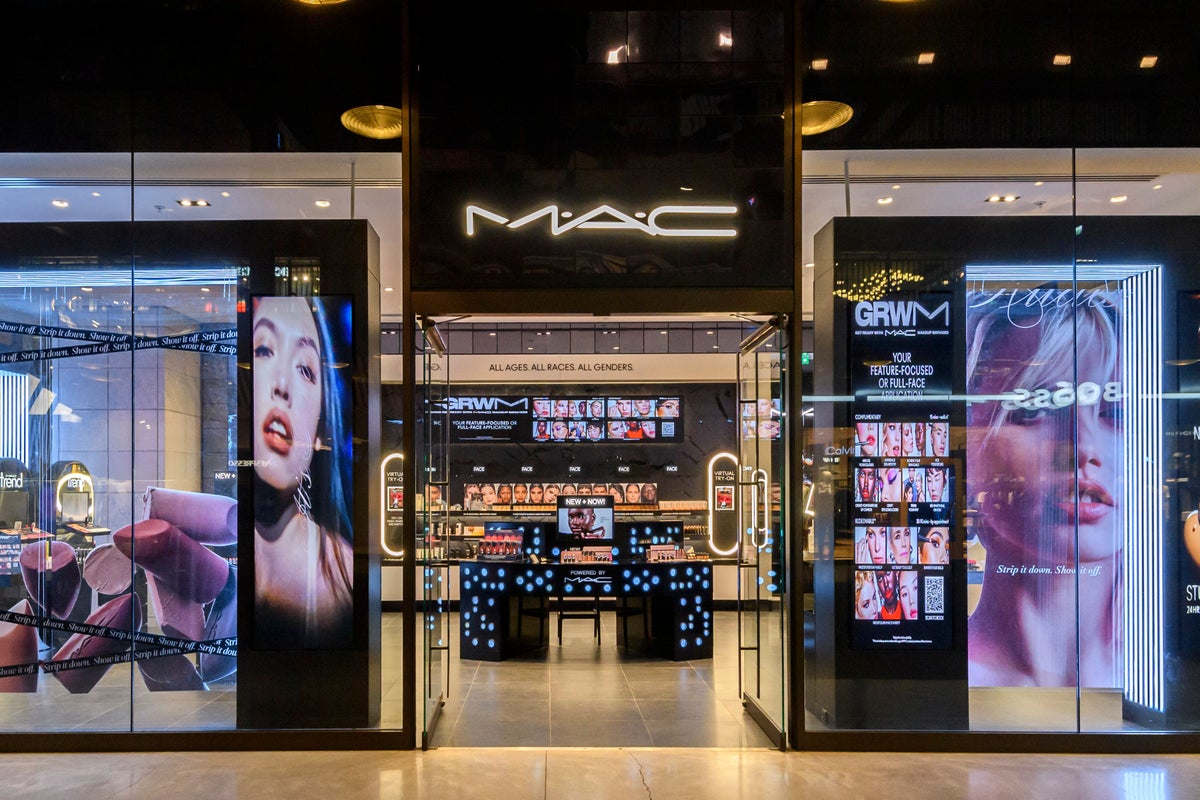
A major beauty brand is enticing all its UK employees to earn a cut of any sales they drive on TikTok Shop in a bid to cash in on the rapid rise of the influencer-led beauty market.
MAC Cosmetics is kitting out shops with mini studios for its makeup artists to host live shopping shows when it launches on TikTok Shop on April 2.
It says it is the first major beauty brand in the UK to give every member of staff the opportunity to opt in as an affiliate and sell on the social media platform.
Those who become faces of the live channel will be offered a percentage of any sale that they drive on TikTok Shop.
The makeup artists will be encouraged to host tutorials and product demonstrations, with items available to buy directly through the app.
MAC, which is part of the Estee Lauder group of beauty brands, said the first live shopping show will stream from its Carnaby Street store in London.
It is hoping that tapping into social media shoppers will also bring more people into its more than 230 standalone shops and concessions.
TikTok Shop burst onto the UK’s retail scene in 2021 and, in recent years, has become a significant force in the world of e-commerce, reaching millions of people who use the video-sharing app and converting many into shoppers with a few taps.
Many content creators can earn a commission on products that they sell through the app when they co-operate with a brand or retailer.
Major retailers like Marks & Spencer and Sainsbury’s are now selling products on the marketplace alongside thousands of smaller businesses and brands.
The app has particularly been part of a boom for the beauty market, with beauty sales on the platform soaring by 60% year-on-year in 2025, fuelled by trends such as Korean skincare.
But the spread of in-app shopping has also prompted concerns about so-called impulse buying, particularly among younger consumers who are often targeted by influencer-led marketing.
Sara Staniford, the vice president and general manager of MAC in the UK and Ireland, said: “MAC has always been driven by our artists and the communities they create.
“TikTok Shop gives us an exciting new way to celebrate that creativity and connect with beauty lovers in real time.
“It puts our artists exactly where they belong, at the centre of the conversation.”
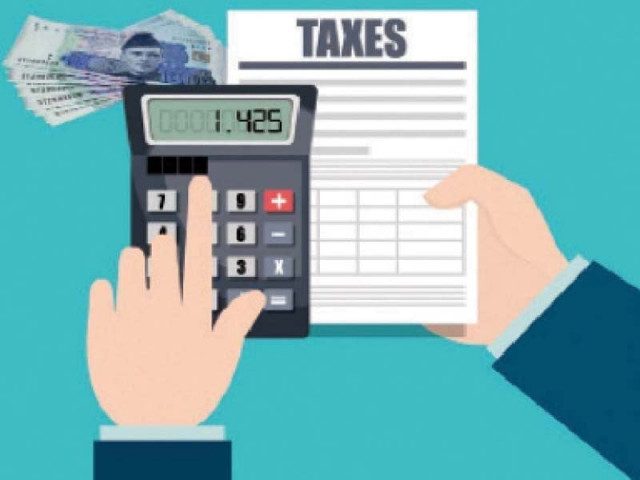
Tax systems designed primarily for extraction eventually undermine revenue due to weak economic growth
A flat tax would eliminate much of the inefficiency from Pakistan’s tax system by both broadening the tax base and significantly lowering the highest marginal tax rates. photo: file
ISLAMABAD:
The federal budget for next fiscal year (2026-27) will be under preparation after Eid holiday. Our policymakers would face an uphill task to balance the budget amidst the 37-month $7 billion Extended Fund Facility (EFF) of the International Monetary Fund (IMF) and shockwaves of the war imposed on Iran by the US and Israel in circumstances.
Regional war has intensified geopolitical risk, commodity markets remain volatile and global financial conditions continue to tighten. For a country already navigating fiscal consolidation under an IMF programme, the margin for policy error has become extremely narrow.
In such moments, governments often resort to familiar instruments: higher tax rates, new levies and additional withholding measures designed to secure immediate revenue. Pakistan’s experience over several decades suggests that this approach rarely produces durable fiscal stability. Slower investment, weaker economic activity and a shrinking tax base often follow temporary revenue gains.
A more sustainable framework for fiscal policy is outlined in the PIDE-PRIME Tax Reforms Commission report titled “Revenue with Growth”. The report argues that Pakistan’s tax system must move away from narrow revenue extraction towards a structure that supports economic expansion. Simplification of taxes, encouragement of investment, protection of exports and modernisation of tax administration form the central pillars of this approach. In the difficult environment facing the country today, this framework offers a practical guide for budget strategy.
Escaping high-tax, low-growth trap
Pakistan’s fiscal dilemma has long been structural. Revenues remain modest relative to the size of the economy while expenditures – particularly debt servicing and defence – continue to rise. Periods of geopolitical tension naturally intensify these pressures.
Historically, the response has been to increase taxes on existing taxpayers rather than expand the underlying economic base. This pattern has created a cycle in which weak growth leads to revenue shortfalls, tax rates are increased to meet fiscal targets, higher taxes suppress investment and economic activity, and slow growth again produces fiscal stress.
The PIDE-PRIME report challenges this cycle by emphasising a basic principle of public finance: tax systems designed primarily for extraction eventually undermine the revenue they seek to maximise. Breaking this pattern requires a shift towards policies that expand the productive economic activity.
Simplifying complex tax system
Pakistan’s tax structure has gradually evolved into a complicated web of withholding taxes, presumptive regimes and special levies such as super tax and turnover taxes. Such complexity raises compliance costs, increases litigation and discourages documentation of economic activity. Simplification therefore becomes the logical starting point for reform.
A tax structure with moderate rates applied to a broader base is more likely to encourage compliance while reducing administrative disputes. Predictability is particularly important in the present environment where businesses already face uncertainty from global geopolitical developments.
Encouraging investment and industrial expansion
Economic growth ultimately depends on investment. Yet Pakistan’s tax policy often raises the cost of investment through high duties on machinery and industrial inputs.
The PIDE-PRIME report recommends removing regulatory duties and additional customs duties and allowing zero-rating of plant, machinery and key intermediate goods. Such measures would reduce the cost of capital investment and support technological upgrading within industry.
For the upcoming budget, this principle carries special significance. Periods of regional instability often lead businesses to delay expansion plans. Clear policy signals encouraging industrial investment can counter that hesitation and strengthen confidence in the economy.
Protecting export competitiveness
Exports remain central to Pakistan’s economic resilience. Yet exporters frequently face liquidity constraints arising from withholding taxes, delayed refunds and administrative bottlenecks.
Budget policy should therefore focus on removing distortions affecting export sectors and ensuring efficient refund mechanisms. Strengthening export competitiveness improves foreign exchange earnings and reduces pressure on the balance of payments – an objective that becomes even more critical during periods of global economic turbulence.
Modernising tax administration
Tax reform cannot succeed without administrative reform. The PIDE-PRIME report emphasises the importance of digitisation, automation and reduced discretionary authority in tax administration.
Modern data-driven systems can minimise direct interaction between taxpayers and officials, reduce opportunities for rent seeking and improve voluntary compliance. Administrative credibility becomes especially important in times of economic stress when taxpayers already face higher costs and uncertainty.
Fiscal discipline and credibility
Credible fiscal management must accompany a growth-oriented tax system. Citizens are more willing to comply with taxation when public expenditures demonstrate discipline and transparency.
The upcoming budget should therefore combine tax reform with efforts to rationalise non-development spending and improve efficiency in public sector operations. Fiscal credibility strengthens the relationship between the state and taxpayers and supports long-term revenue mobilisation.
Turning crisis into reform
Pakistan’s economic history shows that periods of crisis often create the political space for structural reform. The present geopolitical and economic pressures therefore offer an opportunity to rethink fiscal strategy.
Instead of repeating the familiar pattern of incremental tax increases, policymakers could use the upcoming budget to initiate transition towards a growth-oriented tax system. Simplifying taxes, encouraging investment, strengthening exports and modernising administration would gradually expand the economic base and improve long-term fiscal stability.
In uncertain times, the most effective fiscal policy is not the one that extracts the largest revenue in the short term. It is the one that strengthens the productive capacity of the economy and ensures sustainable revenue in the years ahead.
The writer is the Advocate Supreme Court, Adjunct Faculty at LUMS, member Advisory Board, visiting Senior Fellow of Pakistan Institute of Development Economics and holds LLD in tax laws
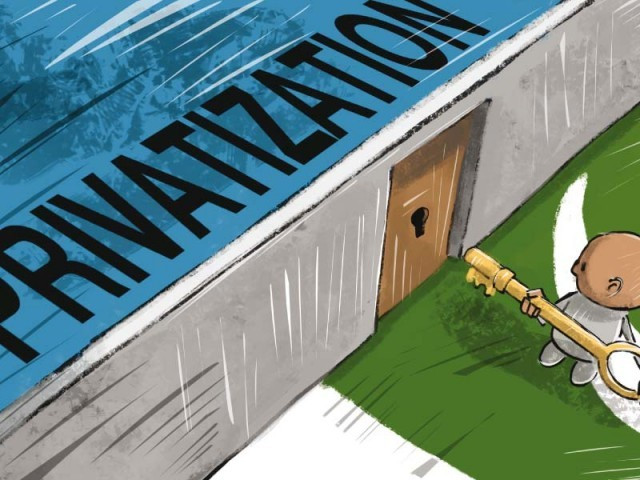
Answer to dilemma is sure-fire sale of bankrupt SOEs in unchaotic and transparent manner
BRUSSELS:
Rule number one is that the role of government is to govern and not run a business. State-owned enterprises (SOEs) have been a huge drain on Pakistan’s fiscal solvency since decades. Staggering losses over the years and the accumulated liabilities absorbed by the national exchequer (read: taxpayers) through subsidies, guarantees and debt have suffocated Pakistan.
Total SOEs’ liabilities have climbed to Rs9.6 trillion, roughly half of the annual federal budget. Unfunded pension obligations alone stand at Rs2 trillion. Out of the Rs13 trillion collected in federal taxes, about Rs2.1 trillion was redirected towards SOEs in 2025 just to keep them afloat. With mounting losses and negative equity of these white elephants, a comprehensive plan for wholesale privatisation of SOEs needs to be developed and, more importantly, implemented on an urgent basis. Yet the current government, like those before it, keep procrastinating the urgent need to privatise these entities.
So, the question to ask is why? The most obvious answer is “retaining control” not for economic rationalisation but for political control. It is the political leadership and state bureaucracy that “throw a monkey wrench” into any plans for privatisation.
Their combined objective is not to increase their economic value but to use them as tools to maintain a patronage system to reward loyalists to SOE boards that exist in name but lack authority, a management that has never run a private business, a bloated employment with excess wages and benefits.
The subordination of economic efficiency to their self-interests inevitably means an incentive to “drag their feet” and/or backtrack on reforms. Bureaucratic inertia and political reluctance, coupled with resistance from vested interests, continues to stall meaningful change, adding to the burden of taxpayers.
The annual report on the federal SOEs (2024-2025) by the Central Monitoring Unit (CMU) in the Ministry of Finance highlights the deep-rooted problems of the public sector to the poor leadership that is unable to run it as a viable commercial enterprise. The CMU recommendations – stronger boards, timely audits, better disclosure and performance-based accountability – are not new.
The CMU fails to understand the nature of business. SOEs cannot function as a sustainable business, any effort to restructure with half measures or cosmetic changes will only give the same results and be an arduous exercise in futility. Private sector businesses with their boards, management and employees are beholden and answerable to their shareholders. Financial health of these companies are annually scrutinised to improve performance and increase economic value.
SOEs on the other hand are beholden and answerable to politicians and bureaucrats, who care less about financial health because it’s not their money on the line, it’s the taxpayers’ money and it is they who “bear the brunt” of these massive losses.
So, what’s the answer to this dilemma? Nothing but a sure-fire sale of these bankrupt SOEs must be done urgently in an unchaotic and transparent manner. Questionable opaque methods of transferring the assets of struggling or bankrupt SOEs to private entities, foreign or domestic, must be avoided. The exit of these SOEs will create opportunities for the private sector to eclipse the state sector as the most important engine of growth, productivity, and job creation in finance, energy, utilities, transport, manufacturing and mining.
Revenues from the privatisation sales will go a long way to help Pakistan’s fiscal quandary, but even more. So the removal of these businesses from Pakistan’s ownership ledgers eases the headache for the government to oversee their operations so that it can focus on governance and utilise a significant portion of public resources on development, education and healthcare rather than keeping these loss-making state entities alive.
The writer is a philanthropist and an economist based in Belgium


EU regulatory tsunami hits war-distracted textile industry now
MAC entices staff to transform into TikTok live shopping hosts

Imran Khan undergoes third eye procedure at Pims

Tips and Advice for Buying Used or Refurbished Electronics

UAE savings strategies 2026 explained: Best apps, tools, budget rules and smart money hacks to beat rising cost of living in emirates – The Times of India

Iran threatens US-linked oil facilities after Kharg Island bombed

-
 Tech1 week ago
Tips and Advice for Buying Used or Refurbished Electronics
-
Business1 week ago
UAE savings strategies 2026 explained: Best apps, tools, budget rules and smart money hacks to beat rising cost of living in emirates – The Times of India
-
 Politics1 week ago
Iran threatens US-linked oil facilities after Kharg Island bombed
-

 Politics1 week ago
How can US get out of Iran war?
-
 Entertainment1 week ago
Strategic oil stocks to be released ‘immediately’ in Asia and Oceania: IEA
-

 Entertainment1 week ago
Iran at war
-

 Sports1 week ago
Japan suffers shocking collapse to Venezuela in World Baseball Classic
-

 Entertainment1 week ago
Meet one of the last true paparazzi