

Business
IMF loads $7 billion package with 11 new conditions | The Express Tribune

Govt committed to IMF that parliament will approve fiscal year 2026-27 budget in line with the staff level agreement
The government has agreed to the need for a mini-budget if revenues fall short of expectations by end-December 2025, according to the IMF. Photo: file
The International Monetary Fund (IMF) loaded the $7 billion bailout package with nearly a dozen more conditions, including approval of the new budget by the National Assembly in line with the fund’s agreement and amending laws governing the special economic and technology zones.
The government has committed to the IMF that Parliament would approve the fiscal year 2026-27 budget in line with the IMF staff agreement to the $7b programme targets. This is the second time that the government has accepted such a condition under the current programme, as the last budget was also approved under the IMF instructions.
Government sources told The Express Tribune that the staff-level agreement between Pakistan and the IMF last month became possible after including 11 more conditions in the bailout package.
With the addition of 11 new conditions during the third review of the $7b programme, the total number of conditions that the IMF has so far imposed during the past two years has touched 75. These encompass all spheres of economic decision-making, governance and private sector development.
Read More: ‘IMF board nod awaited for next tranche’
The sources said that Pakistan had assured the IMF that it would unveil the fiscally consolidated budget and would not target higher economic growth in the next fiscal year. The assurance was given by Finance Minister Muhammad Aurangzeb to the deputy managing director of the IMF during last week’s visit to Washington.
The sources said that Pakistan had accepted the IMF condition that by June 2027, it would enact amendments to the Special Economic Zones (SEZ) Act and Special Technology Zones Authority Act (STZA) to phase out existing fiscal incentives and shift from profit- based to cost-based incentives.
The country would also amend these laws to withdraw the authority of the Board of Approvals, Board of Investment and the SEZ authorities in granting tax incentives. The legal changes would be made to the satisfaction of the IMF to completely phase out all existing fiscal incentives to STZs by 2035.
According to another commitment, the government would prohibit the Export Processing Zones from selling their goods in the domestic market. The restriction to sell locally would be implemented by September this year, said the sources.
Also Read: IMF MD appreciates Pakistan’s reform progress and macro stability
The industries located in these export zones are often accused of selling a significant chunk of their production in the local market to evade taxes.
The government accepted the IMF’s new condition in the middle of the NA Standing Committee on Finance’s action to amend the SEZ law last week, without even discussing it thoroughly.
The government would give 6,000 acres of land in Karachi on lease to developers for the development of SEZs without charging any money, said Minister for Investment Qaiser Sheikh after the meeting. He said any developer can get up to 1,000 acres of land on lease, but the terms of the lease had not yet been finalised.
The law states that more than one developer shall only be selected where the area of the zone is at least 1,000 acres, and each developer is allotted at least 500 acres.
The law, as approved by the standing committee, also bars the courts from taking cognisance of commercial legal disputes related to these zones.
The government has also assured the IMF that it remains committed to not introducing new zones until the outcome of negotiations on creating exceptions for notifying new STZs in priority sectors and phasing out all current by 2035, with a view to levelling the playing field for investment and strengthening the business environment nationally.
Out of the $7b, the IMF has so far disbursed $3b. The fourth tranche of $1b is expected to be released in the first week of May.
PRR
According to another new condition, by June next year, the government will set up the Pakistan Regulatory Registry to improve the business climate. The registry will be a comprehensive and legally authoritative source on business regulations, starting with federal government and Islamabad Capital Territory regulations, and later it will be extended to all provincial regulations.
Read This: IMF lowers Pakistan’s economic growth forecast to 3.5%, inflation to 8.4% for next fiscal year
The IMF is also pushing Pakistan to ease restrictions on the foreign exchange regulations. As a result, the central bank has committed to developing a roadmap for the gradual removal of foreign exchange restrictions, spelling out the appropriate sequencing, including the macroeconomic, financial stability, and other structural preconditions needed for each liberalisation step.
Energy prices
The government has also accepted at least three new conditions to regularly adjust the prices of electricity and gas. Such conditions were already in place, but the global lender thought to add three more to the long list to make sure that the government does not go back on its commitment to increase electricity and gas prices.
These new conditions state that the Pakistani authorities remain committed to timely notifications of quarterly tariff adjustments (QTAs) and automatic monthly fuel charge adjustments (FCAs). The government has accepted that in January 2027, it will fully implement the annual electricity price, which will reflect the impact of recent global energy market volatility.
The government has also agreed that it would notify semiannual gas tariff adjustments in line with cost recovery, as determined by OGRA, first on July 1, 2026 and February 15, 2027.
FBR
According to another condition, by June this year, the Federal Board of Revenue (FBR) would centralise the audit case selection process. The FBR will adopt a standardised audit manual, a published audit policy, and a comprehensive audit and integrity risk register, formalising current institutional roles and responsibilities.
The audit policy will require mandatory follow-up of all high-risk cases identified through the risk management system, which should include risks on registration and non-filing.
PPRA
The government has also accepted the condition that by September this year, it will amend Public Procurement Regulatory Authority rules to eliminate SOE preferences in awarding public procurement contracts without competition. The new public procurement rules will be implemented subject to the approval of the federal cabinet.
BISP
In order to offset the impact of higher energy prices and high taxes under the IMF programme, the government has accepted the IMF condition to increase the Benazir Income Support Programme beneficiaries’ compensation from Rs14,500 to Rs19,500, beginning in January 2027.
This will cover both projected inflation for 2026 and an additional increase in generosity, bringing quarterly benefits significantly closer to the goal of 15% of the lowest family income quintile’s consumption basket.






Malaysia-based Karex produces more than five billion condoms a year and supplies global brands like Durex and Trojan.
Source link

Tesco Pet Insurance, who provided the cover, says “the cost of claims is one of a number of factors that can affect the price of a policy at renewal” and also noted Tilly’s age had been reflected in the quote. It says the couple had a more comprehensive policy, which typically costs more than basic levels of cover, and that alternative options were presented to Fawcett and Neild.
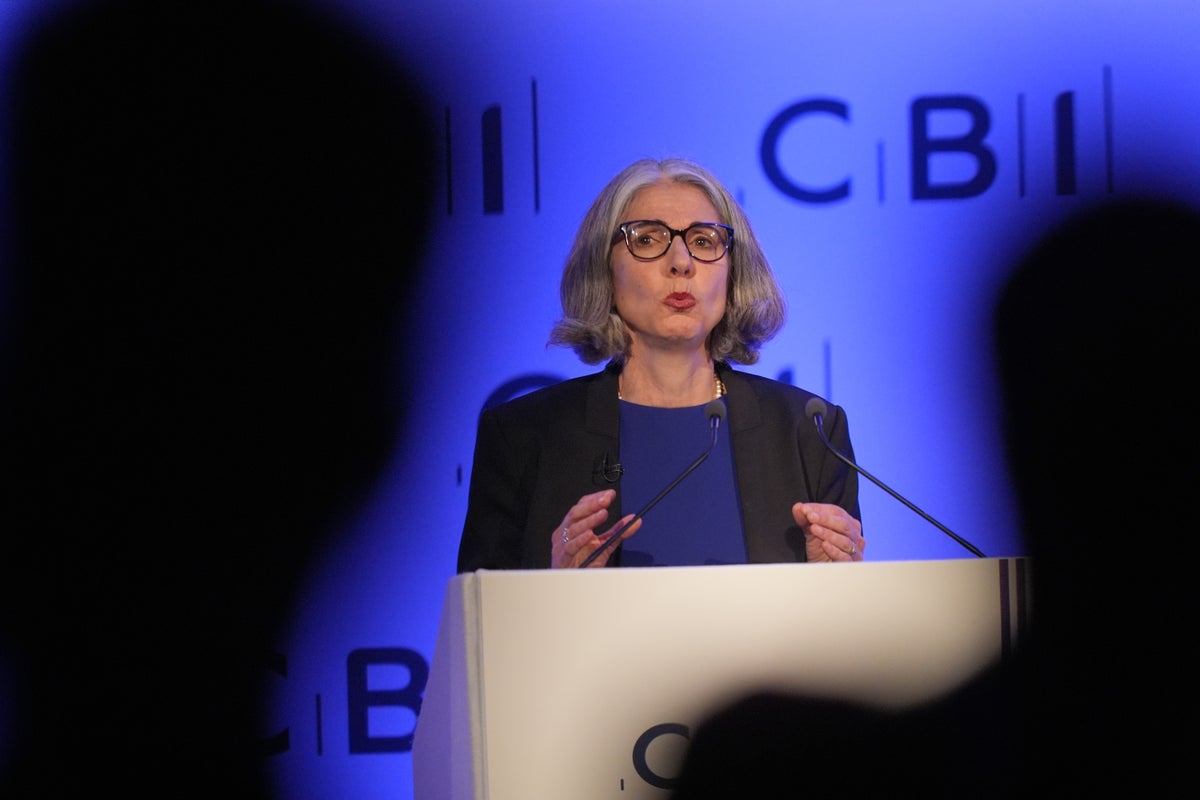
The UK must not “cut ourselves off” from trade opportunities in China despite security and business risks, the head of the Confederation for British Industry has warned.
CBI chief Rain Newton-Smith highlighted that British businesses see increased trade with Chinese firms as an opportunity to drive growth.
Her remarks came as business leaders were questioned by MPs on Parliament’s Business and Trade Select Committee regarding the UK’s economic relationship with China.
Last December, Prime Minister Sir Keir Starmer admitted China poses security threats to the UK but urged for greater business ties.
Ms Newton-Smith, chief executive of one of the UK’s largest business groups, was positive about the Government’s engagement with China.
“You can’t have a growth strategy without a strategy for China,” she said.
“China has the biggest contribution to global growth, is the third largest trading partner, and the world’s largest consumer market.
“The UK is second largest exporter of trade and services.
“We are mindful as all businesses are of security risks but it is really important that we have a strategy towards China.
“This Government has increased the economic engagement with China and including business within this does help us as a country.”
She added: “If we think about the future economy, there is a huge market in China and I think we mustn’t cut ourselves off from some of the opportunities there, even if in some areas there are difficult conversations and negotiations that need to be had.”
Peter Burnett, chief executive of the China-Britain Business Council, told the committee: “There are risks associated with technology advancement, AI, industrial development that they need to assess.
“Increasingly you will find them saying that they need to engage more in China to understand those risks and to develop some of the technologies along some of those risks themselves.”


IMF to give specific attention to low-income, vulnerable nations

A case for fuel reforms
World’s biggest condom maker Karex set to raise prices due to Iran war

-

 Fashion6 days ago
France’s LVMH Q1 revenue falls 6%, shows resilience amid Iran war
-

 Sports1 week ago
The case for Man United’s Fernandes as Premier League’s best
-

 Entertainment1 week ago
Palace left in shock as Prince William cancels grand ceremony
-
 Business1 week ago
UK could adopt EU single market rules under new legislation
-

 Entertainment7 days ago
Is Claude down? Here’s why users are seeing errors
-

 Fashion1 week ago
Energy emerges as biggest cost driver in textile margins
-
 Business1 week ago
Delta Air Lines unveils first new Delta One suite in premium cabin arms race
-
 Fashion1 week ago
Asia claims largest share of markets on Kearney FDI Confidence Index