

Tech
Air conditioning isn’t the only answer

I recently returned from visiting family in America and was struck by how hot I felt back home in London, despite the temperatures being lower. Partly, this was down to humidity: London is sticky in summer, while Utah, where my uncle lives, is very dry.
But it’s also down to the buildings. My brick house absorbs and retains heat while every building I went to in America was either well ventilated or had air conditioning blasting away.
That contrast got me thinking: as the UK warms, can it keep its homes and workplaces comfortable without relying solely on air-con?
Jesus Lizana, Nicole Miranda and Radhika Khosla at the University of Oxford say that northern Europe is dangerously unprepared for the heat of the near future.
They looked at the coming demand for cooling using the concept of “cooling degree days,” which essentially assesses how often people will need to take extra measures, like switching the air-conditioning on, to keep themselves cool.
They found countries like Nigeria and Chad will see the biggest absolute rise in cooling degree days. “A clear indication that Africa is shouldering the burden of a problem it did not create,” they note.
But they also found that countries in northern latitudes will face the greatest relative increase in uncomfortably hot days.
“Of the top ten countries with the most significant relative change in cooling degree days as global warming exceeds 1.5°C and reaches 2°C, eight are located in northern Europe.”
It gets worse. “Buildings in the northern hemisphere,” they write, “are primarily designed to withstand cold seasons by maximizing solar gains and minimizing ventilation—like greenhouses.”
The solution seems obvious: let’s all get air-con.
Coal-powered air-con?
But Mehri Khosravi says it isn’t that simple. An energy researcher at the University of East London, she warns that:
“Cooling requires huge amounts of energy at the exact moments when demand is already high. In 2022 and 2023, the UK had to briefly restart a coal power plant to keep the lights—and the air conditioners—on.”
Khosravi says the UK and similar countries should instead focus on reducing demand for cooling.
In winter, she says, we rightly focus on better insulation to reduce heating demand, as “it’s a lot harder to warm a house than it is to stop heat escaping in the first place.”
So how do we stop a northern European brick house from heating up in the first place?
Khosravi suggests we look to southern Europe for inspiration, where 35°C summers were common long before climate change. Her suggestions include shading and shutters to block sunlight before it enters a building, natural ventilation to let heat escape in cooler hours, and reflective or light-colored buildings that reflect sunlight.
It’s hard to imagine Scarborough being turned into Santorini any time soon. But while we wait to adapt our buildings for the new normal, Khosravi says we should adapt our behavior too.
In Spain, the hottest hours are for siestas. Outdoor activities are paused, and people are more active in the mornings and evenings. Culturally, they understand that keeping curtains closed during the day and opening windows at night can prevent homes from overheating.
In the UK, heat is still culturally framed as “good weather”. Sunny weekends trigger beach trips, barbecues and more outdoor activity, even when it’s dangerously hot. This mismatch between perception and risk is a major public health challenge.
Smarter cooling
Perhaps there are smarter ways to cool down. Academics in Australia recently published research suggesting a “fan first” approach, even when air-conditioning is installed.
“The approach is simple,” they write: “use electric fans as your first cooling strategy, and only turn on air conditioning when the indoor temperature exceeds 27°C.”
These fans use only a tiny fraction of the electricity used to run air conditioning, but “can make you feel up to 4°C cooler.” In their research, the Australian team increased an office’s air conditioning set-point from 24 to 26.5°C, with supplementary air movement from desk and ceiling fans. This “reduced energy consumption by 32%, without compromising thermal comfort.”
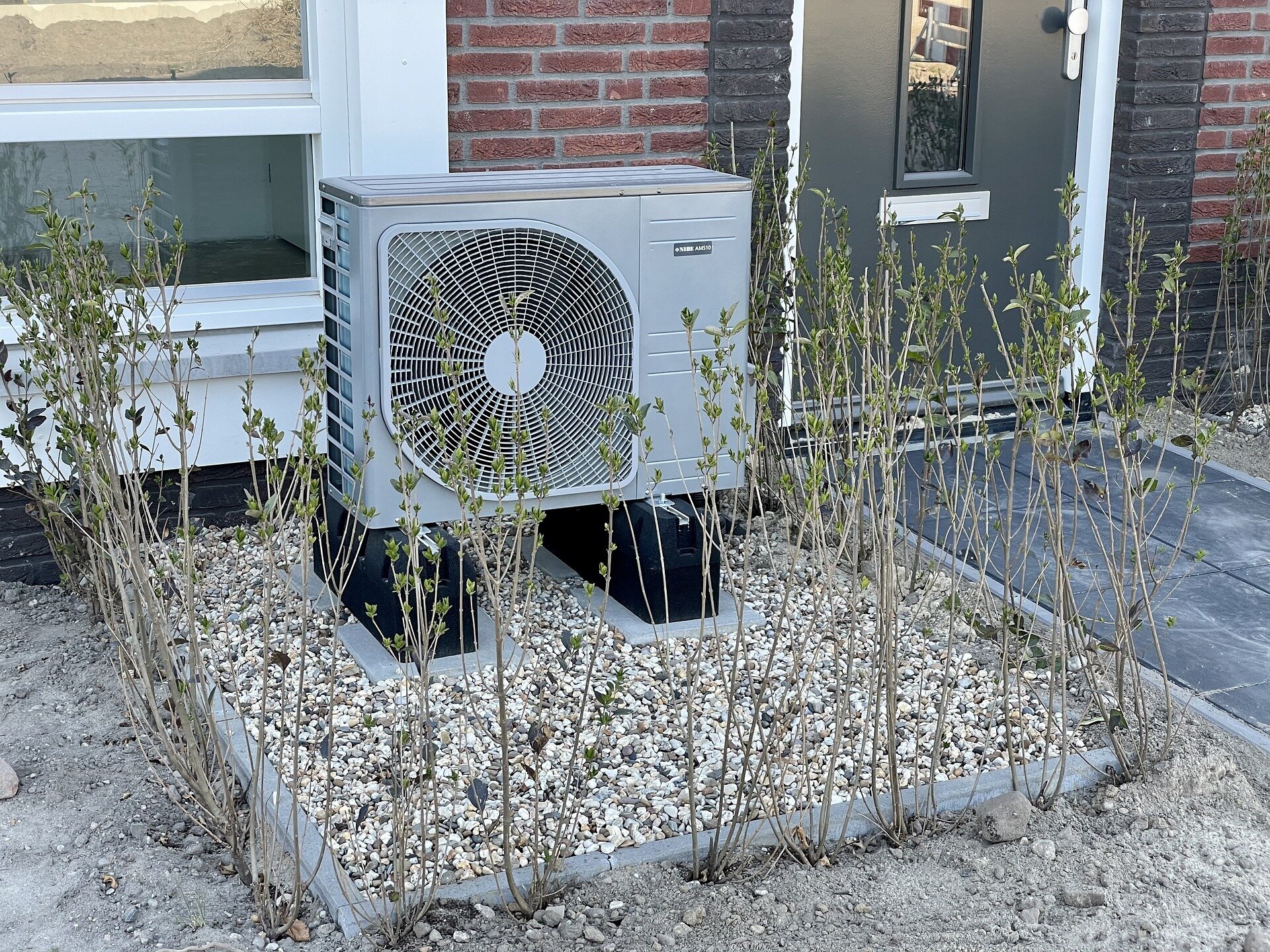
Air conditioning doesn’t have to mean the typical rows of humming white boxes. Heat pumps—already central to Britain’s low-carbon heating plans—can also keep homes cool in summer.
Essentially, they’re able to act like reversible air conditioners: in winter, they draw warmth into a building, and in summer they can run in reverse to push heat out.
Crucially, they do so with far greater efficiency than traditional systems. Theresa Pistochini, an engineer at UC Davis in California, points out that heat pumps can be “anywhere from 200% to 400% efficient,” meaning they move more than twice as much energy (heat) than the energy required to operate them.
Her analysis found that “buying a heat pump today will reduce global-warming impact in almost all geographical locations.”
For households, this could mean one appliance that covers both heating and cooling, slashes energy bills, and avoids the climate-damaging lock-in of conventional air conditioning. For policymakers, heat pumps may offer a way to meet surging cooling demand without blowing the carbon budget.
But heat pumps aren’t a perfect fix. Installation is costly, many older homes will still need upgrades, and there aren’t enough trained engineers. They’ll need further support if they’re to become a mainstream alternative to air-con.
Nonetheless, together with simple measures like fans and shutters, heat pumps point to a smarter approach to cooling. And it could be made even more sustainable if paired with clean energy from rooftop solar.
Homes equipped with solar panels can generate electricity during the hottest parts of the day—exactly when air conditioners or heat pumps are working hardest.
Tom Rogers and colleagues at Nottingham Trent University say solar will play a “pivotal role” in “addressing summer cooling demand and enhancing climate resilience.” They analyzed satellite images to estimate that rooftop solar could provide “nearly one third” of the city’s electricity demand.
The UK is warming, and staying comfortable in hotter summers is a must. But there’s more than one way to cool down. Simple measures like fans, efficient heat pumps and rooftop solar—combined with smarter building design and passive cooling—could keep homes safe, energy use low and emissions in check.
This article is republished from The Conversation under a Creative Commons license. Read the original article.
Citation:
Air conditioning isn’t the only answer (2025, August 28)
retrieved 28 August 2025
from https://techxplore.com/news/2025-08-air-conditioning-isnt.html
This document is subject to copyright. Apart from any fair dealing for the purpose of private study or research, no
part may be reproduced without the written permission. The content is provided for information purposes only.











I love a digital notebook. I write about them all year long here at WIRED, and it’s not often my favorites go on sale. (Or for any to go on sale, besides Amazon’s own sale events.) But this year, multiple digital notebooks I love are on sale for the biggest sale event of the year.
If you’ve thought about getting one of these for yourself, there’s truly no better moment. From reMarkable’s on-sale bundles to Kobo’s deals, you can shop five of the best digital notebooks we’ve ever tried right now at a lower price than you might find until next year. They’re a handy device just about everyone can enjoy, whether you want to digitally annotate your books or write out your grocery list without using a piece of paper.
Looking for more great sales to shop? Don’t miss our guides to the Best Amazon Device and Kindle Deals, Best Laptop Deals, the Absolute Best Cyber Monday Deals, and our liveblog.
Update Dec. 1: We updated prices, links, and deals, and added the Rocketbook Fusion Plus notebook.
The Best Digital Notebook Deals
Some of the best digital notebooks we’ve tried come from reMarkable, and one of reMarkable’s models always seems to reign supreme over our digital notebooks guide. While the Paper Pro Move is the newest model, the reMarkable Paper Pro that launched in September 2024 is my current all-around favorite. It’s not only powerful with tons of tools and an easy interface, but packs a color screen for colorful notes. It also has a gentle front light so that you can use it in darker environments. You can get the bundles on sale right now, so combine one of reMarkable’s markers and folio covers with a Paper Pro to get $50 off.
-
Photograph: Nena Farrell

The best discount from reMarkable is actually for its older device and our previous top pick, the reMarkable 2. It doesn’t have a color screen or the front light, but you’ll get the reMarkable’s great software and options for accessories like the Keyboard Folio to use it like a laptop. The reMarkable 2 bundles are also on sale, so add on your favorite folio of choice on reMarkable’s website to get $70 off.
-
Photograph: Nena Farrell
-
Courtesy of Kobo
-Reviewer-Photo-SOURCE-Nena-Farrell.jpg)

The Kobo Libra Colour is my favorite all-around e-reader with its color screen and page turner buttons, but you can add on a stylus to have it double as a digital notebook. It’s one of the more affordable options, and it’s a smaller screen than the rest of these, but I especially love that you can use the stylus to doodle on the books you’re reading (something you can’t do with the Kindle Scribe). It’s $30 off on Kobo’s site for Cyber Monday.
-
Photograph: Nena Farrell
-
Photograph: Nena Farrell
-
Courtesy of Amazon


Amazon
Kindle Scribe (2024)
The second-generation Kindle Scribe isn’t the best digital notebook, but the long battery life (12 weeks!!) and convenient starting point of it being a Kindle I could already be reading on makes it a great go-to for casual notetakers and doodlers. It’s a good choice for Kindle and Amazon users, and there are new models due out this winter, but they likely won’t be as cheap as this one. (Especially since some of those new models will have color!)

Photograph: Nena Farrell
If you like the idea of getting a Kobo e-reader that doubles as a digital notebook, you can go for more of a classic size with the larger Elipsa 2E. This one comes with the stylus, so you won’t have to add it on, and it’s $50 off.

Photograph: Nena Farrell
The Rocketbook Fusion Plus digital planner and notebook is for those who don’t want to charge their notebook or give up on the whole “paper” experience. Take notes with the included, erasable Pilot Frixion Pen, scan photos of the pages into the app, and erase the whole thing with the damp microfiber cloth (also included). Fusion Plus is on its steepest discount of recent memory, and comes templates that range from monthly and weekly pages to project management and meeting notes.
Power up with unlimited access to WIRED. Get best-in-class reporting and exclusive subscriber content that’s too important to ignore. Subscribe Today.
Our muscles are nature’s actuators. The sinewy tissue is what generates the forces that make our bodies move. In recent years, engineers have used real muscle tissue to actuate “biohybrid robots” made from both living tissue and synthetic parts. By pairing lab-grown muscles with synthetic skeletons, researchers are engineering a menagerie of muscle-powered crawlers, walkers, swimmers, and grippers.
But for the most part, these designs are limited in the amount of motion and power they can produce. Now, MIT engineers are aiming to give bio-bots a power lift with artificial tendons.
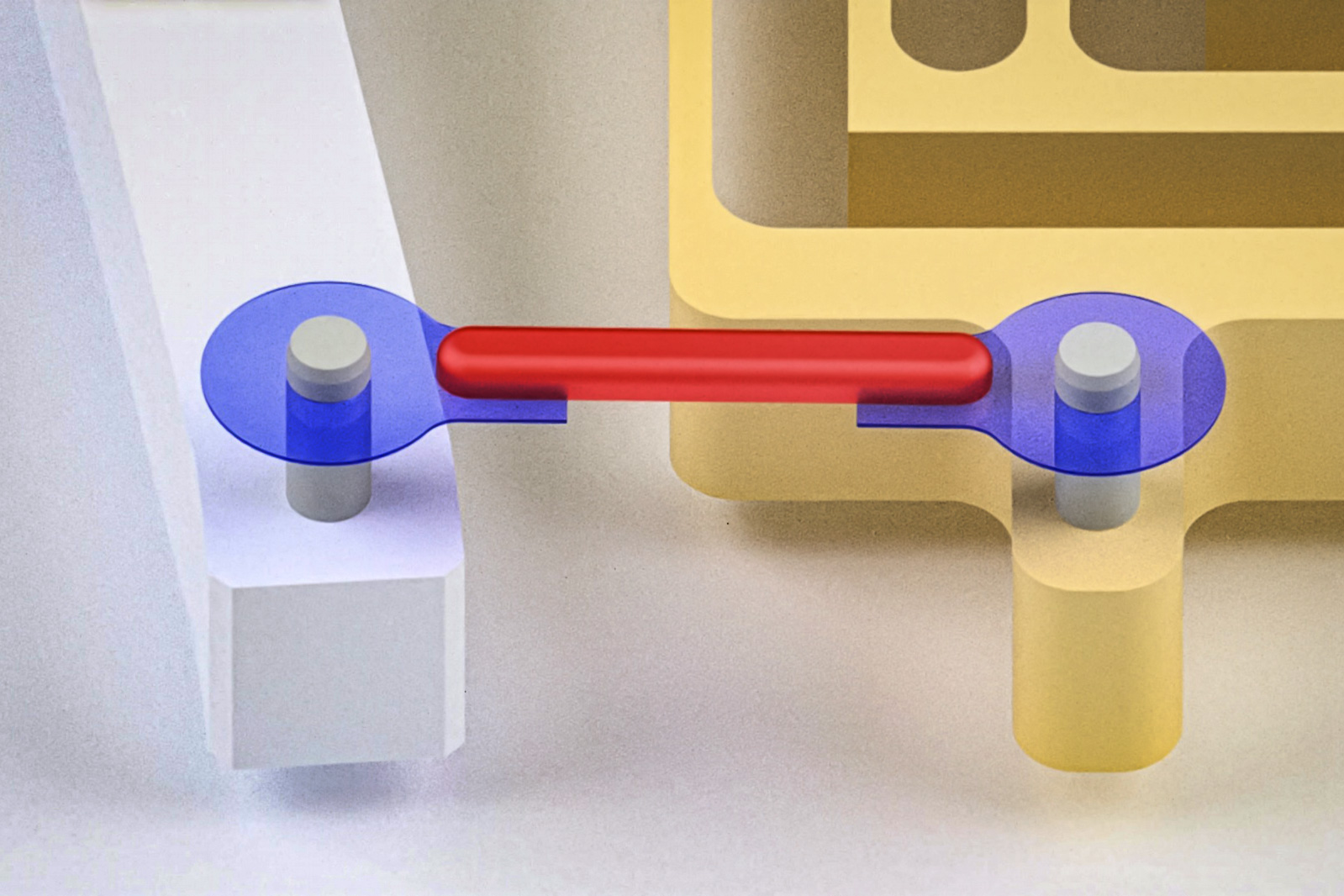
In a study appearing today in the journal Advanced Science, the researchers developed artificial tendons made from tough and flexible hydrogel. They attached the rubber band-like tendons to either end of a small piece of lab-grown muscle, forming a “muscle-tendon unit.” Then they connected the ends of each artificial tendon to the fingers of a robotic gripper.
When they stimulated the central muscle to contract, the tendons pulled the gripper’s fingers together. The robot pinched its fingers together three times faster, and with 30 times greater force, compared with the same design without the connecting tendons.
The researchers envision the new muscle-tendon unit can be fit to a wide range of biohybrid robot designs, much like a universal engineering element.
“We are introducing artificial tendons as interchangeable connectors between muscle actuators and robotic skeletons,” says lead author Ritu Raman, an assistant professor of mechanical engineering (MechE) at MIT. “Such modularity could make it easier to design a wide range of robotic applications, from microscale surgical tools to adaptive, autonomous exploratory machines.”
The study’s MIT co-authors include graduate students Nicolas Castro, Maheera Bawa, Bastien Aymon, Sonika Kohli, and Angel Bu; undergraduate Annika Marschner; postdoc Ronald Heisser; alumni Sarah J. Wu ’19, SM ’21, PhD ’24 and Laura Rosado ’22, SM ’25; and MechE professors Martin Culpepper and Xuanhe Zhao.
Muscle’s gains
Raman and her colleagues at MIT are at the forefront of biohybrid robotics, a relatively new field that has emerged in the last decade. They focus on combining synthetic, structural robotic parts with living muscle tissue as natural actuators.
“Most actuators that engineers typically work with are really hard to make small,” Raman says. “Past a certain size, the basic physics doesn’t work. The nice thing about muscle is, each cell is an independent actuator that generates force and produces motion. So you could, in principle, make robots that are really small.”
Muscle actuators also come with other advantages, which Raman’s team has already demonstrated: The tissue can grow stronger as it works out, and can naturally heal when injured. For these reasons, Raman and others envision that muscly droids could one day be sent out to explore environments that are too remote or dangerous for humans. Such muscle-bound bots could build up their strength for unforeseen traverses or heal themselves when help is unavailable. Biohybrid bots could also serve as small, surgical assistants that perform delicate, microscale procedures inside the body.
All these future scenarios are motivating Raman and others to find ways to pair living muscles with synthetic skeletons. Designs to date have involved growing a band of muscle and attaching either end to a synthetic skeleton, similar to looping a rubber band around two posts. When the muscle is stimulated to contract, it can pull the parts of a skeleton together to generate a desired motion.
But Raman says this method produces a lot of wasted muscle that is used to attach the tissue to the skeleton rather than to make it move. And that connection isn’t always secure. Muscle is quite soft compared with skeletal structures, and the difference can cause muscle to tear or detach. What’s more, it is often only the contractions in the central part of the muscle that end up doing any work — an amount that’s relatively small and generates little force.
“We thought, how do we stop wasting muscle material, make it more modular so it can attach to anything, and make it work more efficiently?” Raman says. “The solution the body has come up with is to have tendons that are halfway in stiffness between muscle and bone, that allow you to bridge this mechanical mismatch between soft muscle and rigid skeleton. They’re like thin cables that wrap around joints efficiently.”
“Smartly connected”
In their new work, Raman and her colleagues designed artificial tendons to connect natural muscle tissue with a synthetic gripper skeleton. Their material of choice was hydrogel — a squishy yet sturdy polymer-based gel. Raman obtained hydrogel samples from her colleague and co-author Xuanhe Zhao, who has pioneered the development of hydrogels at MIT. Zhao’s group has derived recipes for hydrogels of varying toughness and stretch that can stick to many surfaces, including synthetic and biological materials.
To figure out how tough and stretchy artificial tendons should be in order to work in their gripper design, Raman’s team first modeled the design as a simple system of three types of springs, each representing the central muscle, the two connecting tendons, and the gripper skeleton. They assigned a certain stiffness to the muscle and skeleton, which were previously known, and used this to calculate the stiffness of the connecting tendons that would be required in order to move the gripper by a desired amount.
From this modeling, the team derived a recipe for hydrogel of a certain stiffness. Once the gel was made, the researchers carefully etched the gel into thin cables to form artificial tendons. They attached two tendons to either end of a small sample of muscle tissue, which they grew using lab-standard techniques. They then wrapped each tendon around a small post at the end of each finger of the robotic gripper — a skeleton design that was developed by MechE professor Martin Culpepper, an expert in designing and building precision machines.
When the team stimulated the muscle to contract, the tendons in turn pulled on the gripper to pinch its fingers together. Over multiple experiments, the researchers found that the muscle-tendon gripper worked three times faster and produced 30 times more force compared to when the gripper is actuated just with a band of muscle tissue (and without any artificial tendons). The new tendon-based design also was able to keep up this performance over 7,000 cycles, or muscle contractions.
Overall, Raman saw that the addition of artificial tendons increased the robot’s power-to-weight ratio by 11 times, meaning that the system required far less muscle to do just as much work.
“You just need a small piece of actuator that’s smartly connected to the skeleton,” Raman says. “Normally, if a muscle is really soft and attached to something with high resistance, it will just tear itself before moving anything. But if you attach it to something like a tendon that can resist tearing, it can really transmit its force through the tendon, and it can move a skeleton that it wouldn’t have been able to move otherwise.”
The team’s new muscle-tendon design successfully merges biology with robotics, says biomedical engineer Simone Schürle-Finke, associate professor of health sciences and technology at ETH Zürich.
“The tough-hydrogel tendons create a more physiological muscle–tendon–bone architecture, which greatly improves force transmission, durability, and modularity,” says Schürle-Finke, who was not involved with the study. “This moves the field toward biohybrid systems that can operate repeatably and eventually function outside the lab.”
With the new artificial tendons in place, Raman’s group is moving forward to develop other elements, such as skin-like protective casings, to enable muscle-powered robots in practical, real-world settings.
This research was supported, in part, by the U.S. Department of Defense Army Research Office, the MIT Research Support Committee, and the National Science Foundation.

HBO knows you’re bored and cold. It wants you to Max and chill with Noah Wyle in scrubs. The company offers some of the best Cyber Monday streaming deals with a ridiculously low-priced $3/month offer for basic HBO Max (it’s the version with ads and 2K streaming, but still, super-cheap). Disney Plus and Hulu deals are bundled up for $5/month. Apple TV wants back in your life for $6.
Of course, this deal is only meant for new customers. Not boring ol’ existing customers. If you already have basic HBO Max, you’re already paying $11 for the same service, and HBO would like you to keep doing that. Streaming apps are banking on you being complacent and happy in your streaming life. Maybe they’re even taking you for granted.
Sometimes you can get the current deal just by threatening to cancel, or actually canceling, your account. Suddenly, you’re an exciting new customer again! Another method is by using an alternate email account (perhaps your spouse’s or roommate’s?) and alternate payment information as a new customer. If you do use a burner email (you did not hear this from me), check in on your favorite app’s terms of service to make sure you’re not in violation by re-enrolling with different emails. I’ll also issue the caveat that you lose all your viewing data and tailored suggestions if you sign up anew.
But times and wallets are tight! And $3 HBO Max sounds pretty good. After all, every middle-aged American man needs to rewatch The Wire once every five years or so—assuming he’s not the kind of middle-aged man who rewatches The Sopranos instead. Here are the current best streaming deals for Cyber Monday 2025.
Devon Maloney; ARCHIVE ID: 546772
Regular price: $80


I’ve Tried Every Digital Notebook. Here Are the Best Ones on Sale

Flamengo’s Copa Libertadores trophy damaged in title celebrations

Eastpak appoints Marie Gras as vice president, global brand

-

 Sports1 week ago
WATCH: Ronaldo scores spectacular bicycle kick
-

 Entertainment1 week ago
Welcome to Derry’ episode 5 delivers shocking twist
-

 Politics1 week ago
Washington and Kyiv Stress Any Peace Deal Must Fully Respect Ukraine’s Sovereignty
-
 Business1 week ago
Key economic data and trends that will shape Rachel Reeves’ Budget
-

 Politics1 week ago
53,000 Sikhs vote in Ottawa Khalistan Referendum amid Carney-Modi trade talks scrutiny
-

 Tech6 days ago
Wake Up—the Best Black Friday Mattress Sales Are Here
-

 Fashion1 week ago
Canada’s Lululemon unveils team Canada kit for Milano Cortina 2026
-

 Tech1 day ago
Get Your Steps In From Your Home Office With This Walking Pad—On Sale This Week