

Business
American Airlines is arriving late to the luxury travel boom. Can it catch up?


An American Airlines Airbus A321 taxis at San Diego International Airport as a United Airlines airplane departs on August 24, 2024 in San Diego, California.
Kevin Carter | Getty Images News | Getty Images
FORT WORTH, Texas — American Airlines started pouring customers Champagne Bollinger in its top-tier lounges and cabins this fall. But at headquarters, it’s not time to celebrate — yet.
American has fallen behind large rivals Delta Air Lines and United Airlines in the post-Covid luxury travel boom that has taken Seoul spa vacations and 40th birthday bashes abroad out of the chat and armed millions of consumers with high-end rewards credit cards.
In the first nine months of this year, Delta made $3.8 billion and United made $2.3 billion. American made $12 million. That means that American, which offers more flights than any other airline, according to OAG, accounted for just 2% of the profit the biggest three U.S. carriers generated so far in 2025.
American ranked last in a J.D. Power’s North American airline customer satisfaction ranking this year. The carrier has also been working to undo damage from a failed business-travel sales strategy.
And American, which branded itself the “on-time machine” in the 1980s, in the first half of this year ranked ninth out of 10 airlines for on-time arrivals, according to the Department of Transportation.
The airline is trying to change all of that and uplift its brand after strategy errors, some skittishness about spending, and at times being late to capitalize on industry trends, like travelers’ willingness to pay up to sit in bigger seats, according to current and former executives and industry watchers.
To make that happen, CEO Robert Isom will have to rally American’s more than 130,000 employees around the airline’s plans and win over both customers and investors. American’s stock is down 20% this year through Friday’s close, compared with modest gains posted by Delta and United.
Last week, however, some investors noticed a change within American, whose fourth-quarter profit forecast surpassed Wall Street analysts’ expectations. Shares rose more than 16%, their biggest weekly percentage gain in almost a year.
“You’re going to have a three-month period where you have to be crystal clear on your story,” said Melius Research airline analyst Conor Cunningham, referring to the airline’s leaders.
The bigger changes are going to take time and money.
“American hasn’t been paying attention to the customer for the longest time,” said Henry Harteveldt, founder of the Atmosphere Research Group travel consulting firm. “I believe there is the beginning of a meaningful turnaround … but a large airline like American is not going to be turned around overnight.”
‘Everyone felt it was price and schedule, and that’s it’
American has tasked Heather Garboden — who has worked for more than two decades at American and US Airways, including roles in the cargo and finance departments, and now is chief customer officer — with leading a lot of a nose-to-tail revamp of the nearly century-old airline.
“Fifteen years ago, I don’t think in the industry, there was much of a belief that customer experience … really drove a differentiation between airlines. I think everyone felt it was price and schedule, and that’s it,” she said in an interview. “That has changed, and we understand that.”
American fell behind with both retailing fares and technology compared with large U.S. rivals. At Delta, the most profitable U.S. airline, its executives were early to notice how customers were paying up for pricier first-class seats, precious real estate it and other airlines used to give away to frequent flyers as free upgrades. Now, offering buy-ups is more common among all three, and American is looking for more ways to sell those seats and to make sure its planes have enough of them to offer.
One challenge for American has been that it was last of the big three airlines to complete a mega merger in 2013 when it combined with US Airways, while Delta and United had years-long head starts to get through their integrations and improve their products.
New lounges, coffee and suites
Garboden spent much of her career in the finance departments and said it’s tough to provide that team with the return-on-investment of something like Champagne but that it’s still important.
“Customer experience, it’s not just Champagne. It’s not just a nice seat. It’s not just having the best lounge,” she said. “It’s the whole holistic view of it, and from end to end, [how] we want it to feel.”
Including new aircraft, American expects its capital spending to total $3.8 billion this year, and rise to about $4.5 billion next year, the carrier said Thursday. It said it has nearly $37 billion in total debt, and plans to cut that down by about at least $2 billion before 2028.
One example of how things have changed: American’s management team nearly a decade ago decided to remove seat-back screens from its aircraft, saving money on the equipment (and the fuel-sucking weight they add to the plane) because at the time they said customers would likely use their own mobile phones, tablets or laptop to watch entertainment.
United, some of whose senior leadership team, including its chief executive, Scott Kirby, came from American, has done the opposite and is in the process of adding thousands of screens to narrow-body planes both new and old, including Bluetooth technology for wireless headphones.
American might be changing its tune. “I think of where the technology was a decade ago, and where it can be today, or even a few years from today,” Garboden said. “Hopefully the complexity is less.”
An seatback on an American Airlines Boeing 737.
Leslie Josephs/CNBC
American is working to make its website and app better, with features like a way to toggle between paying for tickets with cash or miles, Garboden said, among other revamps that executives hope will drive sales — and paid upgrades. Another goal: using artificial intelligence and allowing customers to search for vacation themes, such as “best wine tasting in spring” instead of searching for flights between cities, she said.
American is also in the middle of a push to refresh many of its longer-haul premium cabins and announced on Thursday that it will refurbish its Boeing 777-200 aircraft with a new business class, adding to an upgrade, first unveiled three years ago, of its larger Boeing 777-300 jets.
“That is a big deal for us because extending the lives of those and putting those into service really gives us a capital spending holiday in terms of fleet replacement,” Isom said in an earnings call with analysts on Thursday. “So it’s a win-win-win for our customers, for our company and, most certainly, our investors.”
Those plans are made years in advance, and high demand, supply chain problems and long certification wait times have delayed plusher cabins, exasperating airline executives.
On Thursday, American’s first Airbus A321 XLR, a long-range narrow-body plane it plans to fly across the country and, eventually to Europe, touched down at Dallas Fort Worth International Airport. On all three aircraft types, it will do without first class in favor of a larger business class. For flights over the Atlantic it can cost $600 in the back and well over $6,000 up front.
The new suites that feature sliding doors, larger screens and a palette of dark browns, navy blue and tan, started flying this year on some of American’s Boeing 787 Dreamliners, subset P, for “premium.”
American Airlines new business-class suite.
American Airlines
Meanwhile, the union that represents American’s attendants is pushing the carrier add more crew members on board to cater to the larger business-class cabins.
“Staff your airplanes the way a world-class airline should — and deliver a competitive onboard experience in every cabin,” the Association of Professional Flight Attendants, the pilots’ union and unions at the carrier said in a message on Friday that was sent to staff but directed at the carrier, targeting the airline’s underperformance compared with rivals.
American’s updates even have it rethinking beverages throughout the plane. The airline signed a coffee provider deal with Italy’s Lavazza recently, and to test out the brews, it brought airplane water to its headquarters in Fort Worth so staff could evaluate what it would taste like brewed on board. Lavazza made the cut.
The airline on Thursday named Nat Pieper as is chief commercial officer, a nearly three-decade airline veteran who’s worked at Alaska Airlines and Delta and who Isom described as “exactly the kind of leader we want at American.” American fired its former CCO, Vasu Raja, last year after his business-travel strategy backfired and sparked outrage from travel agencies.
There are signs of progress.
“Exiting this year, we expect to have fully recovered the revenue share that was lost by our prior sales and distribution strategy,” Isom said Thursday.
American also just inked a new credit card deal with Citi and last week said it would introduce a new mid-tier card, with a $350 annual fee.
One-time pioneer, new challenges
American Airlines was an industry leader for decades. It was the first to launch a frequent flyer program, AAdvantage. Loyalty programs, which in large part make money from selling frequent flyer miles to banks, have now become the lifeblood of many airlines.
The airline this year announced new measures to improve reliability. One change: five additional minutes of boarding time. An American spokeswoman said that helps avoid bottlenecks and last-minute gate-checked bags, which she said are down 25% since May 1.
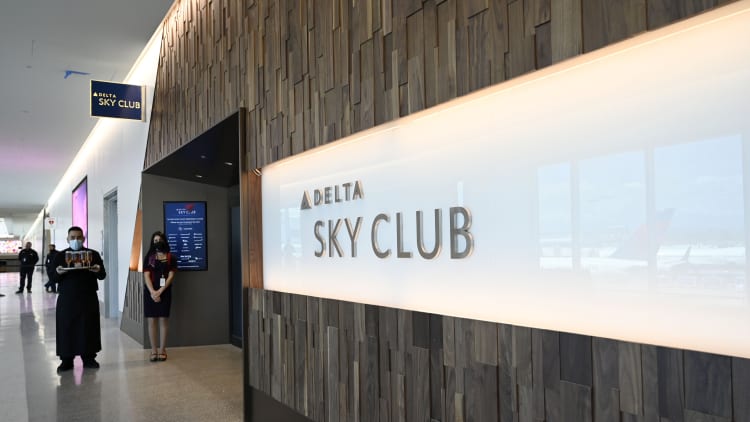
Some of American’s challenges are fairly recent. A federal judge in 2023 blocked American’s regional tie-up with JetBlue Airways, leaving it without a partner in key, wealthy markets like Boston and New York, where United and Delta had made inroads.
United this year scooped up a partnership with JetBlue that allows customers to earn and burn miles on each others airline, but stops short of coordinating schedules or routes. It took effect on Thursday, as American was reporting its third-quarter results.
American dominates its fortress hubs in Dallas and Charlotte, North Carolina, profitable operations, though it has fallen behind in the Northeast. Other companies have looked to the Sun Belt for growth as the population there grew.
United and Delta executives have credited some of their success to having lots of flights in big coastal hubs with affluent travelers, though United has also built up flying in key markets like Denver, Houston and Chicago.
‘Generational lead’
An American Airlines Airbus A321-231 airplane taxis to depart from San Diego International Airport to Dallas at sunset on November 22, 2024 in San Diego, California.
Kevin Carter | Getty Images News | Getty Images
While American has been reluctant to make big investments, United’s CEO Kirby earlier this month told investors that the airline is plowing more than $1 billion a year into improving customer experience.
United recently started flying planes with free Wi-Fi provided by SpaceX’s Starlink, following Delta and JetBlue in making the service complimentary. American plans to roll out complimentary Wi-Fi next year for most of its fleet.
United said such investments take years.
“We have built up a generational lead on this front,” United’s chief commercial officer, Andrew Nocella, said in an interview, adding that new products are coming in the next few years. (He declined to provide details.) “We think it’s substantial, and I don’t want to give an inch of that ground up, no matter what our competitors do to innovate over the next decade.”
Some customers, however, continue to value the convenience American offers them, and have remained loyal.
Todd Bryan, 41, who has Executive Platinum status on American, said he chooses the carrier in large part because it has the most frequencies out of where he lives, in Fayetteville, Arkansas.
The 41-year-old sales account manager who works in the consumer packaged goods industry, said he gets upgraded on most of his flights, but he has noticed that American has been more aggressive about offering buy-ups with cash or miles.
Even though he’s usually at the top of the list, he now considers taking the offer instead of gambling on a free upgrade on personal trips if “it feels cheap enough that I assume someone else would buy it too.”








Business
India opposes China-led IFD pact’s inclusion; flags risks to WTO framework and core principles – The Times of India
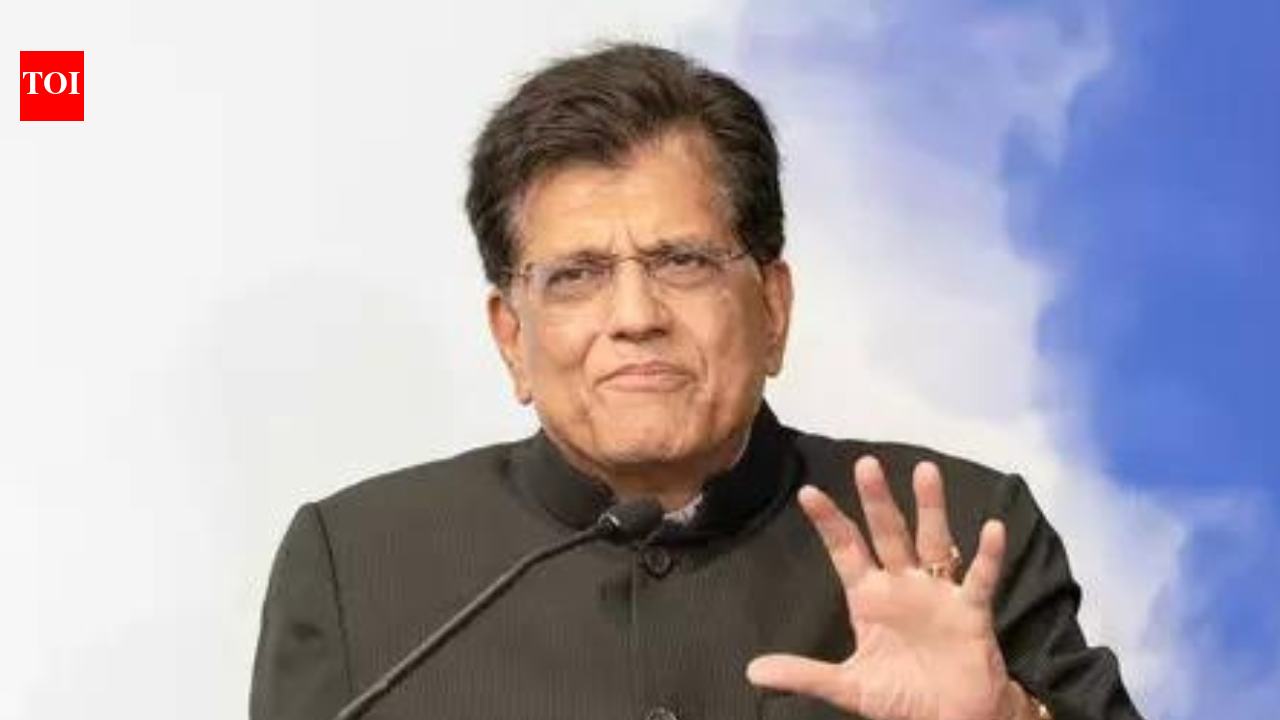
India on Saturday said it has strongly opposed the China-led Investment Facilitation for Development (IFD) Agreement being incorporated into the World Trade Organisation (WTO) framework, flagging concerns over its systemic implications, PTI reported.The issue was raised at the ongoing 14th ministerial conference (MC14) of the WTO in Yaounde, Cameroon, where Commerce and Industry Minister Piyush Goyal said such a move could weaken the institution’s foundational structure.“Incorporation of the IFD agreement risks eroding the functional limits of the WTO and undermining its foundational principles,” Goyal said in a social media post.“At #WTOMC14, drawing inspiration from Mahatma Gandhi ji’s philosophy of Truth prevailing over conformity, India showed the courage to stand alone on the contentious issue of the IFD Agreement and did not agree to its incorporation into the WTO framework as an Annex 4 Agreement,” he said.Annex 4 of the WTO Agreement contains Plurilateral Trade Agreements that are binding only on members that have accepted them, unlike multilateral agreements which apply to all members.Goyal said that as part of WTO reform discussions, members are deliberating on guardrails and legal safeguards for plurilateral agreements before integrating any such outcomes into the framework.“In view of the systemic issue at hand, India showed openness to have good faith, comprehensive discussions and constructive engagement under the WTO Reform Agenda,” he added.India had also opposed the pact during the WTO’s 13th ministerial conference (MC13) in Abu Dhabi.The Investment Facilitation for Development proposal was first mooted in 2017 by China and a group of countries that rely significantly on Chinese investments, including those with sovereign wealth funds. The agreement, if adopted, would be binding only on signatory members.

Vijaypat Singhania, former Raymond chairman, Padma Bhushan awardee and noted aviator, has passed away.He died in Mumbai at the age of 87.His son Gautam Singhania, chairman and managing director of the Raymond Group, announced the death on microblogging platform X.A company spokesperson said Singhania passed away “peacefully” and his last rites will be performed on Sunday, reported PTI.A recipient of the Padma Bhushan, Vijaypat Singhania was known not only for his leadership at Raymond but also for his passion for aviation. He held a world record for achieving the highest altitude in a hot air balloon.He led Raymond as chairman for around two decades until 2000, after which he handed over the reins of the company to Gautam Singhania. He had also transferred his entire 37 per cent stake in the company to his son.Vijaypat Singhania and Gautam Singhania were later involved in legal disputes, which were subsequently resolved.
Business
Middle East crisis: Jubilant FoodWorks reports some Domino’s outlets affected by LPG shortage – The Times of India

Jubilant FoodWorks Ltd (JFL), which operates Domino’s Pizza and Dunkin Donuts in India, has reported constraints in LPG cylinder supplies across parts of its store network due to the ongoing West Asia war, according to ET.In a filing to the BSE, the company said, “Operational impact at this stage is limited and being actively managed. The company is taking several steps to conserve LPG and working overtime to move to alternate energy sources like electricity and piped natural gas (PNG).”It added that it is in continuous touch with oil marketing companies to track developments and respond to the evolving situation. “The company is in constant engagement with oil marketing companies (OMCs) to remain apprised of the latest developments and plan operational responses accordingly, given the rapidly evolving nature of the situation,” the filing said.The company noted that it is closely monitoring the situation as supply disruptions persist.The impact is being felt across the restaurant industry, with several chains facing similar challenges due to LPG shortages.On March 10, the National Restaurant Association of India (NRAI) had advised its five lakh members to consider shorter operating hours, reduce items requiring long cooking times or deep frying, and adopt fuel-saving measures such as using lids while cooking, in view of supply constraints linked to the Gulf war.


Hubert Kós leads Texas men to second straight NCAA swim title

Pakistan rejects India’s remarks on Shia community, calls them ‘cynical, diversionary’

What’s next for teams eliminated from Sweet 16: Recruits, transfer portal, more

-
 Business1 week ago
Flipkart group CFO to leave co amid IPO plans – The Times of India
-

 Fashion1 week ago
China’s textile & apparel exports surge 17% to $50 bn in Jan-Feb 2026
-

 Sports1 week ago
Rating Adidas’ 2026 World Cup away shirts: Argentina, Spain, Mexico and more
-

 Sports1 week ago
American Conference Commissioner Tim Pernetti thanks Trump for Army-Navy game executive order
-
Tech1 week ago
The Corsair 4000D RS PC Case Keeps Your System Cool
-

 Tech1 week ago
Gamers Hate Nvidia’s DLSS 5. Developers Aren’t Crazy About It, Either
-
 Business5 days ago
Property Play: Home flippers see smallest profits since the Great Recession, real estate data firm says
-
 Business1 week ago
‘Marriage penalty’ in Washington state’s new millionaire tax stirs debate