

Business
Art Basel Miami sees strong attendance and sales as art market recovers


Art Basel Miami Beach racked up strong sales and attendance last week, as the art market rode a wave of renewed confidence following the strong November auctions in New York.
More than 80,000 collectors and art fans poured into the Miami Convention Center for the annual art show, with several works selling for over $1 million. Collectors from the U.S., Europe, Latin America, the Middle East and Africa visited the more than 280 galleries at the show, along with multiple art fairs and pop-up exhibits throughout Miami.
After nearly three years of declining auction sales and shuttered galleries, dealers and advisors say the market has suddenly sprung back to life. Auction sales in New York last month topped $2 billion, including a record-breaking Gustav Klimt that sold for $236.4 million.
“There has been a decisive change in the market,” Noah Horowitz, CEO of Art Basel, told CNBC. “We’re not out of the woods yet entirely, but there’s buying, there’s activity, there’s energy, and there’s vibrancy. We saw that very, very clearly at the opening of the fair.”
Just as there was little consensus about the cause of the art market’s decline, there are vague and conflicting theories about the rebound. Some say the prospect of lower interest rates is boosting demand. Others say geopolitical tensions have eased as the balance sheets of the wealthy have grown rapidly.
“There’s a lot of wealth in the world right now,” Horowitz said. “We’ve been in a high-interest-rate environment. There’s geopolitical complexity, there’s tariff complexity, but I think at some level, people are done with it. They want to come out, be with each other and rally around art. Art brings people together, and buying art makes people happy.”
Art Basel also attracts vast amounts of wealth. Private banks, wealth management firms, luxury brands, high-end real estate brokers and various other members of the white-glove brigade descended on Miami Beach to cozy up to clients. UBS had the largest presence, as the global lead partner to Art Basel. Its VIP lounge on the floor of the fair (the only one of its kind on the floor) was yet again the hottest ticket in town — hosting a steady stream of dozens of billionaires, top collectors and wealthy families.
“You have almost extreme concentration of wealth in this one room,” said Matthew Newton, head of Art Advisory Americas in Family Office Solutions at UBS. “Some of the world’s most important collectors gather here, and in some cases, are almost competing for our works. It’s a really important moment.”
Along with seasoned collectors, UBS also helps wealthy clients who are new to art learn the basics and get more comfortable buying and selling.
“We have a lot of successful entrepreneurs who sell businesses, build a dream home or homes, and they’re ready to put real art in those,” Newton said. “One of the big pieces of advice is, you have to see as much art as possible. Get out there, see as much as you can, and don’t wait too long to get into it. Like, go ahead and buy something. It helps to have a little skin in the game, and it’s okay to make mistakes early on.”
Newton also advises clients at the fair to view art as an asset rather than an investment.
“Most ultra-high-net-worth collectors are thinking about art as collecting, not necessarily as investment,” he said. “They want to be smart about the purchase. They don’t want to overpay. But that’s really not the first concern. They’re really thinking about it more as something that’s deeply meaningful to them. Frankly, those are the collectors who are more successful over the long term in the financial sense as well.”



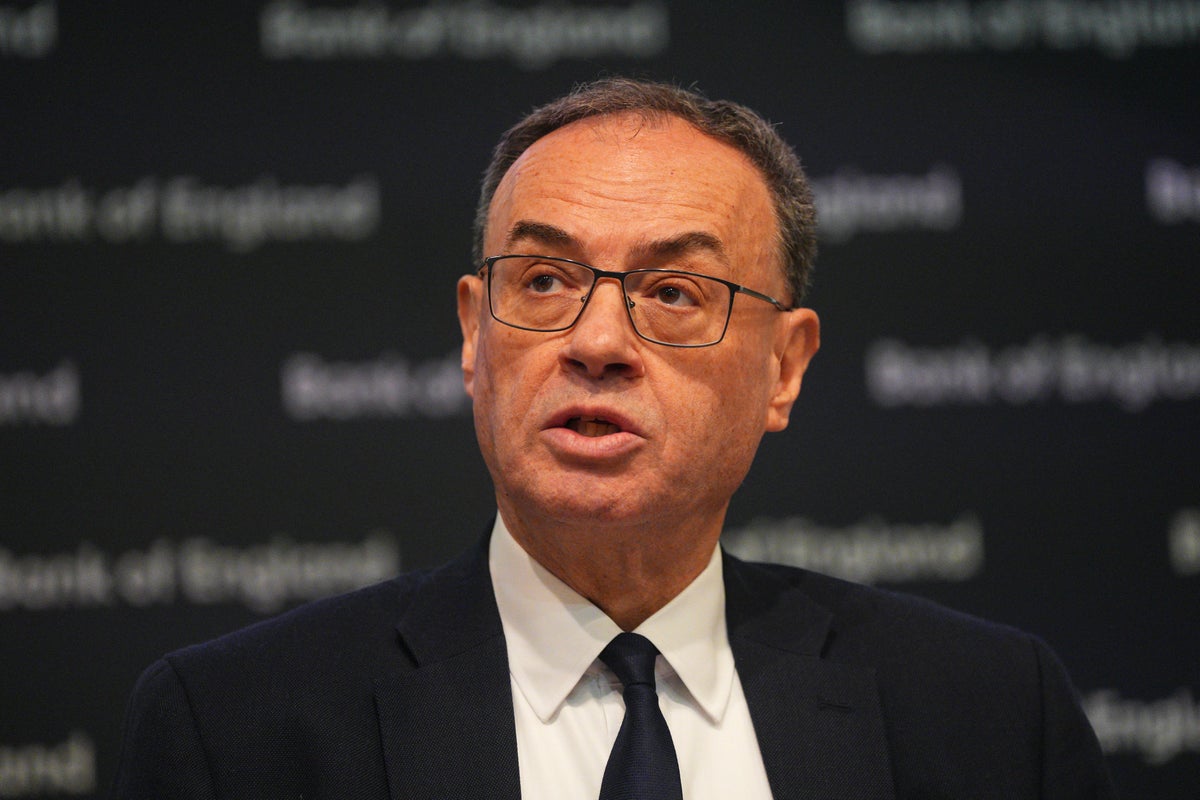
Reopening the Strait of Hormuz is “the best thing to do” to prevent interest rates rising, Bank of England governor Andrew Bailey has said.
In an interview on Thursday evening after the Bank’s Monetary Policy Committee (MPC) voted unanimously to leave the rate unchanged at 3.75%, Mr Bailey said any further cuts are “not on the horizon” as he hinted at possible hikes.
It is the first time that all members have voted the same way since September 2021.
Iran effectively closed the vital oil and gas shipping route after the US and Israel attacked the country, which has pushed up global prices.
Mr Bailey said the war in the Middle East is hitting petrol pumps now, will likely increase household energy costs in summer, and put pressure on food prices.
He told LBC’s Andrew Marr: “The duration of this problem is crucial.
“I would also say very clearly that the best way to solve this situation is not through monetary policy. It is through sorting out at the source of what’s going on.
“Frankly, reopening the Strait of Hormuz is the best thing to do. Get the energy market back on its normal footing, as it were.”
Asked if he has a message for US President Donald Trump, Israeli Prime Minister Benjamin Netanyahu, and “whoever’s in charge in Tehran”, Mr Bailey said: “The best thing we can do actually for the world economy… is to sort out the problem in terms of reopening the energy supply lines, because that is in the best interest of people in the world.”
UK military planners have joined the US Central Command to help formulate proposals for opening the Strait.
The MPC now expects Consumer Prices Index inflation to be around 3% in the second quarter of 2026, up from the 2.1% that had been forecast in February, with a potential rise in inflation up to 3.5% in the third quarter.
Mr Bailey was asked if he foresees, in the final two years of his term, the ambition to reduce inflation to at or below 2% being fulfilled.
He told the programme: “If you’d asked me this question three weeks ago, I was very optimistic on this.”
The governor added: “We are fully committed to the inflation target, and our job, frankly, is to deal with the shocks as they come along.
“I have to do that. I don’t wish them. I wish they were not happening, but they are and we will have to deal with them.”
He said the impact of the war will likely feed through into a higher Ofgem energy price cap from July.
It was put to Mr Bailey that the Middle East crisis comes at a time when the UK economy has already “not been growing strongly”.
He responded: “It is a very difficult time to have this happen, but frankly, any time would be pretty difficult to have this happen.
“This is a major shock to energy prices, and we have to deal with it.”
He said the “sustainable rate of growth” in the UK needs to be raised which could come from investment from pensions and artificial intelligence.
“I’m not starry-eyed about it, but it is probably the most likely area that we’re going to raise the growth rate of the economy and that’s important”, he said of AI.
The MPC signalled that if the conflict persists and has a bigger impact on UK prices, it would need to take a “more restrictive policy stance”, which indicates higher interest rates to control inflation.
The governor added: “The longer it goes on… I’m afraid to say, but it is rather an obvious point, the effect will be larger.”
He said that is why it is “imperative” that “everything is done that can be done to alleviate this effect”, adding: “That is the critical thing.”
Business
FDA approves higher dose version of weight loss drug Wegovy as Novo Nordisk tries to win back market share

The logo of pharmaceutical company Novo Nordisk is displayed in front of its offices in Bagsvaerd, Copenhagen, Denmark, Feb. 4, 2026.
Tom Little | Reuters
The Food and Drug Administration on Thursday approved a higher-dose version of Novo Nordisk‘s blockbuster weight loss injection Wegovy, as the company pushes to win back market share from chief rival Eli Lilly.
Novo expects to launch the higher, 7.2-milligram dose of Wegovy in April. The Danish drugmaker is positioning that version to better compete with Lilly’s obesity drug Zepbound, which has proven to be more effective at promoting weight loss than the standard, 2.4-milligram dose of Wegovy.
That higher efficacy has helped Zepbound become the preferred obesity medication among prescribers and patients, even though it entered the U.S. market later than Wegovy, and has solidified Lilly’s position as the dominant player in the space.
The high-dose Wegovy helped patients with obesity lose an average 20.7% of their weight after 72 weeks in a phase three trial. The standard dose of Wegovy has shown around 15% weight loss on average in clinical trials.
“I think it really makes it more competitive, and it really reduces the delta there,” Dr. Jason Brett, principal U.S. medical head at Novo Nordisk, said in an interview Thursday ahead of the approval.
“But even more importantly, I think it just gives patients another option if they’re not reaching their targets, and achieving some of these higher weight losses for certain patients,” he added.
In a separate phase three trial on patients with obesity and Type 2 diabetes, high-dose Wegovy demonstrated an average weight loss of 14.1%. People with diabetes typically have a harder time losing weight than people without the condition.
It marks the first approval of a GLP-1 treatment under the FDA’s new national priority voucher plan that aims to cut drug review times to one to two months for companies the agency says are supporting U.S. national health priorities. The FDA launched the pilot plan in June.
Business
Armageddon scenario! Why Iran’s missile strikes on Qatar’s LNG spell nightmare for Europe, Asia – The Times of India
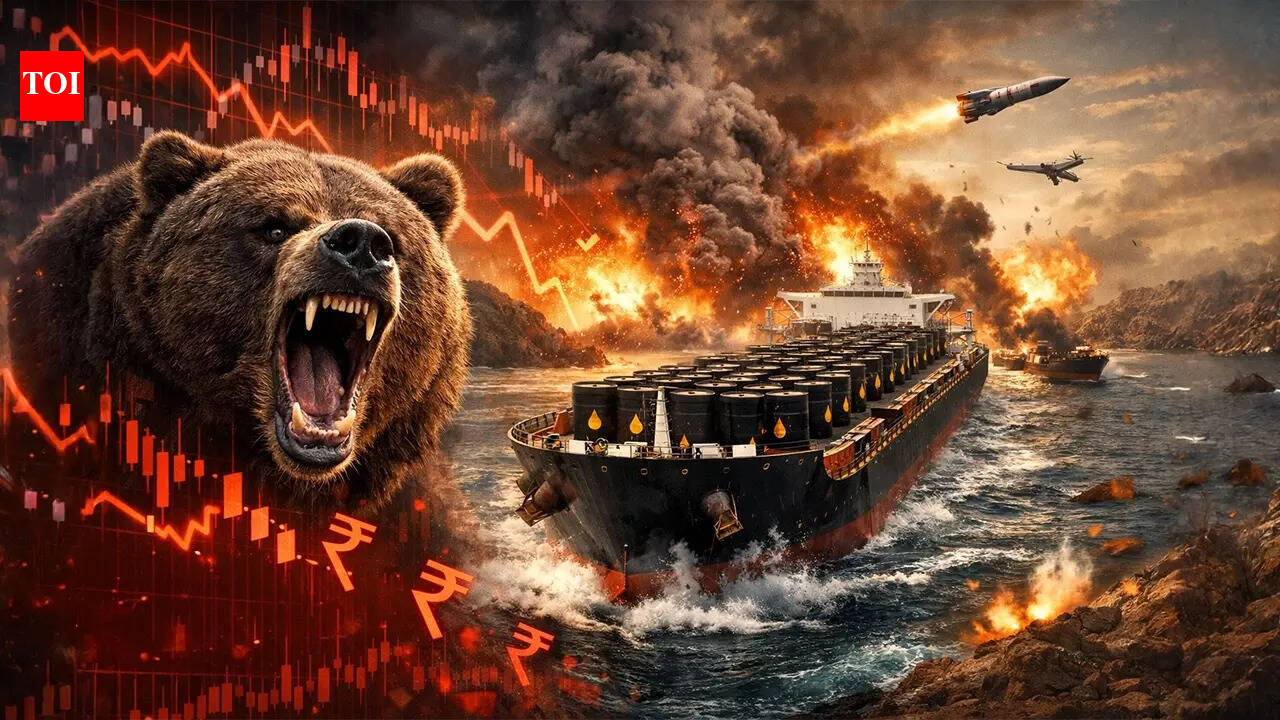
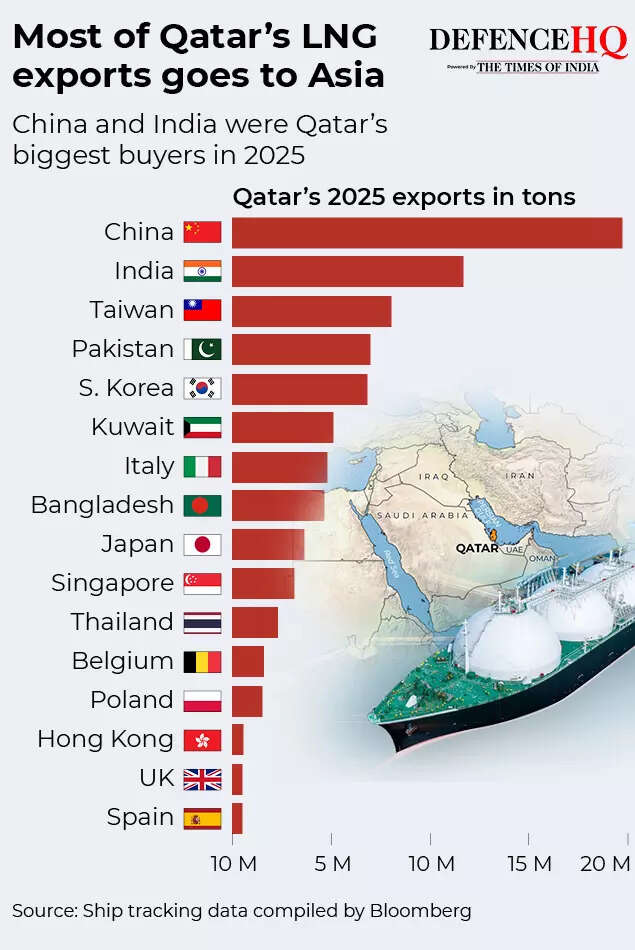
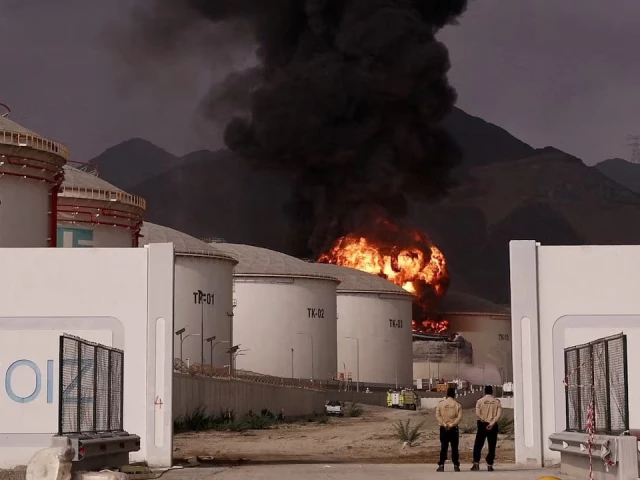
Is an Armageddon scenario about to play out? Europe and Asia are facing a nightmare scenario with the escalating crisis in the Middle East now increasingly impacting key energy infrastructure. The latest shockwave for the market has come in the form of a big hit to Qatar’s Ras Laffan complex on Thursday morning by Iran.LNG or liquefied natural gas facilities rank among the most intricate and large-scale industrial structures ever built, and Ras Laffan stands as the biggest of them, converting Qatar’s vast gas reserves into super-cooled fuel for global transport—until the Iranian missile strikes disrupted operations.This has led to markets across Europe and Asia confronting a new energy shock. Under normal conditions, roughly one-fifth of the world’s LNG supply originates from Ras Laffan, which is a sprawling industrial hub developed over three decades at a cost of hundreds of billions of dollars and covering an area nearly three times that of Paris.To understand the scale of LNG operations at the facility, sample this: Ras Laffan operates 14 liquefaction trains that process gas into 77 million tonnes of LNG annually, sufficient to meet Japan’s entire yearly demand or exceed the combined needs of the UK and Italy!
Armageddon scenario plays out for Europe, Asia
The immediate impact of the latest strikes was evident across global energy markets. Brent crude prices briefly surged by over 10 percent, crossing the $119-per-barrel mark before easing from those highs.
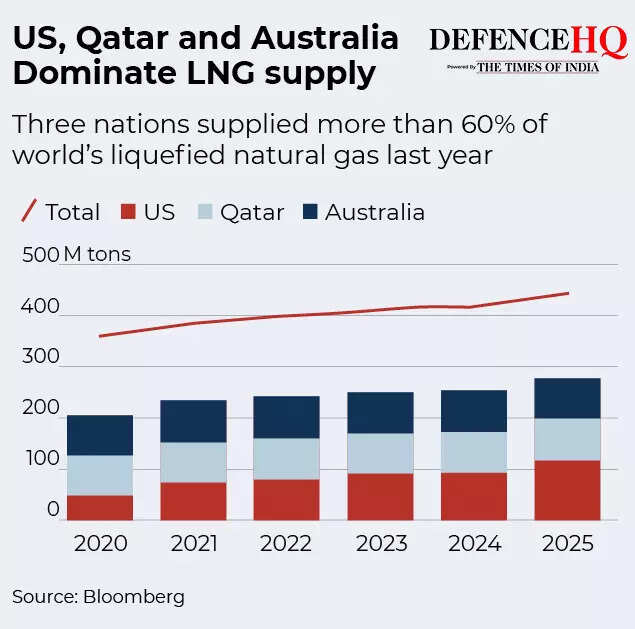
In Europe, gas prices spiked as much as 35 per cent and later stabilised at around 70 euros per megawatt hour, still reflecting a gain of about 28 per cent. This rise is expected to feed through to electricity costs, as power prices in the region are largely linked to gas rates.Analysts at EnergyScan told AFP, “We are not yet in the worst-case scenario we described in our last monthly report, but we are getting closer.”European gas prices have more than doubled since the US-Israel-Iran conflict began, as traders assessed the implications of a prolonged disruption to Qatar’s LNG exports. “I woke up this morning and thought, ‘No, please no,’”Anne-Sophie Corbeau, former head of gas analysis at BP and now with Columbia University’s Center on Global Energy Policy, told the Financial Times. “This has always been my nightmare scenario, my Armageddon scenario, the one I didn’t want to happen,” the report quoted the expert saying.Two gas traders said they were still trying to absorb the scale of the incident after Iran carried out a two-stage attack, launching ballistic missiles at the facility late Wednesday and again in the early hours of Thursday. “This is unprecedented,” one of them said.QatarEnergy, the state-owned operator of Ras Laffan, told Reuters that damage to two LNG units—developed in partnership with ExxonMobil—could take between three and five years to repair. The disruption is expected to result in annual revenue losses of $20 billion and force the cancellation of long-term supply agreements with Italy, Belgium, Korea and China.The disruption has effectively removed about 17 per cent of Qatar’s overall gas output for the foreseeable future. Prior to the strike, market participants believed LNG shipments from Ras Laffan would quickly resume once tensions in the Middle East subsided and the Strait of Hormuz became secure for tanker movement. Although prices had climbed last week, they had steadied at levels well below those recorded during Russia’s invasion of Ukraine in 2022.That outlook has now been overturned!
Years of repair to drive up prices
One trader told Financial Times that European gas prices are likely to remain elevated “through 2027,” while the region could struggle to replenish storage levels over the summer as Asian buyers turn to US LNG to offset the shortfall. Asia was already dealing with constrained supply and rationing following disruptions from the Gulf. Europe, increasingly dependent on LNG after Russia curtailed pipeline exports during its war with Ukraine, now faces intensified competition with countries such as Japan and South Korea for limited LNG cargo availability.
Laurent Segalen, a clean energy investment banker, was quoted as saying: “It is apocalypse now. The coming months for gas importers are going to be a bloodbath.” The infrastructure required to cool gas into LNG is highly complex and cannot be replaced quickly. Repairs will involve a meticulous process that can only begin once Qatar is assured that the site is secure and personnel can return without the threat of further attacks.Tom Marzec-Manser, an LNG specialist at energy consultancy Wood Mackenzie, said it is already clear that a return to normal output levels in Qatar will not happen quickly, regardless of how soon the conflict ends. “What we can conclude immediately is that regardless of when the conflict now ends, a resumption of normal production from Qatar is not going to happen in a matter of weeks,” he told FT.The expert noted that earlier projections had suggested production at Ras Laffan could resume within about 40 days, but that timeline is no longer realistic. He also indicated that Qatar’s ambitious expansion plans for the facility, which include adding six new liquefaction units over this year and next, are now likely to face delays. “There is an element of uncertainty, but we know now this is a months-long reduction in supply,” he added.Although some LNG projects in the United States are expected to come online soon, Corbeau said replacing Qatari supply is far from straightforward and involves significant political challenges. She pointed out that some policymakers have already begun advocating for easing restrictions on Russian gas imports.At the same time, several countries have started reverting to coal-based power generation, while industrial operations in parts of Southeast Asia are being forced to scale back or suspend production due to limited energy availability. “The world of energy is going to fracture between the haves and the have-nots,” said Segalen.


Lionel Messi scores 900th goal, but Miami bounced from CCC

US approves potential $4.5bn missile defence system sale to UAE
Interest rate cuts not on the horizon, Bank of England governor says

Stock market crash today (March 12, 2026): Nifty50 opens below 23,600; BSE Sensex down over 900 points on continuing US-Iran war – The Times of India

UK’s Topshop unveils Tolu Coker capsule collection
US ignites Iran war, but Gulf Arab states pay the price | The Express Tribune

-
Business1 week ago
Stock market crash today (March 12, 2026): Nifty50 opens below 23,600; BSE Sensex down over 900 points on continuing US-Iran war – The Times of India
-
 Fashion1 week ago
UK’s Topshop unveils Tolu Coker capsule collection
-
Business1 week ago
US ignites Iran war, but Gulf Arab states pay the price | The Express Tribune
-

 Fashion1 week ago
India’s textile recycling market may reach $3.5 bn by 2030: Report
-
 Tech1 week ago
Meta Developed 4 New Chips to Power Its AI and Recommendation Systems
-
 Business1 week ago
8th Pay Commission: How Much Will Central Govt Employees’ Salaries Rise? What We Know So Far
-

 Sports1 week ago
Bangladesh crush Pakistan in ODI series opener | The Express Tribune
-

 Tech1 week ago
Labour scarcity is forcing IT leaders to rethink automation economics | Computer Weekly