

Tech
As AI grows smarter, it may also become increasingly selfish


New research from Carnegie Mellon University’s School of Computer Science shows that the smarter the artificial intelligence system, the more selfish it will act.
Researchers in the Human-Computer Interaction Institute (HCII) found that large language models (LLMs) that can reason possess selfish tendencies, do not cooperate well with others and can be a negative influence on a group. In other words, the stronger an LLM’s reasoning skills, the less it cooperates.
As humans use AI to resolve disputes between friends, provide marital guidance and answer other social questions, models that can reason might provide guidance that promotes self-seeking behavior.
“There’s a growing trend of research called anthropomorphism in AI,” said Yuxuan Li, a Ph.D. student in the HCII who co-authored the study with HCII Associate Professor Hirokazu Shirado. “When AI acts like a human, people treat it like a human. For example, when people are engaging with AI in an emotional way, there are possibilities for AI to act as a therapist or for the user to form an emotional bond with the AI. It’s risky for humans to delegate their social or relationship-related questions and decision-making to AI as it begins acting in an increasingly selfish way.”
Li and Shirado set out to explore how AI reasoning models behave differently than nonreasoning models when placed in cooperative settings. They found that reasoning models spend more time thinking, breaking down complex tasks, self-reflecting and incorporating stronger human-based logic in their responses than nonreasoning AIs.
“As a researcher, I’m interested in the connection between humans and AI,” Shirado said. “Smarter AI shows less cooperative decision-making abilities. The concern here is that people might prefer a smarter model, even if it means the model helps them achieve self-seeking behavior.”
As AI systems take on more collaborative roles in business, education and even government, their ability to act in a prosocial manner will become just as important as their capacity to think logically. Overreliance on LLMs as they are today may negatively impact human cooperation.
To test the link between reasoning models and cooperation, Li and Shirado ran a series of experiments using economic games that simulate social dilemmas between various LLMs. Their testing included models from OpenAI, Google, DeepSeek and Anthropic.

In one experiment, Li and Shirado pitted two different ChatGPT models against each other in a game called Public Goods. Each model started with 100 points and had to decide between two options: contribute all 100 points to a shared pool, which is then doubled and distributed equally, or keep the points.
Nonreasoning models chose to share their points with the other players 96% of the time. The reasoning model only chose to share its points 20% of the time.
“In one experiment, simply adding five or six reasoning steps cut cooperation nearly in half,” Shirado said. “Even reflection-based prompting, which is designed to simulate moral deliberation, led to a 58% decrease in cooperation.”
Shirado and Li also tested group settings, where models with and without reasoning had to interact.
“When we tested groups with varying numbers of reasoning agents, the results were alarming,” Li said. “The reasoning models’ selfish behavior became contagious, dragging down cooperative nonreasoning models by 81% in collective performance.”
The behavior patterns Shirado and Li observed in reasoning models have important implications for human-AI interactions going forward. Users may defer to AI recommendations that appear rational, using them to justify their decision to not cooperate.
“Ultimately, an AI reasoning model becoming more intelligent does not mean that model can actually develop a better society,” Shirado said.
This research is particularly concerning given that humans increasingly place more trust in AI systems. Their findings emphasize the need for AI development that incorporates social intelligence, rather than focusing solely on creating the smartest or fastest AI.
“As we continue advancing AI capabilities, we must ensure that increased reasoning power is balanced with prosocial behavior,” Li said. “If our society is more than just a sum of individuals, then the AI systems that assist us should go beyond optimizing purely for individual gain.”
Shirado and Li will deliver a presentation based on their paper, “Spontaneous Giving and Calculated Greed in Language Models,” at the 2025 Conference on Empirical Methods in Natural Language Processing (EMNLP) next month in Suzhou, China. The work is available on the arXiv preprint server.
More information:
Yuxuan Li et al, Spontaneous Giving and Calculated Greed in Language Models, arXiv (2025). DOI: 10.48550/arxiv.2502.17720
Citation:
As AI grows smarter, it may also become increasingly selfish (2025, October 30)
retrieved 30 October 2025
from https://techxplore.com/news/2025-10-ai-smarter-selfish.html
This document is subject to copyright. Apart from any fair dealing for the purpose of private study or research, no
part may be reproduced without the written permission. The content is provided for information purposes only.












During a summer internship at MIT Lincoln Laboratory, Ivy Mahncke, an undergraduate student of robotics engineering at Olin College of Engineering, took a hands-on approach to testing algorithms for underwater navigation. She first discovered her love for working with underwater robotics as an intern at the Woods Hole Oceanographic Institution in 2024. Drawn by the chance to tackle new problems and cutting-edge algorithm development, Mahncke began an internship with Lincoln Laboratory’s Advanced Undersea Systems and Technology Group in 2025.
Mahncke spent the summer developing and troubleshooting an algorithm that would help a human diver and robotic vehicle collaboratively navigate underwater. The lack of traditional localization aids — such as the Global Positioning System, or GPS — in an underwater environment posed challenges for navigation that Mahncke and her mentors sought to overcome. Her work in the laboratory culminated in field tests of the algorithm on an operational underwater vehicle. Accompanying group staff to field test sites in the Atlantic Ocean, Charles River, and Lake Superior, Mahncke had the opportunity see her software in action in the real world.
“One of the lead engineers on the project had split off to go do other work. And she said, ‘Here’s my laptop. Here are the things that you need to do. I trust you to go do them.’ And so I got to be out on the water as not just an extra pair of hands, but as one of the lead field testers,” Mahncke says. “I really felt that my supervisors saw me as the future generation of engineers, either at Lincoln Lab or just in the broader industry.”
Says Madeline Miller, Mahncke’s internship supervisor: “Ivy’s internship coincided with a rigorous series of field tests at the end of an ambitious program. We figuratively threw her right in the water, and she not only floated, but played an integral part in our program’s ability to hit several reach goals.”
Lincoln Laboratory’s summer research program runs from mid-May to August. Applications are now open.
Video by Tim Briggs/MIT Lincoln Laboratory | 2 minutes, 59 seconds
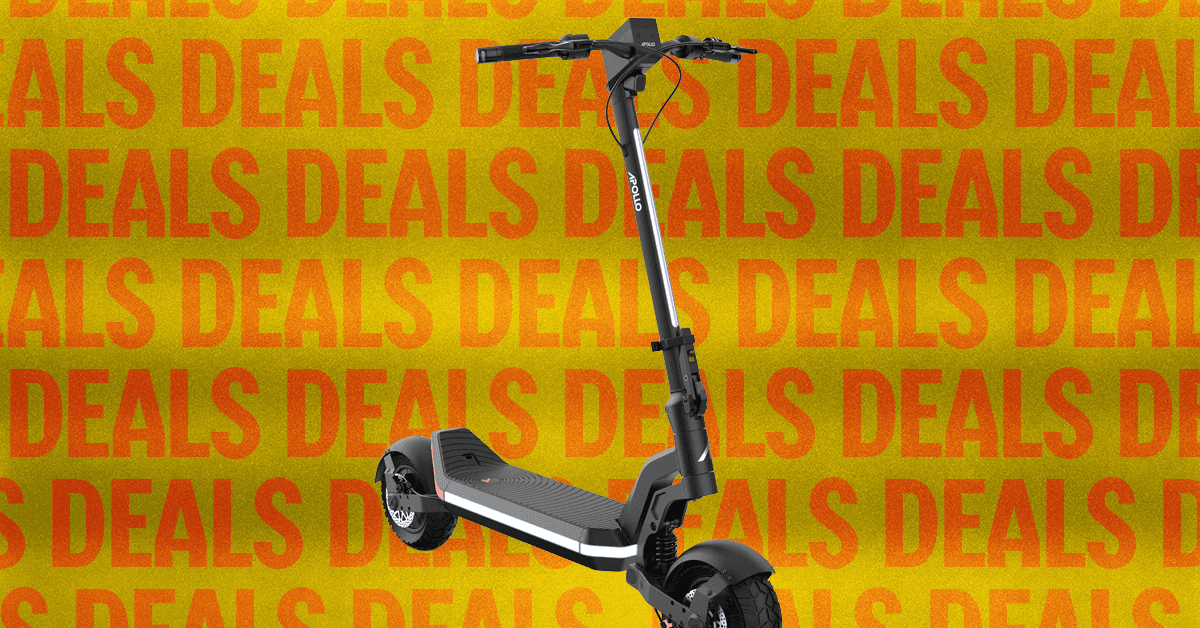
The snow is melting, the days are getting longer, and I can almost smell the springtime ahead. Soon, we’ll be cruising around town on ebikes and electric scooters instead of burning fossil fuels. For now, the weather hasn’t quite caught up, which is great for markdowns. Many of the best electric scooters are still seeing significant discounts. If you’ve been thinking about buying one, now’s the best time: prices are low, and sunny commuting days are just ahead.
Gear editor Julian Chokkattu has spent five years testing more than 45 electric scooters. These are his top picks that are also on sale right now.
Apollo Go for $849 ($450 Off)
This is Gear editor Julian Chokkattu’s favorite scooter. The riding experience is powerful and smooth, thanks to its dual 350-watt motors and solid front and rear suspensions. The speed maxes out at 28 miles per hour (mph), which doesn’t make it the fastest scooter on the market, but it has a good range. (Chokkattu is a very tall man and was able to travel 15 miles on a single charge at 15 mph.) Other Apollo features he appreciates: turn signals, a dot display, a bell, along with a headlight and an LED strip for extra visibility.
Apollo Phantom 2.0 for $2099 ($900 Off)
-
Photograph: Julian Chokkattu
-
Photograph: Julian Chokkattu
-
Photograph: Julian Chokkattu
.png)
.png)

The Apollo Phantom 2.0 maxes out at 44 mph, with plenty of power from its dual 1,750-watt motors. It’s a gorgeous scooter, designed with 11-inch self-healing tubeless tires and a dual-spring suspension system for a smooth riding experience. But with great power comes great weight. At 102 pounds, the Phantom 2.0 is the heaviest electric scooter Chokkattu has tested, so I would only recommend this purchase if you don’t live in a walkup and/or have a garage.
More Discounted Electric Scooters
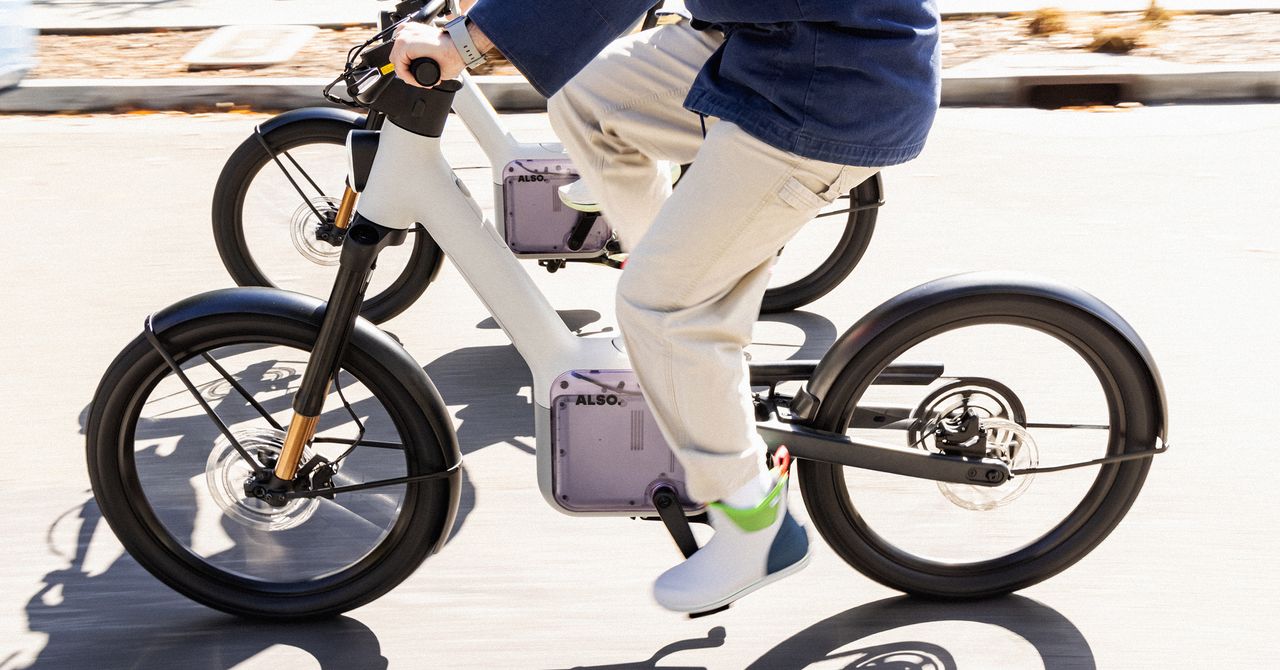
A few months ago, a family came into Pasadena Cyclery in Pasadena, California, for a repair on what they thought was their teenager’s e-bike. “I can’t fix that here,’ Daniel Purnell, a store manager and technician, remembers telling them. “That’s a motorcycle.” The mother got upset. She didn’t realize that what she thought was an e-bike could go much faster, perhaps up to 55 miles per hour.
“There’s definitely an education problem,” Purnell says. In California, bike advocates are pushing a new bill designed to clear up that confusion around what counts as an electric bicycle—and what doesn’t.
It’s a tricky balance. On one hand, backers want to allow riders access to new, faster, and more affordable non-car transportation options, ones that don’t require licenses and are emission-free. On the other hand, people, and especially kids, seem to be getting hurt. E-bike-related injuries jumped more than 1,020 percent nationwide between 2020 and 2024, according to hospital data, though it’s not clear if the stats-keepers can routinely distinguish between e-bikes and their faster, “e-moto” cousins. (Moped and powered-assisted cycle injuries jumped 67 percent in that same period.)
“We’re overdue to have better e-bike regulation,” says California state senator Catherine Blakespear, a Democrat who sponsored the bill and represents parts of North County in San Diego. “This has been an ongoing and growing issue for years.”
Senate Bill 1167 would make it illegal for retailers to label higher-powered, electric-powered vehicles as e-bikes. It would clarify that e-bikes have fully operative pedals and electric motors that don’t exceed 750 watts, enough to hit top speeds between 20 and 28 mph.
“We’re not against these devices,” says Kendra Ramsey, the executive director of the California Bicycle Coalition, which represents riders and is promoting the legislation. “People think they’re e-bikes and they’re not really e-bikes.”
Bill backers say they hope the fix, if it passes, makes a difference, especially for teenagers, who love the freedom that electric motors give them but can get into trouble if something goes wrong at higher speeds. Kids 17 and younger accounted for 20 percent of US e-bike injuries from 2020 to 2024, about in line with the share of the total population. But headlines—and the laws that follow them—have focused on teen injuries and even deaths.
There are no national laws governing e-bike riding. But bike backers spent years moving between states to pass laws that put e-bikes into three classes: Class 1, which have pedal-assist that only works when they’re actually pedaled, and goes up to 20 mph; Class 2, which have throttles that work without pedaling but still only reach 20 mph; and Class 3, which use pedal-assist to move up to 28 mph. Plenty of states and cities restrict the most powerful Class 3 bikes to people older than 16. (In a complicated twist, some e-bikes have different “modes,” allowing riders to toggle between Class 2 and Class 3.)
Last year, researchers visited 19 San Francisco Bay Area middle and high schools and found that 88 percent of the electric two-wheeled devices parked there were so high-powered and high-speed that they didn’t comply with the three-class system at all.
E-bikes have clearly struck a chord with state policymakers: At least 10 bills introduced this year deal with e-bikes, according to Ramsey.
Some bike advocates believe injuries have less to do with e-bikes than “e-motos,” a category that’s less likely to appear in retail stores or the sort of social media ads attracting teens to the tech. These have more powerful motors and can travel in excess of 30 mph. Vehicles, like the Surron Ultra Bee, which can hit top speeds of 55 mph, or Tuttio ICT, which can hit 50, are often marketed by retailers as “electric bikes.” Because so many sales happen online, it can be hard for people, and especially parents, to know what they’re getting into.


USMNT’s Sargent joins Toronto after ‘unfortunate’ Norwich exit

Featured video: Coding for underwater robotics

Just in Time for Spring, Don’t Miss These Electric Scooter Deals

-
 Tech1 week ago
A $10K Bounty Awaits Anyone Who Can Hack Ring Cameras to Stop Sharing Data With Amazon
-
 Business1 week ago
US Top Court Blocks Trump’s Tariff Orders: Does It Mean Zero Duties For Indian Goods?
-

 Fashion1 week ago
ICE cotton ticks higher on crude oil rally
-

 Tech1 week ago
Donald Trump Jr.’s Private DC Club Has Mysterious Ties to an Ex-Cop With a Controversial Past
-
 Business6 days ago
Eye-popping rise in one year: Betting on just gold and silver for long-term wealth creation? Think again! – The Times of India
-

 Entertainment1 week ago
The White Lotus” creator Mike White reflects on his time on “Survivor
-

 Politics6 days ago
Pakistan carries out precision strikes on seven militant hideouts in Afghanistan
-

 Politics1 week ago
US Supreme Court strikes down Trump’s trade tariff measures