

Fashion
Australia’s Myer posts strong H1 FY26 sales growth, up 24.5% YoY

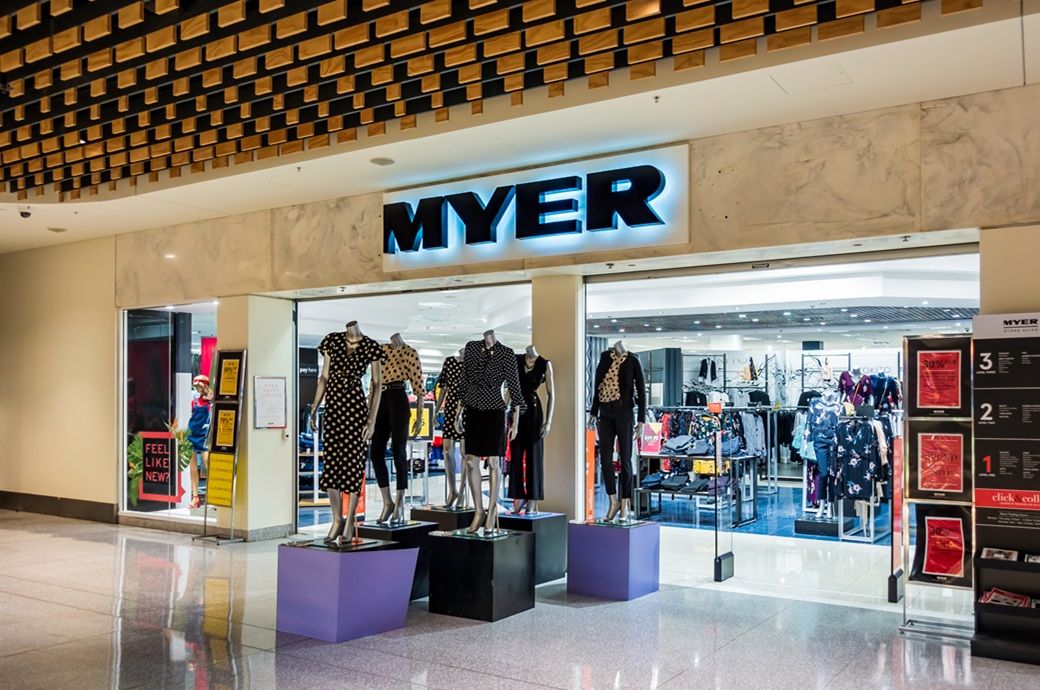
Operating gross profit surged 35.1 per cent to $886.0 million, while underlying earnings before interest and tax (EBIT) rose 10.5 per cent to $112.8 million. Underlying net profit after tax (NPAT) increased 21.7 per cent to $51.7 million, with statutory net profit after tax (NPAT) up 32.8 per cent to $40.3 million.
Myer has reported strong H1 FY26 results, with total sales rising 24.5 per cent to $2,279.5 million and NPAT up 21.7 per cent to $51.7 million.
Growth was supported by Apparel Brands integration and strategic investments.
Loyalty members reached 5.1 million.
Early H2 FY26 sales rose 1.7 per cent, though the company remains cautious amid macroeconomic pressures and weak discretionary demand.
The company maintained strong financial discipline, with cost of doing business at 27.9 per cent of total sales, within its FY26 target of around 29 per cent. Myer also reported a robust net cash position of $287 million, reflecting strong cash conversion and balance sheet flexibility, Myer said in a press release.
Myer’s ongoing transformation strategy continued to gain traction during the period, particularly through its customer engagement and brand expansion initiatives. The relaunched Myer one loyalty programme reached a record 5.1 million active members, supported by enhanced personalisation driven by AI-led data modelling.
The company also strengthened its product portfolio, introducing new exclusive brands and securing partnerships with global names such as Fenty Beauty, La Mer, Gap, and Topshop.
“Our H1 result reflects momentum across our business as we continue to implement the Myer Group Growth Strategy. Sales growth was achieved both in store and online, and our disciplined cost management allowed us to make targeted investments including in e-commerce, marketing, product, merchandise and supply chain to deliver on our plan,” said Olivia Wirth, executive chair at Myer.
“We achieved our biggest Black Friday on record for Myer Retail, and total sales for the group through the important trading months of December and January were in line with last year—a good outcome that demonstrates the resilience of the business,” added Wirth.
The integration of Myer Apparel Brands progressed steadily, with the company targeting at least $30 million in annualised synergies, alongside an additional $10 million from integrating sass & bide, Marcs, and David Lawrence.
Operationally, Myer continued to optimise its store network, closing 22 stores and opening 12 during the period, while advancing its omni-channel capabilities. The company is set to launch an expanded Myer Marketplace platform in May 2026.
Supply chain efficiency also improved, with 32 per cent of online orders fulfilled through third-party logistics and distribution centres, compared to 13 per cent a year earlier.
In the first seven weeks of the second half (H2), total sales grew 1.7 per cent YoY, with Myer Retail sales up 2.2 per cent, driven by strong performance in home and kids categories.
Despite the positive momentum, the company remains cautious amid macroeconomic uncertainty and pressure on discretionary spending.
“Given the current volatility in the wider macroeconomic environment and the ongoing pressures on discretionary spending, we are more focused than ever on delivering value for our customers,” added Wirth.
Fibre2Fashion News Desk (SG)








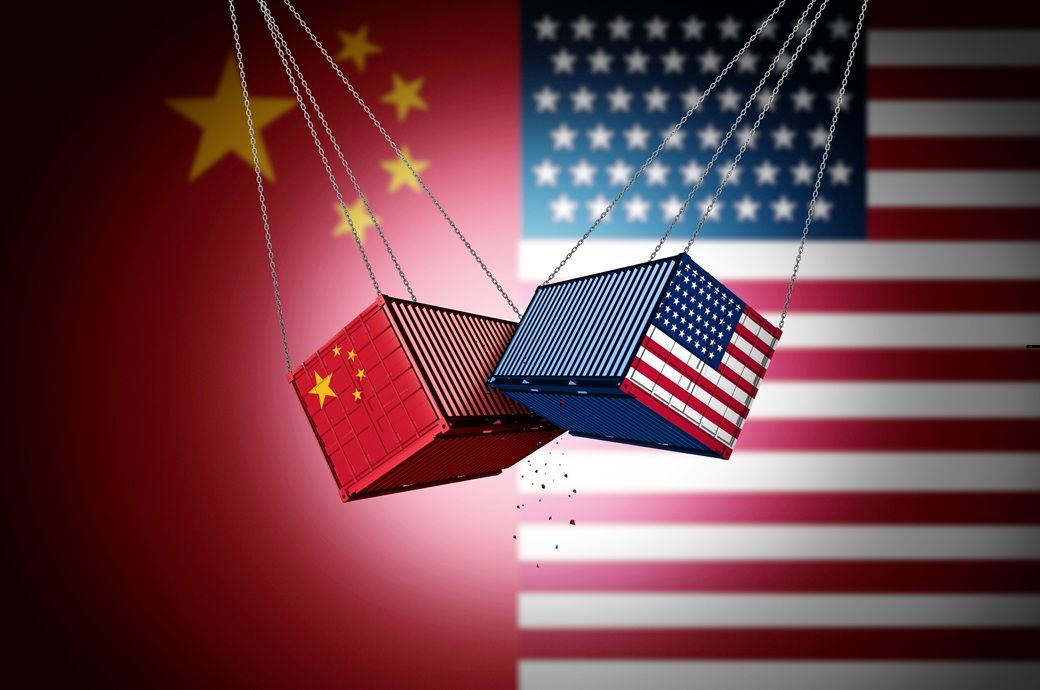
The move follows two separate Section 301 investigations by the Office of the US Trade Representative on March 12 and 13, targeting multiple economies, including China, over concerns such as “overcapacity” and alleged lapses in preventing imports linked to forced labour. Beijing expressed strong dissatisfaction and firm opposition to these actions.
China has launched two trade barrier investigations into the United States (US) measures following recent Section 301 probes by Washington.
The move targets actions affecting global supply chains and green trade.
Beijing opposed the US investigations and said it would take steps based on findings, signalling rising trade tensions between the two economies.
A ministry spokesperson said the probes were initiated in accordance with China’s Foreign Trade Law and related rules, adding that appropriate measures would be taken based on the findings.
Commerce Minister Wang Wentao also raised concerns over the US actions during a meeting with US Trade Representative Jamieson Greer on the sidelines of the 14th WTO Ministerial Conference in Yaoundé, Cameroon.
Fibre2Fashion News Desk (CG)
According to the informal agreement, there will be a new handling fee for each item entering the EU from non-EU countries and sent directly to EU consumers, to cover the extra cost of handling an ever-increasing number of individual parcels.
This will be paid by the same entity responsible for paying other customs charges for the same parcel, to avoid shifting the cost to consumers.
The European Parliament and European Council have reached a deal on a major reform of the EU Customs Code to address problems relating to e-commerce, safety of goods and efficiency.
A new handling fee will be charged for each item entering the EU from non-EU nations and sent directly to EU consumers.
The European Commission will establish the level of the fee and reassess it every two years.
The European Commission will establish the level of the fee and reassess it every two years. Member states will start collecting it as soon as the necessary information technology (IT) system becomes operational, and in any case no later than November 1, this year.
Under the new rules, sellers and platforms that facilitate distance sales of goods from non-EU countries directly to EU customers will be treated as importers. This will oblige them to provide customs authorities with all the necessary data, pay or guarantee any charges, and make sure that the goods comply with EU laws, an official release said.
These companies must be established in the EU or be represented by an EU-based entity having either authorised economic operator (AEO) or trusted trader status. This should prevent the use of shell companies.
To incentivise bulk shipments that are easier for customs authorities to check, non-EU country sellers and platforms are encouraged to operate warehouses in the EU. Their intra-EU client shipments would benefit from a lower handling fee, provided their goods were imported in collective packaging and large enough quantities to make customs checks more efficient.
Companies that repeatedly ignore EU rules could be punished with a fine of at least 1 per cent (and up to 6 per cent) of the total value of goods imported into the EU in the previous 12 months.
Additionally, customs authorities may suspend, revoke, or annul their trusted trader or AEO status and flag them as high-risk operators.
Import-export companies that follow the rules and agree to cooperate transparently with the customs authorities may benefit from a simplified ‘trust and check’ regime. This would initially require them to go through thorough vetting and grant customs authorities access to their electronic systems.
In exchange, their shipments would be checked less frequently and they would have more flexibility regarding the payment of duties and fees.
The current AEO qualification will remain in place to keep customs status accessible to smaller economic operators.
The reform also establishes a new customs data hub to be managed by the new EU Customs Authority (EUCA). It will be available for optional use by 2031 and mandatory by 2034.
The data hub will replace at least 111 software systems currently used by customs.
The provisional agreement needs to be officially approved by Parliament in plenary as well as by the EU Council, before it will become law.
Fibre2Fashion News Desk (DS)
This was driven by an 8.36-per cent YoY decline in import volume and a 7.76-per cent YoY decrease in average unit prices.
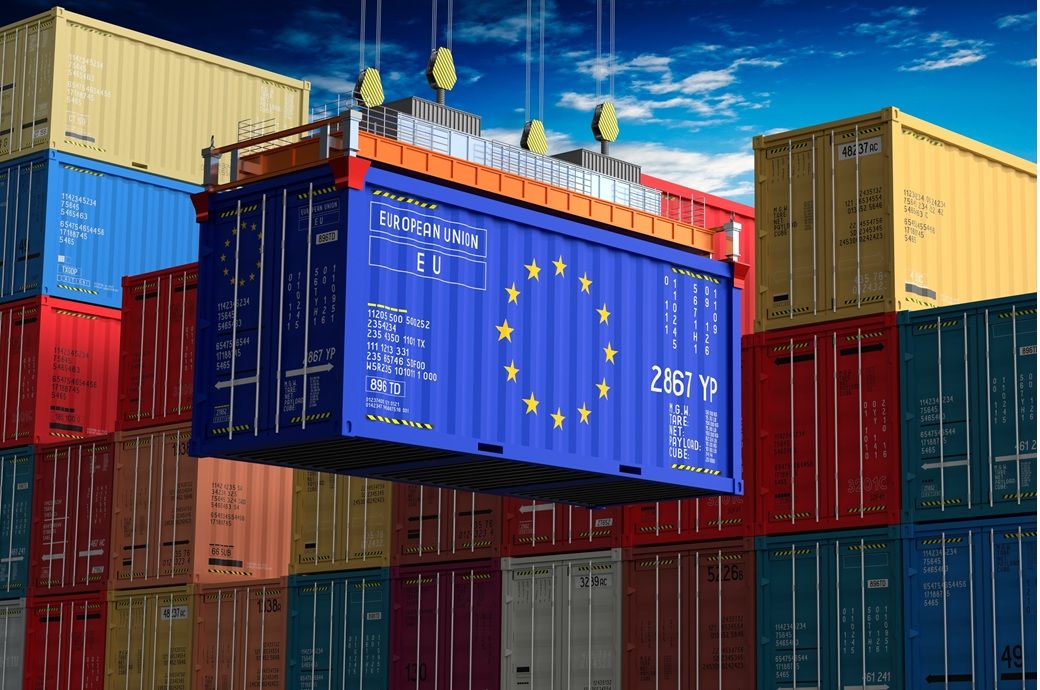
The EU’s apparel imports fell by 15.48 per cent YoY in January to €7.03 billion, according to Eurostat.
Bangladesh’s apparel exports to the EU fell to €1.43 billion in January—a 25.25-per cent drop in value.
China remained the top exporter of apparel to the EU (€2.22 billion), but still saw a 6.9-per cent decline YoY in value.
India, Pakistan, Vietnam and Cambodia also remained in negative territory.
Bangladesh’s apparel exports to the bloc fell to €1.43 billion in January—a sharp 25.25-per cent drop in value. It saw a 17.49-per cent YoY decrease in the quantity of goods shipped, coupled with a 9.41 per cent drop in the unit price per kilogram.
China remained the top exporter of apparel to the EU (€2.22 billion), but still saw a 6.9-per cent decline YoY in value. Its unit prices dropped by 8.01 per cent YoY, while its export volume grew a bit by 1.21 per cent YoY.
Turkey faced a severe hit with a 29.12-per cent YoY decrease in apparel export value to the EU in the month, totaling €619.98 million.
Other countries like India, Pakistan, Vietnam and Cambodia remained in negative territory, reflecting a broad-based slowdown in the European fashion retail market.
Fibre2Fashion News Desk (DS)


Venezuela’s Maduro thanks supporters in first online post from US prison

Global ‘No Kings’ protests target Trump and war on Iran

Arizona beats Purdue to make first Final Four since 2001

-
 Business1 week ago
Flipkart group CFO to leave co amid IPO plans – The Times of India
-

 Sports1 week ago
Rating Adidas’ 2026 World Cup away shirts: Argentina, Spain, Mexico and more
-

 Fashion1 week ago
China’s textile & apparel exports surge 17% to $50 bn in Jan-Feb 2026
-

 Sports1 week ago
American Conference Commissioner Tim Pernetti thanks Trump for Army-Navy game executive order
-
Tech1 week ago
The Corsair 4000D RS PC Case Keeps Your System Cool
-

 Tech1 week ago
Gamers Hate Nvidia’s DLSS 5. Developers Aren’t Crazy About It, Either
-

 Sports1 week ago
How to watch 2026 NCAA swimming and diving championships
-
 Business5 days ago
Property Play: Home flippers see smallest profits since the Great Recession, real estate data firm says