

Business
Banks open as tax gap hits Rs374b | The Express Tribune

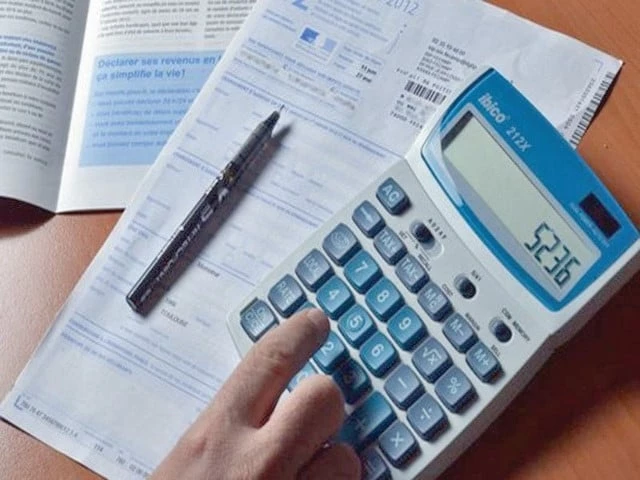
The FBR’s performance has deteriorated despite distributing 1,000 cars and increasing salaries by up to 400% to incentivise officers to perform better. Photo: AFP
ISLAMABAD:
As the tax shortfall against the downward revised target widened to Rs374 billion, the central bank on Friday ordered commercial banks to remain open on a holiday in the hope of collecting a few billion rupees more to minimise the yawning gap.
The Federal Board of Revenue (FBR) collected Rs7.15 trillion till the last working day of the month, falling short of the July-January target by a margin of Rs374 billion, according to provisional results compiled till Friday evening. Compared to the same period last year, the collection was nearly 12% or Rs743 billion higher till the last working day.
The FBR expects that the collection would improve by Rs50 billion on Saturday after more companies deposit money on account of super tax arrears.
However, against the original target, the shortfall was as high as Rs597 billion for the July-January period of the current fiscal year, according to the provisional figures. The International Monetary Fund (IMF) had downward adjusted the target due to the slowing economy and a low rate of inflation.
Due to the widening gap, despite recovering some arrears of the super tax after the Federal Constitutional Court judgment in favour of the FBR, the State Bank of Pakistan (SBP) on Friday issued instructions to banks to remain open on Saturday (today).
“To facilitate taxpayers in making over-the-counter (OTC) payments of government duties and taxes, it has been decided, on the request of the Federal Board of Revenue (FBR), that Saturday opening branches of all commercial banks (including NBP branches handling customs collection) shall observe extended working hours from 9am to 5pm,” according to a statement issued by the central bank.
In a functional tax and governance system, banks are not forced to keep their branches open to compensate for the FBR’s failures.
The central bank further stated that banks have been advised to keep their concerned branches open on January 31, 2026, for as long as required to facilitate the Special Clearing for Government transactions conducted by NIFT. Banks shall also ensure uninterrupted availability of their online payment channels, including internet banking, mobile applications, ATMs and other digital platforms, to facilitate the online payment of government duties and taxes, it added.
Prime Minister Shehbaz Sharif is heavily invested in improving the affairs of the FBR but, so far, he has not been able to achieve the desired results.
The Constitutional Court this week ruled in favour of the government in the super tax case, allowing the FBR to recover an estimated Rs190 billion from taxpayers. FBR officials said they have managed to recover at least Rs50 billion on account of super tax, while further recoveries were expected next month.
However, Dr Ikramul Haq, a renowned tax and legal expert, wrote that “the short order of the Federal Constitutional Court, validating super tax under sections 4B and 4C of the Income Tax Ordinance, has unsettled established constitutional jurisprudence governing the limits of parliamentary power to impose ‘taxes on income’.” He stated that the judgment’s paragraph alone collapses under the weight of its own internal contradiction. One cannot, in constitutional logic, exhaust a legislative entry and yet continue to derive further taxing power from the very same entry by merely altering nomenclature, he added.
The FBR’s performance has deteriorated despite distributing 1,000 cars and increasing salaries by up to 400% to incentivise officers to perform better.
The details showed that, against the revised target of Rs3.64 trillion, the FBR collected Rs3.5 trillion in income tax, falling short of the goal by Rs162 billion, though it was 12.5% higher than last year. Sales tax collection amounted to Rs2.44 trillion, falling short of the target by Rs207 billion, but was 11% higher than last year.
Federal excise duty collection remained at Rs462 billion, slightly higher than the revised target, and was also 18% more than the previous fiscal year’s collection. Customs duty collection fell short of the target by Rs30 billion and stood at Rs750 billion.
The FBR paid Rs339 billion in refunds, which were Rs25 billion higher than the previous fiscal year.
Against the monthly target of Rs1.03 trillion, the FBR collected Rs986 billion in January. However, the FBR expects that the collection would cross Rs1 trillion by Saturday evening as it continues to push companies to pay arrears of the super tax.



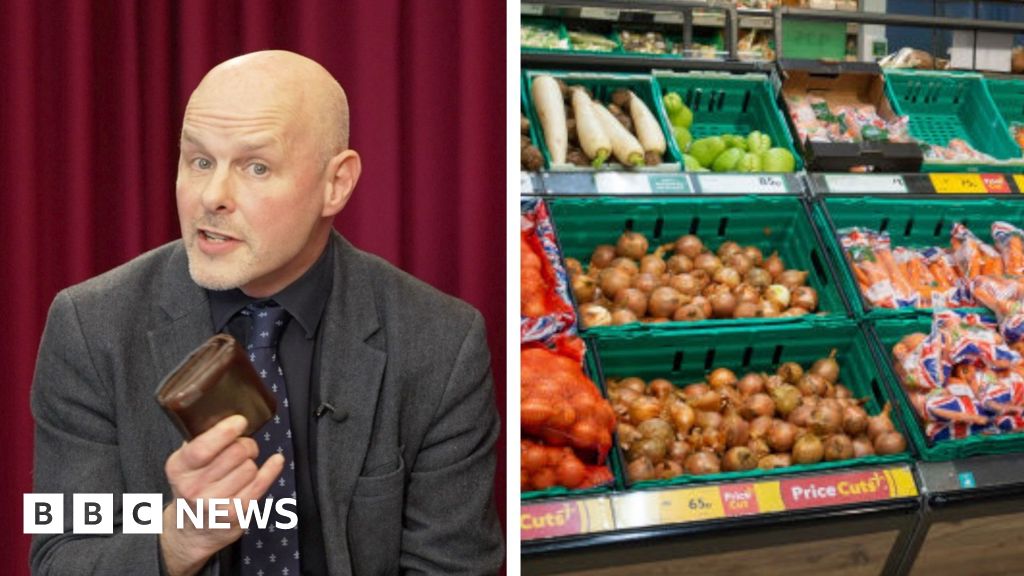
From fuel to mortgages, the BBC looks at how oil and gas prices could push up the cost of living.
Source link
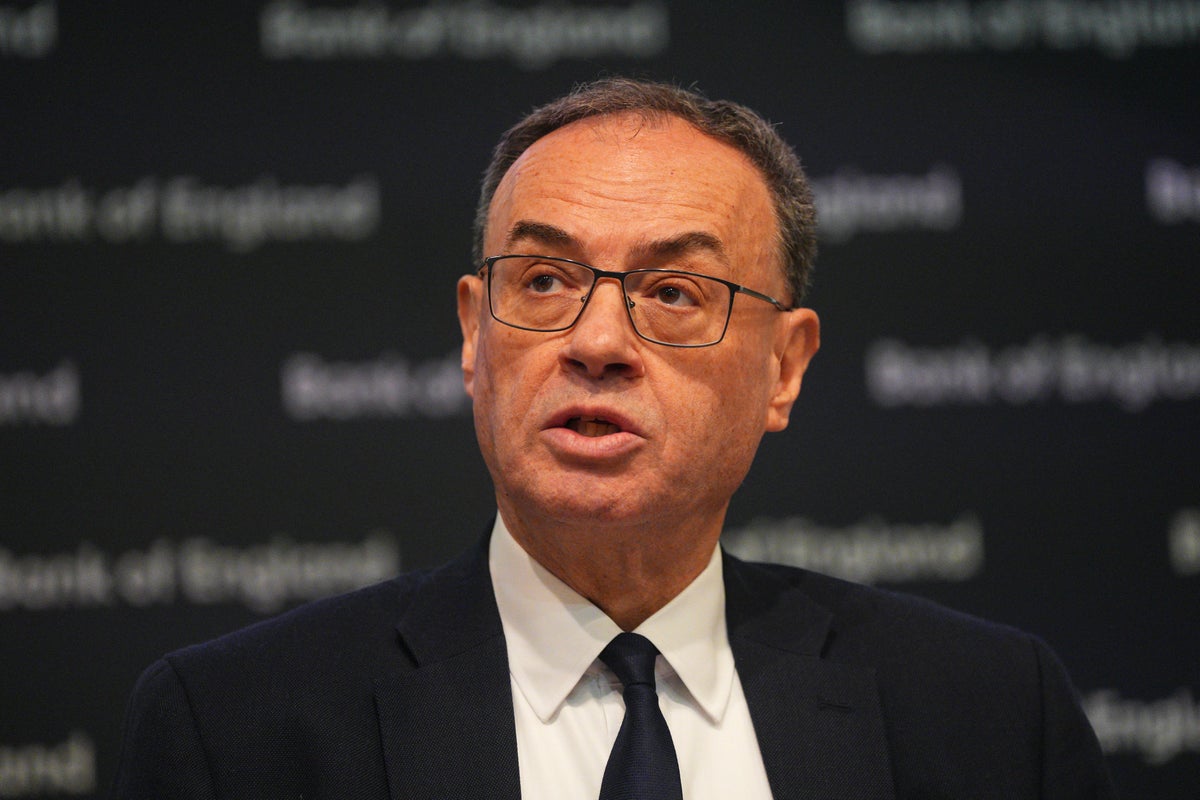
Reopening the Strait of Hormuz is “the best thing to do” to prevent interest rates rising, Bank of England governor Andrew Bailey has said.
In an interview on Thursday evening after the Bank’s Monetary Policy Committee (MPC) voted unanimously to leave the rate unchanged at 3.75%, Mr Bailey said any further cuts are “not on the horizon” as he hinted at possible hikes.
It is the first time that all members have voted the same way since September 2021.
Iran effectively closed the vital oil and gas shipping route after the US and Israel attacked the country, which has pushed up global prices.
Mr Bailey said the war in the Middle East is hitting petrol pumps now, will likely increase household energy costs in summer, and put pressure on food prices.
He told LBC’s Andrew Marr: “The duration of this problem is crucial.
“I would also say very clearly that the best way to solve this situation is not through monetary policy. It is through sorting out at the source of what’s going on.
“Frankly, reopening the Strait of Hormuz is the best thing to do. Get the energy market back on its normal footing, as it were.”
Asked if he has a message for US President Donald Trump, Israeli Prime Minister Benjamin Netanyahu, and “whoever’s in charge in Tehran”, Mr Bailey said: “The best thing we can do actually for the world economy… is to sort out the problem in terms of reopening the energy supply lines, because that is in the best interest of people in the world.”
UK military planners have joined the US Central Command to help formulate proposals for opening the Strait.
The MPC now expects Consumer Prices Index inflation to be around 3% in the second quarter of 2026, up from the 2.1% that had been forecast in February, with a potential rise in inflation up to 3.5% in the third quarter.
Mr Bailey was asked if he foresees, in the final two years of his term, the ambition to reduce inflation to at or below 2% being fulfilled.
He told the programme: “If you’d asked me this question three weeks ago, I was very optimistic on this.”
The governor added: “We are fully committed to the inflation target, and our job, frankly, is to deal with the shocks as they come along.
“I have to do that. I don’t wish them. I wish they were not happening, but they are and we will have to deal with them.”
He said the impact of the war will likely feed through into a higher Ofgem energy price cap from July.
It was put to Mr Bailey that the Middle East crisis comes at a time when the UK economy has already “not been growing strongly”.
He responded: “It is a very difficult time to have this happen, but frankly, any time would be pretty difficult to have this happen.
“This is a major shock to energy prices, and we have to deal with it.”
He said the “sustainable rate of growth” in the UK needs to be raised which could come from investment from pensions and artificial intelligence.
“I’m not starry-eyed about it, but it is probably the most likely area that we’re going to raise the growth rate of the economy and that’s important”, he said of AI.
The MPC signalled that if the conflict persists and has a bigger impact on UK prices, it would need to take a “more restrictive policy stance”, which indicates higher interest rates to control inflation.
The governor added: “The longer it goes on… I’m afraid to say, but it is rather an obvious point, the effect will be larger.”
He said that is why it is “imperative” that “everything is done that can be done to alleviate this effect”, adding: “That is the critical thing.”

new video loaded: The Effects of High Oil Prices
By Ben Casselman, Sutton Raphael, James Surdam, Joey Sendaydiego, Estelle Caswell and June Kim
March 19, 2026


Men’s March Madness live tracker: Updates from Thursday’s first round

Demi Moore pays tribute to Bruce Willis on 71st birthday
Watch: How oil and gas prices are pushing up the cost of living

Stock market crash today (March 12, 2026): Nifty50 opens below 23,600; BSE Sensex down over 900 points on continuing US-Iran war – The Times of India

UK’s Topshop unveils Tolu Coker capsule collection
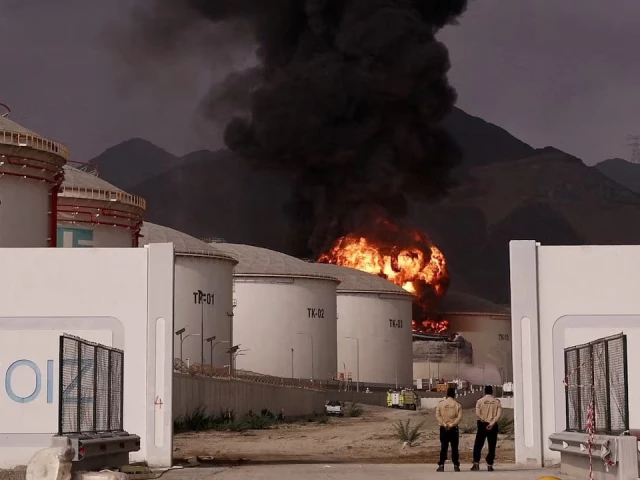
US ignites Iran war, but Gulf Arab states pay the price | The Express Tribune

-
Business1 week ago
Stock market crash today (March 12, 2026): Nifty50 opens below 23,600; BSE Sensex down over 900 points on continuing US-Iran war – The Times of India
-
 Fashion1 week ago
UK’s Topshop unveils Tolu Coker capsule collection
-
Business1 week ago
US ignites Iran war, but Gulf Arab states pay the price | The Express Tribune
-

 Fashion1 week ago
India’s textile recycling market may reach $3.5 bn by 2030: Report
-
 Tech1 week ago
Meta Developed 4 New Chips to Power Its AI and Recommendation Systems
-
 Business1 week ago
8th Pay Commission: How Much Will Central Govt Employees’ Salaries Rise? What We Know So Far
-

 Sports1 week ago
Bangladesh crush Pakistan in ODI series opener | The Express Tribune
-
 Entertainment1 week ago
Gas, food, household prices explained