

Business
Business news live – Banks bet on interest rate cut and UK bills rise 8% in a year

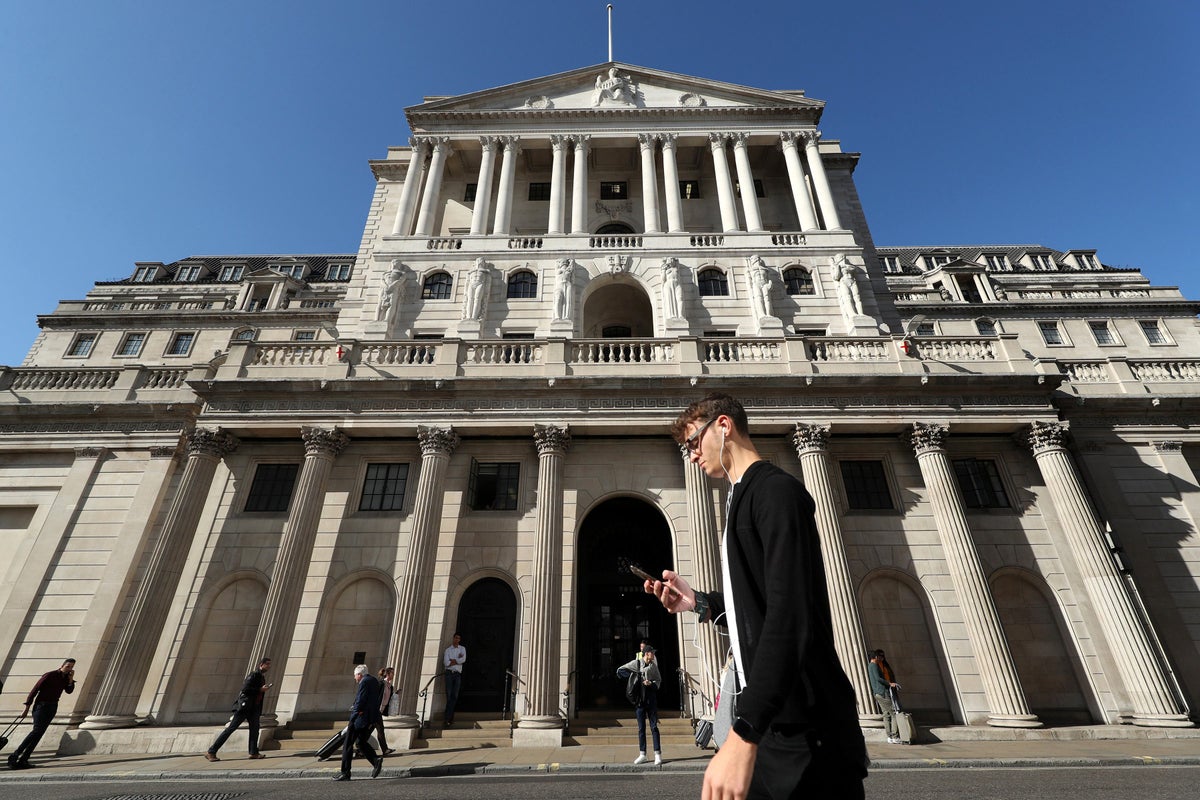
Interest rates: five steady cuts after sharp correction up
It’s sometimes hard to keep pace with everything around interest rates, how much it has all changed and the wider impact it has.
This chart helps display the rate of change, at least: post-Covid we had basically a zero rate for a long period, but the cost of living crisis across 2022 and 2023 saw interest rates shoot higher in quick succession as the BoE tried to stem inflation, which hit 11%.
Since last year the base rate began to decline, we’ve had five cuts in total.
Three this year came in February, May and August.
Karl Matchett3 November 2025 09:20
Economics expert explains why BoE may wait for Budget
Thomas Pugh, chief economist at tax firm RSM UK, is one of those who thinks the MPC will remain prudent for now.
“Financial markets have gone from pricing in less than a 25% chance of another rate cut by the end of the year to a two-thirds chance now, due to a lower inflation peak and rumours of a less-inflationary budget,” he explained.
“We doubt this will be enough to tempt the Monetary Policy Committee (MPC) into a rate cut next week. We expect a 3-6 vote for a hold. But it throws the door wide open to a rate cut in December, especially if the budget is deflationary.”
Karl Matchett3 November 2025 09:00
‘Odds 50-50’ on a December rate cut
Not everyone is immediately convinced, of course.
Plenty still think it’s more likely that the BoE will persist with their cautious approach so far and at least wait for one more monthly set of data to be taken in before opting to cut.
Matt Britzman, senior equity analyst at Hargreaves Lansdown, points to the money market still being split on December at the moment.
“London stocks have a touch higher this morning as investors brace for a pivotal week at the Bank of England. Rates are widely expected to stay at 4% on Thursday, but the real debate is whether policymakers deliver a cut in December, with odds hovering near 50-50. With stubborn inflation and slowing growth, expectations for the year ahead are in the balance.
Karl Matchett3 November 2025 08:40
Barclays join calls for interest rates cut
Last week Goldman Sachs said they think a rate cut is in the offing, and now Barclays have joined them.
Noting that “shop price data point to further disinflation in October”, Barclays analysts have suggested the Bank of England’s MPC members will provide a split vote – they predict 5-4 – but the ultimate outcome will be a cut.
“We acknowledge the decision remains finely balanced, but expect the recent downside inflation and labour market news to tip the vote to a cut,” read the analysis note, from Jack Meaning and Silvia Ardagna.
Food inflation is a key tipping point in the vote, they predict, and it appears to be on the way down (disinflation).
Karl Matchett3 November 2025 08:20
Inflation data behind change of heart on interest rate cuts
Rewind the tape a few weeks and banks, economists and analysts were unified in their belief: no interest rate cut pre-Budget, quite possibly none for the rest of 2025.
However, inflation data for September changed all that.
We didn’t hit 4% as expected, and now the worst is expected to have passed.
On the back of that, jobs data came in weaker again too as companies continued to reign in the hiring and vacancies were down to a multi-year low.
Now, more than one bank has changed its tune.
Karl Matchett3 November 2025 08:14
Business
Coal gasification to boost energy security and cut imports, says G Kishan Reddy – The Times of India
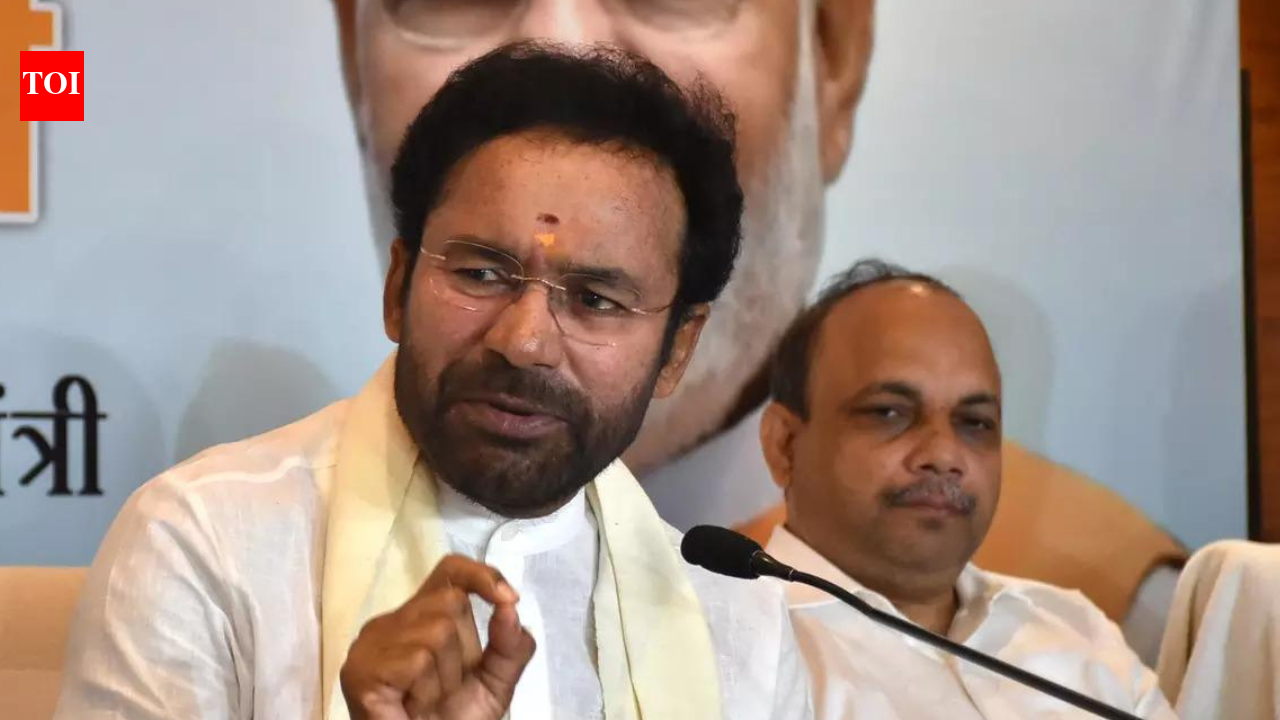
Union coal and mines minister G Kishan Reddy on Sunday said coal gasification will play a critical role in enhancing India’s energy security, reducing import dependence and supporting industrial growth.The renewed push has gained urgency amid the ongoing Middle East conflict, which has led to a surge in global energy prices.Speaking at the Bharat Electricity Summit 2026, the minister described coal gasification as a transformative technology that converts coal into syngas, which can be used to produce cleaner fuels, chemicals, fertilisers and hydrogen, as reported by PTI.He said the approach would enable more efficient and sustainable utilisation of domestic resources while strengthening economic resilience.Reddy highlighted India’s dependence on energy imports, noting that the country imports about 83 per cent of its crude oil requirements, 50 per cent of natural gas and more than 90 per cent of methanol and fertilisers, making energy security a strategic priority.To promote adoption of the technology, the Centre has launched the National Coal Gasification Mission with a target of achieving 100 million tonnes of coal gasification by 2030.“…. An incentive framework of Rs 8,500 crore has been introduced to support public and private sector projects, with several large-scale initiatives already underway and investments exceeding Rs 64,000 crore in the pipeline,” he said.The minister also pointed to advanced technologies such as Underground Coal Gasification, which can help tap previously inaccessible reserves while lowering environmental impact.Calling for greater collaboration, Reddy said coal gasification spans multiple sectors including power, oil and gas and fertilisers, and requires a coordinated ecosystem involving industry, academia, start-ups and research institutions.He reiterated the government’s commitment to streamlined approvals, supportive policies and incentives to encourage early participation and investment.Expressing confidence in India’s potential, the minister said that with innovation, indigenous technology development and coordinated efforts, the country can emerge as a global leader in clean coal technologies while advancing energy security, sustainability and self-reliance.
Business
Sri Lanka increases fuel prices around 25% as Middle East tensions disrupt global oil supplies – The Times of India
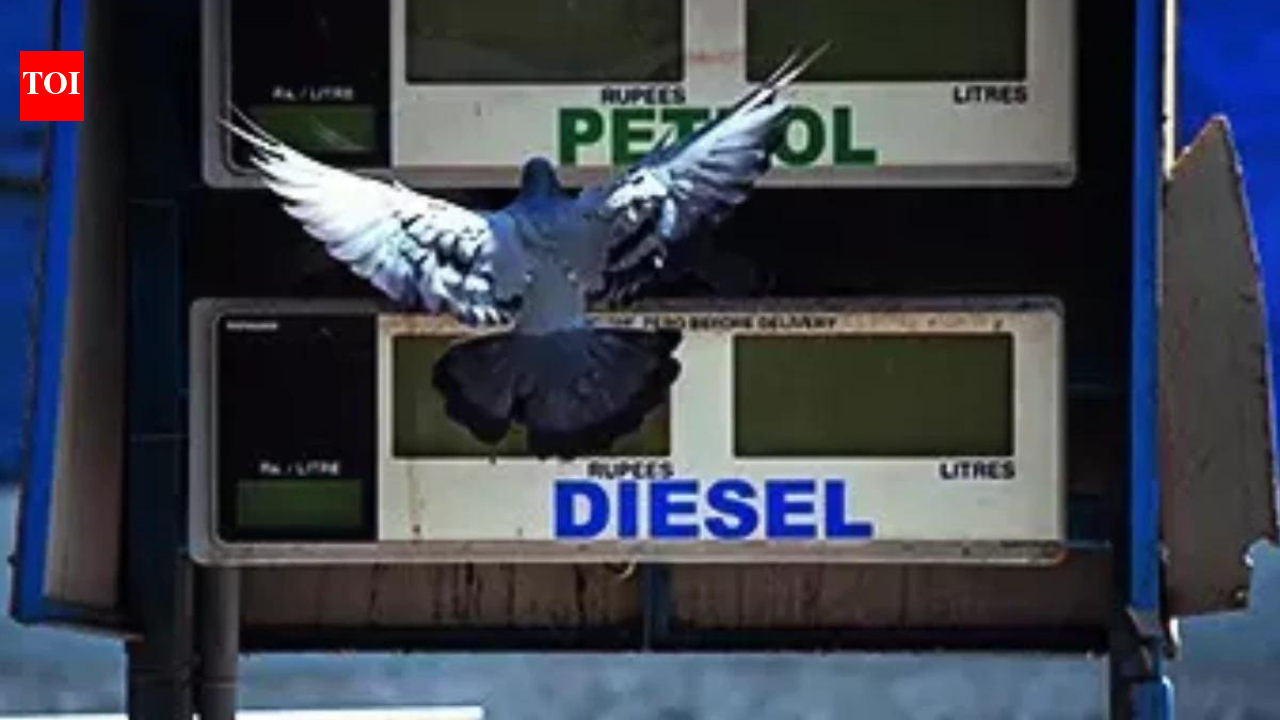
Sri Lanka on Sunday raised fuel prices by around 25 per cent, marking the second increase within a week as the ongoing Middle East conflict continues to disrupt global energy markets, news agency PTI reported.The price revision, effective from midnight, comes as tensions triggered by joint US–Israel strikes on Iran and retaliatory action by Tehran have spread across the Gulf region, leading to the closure of the Strait of Hormuz — a key global energy transit route.According to official announcements, the price of auto diesel rose 26.1 per cent from Sri Lankan rupees (LKR) 303 to LKR 382 per litre, while super diesel increased 25.5 per cent from LKR 353 to LKR 443. Petrol 92 octane climbed 25.6 per cent from LKR 317 to LKR 398, petrol 95 octane rose 24.7 per cent from LKR 365 to LKR 455, and kerosene jumped 30.8 per cent from LKR 195 to LKR 255.This is the third fuel price hike since March 1 and comes as the conflict, which has unsettled global oil markets, entered its fourth week.With the latest revision, retail fuel prices in Sri Lanka are set to return close to levels seen during the 2022 economic crisis, when the country declared its first-ever sovereign default since independence in 1948. The unprecedented financial turmoil at the time forced then president Gotabaya Rajapaksa to resign amid widespread civil unrest.The steep increase has sparked concern among transport operators. Non-state bus owners warned that up to 90 per cent of their fleet could be taken off the roads unless fares are revised.“This is the biggest rise of diesel ever. We will not be able to operate buses without an adequate fare revision. We need a minimum 15 per cent fare hike to stay afloat,” Gamunu Wijeratne, chairman of the Lanka Private Bus Owners’ Association, told reporters.The association threatened a nationwide strike if authorities fail to announce a scheduled fare revision.Responding to the developments, the National Transport Commission (NTC) said the latest diesel price increase, when applied to its fare formula, translates into a rise of more than 10 per cent in current bus fares. NTC Director General Nilan Miranda said Cabinet approval is expected on Monday to implement revised fares, according to media reports.Private operators account for about 65–75 per cent of the island nation’s public transport fleet, while the state-run share stands at around 25–35 per cent.Three-wheeler taxi operators, many of whom use petrol vehicles dominated by India’s Bajaj brand, said the price of commonly used petrol had risen to nearly LKR 400 per litre.“Who would want to ride with us at this rate?” a three-wheeler driver said, as quoted news agency PTI.Apart from state-owned Ceylon Petroleum Corporation (CPC), fuel retailing in Sri Lanka is also carried out by Lanka IOC — a subsidiary of IndianOil –as well as China’s Sinopec and Australia’s United Petroleum. Following CPC’s decision, LIOC and Sinopec also revised their retail fuel prices, media reports said.Opposition leaders criticised the government’s tax policy, claiming that authorities collect about LKR 119 per litre of petrol and LKR 93 per litre of diesel in taxes. They demanded that these levies be scrapped to provide relief to consumers.Analysts warned that the fresh fuel price hike could push inflation higher by 5–8 per cent.Earlier, government spokesman and minister Nalinda Jayatissa said that despite the price revisions, the government continues to bear a monthly subsidy burden of around Rs 20 billion by subsidising diesel by Rs 100 per litre and petrol by Rs 20 per litre.He said that without the revision, the state would have faced an additional financial burden of approximately $1.5 billion. Jayatissa urged the public to consume electricity and fuel “mindfully” and warned against hoarding, calling on citizens to report any such attempts.
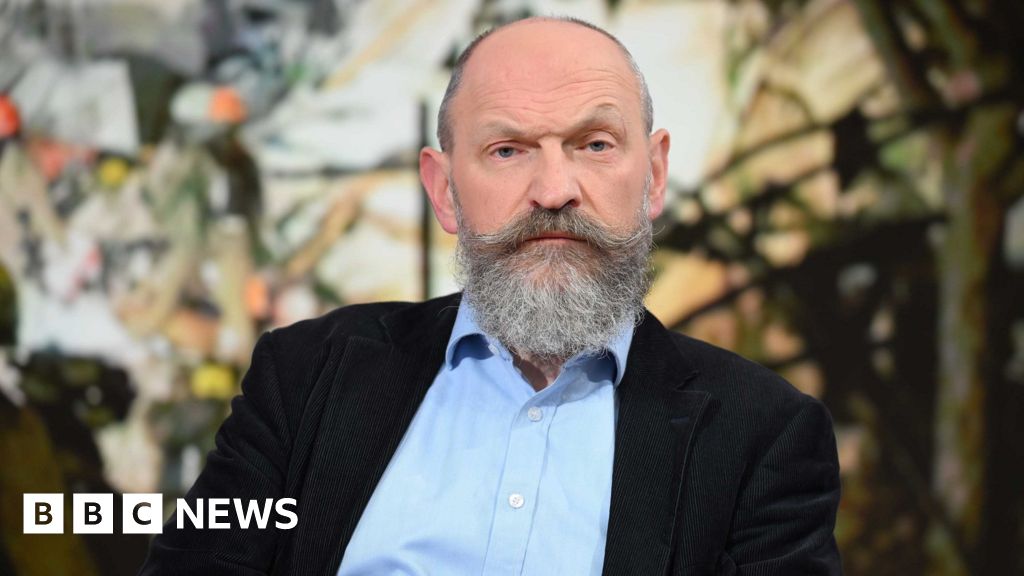
The discussion of ways to mitigate any energy price rises came after the government’s cost-of-living tzar, Lord Walker, who is also chief executive of supermarket chain Iceland, suggested in the Sunday Times that energy companies and petrol stations should have their profits temporarily capped as oil prices jump.


Men’s March Madness live tracker: Updates from all of Sunday’s games

Man City beat passive Arsenal in Carabao Cup; Premier League title race not over?

Uma Thurman bags praise from ‘Pretty Lethal’ director Vicky Jewson

Tips and Advice for Buying Used or Refurbished Electronics

UAE savings strategies 2026 explained: Best apps, tools, budget rules and smart money hacks to beat rising cost of living in emirates – The Times of India

Iran threatens US-linked oil facilities after Kharg Island bombed

-
 Tech1 week ago
Tips and Advice for Buying Used or Refurbished Electronics
-
Business1 week ago
UAE savings strategies 2026 explained: Best apps, tools, budget rules and smart money hacks to beat rising cost of living in emirates – The Times of India
-

 Fashion1 week ago
US court to review de minimis ban on imports from China & Hong Kong
-
 Politics1 week ago
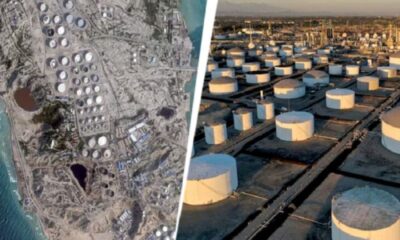
Iran threatens US-linked oil facilities after Kharg Island bombed
-
 Entertainment1 week ago
Iran at war
-

 Sports1 week ago
Japan suffers shocking collapse to Venezuela in World Baseball Classic
-
 Entertainment1 week ago
Strategic oil stocks to be released ‘immediately’ in Asia and Oceania: IEA
-

 Sports1 week ago
College Basketball Invitational abruptly cancels 2026 tournament