

Fashion
Canada’s suit imports fall in Jan-Aug as casualwear demand rises

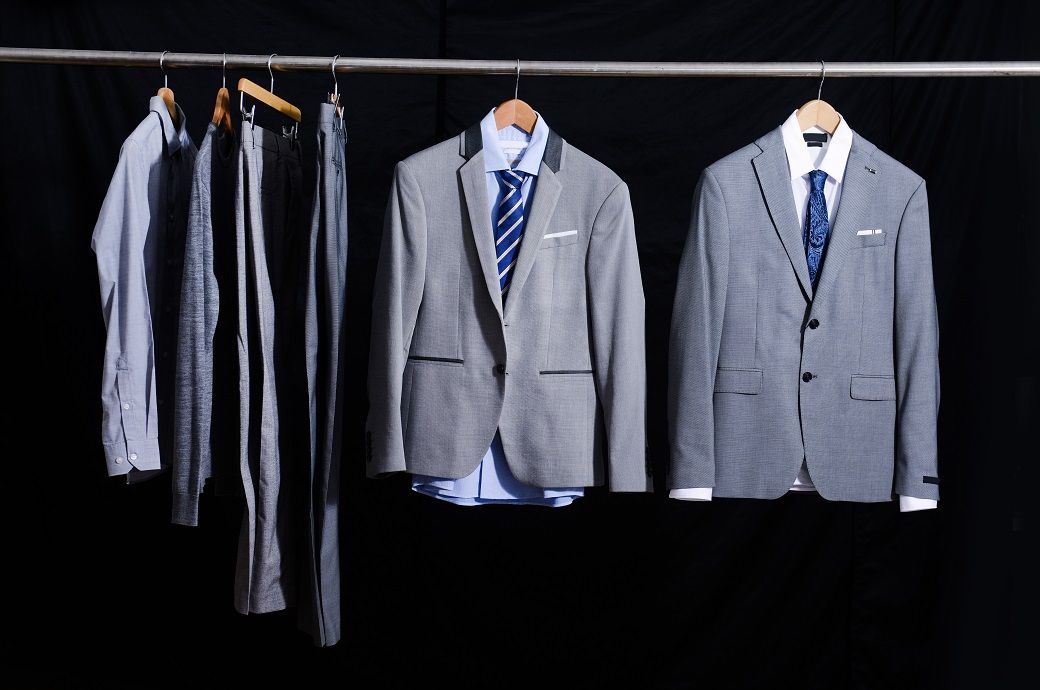
Import volumes mirrored the same trend. Canada imported *.*** million units in the first eight months of ****, down from *.*** million units in the same period of ****. The average landed price dipped further to $**.** per suit, marking a cumulative decline of nearly ** per cent since ****, when the average stood at $**.** per unit, according to *fashion.com/market-intelligence/texpro-textile-and-apparel/” target=”_blank”>sourcing intelligence tool TexPro. Retailers have been moving towards lower-value assortments as consumers prioritise affordability, prompting sourcing shifts to cheaper origins and lower-spec tailoring.
The price reduction suggests increased competition, lower unit-value buying, and retailers favouring budget sourcing channels rather than premium tailoring suppliers—a response to elevated inventory pressures, cautious buying cycles, and slower store traffic for formalwear categories.




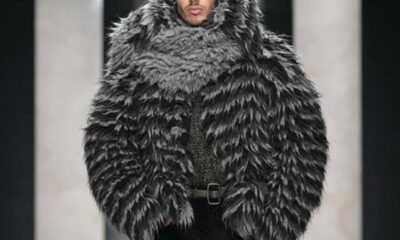









The company continued to see strong momentum in its own website, where revenue rose 27 per cent year on year (YoY), supported by higher site traffic, improved conversion rates and increased order volumes from both new and existing customers. The gross margin improved to 66 per cent, compared with 64.7 per cent in the same period of FY25, driven by an improved intake margin, Sosandar said in a press release.
Sosandar plc has posted a 10 per cent rise in Q3 FY26 revenue to £13.4 million (~$18.09 million), driven by a 27 per cent surge in own-site sales and improved margins.
Gross margin rose to 66 per cent, while net cash reached £9.7 million (~$13.10 million).
Trading remained in line with expectations, with full-year revenue forecast at £43.6 million (~$58.86 million).
The company said its partnership with Marks & Spencer (M&S) continues to trade with stock levels below the prior year following a cyber incident, with stock levels expected to normalise by Spring 2026. Performance through physical stores was also encouraging, with sales ahead of the prior year.
The group ended the period with strong net cash of £9.7 million (~$13.1 million) as of January 9, 2026, compared with £9.5 million on November 22, 2025, after returning £0.8 million to shareholders through market purchases of the company’s shares.
Q3 performance was in line with management expectations and remains on track to meet market expectations for the full fiscal. The current market forecasts for full fiscal ending March 31, 2026, are revenues of £43.6 million (~$58.86 million) and profit before tax of £0.4 million.
Strong H1 momentum carried into the second half (H2), lifting Q3 revenue by 10 per cent YoY to £13.4 million from £12.2 million. This was driven mainly by Sosandar’s own site, the cornerstone of its brand, where revenue surged 27 per cent on the back of higher traffic, stronger conversion and rising order volumes.
“We are pleased to see the positive momentum has continued into the second half of the financial year, with continued revenue growth and improved margins. The foundations have been laid for sustained profitable and cash-generative growth and we are excited for what 2026 will bring,” said Ali Hall and Julie Lavington, joint-CEOs of Sosandar plc.
Fibre2Fashion News Desk (SG)
Published
January 18, 2026
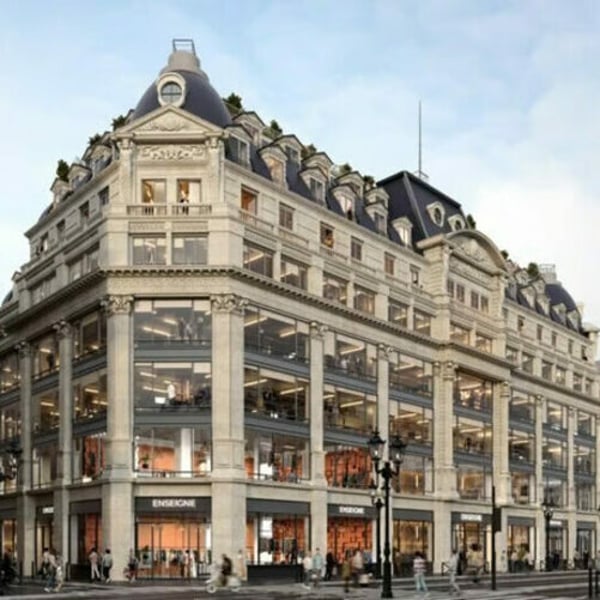
The successor to C&A at 126, rue de Rivoli has finally been revealed. After more than two years of work to rehabilitate the historic building, which for many years housed the flagship of the Dutch fashion chain, Redevco announced on January 16 that another international fashion player will open its French flagship within the BPM project by late 2026.
With a planned footprint of 2,700 square metres, Muji shows that Uniqlo is not the only ambitious Japanese brand in France and Europe. The Japanese advocate of the “no brand” concept (Mujirushi Ryohin) has set its sights on one of the capital’s busiest thoroughfares. The store will be among the largest in Europe, eclipsing the already generous format at Forum des Halles.
It marks a milestone for Muji, whose Paris story began in 1998, when the brand quietly took its first steps on Rue Saint‑Sulpice, attracting a Left Bank clientele of insiders. In nearly thirty years, the brand has spread to the Marais, Saint‑Lazare and Bastille, with six stores. But the forthcoming Rivoli location, with its XXL format over three levels, signals a shift in approach on a thoroughfare that sees nearly 15 million visitors a year.
Muji to expand its range in Europe
“The future store will offer 2,500 square metres of sales space across three levels (basement, ground floor and first floor). For the brand, it’s a genuine relaunch in Paris and then in London, before rolling this proposition out across Europe,” Uriel Karsenti, the brand’s Europe director, told FashionNetwork.com.
“Our strategy is to align Muji’s image at a global level. The aim is to expand the sales area to present a much more comprehensive range.”
Today, Muji offers barely half the range available in its stores in Japan. In its new flagship, the brand will be able to present around 85% of the Japanese range, including the childrenswear collection, as well as skincare, and a much stronger selection of accessories, homeware and electronics.

“This will be our largest store in Europe, after our Finnish location, which is unique in having a restaurant. We are currently looking for a site in London, in the Oxford Street area, where we already have a store,” explained the executive, who hopes for a major opening in the English capital in 2027.
“The flagship is important for the group’s management, as it is a showcase project that will test Muji’s potential for international expansion, a significant growth driver for the Japanese leadership.”
The store, whose concept has been entrusted to Atelier Tsuyoshi Tane Architects (At‑ta), is due to open in October in a building completely refurbished by the owner.
The location is significant, and C&A attracted generations of customers here before closing in 2023. The owner, Redevco, has initiated a complete overhaul of the building to breathe new life into the 13,000 square metre complex. Dubbed “BPM” (for “Beats Per Minute”), the project, entrusted to architect Franklin Azzi, goes beyond a simple façade renovation. The future Muji flagship will be spread over three levels, but it will not be the only new feature: the building will also house a 57‑room Radisson Collection hotel, upmarket offices (the LVMH group is reportedly in the running for part of the space) and, more surprisingly, an urban logistics hub in the basement. Redevco says it was also keen to preserve the soul of the site by maintaining a listed 13th‑century crypt and opening a landscaped rooftop accessible to the public, offering a bird’s‑eye view over the rooftops of Paris.
With another fashion brand yet to be unveiled, Muji—whose parent company, Ryohin Keikaku, closed its 2024‑25 financial year at the end of August with global sales of 785 billion yen (around €4.3 billion) from some 1,450 stores worldwide—is bringing its full hybrid fashion‑and‑home concept to a Parisian thoroughfare that is reinventing itself.
Muji’s management, for whom the North American and European markets account for 5% of activity, intends to build on its positive momentum, having reported double‑digit growth in Europe in the first quarter of 2025‑26, supported by around 30 stores across nine markets.
The expanded range will also be progressively rolled out on its website next season. This is a major development and could prompt Muji to review its current French network, comprising five stores in Paris and one in Lyon. Following the opening of its flagship, Muji may look for new, larger spaces in the years to come.
This article is an automatic translation.
Click here to read the original article.
Copyright © 2026 FashionNetwork.com All rights reserved.


The Best Juicer Is a Slow Juicer

US consumer spending momentum supports 2026 outlook: Fitch

Slowdown in rising cost-of-living set for December pause, say economists

-

 Tech5 days ago
New Proposed Legislation Would Let Self-Driving Cars Operate in New York State
-

 Sports1 week ago
Clock is ticking for Frank at Spurs, with dwindling evidence he deserves extra time
-
Sports1 week ago
Commanders go young, promote David Blough to be offensive coordinator
-

 Entertainment5 days ago
X (formerly Twitter) recovers after brief global outage affects thousands
-
 Fashion1 week ago
South India cotton yarn gains but market unease over US tariff fears
-

 Fashion1 week ago
China’s central bank conducts $157-bn outright reverse repo operation
-
 Business1 week ago
SoftBank reduces Ola Electric stake to 13.5% from 15.6% – The Times of India
-

 Sports1 week ago
US figure skating power couple makes history with record breaking seventh national championship