

Business
Chocolate’s reign over Halloween is under threat from inflation, tariffs and high cocoa prices


A customer shops for Halloween candy at a Walmart Supercenter on October 16, 2024 in Austin, Texas.
Brandon Bell | Getty Images
The scariest thing haunting Halloween this year isn’t a ghost, goblin or ghoul — it’s the price of chocolate.
From Snickers to Reese’s to Twix, one of America’s favorite indulgences is getting more expensive, as tariffs, inflation and high cocoa prices squeeze profit margins and customers’ pocketbooks, possibly leading to fewer chocolate bars landing in trick-or-treat buckets this year.
Chocolate prices have surged nearly 30% since last Halloween and almost 78% in the past five years, according to data from research firm Circana and the U.S. Bureau of Labor Statistics. A 100-piece variety bag of candy now costs $16.39, up from $7.20 in 2020, FinanceBuzz found.
That spike is showing up on store shelves. Variety packs from Hershey — maker of Reese’s, KitKats and Heath bars — are up about 22%, while Mars, the company behind M&M’s and Milky Way, raised prices about 12%, according to the Century Foundation, a progressive, independent think tank, and the Groundwork Collaborative.
“The season did get off to a slow start,” Hershey CEO Kirk Tanner told investors on an earnings call Thursday, warning that holiday sales could be softer this year.
About 4 in 5 Americans buy candy for the Halloween holiday, according to YouGov. This time of year makes up about 18% of annual U.S. confectionery sales — second only to Christmas, according to the National Confectioners Association.
But chocolate’s dominance is slipping. Circana found it made up 52% of Halloween candy sales last year, compared with 44% this year, as shoppers shift toward cheaper, trendier sweets.
“Macroeconomic headwinds” are among the culprits, said Sally Wyatt, who works for Circana analyzing global consumer packaged goods and as a food-service industry advisor. “It’s the compounded impact on top of the fact that we’ve outpaced wage growth. So consumers have started to … [make] very specific choices on discretionary items.”
Sector-wide, candy prices are outpacing the national inflation rate, marking a roughly 10% increase compared with last year, according to the Century Foundation. Still, the National Retail Federation said 2025 is expected to be a record year for candy sales in the U.S., with about $3.9 billion spent on Halloween candy alone.
“Even as consumers face higher prices for food, they continue to leave room in their budgets for chocolate and candy, meaning that the category is strong, vibrant and growing,” Carly Schildhaus, a spokesperson for the National Confectioners Association, told CNBC.
Much of the chocolate filling U.S. shelves this fall was made from cocoa beans purchased at record prices last December, when futures peaked above $12,000 per ton, experts said. Prices have since cooled to around $6,000, but that’s still more than double the pre-pandemic average.
A cocktail of rising temperatures, erratic rainfall, drought and crop disease for the past three years has devastated harvests in West Africa, which produces roughly 70% of the world’s cocoa. The result: the largest global cocoa deficit in 60 years, with supply falling half a million tons short of demand.
Prices could stabilize, but not decrease, by next year as crop yields have increased, said David Branch, a sector manager at Wells Fargo Agri-Food Institute.
“It’s not just the cost of manufacturing cocoa and other ingredients,” Branch told CNBC. “It’s also a combination of labor, transportation, fuel, overhead [and] all of those factors, and, given the inflationary rate we’ve been in, those came up and haven’t really come down.”
Hershey said Thursday that tariff expenses will cost the company $160 million to $170 million this year. In July, it also announced a “low double-digit” price hike, though executives said those increases weren’t tied to tariffs or Halloween pricing.
Chocolate makers have lobbied the Trump administration for tariff exemptions on cocoa and other agricultural imports, arguing they have little ability to source those ingredients domestically.
Sweet variety
As chocolate becomes more expensive, fruity, sour and chewy candies have gotten more popular. More than half of shoppers said they planned to prioritize gummy candies for Halloween this year, NielsenIQ found.
On average, the price per pound of chocolate rose nearly 14% in the 12 weeks ending Oct. 5, while sales volumes fell 6%, Circana data show. Non-chocolate Halloween candy such as Jolly Ranchers and Skittles saw sales climb 8.3% in that same period.
Younger adults, especially Gen Z, are also fueling growth in non-chocolate categories — gravitating toward gummies, freeze-dried sweets and TikTok-friendly flavor mashups.
“It’s that experiential [aspect] because you can have it [non-chocolate items] with chewy, with sweet flavors, with hot and sweet, spicy flavors,” Wyatt told CNBC. “Some candies you get this big explosion in your mouth of flavors. We’ve seen it popular with different cohorts.”
Chocolate makers are responding in kind. Hershey has expanded its gummy lineup, including a partnership with Shaquille O’Neal, and rolled out ghost-shaped Twizzlers and mismatched “Trickies” Jolly Rancher gummies.
Mondelez International, maker of Cadbury and Toblerone, said it’s also prioritizing gummies in the U.S. market. CEO Dirk Van de Put said on an earnings call Tuesday, however, that the U.S. market in particular “is slower than we’ve seen in quite a while” and the company’s promotional strategy earlier this year “was not giving us the volume effect that we were hoping for.”
Manufacturers are also experimenting with smaller bars, new fillings and cocoa-free options such as crème or nut-based confections to offset rising ingredient costs, Branch said.
“Companies have got to be very aware of if they can keep their prices in line. They can’t just keep increasing their prices and expect sales to continue to go up,” Branch said. “But customers have not lost their appetite for chocolate. It’s going to remain an indulgence that people will always have and can’t really do without.”







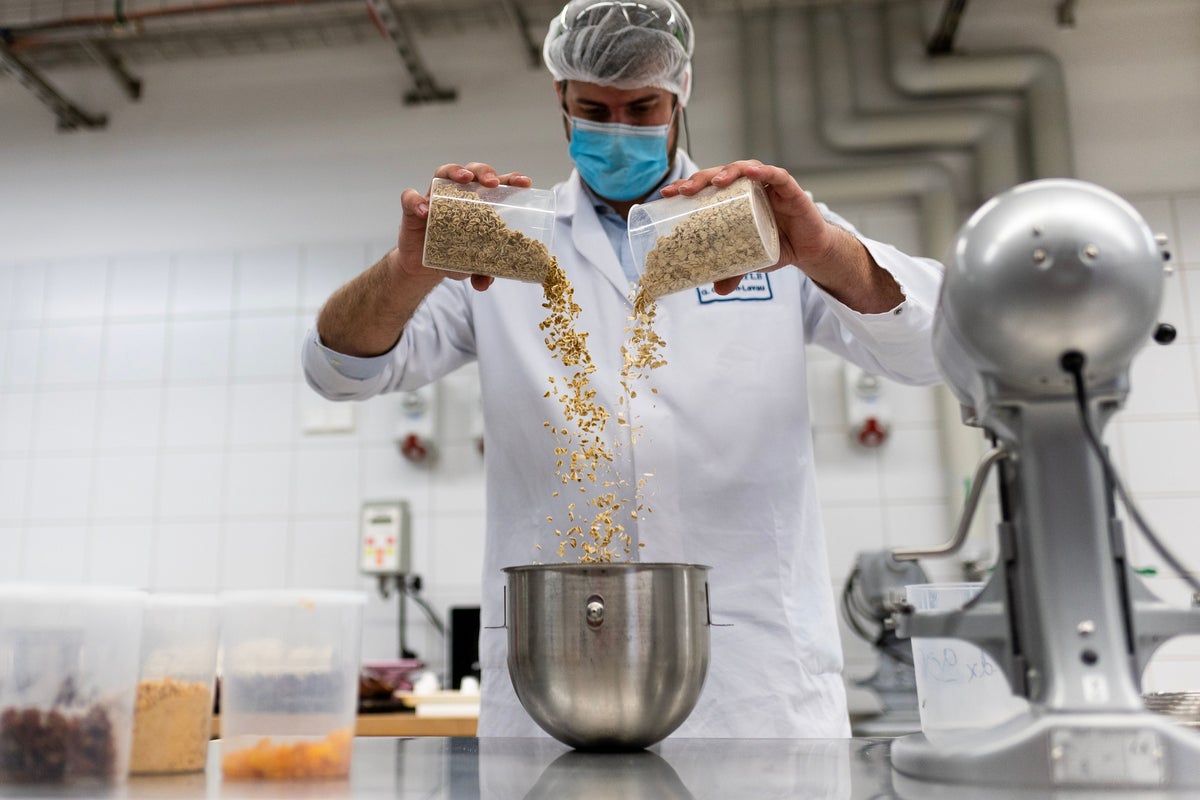
Sweetener and ingredients firm Tate & Lyle has revealed talks over a possible £2.7 billion takeover by US rival Ingredion Incorporated in the latest swoop on a UK company.
London-listed Tate & Lyle said it had received an approach from Illinois-based Ingredion worth 615p per share in cash, which follows a number of earlier proposals.
Tate and Ingredion are now in discussions, but Tate stressed there was no certainty an offer will be made.
Ingredion has until 5pm on June 11 to make a firm offer or walk away under Takeover Panel rules.
It comes amid a spate of approaches for British firms by overseas suitors, with laboratory testing company Intertek earlier this week giving its backing to a £9.4 billion proposal from Swedish firm EQT.
Shares in Tate & Lyle soared by over 50% in afternoon trading on Thursday.
But the takeover tilt comes after shares have come under pressure over the past year, with Tate warning over full-year profits last October and revealing a 10% drop in first half profits in November.
Tate & Lyle last year bought food and drink ingredients business CP Kelco in a deal worth around £1.4 billion.
.jpeg?width=1200&height=800&crop=1200:800 "UK household wealth tumbles, as taxes, food bills and rent costs bite")
The economy might have been growing at a decent rate – at least until the war in Iran began – but households feel poorer which bodes badly for future consumer spending, new statistics reveal.
On Thursday, official figures showed the UK economy grew at 0.6 per cent in the first three months of this year.
But the fear is that political infighting in Westminster is affecting not just bond markets but consumer confidence.
St James’s Place annual Financial Health report finds that average UK household wealth fell 17.5 per cent to £104,329 in 2026, down from £126,482.
London has the highest household wealth at £171,455, Yorkshire and the Humber the lowest at £73,488.
Alexandra Loydon, group advice director at St. James’s Place, said: “Many households are feeling worse off, with living costs and heightened global uncertainty weighing on confidence and, understandably, affecting how people feel about their finances and the future.”
That suggests the latest economic figures could be a high point, with consumers cutting spending from here.
Household wealth includes savings, investments and physical possessions – everything apart from property and pensions.

Get a free fractional share worth up to £100.
Capital at risk.
Terms and conditions apply.
ADVERTISEMENT
Get a free fractional share worth up to £100.
Capital at risk.
Terms and conditions apply.
ADVERTISEMENT
Paul Donovan, chief economist at UBS, said: “UK first quarter GDP was stronger than expected, led by the consumer. As elsewhere, consumers have reduced savings rates to afford higher oil prices.”
The survey shows that more than twice as many people say their financial situation has worsened than improved in the last twelve months (34 per cent vs 17 per cent).
Everyday financial confidence is also slipping. Just 37 per cent now describe themselves as financially comfortable, down from 42 per cent last year, while one in five (21 per cent) say they are struggling financially, up from 16 per cent.
Joe Nellis, economic adviser to accountants MHA, says: “A near 18 per cent decline in average household wealth over a single year is a major warning sign for the UK economy. Behind the numbers lies a growing sense of insecurity as rising food prices, higher bills, weak wage growth, and global instability continue to erode living standards.
“More than twice as many people say their finances have deteriorated over the past year as have improved. That is not the mood of a confident economy.”
Higher costs of living is the main reason for the negative report, with higher taxes, rent and food bills all part of the somewhat gloomy picture.
Ian Futcher, financial planner at Quilter, said: “There is a growing divide between those who are actively making decisions about their money and those who are drifting. Given the current tax environment that has become much less forgiving. Frozen thresholds mean people can gradually creep into paying more tax, or lose valuable allowances, without feeling any better off in their day-to-day lives.
“Making proper use of pension contributions and salary sacrifice can help mitigate some of that pressure, particularly for those moving close to key tax thresholds but this needs to be planned for.”
Ms Loydon adds: “At a time when so much feels outside of our control, it becomes even more important to focus on the things we can influence. Having a clear plan for your money, and taking small, consistent steps to manage it, can make a meaningful difference – helping people feel more in control and better prepared for whatever comes next.”
Business
Why is stock market up today? Sensex rises over 1,000 points; Nifty50 above 23,700 – top reasons for rally – The Times of India

Stock market rally today: Sensex and Nifty50 rallied strongly in trade on Thursday as firm global cues and possible steps to stem rupee’s fall boosted confidence. Both benchmarks rose over 1%, even as global and domestic challenges continued to weigh on sentiment.The sharp upswing added more than Rs 4 lakh crore to the total market capitalisation of companies listed on the BSE, pushing the overall valuation closer to Rs 463 lakh crore.Despite the bullish undertone in equities, several risk factors continue to keep investors on edge. The rupee touched a fresh record low after breaching the 95.8 mark against the US dollar for the first time, surpassing its previous lifetime low of 95.7950 recorded on Wednesday. The currency has weakened around 1.4 per cent so far this week and has hit new lows in every trading session from Tuesday through Thursday.
Why is stock market rising today? Top reasons
Tax on bonds to be cut?One of the key factors supporting market sentiment was a report suggesting that the government is evaluating a proposal to substantially reduce taxes on bond investments made by foreign investors to bring policies more in line with global standards and attract overseas capital inflows. According to a Bloomberg report, the proposal was recommended by the Reserve Bank of India and is under active consideration by the Finance Ministry.Following the report, the rupee recovered part of its earlier losses and government bond prices strengthened, leading to a decline of 2 basis points in the benchmark 10-year bond yield to 7.03 per cent. Expectations that such a move could revive foreign institutional investor inflows after sustained selling pressure appeared to lift overall market sentiment.Robust corporate earnings support sentimentA number of large companies have posted solid March-quarter results this earnings season, with Morgan Stanley stating that the earnings cycle appears to be recovering after a six-quarter mid-cycle slowdown. The brokerage expects profit growth to gather momentum further, supported by reflationary measures from the government and the Reserve Bank of India, including interest-rate cuts, banking sector deregulation and liquidity support.It also pointed to strong capital expenditure trends across sectors such as energy, defence, semiconductors, fertilisers and data centres, along with major tax reductions and a relatively growth-supportive fiscal stance.Markets closely tracking the US-China meetingInvestor attention is also firmly focused on the meeting between US President Donald Trump and Chinese President Xi Jinping following Trump’s arrival in China, amid years of geopolitical tensions between the world’s two largest economies.According to an ET report, Shaun Rein of China Market Research Group described the meeting as highly significant, noting that it marks the first visit by a US president to China in nine years since trade tensions escalated during the 2017-18 period. He said countries across the world, including India, the US, Europe and Africa, have been impacted by the prolonged geopolitical divide between Washington and Beijing.Positive trend across global marketsMost major global markets traded with gains, helping improve overall investor sentiment. South Korea’s Kospi surged nearly 2 per cent, while Hong Kong’s Hang Seng posted modest gains. In contrast, Japan’s Nikkei and China’s Shanghai Composite ended sharply lower.European equities had also finished higher in the previous session, with France’s CAC, the UK’s FTSE and Germany’s DAX advancing by as much as 0.75 per cent. On Wall Street, US markets closed firmly in positive territory, led by technology stocks, with the Nasdaq climbing more than 1 per cent.Cooling bond yields aid equitiesUS Treasury yields eased marginally, providing some relief to equity markets. The benchmark 10-year US Treasury yield slipped to 4.455 per cent, while the 30-year bond yield declined to 5.027 per cent. The yield on the 2-year Treasury note, which generally reflects expectations around future Federal Reserve rate decisions, fell to 3.965 per cent.Lower bond yields often reduce the attractiveness of fixed-income investments, prompting investors to shift towards equities and other risk assets, which can support stock market gains.(Disclaimer: Recommendations and views on the stock market, other asset classes or personal finance management tips given by experts are their own. These opinions do not represent the views of The Times of India.)

Tate & Lyle in talks over £2.7bn takeover tilt from US rival

India’s textile reset is here. The winners will be built, not picked.

Iran says UAE ‘active partner’ in US-Israeli war

-

 Tech6 days ago
A new frontier: Identity stack evolves for agentic systems | Computer Weekly
-

 Tech6 days ago
‘Orbs,’ ‘Saucers,’ and ‘Flashes’ on the Moon: Pentagon Drops New UFO Files
-

 Fashion6 days ago
New orders in German manufacturing up 5% MoM in Mar 2026: Destatis
-

 Tech6 days ago
Nick Bostrom Has a Plan for Humanity’s ‘Big Retirement’
-

 Sports6 days ago
Shaheen Afridi achieves landmark feat during opening Test against Bangladesh
-

 Entertainment6 days ago
Rihanna embraces new tattoo given by children
-

 Tech7 days ago
What Microsoft Executives Really Thought About OpenAI in 2018
-

 Tech6 days ago
The Canvas Hack Is a New Kind of Ransomware Debacle