

Sports
Clearwater Invitational 2026: College softball schedule

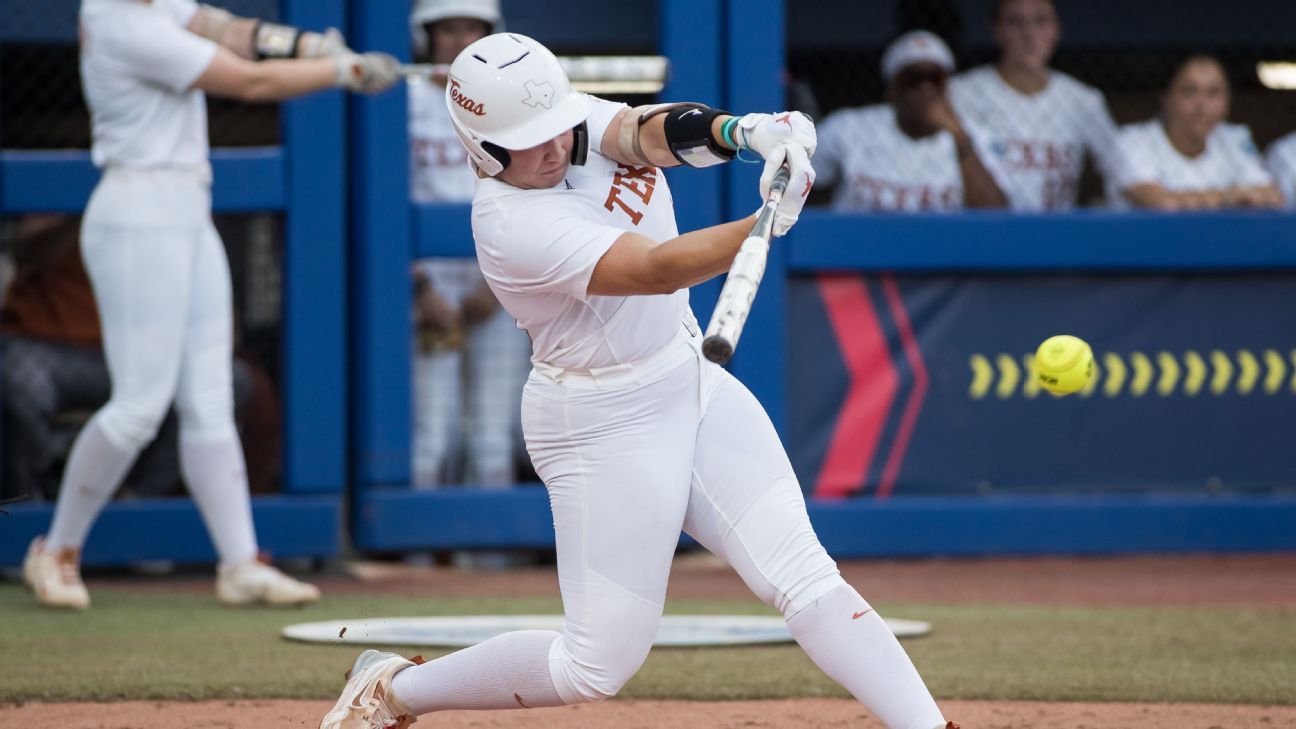
The Shriners Children’s Clearwater Invitational returns to the Eddie C. Moore Complex in Clearwater, Florida, this week for four days of premier college softball action. Tennessee, Texas Tech and UCLA, three teams that advanced to the 2025 Women’s College World Series, headline this year’s 16-team field. For a seventh straight year, ESPN will broadcast all 40 games across its family of networks and digital platforms.
Here are key facts about the 2026 Shriners Children’s Clearwater Invitational:
When is the tournament?
The tournament takes place Thursday through Sunday.
How can fans watch?
In addition to the networks listed below, all 40 games during the four-day invitational are available in the ESPN App and in the NCAA softball streaming hub.
Who are the teams?
The 16-team field includes Duke, Florida Atlantic, Florida State, Georgia, James Madison, LSU, Missouri, NC State, Nebraska, Northwestern, Oklahoma State, Tennessee, Texas A&M, Texas Tech, UCF and UCLA.
What is the schedule?
*All times ET
Thursday, Feb. 12
-
10 a.m.: Nebraska vs. LSU on ESPN2
-
11 a.m.: Oklahoma State vs. Georgia on SEC Network
-
1 p.m.: Florida State vs. Texas Tech on ESPN2
-
3 p.m.: LSU vs. Oklahoma State on ESPN2
-
4 p.m.: Nebraska vs. Georgia
-
6 p.m.: Texas Tech vs. Northwestern
Friday, Feb. 13
-
9 a.m.: NC State vs. Georgia on SEC Network
-
10 a.m.: Oklahoma State vs. Texas A&M on ESPN2
-
10 a.m.: Northwestern vs. UCF
-
Noon: Tennessee vs. Nebraska on ESPN2
-
12:30 p.m.: Missouri vs. NC State on ACC Network
-
1 p.m.: Duke vs. Texas A&M
-
1 p.m.: Georgia vs. UCF
-
3 p.m.: UCLA vs. Oklahoma State on ESPNU
-
4 p.m.: Texas Tech vs. Florida Atlantic
-
4:30 p.m.: Duke vs. LSU
-
5 p.m.: Tennessee vs. James Madison
-
6 p.m.: UCLA vs. Missouri
-
7 p.m.: Florida State vs. Florida Atlantic
Saturday, Feb. 14
-
9 a.m.: Texas A&M vs. NC State on ACC Network
-
10 a.m.: Oklahoma State vs. Duke on ESPN2
-
10 a.m.: UCF vs. LSU on SEC Network
-
10 a.m.: Missouri vs. Northwestern
-
Noon: Florida Atlantic vs. Tennessee
-
1 p.m.: NC State vs. Texas Tech
-
1 p.m.: Georgia vs. Northwestern
-
1:30 p.m.: Nebraska vs. UCF
-
3 p.m.: Florida Atlantic vs. Missouri
-
4 p.m.: UCLA vs. Tennessee on ESPNU
-
4 p.m.: Georgia vs. Duke
-
4:30 p.m.: James Madison vs. Texas Tech
-
7 p.m.: UCLA vs. Florida State
Sunday, Feb. 15
-
9 a.m.: James Madison vs. Texas A&M on SEC Network
-
9 a.m.: Missouri vs. Duke on ACC Network
-
10 a.m.: LSU vs. UCLA on ESPN2
-
Noon: Northwestern vs. Texas A&M on ESPN2
-
Noon: UCF vs. NC State
-
1 p.m.: Florida Atlantic vs. James Madison
-
6 p.m.: Texas Tech vs. Nebraska on ESPN
-
8 p.m.: Tennessee vs. Florida State on ESPN
How can fans access more college sports coverage from ESPN?
Check out the ESPN college sports hub page for scores, rankings and more.
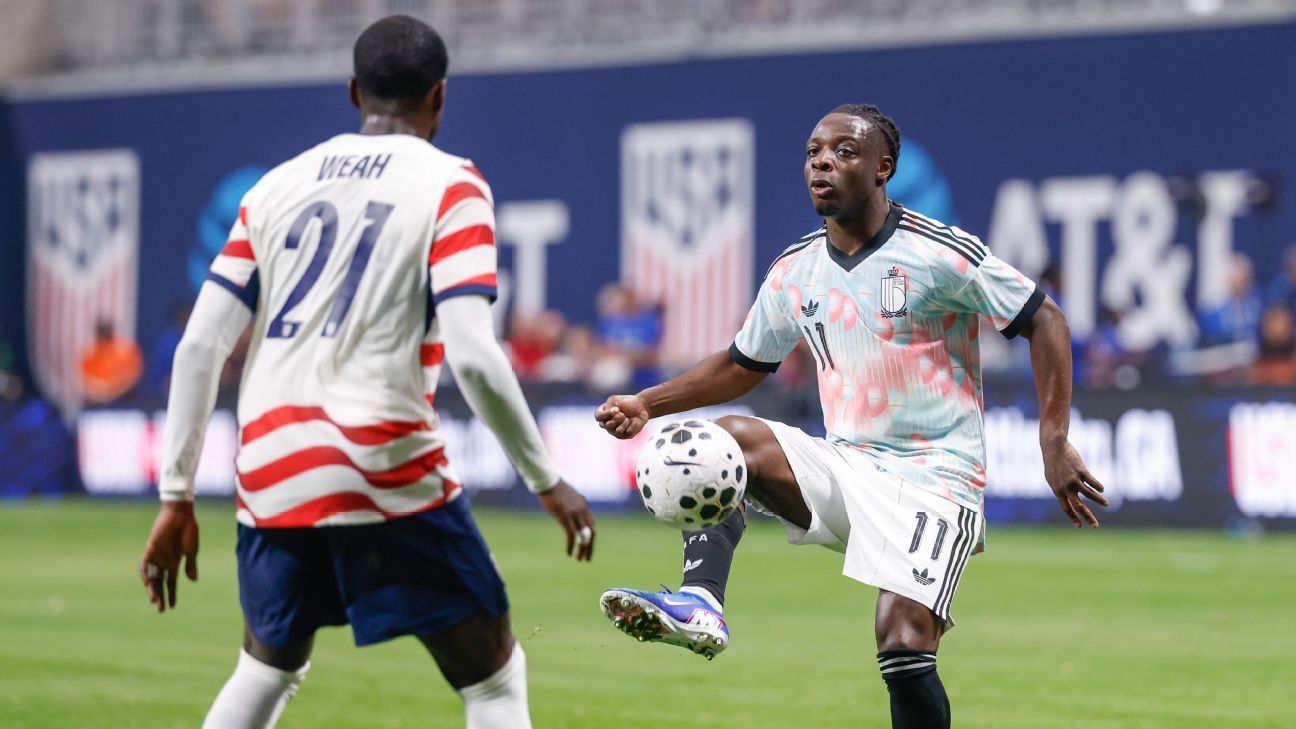
ATLANTA — The preparation of the United States men’s national team for the World Cup has entered its final phase. Not only will individual performances be scrutinized, but teamwide cohesion will be as well.
As such, Saturday’s match against Belgium provided a sobering assessment of where the USMNT currently stands, with the Americans enduring a heavy 5-2 defeat. Granted, it was one game, but the U.S. doesn’t look remotely ready for when the games start for real in June.
The U.S. looked competitive in the first half. Weston McKennie continued his fine run of form, scoring the Americans’ goal to put them up 1-0. But while the U.S. back line held up well into the second half, it had no answer for an electric performance from Belgian winger Jérémy Doku and saw its five-game unbeaten streak come to an abrupt end.
– USMNT player ratings: Weah poor as U.S. suffer heavy Belgium defeat
– O’Hanlon: Can USMNT’s depth at the 2026 World Cup make a difference?
– USMNT players speak up about what Mauricio Pochettino is like
It was a match where the deployment of the USMNT’s center backs was the main area of focus. FC Cincinnati‘s Miles Robinson and Crystal Palace‘s Chris Richards were out injured with groin and knee ailments, respectively, while FC Augsburg defender Noahkai Banks remains noncommittal to the U.S. squad. There are other reasons to be worried about the back line. Charlotte FC‘s Tim Ream hasn’t been at his best this season, while Mark McKenzie still has a few levels to climb in consistency with the USMNT. Those factors left manager Mauricio Pochettino to revert to the old standby formation of 4-3-3, with Ream and McKenzie anchoring the defense.
In the end, it wasn’t so much the center backs that were the issue. This was a teamwide humbling that will do little to inspire confidence in this U.S. side. In particular, the Americans’ defending on the flanks was abysmal. Belgium repeatedly found Doku isolated out wide either in transition or via a big switch of the point of attack and, even when he was double-teamed, he still found a way to torment the USMNT. Case in point was Amadou Onana‘s go-ahead goal in the 53rd minute. McKenzie didn’t do badly to contain Doku’s run, but the Belgian managed to suck nearly the entire U.S. defense toward him, leaving space for others. Doku played the ball to Charles De Ketelaere, who laid the ball off to Onana to fire home.
To be fair, Doku is an outstanding player. He wouldn’t be on the books of Manchester City if he weren’t. But this is a USMNT side that has set big goals for itself at this summer’s World Cup. If the U.S. is to make a deep run, it needs to beat a team of Belgium’s caliber, probably more than one. That Timothy Weah was the player usually victimized by Doku is somewhat surprising given he has played as an outside back plenty of times this season. It leaves one to wonder if anyone on the U.S. squad could have done better. Alex Freeman certainly couldn’t have done any worse.
That said, the U.S. also needed to do a better job of providing help out wide while also picking up late runners into the box and not resort to just watching the ball. This falls on the entire team, not just the back line, and is a fairly basic defense concept. That the U.S. seemed so incapable of executing in this area is probably the most concerning aspect of the performance. A return to three at the back — even with the depleted complement of center backs — is probably in order.
There are questions to be answered about the U.S. midfield as well. With Tyler Adams not even making the trip stateside due to a quad injury, an opportunity beckoned for Johnny Cardoso. After a rough first five months of the season with Atletico Madrid due to ailments of his own, Cardoso has ramped up his performance level at his club to the point that he appears indispensable. The problem with the USMNT is that Cardoso has never come close to replicating that level of form.
On Saturday, Cardoso showed flashes. He was 13 for 13 with his passes. His clever pick allowed McKenzie to break free on his goal and redirect Antonee Robinson‘s corner. He also had a vital tackle in the 17th minute that thwarted a Belgian counterattack. It was a surprise then to see him substituted at halftime with Cristian Roldan taking his place, although Pochettino explained after the match that the change was pre-planned due to discomfort the player felt earlier in the week.
For a team that didn’t possess the ball that well in the first half it was a strange decision, one that calls into question the level of the team’s depth. The second half witnessed a deluge of goals from Belgium with the U.S. continuing to show its inability to defend one-on-one situations. Goalkeeper Matt Turner, who was a surprise starter in place of Matt Freese, was continually left exposed. What will also give Pochettino pause is that he made liberal use of his bench, and things actually got worse. The only bright spot was when Ricardo Pepi deflected a pass out of the back that allowed Patrick Agyemang to score a consolation goal.
Is there reason to panic? Not yet. Four years ago, the U.S. fell 2-0 to Japan in its penultimate friendly prior to the 2022 World Cup that wasn’t nearly as close as the score indicated. In that instance, then-manager Gregg Berhalter got some data on who he could count on to deliver at the World Cup and who he couldn’t. Pochettino will need to do the same.
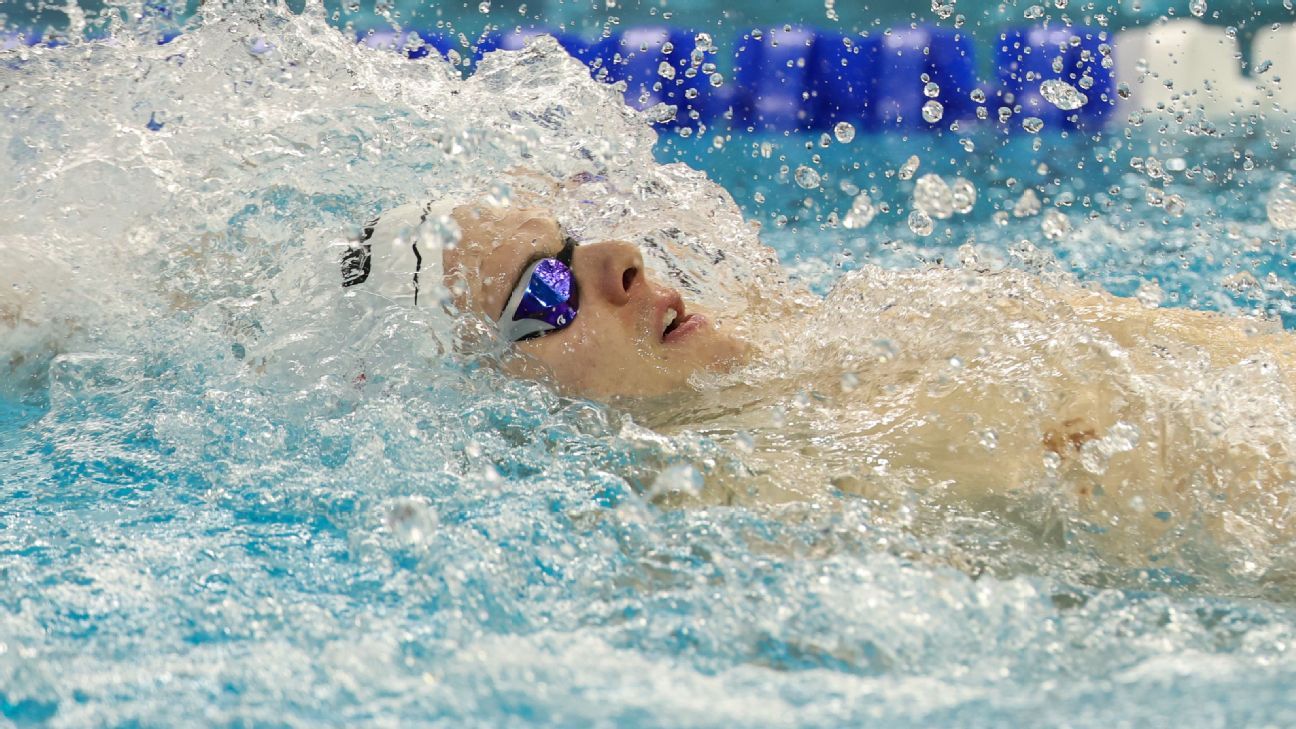
ATLANTA — Hubert Kós broke his own NCAA record while defending his title in the 200-yard backstroke to help the Texas men win a second straight national championship in swimming and diving on Saturday.
Kós won with a time of 1 minute, 34.13 seconds as the Longhorns piled up 445.5 points. He set an NCAA record of 1:34.21 in winning the event last season. Kós also broke the NCAA record in the 100 backstroke earlier this meet. Florida junior Jonny Marshall finished second and Virginia sophomore David King took third.
Runner-up Florida had 416 points. Indiana (351), Arizona State (328) and Tennessee (272) rounded out the top five.
Virginia freshman Maximus Williamson began the day by winning the 200 IM in 1:38.48. Indiana senior Owen McDonald was second, followed by Texas senior Baylor Nelson.
Florida senior Josh Liendo clocked a 39.91 to win the 100 freestyle. LSU junior Jere Hribar was second, followed by Tennessee senior Gui Caribe.
Arizona State junior Ilya Kharun won the 200 butterfly in 1:37.66, a half-second in front of Michigan senior Tyler Ray. Virginia freshman Thomas Heilman placed third.
Kharun, Adam Chaney, Remi Fabiani and anchor Jonny Kulow won the men’s 400 free relay with a NCAA record time of 2:42.15. N.C. State placed second and Florida was third. The Sun Devils won five of the seven relay races.
Texas A&M freshman Emilio Trevino won the title in platform diving with 465.40 points. Purdue sophomore Tyler Wills (451.15) and Florida sophomore Jesus Gonzalez (427.25) followed.
Coach Bob Bowman has led Texas to back-to-back championships. He guided Arizona State to the championship in 2024 before taking the Longhorns job.
Hall-of-Fame coach Eddie Reese led Texas to 15 championships during his 46-year run from 1978-2024.
-
Myron Medcalf
Close
Myron Medcalf
ESPN Staff Writer
- Covers college basketball
- Joined ESPN.com in 2011
- Graduate of Minnesota State University, Mankato
Multiple Authors
The 2026 men’s NCAA tournament has featured its fair share of heartbreaking losses — particularly after the first weekend.
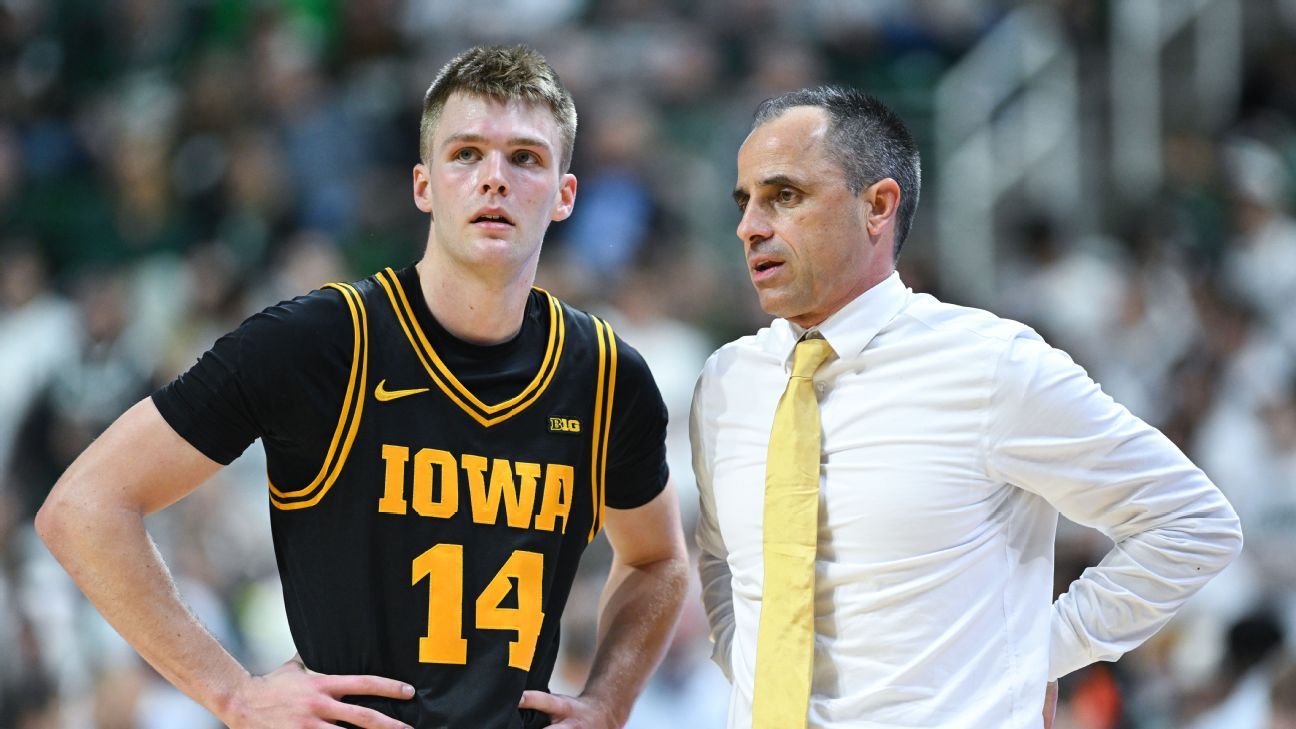
Iowa, the 9-seed that took out reigning national champion Florida in the second round and 4-seed Nebraska in the Sweet 16, finally fell to 3-seed Illinois in the Elite Eight.
The Sweet 16, meanwhile, saw exits for St. John’s, Michigan State, Nebraska, Texas, Alabama, Arkansas, Iowa State and Houston.
In addition to the Gators’ unexpected early exit in the second round, Kansas was eliminated on a buzzer-beating layup by St. John’s. Kentucky suffered its worst NCAA tournament loss since 1972. And North Carolina surrendered a 19-point lead to fall to VCU in overtime.
With some of the most storied college basketball programs ending their seasons earlier than expected, ESPN’s Jeff Borzello and Myron Medcalf detail what’s next for each. Here’s your guide to their expected departures, returnees, top incoming recruits and where that leaves their personnel priorities for when the transfer portal opens April 7.


Record: 24-13 (10-10 in Big Ten)
How their season ended:: Lost to Illinois in the Elite Eight
Expected departures
Bennett Stirtz (19.7 PPG)
Tavion Banks (10.6 PPG)
Players with remaining eligibility
Alvaro Folgueiras (8.5 PPG)
Cooper Koch (7.8 PPG)
Cam Manyawu (6.9 PPG)
Kael Combs (6.2 PPG)
Tate Sage (5.6 PPG)
Isaia Howard (5.1 PPG)
Top incoming recruit: Ethan Harris (four-star)
The 6-foot-9 forward, and only recruit Iowa has signed from this class, is a strong addition to this roster. Harris averaged 18.1 points and 8.1 rebounds as a high school senior and picked the Hawkeyes over his home state schools of Washington and Gonzaga. He should give this frontcourt a boost.
Portal priorities: Stirtz is the centerpiece of everything McCollum has done at Iowa (and Drake and Northwest Missouri State before that), so his biggest priority in the portal will be to find a point guard and playmaker to run the Hawkeyes offense. The good news is that their Sweet 16 run should help them attract a player who fills that mold.
Iowa is also losing Banks, a versatile 6-foot-7 forward who is second on the team in scoring and excellent from 3 (45% this season). The Hawkeyes need another scoring threat who can stretch the floor, unless Banks — a former junior college player — is granted another year of eligibility as a result of the NCAA’s blanket waiver.
Finally, an Iowa team that finished 17th in offensive rebounding rate and 15th in defensive effectiveness inside the 3-point line in conference play needs more frontcourt depth to keep up in the Big Ten.

Record: 27-8 (15-5 in the Big Ten)
How their season ended: Lost to UConn in the Sweet 16
Expected departures
Jaxon Kohler (12.6 PPG)
Carson Cooper (11.0 PPG)
Players with remaining eligibility
Jeremy Fears Jr. (15.3 PPG)
Coen Carr (12.0 PPG)
Kur Teng (7.5 PPG)
Jordan Scott (5.9 PPG)
Cam Ward (5.2 PPG)
Divine Ugochukwu (5.1 PPG)
Top incoming recruit: Jasiah Jervis (No. 25)
The 6-foot-5 Jervis is one of four top-100 recruits — one of three in the top 50 — in Tom Izzo’s 2026 class. With Fears and Carr expected to return, Jervis will strengthen a talented Michigan State squad and have an opportunity to play with a point guard (Fears) who could enter next season as the front-runner to win the Wooden Award.
Portal priorities: Izzo has not traditionally relied on the portal because of his ability to retain players. His incoming freshman class also includes Ethan Taylor and Julius Avent, a pair of big bodies who will help replace the size and skill lost by Kohler’s and Cooper’s departures. Redshirt freshman and former four-star recruit Jesse McCulloch should strengthen this team’s depth inside, too. Assuming Fears also returns, the only portal needs might be more depth at power forward/center and point guard. — Medcalf

Record: 30-7 (18-2 in the Big East)
How their season ended: Lost to Duke in the Sweet 16
Expected departures
Zuby Ejiofor (16.3 PPG)
Bryce Hopkins (13.6 PPG)
Oziyah Sellers (10.5 PPG)
Dillon Mitchell (8.2 PPG)
Sadiku Ibine Ayo (1.8 PPG)
Players with remaining eligibility
Ian Jackson (9.6 PPG)
Joson Sanon (8.1 PPG)
Dylan Darling (6.9 PPG)
Ruben Prey (4.1 PPG)
Lefteris Liotopoulos (3.0 PPG)
Kelvin Odih (1.5 PPG)
Imran Suljanovic (redshirt)
Casper Pohto (redshirt)
Top incoming recruit: None.
Since Rick Pitino arrived, the Red Storm have leaned far more heavily into the transfer portal than high school recruiting when it comes to roster construction. Freshmen started a combined six games in his first season, one game last season and zero this season. In fact, a freshman hasn’t touched the floor for the Red Storm in a month. It is worth noting that St. John’s received a commitment from SC Next 100 recruit Adam Oumiddoch — but he decommitted in February and is now attending Villanova in the fall.
Portal priorities: St. John’s is sure to lose at least four starters, with Big East Player of the Year Ejiofor, two-time All-Big East performer Hopkins, third-team All-Big East selection Mitchell and starting guard Sellers all out of eligibility. Which means we should be in for another busy spring portal season in Queens.
The focus will be up front, with only reserve big man Prey coming back. Pitino will likely need at least two starters, potentially three if he opts to go with a bigger lineup again.
There could be some perimeter continuity, with Darling, the NCAA tournament hero, and scorers Sanon and Jackson all able to return. Will all three decide to do so? Jackson is the biggest question mark, as his role has fluctuated throughout the season and Pitino has spoken publicly about the potential for him to leave after this campaign. Despite his inconsistency, Jackson is a high-level scorer, and another year with Pitino could see him take the next step.
One more backcourt conundrum: While this trio helped St. John’s sweep the Big East regular season and tournament championships, it felt like the Red Storm lacked a true playmaking point guard. Will Pitino go to the portal for one of those as well? — Borzello

Record: 29-8 (12-6 in the Big 12)
How their season ended: Lost to Tennessee in the Sweet 16
Expected departures
Joshua Jefferson (16.4 PPG)
Tamin Lipsey (13.3 PPG)
Nate Heise (5.4 PPG)
Players with remaining eligibility
Milan Momcilovic (17.2 PPG)
Killyan Toure (8.6 PPG)
Blake Buchanan (8.5 PPG)
Jamarion Batemon (6.8 PPG)
Dominykas Pleta (4.5 PPG)
Top incoming recruit: Yusef Gray (Unranked four-star)
Gray, a 6-foot-3 guard from West Allis, Wisconsin, averaged 24.3 points as a high school senior before a labrum injury in February cost him the rest of the season. But T.J. Otzelberger has had success with prep talent from Wisconsin, and Gray could be the next standout for the Cyclones.
Portal priorities: The Cyclones might build a statue of Lipsey, who has been the starting point guard since his freshman season. Before him, Otzelberger had Tyrese Hunter, who helped the team reach the Sweet 16 as an 11-seed. That’s the first position Otzelberger will look to fill first out of the portal, because his offense doesn’t work without a dynamic point guard. Jefferson is also the best player on the roster. He did so many things that he can’t be replaced by just one player. There’s also the chance Momcilovic, one of the best shooters in NCAA history, could leave for the NBA after a surprising season. Iowa State’s best teams have had stars, and this group could lose three of them: at point guard, on the wing and in the paint. Otzelberger might have to find a few players for the 2026-27 season. — Medcalf
Record: 25-10 (16-2 in the SEC)
How their season ended: Lost to Michigan in the Sweet 16
Expected departures
Labaron Philon Jr. (22.0 PPG)
Latrell Wrightsell (12.7 PPG)
Houston Mallette (6.4 PPG)
Noah Williamson (1.2 PPG)
Players with remaining eligibility
Aden Holloway (16.8 PPG)
Amari Allen (11.6 PPG)
Aiden Sherrell (11.2 PPG)
Taylor Bol Bowen (6.5 PPG)
London Jemison (6.2 PPG)
Jalil Bethea (4.2 PPG)
Keitenn Bristow (3.6 PPG)
Davion Hannah (3.3 PPG)
Collins Onyejiaka (1.0 PPG)
Top incoming recruit: Jaxon Richardson (No. 17)
Richardson surprised most of the recruiting world in early March when he committed to Alabama over perceived favorite Creighton. An explosive athlete who’s at his best in transition, he should make an impact at both ends of the floor with his length and motor. He’s not a consistent 3-point shooter yet, which makes his commitment to the most 3-point-happy team in the country an interesting marriage, but he brings plenty else to add a different dimension.
Portal priorities: There are plenty of moving parts for Alabama. At the top of that list is the status of Holloway, the team’s second-leading scorer, who was arrested on a felony drug charge just before the NCAA tournament, and who subsequently missed the Tide’s Sweet 16 run. Then there are the NBA draft decisions facing Philon and Allen. Philon was a projected top-20 pick in ESPN’s most recent mock draft, while the fast-rising Allen sneaked into the back end of the first round. Some NBA evaluators believe he could continue to skyrocket as the predraft process continues.
Nate Oats is reinforcing the wing positions with the high school signings of Richardson, Qayden Samuels and Tarris Bouie, all top-50 recruits. But he will need a high-level point guard if Holloway or Philon aren’t back. He also desperately needs more size and talent in the post. Sherrell enjoyed a breakout season, but depth was such an issue up front that Oats tried to bring Charles Bediako back to college basketball in January. It would help if Bol Bowen or Jemison can become a consistent contributor and matchup problem as a wing forward, and if the freshmen hit the ground running. Alabama will still likely be looking for multiple starter-caliber players in the portal. — Borzello
Record: 30-7 (14-4 in Big 12)
How their season ended: Lost to Illinois in the Sweet 16
Expected departures
Kingston Flemings (16.2 PPG)
Emanuel Sharp (15.4 PPG)
Milos Uzan (11.3 PPG)
Kalifa Sakho (2.5 PPG)
Ramon Walker Jr. (2.3 PPG)
Players with remaining eligibility
Chris Cenac Jr. (9.6 PPG)
Joseph Tugler (8.5 PPG)
Mercy Miller (5.2 PPG)
Chase McCarty (4.0 PPG)
Isiah Harwell (3.6 PPG)
Cedric Lath (0.5 PPG)
Jacob McFarland
Bryce Jackson (redshirt)
Top incoming recruit: Arafan Diane (No. 20)
Diane is a massive addition for Kelvin Sampson’s team — and not just from a size perspective, though the 7-1, nearly 300-pound center is the most physically imposing and dominant player in the 2026 class. He’ll immediately upgrade the Cougars at both ends of the floor. He has good touch in his face-up game and can catch the ball in the low post to score with his back to the basket. He’ll also bring rim protection and offensive rebounding, two areas in which the Cougars weren’t quite as dominant this season. Four-star Ikenna Alozie also fits the Houston ethos of physicality and intensity on the defensive end.
Portal priorities: Houston will likely bid farewell to its entire perimeter group, with Sharp and Uzan out of eligibility, and Flemings a projected NBA draft lottery pick. Sampson will hope for a major step forward from former five-star recruit Harwell, who dealt with injuries and saw his role dissipate down the stretch of the campaign. There were also real signs of promise for reserve guards Miller and McCarty, with Miller scoring in double figures in three straight postseason games and McCarty an asset on the perimeter.
Even with all the expected personnel in the fold next season, Houston could use an immediate-impact player at point guard. The Cougars need a playmaker and facilitator, as they found last season with Uzan and this season with Flemings.
Up front, much depends on whether Cenac and Tugler return. Cenac is still a projected first-round NBA draft pick but is not the surefire lottery selection he was at the start of the campaign, and Tugler was not in ESPN’s most recent mock draft after previously looking like a potential first-rounder. Diane is a ready-made replacement if one of them opts to depart. — Borzello
Record: 28-9 (13-5 in SEC)
How their season ended: Lost to Arizona in the Sweet 16
Expected departures
Darius Acuff Jr. (23.3 PPG)
Trevon Brazile (13.2 PPG)
Malique Ewin (9.9 PPG)
Nick Pringle (4.6 PPG)
Players with remaining eligibility
Meleek Thomas (15.6 PPG)
Billy Richmond III (11.1 PPG)
Karter Knox (8.1 PPG)
D.J. Wagner (7.4 PPG)
Isaiah Sealy (2.9 PPG)
Paulo Semedo (redshirt)
Karim Rtail (redshirt)
Top incoming recruit: Jordan Smith (No. 2)
The best guard of the class chose Arkansas over Duke and a host of other schools, helping push the Razorbacks into the top five of the 2026 recruiting class rankings. Smith is one of the most decorated and successful players among the incoming freshmen, having won multiple gold medals with USA Basketball and put up huge numbers on the grassroots circuit. While not nearly as explosive or electric with the ball in his hands, Smith is an ideal replacement for Acuff. Smith is aggressive and can get to the rim and really defend.
The Razorbacks are also bringing in five-star forward JaShawn Andrews and top-25 wing Abdou Toure.
Portal priorities: Injuries left Arkansas dangerously thin for stretches of this season, so John Calipari will likely want to improve his depth further down the roster. And while Acuff is almost certainly out the door as a projected top-five NBA draft pick, former five-star guard Thomas could go either way — he landed in the second round of ESPN’s most recent mock draft, though he has had some fantastic individual performances down the stretch of the season.
Other question marks: Will Wagner return? Will Knox forgo the NBA draft again? If they, Thomas and Richmond all return, Calipari will have a rotation nearly finished.
There will have to be a frontcourt revamp with Brazile, Ewin and Pringle all out of eligibility. As things stand, there might not be a natural point guard on the team, either. But Smith, Thomas and even Wagner — to an extent — have the potential to be the team’s primary playmaker. A Thomas-Smith backcourt, in particular, could excel at both ends of the floor. — Borzello

Record: 28-7 (15-5 in Big Ten)
How their season ended: Lost to Iowa in the Sweet 16
Expected departures
Rienk Mast (13.9 PPG)
Jamarques Lawrence (9.8 PPG)
Sam Hoiberg (9.4 PPG)
Players with remaining eligibility
Pryce Sandfort (17.9 PPG)
Braden Frager (11.7 PPG)
Connor Essegian (5.4 PPG)
Ugnius Jarusevicius (7.0 PPG)
Berke Buyuktuncel (6.7 PPG)
Cale Jacobsen (4.6 PPG)
Top incoming recruit: Jacob Lanier (No. 90)
Both Lanier and Colin Rice (No. 94) will help Fred Hoiberg’s team reload this season after losing a trio of seniors (and perhaps its best player, too). Both incoming freshmen should be physically ready — Lanier is 6-foot-5 and Rice is 6-8 — to compete in the Big Ten.
Portal priorities: This question is tied to a lot of unknowns for Nebraska. Sandfort is emerging as an NBA prospect after a strong season. Will he pursue the draft? Essegian should return after missing most of the season due to injury, if he’s granted a medical redshirt. If we assume Sandfort returns, then Hoiberg might want to boost his backcourt depth with Sam Hoiberg and Lawrence both leaving. But Fred Hoiberg has enough on his bench, along with the expected return of Essegian, to thrive. His real concern — assuming Sandfort is back — will be the loss of Mast, who has been an imperative standout for Nebraska’s frontcourt. Buyuktuncel might play a bigger role but it won’t be surprising if Nebraska pursues more depth in its frontcourt. — Medcalf

Record: 21-15 (9-9 in SEC)
How their season ended: Lost to Purdue in the Sweet 16
Expected departures
Jordan Pope (13.1 PPG)
Tramon Mark (13.5 PPG)
Dailyn Swain (17.4 PPG)
Chendall Weaver (5.9 PPG)
Players with remaining eligibility
Matas Vokietaitis (15.7 PPG)
Camden Heide (5.9 PPG)
Simeon Wilcher (5.7 PPG)
Nic Codie (4.1 PPG)
Top incoming recruit: Austin Goosby (No. 19)
Sean Miller could lose the bulk of his starting rotation this offseason, but the 6-foot-5 Goosby could be the Longhorns’ next star. The No. 1 recruit from the state of Texas has a chance to put together a one-and-done campaign. Depending on Swain’s decision, Goosby could become the top option from the moment he arrives. He headlines a Texas recruiting class that features two more top-100 recruits: Bo Ogden and Joe Sterling.
Portal priorities: Swain has emerged as a borderline first-round NBA draft pick following a fabulous season leading the Longhorns in scoring, so his potential departure could mean a significant loss in experience with senior starters Pope and Mark on their way out. If Swain leaves, Miller could use a veteran guard or two.
The Longhorns are also losing a lot of size in their frontcourt. Vokietaitis should be the centerpiece if he’s back, but Miller will have to add depth around him in the post. — Medcalf
Record: 27-8 (16-2 in SEC)
How their season ended: Lost to Iowa in the second round
Expected departures
Thomas Haugh (17.0 PPG)
Xaivian Lee (11.4 PPG)
Micah Handlogten (4.2 PPG)
Players with remaining eligibility
Alex Condon (14.9 PPG)
Boogie Fland (11.7 PPG)
Rueben Chinyelu (11.2 PPG)
Urban Klavzar (9.7 PPG)
Isaiah Brown (5.6 PPG)
CJ Ingram (2.2 PPG)
Viktor Mikic (1.3 PPG)
Alex Lloyd (1.2 PPG)
Alex Kovatchev (0.5 PPG)
AJ Brown (redshirt)
Top incoming recruit: Jones Lay (three-star)
Florida has essentially eschewed immediate impact freshmen under Todd Golden, landing only two top-100 recruits in the past four recruiting classes combined. The incoming class is no different, with only the unranked Lay in the fold. He will very likely be a depth player early in his career, then his future will depend on development. The Gators did take a couple of swings at recruiting top-50 prospects, but will instead go to the portal or overseas for the rest of their newcomers.
Portal priorities: Before Florida fully goes into the portal, the Gators will need to figure out which of their starters are returning to Gainesville. Haugh has played himself into a potential NBA draft lottery pick, so we can project him to leave for the NBA. But both Condon and Chinyelu were projected second-round picks in ESPN’s most recent mock draft, leaving their short-term futures more uncertain. Condon was a borderline first-round pick in 2025 and opted to return to school. It probably would cost at least $3 million to retain each, but they’ve been anchors for back-to-back No. 1 seeds, and Golden could see value in building around them again. Fland should return to school after also withdrawing from the NBA draft last spring.
If Condon, Chinyelu and Fland all return, Golden would need a Haugh replacement and additional shooting on the perimeter. Klavzar could move into the starting lineup with Lee gone, but he proved to be incredibly useful as a sixth man. Could any of the seldom-used roster players make a sizable jump and move into a consistent rotation role the way Isaiah Brown did from 2024-25 to 2025-26? It wouldn’t be a surprise to see Florida go into the portal or look at international players to bring in at least two or three more perimeter players. — Borzello
Record: 24-11 (12-6 in Big 12)
How their season ended: Lost to St. John’s in the second round
Expected departures
Darryn Peterson (20.1 PPG)
Tre White (13.8 PPG)
Melvin Council Jr. (12.6 PPG)
Jayden Dawson (2.1 PPG)
Players with remaining eligibility
Flory Bidunga (13.3 PPG)
Bryson Tiller (8.1 PPG)
Elmarko Jackson (4.8 PPG)
Jamari McDowell (3.4 PPG)
Kohl Rosario (3.3 PPG)
Paul Mbiya (1.1 PPG)
Samis Calderon (0.4 PPG)
Top incoming recruit: Taylen Kinney (No. 19)
Kinney is one of the best point guards in the 2026 class, and will step in immediately as the playmaking focal point of the offense with Peterson’s departure. He’s better as a scorer at this point in his development, especially when taking his defender off the dribble and attacking the rim. Kinney has improved as a passer and creator over the past year, so the next step on offense is becoming more consistent from the perimeter. His length should help him early as a defender.
Portal priorities: The frontcourt should be in good shape if Bidunga and Tiller both return; it would make sense for both to be retention priorities. Bidunga developed into one of the best defensive players in the country this season while also proving to be a capable scorer in the post. And Tiller showed very impressive flashes despite struggling down the stretch.
With Kinney coming in to run the show at point guard, that leaves the wings as areas to improve for Kansas. It’s worth keeping in mind that the Jayhawks are considered the frontrunner to sign SC Next 100‘s top overall recruit Tyran Stokes. If they do land him, that could change the calculus for their offseason roster construction. But with or without Stokes, they will need an immediate impact player on the perimeter — Rosario showed promise early in the season, and though he could take a step forward, Kansas would benefit from more proven production.
There’s also the elephant in the room: Bill Self’s status. Self said after the loss to St. John’s that he hasn’t decided on whether he will return next season. If he doesn’t come back, it’s entirely unclear how the Kansas roster will look. — Borzello

Record: 22-14 (10-8 in SEC)
How their season ended: Lost to Iowa State in the second round
Expected departures
Denzel Aberdeen (13.5 PPG)
Otega Oweh (18.6 PPG)
Jayden Quaintance (5.0 PPG)
Players with remaining eligibility
Jaland Lowe (8.0 PPG)
Collin Chandler (9.7 PPG)
Mouhamed Dioubate (8.8 PPG)
Brandon Garrison (4.7 PPG)
Kam Williams (6.0 PPG)
Malachi Moreno (7.8 PPG)
Jasper Johnson (4.9 PPG)
Andrija Jelavic (5.5 PPG)
Trent Noah (3.0 PPG)
Top incoming recruit: None
You’re reading that right: Kentucky does not have a single commitment from the 2026 class as of Tuesday. The Wildcats pursued Tyran Stokes, but as Jeff detailed above, it seems the No. 1 recruit is leaning toward Kansas. It appears that coach Mark Pope will again construct a roster comprising returnees and transfers — but as he learned this season, that’s a risk. The Wildcats reportedly spent more than $20 million on their 2025-26 roster yet finished only two games above .500 in SEC play and advanced to the second round of the NCAA tournament only because of a miracle buzzer-beater.
Portal priorities: This season’s roster never jelled the way Pope anticipated, which means he might end up building another from scratch, depending on who stays or goes.
The backcourt has to be his top priority. Aberdeen and Oweh are out of eligibility, which means that not only will Pope need elite guards who are capable playmakers and scorers, but he’ll also need depth — especially at point guard. The latter has been a problem throughout his tenure. Even if Lowe returns, Pope will need multiple players at both guard positions to anchor next season’s roster.
The next priority: a big man. Though Moreno could take the next step as a sophomore, and Dioubate has been solid for stretches, the Wildcats didn’t have a dominant big with Quaintance contending with knee injuries. The teams still competing for this year’s national championship — Michigan, UConn, St. John’s and Duke — have imposing big men. Kentucky can’t enter another season without a strong inside presence.
Finally, with Chandler the only reliable 3-point shooter on this season’s squad, Kentucky also needs more support on the perimeter. — Medcalf
Record: 24-9 (12-6 in ACC)
How their season ended: Lost to VCU in the first round
Expected departures
Caleb Wilson (19.8 PPG)
Seth Trimble (14.0 PPG)
Players with remaining eligibility
Henri Veesaar (17.0 PPG)
Luka Bogavac (9.8 PPG)
Jarin Stevenson (8.1 PPG)
Derek Dixon (6.5 PPG)
Jonathan Powell (4.8 PPG)
Kyan Evans (4.0 PPG)
Zayden High (3.4 PPG)
Isaiah Denis (1.9 PPG)
Jaydon Young (1.8 PPG)
Top incoming recruit: Dylan Mingo (No. 9)
Mingo is one of the elite guards in the 2026 class, despite being hampered by injuries for most of the high school season. He has great positional size and length, and projects to make an impact at both ends of the court. With Evans potentially leaving for the portal after struggling this season, Dixon and Mingo could share playmaking duties in the backcourt — if Mingo opts to keep his commitment, should Hubert Davis depart. Mingo didn’t pick Carolina until mid-February.
Portal priorities: Though Wilson is probably off to the NBA and Trimble is out of eligibility, Davis or his potential replacement will have to make Veesaar the priority. He had an early second-round projection in ESPN’s most recent mock draft, but he could opt to return to Chapel Hill for a substantial amount of money. If Veesaar is back at UNC, he and Stevenson should form one of the better frontcourt duos in the ACC. If Veesaar leaves, the Tar Heels will need to target a high-level big man in the portal.
In addition to a potential Veesaar replacement, the Tar Heels also probably will need an upgrade when it comes to perimeter shotmaking and explosiveness. None of Bogavac, Powell or Young were overly consistent as scorers. And though Mingo is a terrific addition — as is four-star forward Maximo Adams — neither is a knockdown shooter. If the roster falls apart following Davis’ potential departure, Veesaar, Stevenson and Dixon should be the retention priorities for a new coach. — Borzello


China launches twin probes into US trade practices
From office desks to dark streets: How the oil crunch is reshaping daily life in different nations – The Times of India

USMNT handed reality check by Doku, Belgium ahead of World Cup

-
 Business1 week ago
Flipkart group CFO to leave co amid IPO plans – The Times of India
-

 Fashion1 week ago
China’s textile & apparel exports surge 17% to $50 bn in Jan-Feb 2026
-

 Sports1 week ago
Rating Adidas’ 2026 World Cup away shirts: Argentina, Spain, Mexico and more
-

 Sports1 week ago
American Conference Commissioner Tim Pernetti thanks Trump for Army-Navy game executive order
-
Tech1 week ago
The Corsair 4000D RS PC Case Keeps Your System Cool
-
 Tech1 week ago
Gamers Hate Nvidia’s DLSS 5. Developers Aren’t Crazy About It, Either
-
 Business5 days ago
Property Play: Home flippers see smallest profits since the Great Recession, real estate data firm says
-
 Business1 week ago
‘Marriage penalty’ in Washington state’s new millionaire tax stirs debate