

Tech
Europe’s fastest supercomputer to boost AI drive

Europe’s fastest supercomputer Jupiter is set to be inaugurated Friday in Germany with its operators hoping it can help the continent in everything from climate research to catching up in the artificial intelligence race.
Here is all you need to know about the system, which boasts the power of around one million smartphones.
What is the Jupiter supercomputer?
Based at Juelich Supercomputing Center in western Germany, it is Europe’s first “exascale” supercomputer—meaning it will be able to perform at least one quintillion (or one billion billion) calculations per second.
The United States already has three such computers, all operated by the Department of Energy.
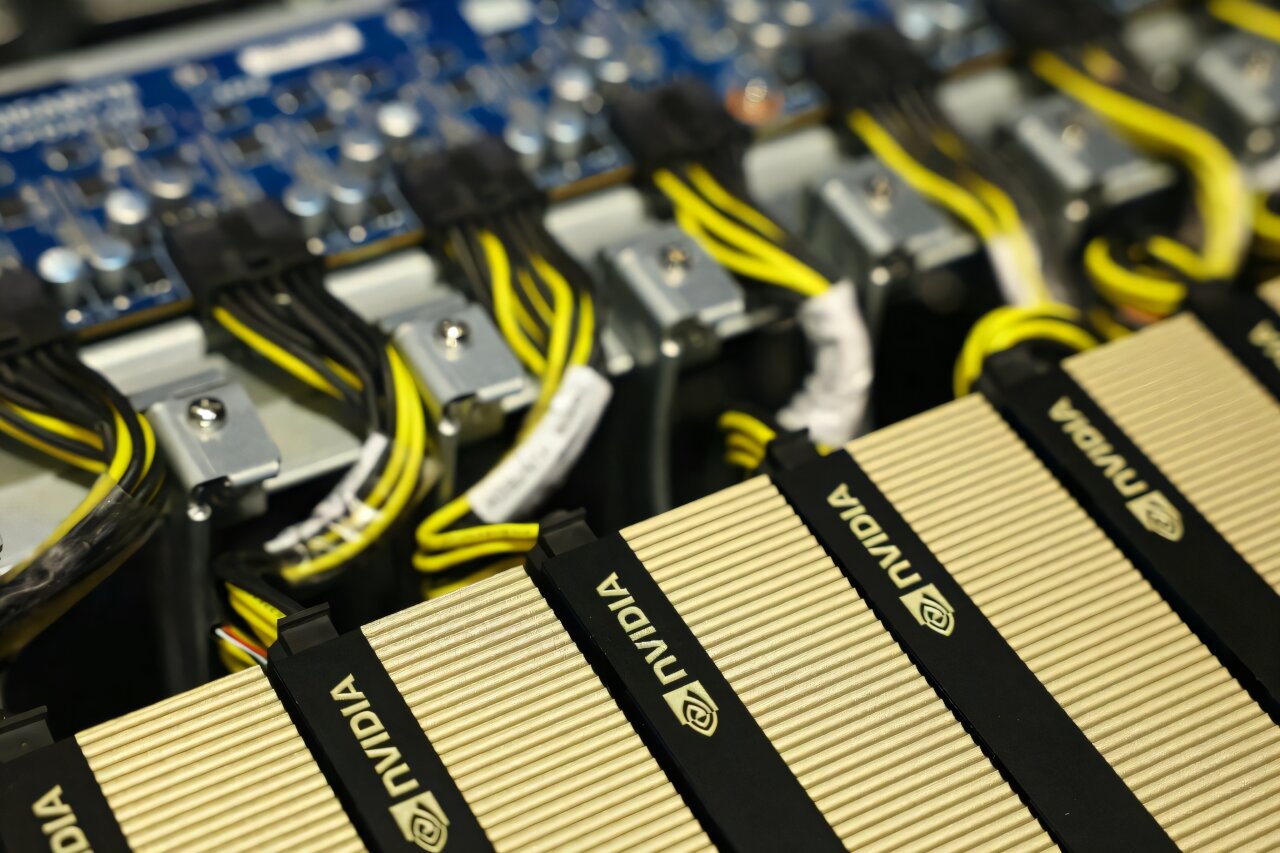
Jupiter is housed in a center covering some 3,600 meters (38,000 square feet)—about half the size of a football pitch—containing racks of processors, and packed with about 24,000 Nvidia chips, which are favored by the AI industry.
Half the 500 million euros ($580 million) to develop and run the system over the next few years comes from the European Union and the rest from Germany.
Its vast computing power can be accessed by researchers across numerous fields as well as companies for purposes such as training AI models.
“Jupiter is a leap forward in the performance of computing in Europe,” Thomas Lippert, head of the Juelich center, told AFP, adding that it was 20 times more powerful than any other computer in Germany.
How can it help Europe in the AI race?
Lippert said Jupiter is the first supercomputer that could be considered internationally competitive for training AI models in Europe, which has lagged behind the US and China in the sector.
According to a Stanford University report released earlier this year, US-based institutions produced 40 “notable” AI models—meaning those regarded as particularly influential—in 2024, compared to 15 for China and just three for Europe.
“It is the biggest artificial intelligence machine in Europe,” Emmanuel Le Roux, head of advanced computing at Eviden, a subsidiary of French tech giant Atos, told AFP.
A consortium consisting of Eviden and German group ParTec built Jupiter.
Jose Maria Cela, senior researcher at the Barcelona Supercomputing Center, said the new system was “very significant” for efforts to train AI models in Europe.
“The larger the computer, the better the model that you develop with artificial intelligence,” he told AFP.
Large language models (LLMs) are trained on vast amounts of text and used in generative AI chatbots such as OpenAI’s ChatGPT and Google’s Gemini.
Nevertheless with Jupiter packed full of Nvidia chips, it is still heavily reliant on US tech.
The dominance of the US tech sector has become a source of growing concern as US-Europe relations have soured.
What else can the computer be used for?
Jupiter has a wide range of other potential uses beyond training AI models.
Researchers want to use it to create more detailed, long-term climate forecasts that they hope can more accurately predict the likelihood of extreme weather events such as heat waves.
Le Roux said that current models can simulate climate change over the next decade.
“With Jupiter, scientists believe they will be able to forecast up to at least 30 years, and in some models, perhaps even up to 100 years,” he added.
Others hope to simulate processes in the brain more realistically, research that could be useful in areas such as developing drugs to combat diseases like Alzheimer’s.
It can also be used for research related to the energy transition, for instance by simulating air flows around wind turbines to optimize their design.
Does Jupiter consume a lot of energy?
Yes, Jupiter will require on average around 11 megawatts of power, according to estimates—equivalent to the energy used to power thousands of homes or a small industrial plant.
But its operators insist that Jupiter is the most energy-efficient among the fastest computer systems in the world.
It uses the latest, most energy-efficient hardware, has water-cooling systems and the waste heat that it generates will be used to heat nearby buildings, according to the Juelich center.
© 2025 AFP
Citation:
Europe’s fastest supercomputer to boost AI drive (2025, September 5)
retrieved 5 September 2025
from https://techxplore.com/news/2025-09-europe-fastest-supercomputer-boost-ai.html
This document is subject to copyright. Apart from any fair dealing for the purpose of private study or research, no
part may be reproduced without the written permission. The content is provided for information purposes only.










On November 16, 2021, Matthew Ziburis sat in his car in a residential neighborhood in the Bay Area stalking an “enemy,” as he put it. A veteran of both the US Army and Marine Corps, Ziburis had previously served in Iraq. But on this mission, he was working at the behest of China’s government. The targets that autumn day were American citizens: Arthur Liu and his teenage daughter, Alysa.
Arthur’s personal story was an exemplar of the American Dream. As a university student, he took part in the 1989 pro-democracy movement in China. After the crackdown at Tiananmen Square that year, he fled to the United States, settling in California. Arthur poured a small fortune and an equal amount of energy into molding Alysa into a figure skating phenom. As a national champion at age 13, she bantered along with Jimmy Fallon on The Tonight Show, and was at the time on track to represent America at the Winter Olympics the following year in Beijing.
Ziburis was surveilling the Liu home when he called Arthur, falsely claiming that he was a member of the US Olympic Committee who needed to discuss upcoming travel to Beijing, Arthur says. Ziburis was adamant that Arthur fax him copies of his and his daughter’s passports as part of a travel “preparedness check,” Liu tells WIRED. This struck Arthur as odd. In his many years dealing with sports bodies, he had never fielded such a request. Alysa’s agent did not respond to a request for comment.
Ziburis’ surveillance of Arthur and Alysa Liu that November day five years ago was just one episode in a bizarre saga that spanned from California to Beijing, touched New York City mayors and members of the US Congress, and has seen two people plead guilty and two more awaiting trial.
Unbeknownst to Ziburis, as he sat outside Aurthur and Alysa’s Northern California home, he too was being watched.
Ziburis had allegedly been dispatched to Northern California by Frank Liu, a self-styled fixer in the Chinese community from Long Island, New York, who was in turn receiving orders from a person in China named Qiang Sun. According to US authorities, Sun was working at the behest of the Chinese government. A concerned private investigator who once worked for Frank Liu had alerted the FBI to Frank’s escapades and was assisting authorities. Law enforcement was already on to Ziburis by the time he arrived. Anthony Ricco, Ziburis’ lawyer, did not respond to requests for comment.
Officers watched as Ziburis surveyed Arthur’s home and visited his law office. The heavy-set man sulking around Arthur’s office also caught the attention of a neighbor, who approached Ziburis and asked him if he needed help, Arthur says. Apparently concerned, the FBI called Arthur to warn him that Ziburis was heading to his home. By then, in part because of the harassment, Arthur and Alysa were boarding a plane to fly out of California. “It was like a movie,” Arthur says.
Alysa’s showing in Beijing in 2022 was disappointing. Burned out, she retired from the sport. Then in February, after returning to the ice after a two year hiatus, Alysa became the first US women’s figure skater to win Olympic gold since 2002—intentionally without her father by her side.
Despite her much-publicized complicated relationship with Arthur, Alysa’s success—punctuated by her signature pierced smile, racoon-tail dye job, and palpable joy for her sport—has reignited interest in the long-running case of transnational repression against her and her father. Human rights advocates and researchers have documented in recent years the lengths Beijing has taken to suppress critical voices, even those residing abroad or whose perceived transgressions date back decades.

Neuroscientists know that there is a link between loneliness and cognitive decline in older adults, although it is still difficult to understand the exact magnitude of the link. A new longitudinal study provides evidence that a proportion of people who feel lonely end up having more memory impairment, though this doesn’t necessarily mean that their brains age faster.
The report, published in Aging & Mental Health, shows that older adults with higher levels of loneliness scored lower on tests of immediate and delayed recall. Even so, the rate at which their memory declined over six years was virtually identical to those who were not lonely.
“It suggests that loneliness may play a more prominent role in the initial state of memory than in its progressive decline,” said Luis Carlos Venegas-Sanabria of the School of Medicine and Health Sciences at Universidad del Rosario, who led the research. “The study underscores the importance of addressing loneliness as a significant factor in the context of cognitive performance in older adults.”
Six-Year Study of Thousands of Single People
The team analyzed data from the Survey of Health, Ageing and Retirement in Europe (SHARE), one of the most robust longitudinal databases for studying aging. For six years, the researchers followed 10,217 adults, aged 65 to 94, from 12 European countries. They assessed their level of loneliness and their performance on memory tests.
The results show that age was the most important determinant of memory level and speed of decline. From the age of 75 onwards, scores began to fall more rapidly. After 85 the decline became more pronounced. Depression and chronic diseases such as diabetes also reduced the initial score. Loneliness, while influencing the starting point, did not accelerate the slope of cognitive decline.
The study also found that physical activity was associated with better initial memory scores. People who engaged in moderate or vigorous physical activity at least once a month recalled more words on immediate and delayed recall tests. This effect did not change the speed of decline, but it did raise the baseline level, which functions as a kind of “cognitive buffer.”
Although the study does not explore the causes of the link between loneliness and cognition, previous research has proposed plausible mechanisms. Loneliness is often associated with less social interaction, a factor that influences cognitive performance. It is also associated with increased risk of depression, which does directly affect memory tests. In addition, lonely people tend to have more health problems, such as hypertension or diabetes, which also affect cognitive function.
By 2050, according to United Nations projections, one in six people in the world will be over the age of 65. Societies are entering a stage where old age will no longer be the exception but will become the norm. Dementia, as well as other neurodegenerative diseases that appear with age, will be a major challenge for health care institutions.
Privacy is not a modern invention; it is part of the human condition of trust, dissent, and intimacy. Every society has developed ways to communicate beyond the reach of power: whispered conversations, sealed letters, coded language.
The need to keep secrets is equally as important among the powerful – governments, more so than individuals, have jealously guarded their own secrets, even as they seek to uncover the secrets of others. What is new is neither the need nor desire for private communication but the current power of the observer.
We now live in what some have termed a “golden age of surveillance,” in which governments, corporations, and adversaries possess the technical capability to monitor human interaction at unprecedented scale. In this era of pervasive digital connectivity, most digital interactions leave a permanent, searchable trace, and the need to protect sensitive information has become critical.
End-to-end encryption (E2EE) is therefore not a technical abstraction or ideological indulgence; it is the most effective defence against unauthorized access to private communications in a fully networked world. As digital communication continues to evolve, the risks of interception scale with it.
Why E2EE matters
E2EE preserves data confidentiality by masking data from unauthorised users and ensuring that only the intended recipients, with a decryption key, can access the data. Using cryptography, E2EE transforms readable plaintext into unreadable ciphertext on the sender’s device, keeps it encrypted during transmission, and decrypts it back into its original form only when it reaches its destination and is decoded with the correct key. It is widely used by governments and corporations and is becoming increasingly common among individual users, reflecting its status as the prevailing standard for data security and privacy.
The most common use of E2EE is for secure communications on mobile and online messaging services. It is also widely used by password managers to protect users’ passwords; for data storage purposes to ensure that data is protected when it is stored and when it is transmitted between devices or to the cloud; and for file-sharing purposes, including peer-to-peer file sharing, encrypted cloud storage, and specialised file transfer services.
Using E2EE means that no one else, including the service provider facilitating the communications, has access to the unencrypted data without consent. If it were to be intercepted, the data would appear to third parties as random, unintelligible characters.
As the service provider facilitating the communications does not have access to the unencrypted data due to E2EE, it is unable to provide it to any third party. That includes governments and law enforcement agencies that criticize E2EE as an obstacle to investigations while at the same time relying on and demanding the strongest available encryption to protect their own systems. Thus, the debate over E2EE is not about balancing privacy and security. It is about whether governments can demand systemic insecurity while insisting on absolute security for themselves.
The risks of ‘exceptional access’
“Exceptional access” is the term used to describe the mechanism for enabling government access to encrypted communications. Different governments take different approaches to the methods they use to seek exceptional access. While the intentions behind exceptional access may be noble, facilitating such mechanisms in E2EE communications can create more problems than it seeks to solve.
The creation of government-mandated security vulnerabilities, commonly known as backdoors, into E2EE services jeopardizes the security and privacy of global communications. Once a backdoor is built, no one can guarantee that only the authorised third party will have access to it. Malicious actors will try to use such backdoors to enter and decrypt communications that are intended to be secure on the endpoints and only accessible to the sender and recipients. It is for this reason that the world’s leading providers have avowed publicly never to do so.
Third-party exceptional access mechanisms in which a copy of a user’s decryption keys are held by a “trusted” third party for potential future use by the government are at present fraught with insurmountable technological and security issues. Industry, backed by the vast majority of relevant experts, is saying that it’s simply not possible to have E2EE where a third party holds a key. It defeats E2EE’s central premise and is a deliberate breach of the security guarantee that E2EE provides.
Any kind of repository where providers are forced to store the keys would become a treasure trove of a target for attackers – especially so for sophisticated state actors who, as we have repeatedly seen, are adept at breaking into worldwide telecommunications networks and critical infrastructure.
Why encryption is not an existential threat to law enforcement
In any event, governments have for decades warned of the existential threat posed by encryption and on the grim possibility of “going dark.” But they have not gone dark, and there exist other means by which governments can get valuable data. Metadata remains available. Enhanced investigative means and other investigative tools are ever evolving and becoming more sophisticated.
Governments should be careful about what they wish for. In seeking to fetter E2EE, they may drive the very actors whose data they most need away from mainstream providers, most of whom have long-standing collaborative relationships with law enforcement. In doing so, they will lose the ability to gain the data they can still obtain notwithstanding the use of E2EE – or, worse, they will undermine the very technology on which they also rely.
At this stage of technological development, there exists no meaningful way to grant governments “exceptional access” to encrypted communications without deliberately engineering systemic vulnerability into the digital infrastructure on which billions of people, institutions, and governments themselves depend.
Once such vulnerabilities exist, they cannot be confined to the well-intentioned or the lawful; they become available to hostile states, criminal actors, and anyone capable of exploiting them. The consensus among technologists and security experts is unequivocal: E2EE either works for everyone, or it is broken for everyone. Governments may continue to warn of impending darkness, but the greater danger lies in demanding insecurity by design – an outcome that would fundamentally undermine trust, resilience, and the security of the global communications ecosystem.


2026 growth in Africa to drop by up to 0.2% due to Iran war: Report

Indian reforms strengthen DGFT norms committees’ functioning: Ministry

How words shaped the narrative in the US-Israel conflict with Iran

-

 Fashion4 days ago
France’s LVMH Q1 revenue falls 6%, shows resilience amid Iran war
-

 Sports1 week ago
The case for Man United’s Fernandes as Premier League’s best
-

 Entertainment1 week ago
Palace left in shock as Prince William cancels grand ceremony
-
 Business1 week ago
UK could adopt EU single market rules under new legislation
-

 Entertainment5 days ago
Is Claude down? Here’s why users are seeing errors
-

 Fashion1 week ago
Energy emerges as biggest cost driver in textile margins
-

 Sports1 week ago
Lamar Jackson hits back at critics with faithful message on social media
-
 Business7 days ago
Delta Air Lines unveils first new Delta One suite in premium cabin arms race