

Business
Explainer: Tax-free Limit Of Rs 12 Lakh Excludes Special Income


New Delhi: The government announced in the Union Budget 2025-26 that income up to Rs 12.75 lakh, with a standard deduction of Rs 75,000, will be tax-free under the new tax regime. However, taxpayers should be aware that short-term capital gains and long-term capital gains tax cannot be included in the total income eligible for a full waiver.
The Finance Act, 2025, clarified that the rebate under Section 87A is not available for income taxed at special rates. A taxpayer cannot apply the Section 87A rebate against tax liability from income taxed at special rates, such as short-term capital gains under Section 111A or long-term capital gains under Section 112A.
But analysts have noted that this removal of the Section 87A tax rebate benefit was done through an amendment introduced in Budget 2025, which should only be effective from FY 2025-26 (AY 2026-27) onwards. Currently, Section 87A rebate on special rate incomes is not being granted for FY 2024-25 (AY 2025-26), they noted.
For the unversed, for AY 2025-26, taxpayers with an annual total income of up to Rs 7 lakh qualify for the Section 87A rebate under the new tax regime, while those with an income of up to Rs 5 lakh qualify under the old tax regime. In this context, a taxpayer’s total income is calculated by excluding exempt income and applying allowable deductions, including the standard deduction for salary or pension income.
Applying the Section 87A tax rebate to incomes up to the limits mentioned above should result in a net tax liability of zero. The current Income Tax Return utility, however, does not permit the Section 87A rebate on tax calculated for such special rate income for FY 2024-25.
So individuals with a total income under Rs 7 lakh may still incur a tax liability if their earnings primarily come from special-rate capital gains. Analysts waited for the Income Tax Department to provide further clarification on whether the law will take retrospective effect from FY 2024-25.




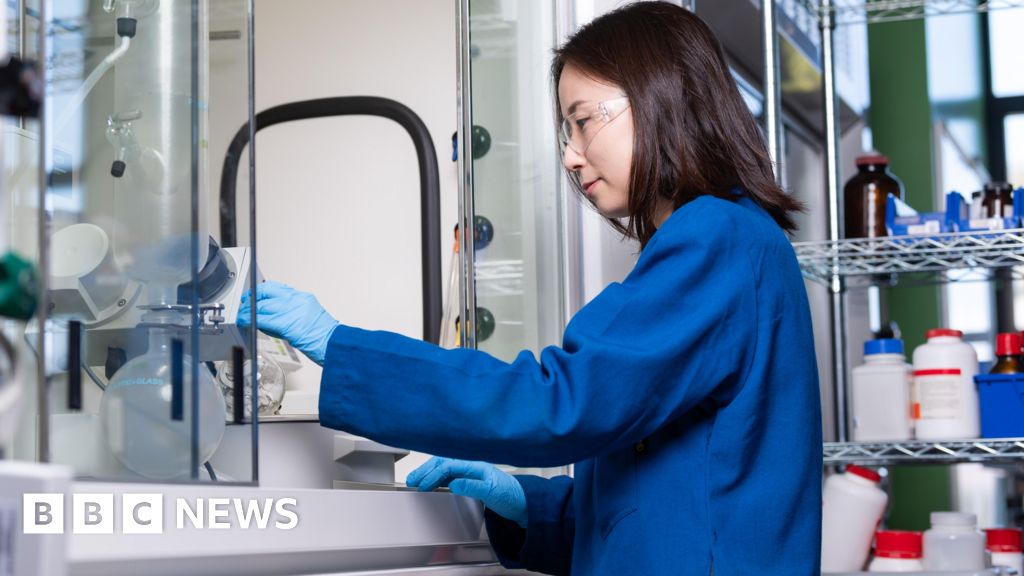
Molecules that can capture heat could be a useful technology to decarbonise heating.
Source link

The city is responsible for 80% of the world’s natural history TV shows.
Source link

NEW DELHI: The West Asia conflict is pushing govt to look at a faster transition towards renewable energy, including the possibility of increasing ethanol blending in petrol from 20-25%, although in a calibrated manner. This will come along with increased refining capacity within the country, so that there is a buffer in the system and greater domestic resilience, those familiar with the discussions said, pointing out that sustaining refineries at 100% capacity is not sustainable.While Barmer refinery has begun operations, expansion at Numaligarh is underway and work on integrated refineries on the west coast is also under focus. Apart from a mega refinery in Maharashtra, a new facility in Gujarat is also planned.Officials said rising use of renewables, biofuels and hydrogen in the energy mix was no longer just an environmental issue, but a strategic necessity in a situation like the present one, where the military conflict in West Asia has disrupted global energy supplies, triggering a supply crisis and a surge in oil and gas prices.According to officials, 20% ethanol blending has helped India save 4.5 crore barrels of crude annually and reduce foreign exchange outflow by around ₹1.5 lakh crore so far. Given the concerns over fuel efficiency and impact on vehicles, govt is expected to take a gradual approach that addresses the anxiety on ethanol blending. The third pillar on energy is expanding the strategic petroleum reserves.


CDF Munir to address Marka-e-Haq victory ceremony at GHQ tomorrow

Putin says army fighting ‘aggressive’ Nato-backed force in Victory Parade address

I Tried the Best Captioning Smart Glasses, and Only One Leads the Pack

-

 Politics6 days ago
Iran weighs US reply delivered via Pakistan as Trump signals opposition to deal terms
-

 Tech1 week ago
This Indigenous Language Survived Russian Occupation. Can It Survive YouTube?
-

 Fashion1 week ago
Canada’s Lululemon appoints Esi Eggleston Bracey to board of directors
-

 Fashion1 week ago
US’ J.Jill, Inc. appoints Kimberly Wallengren as CMO
-
 Business1 week ago
Government hikes jet fuel prices by 5% for international airlines – The Times of India
-
 Business1 week ago
Apollo Sports Capital and Tom Dundon make landmark $225 million investment in pickleball
-

 Fashion1 week ago
US’ Gap partners with Victoria Beckham on timeless wardrobe essentials
-

 Fashion1 week ago
AAFA pushes for swift US House passage of key anti-counterfeiting law