

Fashion
Frasers Group acquires two major UK designer outlets

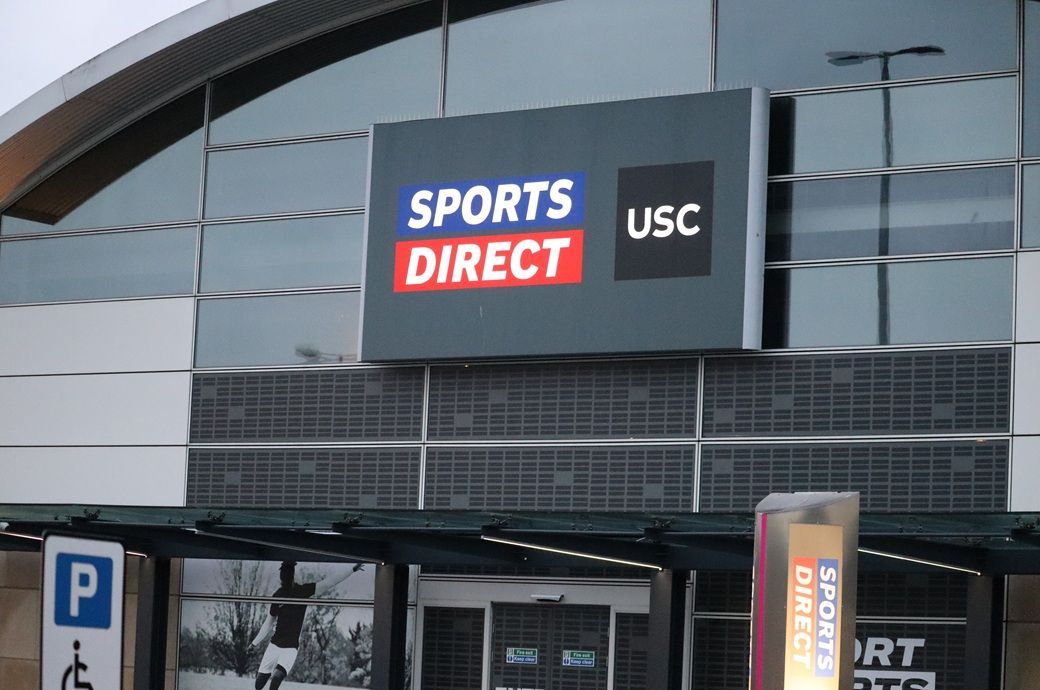
With an annual footfall of almost 7.8 million visitors across the two outlets, these acquisitions highlight Frasers Group’s position as both a landlord and retailer, supporting global brands’ outlet strategies while delivering strong value and brand choice to UK consumers.
- York Designer Outlet (250,000 sq. ft), located just outside York city centre, is home to 120 leading UK and international brands and welcomes 4.3 million visitors annually.
- East Midlands Designer Outlet (170,000 sq. ft), positioned near the M1 motorway, offers over 65 designer brands and has a footfall of 3.5 million visitors annually.
These acquisitions demonstrate Frasers Group’s continued commitment to the outlet sector, enhancing the Group’s property portfolio mix as it delivers against its Elevation Strategy.
Frasers Group plc has acquired York Designer Outlet and East Midlands Designer Outlet, adding over 400,000 sq. ft of retail space across 185+ brands.
With a combined 7.8 million annual footfall, the move strengthens its dual role as landlord and retailer, supports global outlet strategies, and accelerates its Elevation Strategy to grow UK market share and brand ecosystem.
Michael Murray, Chief Executive Officer at Frasers Group, said: “These strategic acquisitions reinforce our vision, leveraging strong partnerships with leading global brands to unlock mutual value – supporting their outlet strategies while driving growth. Today, we own over one-fifth of the UK outlet market and have a clear ambition to grow our share further.”
Note: The headline, insights, and image of this press release may have been refined by the Fibre2Fashion staff; the rest of the content remains unchanged.
Fibre2Fashion News Desk (RM)










The increase in GDP was driven by gains in investment, exports, consumer spending and government expenditure. However, imports also rose during the period, which subtracts from GDP calculations.
Compared with the previous quarter, the stronger growth reflected upturns in government spending and exports, along with faster investment growth. These gains were partly offset by a slowdown in consumer spending, while imports turned upward.
US GDP grew 2 per cent in Q1 2026, accelerating from 0.5 per cent in Q4 2025, driven by investment, exports and government spending.
Consumer spending slowed, while imports rose.
Inflation pressures increased, with personal consumption expenditures (PCE) inflation at 4.5 per cent.
Goods exports were boosted by higher shipments of industrial supplies and materials.
Real final sales to private domestic purchasers, a key measure combining consumer spending and gross private fixed investment, rose 2.5 per cent in the first quarter, up from 1.8 per cent in the previous quarter.
Inflation indicators showed mixed trends. The price index for gross domestic purchases increased 3.6 per cent, slightly lower than 3.7 per cent in the previous quarter. However, the personal consumption expenditures (PCE) price index rose to 4.5 per cent from 2.9 per cent, while the core PCE index, excluding food and energy, climbed to 4.3 per cent from 2.7 per cent.
In terms of components, both exports and imports were lifted mainly by higher goods trade. Goods exports were supported by increased shipments of industrial supplies and materials.
Government spending rose primarily due to higher federal non-defense expenditure, especially employee compensation, which rebounded after declining in the fourth quarter of 2025. Spending patterns were also influenced by the government shutdown during the previous quarter.
Fibre2Fashion News Desk (CG)
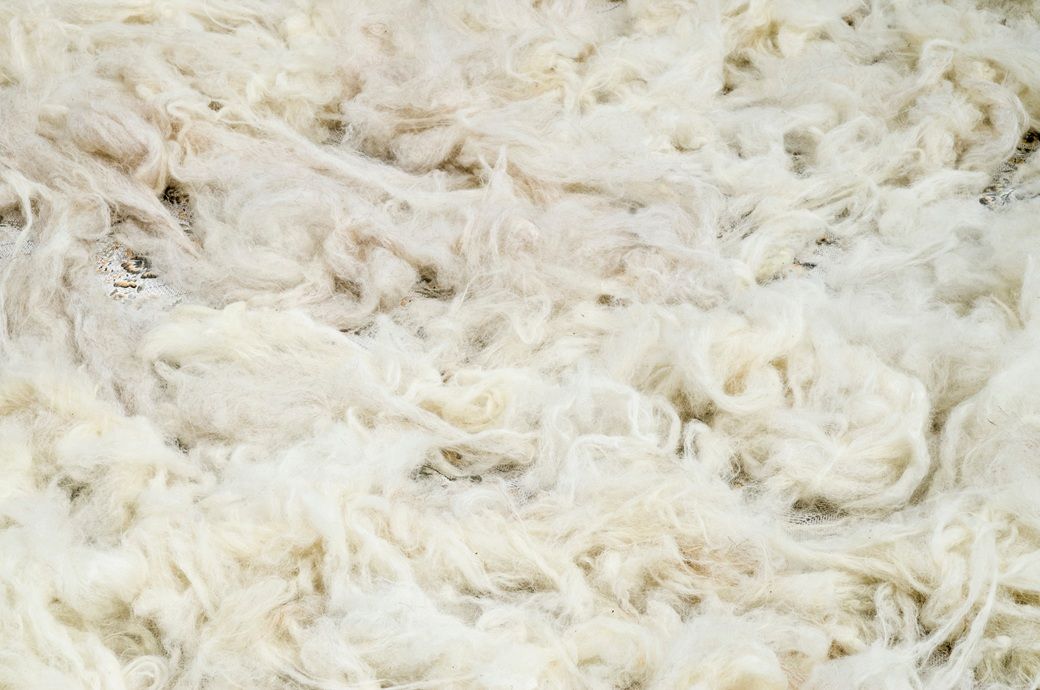
A marginally weaker US dollar lent support to returns, while the Australian dollar, holding firm at $0.71-0.72, continued to cap gains in US dollar terms, Australian Wool Innovation (AWI) noted in its Week 44 commentary (week ending May 1, 2026).
Australian wool prices edged higher, with EMI up slightly, though US dollar returns weakened and WMI declined.
Mixed trends were seen across wool types, with crossbreds gaining and Merino types easing.
A larger offering increased quality variation, leading to discounts on lower-grade wool.
With supply set to fall to 34,290 bales next week, market direction will depend on demand and quality.
Price trends were mixed across wool types. Fine Merino (16.5-19 micron) gained 5-10 cents in the North but declined 10-20 cents in the South and West. Medium Merino (19.5-24 micron) eased 5-15 cents in the North and South and dropped 15-35 cents in the West. Crossbreds (25-32 micron) rose 10-30 cents across most centres, while Merino cardings were mixed but generally firm, according to AWI commentary.
The week’s higher offering of 37,744 bales, up by 4,078 bales, introduced a broader quality mix, resulting in heavier discounting for lower-grade wool and a softer underlying tone. While better-quality lots attracted steady demand, weaker lines, especially in Melbourne put pressure on overall market sentiment as per the AWI commentary.
Looking ahead, next week’s offering is expected to decline by around 3,500 bales to 34,290 bales, which could provide some support, AWI commentary noted.
However, outcomes will depend on buyer confidence and the quality profile of the catalogue, as demand remains selective, AWI commentary observed.
The upcoming sales will feature Fremantle on Tuesday, while Sydney and Melbourne will follow a Tuesday-Wednesday roster.
Fibre2Fashion News Desk (CG)

From January to March, the country’s total social logistics value reached ¥96.4 trillion (~$14 trillion), marking a year on year (YoY) increase of 6.2 per cent at comparable prices. The growth rate was 1.1 per cent points higher than the full-year level in 2025 and 0.5 per cent points above Q1 2025.
China’s logistics sector recorded steady growth in Q1 2026, with total social logistics value rising 6.2 per cent year on year (YoY) to ¥96.4 trillion (~$14 trillion).
Industrial activity remained the key driver, while online retail and consumption trends supported demand.
Authorities aim to enhance supply chains and accelerate digital, green transformation.
The industrial sector emerged as the primary growth driver, with the value of industrial goods logistics rising 5.8 per cent year on year (YoY). It contributed over 80 per cent of the increase in total social logistics value during the period. Within this, manufacturing accounted for more than 80 per cent of overall logistics demand, as reported by Chinese media.
Logistics demand linked to consumption also showed steady expansion. Online retail sales rose 7.5 per cent year on year (YoY) in the first three months, accounting for 24.8 per cent of total retail sales of consumer goods, reflecting the continued rise of new consumption patterns.
“Supported by the recovery in springtime consumption and policies aimed at boosting spending, demand for consumer-related logistics has expanded steadily, with the sector’s resilience continuing to strengthen,” said Liu Yuhang, director of the China Logistics Information Center.
Looking ahead, Liu noted that efforts will focus on optimising urban rural delivery networks and accelerating the development of a modern supply chain system. He also emphasised the need to closely track changes in transport and oil prices, while advancing the sector’s digital, intelligent, and green transformation.
Fibre2Fashion News Desk (JP)


US GDP grows 2% in Q1 2026, driven by investment & exports

Australian wool prices edge higher, quality gap weighs on market

Kim Kardashian delights fans with pregnancy pic ahead of Met Gala: ‘Loading’

-

 Tech7 days ago
A Brain Implant for Depression Is About to Be Tested in Humans
-

 Tech1 week ago
Almost 90% of women leave tech industry within 10 years | Computer Weekly
-
 Business1 week ago
Pakistan’s oil market is fuelling the crisis | The Express Tribune
-
 Business6 days ago
‘I had £20,000 stolen and had to fight a 13-month fraud reporting rule to get it back’
-

 Sports6 days ago
Pro wrestling star Steph De Lander reveals how colleague’s advice helped lead her to title triumph at ACW
-

 Entertainment7 days ago
Norway joins Type 26 Frigate Programme to boost NATO naval power
-

 Entertainment7 days ago
Melania Trump says ABC should ‘take a stand’ on late-night host Kimmel
-

 Tech6 days ago
This Ambitious Laptop Doesn’t Leave Much Room for Your Hands