

Business
FTSE eases on weak US data as Ukraine peace summit looms

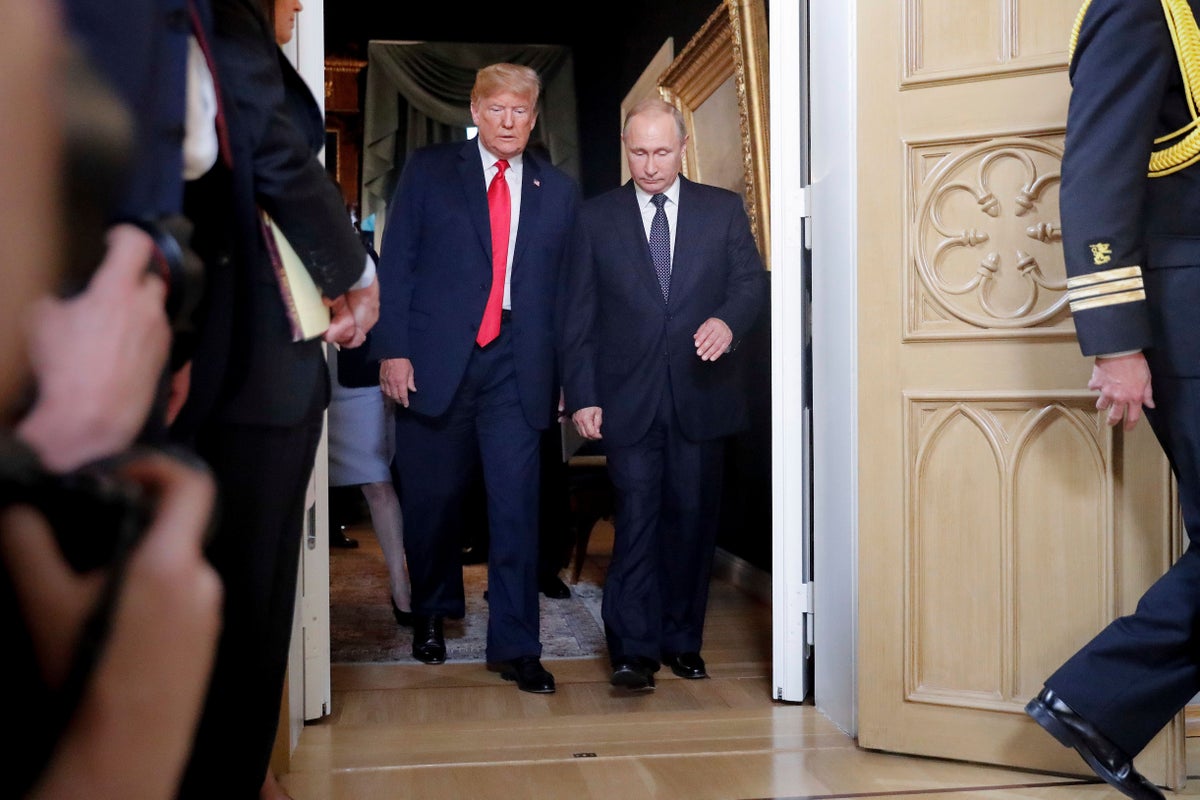
The FTSE 100 fell back after hitting a new all-time high to close lower on Friday amid caution ahead of the US-Russia peace summit, hints of more tariffs and weak US consumer sentiment.
The index closed down 38.34 points, 0.4%, at 9,138.90. It had earlier reached an all-time intra-day high of 9,222.07.
The FTSE 250 ended down 43.43 points, 0.2%, at 21,758.24, and the AIM All-Share finished 0.86 of a point higher, 0.1%, at 759.80.
For the week, the FTSE 100 rose 0.5%, the FTSE 250 fell 0.9% and the AIM-All Share declined 0.3%.
In Europe, the Cac 40 in Paris rose 0.7%, while the Dax 40 in Frankfurt closed down slightly.
US President Donald Trump and Russian counterpart Vladimir Putin will meet later on Friday in Alaska in a summit that could prove decisive for the future of Ukraine.
Mr Putin will step on to western soil for the first time since he ordered the invasion of Ukraine in February 2022.
Mr Trump extended the invitation at the Russian leader’s suggestion, but the US president has since warned that the meeting could be over within minutes if Mr Putin does not compromise.
Speaking to reporters aboard Air Force One en route to Anchorage, the US leader sounded a more positive note, saying: “There’s a good respect level on both sides and I think something’s going to come out of it.”
“Investors will be watching closely for signs a credible peace deal is in the offing and any outcomes could set the mood music for next week,” said AJ Bell investment director Russ Mould.
Mr Trump also said he will be setting new tariffs on steel, semiconductors and computer chips from next week, but declined to say what rate would apply, according to AFP.
The US president said he would keep the new levies “lower at the beginning” to give companies “a chance to come in and build” in the US.
“And if they don’t build here, they have to pay a very high tariff, which doesn’t work. So they’ll come and build,” he said.
In New York, the Dow Jones Industrial Average was up 0.1%, the S&P 500 was 0.2% lower, and the Nasdaq Composite dropped 0.4%.
Figures showed US retail sales growth decelerated in July, although the number was in line with hopes.
The US Census Bureau said retail sales grew 0.5% monthly in July from June, when they had grown 0.9%, which revised up from 0.6%.
But separate data from the University of Michigan showed the preliminary August sentiment index fell to 58.6 from 61.7 a month earlier. FX Street consensus had forecast an improvement to 62.0.
The report showed US consumers are scaling back spending plans amid concerns about inflation and weakening job prospects.
The pound climbed to 1.3566 dollars late on Friday afternoon in London, compared with 1.3541 at the equities close on Thursday.
The yield on the US 10-year Treasury was at 4.31%, widened from 4.28%. The yield on the US 30-year Treasury was 4.90%, up from 4.87%.
On the FTSE 100, mining stocks rose despite weak data from China.
Anglo American rose 2.1%, Glencore climbed 1.8% and Antofagasta 1.2% on hopes the soft figures will spark action from Chinese authorities.
“Chinese economic activity slowed across the board in July, with retail sales, fixed asset investment, and value added of industry growth all reaching the lowest levels of the year,” ING said.
“After a strong start, several months of cooling momentum suggest that the economy may need further policy support,” the broker added.
Asia-focused bank Standard Chartered slumped 7.2% after a US politician asked the country’s attorney general to investigate the bank.
Republican Elise Stefanik, in a post on X, said she has asked Pam Bondi to investigate the bank for “illicit payments to known terrorists”.
Ms Stefanik shared a letter on X in which she alleged Standard Chartered had made 9.6 billion dollars from such payments.
“China has been using Standard Chartered to purchase sanctioned Iranian oil,” she claimed.
On a quiet day for company news, Associated British Foods ended up 0.2% after confirming the acquisition of Hovis Group from private equity firm Endless.
AB Foods plans to combine Hovis with its existing Allied Bakeries division to create a “profitable UK bread business that is sustainable over the long term”.
Allied Bakeries owns the bread brands Kingsmill, Allinson’s and Sunblest. It also produces own-label bakery ranges for major UK supermarkets.
Clive Black, retail analyst at Shore Capital, said the deal shows AB Foods has been true to its word and taken “demonstrable action to deal with persistent problem children”.
He said AB Foods and Endless need to overcome any UK antitrust concerns, but he believes there is “ample” choice for bread shoppers after any Hovis/Kingsmill alliance, providing a “firm basis” for regulatory approval.
On the FTSE 250, Bytes Technology Group jumped 8.4% after launching a share buyback programme worth up to £25 million.
A barrel of Brent fell to 66.33 dollars late on Friday afternoon from 66.80 on Thursday. Gold rose to 3,343.39 dollars an ounce against 3,339.74.
The biggest risers on the FTSE 100 were Anglo American, up 47.0p at 2,170.0p, BP, up 7.3p at 421.4p, Glencore, up 5.2p at 299.7p, Games Workshop, up 200.0p at 15,680.0p and Antofagasta, up 26.0p at 2,122.0p.
The biggest fallers were Standard Chartered, down 101.5p at 1,305.5p, Rolls-Royce, down 27.5p at 1,074.0p , 3i Group, down 96.0p at 3,971.0p, Airtel Africa, down 4.0p at 216.2p and Rightmove, down 13.8p at 761.0p.
Contributed by Alliance News

One petrol retailer says he is experiencing about five drive-offs a week at each forecourt, costing him thousands.
Source link
Business
Billions to be paid! US starts refund process for Trump tariffs: Can Indian exporters claim? – The Times of India
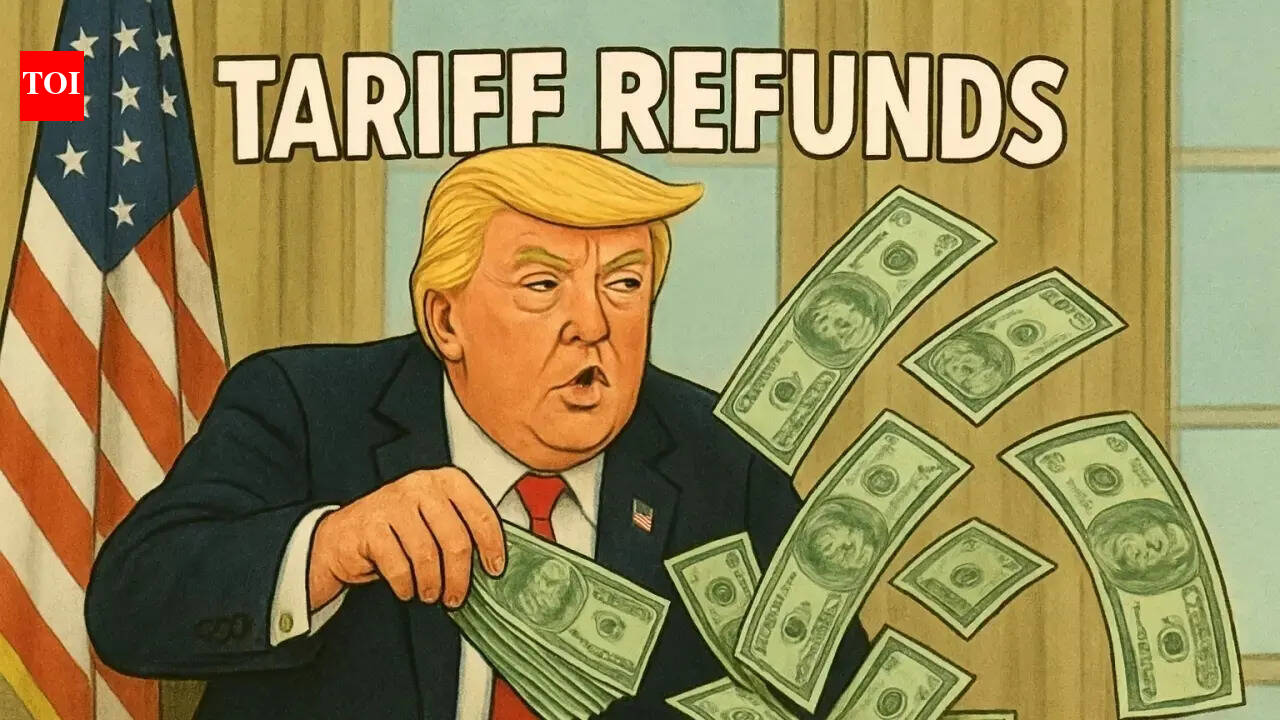
The US government has rolled out a system to facilitate refunds of over $166 billion from tariffs introduced by Donald Trump and later invalidated by the US Supreme Court. In February, the court struck down a broad set of reciprocal tariffs, delivering a significant setback to a central pillar of Trump’s economic agenda and paving the way for repayments.On Monday, US Customs and Border Protection announced that the first phase of its refund-processing platform is now operational, allowing importers and customs brokers to begin filing claims to recover the duties they had paid.The agency had earlier estimated in March that more than 330,000 importers may qualify for reimbursements on duties or deposits linked to over 53 million shipments. In its initial rollout, the platform covers about $127 billion in duty payments eligible for electronic refunds.
Tariff refunds What US Customs and Border Protection has said
The process to return reciprocal tariff payments starts on April 20 through a newly launched online platform, CAPE (Consolidated Administration and Processing of Entries), operated by US Customs and Border Protection.This move follows a February 20, 2026 judgment by the US Supreme Court, which ruled that tariffs introduced by Donald Trump were unlawful. The court found that these duties had been imposed under the International Emergency Economic Powers Act without adequate legal backing.Also Read | Iran has closed Strait of Hormuz completely: What does this mean for India’s crude oil, LPG, LNG supplies?The tariffs impacted a wide range of exports from countries including India. To receive repayments, importers in the US are required to submit claims which include shipment details, applicable tariff classifications and proof of payment. Once approved, these refunds along with interest are expected to be processed within 60 to 90 days. Eligibility is limited to those who originally paid the tariffs, primarily US importers and businesses.The total amount to be refunded is estimated at around $166 billion, with nearly $12 billion tied to Indian goods.The tariff structure began at 10% on April 2, 2025, before escalating quickly. Duties on Indian goods increased to 25% by August 7, 2025, and further to 50% by August 28, remaining at that level until early February 2026. On February 6, 2026, rates were lowered to 18% following negotiations. However, the Supreme Court’s ruling later that month nullified the entire regime, effectively rendering the tariffs void and paving the way for refunds.
What it means for India
Exporters and end consumers are not permitted to file claims directly, although some companies, such as FedEx, may opt to pass on the refunded amounts at their discretion.According to Global Trade Research Initiative (GTRI), around 53% of India’s shipments to the US, which largely comprises textiles and apparel, were subject to higher tariffs. This makes them the largest contributors to the refund pool. Of the nearly $12 billion tied to Indian exports, textiles and apparel are estimated to account for around $4 billion, followed by engineering goods with a similar share and chemicals contributing about $2 billion, while other sectors make up the remainder.However, what is important to understand is that these refunds will not flow directly to Indian exporters. The payments are meant only for US importers who bore the tariff burden.Also Read | Explained: On way to 4th largest, how India slipped to 6th rank & what it means for 3rd largest economy dream“Payments go only to US importers, and exporters have no legal right to claim them. Indian exporters, therefore, have no direct legal route to claim refunds,” explains Ajay Srivastava, founder of GTRI.Hence, any potential recovery of these refunds will depend on commercial discussions. Exporters will need to actively engage with their US counterparts to negotiate a share of the refunded duties, particularly in cases where earlier pricing factored in tariff costs. GTRI explains that this can be done by reopening contracts, adding rebate-sharing clauses, asking for price revisions or credit notes, and using invoices and tariff data to show how costs were absorbed. “Exporters with stronger bargaining power, especially in textiles and engineering goods, may secure better terms in future orders,” the think tank says.Industry bodies such as the Apparel Export Promotion Council, Engineering Export Promotion Council of India and Chemexcil can also assist exporters with guidance on contract renegotiation and sector-specific approaches, it adds.
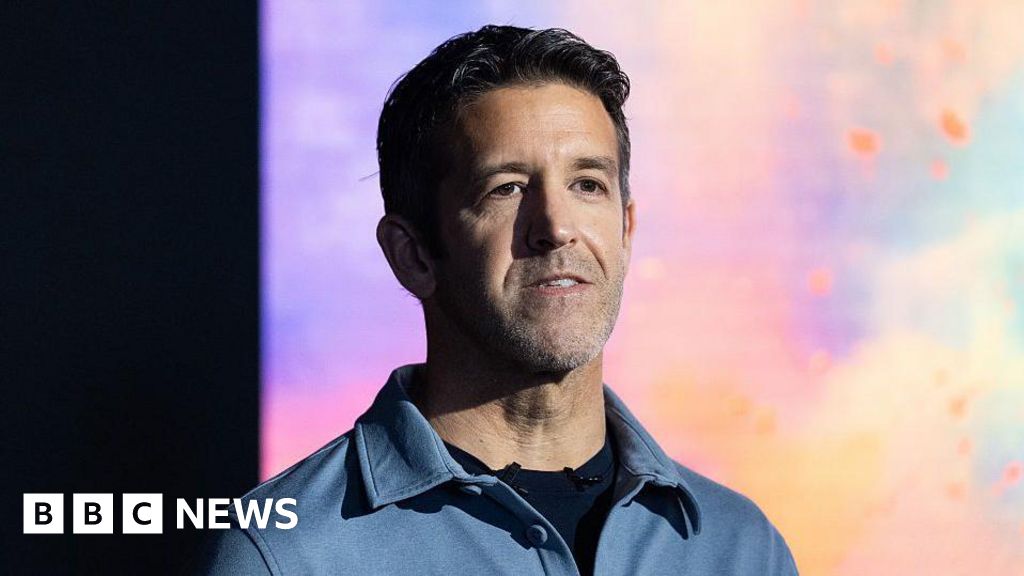
John Ternus will take over running the technology giant as Cook steps up to become executive chairman.
Source link

Spike in petrol thefts after Iran war pushed up fuel prices

War-linked energy shock pushing inflation higher in Europe: IMF expert

Scam messages offering ships safe transit through Hormuz, warns security firm

-

 Fashion5 days ago
France’s LVMH Q1 revenue falls 6%, shows resilience amid Iran war
-

 Sports1 week ago
The case for Man United’s Fernandes as Premier League’s best
-

 Entertainment1 week ago
Palace left in shock as Prince William cancels grand ceremony
-
 Business1 week ago
UK could adopt EU single market rules under new legislation
-

 Entertainment6 days ago
Is Claude down? Here’s why users are seeing errors
-

 Fashion1 week ago
Energy emerges as biggest cost driver in textile margins
-
 Business1 week ago
Delta Air Lines unveils first new Delta One suite in premium cabin arms race
-

 Tech1 week ago
A Lot of Shops Won’t Fix Electric Bikes. Here’s Why