

Business
Govt, industry flag deep economic strains | The Express Tribune

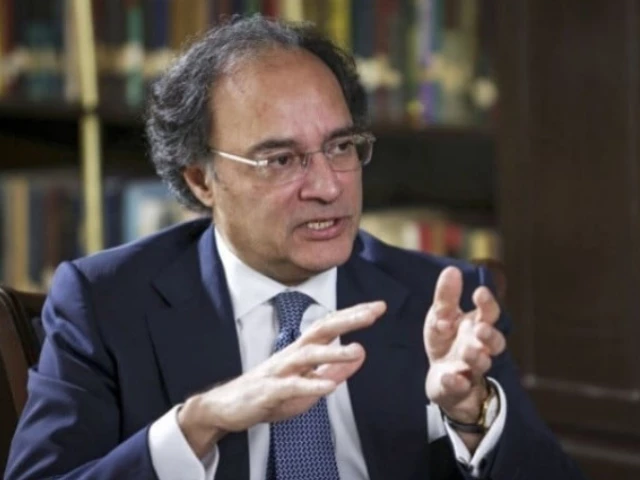
Aurangzeb cites IMF-driven reforms as businesses warn of crippling energy costs and collapsing investment
LAHORE:
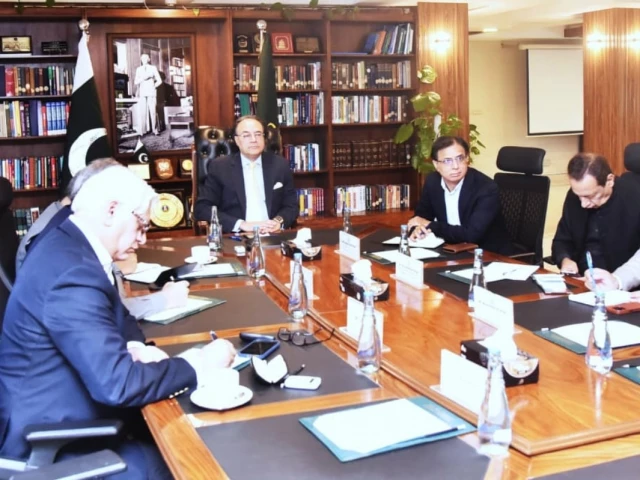
Federal Finance Minister Senator Muhammad Aurangzeb on Saturday said that sustained, meaningful dialogue between the government and the business community is essential for finding workable economic solutions, stressing that engagement limited only to the annual budget cycle cannot address structural problems. Addressing the All Pakistan Chambers Conference hosted by the Lahore Chamber of Commerce and Industry (LCCI), he said constructive discussions have recently taken place between the federation and the provinces on the NFC Award, leading to the formation of eight working groups, with progress expected by January 15.
He added that the State Bank of Pakistan has received $1.2 billion following the approval of the International Monetary Fund (IMF) programme and invited the private sector to participate in the privatisation of Pakistan International Airlines (PIA). Aurangzeb also told participants that the IMF diagnostic and corruption report resulted from a transparency process initiated by the government itself, not one targeting any specific administration. He said an action plan is now being prepared to address the structural weaknesses highlighted in the report.
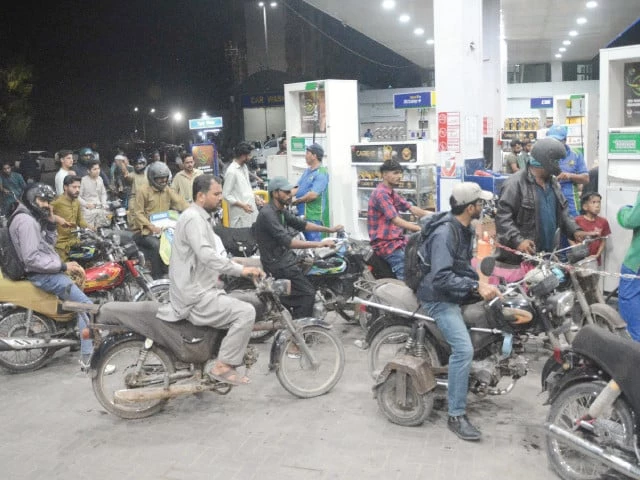
LCCI President Faheemur Rehman Saigol, speaking earlier, said that the cost of doing business had reached an unbearable level, creating an urgent need for industry-wide relief. He said the high policy rate and expensive electricity and gas were compelling industries to relocate abroad. He added that agreements with independent power producers (IPPs) should undergo forensic audit and electricity tariffs should be aligned with regional countries.
The LCCI chief said non-filers should be incentivised and integrated into the tax net while existing taxpayers should be facilitated. Calling for a simple and transparent tax system, he urged the abolition of unnecessary withholding taxes. According to him, Pakistan is facing a widening trade deficit, and exports can only grow if exporters are supported through the restoration of the Final Tax Regime and timely payment of duty refunds. Saigol further pointed to annual losses of around Rs850 billion incurred by state-owned enterprises (SOEs), calling them a major economic burden and arguing that immediate privatisation had become essential. He said investment in the country is at a 25-year low, stressing the importance of promoting domestic investment. He also sought collateral-free and cash-flow-based financing for SMEs to generate employment and increase exports.
Aurangzeb, continuing his address, said remittances remain the backbone of the economy and noted ongoing efforts to deepen the local bond market and deregulate commodity markets. He announced that the Pakistan Agricultural Storage and Services Corporation (PASCO) would be abolished, with strategic reserves to be maintained through the private sector. He said the Tax Policy Office has been separated from the Federal Board of Revenue and placed under the Finance Division to ensure long-term and stable policymaking. Acknowledging pressures on the formal sector and salaried class, he said action is being taken against non-compliant sectors. He stressed that only the private sector can drive economic growth, while the government’s role is to provide an enabling environment.
Aurangzeb said large-scale manufacturing has grown by 4%, IT exports have crossed $4 billion, and remittances are expected to reach $41-42 billion. He also mentioned steps related to PIA privatisation, crypto, blockchain and the digital economy, and proposed establishing a research cell at the Lahore Chamber.
SAARC Chamber Vice President Mian Anjum Nisar said extremely high electricity prices remain a fundamental concern.
LCCI Senior Vice President Tanveer Ahmed Sheikh said the FIR culture against traders must end, warning that if local investors do not feel secure, attracting foreign investment will be difficult. Presidents of the Chambers of Chaman, Quetta and Sarhad urged the opening of border trade, saying closures were hurting their exports to Central Asian states.



Business
Middle East crisis: Jubilant FoodWorks reports some Domino’s outlets affected by LPG shortage – The Times of India

Jubilant FoodWorks Ltd (JFL), which operates Domino’s Pizza and Dunkin Donuts in India, has reported constraints in LPG cylinder supplies across parts of its store network due to the ongoing West Asia war, according to ET.In a filing to the BSE, the company said, “Operational impact at this stage is limited and being actively managed. The company is taking several steps to conserve LPG and working overtime to move to alternate energy sources like electricity and piped natural gas (PNG).”It added that it is in continuous touch with oil marketing companies to track developments and respond to the evolving situation. “The company is in constant engagement with oil marketing companies (OMCs) to remain apprised of the latest developments and plan operational responses accordingly, given the rapidly evolving nature of the situation,” the filing said.The company noted that it is closely monitoring the situation as supply disruptions persist.The impact is being felt across the restaurant industry, with several chains facing similar challenges due to LPG shortages.On March 10, the National Restaurant Association of India (NRAI) had advised its five lakh members to consider shorter operating hours, reduce items requiring long cooking times or deep frying, and adopt fuel-saving measures such as using lids while cooking, in view of supply constraints linked to the Gulf war.
Business
Russia sells reserve gold for first time in 25 years to fund Ukraine war deficit: Report – The Times of India

Russia has begun selling physical gold from its central bank reserves for the first time in 25 years, as the government seeks to plug a widening budget deficit driven by sustained military expenditure, according to a report by Berlin-based news outlet bne IntelliNews.Regulatory data show that between 2022 and 2025, Russia sold gold and foreign currency worth over RUB 15 trillion ($150 billion), followed by an additional RUB 3.5 trillion ($35 billion) in just the first two months of 2026, the report noted. In January alone, the Central Bank of Russia sold 300,000 ounces of gold, followed by another 200,000 ounces in February.The move marks a significant shift in reserve management. Earlier, gold transactions were largely notional, involving transfers between the Ministry of Finance and the central bank without physical movement of bullion. In recent months, however, the central bank has started selling actual gold bars into the market.As a result, Russia’s gold holdings have declined to 74.3 million ounces, the lowest level in four years. The disposal of 14 tonnes in January and February is the largest two-month sale since the second quarter of 2002, when 58 tonnes were offloaded in a single tranche.The sales come as Russia’s fiscal position comes under increasing strain. The government ended 2025 with a budget deficit of 2.6 per cent of GDP, compared to an initial projection of 0.5 per cent, Berlin-based bne IntelliNews report noted. Economists estimate the actual deficit could be closer to 3.4 per cent, with some payments deferred to 2026 to limit the reported gap.Pressure on the budget has intensified as oil prices weakened in the second half of the year and US sanctions tightened, reducing the contribution of oil and gas tax revenues to about 20 per cent of total revenues — roughly half of pre-war levels.The decision to sell gold has also been influenced by the sharp rise in bullion prices to above $5,000 per ounce. This surge has pushed Russia’s international reserves to over $809 billion as of February 28, including around $300 billion of assets frozen in the West, according to the Central Bank of Russia. Of this, gold reserves alone are valued at about $384 billion.Russia currently holds more than 2,000 tonnes of gold, making it the world’s fifth-largest sovereign holder, according to World Gold Council data. The country had built up these reserves over the years to reduce dependence on dollar-denominated assets, especially after sanctions imposed following the annexation of Crimea in 2014 and further tightened after the invasion of Ukraine in 2022.Since 2022, the Ministry of Finance has relied on multiple funding channels to manage budget pressures. These include drawing from the National Welfare Fund, which still holds around RUB 4 trillion, increasing issuance of domestic OFZ treasury bonds, and raising value-added tax rates, which account for about 40 per cent of government revenues.The shift to selling physical gold suggests that Russia is now tapping its liquid reserve buffers more directly, underlining the growing fiscal strain as the conflict in Ukraine continues into its fourth year.
Three-month waiver on bank guarantees, credit letters covers rice, seafood, pharmaceuticals among other commodities
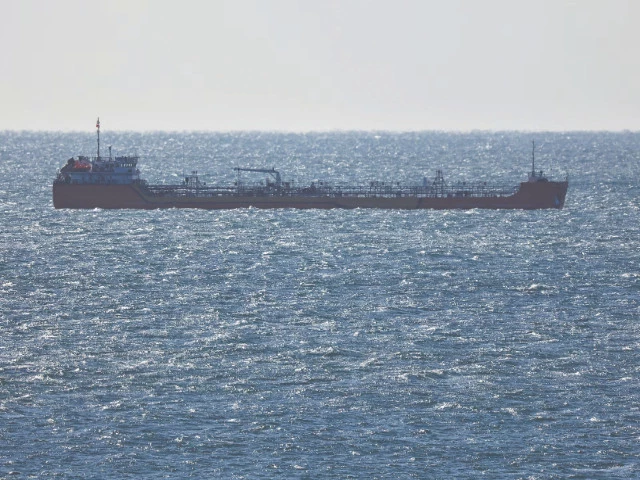
Increased sourcing from the US reduces reliance on the Strait of Hormuz — a narrow maritime corridor through which a substantial proportion of global oil trade passes and which remains vulnerable to geopolitical tensions. Photo: Reuters
ISLAMABAD:
The Ministry of Commerce has approved a temporary exemption from financial instruments, including bank guarantees and letters of credit, for exports to Iran, the Central Asian Republics and Azerbaijan via Iran’s land route, it emerged on Saturday.
The development arose from a March 24 notification by the Ministry of Commerce received by The Express Tribune.
The exemption, issued under the Import and Export Control Act 1950, waived the requirement under Paragraph 3 of the Export Policy Order 2022, which mandates that all exports from Pakistan be made in compliance with Foreign Exchange Rules, regulations, and procedures notified by the State Bank of Pakistan (SBP).
The concession will remain effective for three months, from March 24 to June 21. The ministry stated that the federal government had taken the step to facilitate exporters and enhance regional trade.
Read: Local exports hit by ‘triple threat’
Under the exemption, rice may be exported to the Central Asian Republics and Azerbaijan through Iran’s land route. Exports of the following commodities to Iran via land route were also permitted: rice (milled), seafood, potatoes, meat, onions, maize, citrus, banana, tomato, frozen chicken, pharmaceuticals and tents.
However, the exemption from financial instruments, according to the notification, would be subject to the submission of an undertaking by the exporter that the export proceeds would be submitted within the stipulated time period.
Commerce Minister Jam Kamal Khan said Pakistan would now be able to export rice to Central Asia and Azerbaijan via Iran, adding that removing barriers to pharmaceutical exports was the government’s top priority.
He added that trade through Iran would significantly reduce exporters’ costs and time, and that increasing exports would steer the country towards economic stability.
Read More: Attack on Iran jolts Pakistan’s economy
The Ministry of Commerce said it was utilising all resources to enhance regional connectivity and increase trade volume, adding that the measure would strengthen trade links in the region.
A week ago, Pakistan’s Ambassador to Iran, Mudassir Tipu, said bilateral and transit trade between the two countries remained operational despite ongoing regional tensions.
The envoy expressed gratitude to the Iranian government for extending “full facilitation” to Pakistan’s trade, including transit trade through Iran during “challenging times”.
He added that land border crossings between Pakistan and Iran were functioning “optimally”, with green channels at multiple routes ensuring swift movement of goods on both sides. Further, Tipu said that Pakistan was extending maximum cooperation to Tehran to ensure trade flows remain unaffected by the evolving situation.

Middle East crisis: Jubilant FoodWorks reports some Domino’s outlets affected by LPG shortage – The Times of India

Alex Vesia, Dodgers pitcher who lost infant daughter, gets standing ovation after scoreless return to mound

Men’s March Madness 2026: Ranking the remaining eight teams

-
 Business1 week ago
Flipkart group CFO to leave co amid IPO plans – The Times of India
-
 Business1 week ago
Video: The Effects of High Oil Prices
-

 Fashion1 week ago
China’s textile & apparel exports surge 17% to $50 bn in Jan-Feb 2026
-

 Sports1 week ago
Rating Adidas’ 2026 World Cup away shirts: Argentina, Spain, Mexico and more
-

 Sports1 week ago
American Conference Commissioner Tim Pernetti thanks Trump for Army-Navy game executive order
-
Tech1 week ago
The Corsair 4000D RS PC Case Keeps Your System Cool
-

 Tech1 week ago
Gamers Hate Nvidia’s DLSS 5. Developers Aren’t Crazy About It, Either
-

 Tech1 week ago
‘Uncanny Valley’: Nvidia’s ‘Super Bowl of AI,’ Tesla Disappoints, and Meta’s VR Metaverse ‘Shutdown’