

Sports
How QB-needy NFL teams can approach the bad offseason market

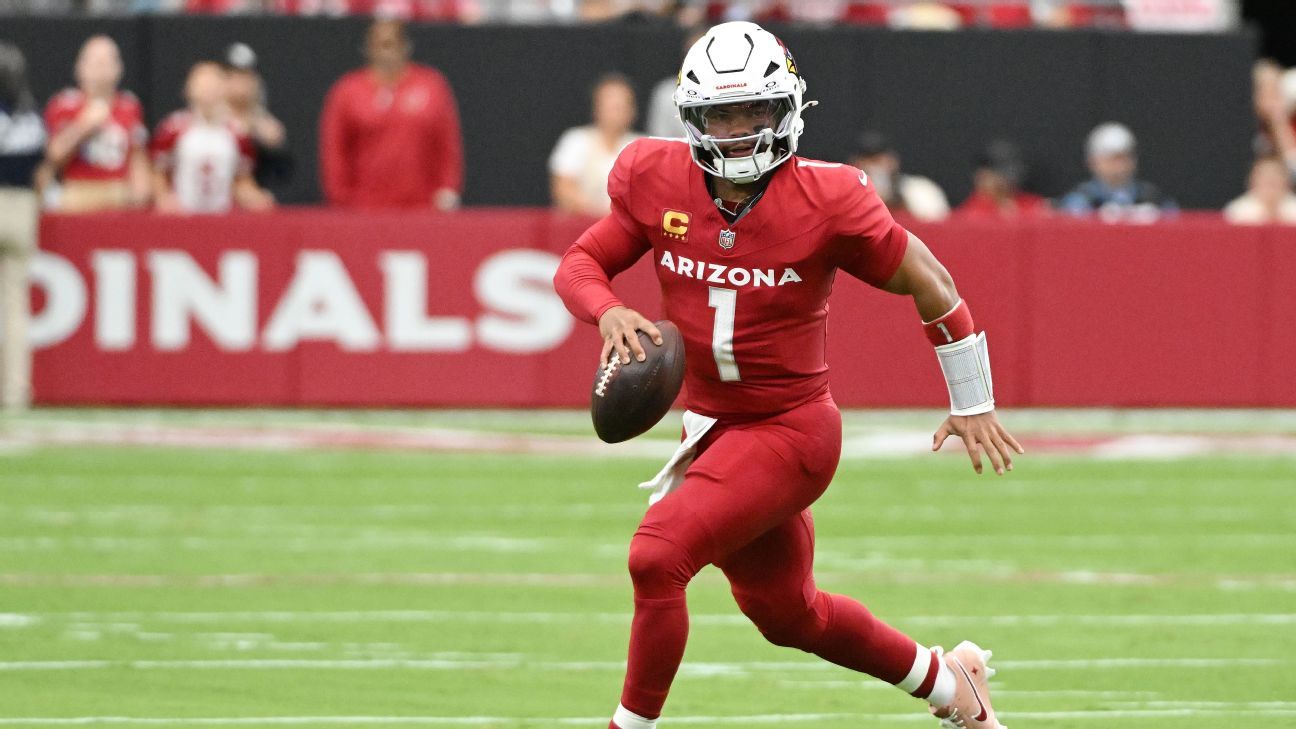
Welcome to the 2026 NFL offseason. If your favorite team needs a quarterback, I have some bad news.
Because many football fans are just now turning their eyes to the offseason, here’s a quick overview. The 2026 NFL draft class isn’t particularly strong overall, and it is extremely thin at quarterback. After presumed first selection Fernando Mendoza (Heisman winner, national champion at Indiana and Raiders QB in a little under three months), the best options are Alabama’s Ty Simpson and … probably LSU’s Garrett Nussmeier? This class might play out like 2022, when only one quarterback went in Round 1 (Kenny Pickett, No. 20) and only four went in the first two days.
There are some names available in the veteran quarterback market, but those names aren’t very exciting. While last offseason included free agent quarterbacks such as (now-Super Bowl champion) Sam Darnold, Daniel Jones and Aaron Rodgers, this offseason’s pool includes … well, Daniel Jones (off an Achilles injury) and Aaron Rodgers (one year older). Because Jones and Rodgers are both strongly suspected to stay with their current teams, the biggest contract might fall to Packers backup and quality spot starter Malik Willis. Or could the Falcons’ Kirk Cousins get one more solid contract after Atlanta releases him before the new league year begins March 11?
If the draft and the free agent market are thin, what is a quarterback-needy team to do? Win in the margins. While this isn’t the offseason for stacking quarterbacks on a big board or pick-your-poison free agent targets, the smart teams with financial flexibility will still have the ability to attack the veteran quarterback trade market. And two names stand out above the rest: Arizona’s Kyler Murray and Miami’s Tua Tagovailoa. (San Francisco backup Mac Jones reportedly will not be traded this offseason.)
When Murray and Tagovailoa are the offseason’s best options, it isn’t a great QB offseason. But both are workable under the right conditions, and below them, there are plenty of veteran journeymen or low-risk gambles teams will consider at the position. Quarterback movement is inevitable, so let’s look at all of the candidates for changing teams, as well as the teams in the market for their services.
Jump to:
Murray | Tagovailoa
Next tier | Sleepers
Teams looking for QBs


In the past 11 drafts, a quarterback has been selected with the first pick nine times. The three drafted longest ago (2015 Jameis Winston, 2016 Jared Goff and 2018 Baker Mayfield) are with new teams. The ensuing six remain on the teams that drafted them. Murray, drafted in 2019, is the longest tenured of those six … for now.
As ESPN’s Adam Schefter reported last week, the Cardinals are actively seeking a trade partner for Murray’s deal. It makes sense. Cutting Murray outright would incur a dead cap hit north of $54.7 million. It wouldn’t be the biggest dead cap hit ever — when Russell Wilson was released by the Broncos in 2024, he left behind a whopping $85 million in dead money. But it would be the second biggest.
By trading Murray, the Cardinals could save on dead money and get draft capital in return. Assuming Murray is traded the moment the new league year begins, the Cardinals would take on only the $17 million in cap already due Murray from prorated signing and option bonuses. Relative to his expected 2026 cap hit of over $52 million, they’d save around $35 million in cap space — a huge boon.
But the remaining contract is prohibitive in trade negotiations. If Murray’s deal is moved as is, he would have three years and about $125 million left on it — an average of $41.6 million per year, just above Matthew Stafford for 16th among all quarterbacks. Of that $125 million, a whopping $60 million would be guaranteed, a huge amount for a deal acquired via trade. This is one of the reasons why quarterback megacontracts aren’t often traded. Because of roster bonus timing and salary guarantee kickers deep into the fourth or fifth years of the deal, the acquiring team gets stuck not just with big remaining contract years but also with guaranteed money it can’t easily release or restructure.
Murray’s $22.8 million base salary for the 2026 season is already guaranteed, and another $17 million in roster bonuses is guaranteed by whatever team rosters him — the Cardinals or an acquiring team — on the fifth day of the 2026 league year. As such, Murray would hit the cap for over $40 million in Year 1 and is due another $19.5 million guaranteed in Year 2. This is not a small commitment.
If Murray is considered a veteran dart throw who might steer a listless franchise into a rookie quarterback, then he’s very expensive to add as bridge option. Daniel Jones’ one-year deal with the Colts cost $14 million last season, and he did not cost them any draft capital. Jones is just a few months older than Murray, and from 2019 to 2024 (in other words, excluding Jones’ stellar 2025 season), he was not a significantly worse quarterback than Murray by catch-all metrics. Murray is definitely a more talented player than Jones, but if Jones’ deal is a good proxy for how the league wants to compensate bridge quarterbacks, it’s tough to see the Cardinals dealing Murray without altering his deal.
Unlike many quarterback reclamation projects, Murray did not stumble out of the gates with his first team then bounce around looking for a new home. He won Offensive Rookie of the Year in 2019 and made Pro Bowls in 2020 and 2021. He was a great fit in Kliff Kingsbury’s spread-and-shred passing attack and a prolific scrambler, and the certainty of a contract extension was clouded only by a 2022 ACL tear. But he got that extension, and among all of the successful QB reclamation projects over the past several years (including Geno Smith, Sam Darnold, Baker Mayfield, etc.), Jones is the only other one to get a second contract with his original team. (And that original team, the Giants, released Jones less than two years later.)
Post-ACL tear and outside of Kingsbury’s offense, Murray hasn’t been the same quarterback. He returned late in the 2023 season, his first under new offensive coordinator Drew Petzing. The Cardinals employed a run-heavy offense but never got the deep play-action shot active with Murray under center. On throws of at least 10 air yards from 2023 to 2025, Murray was 26th in completion percentage, 28th in off-target rate and dead last in EPA per dropback (among 34 quarterbacks). The numbers are all as bad or worse on throws of 20-plus air yards.
This split is a serious departure from where Murray was on similar throws under Kingsbury, and it speaks to the disconnect between Petzing and Murray, as well as the Cardinals’ Marvin Harrison Jr.-sized failure to find a solid downfield target.
Murray is currently recovering from a foot injury of unclear severity, and the Cardinals likely used that injury to keep him on the bench for the entire regular season. Could he have come back? If so, when? And how would he have looked? We have no idea, which makes his offseason even more uncertain.
A foot injury can linger, and Murray’s mobility is integral to his game, so acquiring teams must beware. But there is reason to be quite confident that Murray still has some juice as a quality starter in a shotgun, spread offense. As Jones and Darnold showed us this past season, the 16th-best quarterback in football can captain league-leading offenses if everything around them is right. Murray needs to play with more team speed than the Cardinals had and see more RPOs and screens to maximize his quick release and underneath accuracy. As long as his foot is healthy and his quickness remains, he’d also benefit from an offense that more intentionally folds him into the running game.
Were Murray the only legitimate starter available for trade, the Cardinals would have a leveraged position to force an acquiring team to take on as much money as possible. But Murray is not the only big name available. As such, it’s unlikely he gets dealt before the fifth day of the league year, meaning his contract will need to be adjusted to make it more palatable for an acquiring team. Interestingly, when Schefter reported on the trade availability of Murray and fellow veteran Tagovailoa, he reported that the Dolphins were willing to swallow a portion of Tagovailoa’s deal to facilitate a trade. He reported no such thing about Murray.
If Murray’s contract is traded in its current form, I think the return would be almost nominal — a Day 3 pick. For acquiring teams with plenty of cap space and a long-term rebuild ahead (think teams such as the Jets), keeping the draft capital and spending the money on Murray might be preferable. But would the Cardinals endure the optics of getting just a fourth-round pick for Murray to save the money? I’d wager they’re more likely to take on some dead cap in order to improve the draft compensation they get in return, which would put other teams in play.

From 2022 to 2023, Tagovailoa was third in the league in EPA per dropback behind only Patrick Mahomes and Josh Allen. Tagovailoa was third in dropback success rate, behind only Mahomes and Allen. And he was first in explosive pass rate.
Much like Murray, Tagovailoa has been most successful under one playcaller. After a couple of shaky years under coach Brian Flores and a carousel of offensive coordinators, Tagovailoa fell into the Mike McDaniel offense, which subsequently took the league by storm. With his shotgun, play-action system that utilized sudden motion at the snap, McDaniel opened intermediate passing windows more easily than even Kyle Shanahan or Sean McVay had before him. From 2022 to 2023, Tagovailoa led the league with 39.5% of his throws going at least 10 yards downfield and had the second-fastest time to throw (2.54 seconds) behind only Tom Brady. That’s how an offense breaks the league.
Tagovailoa has a hyper-specific and fragile skill set, though. A tremendous RPO passer because of his fast release, willingness to challenge coverages with anticipation and accuracy within 20 yards of the line of scrimmage, Tagovailoa was perfectly equipped to lead the McDaniel offense. He trusted McDaniel exhaustively and, at times, to his detriment, throwing to spots on the field almost independent of safety rotation. More than any other quarterback we had seen in the Shanahan system, Tagovailoa was willing to make it work.
When McDaniel was on the cutting edge ahead of opposing defensive coordinators, the system sang. But because Tagovailoa struggles with escaping the pocket, throws on the move and adjusting beyond his first read, any defensive coordinator who could get the jump on McDaniel never had to fear Tagovailoa punishing the opponent in the scramble drill. After coaches such as Brandon Staley (2022) and Steve Spagnuolo (2023) had some success against the system, their approaches proliferated. As such, we can say with confidence that Tagovailoa is a scheme-dependent quarterback.
For a bridge QB, this isn’t terrible news. The way to maximize Tagovailoa is very clear. Though it’s unlikely he gets such an enormous McDaniel-esque bump to the point where he’s among the league leaders in quarterback metrics in 2026 and beyond, a new spin on a spread, RPO-heavy offense would provide passable play. Tagovailoa is the ideal bridge quarterback, in that you can win with him, but he won’t hold off a promising rookie passer for long. Think about the tough decision the Vikings faced when they had to decide if they should keep Sam Darnold or commit to J.J. McCarthy. It’s unlikely Tagovailoa forces such a debate.
He is in the midst of a lucrative contract extension, and the financials behind trading his deal would be tough. Cutting Tagovailoa would create $99 million in dead cap — a record-setting figure. Even with a post-June 1 designation, Tagovailoa would still batter the Dolphins’ salary cap with a $67 million dead cap figure in 2026 alone, beating Wilson’s single-year record of $53 million cleanly. Releasing Tagovailoa would be the largest admission of financial error in NFL history.
0:58
Why Mel Kiper Jr. has some concern about Ty Simpson
Mel Kiper Jr. examines whether Alabama quarterback Ty Simpson is a first-round pick after he declared for the draft.
It also might be inevitable. Any contract this brutal to terminate is similarly brutal to trade. An acquiring team would take on a three-year deal with a $39 million base salary in 2026 (fully guaranteed) and be saddled with another $15 million option bonus if Tagovailoa is traded before the third day of the 2026 league year. Because Schefter reported that the Dolphins are willing to swallow some of Tagovailoa’s contract to get a trade done, it’s easy to infer that they’d take on the $15 million bonus. Yes, it would increase their 2026 dead cap hit after the trade to over $60 million, which would set the single-season record. But unlike in a post-June 1 release, they wouldn’t have to take on any more dead cap in 2027.
I’d wager that the Dolphins don’t just take on Tagovailoa’s $15 million but also some more of the 2026 salary to make his contract more of a one-year deal in the $30 million range (with some team options behind). This would make Tagovailoa’s compensation commensurate with the deal Darnold signed with Seattle, as a scheme-dependent quarterback with the right tool kit to manage an elite offense for the correct coaching staff.
Tagovailoa is extremely unlikely to return much of anything in a trade package. While Murray could easily get into the range of a Day 2 pick, I would be surprised if Tagovailoa is traded for anything better than a Round 4 selection. It would require the Dolphins taking on even more salary to get anything in trade return for their former franchise passer, and they can take on only so much because they must also release Tyreek Hill this offseason.
The next tier

Though Tagovailoa and Murray are the two big-name quarterbacks, smart teams will investigate secondary options. Willis is the splashy young name. The 26-year-old has only six career starts — three with the Titans and three with the Packers — during his four-year career. All six were spot starts behind an injured QB1, and his reps with the Titans were brutal. Willis had no touchdowns and three interceptions, completed just 50% of his passes, was sacked 10 times and averaged 4.5 yards per attempt in Tennessee. He had some value as a rusher, with 27 carries for 123 yards and a score, but not nearly enough to move the needle.
In Green Bay, Willis showed some of the talent that got him drafted in Round 3 in 2022. In 11 games, Willis has 42 carries for 261 yards and three scores. That 6.2 yards-per-rush mark would be fourth behind Murray, Baker Mayfield and Spencer Rattler over the past two seasons among passers with 100-plus dropbacks. Willis’ 13% scramble rate and 11.8% explosive run rate would lead all QBs. This guy is a legitimate threat with the ball.
But it’s the improvement as a passer that really stands out. Over those two seasons, Willis has gone 70-of-89 (79% completion rate) for 972 yards, and that 10.9 yards per attempt ranks miles ahead of second place (Lamar Jackson at 8.7). His 9.2 yards per dropback is also miles ahead of second place (Jackson at 7.7). And his 86.3 total QBR is miles ahead of second place (Jackson at 69.9).
Though Willis’ production has come against some soft passing defenses, such as the Bears and Ravens, the film is undeniable. Willis is throwing accurate passes down the field in rhythm. He can throw inside of structure to the correct option, and he can make quality throws outside of structure, too. The sack rate is worrying — 9.6%, one of the league’s highest over the past two years. But that places him somewhere on the Justin Fields–Jayden Daniels continuum of playmaking, and that’s not a bad place to be.
Watching Malik Willis. Bears bust the coverage so Christian Watson is wide open but Willis doesn’t see it and hits the harder throw to Musgrave instead.
Great velocity on this ball. pic.twitter.com/gdvJC1noiD
— Benjamin Solak (@BenjaminSolak) February 10, 2026
Willis is no longer a sleeper signing. His services will be hotly sought after by teams looking for a still-young gamble at a franchise quarterback. But just how hotly? It’s hard to find a historical proxy for “highly valued free agent with six career starts at quarterback.”
One of the few solid comparisons we can use is Jimmy Garoppolo. Though Garoppolo could not be more stylistically opposite from Willis, he had only seven starts in his first four seasons as a pro — including two before the 49ers traded a second-round pick to acquire him from the Patriots after his third season. Garoppolo had five starts for the 49ers in 2017, went 5-0 as a starter with solid stats and got a five-year deal worth $137.5 million — the largest contract in NFL history at the time.
OK, so maybe not the best proxy.
Brock Osweiler can also help us out. Drafted in the second round in 2012, Osweiler didn’t start a game until his fourth year with the Broncos, as a little-known quarterback named Peyton Manning turned out to be much healthier than Denver could have dreamed. Osweiler parlayed his seven starts (5-2, pretty average stats) into a four-year, $72 million deal with the Texans in 2016 — a substantial contract at the time, and one that Houston traded to the Browns with significant draft capital the next offseason after it became clear Osweiler wasn’t a starting-caliber quarterback.
Osweiler got $18 million per year, which was about 8.6% of the 2016 salary cap. A decade later, with a salary cap projection just over $300 million, a similar deal would cost $26 million per year. This feels like the correct value for Willis. Fields made $20 million per year on his two-year contract with the Jets, and Mayfield is making $33 million per year in Tampa Bay. That $13 million difference between the two feels like the sweet spot for Willis.

The other significant (soon-to-be) free agent is Cousins, whom the Falcons will reportedly release this offseason. He will turn 38 before the 2026 season kicks off and is now more than two years removed from an Achilles injury, so we can pretty easily tie his value to that of Aaron Rodgers. Rodgers was 41 and two years removed from an Achilles tear when he signed his one-year, $13.6 million deal with the Steelers. Much like Rodgers, who had some flashes of quality ball in the back half of the 2024 season with the Jets before he hit free agency, Cousins looked decent stepping in during the back half of the 2025 season with the Falcons once Michael Penix Jr. went down for the year.
Cousins is an evident stopgap quarterback — a one-year solution for a team that needs passable play for short-term relief. While Murray, Tagovailoa and Willis could all play their way into multiyear futures with new teams, Cousins is reportedly mulling retirement and television as an option in this free agent period. If the marriage isn’t right for one last go, he might forgo signing with a team entirely. But of the super-veteran options (Cousins, Rodgers, Russell Wilson, Joe Flacco and Garoppolo), he is comfortably the most talented remaining passer.
I’d make it 65-35 that he ends up signing a one-year deal somewhere.
The super deep indie cuts
With a largely unsatisfying draft class waiting in the wings, there almost certainly will be movement among No. 2 QBs as teams cycle through young passers in hope of striking gold on a Hail Mary heave. Here are a few names to watch for those teams that miss out on Malik Willis, Tua Tagovailoa and Kyler Murray.
-
Will Levis, Tennessee Titans: The 2023 second-round pick lost his job to Cam Ward the moment the Titans landed the first pick in 2024. In July, Levis underwent season-ending shoulder surgery, and he is now approaching the final year of his rookie deal. A disasterclass artist so prolific he produced multiple screenshot-worthy reactions to his own turnovers, Levis is remembered worse than he actually played. He has prototypical size and good arm strength. Because the Titans’ front office and coaching staff are completely new, I’d be stunned if he isn’t traded this offseason.
-
Jalen Milroe, Seattle Seahawks: The Seahawks hedged their Darnold bet with a Round 3 selection on Milroe, who now starts down the path that Willis was on with Tennessee. Milroe is only QB3 in Seattle behind Darnold and Drew Lock, but Milroe started above Ty Simpson — the nominal QB2 in this draft class — at Alabama in 2024. Teams likely will compare their predraft grades on Milroe to the grades on this year’s class, and if they can get Milroe at a discount, they could try to trade for him instead of drafting an inferior prospect.
-
Tanner McKee, Philadelphia Eagles: The backup QB on Howie Roseman’s roster is always in danger of being dealt. McKee typically looks strong in the preseason, and he looked acceptable in two Week 18 starts while throwing to the Eagles’ backups. He is an older prospect (will be 26 next season), but he still has a developmental arc in that he has never seen extended game action. In a world where Will Howard might be starting for the Steelers or Quinn Ewers could be in for the Dolphins, McKee deserves a camp fight somewhere.
-
Davis Mills, Houston Texans: It’s hard to see the Texans trading Mills, whom they just gave a one-year, $7 million extension to continue providing effective QB2 play behind C.J. Stroud. But perhaps a strong offer could entice them to deal Mills, who is far from an exciting option at 28 years old but clearly is somewhere between the QB2 and QB1 worlds for quarterbacking quality. Note that his old offensive coordinator, Bobby Slowik, now coaches the Dolphins’ offense; Miami would need a new quarterback if it flips Tagovailoa.
-
Anthony Richardson Sr., Indianapolis Colts: It was an odd year for Richardson, who reportedly was having a solid camp but could not fend off Daniel Jones for the starting QB job in Indianapolis. Jones took off like wildfire, but once he got hurt, Richardson was unavailable given a freak orbital fracture. Richardson is a huge sleeper now — in that the Colts are likely set at QB2 with Riley Leonard behind Jones — and his youth and physical tool kit merit further opportunities and a fresh start on another team.
-
Spencer Rattler, New Orleans Saints: This is the guy I’d really be pursuing if I were in desperate need. Rattler was a totally acceptable young starter during his eight games of action before Tyler Shough took the reins in New Orleans. And while Shough elevated the offense some, he enjoyed a much more successful defense than Rattler got in his starts. Rattler has great physical tools for playmaking, but he also showed he could be a more cautious and methodical player last season. I’d deal a Day 3 pick for him right now if I were looking for camp competition.
-
Derek Carr, retired: Apparently Carr would maybe come back for the right team? This does not interest me at all. Remember, Carr is still under contract with the Saints, so he isn’t free if he unretires. He has to return to New Orleans, waive his no-trade clause then get dealt. (Presumably not for much, as the Saints don’t want to keep his contract on the books, but still.) Carr will be 35 next month, so he hasn’t aged out of the league just yet, but it’s difficult to be enthusiastic about his ceiling outside of the Klint Kubiak offense.
-
Garrett Nussmeier, LSU: If Fernando Mendoza is the obvious first pick and Simpson is the next man off the board, then the rest of the field is scrambling for a QB3 option. I’d have Nussmeier above players such as Carson Beck (Georgia) and Cade Klubnik (Clemson), as Nussmeier had exciting 2024 film before a 2025 oblique injury robbed him of his throwing power. The size is suboptimal, but the arm talent is there. Nussmeier feels like a pick somewhere in the 70s.
The teams that might need one of these passers …
As I see it, there are 10 teams in clear need of an additional quarterback this offseason. That count does not include Las Vegas, which will draft Fernando Mendoza with the first pick and start a new era of prolific Raiders football (hopefully). Included in those 10 teams are the Cardinals and the Dolphins, who — independent of exactly how they move on from their current passers — will at least look for competition in 2026.

Atlanta can defensibly enter 2026 with Penix under close scrutiny as a third-year starter. But he’s coming off a late-season ACL tear, so the Falcons will need someone who can start in September if he’s not ready. More likely, the Falcons open up the starting job in a camp competition between Penix and another outside option.
Funnily enough, Cousins would be a great fit in Atlanta. He has played for new coach Kevin Stefanski successfully in the past (with Minnesota) and obviously has an existing rapport with the Falcons’ pass catchers. Is the blood in Atlanta still bad now that the front office and coaching staff have been replaced?
Atlanta likely won’t compete hard for Willis’ services in free agency, but I could easily see that front office trading for one of the backups on rookie contracts who are collecting dust on another team’s bench.
2:38
Stephen A.’s NFC QB rankings have RC fuming
Stephen A. Smith, Ryan Clark and Dan Orlovsky get heated debating which NFC quarterbacks they would take over Sam Darnold.

Assuming the Colts sign Daniel Jones, I could still see them looking for a veteran option to start over Riley Leonard while Jones slowly comes back from the Achilles injury. (No, not Philip Rivers. That’s a little too veteran.) This seems like the right team for Marcus Mariota or Joe Flacco.
If the Colts do not re-sign Jones, they’ll have perhaps the biggest QB need on the market. But they will … right?

I don’t think it would be egregious for the Jets to enter next season with a QB room of Justin Fields, Tyrod Taylor and (insert middle-round rookie here). Fields was frustratingly cautious for the Jets last season, but most of the free agent options aren’t much better than him or Taylor.
The Jets do have plenty of money to acquire either Tua Tagovailoa or Kyler Murray. Given the Jets’ intradivisional familiarity with Tagovailoa’s game, I’d be surprised if they go that direction (though, with Frank Reich calling the offense, the RPO game would work well). Murray seems like a more realistic option. GM Darren Mougey is a patient team manager, but he was also present for the Russell Wilson fiasco in Denver, and he knows how badly the Cardinals want to get out of the Murray contract. The Jets have a ton of first-round picks incoming and don’t need to hold on to their third- or fourth-rounders as preciously as other teams.
If I had to guess where Murray ends up next season, this would be my spot.

If the Steelers re-sign Aaron Rodgers to another one-year deal, God bless ’em. Rodgers’ lack of mobility and diminishing arm talent is an enormous limiting factor on their offense. Only two quarterbacks (Fields and Brady Cook) threw shorter passes than Rodgers in 2025, and Rodgers offered the Steelers nothing on extended plays: 39th of 45 quarterbacks by success rate on extended dropbacks. Hopefully a Rodgers return would come with an accompanying trade for a young passer who can compete in camp — I think Rattler would learn a ton from Rodgers, in that Rattler has a style of play reminiscent of prime Rodgers — but I’m not holding my breath on that.
1:30
Graziano: Rodgers not a ‘real solution’ at QB anymore
Dan Graziano explains why the Steelers need to move on from Aaron Rodgers after their AFC wild-card exit against the Texans.

The Browns should aggressively pursue and sign Willis in free agency. Why not? Already leveraged aggressively against future cap years, the Browns will start to make up financial ground only once they have a quarterback on a good deal. If they trade for Will Levis or Anthony Richardson, with one year remaining on their respective contracts, they’ll be negotiating from a weaker position should either player actually hit.
They should give Willis $30 million per year now, backload it and let him ride as their developmental starter for the next few seasons. His tools are so remarkably beyond those of Dillon Gabriel and Shedeur Sanders, and he has a style of play similar to Lamar Jackson, with whom Todd Monken just worked. This is a good marriage.
Miami should wait on making any big moves at quarterback until it has swallowed its 2026 cap lumps. Jeff Hafley is a defensive head coach, and the Dolphins’ roster construction will likely mirror that of Seattle’s under Mike Macdonald: Build an elite defense, then cycle through midtier quarterbacks trying to strike gold. Miami should not be trading any picks, as it needs rookie-contract, rosterable players to fill out its depth chart.
I like the Dolphins as a Kirk Cousins team, but if he prefers to return to Minnesota, it’s tough to find any ideal options. Malik Willis has the coaching familiarity, but the Dolphins will get priced out. Bobby Slowik coached Davis Mills in Houston, but again, I don’t like trading picks given the Dolphins’ current cap position. It really might be a Quinn Ewers year in Miami.

Minnesota will absolutely bring in competition for J.J. McCarthy, as it reportedly tried to do last season with Rodgers. Cousins is the obvious choice because he has scheme familiarity from his time in Minnesota as coach Kevin O’Connell’s starter. But O’Connell is a big believer in quarterback development, and I would not be surprised if he wants to go for a younger player to challenge McCarthy’s seat not just in 2026 but also beyond. Every toolsy young passer who can operate from the pocket (Tanner McKee, Anthony Richardson, Will Levis, etc.) is on my radar for a surprise Vikings trade.
(It will probably just be Cousins, though, let’s be honest.)
1:38
How much better would Vikings have been with Sam Darnold this season?
The “Get Up” crew discusses how the Vikings’ season might have differed with Sam Darnold at quarterback rather than J.J. McCarthy.

The good news for the Cardinals is that 2025 spot starter Jacoby Brissett has one year left on his deal and is a totally palatable bridge quarterback. With new head coach Mike LaFleur stepping in with the Sean McVay system, I would not be surprised to see Rams free agent Jimmy Garoppolo also make his way to Arizona as a potential spot starter instead of Brissett. The Cardinals must invest in some youth at quarterback, and I’d wager they’re in the Malik Willis market accordingly.
The incoming changes to the Cardinals’ offensive line and running back room do some damage to the quality of their developmental bedrock. But despite Arizona’s poor performance this season, a young passer could do a lot worse than Michael Wilson, Trey McBride and whatever can be gleaned from Marvin Harrison Jr. The Cardinals seem like the right team for a Ty Simpson pick in the second round.

Matthew Stafford won the MVP award and confirmed his return for another season in 2026, but I don’t trust his back at all — even and especially after the iron man season he just had. The Rams’ only youth at quarterback is No. 3 QB Stetson Bennett IV, and as such, they should strongly pursue young backups on the trade market this offseason. Will Levis is a great fit, as is Tanner McKee. But I’d wager McVay wants more playmaking at the position, so watch out for Anthony Richardson and Spencer Rattler as well.

The Chiefs need a spot starter! Patrick Mahomes is rehabbing an ACL/LCL tear suffered Dec. 14 with the hope of playing in Week 1, but the Chiefs will likely be uber-cautious with their franchise star. No. 2 QB is not a secure spot either, as Gardner Minshew is a rising free agent. The Chiefs might simply return Minshew and hope to get Mahomes back by Week 5, but they’re a good candidate for a veteran free agent addition, as well.
ATLANTA — The preparation of the United States men’s national team for the World Cup has entered its final phase. Not only will individual performances be scrutinized, but teamwide cohesion will be as well.
As such, Saturday’s match against Belgium provided a sobering assessment of where the USMNT currently stands, with the Americans enduring a heavy 5-2 defeat. Granted, it was one game, but the U.S. doesn’t look remotely ready for when the games start for real in June.
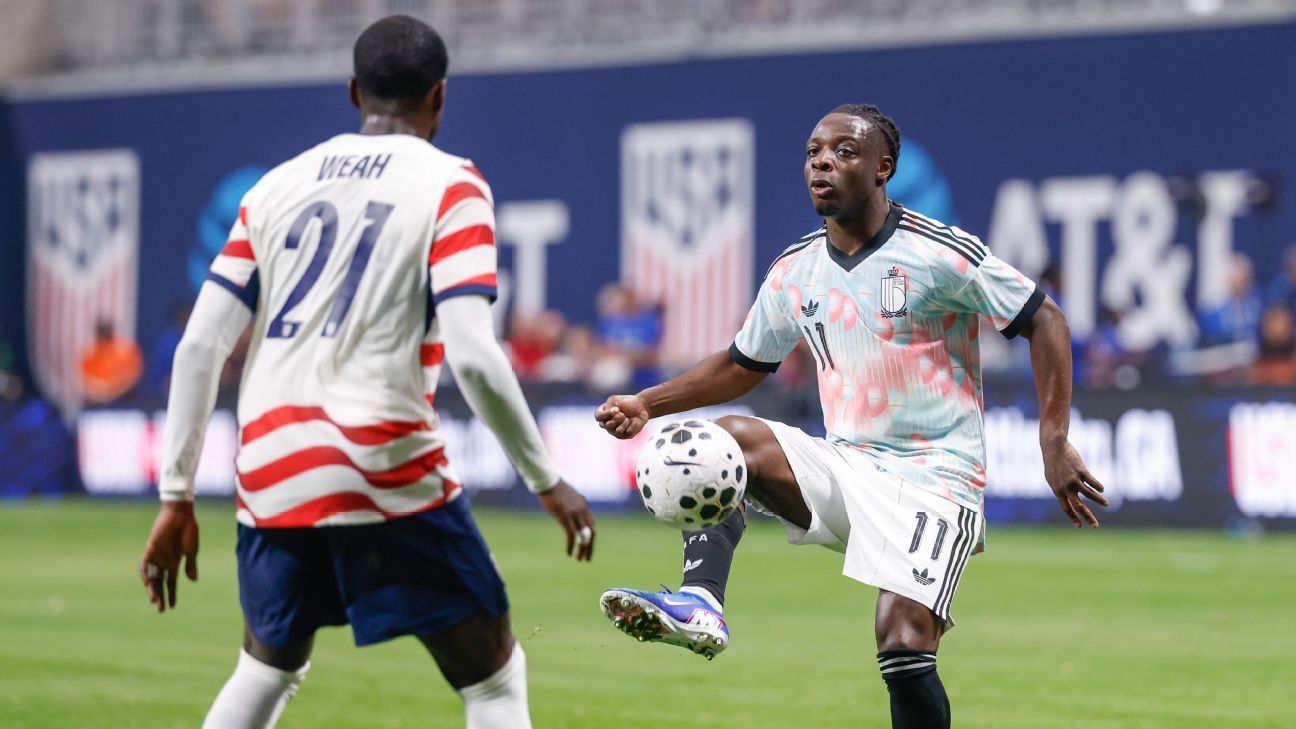
The U.S. looked competitive in the first half. Weston McKennie continued his fine run of form, scoring the Americans’ goal to put them up 1-0. But while the U.S. back line held up well into the second half, it had no answer for an electric performance from Belgian winger Jérémy Doku and saw its five-game unbeaten streak come to an abrupt end.
– USMNT player ratings: Weah poor as U.S. suffer heavy Belgium defeat
– O’Hanlon: Can USMNT’s depth at the 2026 World Cup make a difference?
– USMNT players speak up about what Mauricio Pochettino is like
It was a match where the deployment of the USMNT’s center backs was the main area of focus. FC Cincinnati‘s Miles Robinson and Crystal Palace‘s Chris Richards were out injured with groin and knee ailments, respectively, while FC Augsburg defender Noahkai Banks remains noncommittal to the U.S. squad. There are other reasons to be worried about the back line. Charlotte FC‘s Tim Ream hasn’t been at his best this season, while Mark McKenzie still has a few levels to climb in consistency with the USMNT. Those factors left manager Mauricio Pochettino to revert to the old standby formation of 4-3-3, with Ream and McKenzie anchoring the defense.
In the end, it wasn’t so much the center backs that were the issue. This was a teamwide humbling that will do little to inspire confidence in this U.S. side. In particular, the Americans’ defending on the flanks was abysmal. Belgium repeatedly found Doku isolated out wide either in transition or via a big switch of the point of attack and, even when he was double-teamed, he still found a way to torment the USMNT. Case in point was Amadou Onana‘s go-ahead goal in the 53rd minute. McKenzie didn’t do badly to contain Doku’s run, but the Belgian managed to suck nearly the entire U.S. defense toward him, leaving space for others. Doku played the ball to Charles De Ketelaere, who laid the ball off to Onana to fire home.
To be fair, Doku is an outstanding player. He wouldn’t be on the books of Manchester City if he weren’t. But this is a USMNT side that has set big goals for itself at this summer’s World Cup. If the U.S. is to make a deep run, it needs to beat a team of Belgium’s caliber, probably more than one. That Timothy Weah was the player usually victimized by Doku is somewhat surprising given he has played as an outside back plenty of times this season. It leaves one to wonder if anyone on the U.S. squad could have done better. Alex Freeman certainly couldn’t have done any worse.
That said, the U.S. also needed to do a better job of providing help out wide while also picking up late runners into the box and not resort to just watching the ball. This falls on the entire team, not just the back line, and is a fairly basic defense concept. That the U.S. seemed so incapable of executing in this area is probably the most concerning aspect of the performance. A return to three at the back — even with the depleted complement of center backs — is probably in order.
There are questions to be answered about the U.S. midfield as well. With Tyler Adams not even making the trip stateside due to a quad injury, an opportunity beckoned for Johnny Cardoso. After a rough first five months of the season with Atletico Madrid due to ailments of his own, Cardoso has ramped up his performance level at his club to the point that he appears indispensable. The problem with the USMNT is that Cardoso has never come close to replicating that level of form.
On Saturday, Cardoso showed flashes. He was 13 for 13 with his passes. His clever pick allowed McKenzie to break free on his goal and redirect Antonee Robinson‘s corner. He also had a vital tackle in the 17th minute that thwarted a Belgian counterattack. It was a surprise then to see him substituted at halftime with Cristian Roldan taking his place, although Pochettino explained after the match that the change was pre-planned due to discomfort the player felt earlier in the week.
For a team that didn’t possess the ball that well in the first half it was a strange decision, one that calls into question the level of the team’s depth. The second half witnessed a deluge of goals from Belgium with the U.S. continuing to show its inability to defend one-on-one situations. Goalkeeper Matt Turner, who was a surprise starter in place of Matt Freese, was continually left exposed. What will also give Pochettino pause is that he made liberal use of his bench, and things actually got worse. The only bright spot was when Ricardo Pepi deflected a pass out of the back that allowed Patrick Agyemang to score a consolation goal.
Is there reason to panic? Not yet. Four years ago, the U.S. fell 2-0 to Japan in its penultimate friendly prior to the 2022 World Cup that wasn’t nearly as close as the score indicated. In that instance, then-manager Gregg Berhalter got some data on who he could count on to deliver at the World Cup and who he couldn’t. Pochettino will need to do the same.
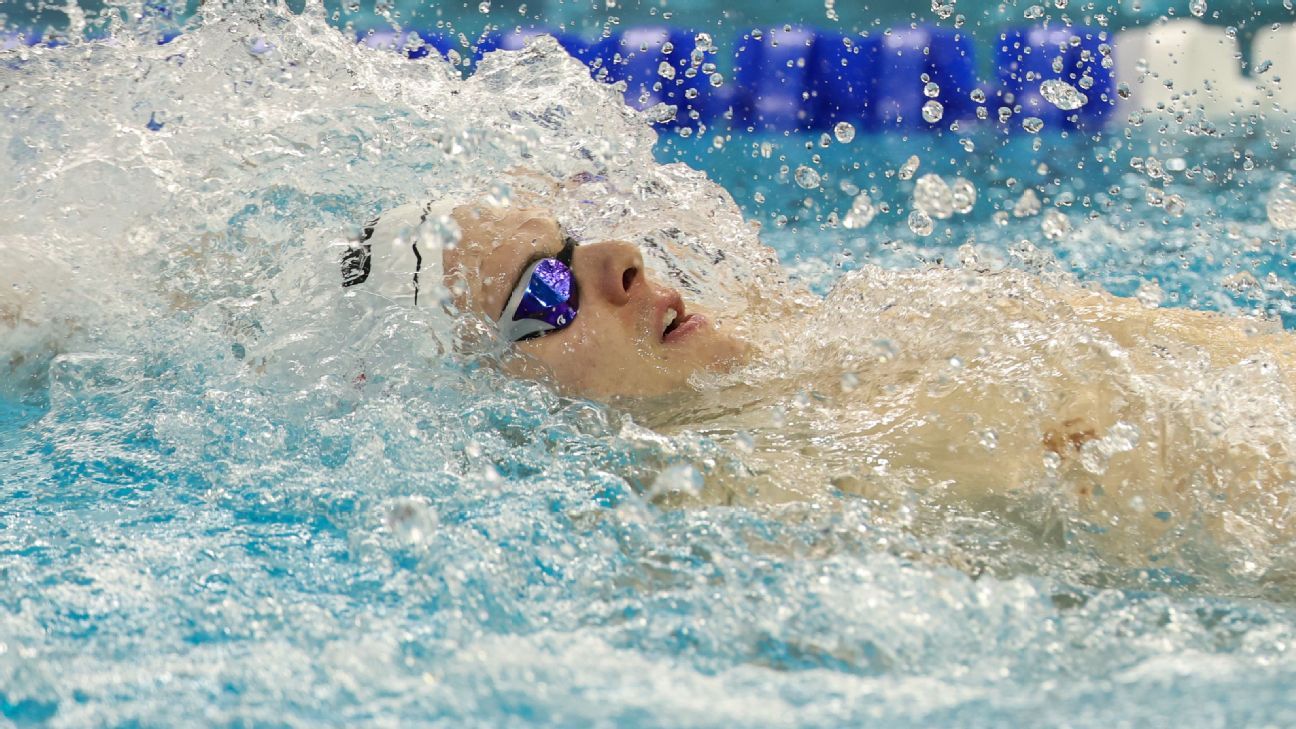
ATLANTA — Hubert Kós broke his own NCAA record while defending his title in the 200-yard backstroke to help the Texas men win a second straight national championship in swimming and diving on Saturday.
Kós won with a time of 1 minute, 34.13 seconds as the Longhorns piled up 445.5 points. He set an NCAA record of 1:34.21 in winning the event last season. Kós also broke the NCAA record in the 100 backstroke earlier this meet. Florida junior Jonny Marshall finished second and Virginia sophomore David King took third.
Runner-up Florida had 416 points. Indiana (351), Arizona State (328) and Tennessee (272) rounded out the top five.
Virginia freshman Maximus Williamson began the day by winning the 200 IM in 1:38.48. Indiana senior Owen McDonald was second, followed by Texas senior Baylor Nelson.
Florida senior Josh Liendo clocked a 39.91 to win the 100 freestyle. LSU junior Jere Hribar was second, followed by Tennessee senior Gui Caribe.
Arizona State junior Ilya Kharun won the 200 butterfly in 1:37.66, a half-second in front of Michigan senior Tyler Ray. Virginia freshman Thomas Heilman placed third.
Kharun, Adam Chaney, Remi Fabiani and anchor Jonny Kulow won the men’s 400 free relay with a NCAA record time of 2:42.15. N.C. State placed second and Florida was third. The Sun Devils won five of the seven relay races.
Texas A&M freshman Emilio Trevino won the title in platform diving with 465.40 points. Purdue sophomore Tyler Wills (451.15) and Florida sophomore Jesus Gonzalez (427.25) followed.
Coach Bob Bowman has led Texas to back-to-back championships. He guided Arizona State to the championship in 2024 before taking the Longhorns job.
Hall-of-Fame coach Eddie Reese led Texas to 15 championships during his 46-year run from 1978-2024.
-
Myron Medcalf
Close
Myron Medcalf
ESPN Staff Writer
- Covers college basketball
- Joined ESPN.com in 2011
- Graduate of Minnesota State University, Mankato
Multiple Authors
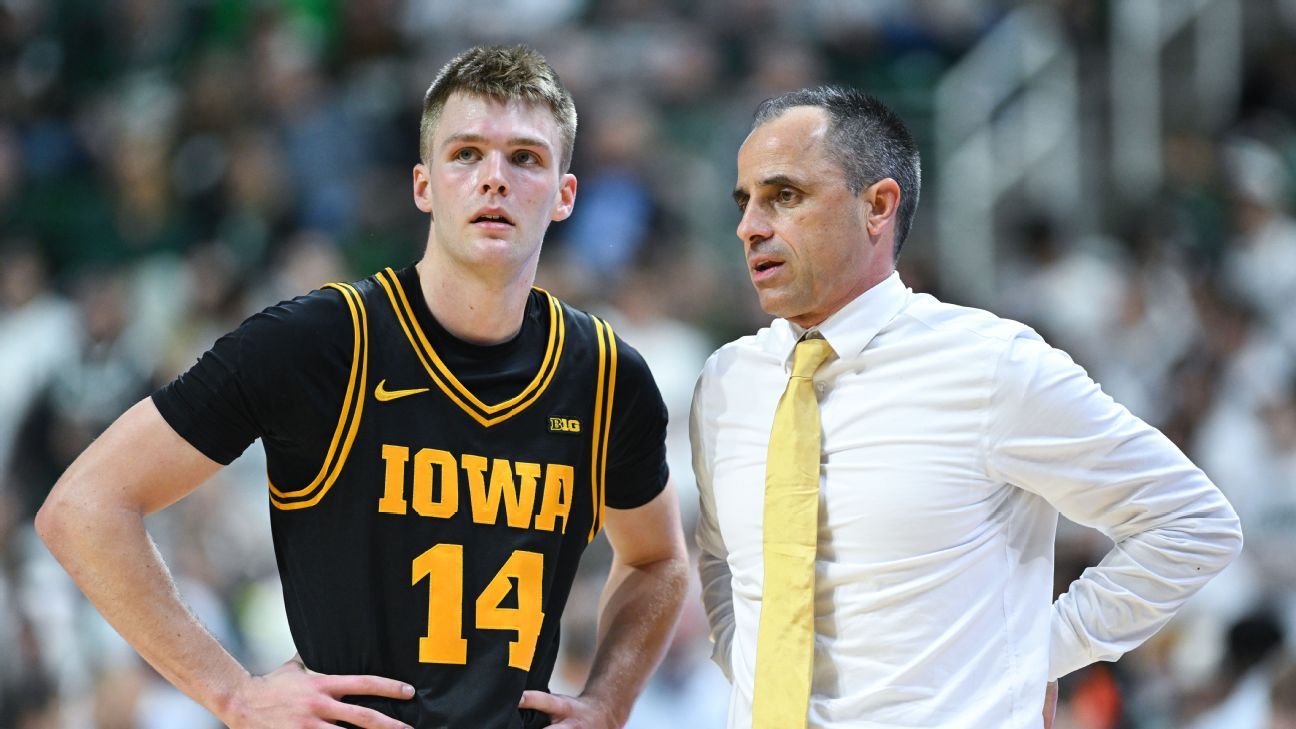
The 2026 men’s NCAA tournament has featured its fair share of heartbreaking losses — particularly after the first weekend.
Iowa, the 9-seed that took out reigning national champion Florida in the second round and 4-seed Nebraska in the Sweet 16, finally fell to 3-seed Illinois in the Elite Eight.
The Sweet 16, meanwhile, saw exits for St. John’s, Michigan State, Nebraska, Texas, Alabama, Arkansas, Iowa State and Houston.
In addition to the Gators’ unexpected early exit in the second round, Kansas was eliminated on a buzzer-beating layup by St. John’s. Kentucky suffered its worst NCAA tournament loss since 1972. And North Carolina surrendered a 19-point lead to fall to VCU in overtime.
With some of the most storied college basketball programs ending their seasons earlier than expected, ESPN’s Jeff Borzello and Myron Medcalf detail what’s next for each. Here’s your guide to their expected departures, returnees, top incoming recruits and where that leaves their personnel priorities for when the transfer portal opens April 7.


Record: 24-13 (10-10 in Big Ten)
How their season ended:: Lost to Illinois in the Elite Eight
Expected departures
Bennett Stirtz (19.7 PPG)
Tavion Banks (10.6 PPG)
Players with remaining eligibility
Alvaro Folgueiras (8.5 PPG)
Cooper Koch (7.8 PPG)
Cam Manyawu (6.9 PPG)
Kael Combs (6.2 PPG)
Tate Sage (5.6 PPG)
Isaia Howard (5.1 PPG)
Top incoming recruit: Ethan Harris (four-star)
The 6-foot-9 forward, and only recruit Iowa has signed from this class, is a strong addition to this roster. Harris averaged 18.1 points and 8.1 rebounds as a high school senior and picked the Hawkeyes over his home state schools of Washington and Gonzaga. He should give this frontcourt a boost.
Portal priorities: Stirtz is the centerpiece of everything McCollum has done at Iowa (and Drake and Northwest Missouri State before that), so his biggest priority in the portal will be to find a point guard and playmaker to run the Hawkeyes offense. The good news is that their Sweet 16 run should help them attract a player who fills that mold.
Iowa is also losing Banks, a versatile 6-foot-7 forward who is second on the team in scoring and excellent from 3 (45% this season). The Hawkeyes need another scoring threat who can stretch the floor, unless Banks — a former junior college player — is granted another year of eligibility as a result of the NCAA’s blanket waiver.
Finally, an Iowa team that finished 17th in offensive rebounding rate and 15th in defensive effectiveness inside the 3-point line in conference play needs more frontcourt depth to keep up in the Big Ten.

Record: 27-8 (15-5 in the Big Ten)
How their season ended: Lost to UConn in the Sweet 16
Expected departures
Jaxon Kohler (12.6 PPG)
Carson Cooper (11.0 PPG)
Players with remaining eligibility
Jeremy Fears Jr. (15.3 PPG)
Coen Carr (12.0 PPG)
Kur Teng (7.5 PPG)
Jordan Scott (5.9 PPG)
Cam Ward (5.2 PPG)
Divine Ugochukwu (5.1 PPG)
Top incoming recruit: Jasiah Jervis (No. 25)
The 6-foot-5 Jervis is one of four top-100 recruits — one of three in the top 50 — in Tom Izzo’s 2026 class. With Fears and Carr expected to return, Jervis will strengthen a talented Michigan State squad and have an opportunity to play with a point guard (Fears) who could enter next season as the front-runner to win the Wooden Award.
Portal priorities: Izzo has not traditionally relied on the portal because of his ability to retain players. His incoming freshman class also includes Ethan Taylor and Julius Avent, a pair of big bodies who will help replace the size and skill lost by Kohler’s and Cooper’s departures. Redshirt freshman and former four-star recruit Jesse McCulloch should strengthen this team’s depth inside, too. Assuming Fears also returns, the only portal needs might be more depth at power forward/center and point guard. — Medcalf

Record: 30-7 (18-2 in the Big East)
How their season ended: Lost to Duke in the Sweet 16
Expected departures
Zuby Ejiofor (16.3 PPG)
Bryce Hopkins (13.6 PPG)
Oziyah Sellers (10.5 PPG)
Dillon Mitchell (8.2 PPG)
Sadiku Ibine Ayo (1.8 PPG)
Players with remaining eligibility
Ian Jackson (9.6 PPG)
Joson Sanon (8.1 PPG)
Dylan Darling (6.9 PPG)
Ruben Prey (4.1 PPG)
Lefteris Liotopoulos (3.0 PPG)
Kelvin Odih (1.5 PPG)
Imran Suljanovic (redshirt)
Casper Pohto (redshirt)
Top incoming recruit: None.
Since Rick Pitino arrived, the Red Storm have leaned far more heavily into the transfer portal than high school recruiting when it comes to roster construction. Freshmen started a combined six games in his first season, one game last season and zero this season. In fact, a freshman hasn’t touched the floor for the Red Storm in a month. It is worth noting that St. John’s received a commitment from SC Next 100 recruit Adam Oumiddoch — but he decommitted in February and is now attending Villanova in the fall.
Portal priorities: St. John’s is sure to lose at least four starters, with Big East Player of the Year Ejiofor, two-time All-Big East performer Hopkins, third-team All-Big East selection Mitchell and starting guard Sellers all out of eligibility. Which means we should be in for another busy spring portal season in Queens.
The focus will be up front, with only reserve big man Prey coming back. Pitino will likely need at least two starters, potentially three if he opts to go with a bigger lineup again.
There could be some perimeter continuity, with Darling, the NCAA tournament hero, and scorers Sanon and Jackson all able to return. Will all three decide to do so? Jackson is the biggest question mark, as his role has fluctuated throughout the season and Pitino has spoken publicly about the potential for him to leave after this campaign. Despite his inconsistency, Jackson is a high-level scorer, and another year with Pitino could see him take the next step.
One more backcourt conundrum: While this trio helped St. John’s sweep the Big East regular season and tournament championships, it felt like the Red Storm lacked a true playmaking point guard. Will Pitino go to the portal for one of those as well? — Borzello

Record: 29-8 (12-6 in the Big 12)
How their season ended: Lost to Tennessee in the Sweet 16
Expected departures
Joshua Jefferson (16.4 PPG)
Tamin Lipsey (13.3 PPG)
Nate Heise (5.4 PPG)
Players with remaining eligibility
Milan Momcilovic (17.2 PPG)
Killyan Toure (8.6 PPG)
Blake Buchanan (8.5 PPG)
Jamarion Batemon (6.8 PPG)
Dominykas Pleta (4.5 PPG)
Top incoming recruit: Yusef Gray (Unranked four-star)
Gray, a 6-foot-3 guard from West Allis, Wisconsin, averaged 24.3 points as a high school senior before a labrum injury in February cost him the rest of the season. But T.J. Otzelberger has had success with prep talent from Wisconsin, and Gray could be the next standout for the Cyclones.
Portal priorities: The Cyclones might build a statue of Lipsey, who has been the starting point guard since his freshman season. Before him, Otzelberger had Tyrese Hunter, who helped the team reach the Sweet 16 as an 11-seed. That’s the first position Otzelberger will look to fill first out of the portal, because his offense doesn’t work without a dynamic point guard. Jefferson is also the best player on the roster. He did so many things that he can’t be replaced by just one player. There’s also the chance Momcilovic, one of the best shooters in NCAA history, could leave for the NBA after a surprising season. Iowa State’s best teams have had stars, and this group could lose three of them: at point guard, on the wing and in the paint. Otzelberger might have to find a few players for the 2026-27 season. — Medcalf

Record: 25-10 (16-2 in the SEC)
How their season ended: Lost to Michigan in the Sweet 16
Expected departures
Labaron Philon Jr. (22.0 PPG)
Latrell Wrightsell (12.7 PPG)
Houston Mallette (6.4 PPG)
Noah Williamson (1.2 PPG)
Players with remaining eligibility
Aden Holloway (16.8 PPG)
Amari Allen (11.6 PPG)
Aiden Sherrell (11.2 PPG)
Taylor Bol Bowen (6.5 PPG)
London Jemison (6.2 PPG)
Jalil Bethea (4.2 PPG)
Keitenn Bristow (3.6 PPG)
Davion Hannah (3.3 PPG)
Collins Onyejiaka (1.0 PPG)
Top incoming recruit: Jaxon Richardson (No. 17)
Richardson surprised most of the recruiting world in early March when he committed to Alabama over perceived favorite Creighton. An explosive athlete who’s at his best in transition, he should make an impact at both ends of the floor with his length and motor. He’s not a consistent 3-point shooter yet, which makes his commitment to the most 3-point-happy team in the country an interesting marriage, but he brings plenty else to add a different dimension.
Portal priorities: There are plenty of moving parts for Alabama. At the top of that list is the status of Holloway, the team’s second-leading scorer, who was arrested on a felony drug charge just before the NCAA tournament, and who subsequently missed the Tide’s Sweet 16 run. Then there are the NBA draft decisions facing Philon and Allen. Philon was a projected top-20 pick in ESPN’s most recent mock draft, while the fast-rising Allen sneaked into the back end of the first round. Some NBA evaluators believe he could continue to skyrocket as the predraft process continues.
Nate Oats is reinforcing the wing positions with the high school signings of Richardson, Qayden Samuels and Tarris Bouie, all top-50 recruits. But he will need a high-level point guard if Holloway or Philon aren’t back. He also desperately needs more size and talent in the post. Sherrell enjoyed a breakout season, but depth was such an issue up front that Oats tried to bring Charles Bediako back to college basketball in January. It would help if Bol Bowen or Jemison can become a consistent contributor and matchup problem as a wing forward, and if the freshmen hit the ground running. Alabama will still likely be looking for multiple starter-caliber players in the portal. — Borzello
Record: 30-7 (14-4 in Big 12)
How their season ended: Lost to Illinois in the Sweet 16
Expected departures
Kingston Flemings (16.2 PPG)
Emanuel Sharp (15.4 PPG)
Milos Uzan (11.3 PPG)
Kalifa Sakho (2.5 PPG)
Ramon Walker Jr. (2.3 PPG)
Players with remaining eligibility
Chris Cenac Jr. (9.6 PPG)
Joseph Tugler (8.5 PPG)
Mercy Miller (5.2 PPG)
Chase McCarty (4.0 PPG)
Isiah Harwell (3.6 PPG)
Cedric Lath (0.5 PPG)
Jacob McFarland
Bryce Jackson (redshirt)
Top incoming recruit: Arafan Diane (No. 20)
Diane is a massive addition for Kelvin Sampson’s team — and not just from a size perspective, though the 7-1, nearly 300-pound center is the most physically imposing and dominant player in the 2026 class. He’ll immediately upgrade the Cougars at both ends of the floor. He has good touch in his face-up game and can catch the ball in the low post to score with his back to the basket. He’ll also bring rim protection and offensive rebounding, two areas in which the Cougars weren’t quite as dominant this season. Four-star Ikenna Alozie also fits the Houston ethos of physicality and intensity on the defensive end.
Portal priorities: Houston will likely bid farewell to its entire perimeter group, with Sharp and Uzan out of eligibility, and Flemings a projected NBA draft lottery pick. Sampson will hope for a major step forward from former five-star recruit Harwell, who dealt with injuries and saw his role dissipate down the stretch of the campaign. There were also real signs of promise for reserve guards Miller and McCarty, with Miller scoring in double figures in three straight postseason games and McCarty an asset on the perimeter.
Even with all the expected personnel in the fold next season, Houston could use an immediate-impact player at point guard. The Cougars need a playmaker and facilitator, as they found last season with Uzan and this season with Flemings.
Up front, much depends on whether Cenac and Tugler return. Cenac is still a projected first-round NBA draft pick but is not the surefire lottery selection he was at the start of the campaign, and Tugler was not in ESPN’s most recent mock draft after previously looking like a potential first-rounder. Diane is a ready-made replacement if one of them opts to depart. — Borzello
Record: 28-9 (13-5 in SEC)
How their season ended: Lost to Arizona in the Sweet 16
Expected departures
Darius Acuff Jr. (23.3 PPG)
Trevon Brazile (13.2 PPG)
Malique Ewin (9.9 PPG)
Nick Pringle (4.6 PPG)
Players with remaining eligibility
Meleek Thomas (15.6 PPG)
Billy Richmond III (11.1 PPG)
Karter Knox (8.1 PPG)
D.J. Wagner (7.4 PPG)
Isaiah Sealy (2.9 PPG)
Paulo Semedo (redshirt)
Karim Rtail (redshirt)
Top incoming recruit: Jordan Smith (No. 2)
The best guard of the class chose Arkansas over Duke and a host of other schools, helping push the Razorbacks into the top five of the 2026 recruiting class rankings. Smith is one of the most decorated and successful players among the incoming freshmen, having won multiple gold medals with USA Basketball and put up huge numbers on the grassroots circuit. While not nearly as explosive or electric with the ball in his hands, Smith is an ideal replacement for Acuff. Smith is aggressive and can get to the rim and really defend.
The Razorbacks are also bringing in five-star forward JaShawn Andrews and top-25 wing Abdou Toure.
Portal priorities: Injuries left Arkansas dangerously thin for stretches of this season, so John Calipari will likely want to improve his depth further down the roster. And while Acuff is almost certainly out the door as a projected top-five NBA draft pick, former five-star guard Thomas could go either way — he landed in the second round of ESPN’s most recent mock draft, though he has had some fantastic individual performances down the stretch of the season.
Other question marks: Will Wagner return? Will Knox forgo the NBA draft again? If they, Thomas and Richmond all return, Calipari will have a rotation nearly finished.
There will have to be a frontcourt revamp with Brazile, Ewin and Pringle all out of eligibility. As things stand, there might not be a natural point guard on the team, either. But Smith, Thomas and even Wagner — to an extent — have the potential to be the team’s primary playmaker. A Thomas-Smith backcourt, in particular, could excel at both ends of the floor. — Borzello

Record: 28-7 (15-5 in Big Ten)
How their season ended: Lost to Iowa in the Sweet 16
Expected departures
Rienk Mast (13.9 PPG)
Jamarques Lawrence (9.8 PPG)
Sam Hoiberg (9.4 PPG)
Players with remaining eligibility
Pryce Sandfort (17.9 PPG)
Braden Frager (11.7 PPG)
Connor Essegian (5.4 PPG)
Ugnius Jarusevicius (7.0 PPG)
Berke Buyuktuncel (6.7 PPG)
Cale Jacobsen (4.6 PPG)
Top incoming recruit: Jacob Lanier (No. 90)
Both Lanier and Colin Rice (No. 94) will help Fred Hoiberg’s team reload this season after losing a trio of seniors (and perhaps its best player, too). Both incoming freshmen should be physically ready — Lanier is 6-foot-5 and Rice is 6-8 — to compete in the Big Ten.
Portal priorities: This question is tied to a lot of unknowns for Nebraska. Sandfort is emerging as an NBA prospect after a strong season. Will he pursue the draft? Essegian should return after missing most of the season due to injury, if he’s granted a medical redshirt. If we assume Sandfort returns, then Hoiberg might want to boost his backcourt depth with Sam Hoiberg and Lawrence both leaving. But Fred Hoiberg has enough on his bench, along with the expected return of Essegian, to thrive. His real concern — assuming Sandfort is back — will be the loss of Mast, who has been an imperative standout for Nebraska’s frontcourt. Buyuktuncel might play a bigger role but it won’t be surprising if Nebraska pursues more depth in its frontcourt. — Medcalf

Record: 21-15 (9-9 in SEC)
How their season ended: Lost to Purdue in the Sweet 16
Expected departures
Jordan Pope (13.1 PPG)
Tramon Mark (13.5 PPG)
Dailyn Swain (17.4 PPG)
Chendall Weaver (5.9 PPG)
Players with remaining eligibility
Matas Vokietaitis (15.7 PPG)
Camden Heide (5.9 PPG)
Simeon Wilcher (5.7 PPG)
Nic Codie (4.1 PPG)
Top incoming recruit: Austin Goosby (No. 19)
Sean Miller could lose the bulk of his starting rotation this offseason, but the 6-foot-5 Goosby could be the Longhorns’ next star. The No. 1 recruit from the state of Texas has a chance to put together a one-and-done campaign. Depending on Swain’s decision, Goosby could become the top option from the moment he arrives. He headlines a Texas recruiting class that features two more top-100 recruits: Bo Ogden and Joe Sterling.
Portal priorities: Swain has emerged as a borderline first-round NBA draft pick following a fabulous season leading the Longhorns in scoring, so his potential departure could mean a significant loss in experience with senior starters Pope and Mark on their way out. If Swain leaves, Miller could use a veteran guard or two.
The Longhorns are also losing a lot of size in their frontcourt. Vokietaitis should be the centerpiece if he’s back, but Miller will have to add depth around him in the post. — Medcalf
Record: 27-8 (16-2 in SEC)
How their season ended: Lost to Iowa in the second round
Expected departures
Thomas Haugh (17.0 PPG)
Xaivian Lee (11.4 PPG)
Micah Handlogten (4.2 PPG)
Players with remaining eligibility
Alex Condon (14.9 PPG)
Boogie Fland (11.7 PPG)
Rueben Chinyelu (11.2 PPG)
Urban Klavzar (9.7 PPG)
Isaiah Brown (5.6 PPG)
CJ Ingram (2.2 PPG)
Viktor Mikic (1.3 PPG)
Alex Lloyd (1.2 PPG)
Alex Kovatchev (0.5 PPG)
AJ Brown (redshirt)
Top incoming recruit: Jones Lay (three-star)
Florida has essentially eschewed immediate impact freshmen under Todd Golden, landing only two top-100 recruits in the past four recruiting classes combined. The incoming class is no different, with only the unranked Lay in the fold. He will very likely be a depth player early in his career, then his future will depend on development. The Gators did take a couple of swings at recruiting top-50 prospects, but will instead go to the portal or overseas for the rest of their newcomers.
Portal priorities: Before Florida fully goes into the portal, the Gators will need to figure out which of their starters are returning to Gainesville. Haugh has played himself into a potential NBA draft lottery pick, so we can project him to leave for the NBA. But both Condon and Chinyelu were projected second-round picks in ESPN’s most recent mock draft, leaving their short-term futures more uncertain. Condon was a borderline first-round pick in 2025 and opted to return to school. It probably would cost at least $3 million to retain each, but they’ve been anchors for back-to-back No. 1 seeds, and Golden could see value in building around them again. Fland should return to school after also withdrawing from the NBA draft last spring.
If Condon, Chinyelu and Fland all return, Golden would need a Haugh replacement and additional shooting on the perimeter. Klavzar could move into the starting lineup with Lee gone, but he proved to be incredibly useful as a sixth man. Could any of the seldom-used roster players make a sizable jump and move into a consistent rotation role the way Isaiah Brown did from 2024-25 to 2025-26? It wouldn’t be a surprise to see Florida go into the portal or look at international players to bring in at least two or three more perimeter players. — Borzello
Record: 24-11 (12-6 in Big 12)
How their season ended: Lost to St. John’s in the second round
Expected departures
Darryn Peterson (20.1 PPG)
Tre White (13.8 PPG)
Melvin Council Jr. (12.6 PPG)
Jayden Dawson (2.1 PPG)
Players with remaining eligibility
Flory Bidunga (13.3 PPG)
Bryson Tiller (8.1 PPG)
Elmarko Jackson (4.8 PPG)
Jamari McDowell (3.4 PPG)
Kohl Rosario (3.3 PPG)
Paul Mbiya (1.1 PPG)
Samis Calderon (0.4 PPG)
Top incoming recruit: Taylen Kinney (No. 19)
Kinney is one of the best point guards in the 2026 class, and will step in immediately as the playmaking focal point of the offense with Peterson’s departure. He’s better as a scorer at this point in his development, especially when taking his defender off the dribble and attacking the rim. Kinney has improved as a passer and creator over the past year, so the next step on offense is becoming more consistent from the perimeter. His length should help him early as a defender.
Portal priorities: The frontcourt should be in good shape if Bidunga and Tiller both return; it would make sense for both to be retention priorities. Bidunga developed into one of the best defensive players in the country this season while also proving to be a capable scorer in the post. And Tiller showed very impressive flashes despite struggling down the stretch.
With Kinney coming in to run the show at point guard, that leaves the wings as areas to improve for Kansas. It’s worth keeping in mind that the Jayhawks are considered the frontrunner to sign SC Next 100‘s top overall recruit Tyran Stokes. If they do land him, that could change the calculus for their offseason roster construction. But with or without Stokes, they will need an immediate impact player on the perimeter — Rosario showed promise early in the season, and though he could take a step forward, Kansas would benefit from more proven production.
There’s also the elephant in the room: Bill Self’s status. Self said after the loss to St. John’s that he hasn’t decided on whether he will return next season. If he doesn’t come back, it’s entirely unclear how the Kansas roster will look. — Borzello

Record: 22-14 (10-8 in SEC)
How their season ended: Lost to Iowa State in the second round
Expected departures
Denzel Aberdeen (13.5 PPG)
Otega Oweh (18.6 PPG)
Jayden Quaintance (5.0 PPG)
Players with remaining eligibility
Jaland Lowe (8.0 PPG)
Collin Chandler (9.7 PPG)
Mouhamed Dioubate (8.8 PPG)
Brandon Garrison (4.7 PPG)
Kam Williams (6.0 PPG)
Malachi Moreno (7.8 PPG)
Jasper Johnson (4.9 PPG)
Andrija Jelavic (5.5 PPG)
Trent Noah (3.0 PPG)
Top incoming recruit: None
You’re reading that right: Kentucky does not have a single commitment from the 2026 class as of Tuesday. The Wildcats pursued Tyran Stokes, but as Jeff detailed above, it seems the No. 1 recruit is leaning toward Kansas. It appears that coach Mark Pope will again construct a roster comprising returnees and transfers — but as he learned this season, that’s a risk. The Wildcats reportedly spent more than $20 million on their 2025-26 roster yet finished only two games above .500 in SEC play and advanced to the second round of the NCAA tournament only because of a miracle buzzer-beater.
Portal priorities: This season’s roster never jelled the way Pope anticipated, which means he might end up building another from scratch, depending on who stays or goes.
The backcourt has to be his top priority. Aberdeen and Oweh are out of eligibility, which means that not only will Pope need elite guards who are capable playmakers and scorers, but he’ll also need depth — especially at point guard. The latter has been a problem throughout his tenure. Even if Lowe returns, Pope will need multiple players at both guard positions to anchor next season’s roster.
The next priority: a big man. Though Moreno could take the next step as a sophomore, and Dioubate has been solid for stretches, the Wildcats didn’t have a dominant big with Quaintance contending with knee injuries. The teams still competing for this year’s national championship — Michigan, UConn, St. John’s and Duke — have imposing big men. Kentucky can’t enter another season without a strong inside presence.
Finally, with Chandler the only reliable 3-point shooter on this season’s squad, Kentucky also needs more support on the perimeter. — Medcalf

Record: 24-9 (12-6 in ACC)
How their season ended: Lost to VCU in the first round
Expected departures
Caleb Wilson (19.8 PPG)
Seth Trimble (14.0 PPG)
Players with remaining eligibility
Henri Veesaar (17.0 PPG)
Luka Bogavac (9.8 PPG)
Jarin Stevenson (8.1 PPG)
Derek Dixon (6.5 PPG)
Jonathan Powell (4.8 PPG)
Kyan Evans (4.0 PPG)
Zayden High (3.4 PPG)
Isaiah Denis (1.9 PPG)
Jaydon Young (1.8 PPG)
Top incoming recruit: Dylan Mingo (No. 9)
Mingo is one of the elite guards in the 2026 class, despite being hampered by injuries for most of the high school season. He has great positional size and length, and projects to make an impact at both ends of the court. With Evans potentially leaving for the portal after struggling this season, Dixon and Mingo could share playmaking duties in the backcourt — if Mingo opts to keep his commitment, should Hubert Davis depart. Mingo didn’t pick Carolina until mid-February.
Portal priorities: Though Wilson is probably off to the NBA and Trimble is out of eligibility, Davis or his potential replacement will have to make Veesaar the priority. He had an early second-round projection in ESPN’s most recent mock draft, but he could opt to return to Chapel Hill for a substantial amount of money. If Veesaar is back at UNC, he and Stevenson should form one of the better frontcourt duos in the ACC. If Veesaar leaves, the Tar Heels will need to target a high-level big man in the portal.
In addition to a potential Veesaar replacement, the Tar Heels also probably will need an upgrade when it comes to perimeter shotmaking and explosiveness. None of Bogavac, Powell or Young were overly consistent as scorers. And though Mingo is a terrific addition — as is four-star forward Maximo Adams — neither is a knockdown shooter. If the roster falls apart following Davis’ potential departure, Veesaar, Stevenson and Dixon should be the retention priorities for a new coach. — Borzello


USMNT handed reality check by Doku, Belgium ahead of World Cup

Hubert Kós leads Texas men to second straight NCAA swim title

Pakistan rejects India’s remarks on Shia community, calls them ‘cynical, diversionary’

-
 Business1 week ago
Flipkart group CFO to leave co amid IPO plans – The Times of India
-

 Fashion1 week ago
China’s textile & apparel exports surge 17% to $50 bn in Jan-Feb 2026
-

 Sports1 week ago
Rating Adidas’ 2026 World Cup away shirts: Argentina, Spain, Mexico and more
-

 Sports1 week ago
American Conference Commissioner Tim Pernetti thanks Trump for Army-Navy game executive order
-
Tech1 week ago
The Corsair 4000D RS PC Case Keeps Your System Cool
-

 Tech1 week ago
Gamers Hate Nvidia’s DLSS 5. Developers Aren’t Crazy About It, Either
-
 Business5 days ago
Property Play: Home flippers see smallest profits since the Great Recession, real estate data firm says
-
 Business1 week ago
‘Marriage penalty’ in Washington state’s new millionaire tax stirs debate