

Sports
How QB-needy NFL teams can approach the bad offseason market

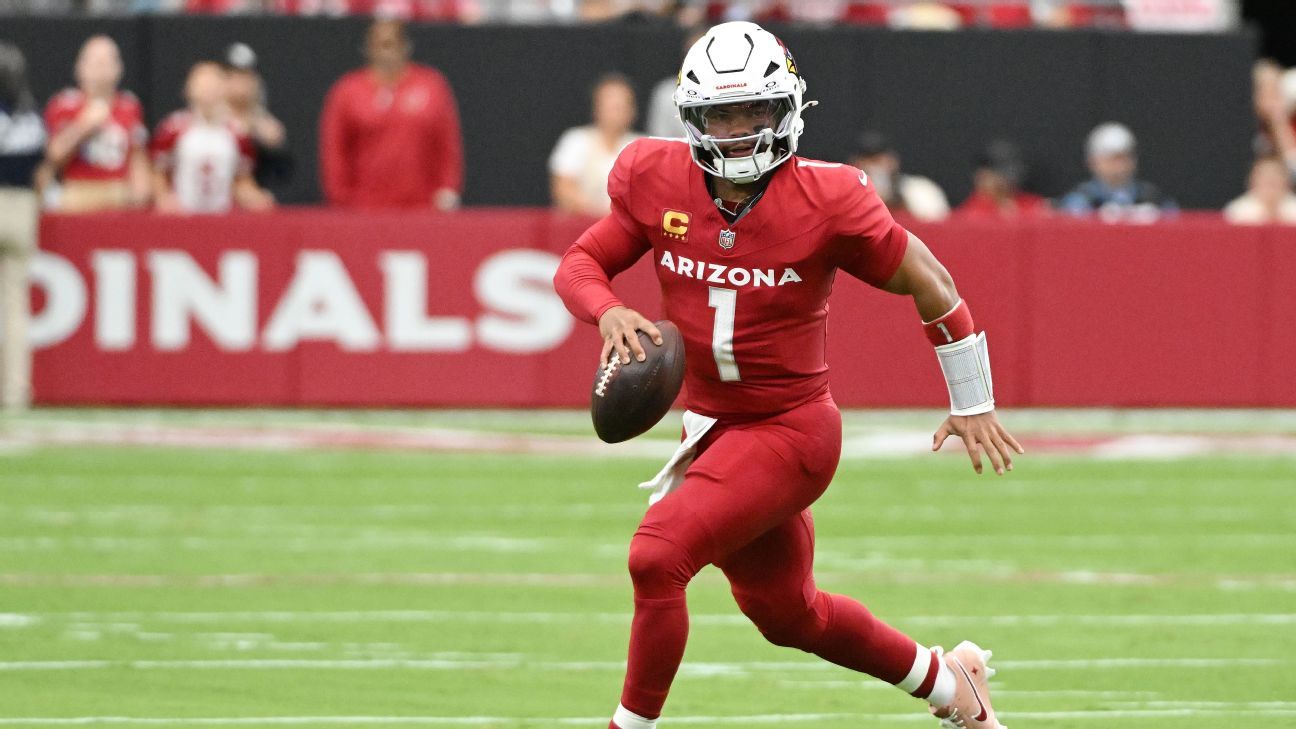
Welcome to the 2026 NFL offseason. If your favorite team needs a quarterback, I have some bad news.
Because many football fans are just now turning their eyes to the offseason, here’s a quick overview. The 2026 NFL draft class isn’t particularly strong overall, and it is extremely thin at quarterback. After presumed first selection Fernando Mendoza (Heisman winner, national champion at Indiana and Raiders QB in a little under three months), the best options are Alabama’s Ty Simpson and … probably LSU’s Garrett Nussmeier? This class might play out like 2022, when only one quarterback went in Round 1 (Kenny Pickett, No. 20) and only four went in the first two days.
There are some names available in the veteran quarterback market, but those names aren’t very exciting. While last offseason included free agent quarterbacks such as (now-Super Bowl champion) Sam Darnold, Daniel Jones and Aaron Rodgers, this offseason’s pool includes … well, Daniel Jones (off an Achilles injury) and Aaron Rodgers (one year older). Because Jones and Rodgers are both strongly suspected to stay with their current teams, the biggest contract might fall to Packers backup and quality spot starter Malik Willis. Or could the Falcons’ Kirk Cousins get one more solid contract after Atlanta releases him before the new league year begins March 11?
If the draft and the free agent market are thin, what is a quarterback-needy team to do? Win in the margins. While this isn’t the offseason for stacking quarterbacks on a big board or pick-your-poison free agent targets, the smart teams with financial flexibility will still have the ability to attack the veteran quarterback trade market. And two names stand out above the rest: Arizona’s Kyler Murray and Miami’s Tua Tagovailoa. (San Francisco backup Mac Jones reportedly will not be traded this offseason.)
When Murray and Tagovailoa are the offseason’s best options, it isn’t a great QB offseason. But both are workable under the right conditions, and below them, there are plenty of veteran journeymen or low-risk gambles teams will consider at the position. Quarterback movement is inevitable, so let’s look at all of the candidates for changing teams, as well as the teams in the market for their services.
Jump to:
Murray | Tagovailoa
Next tier | Sleepers
Teams looking for QBs


In the past 11 drafts, a quarterback has been selected with the first pick nine times. The three drafted longest ago (2015 Jameis Winston, 2016 Jared Goff and 2018 Baker Mayfield) are with new teams. The ensuing six remain on the teams that drafted them. Murray, drafted in 2019, is the longest tenured of those six … for now.
As ESPN’s Adam Schefter reported last week, the Cardinals are actively seeking a trade partner for Murray’s deal. It makes sense. Cutting Murray outright would incur a dead cap hit north of $54.7 million. It wouldn’t be the biggest dead cap hit ever — when Russell Wilson was released by the Broncos in 2024, he left behind a whopping $85 million in dead money. But it would be the second biggest.
By trading Murray, the Cardinals could save on dead money and get draft capital in return. Assuming Murray is traded the moment the new league year begins, the Cardinals would take on only the $17 million in cap already due Murray from prorated signing and option bonuses. Relative to his expected 2026 cap hit of over $52 million, they’d save around $35 million in cap space — a huge boon.
But the remaining contract is prohibitive in trade negotiations. If Murray’s deal is moved as is, he would have three years and about $125 million left on it — an average of $41.6 million per year, just above Matthew Stafford for 16th among all quarterbacks. Of that $125 million, a whopping $60 million would be guaranteed, a huge amount for a deal acquired via trade. This is one of the reasons why quarterback megacontracts aren’t often traded. Because of roster bonus timing and salary guarantee kickers deep into the fourth or fifth years of the deal, the acquiring team gets stuck not just with big remaining contract years but also with guaranteed money it can’t easily release or restructure.
Murray’s $22.8 million base salary for the 2026 season is already guaranteed, and another $17 million in roster bonuses is guaranteed by whatever team rosters him — the Cardinals or an acquiring team — on the fifth day of the 2026 league year. As such, Murray would hit the cap for over $40 million in Year 1 and is due another $19.5 million guaranteed in Year 2. This is not a small commitment.
If Murray is considered a veteran dart throw who might steer a listless franchise into a rookie quarterback, then he’s very expensive to add as bridge option. Daniel Jones’ one-year deal with the Colts cost $14 million last season, and he did not cost them any draft capital. Jones is just a few months older than Murray, and from 2019 to 2024 (in other words, excluding Jones’ stellar 2025 season), he was not a significantly worse quarterback than Murray by catch-all metrics. Murray is definitely a more talented player than Jones, but if Jones’ deal is a good proxy for how the league wants to compensate bridge quarterbacks, it’s tough to see the Cardinals dealing Murray without altering his deal.
Unlike many quarterback reclamation projects, Murray did not stumble out of the gates with his first team then bounce around looking for a new home. He won Offensive Rookie of the Year in 2019 and made Pro Bowls in 2020 and 2021. He was a great fit in Kliff Kingsbury’s spread-and-shred passing attack and a prolific scrambler, and the certainty of a contract extension was clouded only by a 2022 ACL tear. But he got that extension, and among all of the successful QB reclamation projects over the past several years (including Geno Smith, Sam Darnold, Baker Mayfield, etc.), Jones is the only other one to get a second contract with his original team. (And that original team, the Giants, released Jones less than two years later.)
Post-ACL tear and outside of Kingsbury’s offense, Murray hasn’t been the same quarterback. He returned late in the 2023 season, his first under new offensive coordinator Drew Petzing. The Cardinals employed a run-heavy offense but never got the deep play-action shot active with Murray under center. On throws of at least 10 air yards from 2023 to 2025, Murray was 26th in completion percentage, 28th in off-target rate and dead last in EPA per dropback (among 34 quarterbacks). The numbers are all as bad or worse on throws of 20-plus air yards.
This split is a serious departure from where Murray was on similar throws under Kingsbury, and it speaks to the disconnect between Petzing and Murray, as well as the Cardinals’ Marvin Harrison Jr.-sized failure to find a solid downfield target.
Murray is currently recovering from a foot injury of unclear severity, and the Cardinals likely used that injury to keep him on the bench for the entire regular season. Could he have come back? If so, when? And how would he have looked? We have no idea, which makes his offseason even more uncertain.
A foot injury can linger, and Murray’s mobility is integral to his game, so acquiring teams must beware. But there is reason to be quite confident that Murray still has some juice as a quality starter in a shotgun, spread offense. As Jones and Darnold showed us this past season, the 16th-best quarterback in football can captain league-leading offenses if everything around them is right. Murray needs to play with more team speed than the Cardinals had and see more RPOs and screens to maximize his quick release and underneath accuracy. As long as his foot is healthy and his quickness remains, he’d also benefit from an offense that more intentionally folds him into the running game.
Were Murray the only legitimate starter available for trade, the Cardinals would have a leveraged position to force an acquiring team to take on as much money as possible. But Murray is not the only big name available. As such, it’s unlikely he gets dealt before the fifth day of the league year, meaning his contract will need to be adjusted to make it more palatable for an acquiring team. Interestingly, when Schefter reported on the trade availability of Murray and fellow veteran Tagovailoa, he reported that the Dolphins were willing to swallow a portion of Tagovailoa’s deal to facilitate a trade. He reported no such thing about Murray.
If Murray’s contract is traded in its current form, I think the return would be almost nominal — a Day 3 pick. For acquiring teams with plenty of cap space and a long-term rebuild ahead (think teams such as the Jets), keeping the draft capital and spending the money on Murray might be preferable. But would the Cardinals endure the optics of getting just a fourth-round pick for Murray to save the money? I’d wager they’re more likely to take on some dead cap in order to improve the draft compensation they get in return, which would put other teams in play.

From 2022 to 2023, Tagovailoa was third in the league in EPA per dropback behind only Patrick Mahomes and Josh Allen. Tagovailoa was third in dropback success rate, behind only Mahomes and Allen. And he was first in explosive pass rate.
Much like Murray, Tagovailoa has been most successful under one playcaller. After a couple of shaky years under coach Brian Flores and a carousel of offensive coordinators, Tagovailoa fell into the Mike McDaniel offense, which subsequently took the league by storm. With his shotgun, play-action system that utilized sudden motion at the snap, McDaniel opened intermediate passing windows more easily than even Kyle Shanahan or Sean McVay had before him. From 2022 to 2023, Tagovailoa led the league with 39.5% of his throws going at least 10 yards downfield and had the second-fastest time to throw (2.54 seconds) behind only Tom Brady. That’s how an offense breaks the league.
Tagovailoa has a hyper-specific and fragile skill set, though. A tremendous RPO passer because of his fast release, willingness to challenge coverages with anticipation and accuracy within 20 yards of the line of scrimmage, Tagovailoa was perfectly equipped to lead the McDaniel offense. He trusted McDaniel exhaustively and, at times, to his detriment, throwing to spots on the field almost independent of safety rotation. More than any other quarterback we had seen in the Shanahan system, Tagovailoa was willing to make it work.
When McDaniel was on the cutting edge ahead of opposing defensive coordinators, the system sang. But because Tagovailoa struggles with escaping the pocket, throws on the move and adjusting beyond his first read, any defensive coordinator who could get the jump on McDaniel never had to fear Tagovailoa punishing the opponent in the scramble drill. After coaches such as Brandon Staley (2022) and Steve Spagnuolo (2023) had some success against the system, their approaches proliferated. As such, we can say with confidence that Tagovailoa is a scheme-dependent quarterback.
For a bridge QB, this isn’t terrible news. The way to maximize Tagovailoa is very clear. Though it’s unlikely he gets such an enormous McDaniel-esque bump to the point where he’s among the league leaders in quarterback metrics in 2026 and beyond, a new spin on a spread, RPO-heavy offense would provide passable play. Tagovailoa is the ideal bridge quarterback, in that you can win with him, but he won’t hold off a promising rookie passer for long. Think about the tough decision the Vikings faced when they had to decide if they should keep Sam Darnold or commit to J.J. McCarthy. It’s unlikely Tagovailoa forces such a debate.
He is in the midst of a lucrative contract extension, and the financials behind trading his deal would be tough. Cutting Tagovailoa would create $99 million in dead cap — a record-setting figure. Even with a post-June 1 designation, Tagovailoa would still batter the Dolphins’ salary cap with a $67 million dead cap figure in 2026 alone, beating Wilson’s single-year record of $53 million cleanly. Releasing Tagovailoa would be the largest admission of financial error in NFL history.
0:58
Why Mel Kiper Jr. has some concern about Ty Simpson
Mel Kiper Jr. examines whether Alabama quarterback Ty Simpson is a first-round pick after he declared for the draft.
It also might be inevitable. Any contract this brutal to terminate is similarly brutal to trade. An acquiring team would take on a three-year deal with a $39 million base salary in 2026 (fully guaranteed) and be saddled with another $15 million option bonus if Tagovailoa is traded before the third day of the 2026 league year. Because Schefter reported that the Dolphins are willing to swallow some of Tagovailoa’s contract to get a trade done, it’s easy to infer that they’d take on the $15 million bonus. Yes, it would increase their 2026 dead cap hit after the trade to over $60 million, which would set the single-season record. But unlike in a post-June 1 release, they wouldn’t have to take on any more dead cap in 2027.
I’d wager that the Dolphins don’t just take on Tagovailoa’s $15 million but also some more of the 2026 salary to make his contract more of a one-year deal in the $30 million range (with some team options behind). This would make Tagovailoa’s compensation commensurate with the deal Darnold signed with Seattle, as a scheme-dependent quarterback with the right tool kit to manage an elite offense for the correct coaching staff.
Tagovailoa is extremely unlikely to return much of anything in a trade package. While Murray could easily get into the range of a Day 2 pick, I would be surprised if Tagovailoa is traded for anything better than a Round 4 selection. It would require the Dolphins taking on even more salary to get anything in trade return for their former franchise passer, and they can take on only so much because they must also release Tyreek Hill this offseason.
The next tier

Though Tagovailoa and Murray are the two big-name quarterbacks, smart teams will investigate secondary options. Willis is the splashy young name. The 26-year-old has only six career starts — three with the Titans and three with the Packers — during his four-year career. All six were spot starts behind an injured QB1, and his reps with the Titans were brutal. Willis had no touchdowns and three interceptions, completed just 50% of his passes, was sacked 10 times and averaged 4.5 yards per attempt in Tennessee. He had some value as a rusher, with 27 carries for 123 yards and a score, but not nearly enough to move the needle.
In Green Bay, Willis showed some of the talent that got him drafted in Round 3 in 2022. In 11 games, Willis has 42 carries for 261 yards and three scores. That 6.2 yards-per-rush mark would be fourth behind Murray, Baker Mayfield and Spencer Rattler over the past two seasons among passers with 100-plus dropbacks. Willis’ 13% scramble rate and 11.8% explosive run rate would lead all QBs. This guy is a legitimate threat with the ball.
But it’s the improvement as a passer that really stands out. Over those two seasons, Willis has gone 70-of-89 (79% completion rate) for 972 yards, and that 10.9 yards per attempt ranks miles ahead of second place (Lamar Jackson at 8.7). His 9.2 yards per dropback is also miles ahead of second place (Jackson at 7.7). And his 86.3 total QBR is miles ahead of second place (Jackson at 69.9).
Though Willis’ production has come against some soft passing defenses, such as the Bears and Ravens, the film is undeniable. Willis is throwing accurate passes down the field in rhythm. He can throw inside of structure to the correct option, and he can make quality throws outside of structure, too. The sack rate is worrying — 9.6%, one of the league’s highest over the past two years. But that places him somewhere on the Justin Fields–Jayden Daniels continuum of playmaking, and that’s not a bad place to be.
Watching Malik Willis. Bears bust the coverage so Christian Watson is wide open but Willis doesn’t see it and hits the harder throw to Musgrave instead.
Great velocity on this ball. pic.twitter.com/gdvJC1noiD
— Benjamin Solak (@BenjaminSolak) February 10, 2026
Willis is no longer a sleeper signing. His services will be hotly sought after by teams looking for a still-young gamble at a franchise quarterback. But just how hotly? It’s hard to find a historical proxy for “highly valued free agent with six career starts at quarterback.”
One of the few solid comparisons we can use is Jimmy Garoppolo. Though Garoppolo could not be more stylistically opposite from Willis, he had only seven starts in his first four seasons as a pro — including two before the 49ers traded a second-round pick to acquire him from the Patriots after his third season. Garoppolo had five starts for the 49ers in 2017, went 5-0 as a starter with solid stats and got a five-year deal worth $137.5 million — the largest contract in NFL history at the time.
OK, so maybe not the best proxy.
Brock Osweiler can also help us out. Drafted in the second round in 2012, Osweiler didn’t start a game until his fourth year with the Broncos, as a little-known quarterback named Peyton Manning turned out to be much healthier than Denver could have dreamed. Osweiler parlayed his seven starts (5-2, pretty average stats) into a four-year, $72 million deal with the Texans in 2016 — a substantial contract at the time, and one that Houston traded to the Browns with significant draft capital the next offseason after it became clear Osweiler wasn’t a starting-caliber quarterback.
Osweiler got $18 million per year, which was about 8.6% of the 2016 salary cap. A decade later, with a salary cap projection just over $300 million, a similar deal would cost $26 million per year. This feels like the correct value for Willis. Fields made $20 million per year on his two-year contract with the Jets, and Mayfield is making $33 million per year in Tampa Bay. That $13 million difference between the two feels like the sweet spot for Willis.

The other significant (soon-to-be) free agent is Cousins, whom the Falcons will reportedly release this offseason. He will turn 38 before the 2026 season kicks off and is now more than two years removed from an Achilles injury, so we can pretty easily tie his value to that of Aaron Rodgers. Rodgers was 41 and two years removed from an Achilles tear when he signed his one-year, $13.6 million deal with the Steelers. Much like Rodgers, who had some flashes of quality ball in the back half of the 2024 season with the Jets before he hit free agency, Cousins looked decent stepping in during the back half of the 2025 season with the Falcons once Michael Penix Jr. went down for the year.
Cousins is an evident stopgap quarterback — a one-year solution for a team that needs passable play for short-term relief. While Murray, Tagovailoa and Willis could all play their way into multiyear futures with new teams, Cousins is reportedly mulling retirement and television as an option in this free agent period. If the marriage isn’t right for one last go, he might forgo signing with a team entirely. But of the super-veteran options (Cousins, Rodgers, Russell Wilson, Joe Flacco and Garoppolo), he is comfortably the most talented remaining passer.
I’d make it 65-35 that he ends up signing a one-year deal somewhere.
The super deep indie cuts
With a largely unsatisfying draft class waiting in the wings, there almost certainly will be movement among No. 2 QBs as teams cycle through young passers in hope of striking gold on a Hail Mary heave. Here are a few names to watch for those teams that miss out on Malik Willis, Tua Tagovailoa and Kyler Murray.
-
Will Levis, Tennessee Titans: The 2023 second-round pick lost his job to Cam Ward the moment the Titans landed the first pick in 2024. In July, Levis underwent season-ending shoulder surgery, and he is now approaching the final year of his rookie deal. A disasterclass artist so prolific he produced multiple screenshot-worthy reactions to his own turnovers, Levis is remembered worse than he actually played. He has prototypical size and good arm strength. Because the Titans’ front office and coaching staff are completely new, I’d be stunned if he isn’t traded this offseason.
-
Jalen Milroe, Seattle Seahawks: The Seahawks hedged their Darnold bet with a Round 3 selection on Milroe, who now starts down the path that Willis was on with Tennessee. Milroe is only QB3 in Seattle behind Darnold and Drew Lock, but Milroe started above Ty Simpson — the nominal QB2 in this draft class — at Alabama in 2024. Teams likely will compare their predraft grades on Milroe to the grades on this year’s class, and if they can get Milroe at a discount, they could try to trade for him instead of drafting an inferior prospect.
-
Tanner McKee, Philadelphia Eagles: The backup QB on Howie Roseman’s roster is always in danger of being dealt. McKee typically looks strong in the preseason, and he looked acceptable in two Week 18 starts while throwing to the Eagles’ backups. He is an older prospect (will be 26 next season), but he still has a developmental arc in that he has never seen extended game action. In a world where Will Howard might be starting for the Steelers or Quinn Ewers could be in for the Dolphins, McKee deserves a camp fight somewhere.
-
Davis Mills, Houston Texans: It’s hard to see the Texans trading Mills, whom they just gave a one-year, $7 million extension to continue providing effective QB2 play behind C.J. Stroud. But perhaps a strong offer could entice them to deal Mills, who is far from an exciting option at 28 years old but clearly is somewhere between the QB2 and QB1 worlds for quarterbacking quality. Note that his old offensive coordinator, Bobby Slowik, now coaches the Dolphins’ offense; Miami would need a new quarterback if it flips Tagovailoa.
-
Anthony Richardson Sr., Indianapolis Colts: It was an odd year for Richardson, who reportedly was having a solid camp but could not fend off Daniel Jones for the starting QB job in Indianapolis. Jones took off like wildfire, but once he got hurt, Richardson was unavailable given a freak orbital fracture. Richardson is a huge sleeper now — in that the Colts are likely set at QB2 with Riley Leonard behind Jones — and his youth and physical tool kit merit further opportunities and a fresh start on another team.
-
Spencer Rattler, New Orleans Saints: This is the guy I’d really be pursuing if I were in desperate need. Rattler was a totally acceptable young starter during his eight games of action before Tyler Shough took the reins in New Orleans. And while Shough elevated the offense some, he enjoyed a much more successful defense than Rattler got in his starts. Rattler has great physical tools for playmaking, but he also showed he could be a more cautious and methodical player last season. I’d deal a Day 3 pick for him right now if I were looking for camp competition.
-
Derek Carr, retired: Apparently Carr would maybe come back for the right team? This does not interest me at all. Remember, Carr is still under contract with the Saints, so he isn’t free if he unretires. He has to return to New Orleans, waive his no-trade clause then get dealt. (Presumably not for much, as the Saints don’t want to keep his contract on the books, but still.) Carr will be 35 next month, so he hasn’t aged out of the league just yet, but it’s difficult to be enthusiastic about his ceiling outside of the Klint Kubiak offense.
-
Garrett Nussmeier, LSU: If Fernando Mendoza is the obvious first pick and Simpson is the next man off the board, then the rest of the field is scrambling for a QB3 option. I’d have Nussmeier above players such as Carson Beck (Georgia) and Cade Klubnik (Clemson), as Nussmeier had exciting 2024 film before a 2025 oblique injury robbed him of his throwing power. The size is suboptimal, but the arm talent is there. Nussmeier feels like a pick somewhere in the 70s.
The teams that might need one of these passers …
As I see it, there are 10 teams in clear need of an additional quarterback this offseason. That count does not include Las Vegas, which will draft Fernando Mendoza with the first pick and start a new era of prolific Raiders football (hopefully). Included in those 10 teams are the Cardinals and the Dolphins, who — independent of exactly how they move on from their current passers — will at least look for competition in 2026.

Atlanta can defensibly enter 2026 with Penix under close scrutiny as a third-year starter. But he’s coming off a late-season ACL tear, so the Falcons will need someone who can start in September if he’s not ready. More likely, the Falcons open up the starting job in a camp competition between Penix and another outside option.
Funnily enough, Cousins would be a great fit in Atlanta. He has played for new coach Kevin Stefanski successfully in the past (with Minnesota) and obviously has an existing rapport with the Falcons’ pass catchers. Is the blood in Atlanta still bad now that the front office and coaching staff have been replaced?
Atlanta likely won’t compete hard for Willis’ services in free agency, but I could easily see that front office trading for one of the backups on rookie contracts who are collecting dust on another team’s bench.
2:38
Stephen A.’s NFC QB rankings have RC fuming
Stephen A. Smith, Ryan Clark and Dan Orlovsky get heated debating which NFC quarterbacks they would take over Sam Darnold.

Assuming the Colts sign Daniel Jones, I could still see them looking for a veteran option to start over Riley Leonard while Jones slowly comes back from the Achilles injury. (No, not Philip Rivers. That’s a little too veteran.) This seems like the right team for Marcus Mariota or Joe Flacco.
If the Colts do not re-sign Jones, they’ll have perhaps the biggest QB need on the market. But they will … right?

I don’t think it would be egregious for the Jets to enter next season with a QB room of Justin Fields, Tyrod Taylor and (insert middle-round rookie here). Fields was frustratingly cautious for the Jets last season, but most of the free agent options aren’t much better than him or Taylor.
The Jets do have plenty of money to acquire either Tua Tagovailoa or Kyler Murray. Given the Jets’ intradivisional familiarity with Tagovailoa’s game, I’d be surprised if they go that direction (though, with Frank Reich calling the offense, the RPO game would work well). Murray seems like a more realistic option. GM Darren Mougey is a patient team manager, but he was also present for the Russell Wilson fiasco in Denver, and he knows how badly the Cardinals want to get out of the Murray contract. The Jets have a ton of first-round picks incoming and don’t need to hold on to their third- or fourth-rounders as preciously as other teams.
If I had to guess where Murray ends up next season, this would be my spot.

If the Steelers re-sign Aaron Rodgers to another one-year deal, God bless ’em. Rodgers’ lack of mobility and diminishing arm talent is an enormous limiting factor on their offense. Only two quarterbacks (Fields and Brady Cook) threw shorter passes than Rodgers in 2025, and Rodgers offered the Steelers nothing on extended plays: 39th of 45 quarterbacks by success rate on extended dropbacks. Hopefully a Rodgers return would come with an accompanying trade for a young passer who can compete in camp — I think Rattler would learn a ton from Rodgers, in that Rattler has a style of play reminiscent of prime Rodgers — but I’m not holding my breath on that.
1:30
Graziano: Rodgers not a ‘real solution’ at QB anymore
Dan Graziano explains why the Steelers need to move on from Aaron Rodgers after their AFC wild-card exit against the Texans.
The Browns should aggressively pursue and sign Willis in free agency. Why not? Already leveraged aggressively against future cap years, the Browns will start to make up financial ground only once they have a quarterback on a good deal. If they trade for Will Levis or Anthony Richardson, with one year remaining on their respective contracts, they’ll be negotiating from a weaker position should either player actually hit.
They should give Willis $30 million per year now, backload it and let him ride as their developmental starter for the next few seasons. His tools are so remarkably beyond those of Dillon Gabriel and Shedeur Sanders, and he has a style of play similar to Lamar Jackson, with whom Todd Monken just worked. This is a good marriage.
Miami should wait on making any big moves at quarterback until it has swallowed its 2026 cap lumps. Jeff Hafley is a defensive head coach, and the Dolphins’ roster construction will likely mirror that of Seattle’s under Mike Macdonald: Build an elite defense, then cycle through midtier quarterbacks trying to strike gold. Miami should not be trading any picks, as it needs rookie-contract, rosterable players to fill out its depth chart.
I like the Dolphins as a Kirk Cousins team, but if he prefers to return to Minnesota, it’s tough to find any ideal options. Malik Willis has the coaching familiarity, but the Dolphins will get priced out. Bobby Slowik coached Davis Mills in Houston, but again, I don’t like trading picks given the Dolphins’ current cap position. It really might be a Quinn Ewers year in Miami.

Minnesota will absolutely bring in competition for J.J. McCarthy, as it reportedly tried to do last season with Rodgers. Cousins is the obvious choice because he has scheme familiarity from his time in Minnesota as coach Kevin O’Connell’s starter. But O’Connell is a big believer in quarterback development, and I would not be surprised if he wants to go for a younger player to challenge McCarthy’s seat not just in 2026 but also beyond. Every toolsy young passer who can operate from the pocket (Tanner McKee, Anthony Richardson, Will Levis, etc.) is on my radar for a surprise Vikings trade.
(It will probably just be Cousins, though, let’s be honest.)
1:38
How much better would Vikings have been with Sam Darnold this season?
The “Get Up” crew discusses how the Vikings’ season might have differed with Sam Darnold at quarterback rather than J.J. McCarthy.

The good news for the Cardinals is that 2025 spot starter Jacoby Brissett has one year left on his deal and is a totally palatable bridge quarterback. With new head coach Mike LaFleur stepping in with the Sean McVay system, I would not be surprised to see Rams free agent Jimmy Garoppolo also make his way to Arizona as a potential spot starter instead of Brissett. The Cardinals must invest in some youth at quarterback, and I’d wager they’re in the Malik Willis market accordingly.
The incoming changes to the Cardinals’ offensive line and running back room do some damage to the quality of their developmental bedrock. But despite Arizona’s poor performance this season, a young passer could do a lot worse than Michael Wilson, Trey McBride and whatever can be gleaned from Marvin Harrison Jr. The Cardinals seem like the right team for a Ty Simpson pick in the second round.

Matthew Stafford won the MVP award and confirmed his return for another season in 2026, but I don’t trust his back at all — even and especially after the iron man season he just had. The Rams’ only youth at quarterback is No. 3 QB Stetson Bennett IV, and as such, they should strongly pursue young backups on the trade market this offseason. Will Levis is a great fit, as is Tanner McKee. But I’d wager McVay wants more playmaking at the position, so watch out for Anthony Richardson and Spencer Rattler as well.

The Chiefs need a spot starter! Patrick Mahomes is rehabbing an ACL/LCL tear suffered Dec. 14 with the hope of playing in Week 1, but the Chiefs will likely be uber-cautious with their franchise star. No. 2 QB is not a secure spot either, as Gardner Minshew is a rising free agent. The Chiefs might simply return Minshew and hope to get Mahomes back by Week 5, but they’re a good candidate for a veteran free agent addition, as well.
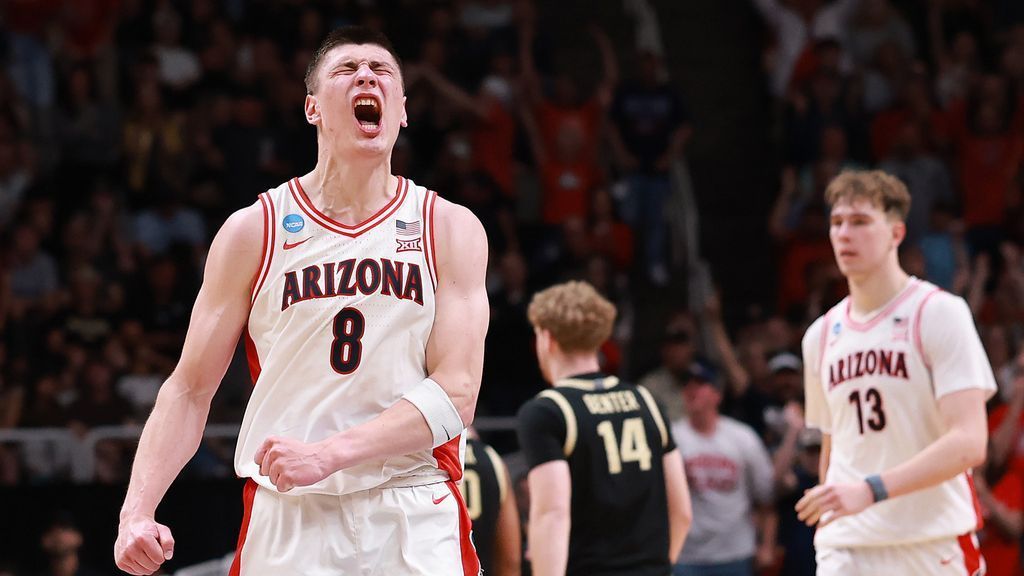
SAN JOSE, Calif. — For the first time since 2001, the Arizona Wildcats are headed to the Final Four.
The top-seeded Wildcats punched their ticket with a 79-64 win against No. 2 Purdue, setting the school record for wins in a season (36) in the process. The previous wins record had stood since 1988, when Arizona reached the first of its four Final Fours — including the national title in 1997 — under legendary coach Lute Olson.
Shortly after the game ended, Arizona coach Tommy Lloyd held a microphone and spoke to the jubilant, heavily pro-Arizona crowd at the SAP Center.
“I know this,” he said. “There’s a good-looking guy with white hair looking down on us right that happy.”
The reference to Olson, who died in 2020, brought even more cheers from Arizona fans.
“Lute’s given me a great life,” Lloyd said. “He and I shook hands only a few times, kind of in a handshake line or something at a game. … His legacy in Tucson is so powerful that he’s the guy, there’s others before him, but he’s the main catalyst to make our program the center of the community.”
But this year’s team, in Lloyd’s fifth season in Tucson, has a chance to surpass all its predecessors as the best in school history. The Wildcats will take a 13-game winning streak to Indianapolis, where they will play the winner of Sunday’s game between Michigan and Tennessee.
Lloyd’s impact at Arizona has been historic. The longtime Gonzaga assistant’s 148 wins over the past five seasons are an NCAA record for most wins by a coach in their first five seasons, eclipsing the record set by Brad Stevens at Butler. He guided the Wildcats to 33 wins in his first year and had three trips to the Sweet 16 in his first four seasons. But the Final Four had remained elusive — until Saturday.
Against a veteran Purdue team, Arizona was led by its talented freshmen. The Wildcats’ three freshmen starters — Brayden Burries (14), Ivan Kharchenkov (18) and Koa Peat (20) — combined for 52 points and were unphased by the biggest stage of their young careers. Senior guard Jaden Bradley added 14 points.
Arizona jumped out to a 19-12 lead at the 12:37 mark of the first half and looked like it might be ready to put the Boilermakers to bed early. But even after Purdue star Trey Kaufman-Renn picked up an early second foul, Purdue started to claw its way back.
One key change came when coach Matt Painter inserted sophomore big man Daniel Jacobsen into the game just as Arizona’s lead stretched to seven. The 7-foot-4 Jacobsen had played just four combined minutes in the previous two games and had mostly been out of the rotation this month, but his size was needed against Arizona, and his presence helped shift the tide. But it didn’t last.
Inside the locker room at halftime, Lloyd addressed the team before leaving them with a parting message.
“I said, ‘Guys, the coaching staff and I are going to leave right now. You guys got a few minutes to talk amongst yourselves and kind of figure this deal out and let’s go kick their ass in the second half,”‘ Lloyd said.
Arizona needed just over five minutes in the second half to reclaim the lead and slowly pulled away.
“I was literally a spectator just like you guys were in that second half,” Lloyd said. “That’s what it felt like.”
Purdue (30-9) falls short of its second Final Four in three seasons, and the loss spells the end of one of the great careers in college basketball history in Braden Smith, who broke Bobby Hurley’s career assist record earlier this season and finishes with 1,103. Smith led Purdue with 13 points but was just 4-of-15 from the field.
During Purdue’s last possession, with the game’s outcome having long been decided, Smith looked at Painter as if to ask whether to dribble it out or keep playing. Painter told him to play and what followed was a final assist to Fletcher Loyer, who added to his Purdue record with one final 3.
“Braden was [a great player] for us for four years,” Painter said. “Very, very consistent, very competitive, good guy.”
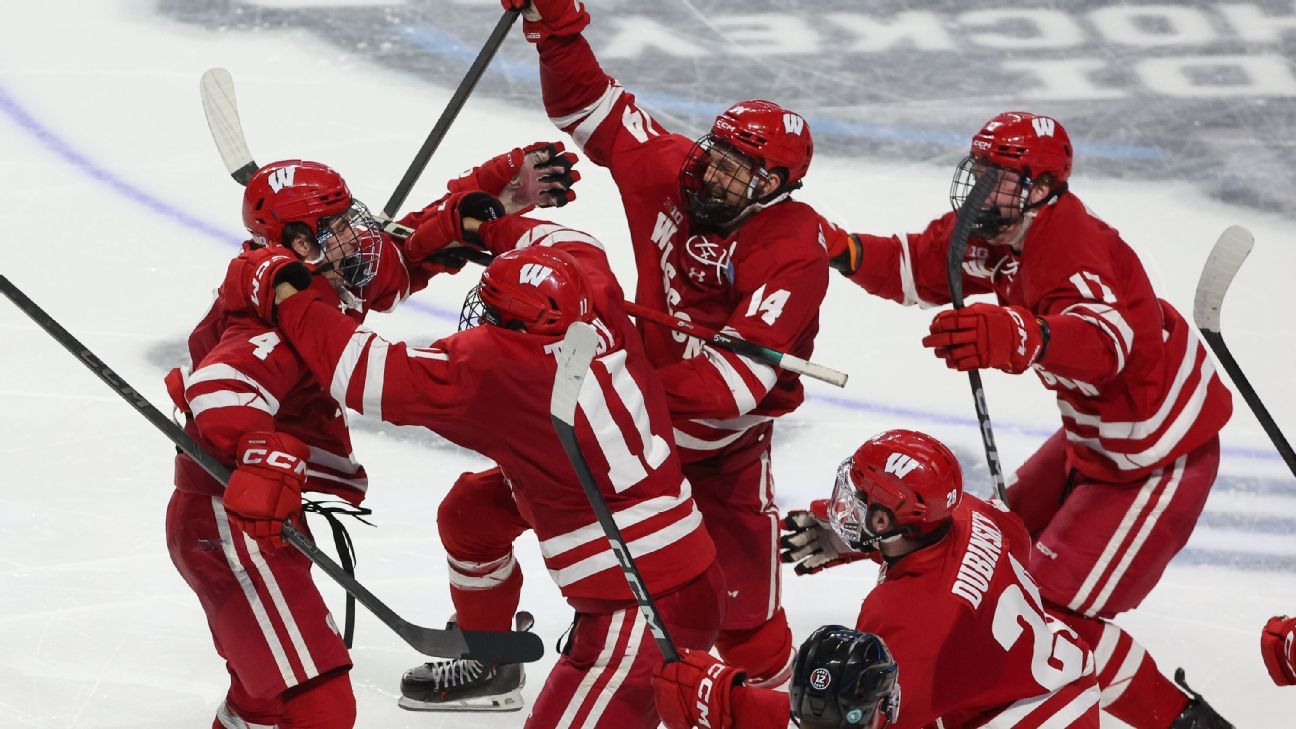
Half of the 2026 men’s Frozen Four is set, with North Dakota and Wisconsin earning trips to Las Vegas to play for the national championship.
The Fighting Hawks, who were the top seed in the Sioux Falls regional, advanced with a 5-0 rout of Quinnipiac, while the Badgers won the Worcester regional with a 4-3 overtime victory over top seed Michigan State.
This is North Dakota’s first Frozen Four appearance since 2016, when it won the national title. Wisconsin is in the Frozen Four for the first time since 2010.
The other two spots will be determined Sunday in the regional finals at Albany, New York, where Michigan plays Minnesota Duluth, and Loveland, Colorado, where Denver meets Western Michigan.
The six winners of their conference tournaments earned automatic berths, with the next top 10 teams in the NPI rankings filling out the NCAA field. The four regional winners will advance to the Frozen Four at Las Vegas on April 9 and 11.
Every game of the men’s hockey tournament will air on the ESPN networks and will stream live on the ESPN App. The Frozen Four semifinals will air on ESPN2 and the final airs on ESPN.
Below is the complete schedule for the tournament, video features and a look at each of the 16 teams in the field.
Jump to a section:
Video features | Teams at a glance
Schedule
All times Eastern.
Worcester (Massachusetts) Regional
Semifinals, Thursday
No. 1 Michigan State 2, No. 4 UConn 1
No. 3 Wisconsin 5, No. 2 Dartmouth 1
Final, Saturday
Wisconsin 4, Michigan State 3 (OT)
Sioux Falls (South Dakota) Regional
Semifinals, Thursday
No. 3 Quinnipiac 5, No. 2 Providence 2
No. 1 North Dakota 3, No. 4 Merrimack 0
Final, Saturday
North Dakota 5, Quinnipiac 0
Albany (New York) Regional
Semifinals, Friday
No. 1 Michigan 5, No. 4 Bentley 1
No. 2 Minnesota Duluth 3, No. 3 Penn State 1
Final, Sunday
Michigan vs. Minnesota Duluth, 5:30 p.m., ESPN
Loveland (Colorado) Regional
Semifinals, Friday
No. 1 Western Michigan 3, No. 4 Minnesota State 1
No. 2 Denver 5, No. 3 Cornell 0
Final, Sunday
Western Michigan vs. Denver, 3 p.m., ESPN2
FROZEN FOUR
at T-Mobile Arena, Las Vegas
National semifinals, April 9
Wisconsin vs. North Dakota, 5 or 8:30 p.m., ESPN2
Albany winner vs. Loveland winner, 5 or 8:30 p.m., ESPN2
National final, April 11
5:30 p.m., ESPN
Highlights
0:41
Wisconsin scores winner 24 seconds into OT to book ticket to Frozen Four
Ben Dexheimer buries the winning goal in overtime for Wisconsin to knock off Michigan State and reach the Frozen Four.
1:26
Penn St. Nittany Lions vs. Minn. Duluth Bulldogs Game Highlights
Penn St. Nittany Lions vs. Minn. Duluth Bulldogs Game Highlights
1:26
Cornell Big Red vs. Denver Pioneers Game Highlights
Cornell Big Red vs. Denver Pioneers Game Highlights
1:26
Minnesota St. Mavericks vs. Western Mich. Broncos Game Highlights
Minnesota St. Mavericks vs. Western Mich. Broncos Game Highlights
1:29
Bentley Falcons vs. Michigan Wolverines Game Highlights
Bentley Falcons vs. Michigan Wolverines Game Highlights
Top storylines
NIL and college hockey: Will big-money behemoths skew the sport’s balance of power? Adam Rittenberg
Michigan’s Michael Hage: How hockey helped the Wolverines star cope with tragedy. Emily Kaplan
8:04
How Michael Hage is honoring his father’s legacy for Michigan
Emily Kaplan shares how Michael Hage is carrying his late father’s legacy with him on the ice for Michigan.
5:33
Penn State’s Frozen Four run draws top prospect Gavin McKenna
After a historic run to the Frozen Four, the Penn State Nittany Lions inspired generational talent Gavin McKenna to leave Canadian juniors for Happy Valley.
6:44
Zacch Wisdom’s journey has been anything but easy
P.K. Subban shares the story of how a childhood of struggle turned into a way out through the game of hockey for Western Michigan’s Zacch Wisdom.
4:39
How Providence men’s hockey has built a winning culture
With just one senior on the roster, the Friars have leaned into their youthful core in one of the most compelling success stories of the season.
4:39
How Quinnipiac’s Ethan Wyttenbach has quickly made a name for himself
Jeremy Schaap tells Ethan Wyttenbach’s story after the Quinnipiac freshman led the nation in scoring with 58 points in 38 games.
4:35
How Rand Pecknold built Quinnipiac into a college hockey powerhouse
The Quinnipiac Bobcats had no rink or winning tradition until Rand Pecknold made them into one of most formidable programs in college hockey.
Teams at a glance
Records, statistics entering NCAA tournament
Worcester Regional
 No. 1 Michigan State
Record: 25-8-2
NPI ranking: 3
How the Spartans got here: At-large bid
Last 10 games: 5-3-2 (lost to Ohio State in Big Ten semifinal)
NCAA history: 30th appearance; seeking 12th Frozen Four and fourth national title (last won in 2007). … Third straight NCAA appearance after 11-year absence. … Lost to Cornell in first round as No. 1 seed in 2025.
Fast fact: Michigan State’s roster features four first-round NHL draft picks and 15 picks overall, both the most among tournament teams.
 No. 2 Dartmouth
Record: 23-7-4
NPI ranking: 6
How the Big Green got here: ECAC champion
Last 10 games: 6-1-3 (beat Princeton in ECAC final)
NCAA history: Fifth appearance; seeking fifth Frozen Four and first national title. … First NCAA appearance since 1980.
Fast fact: Sophomore Hayden Stavroff, an undrafted NHL free agent, leads the country with 29 goals. He has seven goals and five assists in his last eight games.
 No. 3 Wisconsin
Record: 21-12-2
NPI ranking: 12
How the Badgers got here: At-large bid
Last 10 games: 6-4 (lost to Ohio State in Big Ten quarterfinal)
NCAA history: 29th appearance; seeking 13th Frozen Four and seventh national title (last won in 2006). … In the NCAA tournament for the second time in three seasons under coach Mike Hastings.
Fast fact: Wisconsin’s season has been a bit of a roller coaster, with a 14-2-2 start and 6-2 finish but a 2-7 stretch in between. The Badgers lost 7-1 to Ohio State in the Big Ten tournament the last time they took the ice.
 No. 4 UConn
Record: 20-12-5
NPI ranking: 14
How the Huskies got here: At-large bid
Last 10 games: 3-5-2 (lost to Merrimack in Hockey East final)
NCAA history: Second appearance; seeking first Frozen Four and first national title. … Recorded program’s first NCAA victory last year, beating Quinnipiac in first round before falling to Penn State in regional final.
Fast fact: UConn rebounded from a 1-4-2 closing stretch of the regular season to advance to the Hockey East final, then made the NCAA field as the last at-large team.
Albany Regional
 No. 1 Michigan
Record: 29-7-1
NPI ranking: 1
How the Wolverines got here: Big Ten champion
Last 10 games: 6-3-1 (beat Ohio State in Big Ten final)
NCAA history: 42nd appearance; seeking 29th Frozen Four appearance and 10th national title (last won in 1998). … Missed tournament last year after making four straight appearances.
Fast fact: Michigan is the highest-scoring team in the country (4.57 goals per game) and has the best power play (31% conversion rate). The Wolverines converted two of three chances in the Big Ten final against Ohio State.
 No. 2 Minnesota Duluth
Record: 23-14-1
NPI ranking: 8
How the Bulldogs got here: At-large bid
Last 10 games: 6-3-1 (lost to Denver in NCHC final)
NCAA history: 16th appearance; seeking ninth Frozen Four and fourth national title (last won in 2019). … First NCAA appearance — and first winning season — since 2022. … Had made eight straight tournaments before that.
Fast fact: The Bulldogs’ special teams are just that: They are second nationally in power-play conversions (29.9%) and third in penalty killing (89.3%).
 No. 3 Penn State
Record: 21-13-2
NPI ranking: 9
How the Nittany Lions got here: At-large bid
Last 10 games: 3-5-2 (lost to Michigan in Big Ten semifinal)
NCAA history: Sixth appearance; seeking second Frozen Four and first national title. … Defeated 1-seed Maine and 2-seed UConn in 2025 regionals before losing to Boston University in national semifinal. … All six NCAA appearances have come in the past 10 years.
Fast fact: Highly touted freshman Gavin McKenna, expected to be the No. 1 pick in June’s NHL draft, ranks second in the country with 51 points (15 goals, 36 assists) in 34 games.
 No. 4 Bentley
Record: 23-11-5
NPI ranking: 23
How the Falcons got here: Atlantic Hockey champion
Last 10 games: 7-3 (beat St. Thomas in Atlantic final)
NCAA history: Second appearance; seeking first Frozen Four and first national title. … Lost 3-1 to top overall seed Boston College in last year’s tournament.
Fast fact: Bentley hasn’t lost in nine overtime games this season (4-0-5).
Sioux Falls Regional
 No. 1 North Dakota
Record: 27-9-1
NPI ranking: 2
How the Fighting Hawks got here: At-large bid
Last 10 games: 7-2-1 (lost to Minnesota Duluth in NCHC semifinals)
NCAA history: 36th appearance; seeking 23rd Frozen Four and ninth national title (last won in 2016). … Fifth NCAA appearance in the past seven years.
Fast fact: North Dakota has only two regulation losses since Nov. 28: 3-2 vs. Denver on Jan. 17 and 5-1 to Minnesota Duluth in the NCHC tournament.
 No. 2 Providence
Record: 23-10-2
NPI ranking: 7
How the Friars got here: At-large bid
Last 10 games: 7-3-0 (lost to Merrimack in Hockey East quarterfinals)
NCAA history: 17th appearance; seeking sixth Frozen Four and second national title (won in 2015). … Lost to Denver in first round as 2-seed in 2025 tournament. … Second straight NCAA appearance after five-year absence.
Fast fact: The Friars rolled to their first regular-season Hockey East title, going 14-2 to close their schedule before losing to No. 8 seed Merrimack 3-2 in overtime in the conference quarterfinals.
 No. 3 Quinnipiac
Record: 26-9-3
NPI ranking: 10
How the Bobcats got here: At-large bid
Last 10 games: 6-4 (lost to Clarkson in ECAC quarterfinals)
NCAA history: 12th appearance; seeking fourth Frozen Four and second national title (won in 2023). … Lost to UConn in first round of 2025 tournament. … Sixth straight NCAA appearance and 11th in 14 seasons.
Fast fact: Ethan Wyttenbach, a 19-year-old freshman, leads the NCAA with 58 points (24 goals, 34 assists) in 38 games. He was a fifth-round pick of the Calgary Flames in last year’s NHL draft.
 No. 4 Merrimack
Record: 21-15-2
NPI ranking: 19
How the Warriors got here: Hockey East champion
Last 10 games: 6-3-1 (beat UConn in Hockey East final)
NCAA history: Fourth appearance; seeking first Frozen Four appearance. … First NCAA bid since 2023 (first-round loss to Quinnipiac).
Fast fact: Sophomore goalie Max Lundgren leads the country with 1,109 saves (.920 percentage). He made a career-high 49 stops, 22 in the third period, in the Warriors’ win over UConn in the Hockey East championship game.
Loveland Regional
 No. 1 Western Michigan
Record: 26-10-1
NPI ranking: 4
How the Broncos got here: At-large bid
Last 10 games: 7-2-1 (lost to Denver in NCHC semifinals)
NCAA history: 11th appearance; seeking second Frozen Four and second national title (won last year). … Defeated Denver in national semifinals and Boston University in championship game in 2025.
Fast fact: Western Michigan faced one of the toughest schedules in the country, going 9-6 against ranked opponents.
 No. 2 Denver
Record: 25-11-3
NPI ranking: 5
How the Pioneers got here: NCHC champion
Last 10 games: 9-0-1 (beat Minnesota Duluth in NCHC final)
NCAA history: 34th appearance; seeking 20th Frozen Four and 11th national title (last won in 2024). … Defeated overall No. 1 seed Boston College in regional final last year before losing to Western Michigan in national semifinal. … Has reached Frozen Four three of the past four seasons.
Fast fact: No one is hotter than the Pioneers, who extended their unbeaten streak to 13 (12-0-1) in winning the NCHC championship with a 4-3 double-overtime victory over Minnesota Duluth.
 No. 3 Cornell
Record: 22-10-1
NPI ranking: 11
How the Big Red got here: At-large bid
Last 10 games: 5-4-1 (lost to Princeton in ECAC semifinals)
NCAA history: 26th appearance; seeking ninth Frozen Four and third national title (last won in 1970). … Beat 1-seed Michigan State in first round last year before losing to Boston University in regional final. … Has made eight of the past nine tournaments, with first-year coach Casey Jones picking up where longtime coach Mike Schafer left off.
Fast fact: Cornell has the stingiest defense in the country, allowing 1.94 goals per game.
 No. 4 Minnesota State
Record: 22-10-7
NPI ranking: 13
How the Mavericks got here: CCHA champion
Last 10 games: 6-2-2 (beat St. Thomas in CCHA final)
NCAA history: 12th appearance; seeking third Frozen Four and first national title. … Eighth tournament appearance in the last nine years. … Lost to eventual national champion Western Michigan in double overtime in first round of last year’s tourney.
Fast fact: The Mavericks are in the tournament for the second straight year under Luke Strand after making the field in nine of 11 seasons under Mike Hastings, who left after the 2020-21 season to coach Wisconsin.
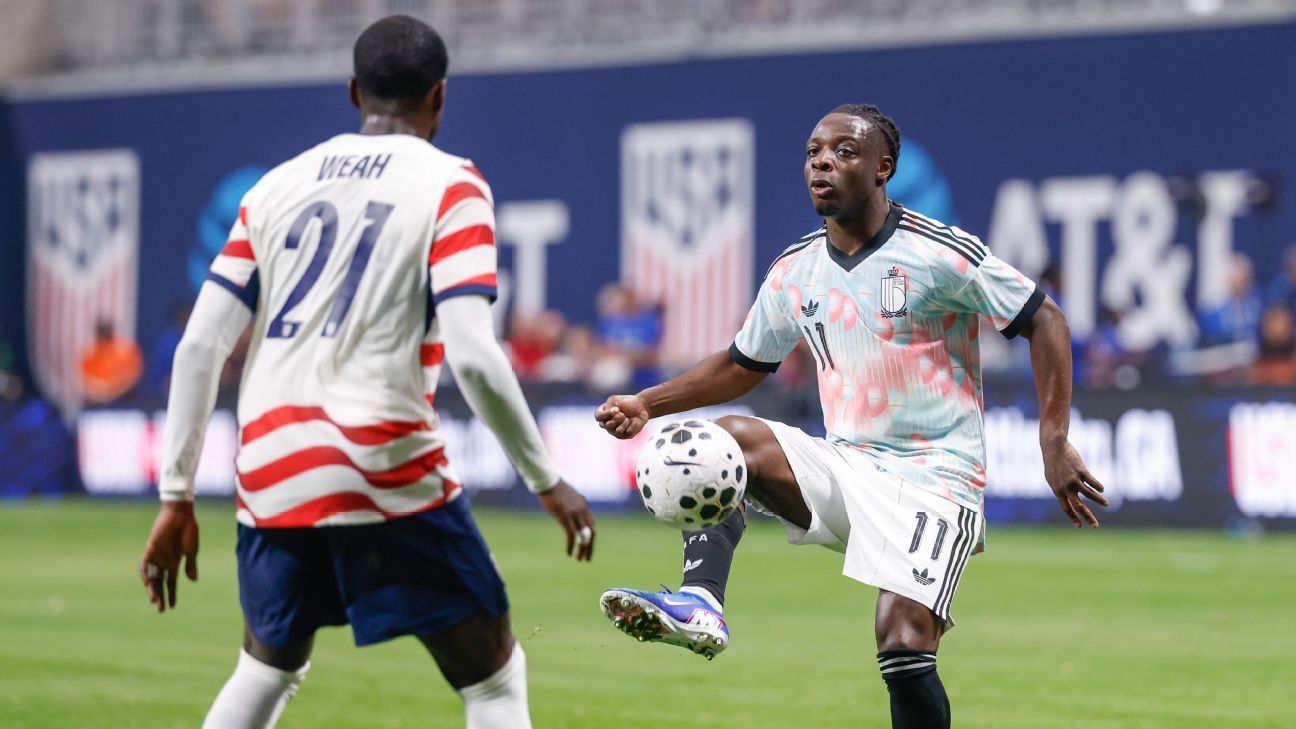
ATLANTA — The preparation of the United States men’s national team for the World Cup has entered its final phase. Not only will individual performances be scrutinized, but teamwide cohesion will be as well.
As such, Saturday’s match against Belgium provided a sobering assessment of where the USMNT currently stands, with the Americans enduring a heavy 5-2 defeat. Granted, it was one game, but the U.S. doesn’t look remotely ready for when the games start for real in June.
The U.S. looked competitive in the first half. Weston McKennie continued his fine run of form, scoring the Americans’ goal to put them up 1-0. But while the U.S. back line held up well into the second half, it had no answer for an electric performance from Belgian winger Jérémy Doku and saw its five-game unbeaten streak come to an abrupt end.
– USMNT player ratings: Weah poor as U.S. suffer heavy Belgium defeat
– O’Hanlon: Can USMNT’s depth at the 2026 World Cup make a difference?
– USMNT players speak up about what Mauricio Pochettino is like
It was a match where the deployment of the USMNT’s center backs was the main area of focus. FC Cincinnati‘s Miles Robinson and Crystal Palace‘s Chris Richards were out injured with groin and knee ailments, respectively, while FC Augsburg defender Noahkai Banks remains noncommittal to the U.S. squad. There are other reasons to be worried about the back line. Charlotte FC‘s Tim Ream hasn’t been at his best this season, while Mark McKenzie still has a few levels to climb in consistency with the USMNT. Those factors left manager Mauricio Pochettino to revert to the old standby formation of 4-3-3, with Ream and McKenzie anchoring the defense.
In the end, it wasn’t so much the center backs that were the issue. This was a teamwide humbling that will do little to inspire confidence in this U.S. side. In particular, the Americans’ defending on the flanks was abysmal. Belgium repeatedly found Doku isolated out wide either in transition or via a big switch of the point of attack and, even when he was double-teamed, he still found a way to torment the USMNT. Case in point was Amadou Onana‘s go-ahead goal in the 53rd minute. McKenzie didn’t do badly to contain Doku’s run, but the Belgian managed to suck nearly the entire U.S. defense toward him, leaving space for others. Doku played the ball to Charles De Ketelaere, who laid the ball off to Onana to fire home.
To be fair, Doku is an outstanding player. He wouldn’t be on the books of Manchester City if he weren’t. But this is a USMNT side that has set big goals for itself at this summer’s World Cup. If the U.S. is to make a deep run, it needs to beat a team of Belgium’s caliber, probably more than one. That Timothy Weah was the player usually victimized by Doku is somewhat surprising given he has played as an outside back plenty of times this season. It leaves one to wonder if anyone on the U.S. squad could have done better. Alex Freeman certainly couldn’t have done any worse.
That said, the U.S. also needed to do a better job of providing help out wide while also picking up late runners into the box and not resort to just watching the ball. This falls on the entire team, not just the back line, and is a fairly basic defense concept. That the U.S. seemed so incapable of executing in this area is probably the most concerning aspect of the performance. A return to three at the back — even with the depleted complement of center backs — is probably in order.
There are questions to be answered about the U.S. midfield as well. With Tyler Adams not even making the trip stateside due to a quad injury, an opportunity beckoned for Johnny Cardoso. After a rough first five months of the season with Atletico Madrid due to ailments of his own, Cardoso has ramped up his performance level at his club to the point that he appears indispensable. The problem with the USMNT is that Cardoso has never come close to replicating that level of form.
On Saturday, Cardoso showed flashes. He was 13 for 13 with his passes. His clever pick allowed McKenzie to break free on his goal and redirect Antonee Robinson‘s corner. He also had a vital tackle in the 17th minute that thwarted a Belgian counterattack. It was a surprise then to see him substituted at halftime with Cristian Roldan taking his place, although Pochettino explained after the match that the change was pre-planned due to discomfort the player felt earlier in the week.
For a team that didn’t possess the ball that well in the first half it was a strange decision, one that calls into question the level of the team’s depth. The second half witnessed a deluge of goals from Belgium with the U.S. continuing to show its inability to defend one-on-one situations. Goalkeeper Matt Turner, who was a surprise starter in place of Matt Freese, was continually left exposed. What will also give Pochettino pause is that he made liberal use of his bench, and things actually got worse. The only bright spot was when Ricardo Pepi deflected a pass out of the back that allowed Patrick Agyemang to score a consolation goal.
Is there reason to panic? Not yet. Four years ago, the U.S. fell 2-0 to Japan in its penultimate friendly prior to the 2022 World Cup that wasn’t nearly as close as the score indicated. In that instance, then-manager Gregg Berhalter got some data on who he could count on to deliver at the World Cup and who he couldn’t. Pochettino will need to do the same.


Arizona beats Purdue to make first Final Four since 2001

Pakistan hosts quadrilateral meeting to discuss Middle East tensions

Saudi Arabia pumps 7 million bpd via east-west pipeline amid Hormuz disruption – The Times of India

-
 Business1 week ago
Flipkart group CFO to leave co amid IPO plans – The Times of India
-

 Fashion1 week ago
China’s textile & apparel exports surge 17% to $50 bn in Jan-Feb 2026
-

 Sports1 week ago
Rating Adidas’ 2026 World Cup away shirts: Argentina, Spain, Mexico and more
-

 Sports1 week ago
American Conference Commissioner Tim Pernetti thanks Trump for Army-Navy game executive order
-
Tech1 week ago
The Corsair 4000D RS PC Case Keeps Your System Cool
-

 Tech1 week ago
Gamers Hate Nvidia’s DLSS 5. Developers Aren’t Crazy About It, Either
-
 Business5 days ago
Property Play: Home flippers see smallest profits since the Great Recession, real estate data firm says
-
 Business1 week ago
‘Marriage penalty’ in Washington state’s new millionaire tax stirs debate