

Tech
Humidity unlocks hidden power of ions in generating static electricity

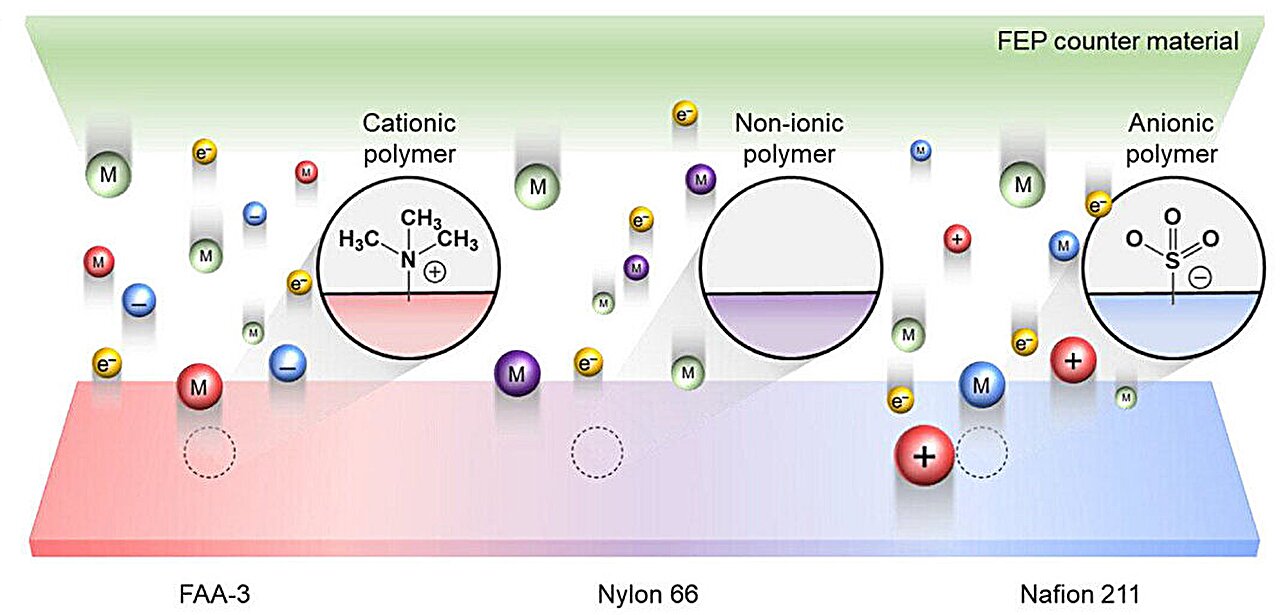
Professor Dong-Myeong Shin and his team from the Department of Mechanical Engineering under the Faculty of Engineering at the University of Hong Kong (HKU) shed light on the contribution of ions in electric charge transfer, though their contribution differs with environmental humidity.
This discovery adds new insights into contact electrification, the phenomenon where static electricity is generated when two different materials touch and then separate. This effect is important for many technologies, including photocopiers, spray painting, energy collection, and self-powered sensors.
Challenging old beliefs about charge transfer
In their study, titled “Quantifying Electron and Ion Transfers in Contact Electrification with Ionomers,” published in Advanced Functional Materials, the team presents evidence that both electrons and ions are transferred at the same time when two solid surfaces come into contact. This challenges the long-held belief that only electrons are responsible for generating static electricity.
The researchers tested three types of films—an anionic ionomer called Nafion 211, a cationic ionomer named FAA-3, and a non-ionic polymer called Nylon—by rubbing them against a fluorinated ethylene propylene (FEP) film.
They analyzed how charges decayed under heat and used advanced techniques to detect surface ions. This allowed them to measure how much electrons and ions contributed to the charge transfer.
Humidity’s surprising role in ion transfer
It was discovered that different ionomer materials displayed distinct charge-transfer behaviors, with humidity greatly amplifying the role of ions. At a relative humidity level of above 50%, ion transfer not only enhanced surface charge density but also offset the depletion usually caused by moisture.
Remarkably, even though less than 2% of the ions actually moved across the interface, their impact was surprisingly large—they played a key role in stabilizing and strengthening static charges. To understand how this happens, the team used computer simulations, which revealed that water molecules absorbed into the ionomer formed tiny channels inside the material. These channels allowed ions to move more freely toward the surface, especially in humid conditions.
Implications for technology and materials
“This is the first time we could unambiguously separate and measure the contributions of electrons and ions in solid contact electrification,” said Dr. Xiaoting Ma, co-first author of the paper.
“By using Nafion and FAA films as model systems, we gained unique insights into how positive and negative ions behave differently depending on humidity.”
Professor Shin highlighted the broader impact: “By quantifying how much electrons and ions transfer during contact, we can develop new strategies to create materials that work reliably even in humid environments. This not only advances fundamental scientific understanding but also opens up new possibilities for eco-friendly technologies such as printing, coating, environmental monitoring, and energy harvesting.”
The team also found that introducing ions onto a non-ionic polymer surface significantly improved its resistance to humidity, offering a practical strategy for engineering robust triboelectric materials.
After integrating Nafion and FAA films into triboelectric nanogenerators (TENGs), the devices showed stable output even in humid environments, successfully powering an array of 78 LEDs and maintaining performance over thousands of cycles.
More information:
Xiaoting Ma et al, Quantifying Electron and Ion Transfers in Contact Electrification with Ionomers, Advanced Functional Materials (2025). DOI: 10.1002/adfm.202506471
Citation:
Humidity unlocks hidden power of ions in generating static electricity (2025, November 13)
retrieved 13 November 2025
from https://techxplore.com/news/2025-11-humidity-hidden-power-ions-generating.html
This document is subject to copyright. Apart from any fair dealing for the purpose of private study or research, no
part may be reproduced without the written permission. The content is provided for information purposes only.












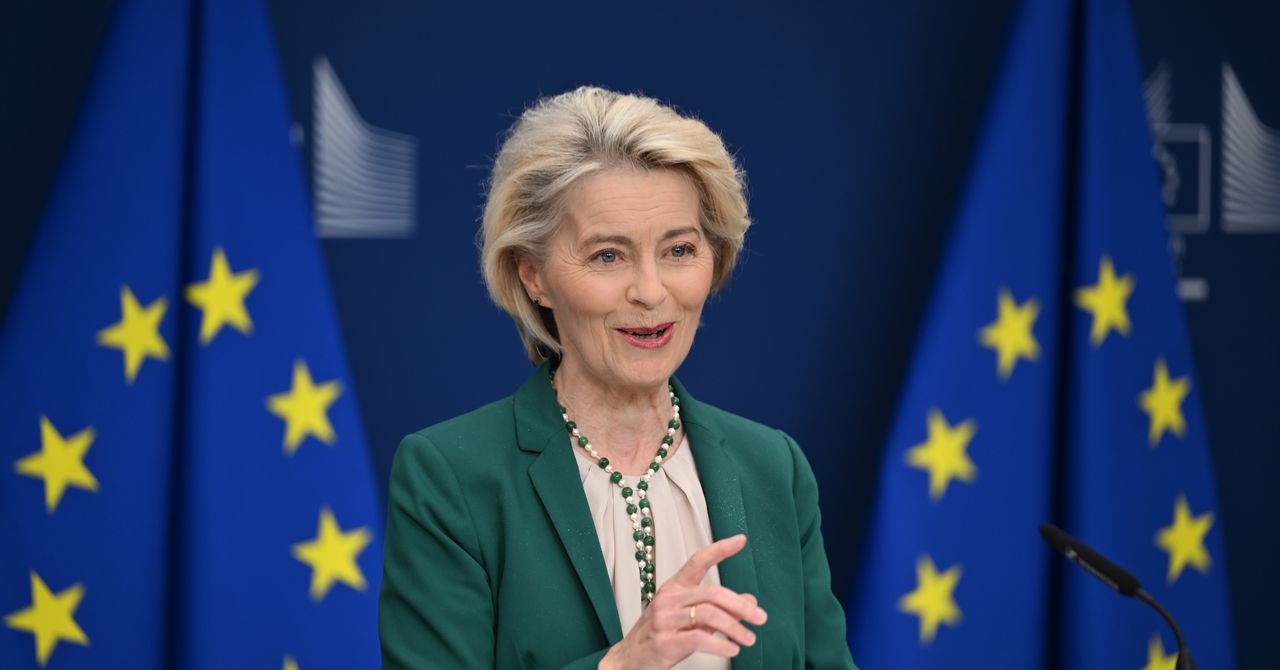
The European online age verification app is ready.
The app works with passports or ID cards, is built to be “completely anonymous” for the people who use it, works on any device (smartphones, tablets, and PCs), and is open source. “Best of all, online platforms can easily rely on our age verification app, so there are no more excuses,” said European Commission president Ursula von der Leyen at a press conference on Wednesday. “Europe offers a free and easy-to-use solution that can protect our children from harmful and illegal content.”
High Expectations
“It is our duty to protect our children in the online world just as we do in the offline world. And to do that effectively, we need a harmonized European approach,” von der Leyen said at Wednesday’s press conference. “And one of the central issues is the question, how can we ensure a technical solution for age verification that is valid throughout Europe? Today, I can announce that we have the answer.”
This answer takes the form of an open source app that any private company can repurpose, as long as it complies with European privacy standards and offers the same technical solution throughout the European Union. The user downloads the app, agrees to the terms and conditions, sets up a pin or biometric access, and proves their age through an electronic identification system, or by showing a passport or ID card (in which case biometric verification is also provided). The app does not store your name, date of birth, ID number, or any other personal information, according to the European Commission—only the fact that you are over a certain age.
After that, when a person using the app wants to access a social network (minimum age: 13), pornographic site (minimum age: 18), or any other age-protected content, if they are logged in from a computer, they need only scan the QR code shown on the site they want to visit. If, on the other hand, the person logs in from a smartphone, the app sends the proof of age directly. The platform does not access the document with which the user proved it in the first place.
Adoption Event
The need to introduce a common system for the entire European Union has been discussed for some time, and according to commission technicians, the technical work is now complete. Of course, it will still be possible to circumvent the system—all it takes is for an adult to lend their phone to a younger friend—but the technological architecture exists, and it will be up to EU member states to decide whether to integrate it into national digital wallets or develop independent apps.
“No More Excuses”
For the app to really be effective, platforms must be obligated to verify the age of their users—that’s where things get tricky. The Digital Services Act, which went into effect in 2024, requires “very large online platforms”—those with more than 45 million monthly users in the European Union—to take concrete steps to mitigate systemic risks related to child protection, with heavy penalties for noncompliance.
“And that’s why Europe has the DSA: to call online platforms to their responsibilities. Because Europe will not tolerate platforms making money at the expense of our children,” European Commission executive vice president Henna Virkkunen told a press conference. She added that after an investigation into TikTok, the European institutions plan to take similar action against Facebook, Instagram, and Snapchat, as well as four porn sites. “Since the platforms do not have adequate age verification tools, we developed the solution ourselves,” he concluded. In short, as von der Leyen also remarked, “there are no more excuses.”
Bare Minimum
So far, this is the European framework that sets the general rules. On this basis, member states can consider more restrictive measures. Italy was among the first to discuss how to regulate the use of social media by minors but has so far not landed on anything concrete. Elsewhere in the EU, France’s Emmanuel Macron has been a trailblazer on the issue, pushing France to discuss a rule to ban social networks for minors under the age of 15 entirely. So far, this measure has received broad political support—but the outcome depends largely on compatibility with the Digital Services Act and the availability of effective age verification systems like the app the European Commission just released.
This article originally appeared on WIRED Italia and has been translated.

Anthropic is moving into a new London office as it seeks to expand its research and commercial footprint in Europe, setting up a scrap between the leading AI labs for talent emerging from British universities.
The company, which opened its first London office in 2023, is moving to the same neighborhood as Google DeepMind, OpenAI, Meta, Wayve, Isomorphic Labs, Synthesia, and various AI research institutions.
Anthropic’s new, 158,000-square-foot office footprint will have space enough for 800 people—four times its current head count—giving it room to potentially outscale OpenAI, which itself recently announced an expansion in London.
“Europe’s largest businesses and fastest-growing startups are choosing Claude, and we’re scaling to match,” says Pip White, head of EMEA North at Anthropic. “The UK combines ambitious enterprises and institutions that understand what’s at stake with AI safety with an exceptional pool of AI talent—we want to be where all of that comes together.
UK government officials had reportedly attempted to coax Anthropic into expanding its presence in London after the company recently fell out with the US administration. Anthropic refused to allow its models to be used in mass surveillance and autonomous weapon systems, leading to an ongoing legal battle between the AI lab and the Pentagon.
As part of the expansion, Anthropic says it will deepen its work with the UK’s AI Security Institute, a government body that this week published a risk evaluation of its latest model, Claude Mythos Preview. According to Politico, the UK government is one of few across Europe to have been granted access to the model, which Anthropic has released to only select parties, citing concerns over the potential for its abuse by cybercriminals.
The increasing concentration of AI companies in the same London district is an important step in creating a pathway for research to translate into AI products, says Geraint Rees, vice-provost at University College London, whose campus is around the corner from Anthropic’s new office.
“This cluster didn’t emerge from a planning document. It grew because serious researchers and companies understand that proximity isn’t a nice-to-have,” he said last month, speaking at an event attended by WIRED. “That’s how the innovation system actually works. It’s not a clean, linear transfer from lab to market. It’s messier, richer, more human than that.”

The increasingly long-in-the-tooth Computer Misuse Act (CMA) of 1990 remains an albatross around the neck of British cyber security professionals, and even though the UK government committed last December to reforming it, every minute of delay is holding back the nation’s security innovation, resilience, talent, and ability to defend itself against cyber attacks, campaigners have warned.
Ahead of the National Cyber Security Centre’s (NCSC’s) upcoming CYBERUK conference in Glasgow, the CyberUp Campaign for reform of the Computer Misuse Act (CMA) has published a new report, titled Protections for Cyber Researchers: How the UK is being left behind to maintain pressure on Westminster.
The CMA defines the vague offence of unauthorised access to a computer, which the campaigners want changed because it was written 35 years ago and fails to account for the development of the cyber security profession, and the fact that in the course of their day-to-day work, cyber pros may sometimes need to hack into other systems.
“Cyber attacks are growing in scale, sophistication and severity, with a devastating impact on infrastructure, businesses and charities,” said a CyberUp campaign spokesperson.
“While other countries have moved to refresh their cyber laws in response, the UK’s Computer Misuse Act hasn’t been updated since before the modern internet – hardly the best platform for accelerating our defences into the next decade.”
The group’s report highlights how other nations, Australia, Belgium, France, Germany, Hong Kong, Malta, Portugal, and the USA, have already secured legal protections for cyber professionals that enable them to go about their business without fear of prosecution.
In Portugal – Britain’s oldest formal ally under a treaty dating back to the 14th Century – the government last year published Decreto-Lei 125/2025, implementing the European Union (EU) Network and Information Systems (NIS2) Directive and revising the country’s cyber crime law to ensure that ethical hackers and professional cyber security practitioners working in good faith are both recognised and protected.
Portgual’s laws now accept some elements of cyber work may have to happen without explicit permission or involve unanticipated technical overreach that has a legitimate purpose.
As such, Portugal says that security work undertaken in good faith won’t be punished as long as the researcher fulfills a set of conditions. For example, they can act only to find vulnerabilities and these must be reported immediately, they must avoid taking harmful actions, like conducting DDoS attacks or installing malware, and they must respect the integrity of any data they may find or access and delete it within 10 days once the issue is addressed.
CyberUp said Portugal’s example demonstrates how cyber crime laws can be modernised to legally protect research carried out in the public interest.
“Portugal has demonstrated how to modernise their equivalent law through cyber legislation. We urge the government to follow this example and act swiftly through the Cyber Security and Resilience Bill to achieve meaningful reform, or risk lagging even further behind our peers,” the spokesperson said.
Defence Framework
Working with cyber security experts and legal advisors, the CyberUp campaign has developed its own Defence Framework that would allow cyber professionals to present a statutory defence in court as long as they adhere to the Framework’s four core principles.
- Harm Vs. Benefit: The benefits of the activity must outweigh the potential harms;
- Proportionality: Cyber pros must take all reasonable steps to minimise the risks of their activity;
- Intent: They must act honestly, sincerely, and clearly direct themselves towards improving security;
- Competence: Their qualifications and professional memberships should demonstrate they are suitably equipped to perform cyber security work.
The campaigners say this framework will bring clarity and confidence to the security sector, enabling cyber pros to run essential research tasks without fear of criminal prosecution, helping organisations operate to recognised legal standards, and enabling a more open and collaborative relationship between the cyber sector and the UK government.


Europe’s Online Age Verification App Is Here

Orioles lose controversial challenge after Coby Mayo unintentionally triggers review

Israel and Lebanon agree to 10-day ceasefire, says Trump

-

 Entertainment1 week ago
Queen Elizabeth II emotional message for Archie, Lilibet sparks speculation
-

 Tech1 week ago
Azure customers up in arms over ‘full’ UK South region | Computer Weekly
-

 Tech1 week ago
As the Strait of Hormuz Reopens, Global Shipping Will Take Months to Recover
-

 Fashion1 week ago
CII submits 20-pt agenda to Indian govt to back firms hit by Iran war
-

 Tech1 week ago
This AI Button Wearable From Ex-Apple Engineers Looks Like an iPod Shuffle
-

 Politics6 days ago
Indian airlines hit hardest after Dubai limits foreign flights until May 31
-

 Entertainment4 days ago
Palace left in shock as Prince William cancels grand ceremony
-

 Politics6 days ago
Chinese, Taiwanese will unite, Xi tells Taiwan opposition leader